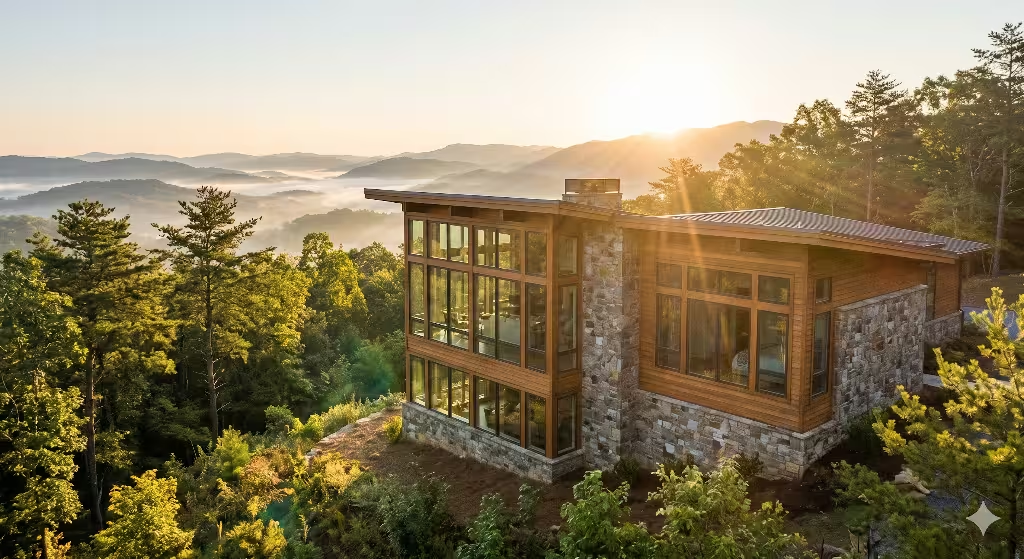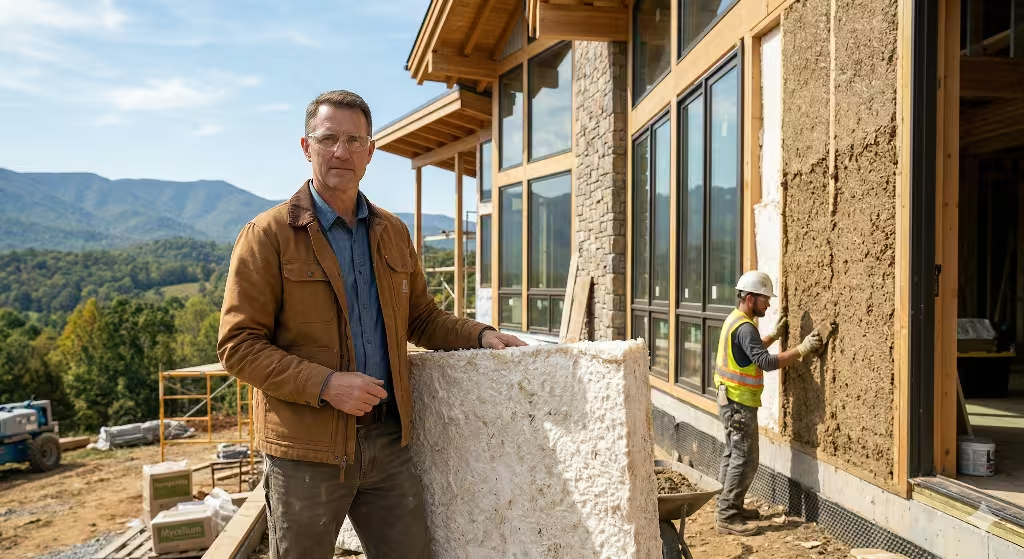


In recent decades, the trend was for families to spread out. The ideal was the “empty nest.” But in the last several years, I’ve seen a clear and logical shift. We are seeing the return of the “full nest,” but this time, it’s by choice and by design. This is the rise of multigenerational living and it is happening here in the Tri-Cities of Tennessee.
This concept is simple. It means multiple generations of a family, such as grandparents, parents, and adult children, living together under one roof or on one property. Research from groups like the Pew Research Center shows this is a fast-growing trend. The reasons are practical: families want to pool their finances to afford a better home, share the costs of living, provide built-in childcare, or care for aging parents.
The above being said, the idea of multigenerational living is one thing. The reality of it is another. The only thing that makes it work successfully is a smart design. It is not about building a bigger house. It is about building a smarter house. The most critical element is the design of the floor plans. A good set of multigenerational home floor plans creates a balance. It provides spaces for the family to come together but, just as importantly, it provides zones for privacy, quiet, and autonomy.
This article is my guide to help you understand the practical, architectural, and legal steps to creating multigenerational home floor plans that work for your family in the real world, right here in Tennessee.
Why Choose a Multigenerational Home? The Practical Benefits & Common Concerns

Choosing to build a custom multigenerational home is a major decision. It goes beyond just picking out paint colors or countertops. It is a financial and lifestyle commitment. Before we even look at the first set of floor plans, it is essential to be precise about the “why.”
The Financial Case
From a purely financial standpoint, the logic is powerful. The cost of land, materials, and labor has made buying or building a home a significant challenge. When a family pools its resources, its buying power increases dramatically.
- Shared Mortgage: Instead of two or three separate households paying two or three separate mortgages or rents, one combined payment can secure a much larger, higher-quality custom home. This allows you to build equity together.
- Reduced Living Costs: Think about the monthly budget. One property means one property tax bill, one homeowner’s insurance policy, and often one set of utility bills (or at least a more managed one). Splitting these costs makes daily life more affordable for everyone.
- Shared Care Costs: This is one of the biggest drivers. The cost of professional childcare is a heavy burden on young families. The cost of assisted living or elder care facilities is staggering. A multigenerational home allows a family to provide that care internally. Grandparents can watch grandchildren, and adult children can provide a safe, loving, and dignified environment for their aging parents. This is not just a financial savings; it is a quality-of-life improvement.
The Lifestyle & Emotional Case
Beyond the numbers, this is a lifestyle choice. They want to build a home that fosters closer family bonds. A shared home means more time together, shared meals, and the ability to offer immediate support. For children, growing up with grandparents is a gift. For older adults, living with family is a proven way to reduce loneliness and stay active, as studies from groups like AARP often show.
Addressing the Challenges (The “Cons”)
This living arrangement will fail if you are not precise about the challenges. The number one reason a multigenerational plan fails is a lack of privacy.
- Privacy: This is the most common concern I hear. “We love our family, but we do not want to be on top of each other.” This is not a family problem; it is an architectural problem. A bad floor plan will make everyone feel crowded. A good set of multigenerational home floor plans is the solution.
- Noise: When you have a toddler playing, a teenager studying, and a grandparent resting, sound control is not a luxury. It is a requirement. Your floor plans must include soundproofing.
- Autonomy: Everyone needs a sense of their own space and schedule. If a family member has to walk through the main living room just to get to their bedroom, it creates friction. Everyone needs a “front door,” even if it is just a psychological one.
- The Family Agreement: This is the most important part. Before you ever approve a single floor plan, you must have a clear, written agreement. Talk about the hard questions. How will the mortgage be split? Who pays for groceries? What are the rules for quiet hours? How are chores divided? What happens if someone’s financial situation changes, or if they decide to move out? A builder designs the floor plans, but your family must design the rules.
Architectural Styles for Multigenerational Floor Plans
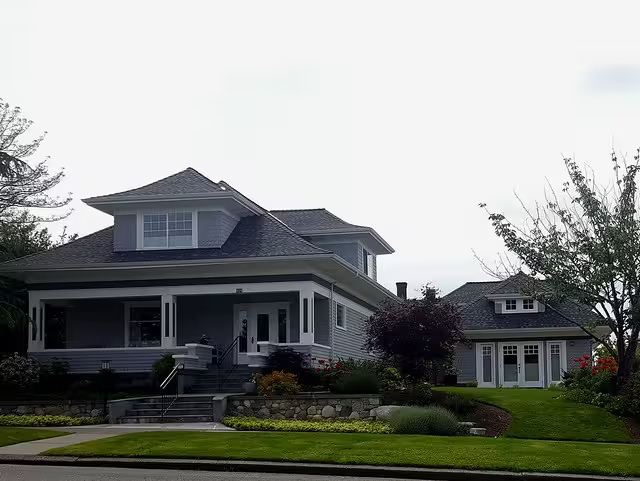
When a client says they want a “multigenerational home,” they are usually describing one of four distinct types of floor plans. The one you choose depends on your family’s specific needs for privacy and connection.
A. The Integrated Suite (Dual Master Suites)
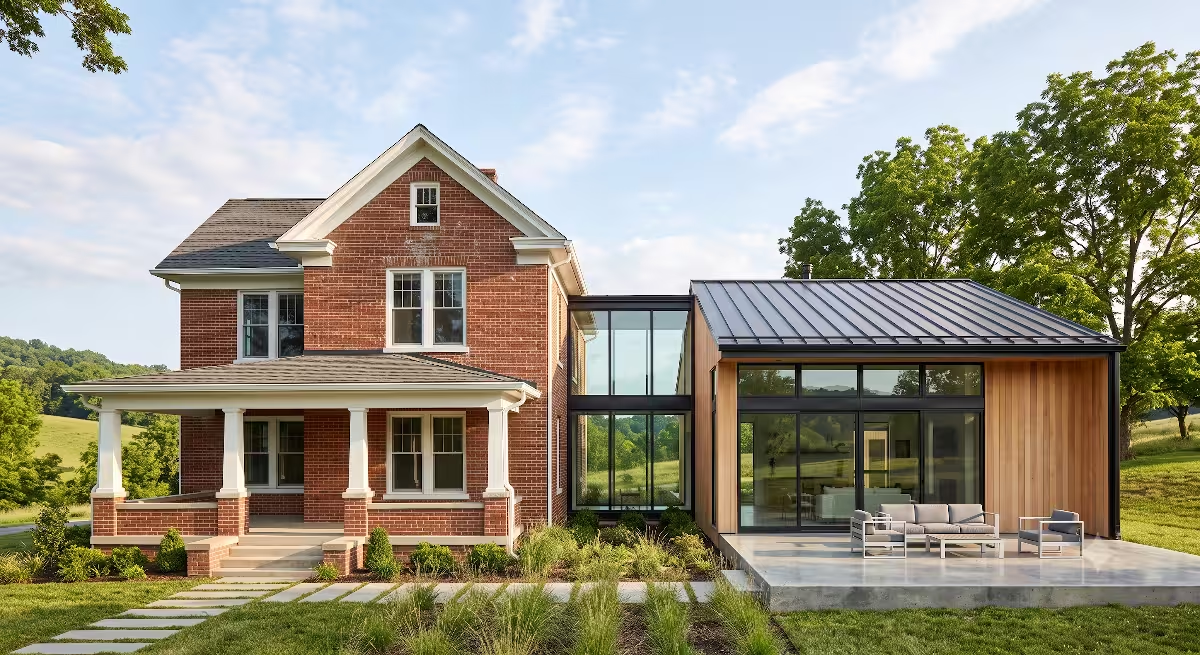
This is the most integrated design. The home is a single, unified house, but the floor plans are designed with two or more primary suites. Often, these floor plans will have a full master suite on the main floor. This is a key feature for accessibility. It allows a family member to live entirely on one level, without needing to use stairs.
This type of floor plan is best for families who need a lower level of separation. For example, it works well for an aging parent who needs some monitoring or is very involved in the daily family life. The home still has one main kitchen and one main living area. The “suite” is simply a private retreat with its own bedroom and full bathroom, often in a separate wing or on a different floor from the other bedrooms. Many modern floor plans are now offering this as a standard option.
B. The Attached Unit (The “In-Law Suite”)
This is the most popular and balanced solution I build in the Tri-Cities. This floor plan features a self-contained apartment that is attached to the main house. The key features are:
- A Private Entrance: The suite has its own exterior door, so the family member can come and go without walking through the main house.
- A Connecting Door: There is also an interior door that connects the suite to the main house. This allows for easy access for shared meals or helping with family, but it can be closed and locked for privacy.
- Private Amenities: The floor plans for an in-law suite include a bedroom, a full bathroom, a small sitting area, and a kitchenette.
A kitchenette is a critical detail. It usually has a sink, a small refrigerator, a microwave, and cabinet space. It is not a full kitchen. As we will discuss, adding a second full kitchen can have major legal and zoning consequences. These multigenerational home floor plans offer a perfect balance of privacy and connection.
C. The Detached Unit (ADU or “Casita”)
This style offers the maximum amount of privacy and autonomy. An ADU, or Accessory Dwelling Unit, is a completely separate, smaller home built on the same property. In our area, this might be a small cottage (sometimes called a “casita”), an apartment built over a detached garage, or even a “barndominium” that has a dedicated living space.
The floor plans for an ADU are essentially the floor plans for a very small, efficient house. They have a full kitchen, a full bathroom, a living area, and one or two bedrooms. This is an ideal solution for adult children who are saving for their own home, or for active grandparents who want a completely independent lifestyle but still want to be close by. The main considerations here are the cost, as you are building a second structure, and the local zoning laws, which can be strict.
D. The Duplex / Split-Plan
This is a less common but highly effective solution. A duplex is a single building that is designed from the ground up as two separate homes, sharing a single dividing wall. These are two distinct floor plans, often mirrored, that are joined together.
Each unit has its own full kitchen, its own living spaces, its own bedrooms, and its own private entrance. The only thing they share is the wall and the property. This is a great solution for two independent families, such as siblings who want to raise their children together or an adult child and parents who are both fully independent but want to share the financial load of the property. The floor plans for a duplex are complex, but they offer a clear, permanent separation of living spaces.
Essential Design Features: The 5 Keys to a Harmonious Home
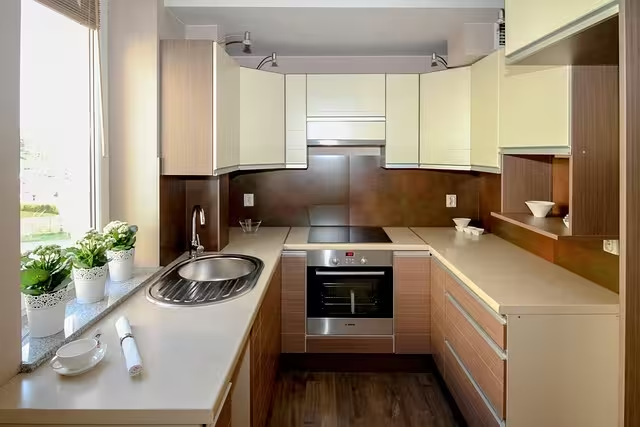
A successful home is a system of parts working together. For multigenerational home floor plans, several design features are not just “nice to have,” they are essential.14 Omitting them will lead to frustration.
1. Separate Entrances
The psychological importance of a separate entrance cannot be overstated. It is the number one feature that gives a family member a sense of autonomy. It means they can have guests over without disturbing the main house. It means they can leave for an early morning walk without waking everyone up. Even in a simple integrated suite, designing the floor plans so the suite’s door is off a main hallway, not directly in the living room, is a smart move. For attached suites, this is non-negotiable.
2. Kitchens & Kitchenettes
The “kitchen rule” is critical. A kitchen is legally defined by its appliances. A full kitchen includes a sink, a refrigerator, and a 220-volt outlet for a full-size range or cooktop. The second you put a full-size range in your in-law suite, many zoning codes will reclassify your home as a “two-family dwelling” or duplex. This triggers different building codes, fire codes (like fire-rated walls between units), and higher property taxes.
A kitchenette is the solution. By installing a sink, an under-counter refrigerator, and a microwave (or even a countertop induction burner), you provide 90% of the function without violating the zoning code for a single-family home. Your floor plans must be specific about this.
3. Accessibility (Universal Design)
When designing multigenerational home floor plans, we are not just planning for today. We are planning for the next 20 years. This is where Universal Design comes in. It means designing a space that is usable by everyone, regardless of their age or physical ability.
- Zero-Step Entries: Having at least one entrance to the home and the suite without a single step.
- Wider Doorways: All doorways, especially to the suite and its bathroom, should be at least 36 inches wide. This allows for wheelchair access, a walker, or just moving furniture easily.
- Main-Floor Master: The suite must be on the main floor. A floor plan that puts an in-law suite in a basement or upstairs is a floor plan that will fail as soon as stairs become a problem.
- Accessible Bathrooms: This includes a “roll-in” or “walk-in” shower with no curb, grab bars installed in the shower and near the toilet (we block the walls for this during framing), and a “comfort height” toilet.
Building these features into the original floor plans is efficient. Adding them later is expensive and disruptive.
4. Soundproofing (The “Invisible” Essential)
This is my area of expertise. As a carpenter and builder, I know that this is the one technical detail that makes or breaks a multigenerational home. You cannot have privacy if you can hear conversations or the television from the next room. Standard walls are not good enough.
When I design floor plans for this, I specify a “sound-dampening” wall assembly. This is not just about using standard insulation.
- Double-Stud Walls: We build two separate walls with a one-inch air gap in between. This means the drywall on one side is not physically touching the drywall on the other, so vibrations (sound) cannot travel through.
- Sound-Dampening Insulation: We use products like Rockwool, which is a dense mineral wool insulation specifically designed to absorb sound.
- Resilient Channels: These are small metal strips that attach to the studs before the drywall. The drywall screws into the channel, not the stud. This “decouples” the drywall, isolating it from vibrations.
- Solid-Core Doors: A hollow door is like having a giant hole in the wall for sound. We use heavy, solid-core doors for all bedrooms and the entrance to the suite.
This system is precise and incredibly effective. It is the invisible key to a quiet and private home.
5. Utility & HVAC Separation
Different generations have different comfort levels. Your grandmother may be comfortable at 75 degrees, while you prefer 68. In a single-zone home, this is a constant battle.
A smart multigenerational floor plan includes separate HVAC (Heating, Ventilation, and Air Conditioning) zones. This allows the suite to have its own thermostat. For a detached ADU, a completely separate system (like a ductless mini-split) is the most efficient solution. We also design the plumbing and electrical systems to be smart. For example, we might install a separate electrical sub-panel for the suite or a separate, small water heater. This helps manage utility costs and ensures one person’s long shower does not leave the rest of the house with cold water.
The Legal & Financials: Building in the Tri-Cities (Johnson City, Kingsport, Bristol)
This is the part of my job where my value for “Integrity” is most important. I cannot, in good conscience, design floor plans for a client without making sure they understand the local rules. The dream of a multigenerational home meets reality at the local planning and zoning office. The rules are different for Kingsport, Johnson City, and Washington or Sullivan counties.
A. Zoning, Permits, and the ADU Question
Zoning laws exist to keep neighborhoods safe and organized. As I mentioned, the “kitchen rule” is the most important one. If your floor plans include a second full kitchen, you are likely trying to build a duplex, not a single-family home.
- Accessory Dwelling Units (ADUs): The legal term for a detached unit is an ADU. Many areas in Tennessee are slowly becoming more ADU-friendly, but the rules are specific. For example, in Kingsport, any “accessory structure” has “setback” rules, meaning it must be a certain distance from the property lines and the main house.
- Owner Occupancy: Many municipalities, including Johnson City and Washington County, have “owner occupancy” rules. This means the owner of the property must live in either the main house or the ADU. This is to prevent developers from buying properties and turning them into two separate rental units.
- Your Builder is Your Guide: This is why you must work with a local builder. I know the codes in this region. The worst-case scenario is building a suite and then having a code inspector tell you it is illegal and must be torn out. We design your floor plans to be 100% compliant before we ever break ground.
B. Cost Considerations in East Tennessee
Clients always ask about cost. It is a precise question that is hard to answer without a specific floor plan. However, a multigenerational suite is not just “adding a bedroom.”
Bathrooms and kitchens are the most expensive rooms in a home, square foot for square foot. A 500-square-foot in-law suite with a bathroom and kitchenette will cost significantly more than a 500-square-foot game room. You are adding complex plumbing, electrical, cabinetry, and fixtures.
The good news is that building these features into new construction is far cheaper than trying to add a suite to an existing home later. While the initial cost is higher, you must compare it to the alternative. The cost of a few years in an assisted living facility often exceeds the entire cost of building the suite. It is an investment.
C. The Family Agreement
I will end where I started. This is not a building tip, but it is the most critical piece of advice I have. Before you sign a construction contract, you must have a legal family contract.
Sit down with a lawyer and put your agreement in writing.
- Who is on the deed?
- How is the mortgage paid?
- How are utilities and taxes split?
- What happens if someone passes away?
- What happens if one party wants to sell, or if a child needs to move out?
Putting this on paper is not a sign of mistrust. It is a sign of “competence” and “precision.” It protects everyone and prevents disagreements from turning into family-breaking-feuds. A clear legal agreement is the foundation for your new home. The floor plans are just the structure we build on top of it.
Building a Home That Lasts for Generations
The trend of multigenerational living is a logical return to a family structure that has worked for centuries. But to make it work in the modern world, it requires a modern, precise design. It demands floor plans that are engineered for both connection and privacy.
The goal is to build a home that allows your family to share lives and resources without sacrificing the autonomy and peace that everyone deserves. It is a design and engineering challenge, and frankly, it is the kind of puzzle I enjoy solving. The result is more than just a house; it is a home that will serve your family for generations to come.