Here in East Tennessee, family is the bedrock of our community. We see it every day, from family cookouts in Johnson City to gatherings along the Holston River in Kingsport. It’s no surprise, then, that a powerful trend is reshaping how we think about our homes: the rise of multigenerational living. The idea of having aging parents a few steps away, or an adult child saving for their own home while maintaining their independence, is becoming less of a novelty and more of a practical, heartfelt choice.
This has given life to the “two homes under one roof” concept. This isn’t about simply adding a spare bedroom. It’s a thoughtful approach to creating a self contained living space, often called an in-law suite or Accessory Dwelling Unit (ADU), that provides family members with both proximity and privacy. A well designed multigenerational home is more than just a smart investment; it’s an investment in your family itself.
This post will serve as your comprehensive guide, walking you through the essential design, legal, and financial steps for building a functional, valuable, and harmonious multigenerational space right here in the Tri-Cities.
What Exactly Qualifies as an In-Law Suite?
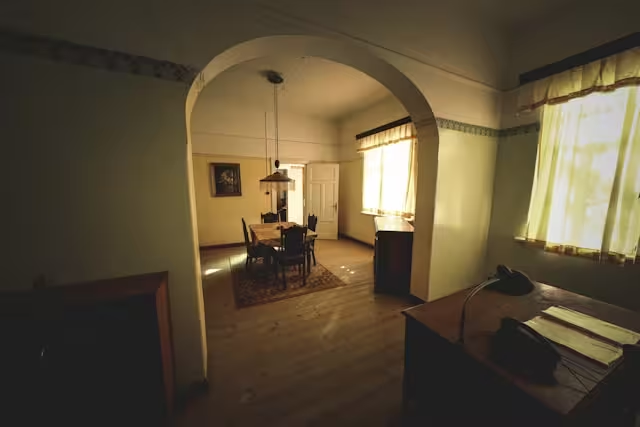
Many people use terms like guest house, in law suite, and granny flat interchangeably, but in the world of building and zoning, the details matter. A guest house is typically a temporary space for visitors, often without a full kitchen. An in law suite, designed for long term multigenerational living, is fundamentally different. It is a true, secondary home on your property. To be considered a proper in law suite or ADU, the space must contain several key components that allow for independent living.
First and foremost is a separate entrance. This is non negotiable for privacy and creating a sense of a distinct home. The resident should be able to come and go without passing through the main family’s living area. Second is a dedicated bedroom, a private space for rest. Third is a full bathroom, complete with a sink, toilet, and a shower or bathtub. Finally, it must have a place to prepare food. This can range from a small kitchenette with a microwave, mini fridge, and sink to a full kitchen with a range and full sized appliances. The choice between a kitchenette and a full kitchen often depends on local zoning laws, which we will discuss later.
These functional spaces can be created in one of three ways, each suited for different properties and multigenerational needs:
- Interior Conversion: This involves transforming existing square footage within your home, such as a walkout basement or an attached garage, into a complete living unit. It is often the most cost effective path to a multigenerational household.
- Attached Addition: This is a brand new structure built onto the side or back of your primary residence. It allows for a custom layout from the ground up while remaining directly connected to the main home, which can be ideal for caregiving situations in a multigenerational family.
- Detached Structure (DADU): Often called a granny flat or cottage, this is a separate, smaller home built on your property.5 It offers the highest level of privacy and independence, making it a popular choice for a truly multigenerational property.
Understanding these core components and types is the first step in planning a space that will successfully support your family’s unique multigenerational dynamics.
Planning & Design: Crafting a Space for Independence and Comfort
When designing a space for multigenerational living, the primary goal is to create an environment that supports both independence and comfort for its occupant, now and in the future. This means going beyond basic aesthetics and focusing on intelligent, forward thinking design. The most important concept to embrace here is Universal Design, or what many call “aging in place.” This design philosophy ensures the home is accessible and usable for people of all ages and abilities without needing special adaptations later on. For a multigenerational suite, this isn’t just a good idea; it’s essential.
Here are some core Universal Design principles to incorporate:
- A No-Step Entry: The entrance to the suite should be accessible without navigating stairs. This can be achieved through grading the landscape or installing a gentle ramp.
- Wider Doorways and Hallways: A standard doorway is about 30 inches, which can be a tight squeeze. Aiming for 36 inch wide doorways and 42 inch wide hallways allows for easy passage with a walker or wheelchair.
- Accessible Bathrooms: This is critical. A walk in or roll in shower with a low or non existent threshold is much safer than a traditional tub. Installing grab bars in the shower and near the toilet provides stability. A comfort height toilet is also a wise addition.
- Smart Fixtures: Simple changes make a huge difference. Lever style door handles are easier to operate than round knobs. Likewise, single handle faucets are easier to use than separate hot and cold taps.
Beyond accessibility, the layout itself must prioritize the psychological needs of a multigenerational household. Privacy is paramount. This means considering soundproofing between the suite and the main house, especially if they share a wall. The separate entrance is key, but also consider the placement of windows. You want to maximize natural light without having the suite’s living room window looking directly into the main home’s kitchen.
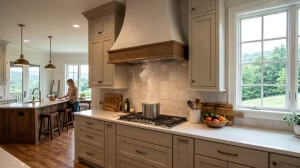
The kitchen debate, whether to install a full kitchen or a smaller kitchenette, is also a major design consideration. A full kitchen provides complete independence, but a kitchenette can save space and money. This decision may also be influenced by local zoning, as some municipalities have specific rules about a second full kitchen on a single family lot. Finally, don’t forget storage. A common mistake is designing a beautiful suite with nowhere for the occupant to store their belongings. Ample, accessible closet space and cabinetry are crucial for long term comfort in any multigenerational home.
Navigating Tri-Cities Zoning and Building Codes

This is the single most critical phase of your project, and it is where many well intentioned homeowners get into trouble. You can have the perfect design, but if it doesn’t comply with local regulations, it can’t be built. The rules governing Accessory Dwelling Units are hyper local and can vary significantly not just between Johnson City, Kingsport, and Bristol, but even depending on your specific neighborhood’s zoning designation. This is not a step to guess at or handle on your own.
The first question I always get is, “Do I need a permit?” The answer is almost certainly yes. Any project that involves adding square footage, altering the structure of your home, or running new electrical and plumbing lines requires a building permit. Attempting to build without one can result in hefty fines and even an order to tear down the work. The permit process ensures the construction is safe and meets building codes.
Here’s a breakdown of the legal framework you’ll be working within:
- Zoning Ordinances: Before any plans are drawn, you or your builder must check with the local planning department. They will tell you what is allowed on your property. Key questions to ask include: Are ADUs permitted in my single family residential zone? Is there a maximum size for the suite (often a percentage of the main home’s square footage)? What are the setback requirements (how far the structure must be from property lines, roads, and the main house)? Can the unit be rented to a non family member? The answers will shape your entire multigenerational project.
- Building Permits: Once your plans are finalized and comply with zoning, they are submitted to the building department for review. This involves detailed architectural drawings that show everything from the foundation to the roof structure. The department reviews them for compliance with the International Residential Code (IRC), which governs safety standards.
- Inspections: After the permit is issued, a city or county inspector will visit your property at key stages of construction. They will inspect the foundation before concrete is poured, the framing before drywall is installed, and the electrical, plumbing, and mechanical systems. These inspections are for your protection, ensuring the work is done correctly.
- Utilities: You’ll also need to decide how to handle utilities. Will the suite share meters with the main house, or will it have its own separate electric and water meters? A detached unit is more likely to require separate utilities, which adds to the cost and complexity but offers a cleaner separation for a true multigeneragional property.
Working with an experienced local builder who has relationships with the planning and building departments in Washington and Sullivan counties is invaluable. We understand the specific codes and can navigate the process efficiently, ensuring your multigenerational home is built legally and safely.
The Financial Picture: Budgeting for Your In-Law Suite
One of the first questions any family has is, “How much will this multigenerational project cost?” The answer is a wide range, as the final price tag depends heavily on the type, size, and level of finishes you choose. However, by understanding the key cost drivers, you can create a realistic budget for your multigenerational suite.
Let’s look at the general cost hierarchy of the three main types of suites:
- Conversions: Converting a basement or garage is generally the most affordable option. The main structure, foundation, and roof are already in place. The costs are primarily for framing interior walls, running plumbing and electrical, adding an egress window or door, installing a bathroom and kitchenette, and finishing the space.
- Attached Additions: This is the mid range option. You are building a new structure from the ground up, which involves pouring a new foundation, framing, roofing, and everything else. However, you save some money by tying into the existing home’s structure and utility lines. The cost per square foot is often higher than a conversion but lower than a fully detached unit.
- Detached Units (Granny Flats): These are typically the most expensive. You are essentially building a small, brand new house. It requires a full foundation, all new walls and roofing, and, most significantly, running separate utility lines (water, sewer, electric) from the main house or the street out to the new building. This trenching and connection work can be a substantial expense.
Beyond the type of construction, several other factors will influence the cost of your multigenerational project here in East Tennessee. Site preparation can be a factor, as a sloped or rocky lot will cost more to build on. The quality of materials you choose for things like windows, flooring, cabinets, and countertops will also have a major impact. Finally, don’t forget to budget for soft costs like architectural design fees and building permits.
While the upfront cost can seem daunting, it’s crucial to view it as an investment. A legally permitted, well designed multigenerational suite can significantly increase your property value.10 More importantly, it can be far more affordable in the long run than assisted living or nursing home care. It’s an investment in your family’s financial future and their well being.
Attached vs. Detached: Which Structure is Right for Your Property?
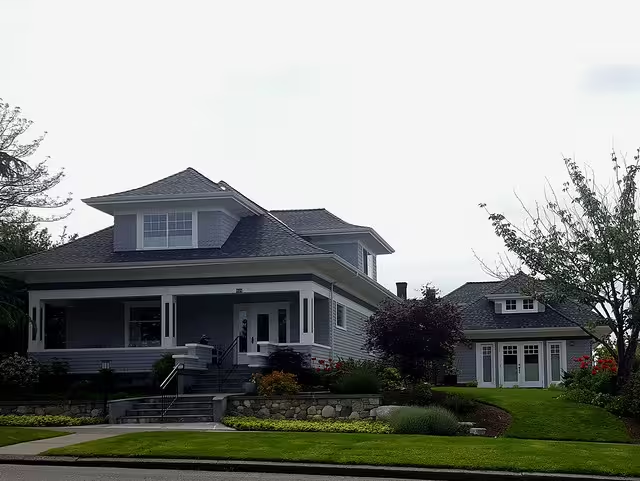
Choosing between an attached and a detached suite is a major decision point that affects budget, lifestyle, and the future use of the space. There is no single right answer; the best choice depends entirely on your property, your budget, and the specific needs of your multigenerational family. Let’s break down the pros and cons of each approach.
Attached In-Law Suites
An attached unit is built directly onto your existing home, sharing at least one wall. It can feel like a separate apartment or a new wing of the house.
- Pros: The biggest advantages are often cost and convenience. Tying into the home’s existing plumbing, electrical, and HVAC systems is usually less expensive than running new, separate lines across your yard. For families in a caregiving role, the direct interior connection is invaluable. You are just a doorway away if you are needed, which provides immense peace of mind for a multigenerational household.
- Cons: The primary downside is a reduction in privacy for both households. You will likely share a wall, a roof, and possibly a yard. The construction process can also be more disruptive to your daily life, as workers will be attached to your home for months.
Detached In-Law Suites (Granny Flats)
A detached unit, or DADU, is a separate, freestanding structure.11 It is a small home in your backyard.
- Pros: The number one benefit is privacy. A detached unit provides the greatest sense of independence and separation. This can be ideal for multigenerational arrangements where the family members are very active and want to maintain distinct lifestyles. It also offers more flexibility for the future. If family is no longer living in it, a detached unit is often easier to use as a rental property (if local zoning allows), a home office, or a guesthouse.
- Cons: Cost is the biggest hurdle. As mentioned, building a separate structure with its own foundation and utility connections is the most expensive option. It also requires having enough space on your lot to meet setback requirements, which can be a challenge on smaller properties. A detached unit requires a deliberate trip outside to get between homes, which might be a drawback in bad weather or for urgent caregiving needs.
Ultimately, the decision comes down to balancing the need for proximity against the desire for privacy, all while staying within your budget and the constraints of your property.
Integrating the Suite with Your Existing Home’s Exterior
A successful multigenerational addition should not look like an afterthought. The goal is to create a cohesive and attractive property where the new suite looks like it was part of the home’s original design. A poorly integrated addition can detract from your home’s curb appeal and even lower its value. Achieving this seamless integration requires careful planning of the exterior elements.
The most important factor is matching the core materials. The new suite’s roofing, siding, and trim should be the same as, or highly complementary to, the main house. If you have a brick home, the addition should use matching brick. If you have vinyl siding, use the exact same color and profile. This creates a unified visual language. The window styles should also match. If the main house has double hung windows with grids, the addition should have them too. This continuity is what tricks the eye into seeing a single, well planned structure.
The roofline is another critical element. A skilled architect or builder will design a roof for the addition that flows naturally from the existing rooflines, rather than looking like a box stuck on the side of the house. This might involve creating a gable or hip roof that complements the home’s original architectural style.
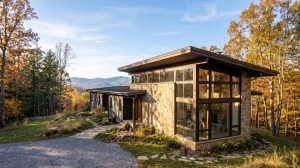
Finally, use landscaping to bridge the gap between the old and the new. A thoughtfully designed pathway can connect the main home’s patio to the new suite’s entrance, making it feel intentional. Planting similar shrubs or creating a continuous garden bed along the foundation of both structures can further unite them. For a detached unit, a stone path and coordinated plantings can make the two buildings feel like a cohesive multigenerational campus rather than two separate buildings. Paying attention to these exterior details ensures your multigenerational home is as beautiful as it is functional.
Interior Finishes: Balancing Durability, Aesthetics, and Accessibility
The interior of the multigenerational suite is where comfort and safety truly come to life. The choices you make for finishes, from the floor up, should be guided by three principles: durability, ease of maintenance, and accessibility. This space needs to be a comfortable home that can stand the test of time and adapt to changing needs.
Flooring: This is one of the most important decisions. While carpet is soft, it can be a trip hazard and is difficult to clean. For a multigenerational space, Luxury Vinyl Plank (LVP) flooring is often the best choice. It is incredibly durable, 100% waterproof, easy to clean, and provides a smooth, continuous surface that is easy to walk on or navigate with a walker. It also comes in a huge variety of realistic wood and tile looks to fit any aesthetic.
Lighting: Good lighting is a critical safety feature. A single, dim overhead light won’t do. You need a layered lighting plan.
- Ambient Lighting: This is the overall light, provided by recessed can lights or flush mount fixtures. Put these on dimmer switches to allow for adjustment.
- Task Lighting: This is focused light for specific activities. Good examples include under cabinet lighting in the kitchen and bright vanity lighting in the bathroom.
- Night Lighting: Consider installing low level pathway lighting or motion activated lights for safe navigation to the bathroom at night.
Paint and Color: To make what is often a smaller space feel as large and airy as possible, stick with lighter, neutral paint colors. Shades of off white, light gray, or beige can open up a room and reflect more natural light. You can always add pops of color through decor, pillows, and artwork.
Fixtures: As mentioned in the design section, choose accessible fixtures. Lever handles on doors, a pull down faucet in the kitchen, and a comfort height toilet in the bathroom are small details that make a huge difference in daily life, ensuring the home is comfortable for any member of a multigenerational family for years to come.
The Building Process: What to Expect from Your Contractor
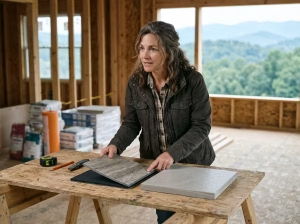
Embarking on a construction project can feel overwhelming, but a professional builder will guide you through a clear, step by step process. Understanding this timeline can demystify the experience and help you know what to expect. While every multigenerational project is unique, they all follow a similar path from concept to completion.
- Initial Consultation and Design: This is where you and your builder discuss your vision, your family’s needs, your budget, and the specifics of your property. The builder will assess the site and determine what is feasible.
- Securing Financing and Budgeting: With a preliminary estimate from your builder, you will finalize your financing, whether it’s a home equity loan, a construction loan, or cash. This solidifies your final budget.
- Architectural Plans and Engineering: An architect or designer will create detailed blueprints for your multigenerational suite. These plans are the roadmap for the entire project and are required for the permit application.
- Permit Application and Approval: Your builder will submit the plans to the local building department. This review process can take several weeks, depending on the municipality’s workload. No work can begin until the permit is issued.
- Site Preparation and Foundation: Once the permit is in hand, work begins. This involves clearing and grading the land, digging for the foundation, and pouring the concrete footers and slab.
- Framing, Roofing, and Mechanical Rough-ins: This is when the project starts to look like a house. The walls go up, the roof trusses are set, and windows and doors are installed. Plumbers and electricians then run all the pipes and wires through the open walls.
- Inspections: At this stage, the building inspector will visit to conduct the “rough in” inspection to ensure the framing, electrical, and plumbing work meet code before anything is covered up.
- Interior and Exterior Finishes: After the inspection passes, insulation is installed, and the drywall goes up. Siding and roofing are completed on the outside, while inside, flooring, cabinets, paint, and fixtures are installed.
- Final Inspection and Certificate of Occupancy: When the work is complete, the inspector returns for a final review. Once they approve it, the city issues a Certificate of Occupancy, which officially declares the space is legal and safe to live in. Your multigenerational suite is now ready for your family.
Conclusion: A Harmonious Home for the Whole Family
Building a space to support multigenerational living is one of the most rewarding projects a homeowner can undertake. It is a practical solution to the evolving needs of the modern family, allowing you to provide care for aging parents, support adult children, and keep those you love close. The benefits are clear: you are adding significant, functional value to your property while making a profound investment in your family’s quality of life. A well planned in law suite provides security, independence, and connection all at once.
The journey from idea to reality requires precision, expertise, and a deep understanding of our local Tri-Cities building environment. The most important decision you will make is choosing a competent, experienced builder who can navigate the complexities of zoning, manage the construction process with integrity, and deliver a high quality home. If you are ready to explore how the “two homes under one roof” concept can work for your family, I encourage you to take the next step. Let’s start a conversation about building a harmonious, multigenerational home that will serve your family for generations to come.