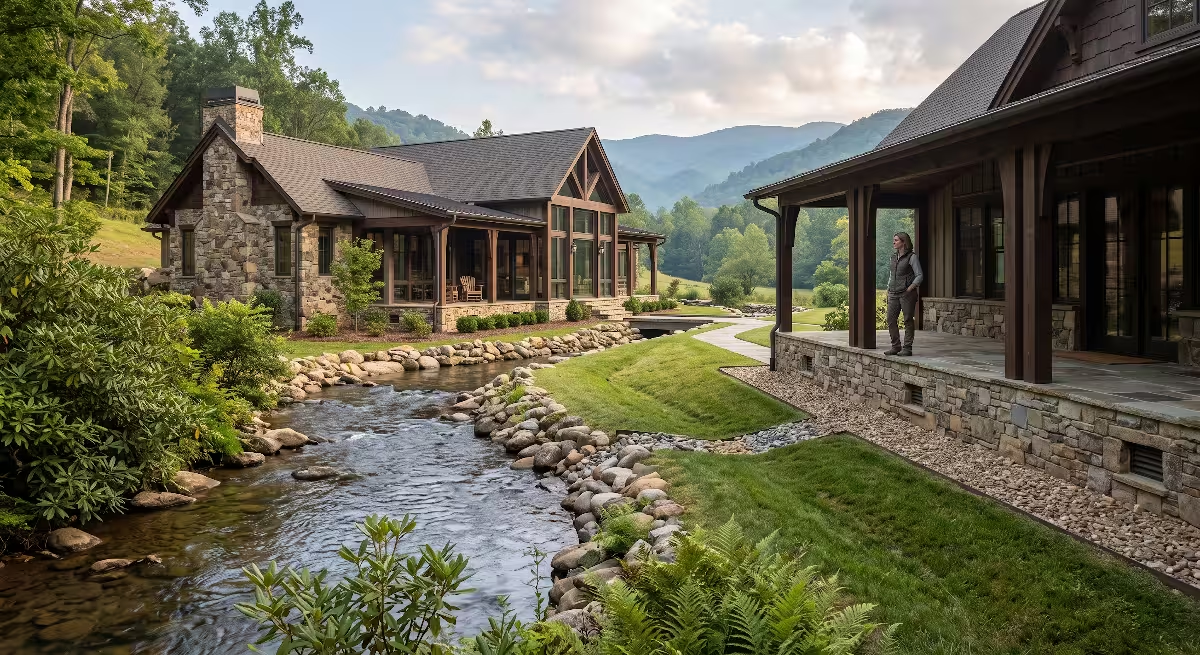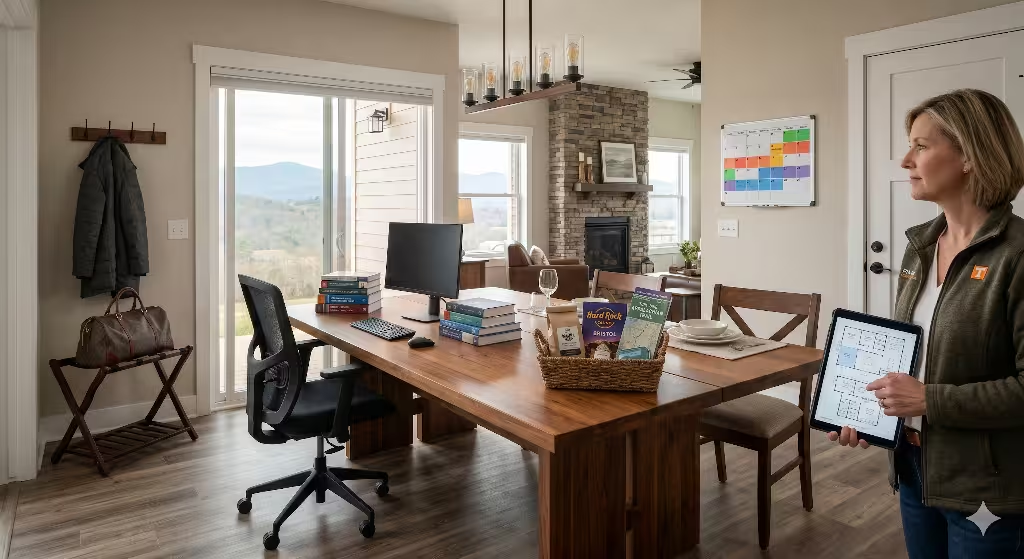


In the Tri-Cities of Tennessee there has been more and more a trend of people talking about adding a second, smaller home to their property. Here in the beautiful Appalachian Highlands, our needs are changing. Families want to keep loved ones close. Homeowners are looking for smart ways to earn extra income to combat rising costs. Others are simply planning for the future, wanting a flexible space that can adapt as their life evolves. This growing interest often leads to one key idea: the Accessory Dwelling Unit, or ADU.
In Johnson City to Kingsport and everywhere in between, these projects bring incredible value to families. I have also seen the confusion and frustration that can come from not understanding the local rules. The path to building a successful ADU is paved with permits, zoning codes, and specific city requirements. It can seem overwhelming.
The goal with this guide is to clear away the fog. Think of this as a map. It is designed to give you a clear, straightforward understanding of the process. We will walk through the regulations in Johnson City, Kingsport, and Bristol, step by step, so you can make informed decisions and turn your idea into a sound, legal, and valuable addition to your home.
What Exactly is an ADU? Defining the Term in East Tennessee
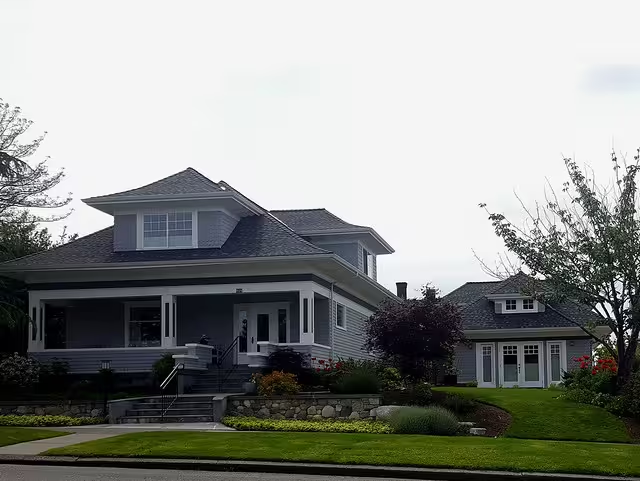
Before we look into the rules, it is important we are all on the same page. So, what exactly is an Accessory Dwelling Unit?
In the simplest terms, an ADU is a small, self contained home that shares the same property as a larger, primary house. You might know them by other names like a granny flat, in law suite, carriage house, or backyard cottage. The key is that it is “accessory” to the main home. It is a secondary structure, not the main event. It has its own kitchen, bathroom, and sleeping area, allowing someone to live there independently.
These are not new ideas. For generations, people had small homes on their property for extended family or helpers. But today, cities are creating official rules for them. Understanding the different types is the first step in figuring out which rules apply to you.
Types of ADUs
There are generally four types of ADUs you can build, and each has its own set of challenges and benefits.
- Detached New Construction: This is what most people picture when they think of an ADU. It is a brand new, standalone building constructed in the backyard. These offer the most privacy for both the main house residents and the ADU occupants. Because they are built from the ground up, you have complete control over the layout, style, and materials. The tradeoff is that this is usually the most expensive option. It requires a new foundation, running new utility lines across your yard, and building four walls and a roof from scratch.
- Garage Conversion: This is a very popular option because you are using a structure that already exists. Transforming an attached or detached garage into a livable apartment can be more cost effective than starting from new. The foundation, walls, and roof are already in place. However, the process is more complex than just putting in some drywall and carpet. A garage was not built to be a home. It needs significant upgrades, including insulation, proper windows and doors, plumbing for a kitchen and bathroom, and electrical systems that can handle a home’s load. Sometimes, a garage’s concrete slab needs to be reworked to allow for plumbing drains.
- Attached Unit: This is essentially a home addition. You build a new, self contained apartment onto the side or back of your primary house. This can be a good middle ground on cost. You only have to build three new walls instead of four, and tapping into existing utilities like water and sewer can be easier and cheaper. The challenge with an attached unit is making it look right. The design needs to blend seamlessly with your existing home’s architecture, so it does not look like a box that was just stuck on the side. It also offers less privacy than a detached unit.
- Interior Conversion: This type of ADU is created within the existing footprint of your home. It involves turning a basement, an attic, or even a large master suite into a separate living unit. This is often the most affordable option because you are not building any new structures. The main challenges are ceiling height (especially in basements), adding proper entrances and exits (fire code is very strict here), and soundproofing. You want to make sure the noise from one unit does not disturb the people in the other.
Understanding which of these types you are interested in is vital, because the specific Tri-Cities accessory dwelling unit (ADU) laws can have different requirements for each one.
The Core Regulations: A City-by-City Breakdown of Tri-Cities ADU Laws
This is the most important section of this guide, and there is one thing you must understand above all else: the rules are local. Think of the Tri Cities not as one big town, but as three neighbors living on the same street, each with different house rules. The regulations that apply to a property in Johnson City will be different from those in Kingsport or Bristol. You cannot assume anything. Always check with the specific city’s planning and zoning department before you spend a single dollar on plans.
Let’s break down what you need to look for in each of our area’s main cities.
Johnson City ADU Regulations
Johnson City has been forward thinking about ADUs as a way to increase housing options. However, they have specific rules in place to make sure these units fit into existing neighborhoods. Your first call should always be to the Johnson City Planning and Zoning Department. They are the authority on these matters.
- Zoning: This is the first hurdle. Your property must be in a residential zone that allows for ADUs. In Johnson City, this typically includes zones like R 2 (Two Family Residential) and R 3 (Low Density Residential), among others. If your home is in a very low density or single family exclusive zone, you may not be able to build an ADU at all. The city’s zoning map is available online, or you can call the department with your address to have them check for you.
- Size & Occupancy: Johnson City has rules on how big your ADU can be. The size is usually based on the size of your main house. For example, the code might say an ADU cannot be larger than 800 square feet or 40% of the main house’s floor area, whichever is smaller. This prevents people from building a second, massive house in their backyard. There is also usually a rule that the property owner must live on site, either in the main house or the ADU. This is called an owner occupancy requirement, and it is meant to prevent outside investors from buying up homes and turning them into duplexes.
- Setbacks & Placement: A setback is an invisible line around your property that you cannot build on. Johnson City’s rules will tell you how far the ADU must be from your front, side, and rear property lines. For a detached ADU, there will also be a rule about how far it must be from the main house, often around 10 feet for fire safety and privacy.
- Parking: When you add a new home, you are likely adding a new car. The city wants to make sure there is a place for that car to park off the street. Johnson City’s code will require you to have at least one dedicated, off street parking space for the ADU, in addition to the parking required for your main home.
- Utilities: Your ADU must be connected to public utilities. This means hooking up to the city’s water and sewer systems and having a safe electrical connection through a provider like
BrightRidge. The rules will specify whether the ADU can share utility meters with the main house or if it needs its own separate connections, which can add significant cost.
Kingsport ADU Regulations
Kingsport also has a set of rules for ADUs, and it is just as important to check with the Kingsport Office of Planning and Zoning before you start. While some rules are similar to Johnson City, there are key differences.
- Zoning: Just like in Johnson City, the first step is to confirm your property’s zoning district. Kingsport’s residential zones have specific permissions. What is allowed in one zone may be forbidden in another. Do not assume that because your neighbor has an ADU, you can too. Their property might be in a different zone.
- Design Standards: Kingsport may have specific design standards to ensure the ADU looks like it belongs in the neighborhood. The rules might require that the ADU’s siding, roof pitch, and window style match the primary home. They want to avoid a modern metal box being built behind a historic brick colonial, for example. This helps maintain the character and property values of the neighborhood.
- Permitting Nuances: Kingsport’s rules may treat attached and detached units differently. An attached ADU might be considered a simple home addition, while a detached ADU could have more stringent placement and setback rules. It is crucial to understand these distinctions when you are in the planning phase.
- Key Differences: When comparing rules, you might find that Kingsport has a slightly more restrictive size limit or requires a larger lot size to even consider an ADU. This is why you must read the specific ordinance for the city you live in. A project that is perfectly legal in Johnson City could be denied in Kingsport based on one of these small but critical differences.
Bristol, TN ADU Regulations
Bristol, Tennessee, has its own unique set of community development rules. Before you do anything, you must contact the City of Bristol Tennessee Community Development department. Because of Bristol’s rich history, there can be extra layers of regulation to consider.
- Zoning: As with the other cities, your property’s zoning designation is everything. The Bristol zoning ordinance will clearly state where accessory dwellings are permitted.
- Unique Considerations: If your home is located in a historic district, you will likely face an extra layer of review. A historic preservation committee may need to approve your plans to ensure the ADU does not detract from the historic character of your home or the surrounding area. This can affect everything from the materials you can use to the size and shape of the windows.
- Rental Restrictions: Be sure to check Bristol’s rules on renting out an ADU. Some cities have restrictions on using ADUs as short term rentals (like on Airbnb). They may require that any rental agreement be for 30 days or longer. This is done to encourage stable, long term housing rather than creating “ghost hotels” in residential neighborhoods.
The Building Process: From Blueprint to Move-In
Understanding the rules is half the battle. The other half is navigating the actual process of building. From my experience, a successful project always follows a logical, step by step path. Trying to skip a step is the fastest way to cause delays, waste money, and create major headaches.
Step 1: Due Diligence & Feasibility
I call this the “homework phase,” and it is the most important part of the entire project. This is where you confirm you can actually build what you want to build. Before you hire an architect or buy a single 2×4, you need to do your research. Call your city’s planning department. Give them your address and ask them to confirm your zoning. Ask them about the specific rules for ADUs: size limits, setbacks, parking, and owner occupancy. Doing this right saves you thousands of dollars. I have seen people spend money on beautiful architectural plans only to find out their lot is too small or their zoning is wrong. Do your homework first.
Step 2: Design & Engineering
Once you have confirmed that your project is feasible, it is time to create the plans. You will need to work with an architect, a building designer, or a drafter to create a full set of construction drawings. These are not just simple floor plans. They are detailed blueprints that show everything: the foundation, the wall structure, the roof framing, the electrical layout, the plumbing plan, and all the materials to be used. These plans must comply with the Tennessee Residential Building Code, which sets the minimum safety standards for construction. A good set of plans is a legal document that tells the builder exactly how to construct a safe, durable building.
Step 3: The Permitting Gauntlet
With your completed plans in hand, you can now apply for a building permit from your city. Many people see permits as a hassle, but I see them as a form of protection. A building permit is your official permission from the city to begin construction. Submitting your application involves providing copies of your architectural plans, a site plan showing where the ADU will be located on your property, and other required forms. The city’s building department will review your plans to make sure they meet all building codes and zoning rules. This review process can take several weeks. Once they approve your plans, they will issue a building permit, which you must post on the job site.
Step 4: Construction & Inspections
Now the physical work begins. As your contractor builds the ADU, a city building inspector will visit the site at several key milestones to make sure the work is being done correctly and according to the approved plans. They do not work for you or the builder; they work for the city to enforce safety codes. These mandatory inspections typically include:
- Foundation Inspection: They check the footings and foundation work before any concrete is poured.
- Framing Inspection: After the walls and roof are framed but before any insulation or drywall goes up, they inspect the structure itself.
- Rough In Inspection: They check the electrical wiring, plumbing pipes, and HVAC ductwork while they are still visible in the walls.
- Insulation Inspection: They verify that the proper type and amount of insulation have been installed.
- Final Inspection: When everything is finished, they do a final walkthrough to make sure the building is safe and ready to be lived in. They will check everything from smoke detectors to handrails.
Only after the ADU passes its final inspection will the city issue a Certificate of Occupancy. This is the official document that declares the home is legal and safe to live in.
Answering Your Top Questions
Over the years, I get asked the same set of questions about ADUs time and time again. Here are straight answers to the most common ones.
How much does it cost to build an ADU in the Tri-Cities?
This is the number one question, and the honest answer is: it depends. The cost can vary widely based on the type, size, and quality of finishes. A simple interior conversion will cost far less than a brand new detached unit. In our region, a good starting point for a budget is to think in terms of price per square foot. This can range from $150 per square foot on the very low end for a basic conversion to over $300 per square foot for a high quality, new construction ADU. An 800 square foot detached ADU could easily cost $200,000 or more.
Key factors that affect the price are site work (if your yard is sloped, it costs more), the distance to run utility lines, and the level of finishes you choose for things like cabinets, countertops, and flooring.
Can I put a tiny home in my backyard and call it an ADU?
This is a very common point of confusion. The answer is usually no, if you are talking about a “tiny home on wheels.” Most cities classify tiny homes on wheels as recreational vehicles (RVs), and they are not legal as permanent residences in most residential zones. To be a legal ADU, the structure must be built on a permanent foundation and must meet all the same Tennessee Residential Building Codes as a regular house. You can certainly build a small, or “tiny,” home on a foundation, but it must go through the same permitting and inspection process as any other home.
What are the financing options for building an ADU?
Most people do not pay for an ADU with cash. There are several good financing options available. The most common is a Home Equity Line of Credit (HELOC) or a cash out refinance. These options allow you to borrow against the equity you have already built in your primary home. Another option is a construction loan, which is a short term loan used to pay for the building process itself. Once the ADU is finished, the construction loan is typically refinanced into a traditional mortgage.
Will an ADU increase my property taxes?
Yes, it will. When you build a legal, permitted ADU, you are increasing the value of your property. The county tax assessor will re evaluate your property after the project is complete, and your assessed value will go up. This means your annual property tax bill will increase. However, it is important to see this as part of the overall investment. A well built ADU adds significant value to your property, far beyond what you will pay in extra taxes. And if you plan to rent it out, the income should more than cover the tax increase.
Common Pitfalls and How to Avoid Them
Building an ADU can be a smooth process, but I have seen a few common mistakes trip people up. Here is how to avoid them.
- Ignoring Setbacks: The most common and costly mistake is building too close to a property line. I once saw a project get a “stop work order” because the foundation was poured two feet inside the side yard setback. They had to tear it out and start over. The solution is simple: get a property survey done before you design anything. A survey will clearly mark your property lines so you know exactly where you can and cannot build.
- Underestimating Utility Costs: The cost of running new sewer, water, and electrical lines from the street or the main house to a detached ADU can be shocking. It can involve extensive trenching, which can add thousands of dollars to the project. Get a firm quote for utility work early in the process so you are not surprised later.
- Choosing the Wrong Contractor: Do not just hire the cheapest person you can find. Your ADU is a major investment. Hire a licensed and insured general contractor who has experience building new homes in your specific city. Ask for references and go see their past work. A good contractor knows the local codes and has a good working relationship with the city inspectors, which can make the whole process much smoother.
- Forgetting “Soft Costs”: The cost of building is not just materials and labor. There are also “soft costs” that can add up. These include the fees for your architect or designer, the cost of the building permit itself, fees for utility connections, and the cost of a property survey. Make sure you account for these in your total budget.
Conclusion
Building an Accessory Dwelling Unit in the Tri Cities is an excellent way to add flexibility and value to your property. Whether you are creating a home for an aging parent, a space for your adult children, or a source of rental income, an ADU is a smart investment in your future.
The process, with its city specific laws and building codes, can seem complex. But it is not impossible. It is a manageable journey if you take it one logical step at a time. The rules are there for a reason: to ensure that what you build is safe, high quality, and a true asset to your property and your neighborhood. The best projects always begin with the best information. Arm yourself with knowledge about your city’s specific regulations, then partner with experienced professionals who understand our local landscape. With careful planning, you can navigate the process successfully and create a space that will serve your family for years to come.