

In the Tri-Cities of Tennessee there are some buyers who want to build more than just a house. They come with a vision. It is a vision of a place that will serve their family not just for their lifetime, but for their children’s and their grandchildren’s lifetimes. The term they often use is “legacy home.”
But what defines a legacy home? It is a brilliant question because the answer is not as simple as square footage or a high price tag. A legacy home is not just an asset; it is the physical container for a family’s story.
The core difference is intent. A legacy home is a property that is designed and built with the specific intent to be passed down. It is planned from the very first blueprint to serve and strengthen a family for multiple generations. It is an anchor.
In this article, it is our purpose is to move beyond that simple buzzword. We will look at the precise characteristics that define a true legacy home. We will cover the design philosophy, the construction quality, the connection to the land, and even the critical legal structures that make it all possible. For families here in our beautiful corner of Tennessee, understanding this distinction is the first step to building something truly permanent. A legacy home is a commitment to the future, and this is how you build one.
The Critical Distinction: Is a “Legacy Home” Just a “Luxury Home”?
This is the most common point of confusion, and it is vital to be precise here. The terms “luxury home” and “legacy home” are often used together, but they do not mean the same thing.
A luxury home is defined by its features. It is about the amenities and comforts for the current owner. It might have a ten-car garage, a high-tech movie theater, a sprawling pool, and the most expensive Italian marble. Its primary focus is on comfort, status, and high-end finishes.
A legacy home is defined by its intent and endurance. Its focus is on timelessness, durability, and multi-generational function. It is designed to last for 100 years or more. It is built to serve not just you, but your children and your grandchildren.
Here is the key: A legacy home is almost always a luxury home, because building for endurance requires high-quality, expensive materials and craftsmanship.
But a luxury home is not always a legacy home.
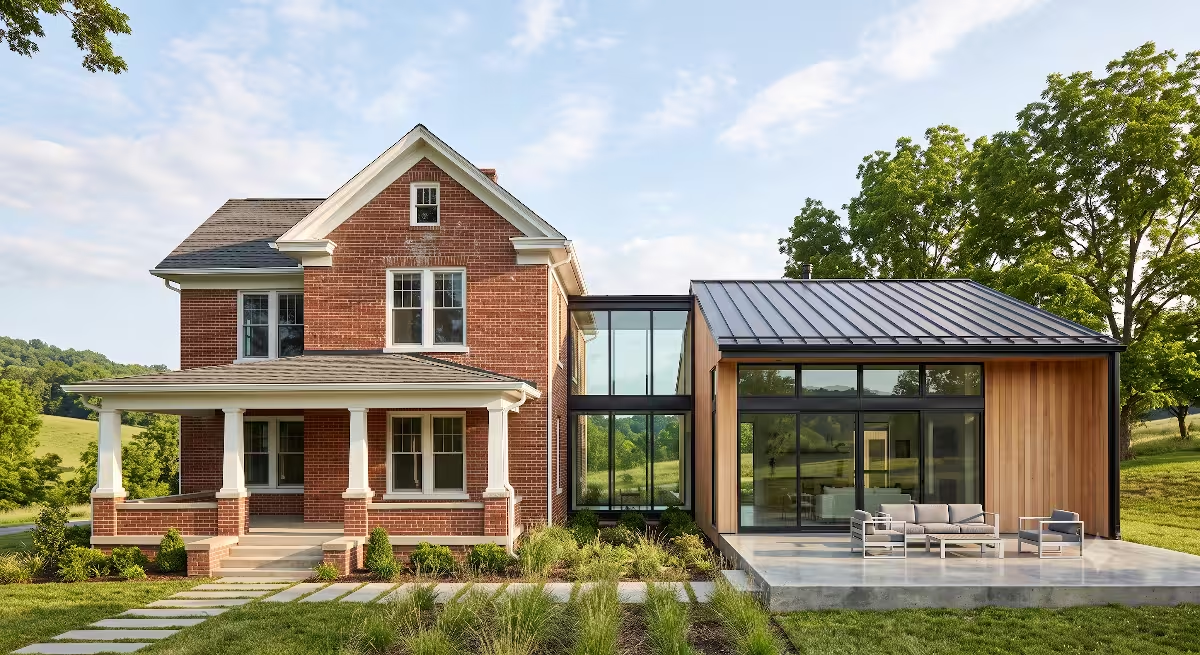
Think of it this way. An ultra-modern house built with a lot of glass and sharp, trendy angles might be the peak of luxury today. It might win design awards and be featured in magazines. But in 30 years, will it look dated and strange? Will its all-glass walls be energy efficient? Will its open-concept “party” layout work for a family with small children or an elderly grandparent needing privacy? If the design is too specific to one moment in time, it will fail the legacy test.
A trendy home is built for the now. A legacy home is built for always. The goal of a legacy home is to remain beautiful, functional, and relevant for decades. This is the critical difference in mindset. Building a legacy home means you are the first steward of a property, but you are not the last. This philosophy changes every decision you make, from the foundation to the doorknobs.
The 5 Pillars of a True Legacy Home
If a legacy home is more than just luxury, what is it? Generally, a true legacy home stands on five key pillars. If any of these pillars are missing, the home’s ability to last for generations is at risk.
Pillar 1: Timeless Architecture and Design
The first pillar is the architecture itself. The design of a legacy home must transcend fleeting trends. It must look and feel as appropriate and beautiful in 50 years as it does the day you move in.
Trends are the enemy of a legacy home. Think about the avocado green appliances of the 1970s, the heavy, dark Tuscan kitchens of the early 2000s, or the “all-white-everything” trend of the 2010s. They were popular, and then they became very dated, very fast. A legacy home avoids this.
How? By focusing on classic, enduring styles. These are designs that have already proven they can last for centuries.
- A well-proportioned Georgian home.
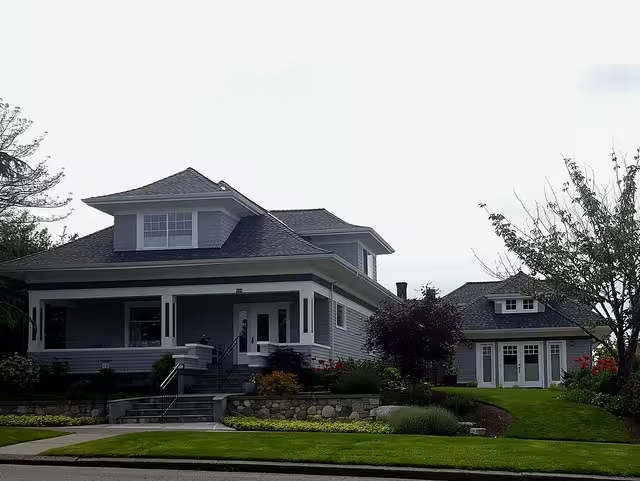
- An honest and sturdy Craftsman bungalow.
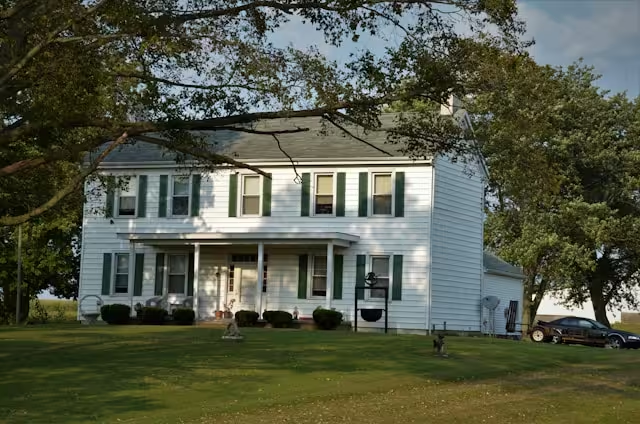
- A simple, elegant Colonial or Farmhouse.
- A timeless Contemporary design that focuses on clean lines, natural materials, and connection to the land, rather than on a “gimmick” or the shape of the month.
The proportions are correct. The rooflines are classic. The materials are natural and honest.
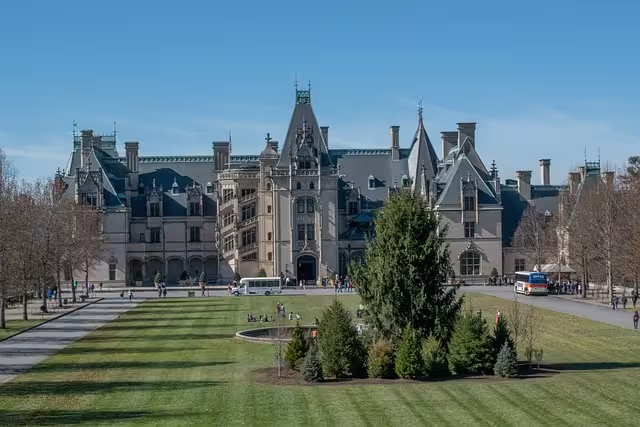
The Biltmore Estate in Asheville is perhaps the best American example of a legacy home. When George Washington Vanderbilt II built it in the 1890s, he was not building it for a quick resale. He was building it for posterity, for the future. He used classic French chateau architecture and the most durable materials. Today, over 125 years later, it remains a masterpiece of design. It does not look dated; it looks permanent.
When you design your legacy home, you are not asking your architect, “What is the most popular trend right now?” You are asking, “Will this design look graceful in 2075?” This means focusing on balance, natural light, good proportions, and a simple elegance. This focus on timeless design is the first and most visible quality of a true legacy home. It is an investment in a design that will not need to be “fixed” or “updated” by the next generation. This is a core part of what makes a legacy home a legacy.
Pillar 2: Uncompromising Quality and Craftsmanship
This pillar is non-negotiable. A legacy home is built to last. I mean that in the most literal, physical sense.
It is not built to the minimum standard allowed by the building code. The code is just the legal minimum to make a house “safe.” A legacy home is built to the highest possible standard of durability.
We call this “building good bones.” The parts of the house you do not see are often the most important parts of a legacy home.
- The Foundation: We over-engineer it. We use more rebar, thicker concrete, and superior water-proofing. A legacy home does not have foundation “issues.”
- The Framing: We might use 2×6 framing instead of 2×4 for exterior walls. This allows for more insulation, creates a quieter and more solid home, and provides a stronger structure.
- The Mechanicals: The plumbing, electrical, and HVAC (heating and air) systems are designed for longevity, but also for serviceability. Can a plumber in 50 years easily access the pipes? Can an electrician update a panel without tearing open walls? In a legacy home, the answer is yes.
After the bones are right, we focus on the materials. A legacy home uses materials that age gracefully. Many materials actually get better with age. We call this a “patina.”
- Roofing: An asphalt shingle roof lasts 20-25 years. A legacy home uses a roof that lasts 100 years. This means natural slate, clay tiles, or a high-quality standing-seam metal roof.
- Exteriors: Instead of vinyl siding, a legacy home uses real natural stone (like the Tennessee fieldstone we find in our region), solid brick, or thick, high-quality wood siding.
- Flooring: Instead of thin, click-together flooring, a legacy home uses solid hardwood floors that can be sanded and refinished many times. Or it uses natural stone tile.
- Doors and Windows: The windows are high-quality, with wood or aluminum-clad exteriors. The doors are solid-core wood. You can feel the difference. When you close a solid-core door in a legacy home, it thuds. It feels permanent.
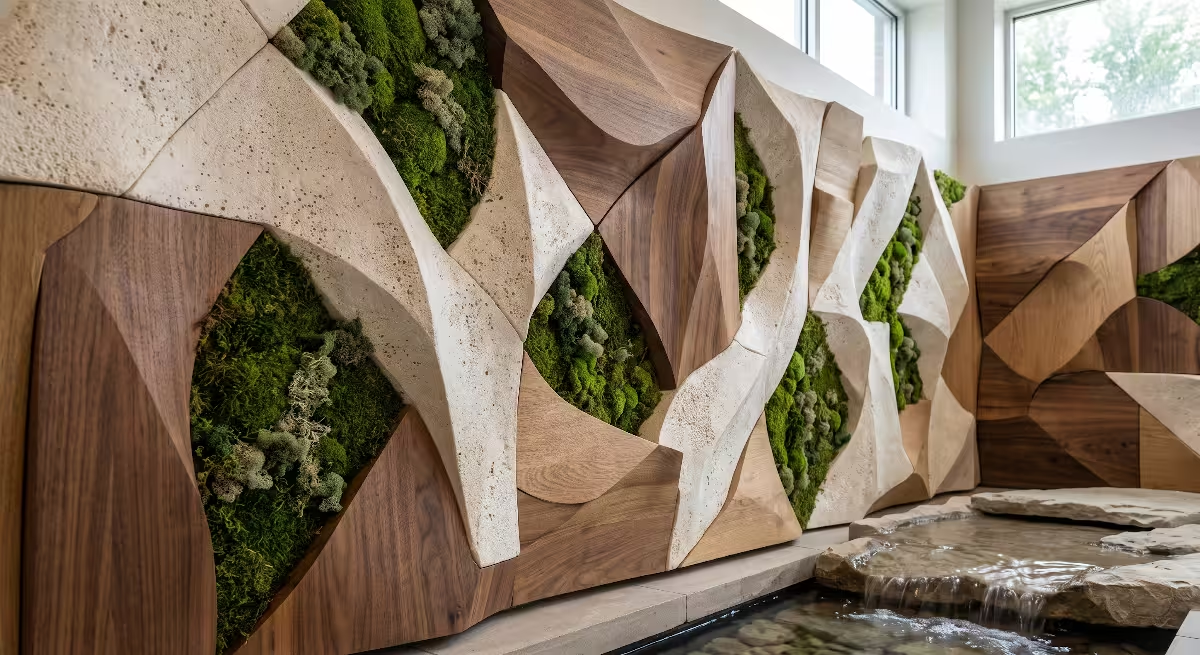
This pillar is about craftsmanship. It is about hiring the artisan who takes twice as long to build your custom cabinets because they are using joinery that will not fail. A legacy home is meant to be maintained, not remodeled. This commitment to physical quality is what separates a standard house from a genuine legacy home. It is a statement of permanence.
Pillar 3: A Deep Connection to the Land
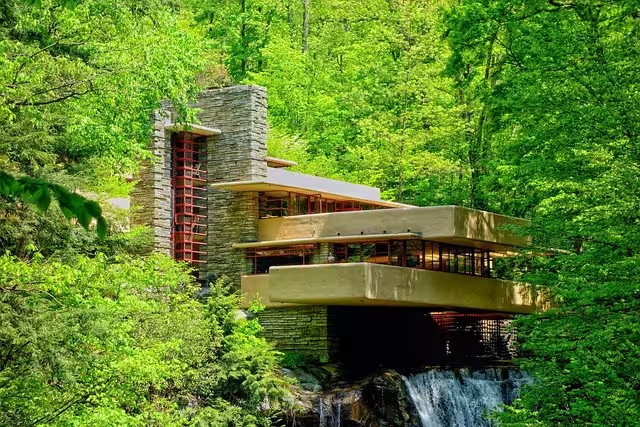
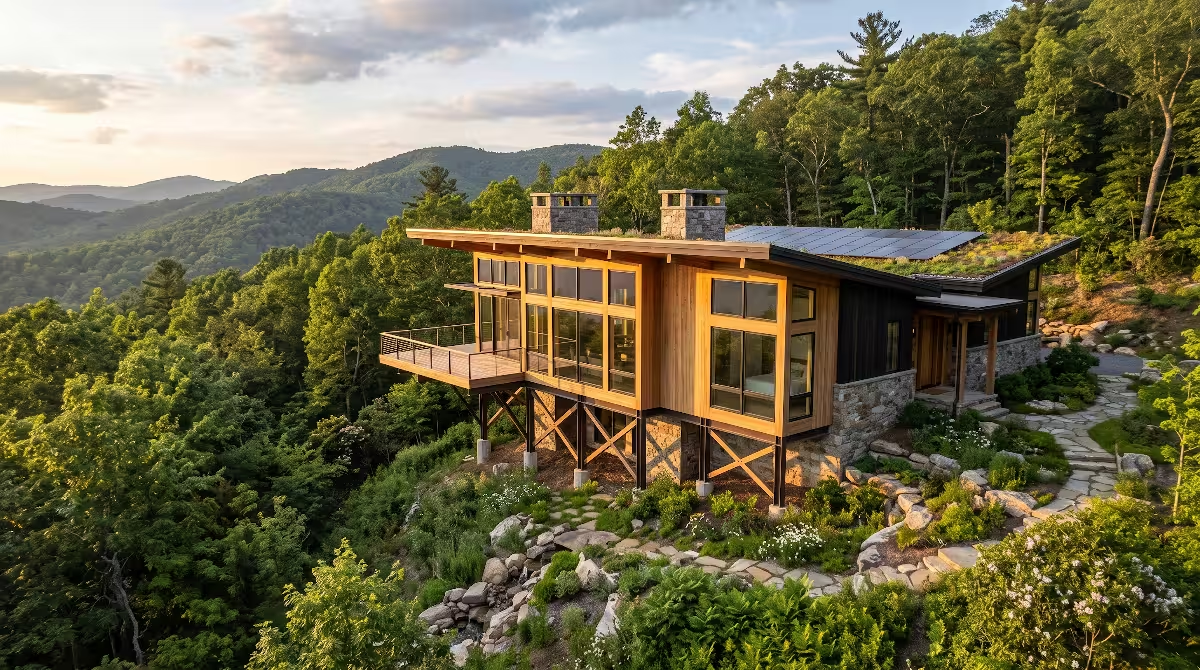
A legacy home is not just a building dropped onto a random piece of dirt. The property itself, the land, is just as important as the structure. The third pillar is this deep, permanent connection between the two. The home should feel like it belongs on that land.
This starts with “siting” the house. Siting is the technical term for deciding exactly where on a property the house should be placed. For a standard home, a builder might just flatten a spot in the middle. For a legacy home, this is a process that can take weeks.
We walk the land at different times of day.
- Where does the sun rise? That is where we should put the kitchen and breakfast nook.
- Where does the hot afternoon sun set? We should limit windows on that side or protect them with deep porches.
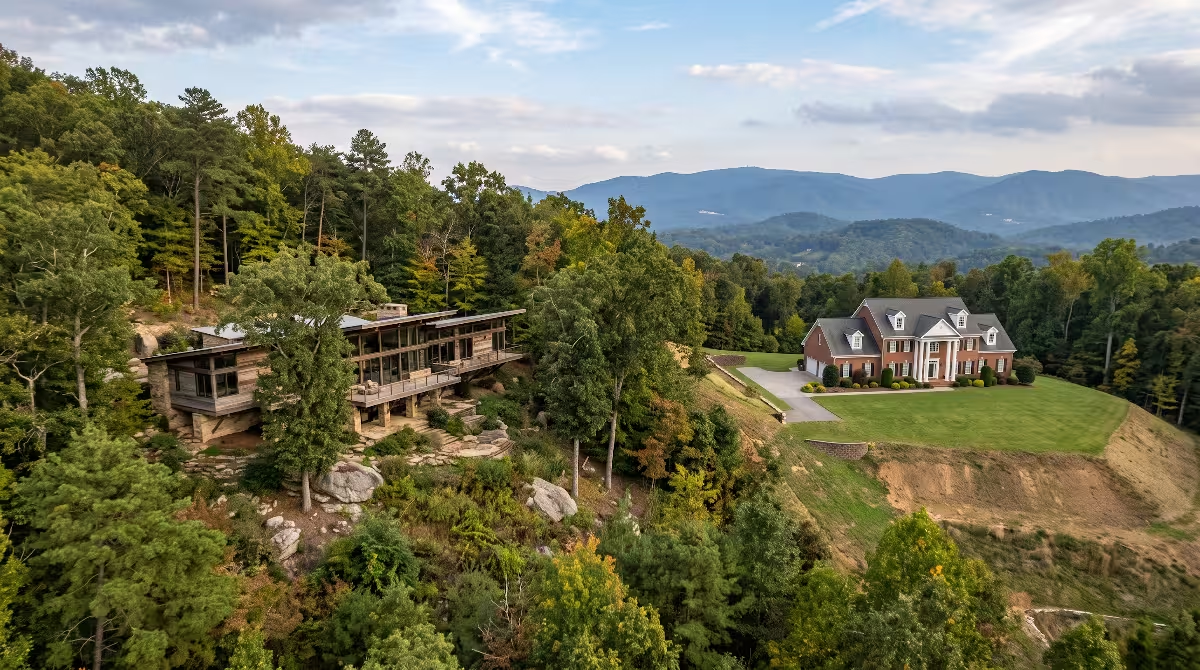
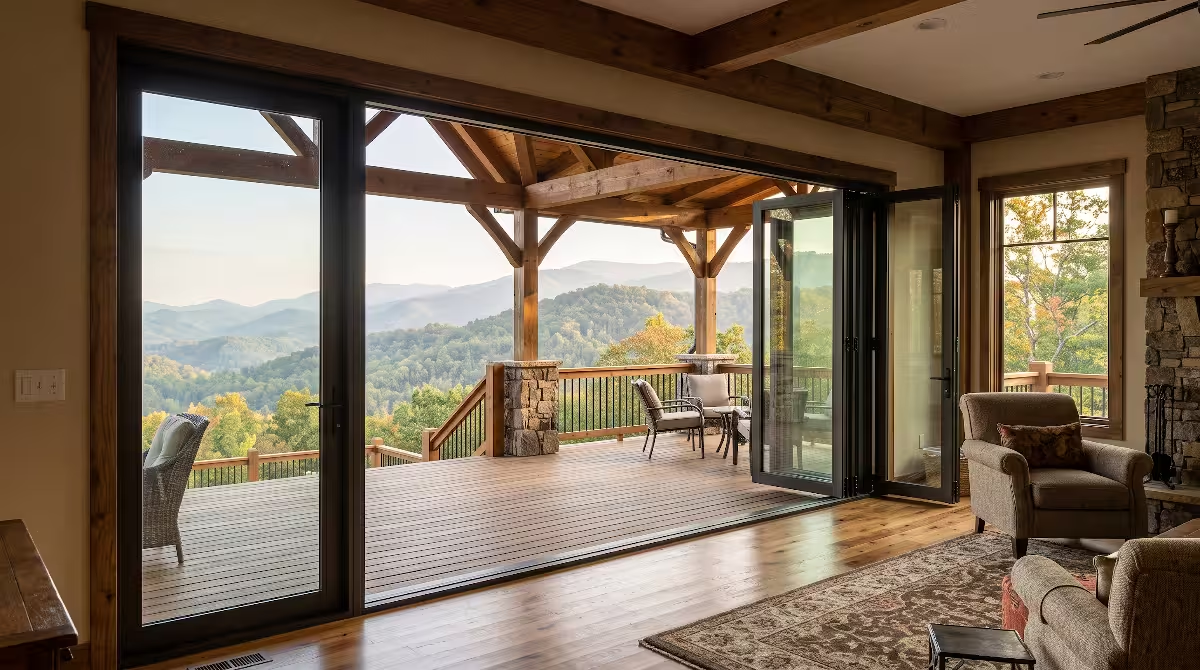
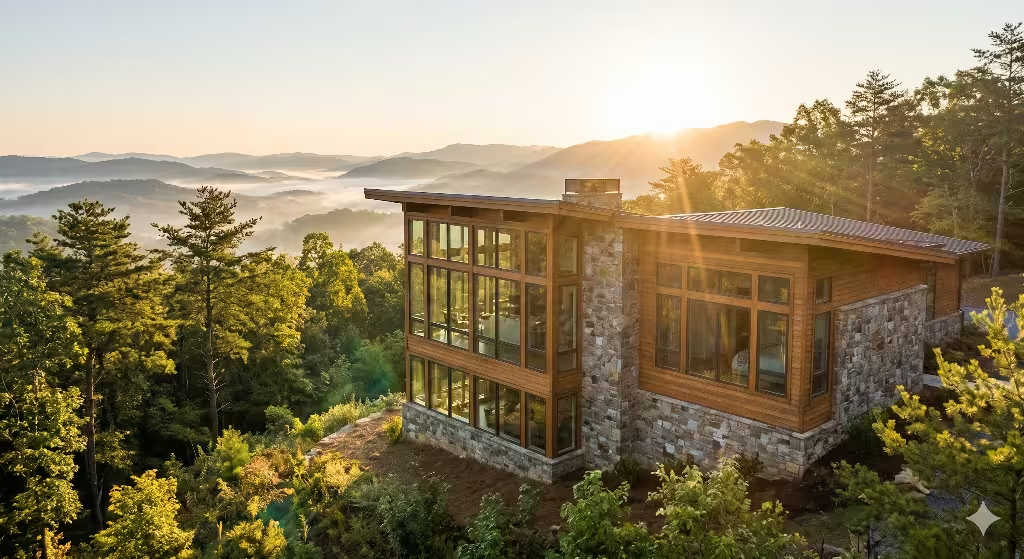
- What are the best views? We angle the house to capture that perfect view of the Appalachian mountains.
- How can we save that 200-year-old oak tree? We design the driveway and foundation around it, making it a feature.
A legacy home is a place for family. That means the outdoor spaces are just as critical as the indoor ones. A legacy home is designed to pull the family outside. We design large, deep porches for sitting. We build stone patios for family dinners. We create lawns for children to play on.
The land provides a sense of place. It provides privacy. It creates a private, protected world for the family. This is why many people who want to build a legacy home look for acreage. They are not just buying a half-acre lot in a subdivision. They are looking for land that can become a “family compound.” The land itself becomes part of the inheritance.
The house and the land should work together in harmony. The land is the setting, and the house is the jewel. One without the other is incomplete. This connection to a specific place is what makes a legacy home feel so rooted and special.
Pillar 4: Adaptive, Multi-Generational Function
This is perhaps the most practical pillar. The floor plan of a legacy home must be flexible. It must be able to adapt as the family evolves over 50, 75, or 100 years.
A house built for a young couple with babies is very different from a house needed for a family with teenagers. That is different from a house for “empty nesters” who host visiting grandchildren. And that is different from a house where an elderly parent needs to move in.
A true legacy home must be ableto work for all of these life stages.
Many “custom homes” are actually built too custom. They are designed for one specific family at one specific moment. A legacy home is different. It is designed for time. Here are the practical ways we achieve this:
- Dual Primary Suites: This is one of the most common features I build into a modern legacy home. There is a full primary suite on the main level. This is for “aging in place.” The owners can live entirely on one floor as they get older, without needing to climb stairs. Then, there is a second primary suite (or a large, private guest suite) upstairs. This can be for an adult child who moves back home, or for a visiting family.
- “Flex Rooms”: We design rooms that do not have a single, fixed purpose. A room near the kitchen might be a home office today. In five years, it could be a nursery. In 30 years, it could be a small, quiet bedroom for a live-in caretaker. We call these “flex rooms” or “adaptable spaces.” They are designed to change with the family’s needs.
- Accessory Dwelling Units (ADUs): This is a powerful tool for a legacy home. An ADU is a small, separate living space on the property.17 It could be a “casita,” a guest wing, or an apartment over the garage. It has its own entrance, a small kitchen, and its own bathroom. This gives total independence to an aging parent or a young adult child, while keeping the family connected.
- Subtle Accessibility (ADA): We build in accessibility features from day one, but we make them invisible. We make all doorways 36 inches wide, not the standard 30. We build at least one shower with a “zero-entry,” meaning there is no curb to step over. We add solid wood blocking inside the bathroom walls, so grab bars can be easily and securely added 40 years from now.
This kind of adaptive design makes the legacy home a “forever home” in the truest sense. The family never has to leave because the home can change with them. This function is what keeps a legacy home from becoming obsolete.
Pillar 5: The Financial and Legal Framework
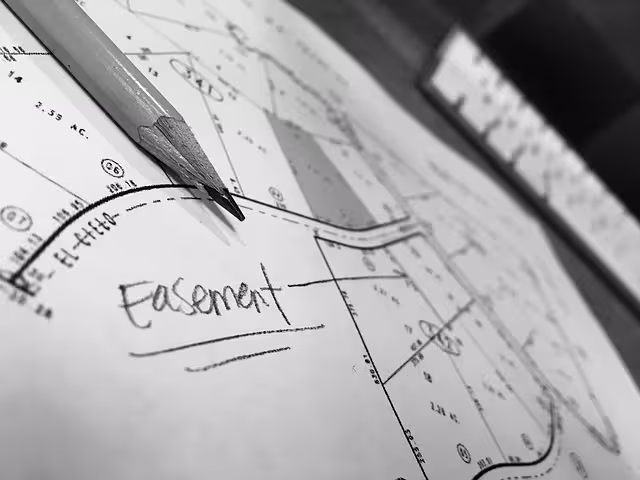
This is the final pillar, and it is the one most people forget. Without this, everything else fails.
A house is just a building. It only becomes a “legacy home” when it is legally and financially protected as a legacy.
You can build the most beautiful, durable, and timeless home in the world. But if you die, and your will simply says, “I leave my estate to my three children equally,” you have not created a legacy home. You have created a problem.
What if one child wants to live in the home, but the other two want their share of the money? The family will be forced to sell the home to pay the other two heirs. The legacy home is sold, and the legacy is broken, all within one generation.
A true legacy home must be supported by a strong legal and financial plan. This is where I insist my clients work with a qualified estate planning attorney. The most common tool we use is a Trust.
A trust is like a legal “box” that you put the house into. You write the rules for that box.
- You can create a “Family Trust” that owns the legacy home.
- You can write the rules. For example, the rules can state that the home cannot be sold for 100 years, or as long as any descendant wants to use it.
- You can set up a maintenance fund (an investment account) inside the trust. The money in this fund is used to pay for the property taxes, insurance, and upkeep of the legacy home, so it is not a financial burden on your heirs.
- You can create a schedule for its use. For example, each branch of the family gets to use the legacy home for certain weeks of the year.
A trust protects the legacy home from creditors, from lawsuits, and from family disagreements. It ensures that your intent—the intent to have this home serve your family for generations—is honored long after you are gone.
Building the house is the first half. Building the legal structure is the second. Without this pillar, you have not built a legacy home. You have just built a very nice house that your children will probably sell.
Building Your Legacy in the Tri-Cities
All of these principles are universal, but they apply perfectly to families here in the Tri-Cities. Those of us in Johnson City, Kingsport, and Bristol have a unique and special opportunity to build a true legacy home.
First, we have the land. Unlike in many crowded parts of the country, we still have the ability to find beautiful land. We can find acreage with rolling hills and breathtaking views of the Appalachian mountains. This is the perfect setting to build a legacy home where you can create that deep connection (Pillar 3) to a specific, beautiful place.
Second, we have the materials. We can source local, durable materials that belong here. I love building a legacy home with Tennessee fieldstone, either for a fireplace that anchors the great room or for the home’s exterior. It is timeless, it is durable (Pillar 2), and it looks like it grew from the land it sits on.
Third, we have the craftsmanship. Our region has a long, proud tradition of building and craftsmanship. We have local artisans, carpenters, and stone masons who understand what quality means. They are not just trying to build fast; they are trying to build right. This is essential for a legacy home.
Finally, you need local expertise. When you plan your legacy home, you need to navigate local development trends and legal aspects. What are the specific zoning rules for an ADU (a guest house) in Sullivan County? What are the soil conditions in Washington County? Working with a building expert who knows this area is key to a smooth process. My passion is helping families in this region bring their vision for a legacy home to life.
A Legacy is a Decision, Not an Accident
To summarize, a legacy home is the result of intention. It is a series of careful, precise decisions. It is never an accident.
A legacy home is not defined by its price tag or its trendy features. It is defined by its five pillars:
- A Timeless Design that will not go out of style.
- An Uncompromising Quality of construction that will last a century.
- A Deep Connection to the land it sits on.
- An Adaptive Function that can serve a family for all stages of life.
- A Strong Legal Framework that protects the home for the future.
It is about building something that will outlast you. It is about giving your family a “home base”—a physical and emotional anchor—for generations to come. A legacy home is the backdrop for your family’s future history. It is the story that you begin, knowing that your children and grandchildren will be the ones to continue it.
When you start to think about your next home, ask yourself one question: Am I building this house just for today, or am I building it for my grandchildren?