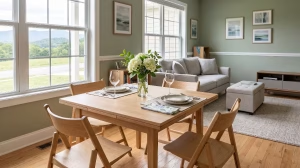
As little as ten years ago if you were renting a house in Johnson City, you either rented it for a year or you didn’t rent it at all. Things were simple, but they were also a bit slow. Fast forward to 2026, and our corner of East Tennessee has changed quite a bit. With the Hard Rock Casino in Bristol now a staple of our local economy and the medical hubs of Ballad Health constantly bringing in new professionals, the old ways of landlording have evolved.
This has caused our neighborhoods to grow in ways we never imagined. We are now in a time where a property can be a vacation spot one month and a home for a traveling nurse the next. This is what we call the world of hybrid rentals. Managing these properties is not just about collecting a check anymore. It is about precision, fostering a good experience, and understanding the local trends that drive people to the Tri-Cities.
In this guide, we want to take you through the details of managing short-term vs. long-term hybrid rentals. We will look at why this model works so well in 2026. We will also talk about the technical side of keeping a house in top shape when different types of people are coming and going. Our goal is to help you see your property not just as a building, but as a flexible asset that can handle whatever the market throws at it.
The 2026 Landscape: Why the Tri-Cities is a Test Lab
In 2026, the Tri-Cities area is a very special place for real estate. We have a mix of three different cities that each bring something unique to the table. Kingsport has the steady jobs from Eastman. Bristol has the excitement of the casino and the races. Johnson City has the energy of the university and the medical center. This mix creates a perfect environment for hybrid rentals because the demand never really stops. It just changes shape.
During the summer, we see a huge influx of people coming for the festivals and the outdoors. In the winter, the demand might shift toward contract workers who need a place for three or four months. Because our local economy is so diverse, we do not have to rely on just one type of guest. Using hybrid rentals allows you to capture the high nightly rates of a tourist in July and the steady, reliable income of a professional in January.
The market has stabilized after the wild years of the early 2020s. We are no longer seeing the frantic bidding wars, but we are seeing a very smart, calculated growth. People who own property here are learning that being flexible is the best way to protect their investment. That is why hybrid rentals have become the gold standard for owners who want to stay ahead of the curve.
Defining the Hybrid Model: Beyond Airbnb vs. Standard Leases
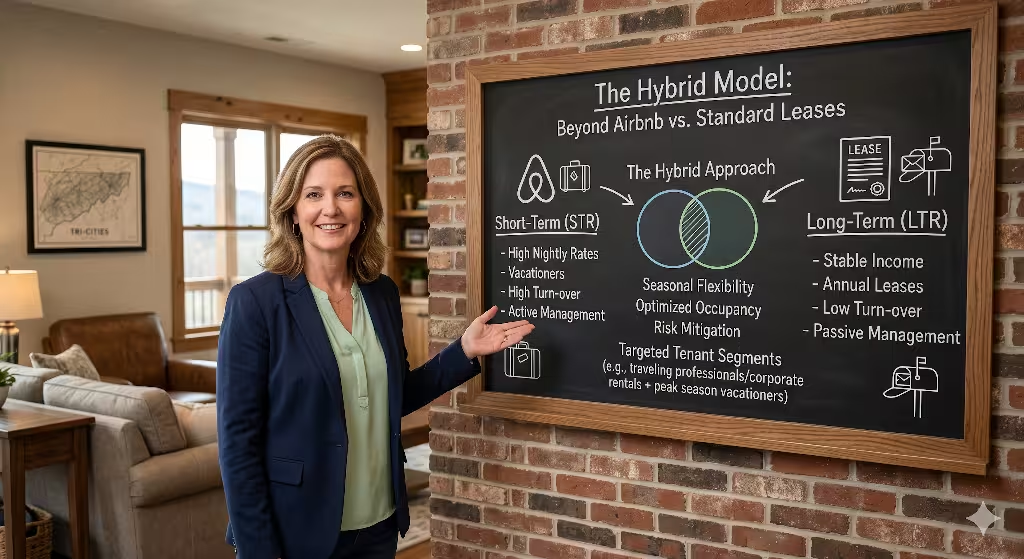
When we talk about hybrid rentals, we are talking about a property that does not stay in one lane. A traditional rental is a one-year lease. A short-term rental is usually anything under 30 days, like what you see on travel websites. Hybrid rentals sit right in the middle. They can do both, and they can also handle the medium-term stays that last between one and six months.
Think of it like a Swiss Army knife for your real estate. You might have a guest stay for three nights during a race weekend in Bristol. Then, you might have the house empty for a few days before a traveling physical therapist moves in for twelve weeks. After they leave, you might decide to put it back on the short-term market for the fall colors. This flexibility is the core of hybrid rentals.
This model requires a change in how you think about your “tenants.” In a hybrid setup, everyone is a guest, but some guests stay longer than others. You have to be ready to switch your mindset from hospitality (like a hotel) to property management (like a landlord) very quickly. It sounds like a lot of work, but with the right systems, hybrid rentals can be much more profitable than choosing just one way to rent.
The Engineering Perspective: A Multi-Functional Asset
We like to look at a house as a system of parts. Every part has a job to do. When you run a property as part of your hybrid rentals portfolio, you are asking those parts to work harder. The floors, the HVAC system, and even the paint on the walls need to be chosen with thought.
In a traditional long-term rental, you might not see the inside of the house for a year. With hybrid rentals, you or your cleaning team are inside the house much more often. This is actually a good thing. It means you can catch a small leak under the sink before it becomes a five-thousand-dollar floor replacement. You are constantly inspecting the “machine” that is your home.
We also have to think about the “users” of the home. A family staying for a year will treat the space differently than a group of friends visiting for a weekend. By designing your home to handle both, you make it more resilient. This means using durable materials that still look high-end. It means having a layout that feels cozy for one person but can also accommodate a small group. Hybrid rentals thrive when the home is designed to be versatile from the ground up.
Strategic Analysis: Why Choose a Hybrid Model?
The biggest reason people choose hybrid rentals is the money, but it is also about control. In 2026, we have seen that the economy can be unpredictable. If you are locked into a long-term lease at a low rate, and inflation goes up, you lose out. If you only do short-term rentals and a new law passes that restricts them, you are in trouble. Hybrid rentals give you a way to pivot.
Revenue optimization is the technical term for making the most money possible. By using hybrid rentals, you can charge a premium for those short, high-demand stays. Then, when the “slow season” hits, you can lower the price slightly to attract a medium-term tenant. This keeps your occupancy high all year long. You aren’t leaving the house empty in February just because nobody wants to go on vacation in the cold.
There is also the risk factor. Being a landlord can be tough if you get a tenant who doesn’t pay. With hybrid rentals, the shorter stay lengths and different types of contracts can actually reduce your risk. You have more “bites at the apple.” If one guest is a problem, they are gone in a few days or weeks, rather than a year. This keeps your stress levels lower and your cash flow more consistent.
Revenue Optimization: High Yields and Stable Income
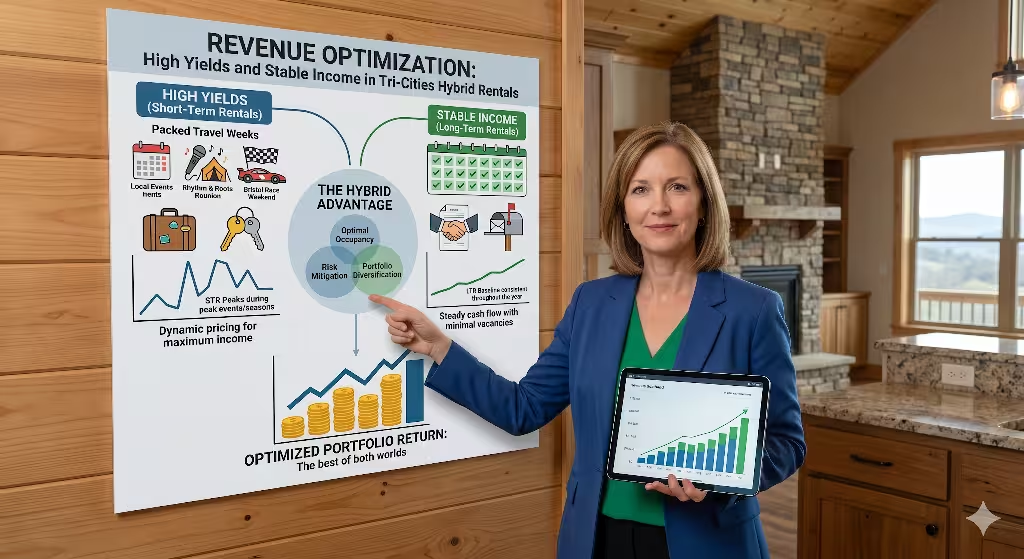
Let’s look at the numbers. In the Tri-Cities, a standard three-bedroom house might rent for $1,800 a month on a long-term lease. That is steady income, but it is capped. If you put that same house into the pool of hybrid rentals, your income potential changes. During a peak weekend in Bristol, you might get $400 a night. That is $1,200 in just three days.
Of course, you can’t get $400 a night every night of the year. That is where the “hybrid” part comes in. By filling the gaps with medium-term stays, you can average out to a much higher monthly total than a standard lease. I have seen owners of hybrid rentals make 30% to 50% more than their neighbors who only do long-term renting.
The key is to watch the calendar. You need to know when the big events are happening in East Tennessee. You need to know when the local hospitals are hiring new staff. When you align your hybrid rentals strategy with the local heartbeat of the Tri-Cities, you stop guessing and start earning. It takes more planning, but the financial reward is worth the extra effort.
Risk Mitigation: Protecting Against Market Shifts
In the world of building and development, we always talk about “hedging our bets.” This just means making sure we have a backup plan. Hybrid rentals are the ultimate backup plan. If the tourism market in Bristol takes a dip because of a cool summer, you can lean more into the long-term side of your hybrid rentals.
We also have to think about regulations. Local governments sometimes change the rules for short-term stays. If you have built your whole business on nightly rentals, a new law could ruin you. But if you are already doing hybrid rentals, you can easily shift to stays that are 31 days or longer. These are usually governed by different rules, making your business much more “future-proof.”
There is also the “wear and tear” risk. People often think that short-term guests ruin houses. Because hybrid rentals are cleaned and inspected so often, they stay in better shape. You don’t have a tenant hiding a pet that isn’t allowed for twelve months. You see the property, you fix the issues, and you keep the value of your asset high.
The Operational Blueprint: How to Manage the Switch-Over
Managing hybrid rentals is all about the “turnover.” This is the time between one guest leaving and the next one arriving. For a standard rental, this happens once a year. For hybrid rentals, it might happen twenty times a year. You need a blueprint to make this work without losing your mind.
First, you need a “Turnover Protocol.” This is a checklist that your cleaning crew follows every single time. It should include everything from checking the light bulbs to testing the smoke detectors. Since you are running hybrid rentals, this list also needs to include “inventory checks.” You need to make sure the kitchen is still fully stocked for the next guest.
Second, you need to think about the transition between a short-term guest and a medium-term tenant. A traveling nurse might need more closet space than a weekend tourist. I recommend having a “modular” approach to your storage. Maybe you have a locked closet where you keep extra supplies for short-term guests, which you can open up or clear out when someone is staying for three months. Successful management of hybrid rentals depends on these small, precise details.
Tech Stack for 2026: Tools of the Trade
You cannot manage hybrid rentals with just a pencil and paper in 2026. The technology has become too good to ignore. You need a Property Management System (PMS) that can talk to all the different booking sites at once. This prevents “double booking,” which is a nightmare for anyone running hybrid rentals.
Dynamic pricing is another tool you must use. This is software that looks at the local demand in the Tri-Cities and changes your rates automatically. If a big concert is announced at the casino, your prices for those dates will go up before you even hear the news. This is how you maximize the “high yield” part of your hybrid rentals strategy.
Don’t forget about smart home tech. For hybrid rentals, I always suggest smart locks, noise monitors, and smart thermostats. Smart locks allow you to give each guest a unique code that only works during their stay. Noise monitors can alert you if a party is starting without invading anyone’s privacy. And smart thermostats can save you hundreds of dollars on power bills when the house is empty between guests. Precision in tech leads to precision in profits.
Maintenance Schedules: Preventative Precision
When it comes to maintenance, we can tell you that “a stitch in time saves nine.” This is especially true for hybrid rentals. You cannot afford for the air conditioning to go out in the middle of a July weekend. Your maintenance schedule needs to be more aggressive than a normal house.
For hybrid rentals, we recommend a monthly “comprehensive inspection.” This isn’t just cleaning. It is checking the filters, looking under the sinks for moisture, and checking the exterior for any pests. Because different people are using the home in different ways, parts will wear out faster. The door hinges might need oiling sooner, or the carpet might need a professional clean every six months instead of every two years.
We also suggest having a “proactive” replacement plan. Don’t wait for the water heater to leak. If it is ten years old and you are running successful hybrid rentals, replace it now. The cost of a replacement is much lower than the cost of a cancelled 30-day booking and a flooded basement. In the Tri-Cities, our weather can be tough on houses, so stay ahead of the maintenance curve to keep your hybrid rentals running smoothly.
Frequently Asked Questions about Hybrid Rentals
There a lot of questions from folks in Johnson City and Kingsport about how this all works. One of the most common is: “Is a hybrid rental more profitable than a long-term rental?” The answer is almost always yes, but only if you factor in your time. Hybrid rentals generate more gross income, but they also have more expenses like utilities, cleaning, and platform fees. You have to be precise with your math.
Another common question is: “What are the risks of a hybrid rental strategy?” The main risk is vacancy. If you don’t market the property well, you might have weeks where no one is staying there. That is why having a strong presence on multiple platforms is key for hybrid rentals. You also have to be careful about “tenant rights” once a guest stays past 30 days, which we will discuss in the legal section.
Lastly, people ask: “How do I transition my long-term rental into a hybrid model?” My advice is to start slow. Finish the house with nice, durable furniture. Get high-quality photos. Start by offering medium-term stays for professionals. Once you get the hang of the faster pace, you can open up your hybrid rentals to short-term weekend guests. It is an evolution, not a race.
Is it Harder to Manage Short-Term or Long-Term?
This is a bit of a trick question. Long-term rentals are “passive” in theory, but they can be very stressful if the tenant stops paying or damages the home. Short-term rentals are very active. You are basically running a tiny hotel. Hybrid rentals fall somewhere in the middle.
With hybrid rentals, you have periods of high activity followed by months of quiet. When you have a three-month tenant, it feels just like a long-term rental. When you have weekend guests, it feels like a hospitality business. The “hardness” comes from the switching. You have to be organized enough to handle both styles of management.
If you are a “hands-off” person, you might find hybrid rentals to be too much work. In that case, we recommend hiring a local property manager who specializes in this exact model. There are several great firms in the Tri-Cities that understand the hybrid rentals market. They take a percentage of the income, but they also handle the 2:00 AM phone calls about the Wi-Fi. For many owners, that is a fair trade.
Legalities: Navigating TN Laws and Tri-Cities Zoning
Tennessee is a very friendly state for property owners, but we still have rules. In 2026, the state has passed laws that protect your right to do short-term and hybrid rentals. However, you still have to follow local zoning. What works in a commercial zone in Bristol might not be allowed in a quiet residential street in Johnson City.
The TN Short-Term Rental Unit Act is the big one. It basically says that if you were already renting your property before a new local ban was passed, you are often “grandfathered” in. This is a huge protection for owners of hybrid rentals. But don’t just take our word for it. Always check with the local planning office. We have spent a lot of time in those offices in Kingsport and Johnson City, and they are usually very helpful if you ask politely.
You also need to understand the “30-Day Rule.” In Tennessee, once a person stays in a place for more than 30 days, they can be considered a legal tenant. This means if they refuse to leave, you can’t just change the locks. You have to go through the formal eviction process. This is something every owner of hybrid rentals needs to be aware of when booking those medium-term stays.
Local Contact Rules: HB 1814 and Beyond
A few years ago, Tennessee passed a law called HB 1814. It is often called the Landlord Transparency Act. It requires you to provide a local contact person for your rental. If you live in Johnson City and your rental is in Bristol, you are fine. But if you are an out-of-state owner, you must appoint someone local who can respond to emergencies.
This is very important for hybrid rentals. If a neighbor has a complaint about noise or trash, they need a number to call. If the city can’t reach you, the fines can add up fast. Being a “good neighbor” is the best way to keep your hybrid rentals business running. Make sure your contact info is on file with the city and given to the neighbors.
Transparency also extends to your guests. You must have clear house rules. For hybrid rentals, these rules should be posted inside the house. Tell them where to park, how to handle the trash, and what the quiet hours are. In the Tri-Cities, we value our community peace. By being professional and transparent, you ensure that your hybrid rentals are seen as an asset to the neighborhood, not a nuisance.
Designing for Versatility
When we talk about a versatility in home building and design, we are talking about focusing on the details that make a home actually livable. For hybrid rentals, this means thinking about storage, safety, and comfort. A house that looks pretty in a photo but has no place to put a suitcase is a failure in the world of hybrid rentals.
Think about the kitchen. A weekend guest just needs a coffee maker and some wine glasses. A three-month nurse needs actual pots, pans, and maybe a slow cooker. In my hybrid rentals, I make sure the kitchen is fully equipped for a long stay. It doesn’t cost much more, but it makes the home much more attractive to those high-paying medium-term tenants.
Safety is also a big part of the design. Good exterior lighting is a must. We like to use motion-sensor lights around the entryways. It makes guests feel safe when they arrive late at night. For hybrid rentals, this “feeling of home” is what gets you five-star reviews. When people feel like
the owner has thought of everything, they come back. And repeat guests are the “secret sauce” of successful hybrid rentals.
Interiors with Integrity: Choosing the Right Materials
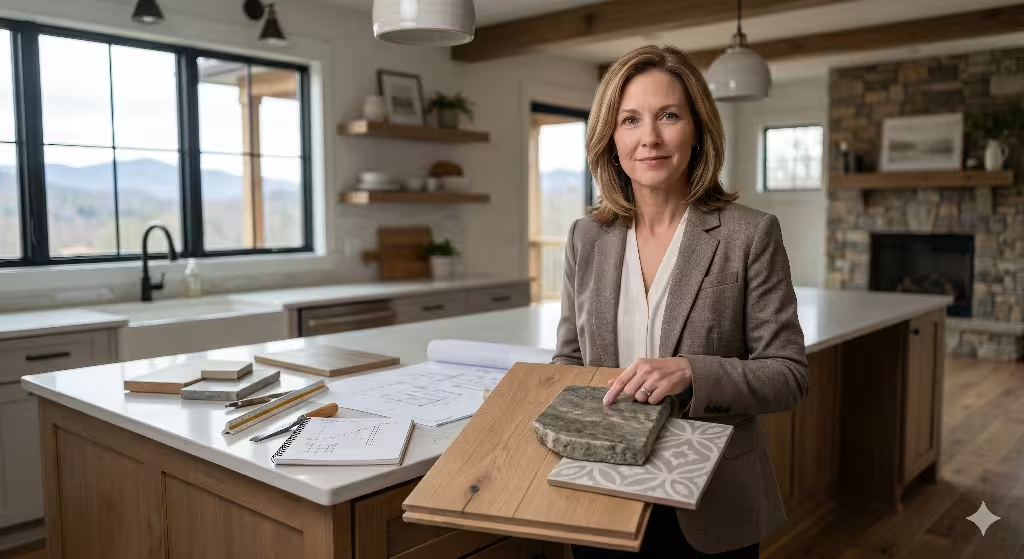
For hybrid rentals, you need “integrity.” This means materials that don’t just look good today, but will look good after fifty different people have used them. Avoid cheap “builder-grade” carpet. It will look terrible in six months. Instead, go with luxury vinyl plank (LVP) flooring. It looks like wood, but it is waterproof and almost impossible to scratch.
The same goes for furniture. Don’t buy the cheapest stuff you can find online. It will break, and you will have to replace it. Buy solid wood pieces where possible. For sofas and chairs in hybrid rentals, choose “performance fabrics” that are stain-resistant. You want to be able to wipe off a coffee spill without calling a professional cleaner every time.
Finally, think about the “vibe.” The Tri-Cities has a beautiful, natural aesthetic. Use colors that reflect our mountains and rivers. Soft greens, blues, and warm wood tones work well. This makes your hybrid rentals feel like they belong in East Tennessee. It creates a connection with the guest. In a world of sterile hotel rooms, a home that feels like a “home” will always win in the hybrid rentals market.
The Storage Solution: Owner’s Closets and More
One of the biggest challenges of hybrid rentals is what to do with the “stuff.” You need extra sheets, cleaning supplies, and maybe some of your own personal items. The best solution is a dedicated “Owner’s Closet” with a sturdy deadbolt. This is a must-have for any property in the hybrid rentals category.
We also suggest creating “guest storage” that is flexible. If someone is staying for a weekend, they just need a place for a bag. If they stay for a month, they need empty drawers and closet rods. I often design hybrid rentals with “built-in” organization systems. This uses the space more efficiently and prevents guests from having to live out of a suitcase.
Don’t forget about the exterior. If your property has a garage or a shed, consider if that should be open to guests. For medium-term hybrid rentals, having a place to park a car or store a bike is a huge selling point. However, if you are doing short-term stays, you might want to keep the garage for your own storage or for the lawnmower. Think through these logistics before you list your hybrid rentals.
Financial Precision: Tax and Insurance Considerations
You can’t run a business without knowing your numbers. For hybrid rentals in the Tri-Cities, you have to be very careful with taxes. Tennessee has a 7% state sales tax on rentals of 180 days or less. On top of that, each city and county has its own “occupancy tax” or “hotel/motel tax.” This can add another 5% or more to the bill.
If you are doing hybrid rentals, you have to make sure you are collecting and paying these taxes correctly. Most booking platforms do this for you for short stays, but if you book a medium-term guest directly, you are responsible. Being precise with your bookkeeping is the only way to avoid a surprise bill from the Department of Revenue.
Insurance is the other big piece. A standard homeowner’s insurance policy will not cover you if a guest gets hurt. You need a specific “short-term rental” or “business use” policy. For hybrid rentals, you need to make sure this policy covers both short stays and longer leases. Talk to a local agent in the Tri-Cities who understands this niche. It might cost a little more, but it protects you from losing everything.
The Cost of Running Hybrid Rentals
It is important to be honest about the expenses. Hybrid rentals are more expensive to run than a traditional rental. You have to pay for the Wi-Fi, the water, the electricity, and the trash pickup. You also have the cost of the cleaning crew and the platform fees. In 2026, these costs have risen along with everything else.
We recommend setting aside at least 25% to 30% of your gross income for these expenses. If you are doing a lot of short-term stays, that number might even be 35%. When you are calculating the ROI of your hybrid rentals, use these higher numbers. It is better to be pleasantly surprised by a profit than to be shocked by a loss.
Precision also means having a “reserve fund.” I like to keep three months of expenses in a separate bank account just for the house. If the roof starts leaking or the hybrid rentals market has a slow month, you won’t be stressed about making the mortgage payment. This is the INTJ way—plan for the worst, so you can enjoy the best.
Building a Resilient Portfolio in the Tri-Cities
We have covered a lot of ground today. From the engineering of the home to the legalities of Tennessee law, managing hybrid rentals is a complex but rewarding task. As we look at the Tri-Cities in 2026, it is clear that the future belongs to those who can be flexible. The old “one size fits all” approach to rentals is fading away.
By choosing the path of hybrid rentals, you are positioning yourself to benefit from everything our region has to offer. You are helping the traveling nurse who is here to save lives. You are welcoming the family who is here to explore our mountains. And you are doing it all while building a strong, stable financial future for yourself. It takes competence and it takes integrity, but it is entirely possible.
If you treat your property with respect, stay precise with your management, and always look for ways to add value, your hybrid rentals will thrive. The Tri-Cities is a wonderful place to live, work, and invest. I am proud to be a part of this building community, and I hope this guide helps you find your own success in our ever-changing market.