If you live in Kingsport, Johnson City, or anywhere around the Tri-Cities of Tennessee, you know our land is rarely flat. We have rolling hills, steep ridges, and rocky terrain. Many folks around here say, “Don’t buy that lot, it is too steep.” They are scared of the foundation costs. They worry about water issues. They settle for a flat, boring piece of land because it seems safer.
However, others see a chance to build a home that is stronger, larger, and more valuable than a standard house on a slab. The secret is not to fight the hill. The secret is to work with it using the right walkout basement floor plans for a sloped lot.
A walkout basement changes the math on home building. It takes a challenge and turns it into an asset. Instead of a dark cellar used only for storing holiday decorations, you get a bright, open living space that walks right out into your backyard. You get extra bedrooms, a home theater, or a rental unit for a fraction of the cost of building an addition.
However, you have to build it right. Our Tennessee red clay and limestone bedrock do not forgive mistakes. You need a plan that respects the engineering realities of our region. In this article, I am going to walk you through everything you need to know. We will look at the soil, the design, the legal side, and the costs. By the end, you will see why I believe a walkout basement is the smartest investment you can make in our area.
Watch a Video of this Article
The Hidden Asset of the Tri-Cities Terrain
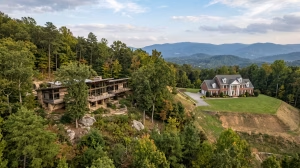
When you drive through areas like Boones Creek, Gray, or Colonial Heights, you see beautiful ridges. These spots offer some of the best views of the Appalachian Mountains. But to get those views, you usually have to deal with a slope. This is where the walkout basement shines.
A traditional basement is entirely underground. It has no windows, or maybe just tiny ones near the ceiling. It feels closed in. A walkout basement is different. Because the lot slopes down, the back wall of the basement is above ground. This allows for full sized windows and sliding glass doors. It brings in natural light. It makes the space feel just as welcoming as the main floor upstairs.
This design adds massive value to your home. In the real estate market, finished square footage above grade usually sells for a higher price than below grade space. While a walkout basement is technically “below grade” on the front side, the feel and function of the back side make it highly desirable. Appraisers and buyers in our area love them. They see it as bonus living space.
From a financial view, this is a huge win. Think about the cost to build. The foundation and roof are the two most expensive parts of a home’s shell. When you build a walkout basement, you are already paying for the foundation and the excavation. Finishing that space costs significantly less per square foot than building a second story or a wide footprint on a single level. You are essentially capturing space that would have been filled with dirt and turning it into a home.
Technical Engineering: The Foundation of Success
You cannot simply dig a hole and pour concrete in East Tennessee. You have to understand what is under your feet. If you ignore the science, your walkout basement will have problems.
Understanding Our Soil
The biggest enemy of any basement in our area is the soil. We have heavy, expansive red clay. Clay acts like a sponge. When it is dry, it shrinks and gets hard as a rock. When it gets wet, it swells up and expands. This expansion creates tremendous pressure.
We call this hydrostatic pressure. Imagine the dirt pushing against your basement walls with thousands of pounds of force. If you build a walkout basement floor plan for a sloped lot without accounting for this, your walls will bow. They will crack. Water will find a way inside.
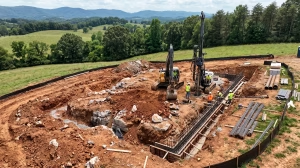
We also have to deal with limestone bedrock. In some parts of Johnson City and Kingsport, you might hit solid rock just a few feet down. This impacts how we dig the hole for your walkout basement. We often have to use a hoe ram, which is a giant jackhammer attached to an excavator, to chip away the rock. It adds cost, but it also gives you a incredibly stable base for your footing.
Structural Solutions for Walls
Because of the pressure from the hill, I almost always recommend poured concrete walls for a walkout basement rather than concrete blocks.
A concrete block wall is held together by mortar. It has joints every eight inches. Those joints are weak points. Under the lateral (sideways) pressure of a steep slope, block walls can buckle over time. Poured concrete is solid. It has steel rebar running through it. It acts as one single, strong unit. It resists the pressure of the earth much better.
For a walkout basement, the back wall is usually framed with wood because it is above ground, but the side walls are “stepped” down the hill. This requires precise forming. The concrete contractor has to step the foundation down to match the grade of the land. This is technical work, but it ensures your house sits firmly on the slope.
Waterproofing is Mandatory
Waterproofing is not an area where you can save money. In other words, do not be cheap. It is the most critical system in your walkout basement. You need to stop water before it ever touches your concrete.
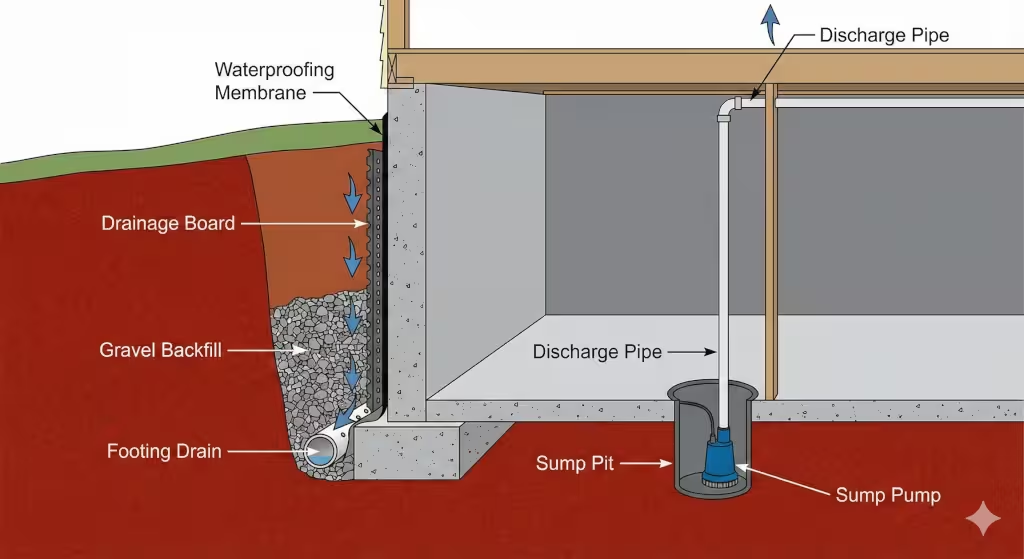
We use a system that involves a heavy duty membrane on the outside of the wall. Then, we install a drainage board. This looks like a dimpled plastic sheet. It creates an air gap so water can flow straight down to the footing drains.
At the bottom, we install a French drain system. This is a perforated pipe surrounded by gravel. The gravel acts as a filter. The water goes into the pipe and is carried away from the house.
If gravity allows, we pipe this water out to daylight down the hill. If the grade does not allow for gravity flow, we must use a sump pump.
Even with a walkout basement, water can accumulate under the slab. The Foundation Drain collects this water. It flows into the Sump Pump Tank buried in the floor. The Sump Pump then actively pushes the water out and away from your home. In our wet springs, this little machine is the difference between a dry floor and a flooded carpet. See the above image to see a sump pump.
Designing the Floor Plan: Zoning for Function
When you look at walkout basement floor plans for a sloped lot, you need to think about how you will use the space. The beauty of this design is that it creates two distinct zones.
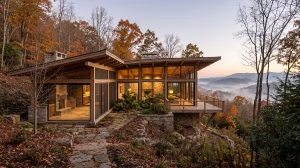
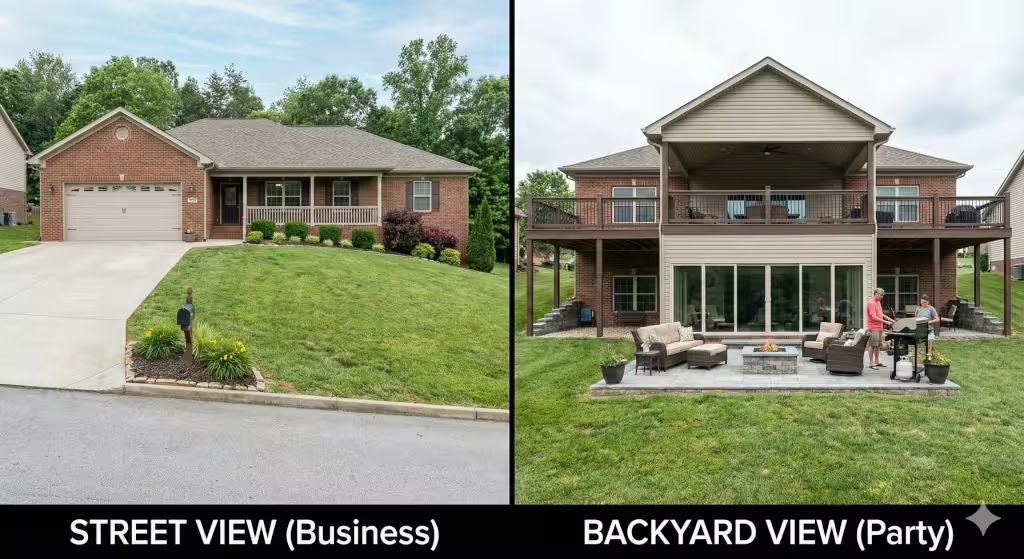
We often call this the “Mullet” concept. It is business in the front, party in the back. From the street, your house looks like a standard, modest single story ranch or cottage. It fits in with the neighborhood. But round the back, it is a two story estate with decks, patios, and glass walls.
Maximizing Natural Light
Orientation is key. If you can, position the rear of your home to face South or Southeast. In the winter, the sun is lower in the sky. It will shine directly into your walkout basement windows, warming the space and filling it with light. In the summer, the sun is higher, and your upper deck can provide shade for the basement patio, keeping it cool.
This passive solar gain makes the walkout basement comfortable year round. It helps lower your heating bills and makes the space feel airy.
Popular Layouts for Our Region
There are two main trends for walkout basement layouts here in the Tri-Cities.
1. The Multigenerational Suite:
More families are living together. A walkout basement is the perfect in-law suite. You can add a full bedroom, a large bathroom with a walk-in shower, and a kitchenette. Because it has a separate entrance through the back patio, parents or adult children can have independence. They can come and go without walking through the main living room upstairs.
2. The Entertainment Hub:
This is the classic “Man Cave”, family game room, or home gym. The area near the windows is perfect for a pool table or a wet bar. The area deeper in the basement, where there are no windows against the retaining wall, is perfect for a home theater. You want that area dark anyway. It is a great use of the space that naturally lacks light.
Legal and Zoning: The “ADU” Opportunity
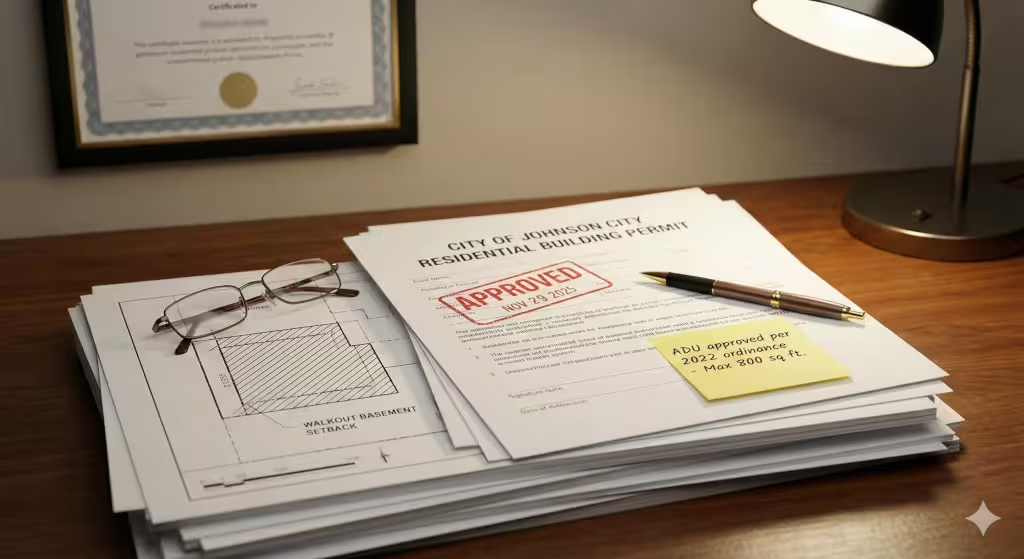
Before you finalize your walkout basement floor plans for a sloped lot, you need to check the local rules. The rules for what you can do with that space are changing.
Rental Potential
Can you rent out your basement? In Johnson City, the rules have become more friendly. In 2022, they updated ordinances regarding Accessory Dwelling Units (ADUs). Generally, you are allowed to have a secondary rental unit if it meets size requirements, usually capped around 800 square feet or a percentage of the main home.
This means your walkout basement could pay your mortgage. If you design it with a separate entrance, a kitchen, and a fire rated ceiling to separate it from the main floor, you have a rental apartment.
In Kingsport and Bristol, you need to check if your zone allows “two family dwellings” or “accessory structures.” Sometimes, adding a stove to the basement kitchen changes the legal classification of the house from a single family home to a duplex. Always check with the planning department before you build.
Permitting Pitfalls
There are a few codes that catch people off guard.
Retaining Walls: If you need to landscape around your walkout basement, be careful with retaining walls. In Johnson City, any wall over four feet tall requires a permit and an engineer’s stamp. You cannot just stack block and hope for the best.
Egress Windows: If you put a bedroom in the basement, it must have an exit. In a walkout basement, this is usually easy because you have normal windows on the back wall. But if you put a bedroom on the side of the house that is partially underground, you might need a window well. This is a deep hole dug outside the window with a ladder, allowing someone to escape in a fire.
Cost Analysis: The Unseen Expenses
Let’s be direct about the costs. A walkout basement is a great value, but it is not cheap to start.
Excavation Realities
Digging a basement on a slope is more complex than scraping a flat pad. The excavator has to move a lot of dirt. They have to “bench” the cut, creating flat steps in the hill for safety.
If we hit that limestone rock I mentioned earlier, costs go up. Renting a hoe ram can cost $2,000 to $5,000 a day. You rarely know exactly how much rock is down there until you start digging. I always tell my clients to keep a contingency fund for this.
The Walkout Surcharge
You will pay more for the concrete. A walkout basement foundation usually has more corners and steps than a flat slab. You also have the cost of the floor system for the main level above it, trusses, subfloor, and framing.
However, compare this to a crawlspace foundation. A crawlspace costs money but gives you zero livable space. A walkout basement might cost 20% more than a crawlspace foundation, but it doubles your square footage. When you do the math on a “price per square foot” basis, the walkout basement is the clear winner.
Grading and Backfill
You also have to pay for gravel. We do not put the red clay back against the wall. We haul in tons of crushed stone. This stone does not expand like clay. It keeps the pressure off your wall. This is an extra material cost, but it is cheaper than fixing a cracked wall five years later.
Selecting Your Team: Local Matters
You need a builder and an excavator who understand the local terrain. Often, out-of-town crews come in and try to treat our ridges like flat land. It never ends well.
The Excavator is Key
In a walkout basement build, the excavator is an artist. They are not just digging a hole; they are sculpting the land. They have to manage the water flow during construction so your hole does not turn into a swimming pool. They have to grade the driveway so it is not too steep to drive on in the winter.
Ask your potential builder who they use for excavation. You want an operator with gray hair or a lot of experience. You want someone who knows the difference between good fill dirt and trash dirt.
Builder Compatibility
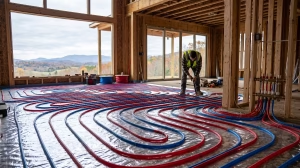
Your builder needs to understand energy codes. A walkout basement has some walls that are “conditioned” (insulated) and some that are against the earth. The insulation strategy is different for each. If they get this wrong, your basement will be cold and damp. Make sure they explain their plan for insulating the concrete walls and the slab floor.
Controlling Humidity and Air Quality
One of the biggest complaints about basements is the smell. That musty, damp smell comes from moisture and lack of air movement. In a modern walkout basement, we can fix this.
Because a walkout basement is tight and well insulated, it holds humidity. You must install a dedicated return air vent for your HVAC system in the basement to keep air cycling. Do not rely on passive air flow.
I also recommend installing a whole-house dehumidifier. This unit ties into your ductwork. It monitors the humidity level and pulls moisture out of the air automatically. It drains into that sump pump or floor drain we talked about earlier. This keeps your basement smelling just as fresh as your upstairs kitchen.
Landscaping the Slope
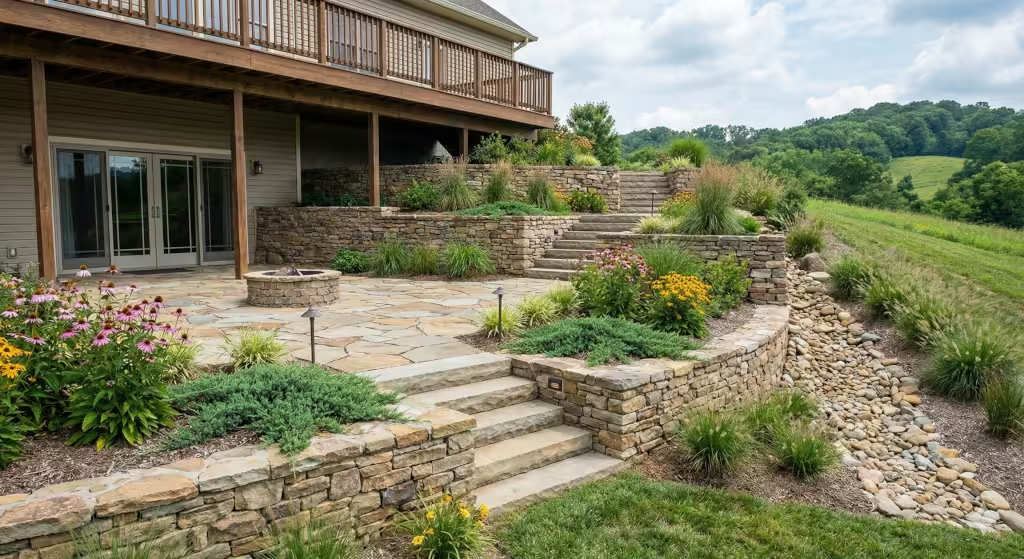
Once the house is built, you still have a slope to deal with. You cannot just leave raw dirt, or it will wash away in the first big Tennessee thunderstorm.
You need to plan for “hardscaping.” This includes patios, walkways, and retaining walls. You need to connect the upper driveway to the lower backyard. Often, this means building steps into the side of the hill.
Use native plants for the slope. Plants with deep roots help hold the soil together and prevent erosion. Creeping juniper or ornamental grasses work well here. They look good and they do a job.
Resale Value and Market Trends
I keep a close eye on the market here. Homes with finished walkout basements are selling fast. Buyers from out of state, places like California or New York, are moving here and they want space. They are used to high prices, so when they see a 3,000 square foot home with a walkout basement for our local prices, they see a bargain.
A walkout basement floor plan for a sloped lot future-proofs your investment. It gives you room to grow. Maybe today it is just storage, but in five years it is a workspace, a gym, or a home for an aging parent. Flexible space is the most valuable kind of space.
Common Mistakes to Avoid
The answers below spotlight some of the common errors in basements. Here is how to avoid them.
1. Skimping on Ceiling Height:
Don’t pour an eight foot wall. By the time you pour the slab floor and drop a ceiling to hide pipes, your room feels short. Pour a nine foot or ten foot concrete wall. It costs a little more in concrete, but it makes the basement feel like a luxury home, not a dugout.
2. forgetting the Plumbing Rough-In:
Even if you do not plan to finish the bathroom right away, put the pipes in the floor before you pour the concrete. Trying to jackhammer concrete later to add a toilet is a nightmare. Spend the few hundred dollars now to “rough in” the plumbing.
3. Ignoring the Driveway Grade:
If you want a garage in your walkout basement, make sure your driveway isn’t too steep. If the slope is too severe, you won’t be able to get your car out when we get snow or ice. Sometimes, it is better to have the garage on the main level and use the basement just for living space.
Conclusion
Building a home on a sloped lot in East Tennessee is a challenge, but it is one worth taking. The views are better. The privacy is usually better. And with the right walkout basement floor plans for a sloped lot, the house is better.
You get light. You get space. You get a connection to the outdoors that a slab home just cannot match. But you have to respect the process. You have to manage the water, reinforce the walls, and hire a team that knows our red clay.
Don’t let the slope scare you. Use it. That hill is the reason you can have a three story view for a two story price. It is the reason you can have a bright, sunny office downstairs while the kids play upstairs.
We hope this guide helps you feel more confident about buying that ridge-top lot. It is a big project, but if you build it with integrity and precision, it will be the best home you ever own.