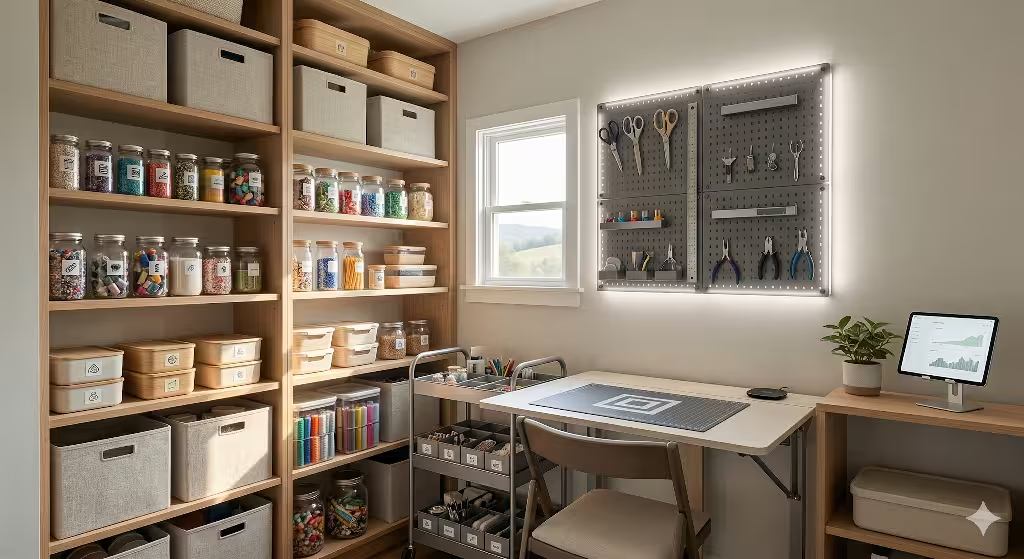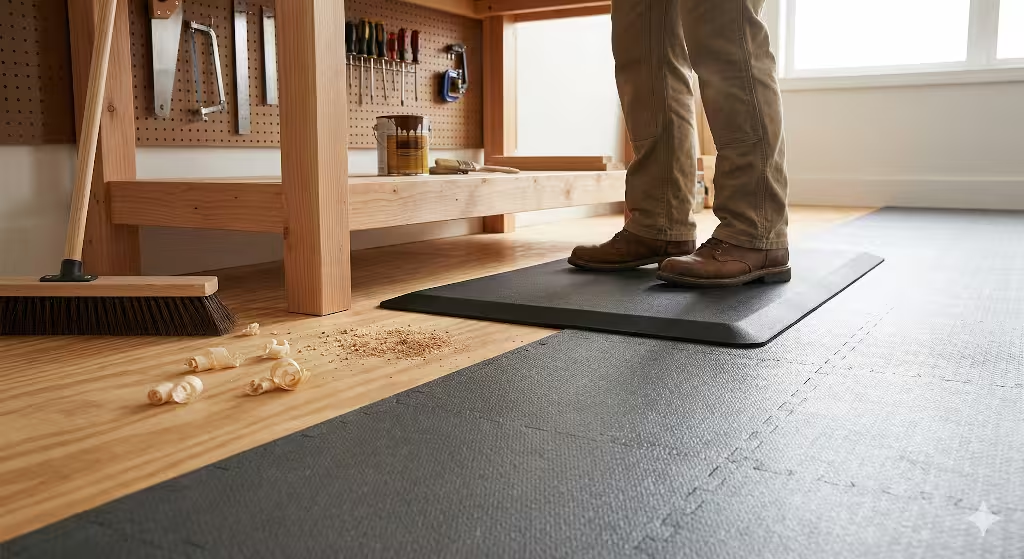


If you have been reading this blog, you likely know that we view a house as a system, not just a collection of wood and bricks. One of the most common requests from custom home buyers these days are about how to build a proper training space. They want a place to work out, but they usually start with the wrong questions.
Most people think building a home gym starts with buying a treadmill or a set of weights. They throw some equipment in a dark corner of the basement or a dusty spot in the garage and wonder why they never use it. That is not a gym. That is a storage unit for expensive metal.
To build a home gym that actually adds value to your life and your property, you have to think like a builder. You have to think about the foundation, the air you breathe, the light you see, and the flow of the room. In this post, are going to look at this through the lens of engineering, but it will be kept simple. We are going to turn that damp basement or cold garage into the best room in your house.
The goal here is to create a space where you can focus. If your home gym is cold, smells like mildew, or feels cramped, you will not get a good workout. If we design it right, with the correct flooring, lighting, and layout, it becomes a tool for self-improvement. Let’s get to work and build this the right way.
Phase One: The Structural Feasibility Study
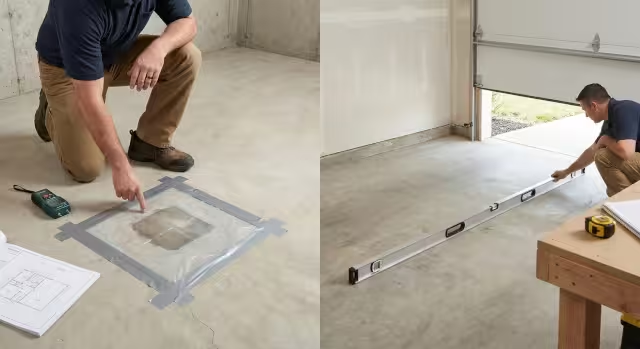
Before we ever look at a catalog for weights, we have to look at the bones of your house. In my line of work, skipping the inspection phase is a recipe for disaster. You need to know what your room can handle.
Assessing the Bones of the Basement
If you are planning a basement home gym, water is your enemy. In East Tennessee, we have a lot of clay in our soil, and that holds water against your foundation. Before you lay down mats or bring in equipment, you need to check for moisture.
There is a simple test you can do. Take a square of clear plastic sheeting and tape it to your concrete floor. Seal all the edges with duct tape. Leave it there for 24 hours. When you pull it up, if the concrete is dark or there are water droplets on the plastic, you have a moisture problem. You cannot put home gym flooring over wet concrete. The moisture will get trapped, mold will grow, and your gym will smell like a swamp within a week. If you find moisture, you need to seal the concrete with a high-quality masonry sealer first.
Assessing the Garage Slope
If you are looking at a garage home gym, you have a different challenge. Garage floors are not level. They are engineered to slope toward the big door so that water from your car drips off and runs outside. This is great for parking cars but bad for lifting weights.
If you put a squat rack on a slope, your body will be slightly out of alignment every time you lift. Over time, this can cause injury. For a serious home gym, you might need to build a level platform. You can do this with layers of plywood. It takes a little carpentry skill, but it ensures you are lifting on a flat surface. It is a small detail, but in engineering, the small details are what keep the structure standing.
Ceiling Height Clearance
You also need to look up. Standard ceilings in older homes might only be eight feet tall. In some basements, they drop to seven feet because of ductwork. If you are six feet tall and you want to do a standing overhead press, you need to do the math.
Measure your reach with your arms extended. Then add the diameter of a weight plate, which is roughly 18 inches. If that number is higher than your ceiling, you need to change your plan. You might have to buy a short power rack or focus on seated exercises. A functional home gym is one where you do not smash your knuckles into the drywall.
Structural Load Engineering
Finally, we have to talk about weight. Concrete slabs on the ground can hold a massive amount of weight. You can park a truck on them, so a rack of dumbbells is fine. However, if your home gym is going in a room above a garage, or on a main floor with a basement underneath it, you have to be careful.
Residential floors are usually built to hold about 40 pounds per square foot. A stack of heavy weights in one corner can exceed that quickly. If you are lifting heavy, dropping weights, or installing a heavy treadmill, you need to know the joists underneath are strong enough. If you are unsure, ask a builder. We can look at the span tables and tell you if you are safe. Safety is always the first priority.
Phase Two: Environmental Control
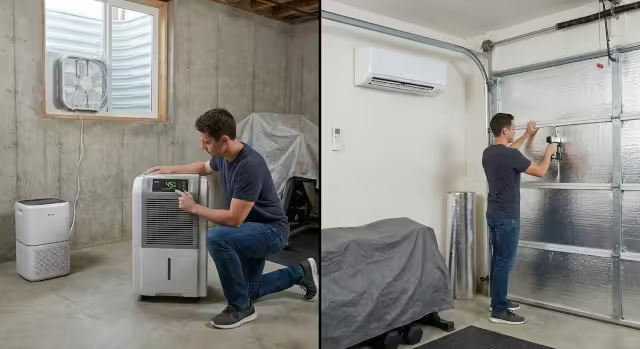
A home gym is useless if it is too hot in the summer or freezing in the winter. I see this all the time. People buy great equipment but put it in a garage that gets up to 95 degrees in July. They quit working out because the environment is miserable.
The Humidity Factor
In the Tri-Cities of Tennessee, humidity is a constant battle. High humidity rusts iron. If you buy nice steel barbells and put them in a humid garage, they will turn orange with rust in a month.
For a basement home gym, a dehumidifier is mandatory. You want to keep the humidity level below 50 percent. This protects your equipment, but it also keeps the air feeling fresh. In a garage, you have to focus on insulation.
Heating and Cooling Solutions
The best upgrade you can make for a garage home gym is a mini-split system. This is a small heat pump that hangs on the wall. It provides both heating and air conditioning. It does not require running expensive ductwork from your main house system.
If a mini-split is out of the budget, you must insulate. Most garage doors are just thin metal. They let all the heat out in winter and let the heat in during summer. You can buy insulation kits for garage doors that are easy to install.8 This raises the R-value, which is a measure of thermal resistance. A comfortable temperature means you will actually use your home gym consistently.
Air Quality and Ventilation
When you work out, you breathe heavy. You are expelling a lot of carbon dioxide. In a small, sealed basement room, the air can get stale very fast. This can make you feel tired or dizzy.
Good airflow is part of the design. In a garage, this is easy; you can crack the door. In a basement home gym, consider installing a fan that pulls air out, or an air purifier. Good oxygen flow fuels your muscles. It is a biological engine, and it needs air intake just like a car engine.
Phase Three: Electrical and Lighting Plan
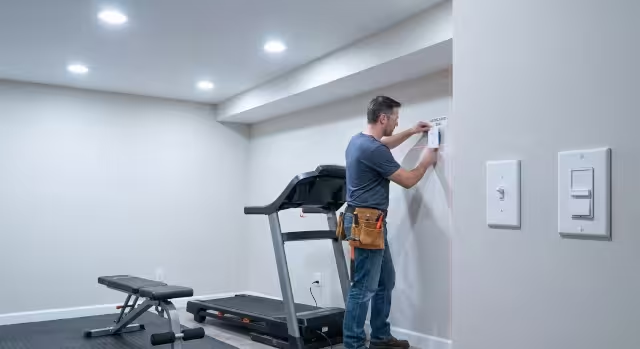
You cannot train in the dark, and you cannot run a treadmill on a weak circuit. Most standard bedrooms have 15-amp circuits. This is fine for a lamp and a laptop, but a home gym has different needs.
Power Requirements
If you plan to have a treadmill, you need to look at the motor specifications. Many heavy-duty treadmills require a dedicated 20-amp circuit. This is because when you first start the machine, or when you are running hard, the motor pulls a surge of electricity. If you share that circuit with your lights or a TV, you will trip the breaker constantly.
For a really professional home gym, call an electrician. Have them install an extra outlet or two exactly where you plan to put the equipment. You do not want extension cords running across the floor. That is a trip hazard. In a gym, trip hazards are unacceptable.
Lighting Design
Lighting affects your energy levels. Warm, yellow light (like you have in a living room) is designed to make you relax. That is about 2700 Kelvin on the color scale. You do not want to relax in your home gym; you want to be alert.
I recommend using LED shop lights or recessed lights that are in the 4000K to 5000K range. This is often called “Daylight” color. It mimics natural sunlight. It wakes up your brain.
Also, think about placement. If you are doing bench presses, you do not want a bright spotlight staring directly into your eyes when you look up. Plan your lighting around your bench. Installing a dimmer switch is also a smart move. It allows you to lower the lights for stretching or yoga at the end of a session.
Phase Four: The Foundation and Flooring
The floor is the most abused part of any home gym. It has to handle dropped weights, sweat, and heavy machines. The carpet in your spare bedroom is not going to cut it.
Garage Gym Flooring
For a garage, the industry standard is the horse stall mat. You can find these at farm supply stores. They are usually made of recycled rubber, are 3/4 of an inch thick, and are incredibly durable. They are designed for a 1,000-pound animal to stand on, so they can handle your deadlifts.
They are cheaper than the fancy interlocking foam tiles you see online, and they are much better. Foam tiles compress too much. When you squat, you want a solid base, not a squishy one. Stall mats give you that stability while protecting the concrete underneath.
Basement Flooring Specifics
In a basement home gym, you might want something that looks a little nicer. Luxury Vinyl Plank, or LVP, is a popular choice for finishing basements. It is waterproof and looks like wood. However, you cannot drop weights directly on LVP. It will crack the locking mechanism that holds the planks together.
If you use LVP for the look, you still need to put rubber mats down in your lifting zone. Also, never forget the vapor barrier we talked about earlier. Even if you do not see water, concrete breathes. A vapor barrier prevents moisture from rotting your flooring from the bottom up.
Phase Five: Spatial Layout and Workflow
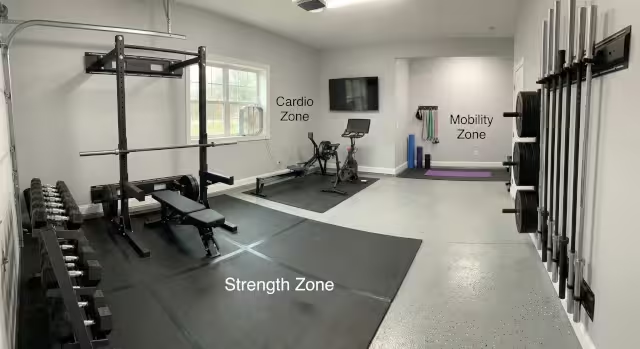
Designing the layout of your home gym is like designing a kitchen. There is a “work triangle” in a kitchen; in a gym, there is a “flow.” You need to move between exercises without tripping over gear.
The Three Zones
I like to divide a home gym into three distinct zones.
First is the Strength Zone. This is where your rack, bench, and weights go. This needs to be in the area with the highest ceiling. It should be on the most level part of the floor.
Second is the Cardio Zone. This is for your bike, rower, or treadmill. If possible, place this near a window or facing a TV. Cardio can be boring, and having a visual distraction helps. Also, try to put these near the fan or airflow source.
Third is the Mobility Zone. You need an open space just to move. This is where you stretch, use a foam roller, or do lunges. A common mistake is packing a home gym so full of machines that there is no floor space left to stretch. You need open ground.
Vertical Storage
Space is usually tight. To make a home gym feel bigger, you have to get things off the floor. In a garage, you can bolt storage stringers into the wall studs. You can hang folding benches, barbells, and weight plates on the wall.
This is efficient. It keeps the floor clear for movement. When I look at a project, I appreciate efficiency. A clutter-free space is a safer space.
Phase Six: Legal and Safety Considerations
We need to talk about the legal side of things. In the Tri-Cities area, like most places, there are rules about what you can do to your home.
Permitting
If you are just painting walls and laying down mats, you are fine. But if you are running new electrical circuits for that treadmill, or knocking down a wall to make your home gym bigger, you likely need a permit.
Some people try to hide this work. That is a mistake. When you go to sell your house, an inspector will find the unpermitted work. It can hold up the sale or force you to pay to have it redone. Integrity means doing it right, even when no one is watching. Get the permit.
Egress and Safety
If your home gym is in a basement, you must have a way out in case of a fire. This is called “egress.” If the stairs are blocked, is there a window big enough to crawl through?
Also, think about kids and pets. A home gym is full of pinch points and heavy objects. If you have small children, you need a way to lock the room. Treadmills should have safety keys removed when not in use. I have seen too many accidents happen because a gym was left accessible to a toddler.
The Mental Aspect of the Space
There is one final element that is not made of wood or concrete. It is the psychology of the room. A home gym is a place for self-improvement. It should reflect that.
Do not leave the walls bare concrete or unfinished drywall if you can help it. Paint the room. Put up a mirror. Mirrors are not just for vanity; they are a tool to check your form and technique. They also make a small room feel twice as big.
Invest in a good sound system. Music drives intensity. When you step into your home gym, you should feel a shift in your mindset. You are leaving the comfort of your home and entering a place of work. The design should support that shift.
Common Questions About Home Gyms
Does a home gym add value to your home?
Yes, but usually when it is finished as “flex space.” If you convert a garage and remove the ability to park a car, it might actually hurt the value. However, a finished basement room that serves as a home gym is a huge selling point. It shows potential buyers that the home has extra usable square footage.
How much space do you need for a home gym?
You need less than you think, but more than you hope. A 10-foot by 10-foot area is the functional minimum for a rack and a barbell. If you only use dumbbells, you can get away with less. But for a full setup, aim for at least 100 to 150 square feet.
Is it safe to put a gym on the second floor?
It can be, but you need to be careful. Dynamic exercises, like jumping or dropping weights, create a force much higher than the weight itself. If you are unsure, stick to the basement or garage, or consult a structural engineer. It is better to be safe than to crack your ceiling joists.
How do I stop my garage gym from sweating?
This is called condensation. It happens when warm, moist air hits cold metal or concrete. The solution is to lower the humidity with a dehumidifier and raise the temperature of the surfaces with insulation. Keeping the air moving with a fan also helps prevent water from settling on your gear.
Conclusion
Building a home gym is a project that pays off every single day. It removes the commute. It removes the crowds. It gives you total control over your health. But like any construction project, the quality of the result depends on the planning.
You have to handle the moisture issues first. You have to ensure the structure is sound. You need to control the temperature so you are comfortable. You need the right light and the right power. And you need a floor that can take a beating.
If you follow this guide, you will not just have a pile of weights in a garage. You will have a professional-grade training facility steps away from your living room. That is efficiency. That is adding value to your life.
So, here is my question for you: You have the knowledge now. You know the steps. What is the first wall you are going to measure? Stop planning and start building.
Terms to Know About Regarding Home Gyms
When you are researching this further, you might see some specific terms. Here is what they mean for your build.
Stall Mats: As mentioned, these are heavy rubber mats found at stores like Tractor Supply. They are the gold standard for a home gym.
Mini-Split: Brands like Mr. Cool make these ductless AC units. They are perfect for garages.
Power Rack: This is the metal cage used for squats and bench presses. It is the centerpiece of a strength setup.
Bumper Plates: These are weights coated in rubber. They are safer for home floors because they bounce slightly if dropped, causing less damage than iron plates.
Concrete Sealer: This is the liquid coating you paint on the floor to stop dust and block moisture.