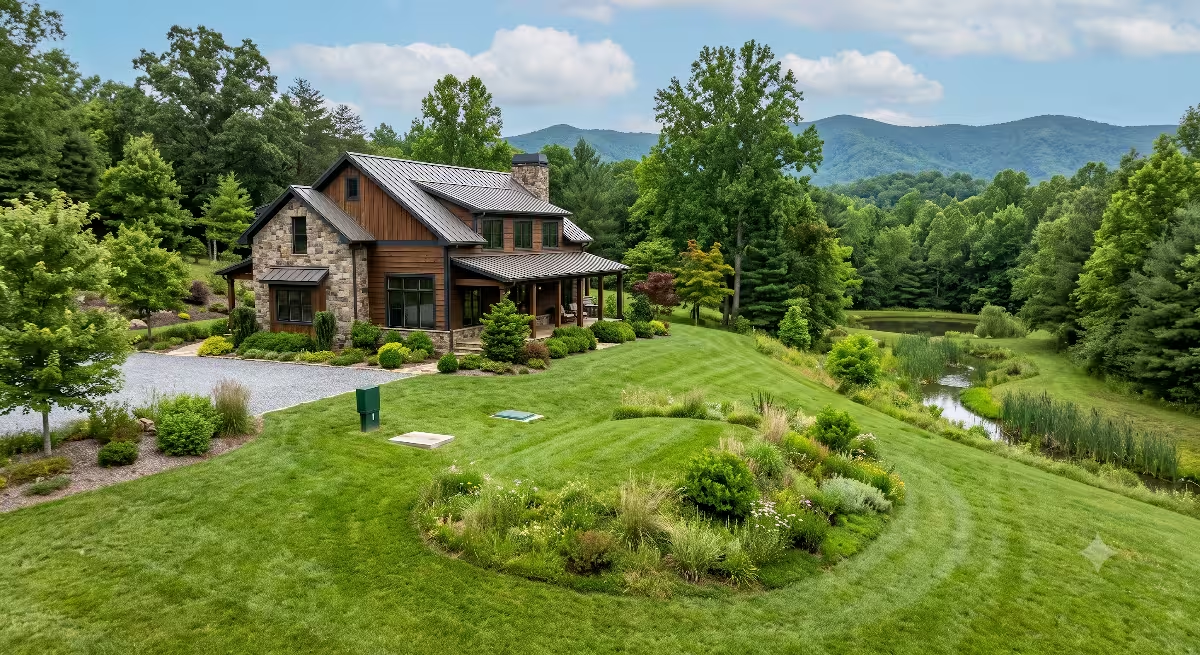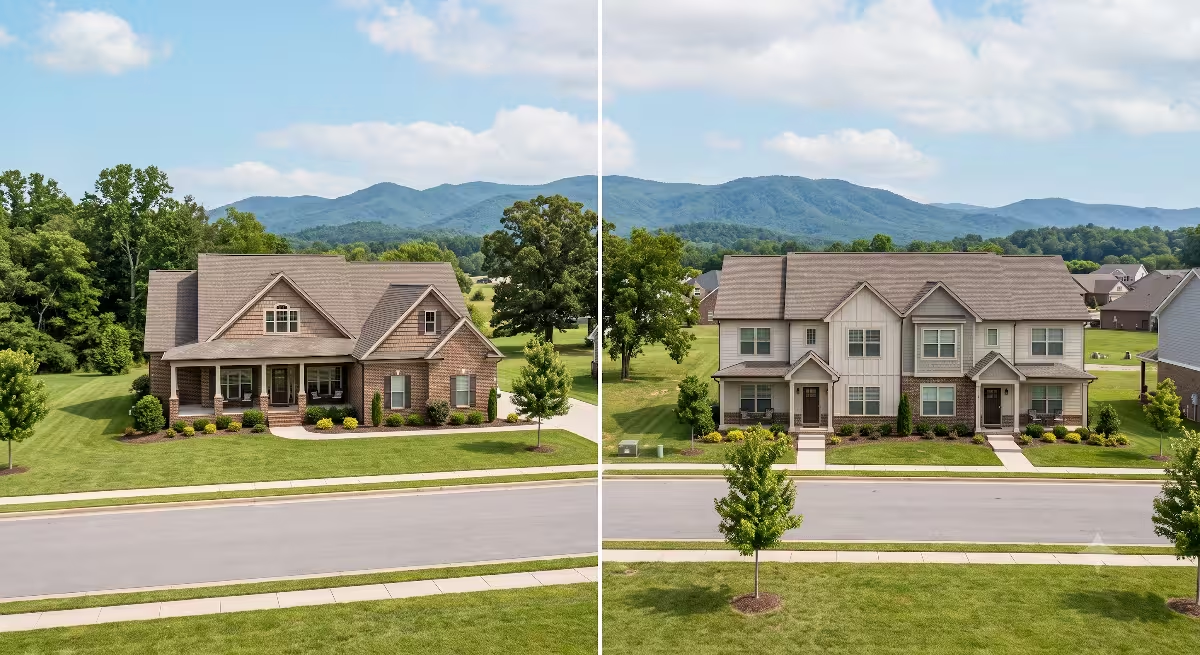

The dream of building a custom home in the rolling hills of Northeast Tennessee is a powerful one. You can already picture the view from your porch overlooking Johnson City, the morning fog settling in the valleys. It’s a vision of peace, of something truly your own. But the path from an empty lot to your front door is paved with due diligence. The difference often comes down to the questions asked before the land was ever purchased.
This guide is a straightforward, no-nonsense checklist for land purchases. It’s not meant to discourage you, but to empower you. Think of it as a conversation we might have over coffee, where I point out the things you need to see beyond the beautiful view. It’s designed to equip you with the precise questions you need to ask to ensure the land you buy is truly the foundation for your dream home, not a money pit. Taking the time now to properly vet a piece of land will save you from years of frustration and unforeseen expenses. Let’s walk through it together.
1. What does the topography and soil tell you?

When people look at a piece of land, they often see the trees and the view. Many builders when they look at land, they see the angle of the slope and wonder what’s underneath the grass. These two elements, topography and soil, are the most fundamental and can have the biggest impact on your budget after the initial land purchase.
Topography: The Lay of the Land
Topography is simply the shape of the land’s surface. Is it flat, gently rolling, or steeply sloped? A recent property survey or a plat map will show you the exact property lines and elevation changes. In our beautiful, hilly region, it’s rare to find a perfectly flat parcel of land. While a slope can provide a stunning view and the opportunity for a walk-out basement, it always comes with a higher price tag for development.
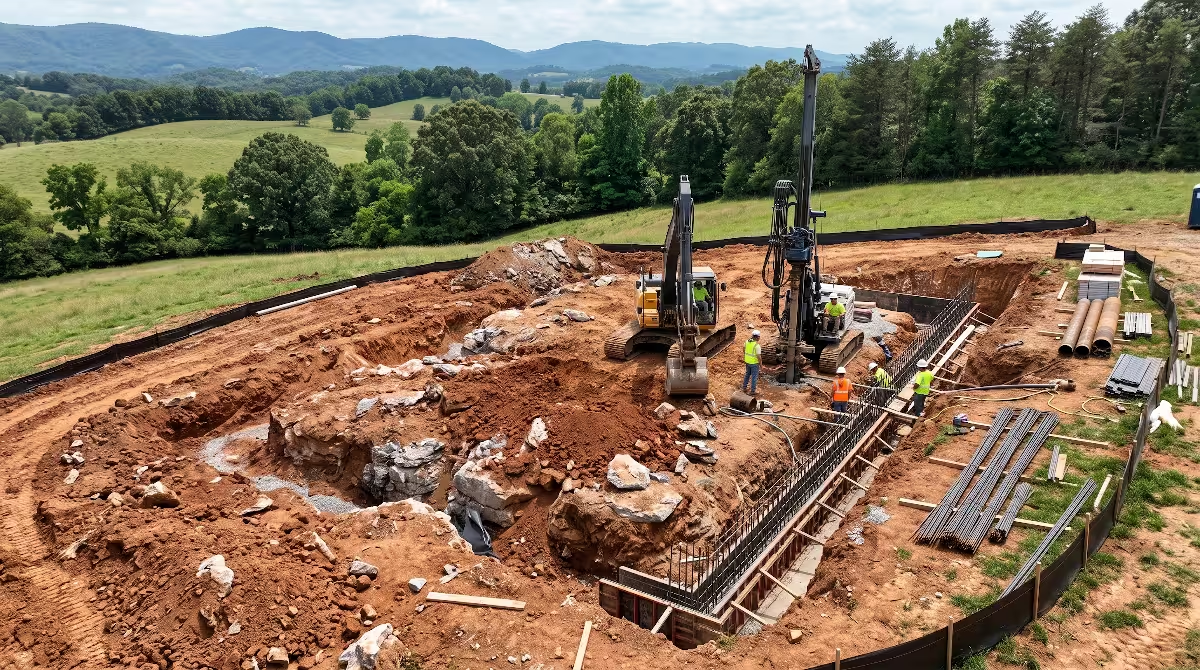
A steep grade means more extensive and expensive earthwork. An excavator will need to perform a “cut and fill,” which involves digging out dirt from the high side of the homesite and moving it to the low side to create a level building pad. This requires heavy machinery, more man-hours, and sometimes, the construction of expensive retaining walls to hold the soil in place.
A driveway on a steep piece of land will also be longer and costlier to install, and you have to consider drainage solutions to keep water from washing it out or flooding your garage. The beautiful hillside land can easily add tens of thousands of dollars to your site preparation costs before you even begin the foundation.
Soil and Perc Tests: What Lies Beneath
What you can’t see is just as important. The soil on your land determines two critical things: its ability to support your home’s foundation and its ability to handle wastewater if you’re not on a public sewer system.
If the land you are considering is outside the city limits and cannot connect to a public sewer, you will need a septic system. To get a permit for one, the land must pass a percolation test, or “perc test.” A soil scientist will dig several holes on your property, fill them with water, and measure how quickly the water drains into the soil.
If the soil is too dense with clay and drains too slowly, or too sandy and drains too fast, the land will fail the test. A failed perc test means you cannot install a conventional septic system, which could render the land unbuildable for your purposes. Never, ever buy a piece of rural land without making the contract contingent on a successful perc test.
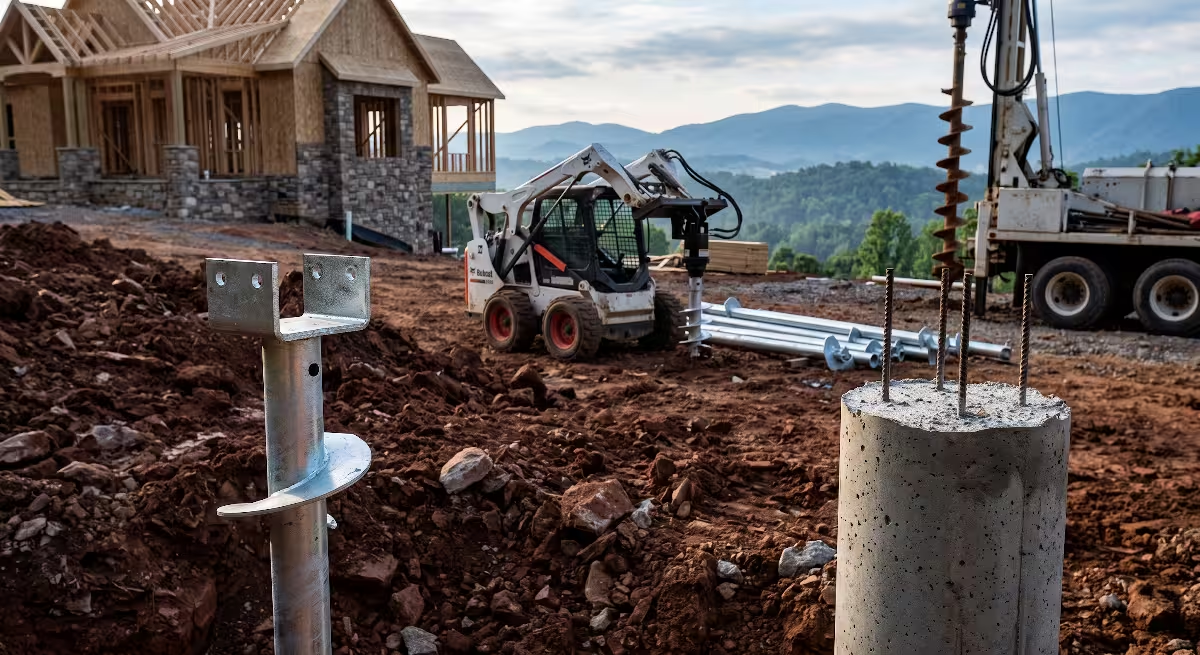
Just as crucial is a geotechnical survey, or soil test. This involves taking core samples of the soil to determine its composition and stability. Some areas in our region have expansive clay soil. This type of soil acts like a sponge, swelling when it gets wet and shrinking when it dries. This constant movement can crack your foundation, buckle walls, and cause endless problems. If a soil test reveals poor conditions, an engineer may need to design a more robust and expensive foundation to compensate. It’s a vital piece of information to have before you own the land.
2. Are there any water-related issues?

Water is the source of life, but it can be the death of a building project if not properly managed. When evaluating land, you need to think about water from three different angles: flood risk, surface drainage, and your drinking water source.
FEMA Floodplains
First, you must determine if the land is in a designated floodplain. You can check this by visiting the FEMA Flood Map Service Center online. If the property is in a high-risk flood zone, a few things happen. Your lender will require you to carry expensive flood insurance for the life of the loan. There may also be strict regulations on how and where you can build, such as requiring the first floor of the home to be elevated to a certain height. In some cases, you may not be able to build on that specific lot at all.
Drainage and Easements
Next, walk the land and observe its natural drainage patterns. Where does rainwater flow? Are there low spots where water collects or marshy areas? Poor drainage can lead to a constantly wet yard, a leaky basement, or even erosion that threatens your foundation. Sometimes, a property will have a drainage easement, which means a portion of your land is designated for the flow of water from neighboring properties. You cannot build any permanent structures within this easement. A good site plan will account for natural drainage and incorporate features like French drains or swales to direct water safely away from your home.
Your Water Source
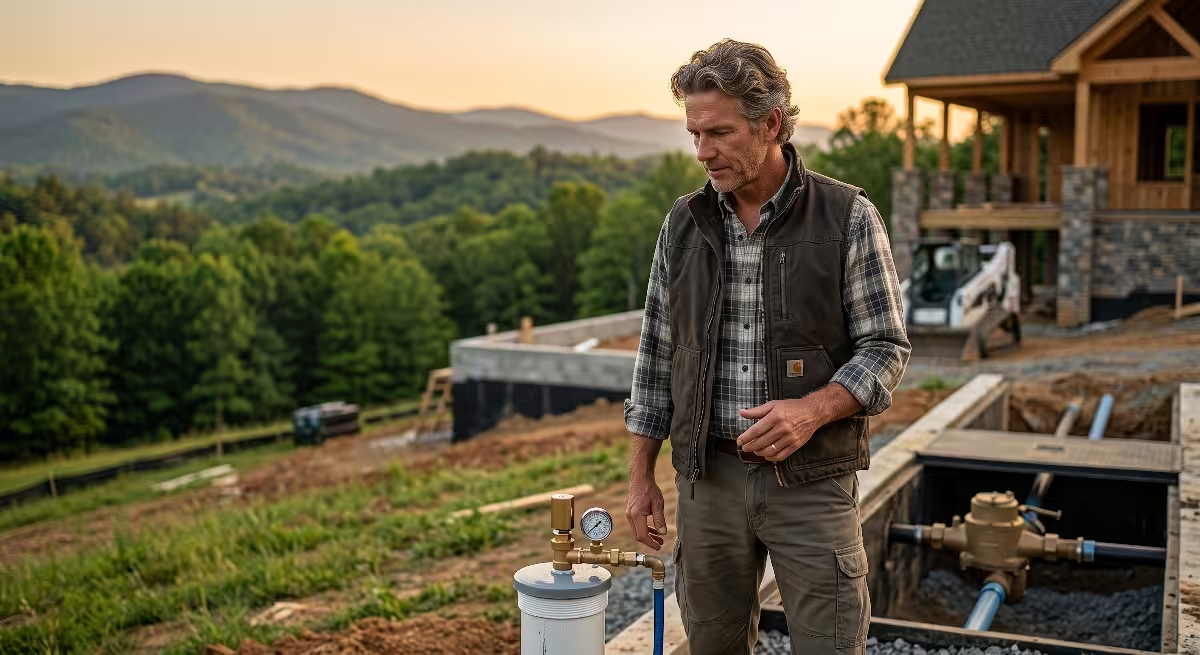
Finally, where will your drinking water come from? If the land is within city limits, it can likely connect to Johnson City Water and Sewer Services. However, you need to confirm this and find out the associated tap fees and costs to run the water line from the main to your homesite. If the land is in the county, you’ll likely need to drill a well. This involves hiring a well drilling company to find a suitable underground water source. The cost can vary widely depending on how deep they have to drill to find an adequate supply of water. It’s a significant expense that needs to be factored into your budget for developing the land.
3. What is the exact zoning classification and what does it permit?
Zoning laws are the city’s or county’s rules for how land can be used. They are designed to keep neighborhoods organized and functional, for instance, by preventing a noisy factory from being built next to a quiet residential street. Buying a piece of land without understanding its zoning is a huge gamble.
The rules can differ significantly between land that is within Johnson City’s jurisdiction and land that is in unincorporated Washington County. You must contact the correct governing body. For land in the city, you’ll work with the Johnson City Planning and Development Services. For land in the county, it’s the Washington County Planning Commission.
Ask them for the specific zoning classification of the parcel of land you are considering. A common one is R-1, which stands for Low-Density Residential. This typically means the land is intended for single family homes. Zoning ordinances will also dictate key details like setbacks, which are the minimum distances your house must be from the front, side, and rear property lines.
They can also regulate the maximum height of your home and the percentage of the land that can be covered by buildings. If you dream of building a main house and a separate large workshop for your business, you need to ensure the zoning on that land allows for it. Don’t assume; always verify directly with the planning department.
4. Are there any Covenants, Conditions, and Restrictions (CC&Rs) or Deed Restrictions?
While zoning laws are public rules, CC&Rs are private rules. These are most often found in newer subdivisions and are put in place by the original developer to maintain a certain standard and aesthetic for the neighborhood. These rules are attached to the deed of the land, meaning that by buying the land, you are legally obligated to follow them.
CC&Rs can be far more restrictive than city zoning. I once had a client who bought beautiful land, planning to build a modern barndominium. They only discovered after closing that the neighborhood covenants required all-brick exteriors, a traditional roof pitch, and a minimum of 3,000 square feet of living space. Their dream for that specific land was over before it began because they didn’t do this one simple check.
Deed restrictions can control a surprising number of things:
- The minimum or maximum square footage of the home.
- The type of exterior materials you can use (e.g., brick or stone only).
- Whether you can park an RV or boat on your land.
- The type and height of fences allowed.
- Whether you can have outbuildings like sheds or workshops.
Before you make an offer on any land in a development, you must get a copy of the CC&Rs and read every single word. Make sure that the vision you have for your home is allowed on that land.
5. What easements exist on the property?
Think of an easement as a permanent right for someone else to use a portion of your land purchase for a specific purpose. It’s a legal right that is recorded on your property’s deed and title report. While it doesn’t stop you from owning the land, it can severely limit how you use it.
There are several common types of easements you might find on a piece of land in our area:
- Utility Easements: This is the most common. It gives utility companies like BrightRidge (for electricity) or the water department the right to access a strip of your land to install and maintain their lines. You cannot build any permanent structure, including a house, pool, or garage, on top of a utility easement.
- Access Easements: This occurs when your land is used for a neighbor to get to their own property. For example, a shared driveway might run across the edge of your land. This is very common for “landlocked” parcels.
- Conservation Easements: These are voluntary agreements that limit the type and amount of development on a piece of land to protect its natural or agricultural features.
When you look at a survey of the land, easements should be clearly marked. Understanding where they are is critical. An easement running right through the middle of an otherwise perfect piece of land could make your preferred building spot unusable.
6. Where are the utilities and what is the cost to connect?
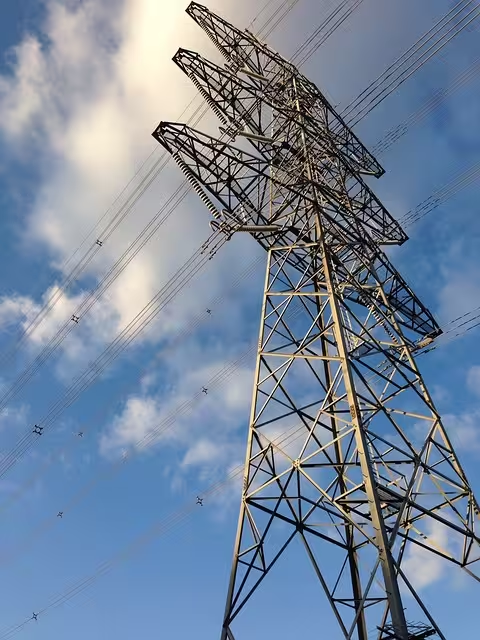
Having access to utilities can be the difference between a manageable project and a financial disaster. Never assume that just because you see a power pole down the road, connecting will be easy or cheap. You must investigate the logistics and cost for every single utility.
- Electricity: Call BrightRidge and give them the address or parcel number of the land. Ask them to confirm where the nearest connection point is. The cost to run power from the main line to your homesite can be very expensive, sometimes thousands of dollars per pole. If the line needs to cross a neighbor’s land, you will also need to secure an easement from them.
- Water/Sewer: As mentioned before, confirm with Johnson City Water and Sewer Services if a connection is possible. Ask about the exact tap fees, meter installation costs, and any other associated charges. These can add up to several thousand dollars.
- Natural Gas: This is less common in rural areas. If it’s important to you, you’ll need to check with the local gas provider to see if a main line is anywhere near the land.
- Internet: In today’s world of remote work and connected living, reliable internet is no longer a luxury; it’s a necessity. This is one of the most overlooked aspects of buying rural land. Check the service maps for all local providers. Don’t take the seller’s word for it. Confirm if high-speed cable or fiber is available. If not, you may be left with satellite internet, which can be slower and less reliable. This one factor can be a deal-breaker for many families.
7. What is the legal and physical access to the property?
How do you get to your land? This question sounds simple, but the answer can be legally complex. You need to know if the road leading to your property is public or private.
A public road is maintained by the city or county. They are responsible for paving, repairs, and snow plowing. If your land fronts a public road, access is usually straightforward.
A private road is owned and maintained by the property owners who use it. If your land is on a private road, you need to ask a critical follow-up question: Is there a recorded road maintenance agreement?
This is a legal document that outlines how the costs of maintaining the road are shared among the neighbors. Without one, you could be in for major trouble. What happens when the gravel road washes out after a big storm? Who pays for repairs? Without an agreement, it often falls on whoever is most motivated, leading to neighbor disputes. Furthermore, some mortgage lenders will not finance a home on a property with private access unless a formal road maintenance agreement is in place.
8. What are the estimated site preparation costs?
The price tag on the real estate listing is just the starting point. The true cost of your land includes the purchase price plus the cost to prepare it for construction. Often, the cheapest parcel of land ends up being the most expensive to build on because of high site prep costs. Based on the answers to the previous questions, you can start to build a realistic budget.
Site preparation costs can include a long list of items:
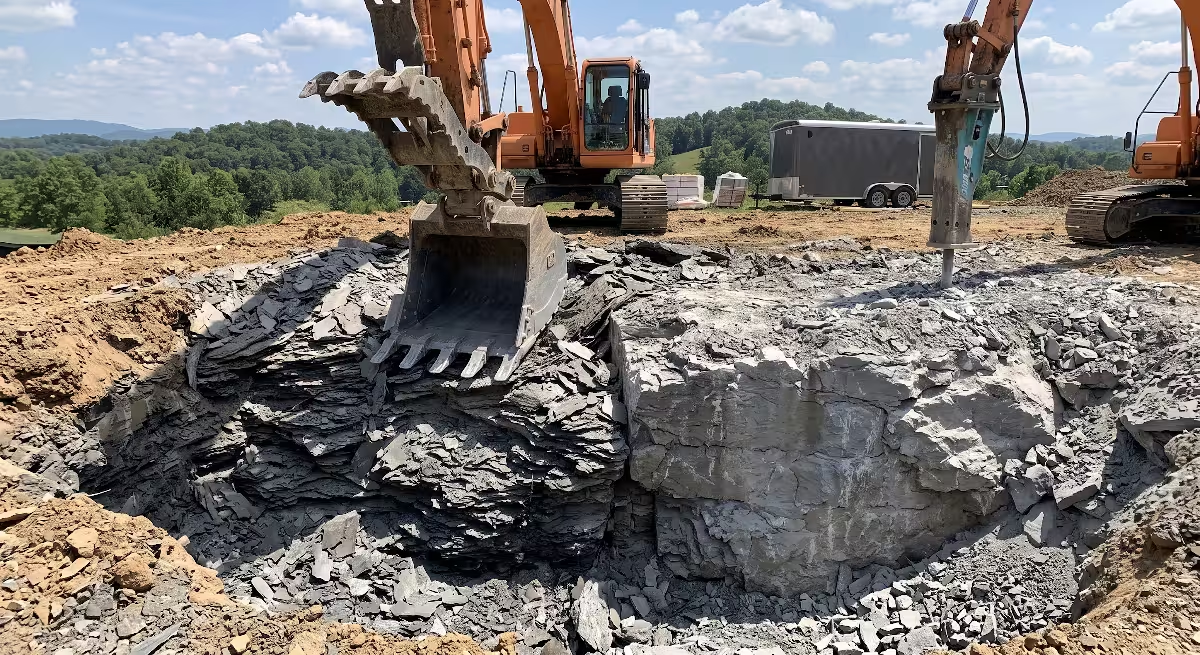
- Land Clearing: Removing trees, stumps, and boulders from the homesite and driveway area. A heavily wooded piece of land can cost a small fortune to clear.
- Grading and Excavation: The earthmoving work to create a level building pad and shape the land for proper drainage.
- Driveway Installation: The cost of cutting in a driveway and surfacing it with gravel or pavement can be substantial, especially for a long driveway.
- Utility Trenching: Digging trenches to run the electric, water, and communication lines from the road to your house.
- Septic System or Sewer Tap: The cost to install a full septic system can be $10,000 to $20,000 or more. Even a sewer tap has significant fees.
- Well Drilling: If needed, drilling a well and installing the pump and pressure tank can easily run $8,000 to $15,000.
It is not an exaggeration to say that site prep for a difficult piece of land can cost over $100,000. It is a massive part of the overall budget that must be understood before you buy the land.
9. What are the annual property taxes?

This is a straightforward but important financial consideration. You can easily find the current property tax information from the Washington County Property Assessor’s office. However, you need to plan for the future.
The taxes you see on a vacant piece of land are very low. As soon as your home is built, the county will reassess the property’s value. The new value will be based on the combined worth of the land and the new house. This will cause your annual property tax bill to increase dramatically. Be sure to factor this higher, long-term cost into your household budget. It’s a recurring expense that will be part of owning your new home on this land for as long as you live there.
10. Have I consulted with a local builder before buying?
This is my final and most important piece of advice. Before you sign a contract to buy any piece of land, you should have a reputable local home builder walk the property with you. This might be the single most valuable hour you spend in your entire home building journey.
A real estate agent helps you buy the land. A builder helps you understand what it will take to build on that land. We see things differently. While you see a beautiful grove of oak trees, I see the cost of tree removal and stump grinding. While you see a charming creek, I see potential floodplain issues and the need for a long, expensive culvert for your driveway.
An experienced builder can look at the slope, the tree cover, and the visible signs of rock or poor drainage and give you a ballpark estimate for site preparation costs. This information is pure gold. It gives you negotiating power with the seller and allows you to make a clear-eyed decision about whether this particular parcel of land truly fits your budget. Investing in a consultation with a builder before you buy is one of the smartest decisions you can make. It can affirm that you’ve found the perfect land or save you from a multi-thousand-dollar mistake.
Conclusion: A Foundation of Knowledge
Buying land in Johnson City is the first step toward building a beautiful life here. The appeal of our region is undeniable. But a successful project is built on a foundation of thorough research, not assumptions. Rushing into a land purchase because it has a great view is a recipe for disaster. By taking a deep breath and methodically working through these ten questions, you move from being a dreamer to being a savvy future homeowner. You protect your investment, your budget, and your peace of mind, ensuring your building process is as smooth as possible.
The process can seem daunting, but it doesn’t have to be. If you’re considering a piece of land in the Tri-Cities and want a professional opinion, feel free to reach out. An hour of prevention is worth a year of cure in this industry.