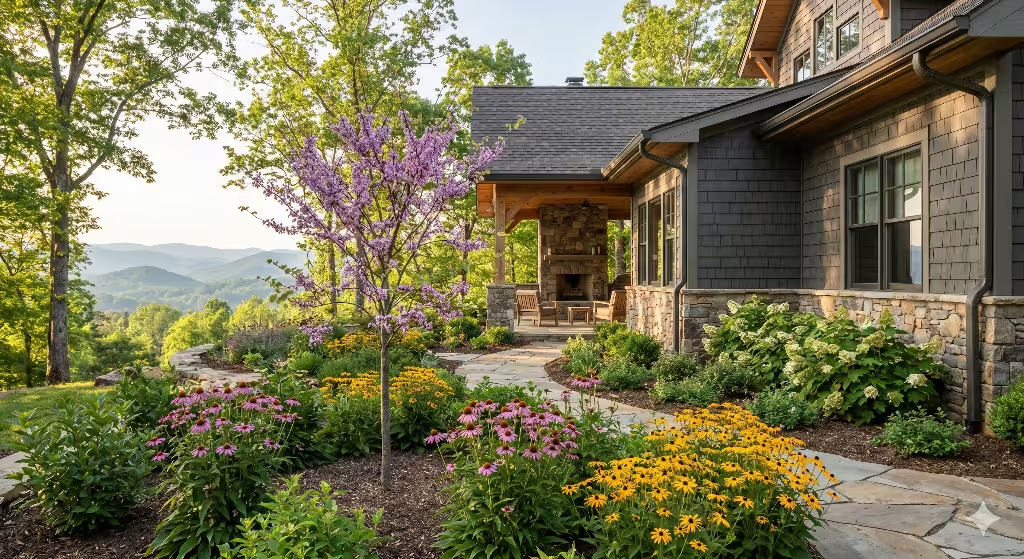
Building a custom home here in the Tri-Cities is a journey. It is a marathon, not a sprint. Buyers in Kingsport or Johnson City, have excitement in my clients’ eyes when they see the custom home they have saved for years, actually built. They have dreamed about this moment. But with that excitement comes a specific danger. It is the danger of falling for what looks good right now instead of what will last for the long haul.
We live in a world of fast fashion and instant gratification. This mindset has bled into the way we build and furnish our living spaces. You scroll through social media and see a style that looks perfect. You want that look right now. But often, what you are seeing is a fad. Fads burn bright and fade fast. Integrity, on the other hand, lasts forever.
Our goal for you is simple. We want you to build a home that holds its value. I want you to make choices that are competent and precise. We need to separate the flash from the substance.
In this article, we are going to look at the interior design trends to avoid in 2026. We will discuss why these trends are fading and what you should do instead to ensure your home remains timeless. We will cover everything from color palettes to floor plans. By the end, you will have a roadmap to navigate the confusing world of interior design without getting lost in the hype.
Video Version of this Article
The “Grey Everything” Era is Over
For the last ten years, you could not walk into a new home without seeing grey. It was everywhere. We saw grey walls. We saw grey floors that looked like weathered wood. We saw grey cabinets and grey couches. It was the safe interior design choice for a long time. Builders liked it because it was neutral. Flippers liked it because it was clean. But the era of the all-grey interior is officially over.
The problem with using grey for every part of your interior design is that it lacks life. It feels cold. When you wake up on a rainy Tuesday morning in November here in Tennessee, a grey room does not help your mood. It can feel sterile, almost like a hospital or an office building. It lacks the warmth that makes a house feel like a home. From a technical standpoint, grey also absorbs light in a way that can make spaces feel flat. It does not bounce light around the room the way warmer tones do.
So, what should you do instead? The interior design world is shifting toward warmth. We call it “greige” sometimes. This is a mix of grey and beige. It keeps the neutral look but adds a little bit of yellow or red undertone to warm it up. We are also seeing a return to creamy whites and earthy tones. Think about the colors you see outside your window in the Smokies. You see the deep green of the pines, the terracotta of the clay soil, and the soft browns of the oak trees.
Bringing these colors inside creates a connection to nature. It makes the space feel grounded. If you are planning your interior design right now, look at samples like “Swiss Coffee” or “Accessible Beige” instead of the stark cool greys of the past.
Modern Farmhouse Overload
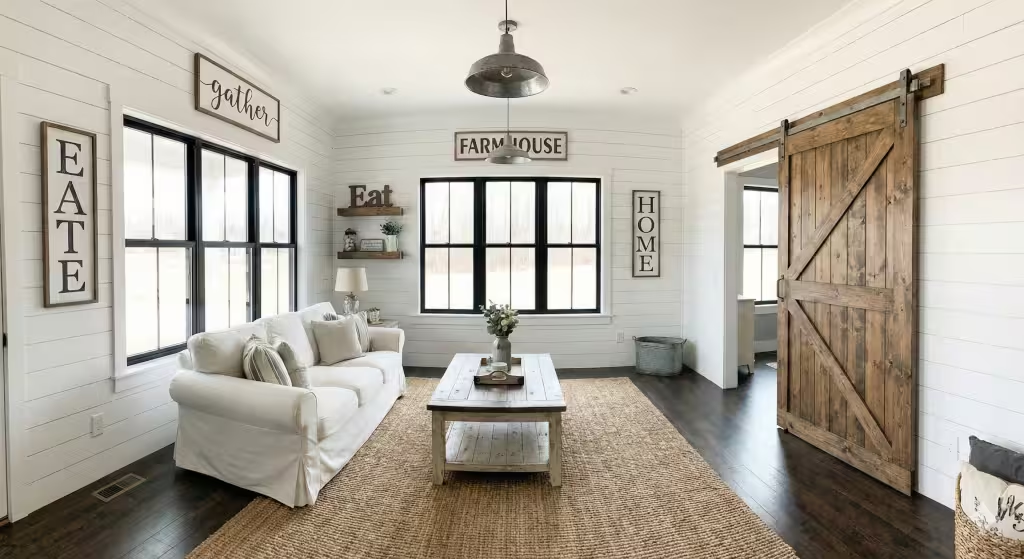
I have built many farmhouses in my career. There is a place for them. But the trend known as “Modern Farmhouse” has reached a saturation point. You know the look. It involves white vertical siding, black window frames, and shiplap on every single wall. Inside, you see sliding barn doors on pantries and bathrooms. You see signs that say “Gather” or “Eat” in script fonts.
The issue here is not the style itself, but how much it has been used. When a style becomes this common, it stops being special. It becomes “builder-grade.” In the world of interior design, once something is in every fast-food restaurant and budget hotel, it is time to move on. Using too much of this style stamps a date on your home. It tells everyone, “This house was built between 2018 and 2022.” As a custom home buyer, you want your house to look timeless, not like a snapshot of a fading trend.
This does not mean you have to abandon the rustic look. We live in Appalachia. Rustic elements make sense here for interior design. But instead of the cartoon version of a farmhouse, look at “Organic Modern” or “Mountain Modern” styles. These approaches to interior design focus on real materials. Instead of painted shiplap, use natural white oak paneling. Instead of a fake barn door, use a solid wood pocket door. Use stone that looks like it was dug up from the property.
The goal is to be authentic. Authentic materials never go out of style. They age well. A painted board might chip, but natural stone and wood develop a patina that looks better with age. That is the kind of interior design that adds value.
The “All-White” Laboratory Kitchen
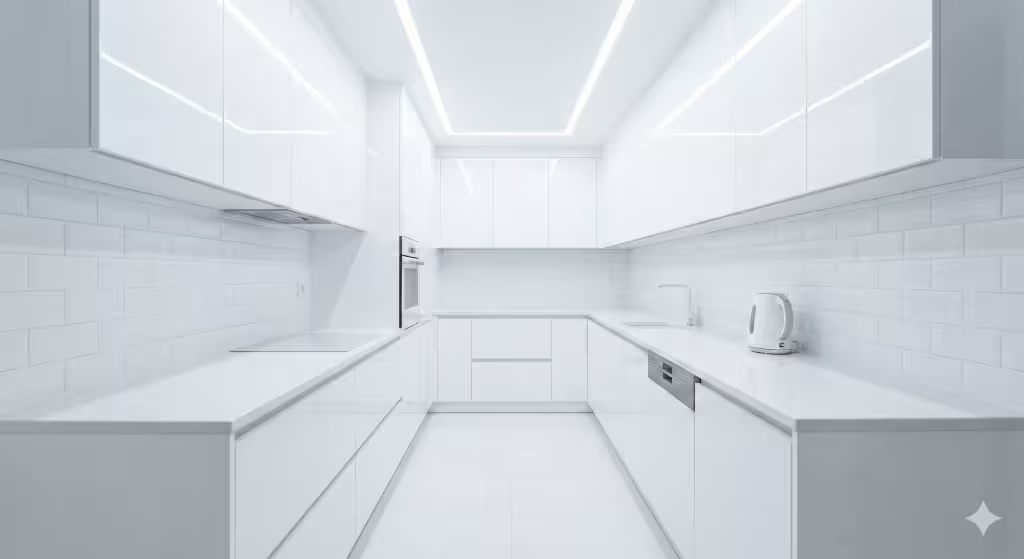
Kitchens are the most expensive room in the house to build. They are also the most important for resale value. For a long time, the standard advice in interior design was to make the kitchen all white. White cabinets, white quartz countertops, white subway tile backsplash, and bright white lights. It looks very clean in a photo. But living in it is a different story.
An all-white kitchen can feel like a laboratory. It can feel like you need to put on a hazmat suit to cook spaghetti. It shows every crumb and every fingerprint. It lacks depth. When everything is the same color, your eye has nowhere to rest. It feels flat. Also, from a maintenance perspective, keeping an all-white kitchen spotless is a nightmare. As a builder, I want to give you a home you can live in, not just look at.
The trends in interior design are moving toward moodier, more interesting kitchens. We are seeing a lot of two-toned cabinetry. This might mean having a natural wood island with painted cabinets on the perimeter. Or you might choose a deep navy blue or a forest green for the lower cabinets and keep the uppers light. This grounds the room. It gives it weight.
Texture is also key. Instead of flat white tile, look for tiles that have a handmade look with uneven surfaces. This catches the light and adds interest. Your kitchen should be the heart of the home. It should feel warm and inviting, like a bowl of soup on a cold day, not like a sterile operating room.
Matching Furniture Sets
When you finally finish building your house, you are tired. You just want to get furniture in there so you can sit down. It is very tempting to go to a big furniture store and buy the “living room set.” You get the sofa, the loveseat, and the chair that all match perfectly. Then you go to the bedroom section and buy the bed, the dresser, and the nightstands that are all made of the exact same wood with the exact same handles.
Please avoid doing this. In the world of interior design, this is a major mistake. It makes your home look like a catalog or a showroom. It lacks personality. It looks like you bought a “look” rather than creating a home. It also signals low quality. Usually, these matching sets are made of cheaper materials to keep the price down. They are not built to last.
Good interior design is about curation. It is about collecting pieces over time that speak to you. Maybe you have a great leather chair that you love. Pair that with a fabric sofa in a complementary color.
Go to downtown Jonesborough or Bristol and find an antique chest to use as a coffee table. Mix old and new. Mix wood tones. It is okay if the wood of your side table does not perfectly match the wood of your floor. This layering creates depth. It makes the home feel like it has a story. It shows that you have confidence in your taste. It takes a little more work than buying the set, but the result is a space that feels custom and unique to you.
Open Concept Without Zones
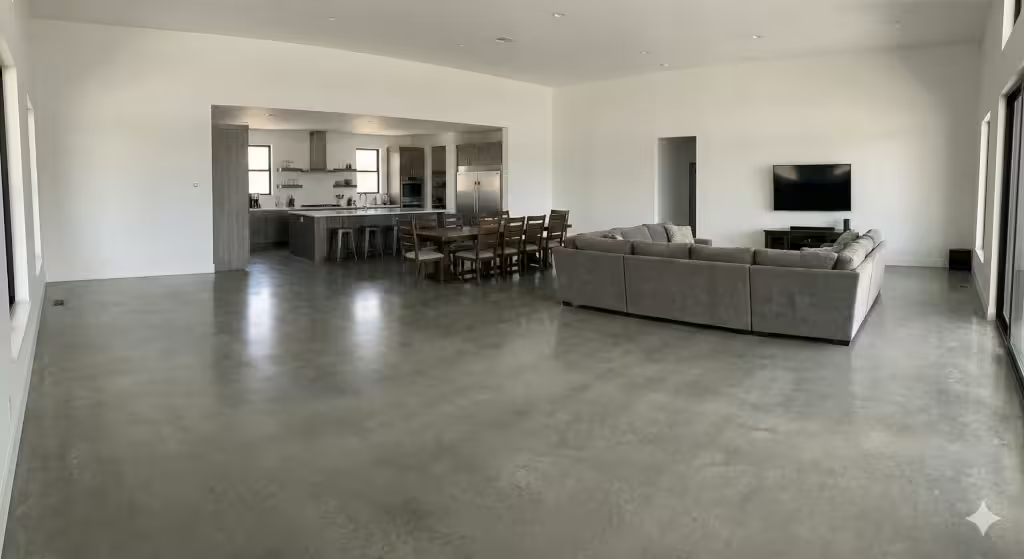
Open concept floor plans have been the king of interior design for twenty years. Everyone wanted to knock down the walls between the kitchen, the dining room, and the living room. They wanted one giant rectangle where everyone could be together. I get the appeal. It makes a house feel bigger. It is great for parties.
But we are starting to see the downsides of this trend. When you have one massive room with no walls, the acoustics are terrible. If someone is watching TV in the living area, and someone else is doing dishes in the kitchen, the noise bounces everywhere. It is loud. It is hard to focus. Heating and cooling these giant spaces is also less efficient. And frankly, sometimes you just want a little privacy. You do not always want to see the dirty dishes while you are trying to relax on the couch.
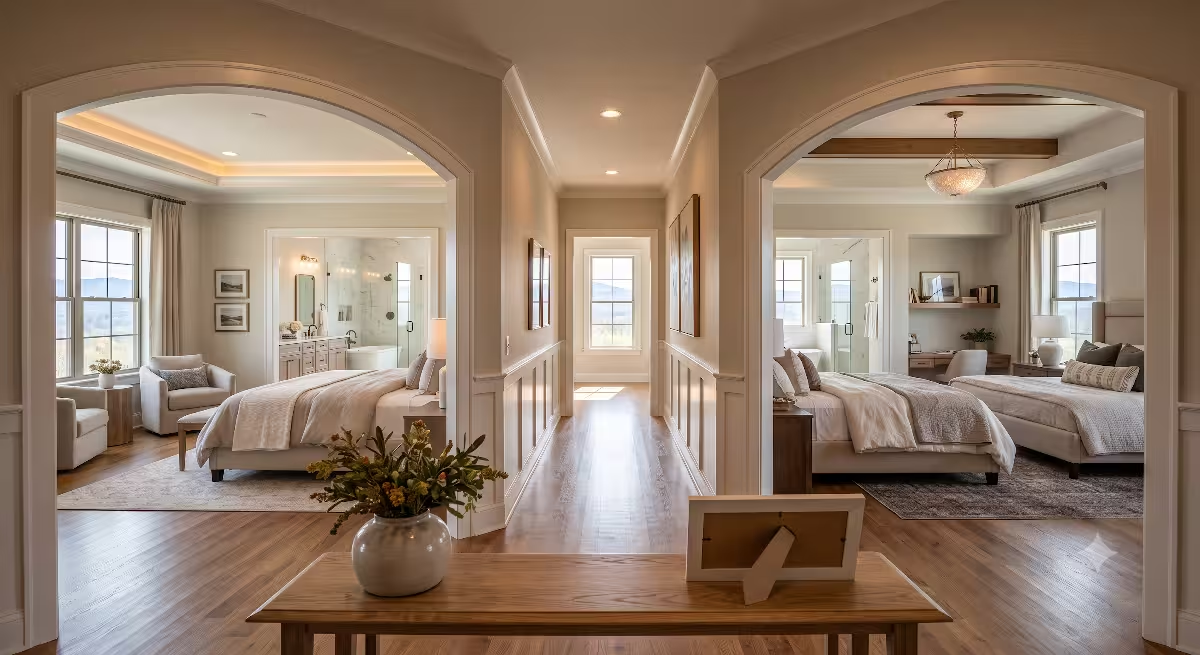
The new direction in interior design is something called “broken plan living.” It is a smart compromise. We are not going back to tiny, dark rooms with doors. Instead, we are using things like wide cased openings to separate spaces.
We might use a double-sided fireplace to create a visual barrier between the dining room and the living room, but still let light pass through. We might use glass partitions or changing floor levels. This keeps the flow and the light of an open plan, but it defines the “zones.” It gives each room a specific purpose. It contains the noise. It makes the home feel cozier and more functional. It is a more competent way to design a floor plan.
Fast Furniture and Synthetic Textiles
We talked about matching sets, but we also need to talk about the quality of the furniture itself. There is a trend in interior design toward “fast furniture.” This is furniture that is cheap, trendy, and not made to last. It is often made of particle board and cheap foam. It might look good for a year, but then the cushions sag and the legs get wobbly.
A specific trend we are seeing right now is the overuse of a fabric called bouclé. It is that knobby, wool-like fabric that looks like a sheep. It is very popular on social media. The problem is that synthetic versions of this fabric trap dust and dirt like a magnet. If you have kids, dogs, or if you ever go outside hunting or fishing, this fabric is going to look bad very quickly.
True interior design focuses on integrity. You should buy the best quality you can afford. Look for solid wood construction. Look for dovetail joints. When it comes to fabrics, look for “performance fabrics.” Brands like Crypton or Sunbrella make fabrics that feel soft but are incredibly durable. You can spill coffee on them, and it wipes right off. They resist fading. This is practical luxury. It means you can actually live in your house without being afraid of ruining the furniture. A well-built leather chair will last you thirty years. A cheap trendy chair will last you three. In the long run, the quality piece is cheaper.
Technical Note: Lighting Mistakes to Avoid
Lighting is often an afterthought in interior design, but it is actually one of the most technical and important parts of a room. The biggest mistake I see is the “Swiss cheese ceiling.” This is when a builder puts rows and rows of recessed can lights in the ceiling and nothing else.
Can lights are useful for general brightness, but they cast shadows on your face. They can make a room feel like an interrogation room if they are the only source of light. They do not provide the warmth and ambiance that you need for a comfortable home.
Good interior design relies on layers of light. You need three types. First, you need ambient light, which can be your can lights (put them on a dimmer!). Second, you need task light. This is light for doing things. Think of pendant lights over your kitchen island or sconces next to your bathroom mirror. Third, you need accent light. This is the jewelry of the room. It could be a lamp on a side table or a picture light over a painting.
When you layer these lights, you can change the mood of the room. You can turn off the big overhead lights and just use the lamps for a cozy evening. Also, pay attention to the “color temperature” of your bulbs. You want warm white, usually around 2700K to 3000K. Anything higher than that looks blue and cold.
The Role of Scale and Proportion
Another area where amateur interior design often fails is scale. Scale is the size of an object in relation to the room. I see this all the time. Someone builds a massive great room with twenty-foot ceilings. Then, they put a tiny rug and a small sofa in the middle of it. The furniture looks like dollhouse furniture. It gets swallowed up by the room.
The opposite happens too. People try to cram a giant sectional sofa into a small den. It blocks the traffic flow. You have to turn sideways to walk past it. This makes the room feel cramped and uncomfortable.
Competent interior design requires precise measurement. Before you buy anything, you need to map out the room. Use blue painter’s tape on the floor to outline where the furniture will go. This helps you visualize the scale. In a large room with high ceilings, you need substantial furniture. You need tall lamps. You need large artwork. In a smaller room, you need pieces with cleaner lines that do not take up as much visual weight. Getting the scale right for your interior design is a subtle engineering problem. It is about balance. When the scale is right, the room feels correct, even if you cannot explain why. When it is wrong, the room feels awkward.
Ignoring the Entryway
The entryway is the first thing people see when they walk into your home. In interior design, we call this the “arrival moment.” Too often, this space is neglected. It becomes a dumping ground for shoes, mail, and coats. Or, it is just a blank hallway with nothing in it.
Your entryway sets the tone for the entire house. It should be functional, but it should also be beautiful. From a builder’s perspective, this space needs to handle traffic. The flooring needs to be durable. Hardwood is good, but tile or slate might be better if you have a lot of mud coming in.
In terms of interior design, you want to create a focal point. This could be a nice console table with a mirror above it. The mirror serves a practical purpose, you can check your look before you leave, but it also bounces light and makes the narrow space feel bigger.
You need a place to put things down, like a small tray for keys. If you have the space, a bench is a great addition so you can sit down to put on your shoes. Do not treat this area as just a pass-through. Treat it as the introduction to your story. If the entryway is chaotic, the whole house feels chaotic. If it is organized and welcoming, the house feels calm.
The Problem with Theme Rooms
I once walked into a house where the powder room was decorated like a beach hut. It had a net on the wall, seashells everywhere, and a sign that said “Life’s a Beach.” We are in East Tennessee. We are hundreds of miles from the ocean. This is what we call a “theme room.”
Theme rooms are a trap in interior design. They feel childish. They break the flow of the house. You want your home to have a cohesive feel. You want the style to flow from one room to the next. If you have a modern living room and a rustic cowboy bedroom and a beach bathroom, the house feels disjointed. It feels like a funhouse, not a custom home.
Instead of themes, think about “feelings” or color palettes. If you love the beach, you do not need fishing nets. You can use the colors of the coast—soft blues, sandy beiges, and crisp whites—in a subtle way. This is sophisticated interior design. It captures the essence of what you love without being literal. If you love hunting, you do not need camouflage bedspreads. You can use rich leathers, plaid accents, and dark wood. This honors your hobby but keeps the design tasteful. Your home should reflect you, but it should do so with nuance.
Neglecting Window Treatments
Windows are the eyes of the home. But often, people leave them bare or put up cheap plastic blinds. This is a missed opportunity in interior design. Window treatments do three things. They control light, they provide privacy, and they add softness to the room.
A room without curtains or shades can feel unfinished. It can echo. Fabric at the windows absorbs sound. It also adds a vertical line that draws the eye up, making the ceiling look higher.
Avoid the cheap vertical blinds that click-clack every time the AC turns on. Avoid the paper shades. Invest in quality drapery or custom shades. In interior design, we often hang the curtains high and wide. This means mounting the rod closer to the ceiling than the window frame, and wider than the window itself. When the curtains are open, they sit on the wall, not blocking the glass. This makes the window look huge and lets in the maximum amount of light. It is a simple trick that adds a lot of elegance.
Over-Accessorizing and Clutter
There is a fine line between a curated home and a cluttered one. In the world of interior design, less is often more. We mentioned the “Modern Farmhouse” trend earlier, which often involves lots of little knick-knacks and signs. This creates visual noise.
When every shelf is packed with stuff, you cannot appreciate any of it. Your eye just scans over it. It becomes dust collection. It makes the room feel smaller and more stressful.
A good rule in interior design is the “cantaloupe rule.” Avoid using too many accessories that are smaller than a cantaloupe. Larger, fewer items make a better statement than a hundred tiny ones. Group things in odd numbers—threes or fives. Leave empty space on your shelves. Negative space is important. It lets the design breathe. It allows you to appreciate the architecture of the home. As a builder, I work hard to give you beautiful trim and straight walls. Don’t cover it all up with clutter.
Following Trends Instead of Your Instincts
The biggest trap in interior design is listening to experts like me more than you listen to yourself. That might sound strange coming from an article about what to avoid. But the truth is, this is your home. You have to live in it.
Trends are useful guides. They show us what is possible. They introduce us to new materials and ideas. But you should never adopt an interior design trend just because it is trendy. If you hate the color green, do not paint your cabinets green just because a magazine said it is the color of the year.
The best interior design is personal. It is a reflection of the people who live there. It solves your specific problems. If you have five dogs, white linen sofas are a bad design choice for you, no matter how popular they are. If you love to read, a wall of bookshelves is a great choice, even if minimalism is “in.” Use your common sense. Be competent in your choices. Ask yourself: Does this work for my life? Do I love it? Will I still like it in five years? If the answer is yes, then it is the right choice for you.
Building for the Future
We have covered a lot of ground here. We looked at why grey is fading and why the farmhouse look is tired. We talked about kitchens, furniture, lighting, and floor plans. The common thread in all of this advice is integrity.
True custom home building and interior design are about creating something of lasting value. It is about resisting the urge to be flashy. It is about choosing materials that get better with age. It is about designing spaces that work for real human beings, not just for cameras.
When you are building or remodeling in the Tri-Cities, you are making an investment in your future. You are building the backdrop for your family’s memories. Do not let fleeting fads dictate that backdrop. Choose warmth. Choose authenticity. Choose quality. If you do that, you will have a home that you are proud of today, and that will still look beautiful twenty years from now. That is the goal. That is what competent building is all about.
Video Resource
For a visual guide on some of these fading trends, I recommend watching Outdated Design Trends 2025. This video by Lisa Holt does a great job of showing exactly what we discussed, specifically regarding the “70s reprise” and the overuse of green. It reinforces the need to be careful with your choices.