
Imagine a little girl growing up in Kingsport, whose favorite place in the world was not inside the house. It was under the massive white oak tree that stood in their backyard. That tree was like a silent member of the family. It saw every birthday party and every summer picnic. It even survived the big ice storms that would roll through the Tennessee mountains. Over the years, many buyers come see the trees as structural parts of a property.
When you build a custom home, you are not just putting up walls and a roof. You are creating a space where life happens for years to come. Choosing the right trees is part of that building process. Many people want a fast fix, so they plant trees that grow quickly but break easily. This article aims to help you pick a tree for your yard that lasts. We want you to plant something that your grandchildren can climb one day. We are going to look at the best long-lived shade trees for our area. In addition, will talk about why they matter and how to make sure they thrive in our unique Tennessee soil.
Planting for the Next Generation
In the building world, we talk a lot about foundations. A good foundation is the most important part of a house. We think of long-lived shade trees as the foundation of your yard. If you pick a tree that only lives for twenty years, you are leaving a problem for the next homeowner. In places like Johnson City and Bristol, we have a specific climate. We are in Zone 7. This means our winters get cold, and our summers get very hot and humid. Shade trees are vital here because they protect our homes from that intense summer sun.
As builders know, female home buyers often think about the “feel” of the home. They want a place that feels established and safe. Nothing makes a new house feel like a home faster than a grand tree. But you have to be precise. You have to be competent in your choices. If you plant the wrong thing, you might end up with roots in your septic line or branches on your roof. We want to avoid those mistakes. We want to choose shade trees that are sturdy and beautiful. We want trees that can handle the heavy clay soil we have here in the Tri-Cities.
Understanding the Tennessee Soil Challenge
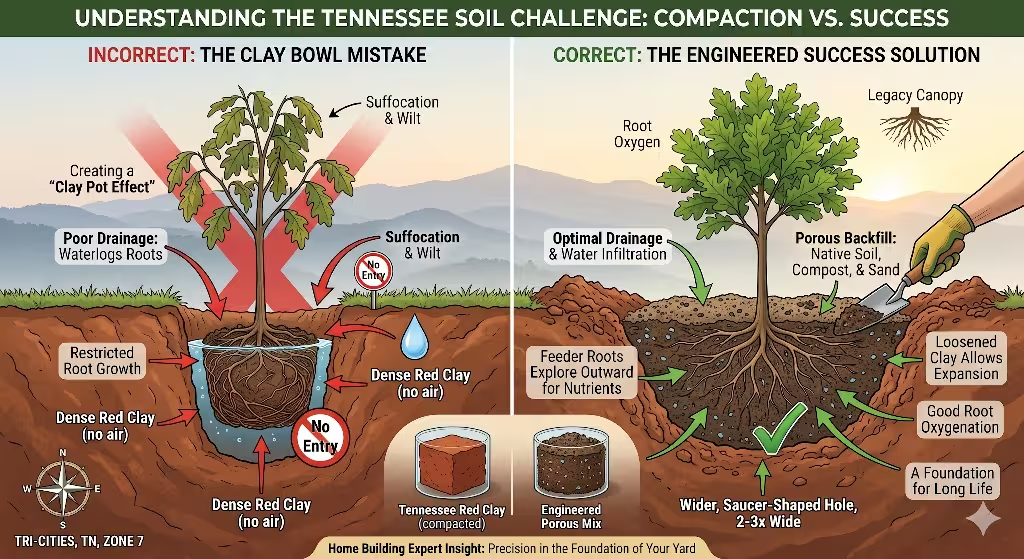
If you have ever tried to dig a hole in East Tennessee, you know our soil is a challenge. It is mostly heavy red clay. As a result, many landscaping projects fail because the builder did not understand the dirt. Clay is very dense. It holds onto water, which can drown the roots of some trees. When it gets dry in the summer, it turns as hard as a brick. This makes it hard for young shade trees to spread their roots.
Before you plant any shade trees, you need to think like an engineer. You have to look at the drainage. If water sits in one spot for days after a rain, you cannot plant a tree that likes dry feet. You also need to check the pH level of your soil. Most of our soil here is slightly acidic. This is good for many types of shade trees, but some might need a little extra help. It is advised that homeowners get a soil test from the local extension office. It is a simple step that shows you are precise and care about the integrity of your land.
When you dig the hole for your new shade trees, do not just make a small circle. You need to dig a hole that is two or three times wider than the root ball. This loosens the clay. It gives the new roots a chance to grow without hitting a wall of hard dirt. Think of it like the framing of a house. If the frame is too tight, the house cannot settle right. If the hole is too small, the tree cannot grow right.
The White Oak: The Gold Standard
The White Oak (Quercus alba) is the king of shade trees in Tennessee. If you want a tree that will be there for three hundred years, this is the one. It grows slowly, which is why some people pass it over. But in the building industry, we know that slow and steady usually means stronger. The wood of a White Oak is incredibly dense. This makes it one of the best shade trees for handling our winter ice storms. It does not snap easily like a Bradford Pear (Pyrus calleryana) or a Silver Maple (Acer saccharinum). Going further, the bradford pear is an invasive exotic species and has foul smelling flowers that attract flies.
The White Oak also has a very deep root system. Once it gets established, it is very hard to kill. It can handle the dry spells we sometimes get in late August. A lot of people also love the White Oak for the wildlife it brings. It produces acorns that feed squirrels and birds. It creates a whole little world in your backyard. When you are sitting on your porch in the evening, seeing that life around your home makes it feel more connected to nature.
One thing to remember as a builder is that White Oaks need space. They can grow to be very wide. You should not plant them too close to your foundation. Give them at least thirty feet of clearance. This ensures the roots have plenty of room to spread out without pushing against your basement walls or your driveway.
Sugar Maple: The Aesthetic Powerhouse
If you love the colors of fall in the Appalachian Mountains, the Sugar Maple (Acer saccharum) is for you. It is one of the most popular shade trees for a reason. In October, the leaves turn bright shades of orange, red, and yellow. It looks like your yard is on fire in the best way possible. These trees can live for over a hundred years if you treat them right.
Sugar Maple has a hard wood. It is strong and reliable. It creates a very dense canopy. This is exactly what you want from shade trees if you are trying to cool your home. The leaves are thick and grow close together. This blocks almost all of the direct sunlight from hitting your windows.
In our Zone 7 climate, Sugar Maples do very well. They like our moist, well-drained soil. However, they do not like to be in a swamp. If your yard has a spot that stays wet all the time, this might not be the best choice. But if you have a nice, rolling hill in Johnson City, a Sugar Maple will be very happy there. It is a precise choice for someone who wants beauty and function in one package.
Shumard Oak: The Clay Specialist
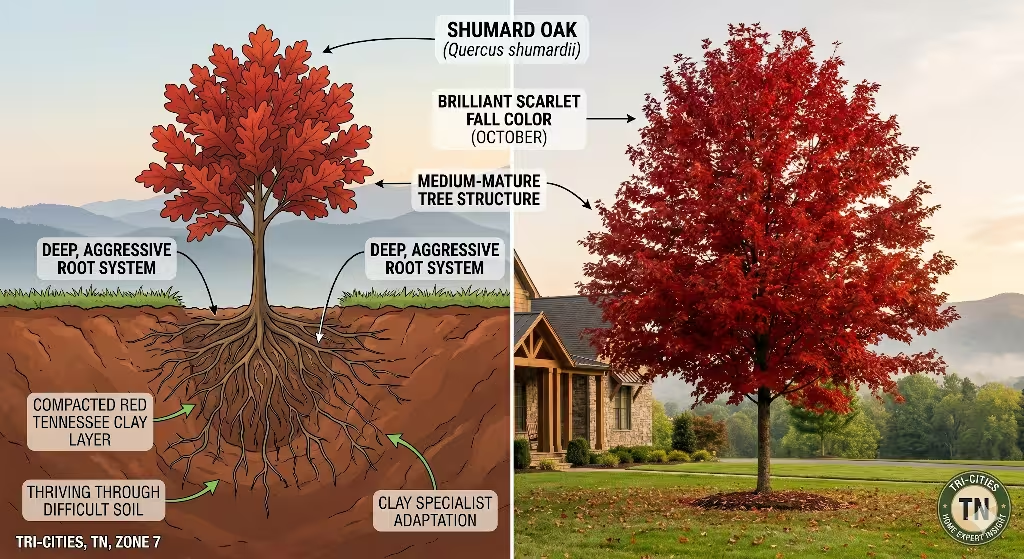
Sometimes you have a yard that is just tough. Maybe it was a construction site where the soil got packed down by heavy trucks. In those cases, we recommend the Shumard Oak (Quercus shumardii). This is one of the toughest shade trees you can find. It is specifically known for being able to handle heavy clay and city pollution. If you are building a home in a more developed part of the Tri-Cities, this tree is a great worker.
The Shumard Oak grows a bit faster than the White Oak. It still provides that long life we are looking for, usually lasting over a hundred years. It has a beautiful shape that looks professional and clean in a front yard. The fall color is a deep, rich red that stays on the tree for a long time.
Additionally, the Shumard Oak is a low-maintenance option. It does not drop as many messy seeds or pods as some other trees. It is a very “tidy” tree. This is great for homeowners who want a beautiful yard but do not have hours every weekend to clean up after their shade trees. It shows competence in planning when you pick a tree that fits your lifestyle.
Bald Cypress: The Durable Sentinel
Now, you might think of the Bald Cypress (Taxodium distichum) as a tree for the Florida Everglades. But it actually does wonderful in Tennessee Zone 7. It is one of the most unique shade trees you can plant. It is a conifer, which means it has needles and cones, but it drops its needles in the winter. This is very cool to watch. In the spring, the needles are a soft, bright green. In the fall, they turn a rusty orange color.
The Bald Cypress is famous for its “knees” that stick up out of the ground if it is planted in a very wet area. But if you plant it in a normal yard, it usually does not grow them. It is one of the longest-lived shade trees on this list. Some can live for hundreds and hundreds of years. It is also incredibly strong. It has a taproot that goes deep into the ground. This makes it almost impossible for the wind to blow it over.
For a custom home buyer, the Bald Cypress offers a bit of architectural flair. It has a tall, narrow shape that looks very elegant. It is perfect for the corners of a large lot. It provides great shade without taking up the entire yard. It is a precision choice for a modern home design.
Ginkgo: The Ancient Survivor
The Ginkgo (Ginkgo biloba) is often called a living fossil. It is a tree that has been around since the time of the dinosaurs. If that does not tell you it is a survivor, nothing will. This is tree is one of the most disease-resistant shade trees in existence and handles urban pollution to boot. Pests do not like it, and it can handle almost any kind of weather Tennessee throws at it.
The most famous thing about the Ginkgo is its leaves. They are shaped like little fans. In the fall, they all turn a brilliant, solid gold at the same time. Then, usually after the first hard frost, they all drop at once. It creates a golden carpet around the base of the tree. It is truly a magical thing to see.
One word of caution from a building expert: make sure you buy a “male” Ginkgo. The female trees produce a fruit that smells very bad when it falls and rots. Most nurseries only sell the male trees for this reason. But you should always double-check. You want your shade trees to add value to your home, not a bad smell!
Frequently Asked Questions about Shade Trees
Buyer often have a lot of questions about shade trees. People are often worried about how fast they grow or where to put them. One common question is: “What are the fastest-growing shade trees in Tennessee?” We always give a warning here. Trees like the Silver Maple or the Empress Tree grow very fast. They can give you shade in just a few years. But their wood is very soft. In our area, we get heavy snow and ice. These fast-growing trees often split or lose big limbs during a storm. This can damage your house or your car. It is much better to pick a tree with a medium growth rate that has stronger wood.
Another question is: “Which shade trees have the least invasive roots?” This is a big concern for people with small yards. You do not want roots lifting up your sidewalk or getting into your pipes. Trees like the Ginkgo or the White Oak have deeper roots that tend to stay away from the surface. Avoid trees like the Weeping Willow or the American Sycamore if you are worried about roots. Those trees love water and will go looking for it in your plumbing.
People wonder about shade trees for small yards. If you do not have a huge lot in Johnson City, you might not want a massive Oak. In those cases, I suggest looking at a “Littleleaf Linden” or even a “Serviceberry.” They provide shade but stay at a manageable size. They are perfect for smaller, modern developments.
The Builder’s Guide to Tree Placement
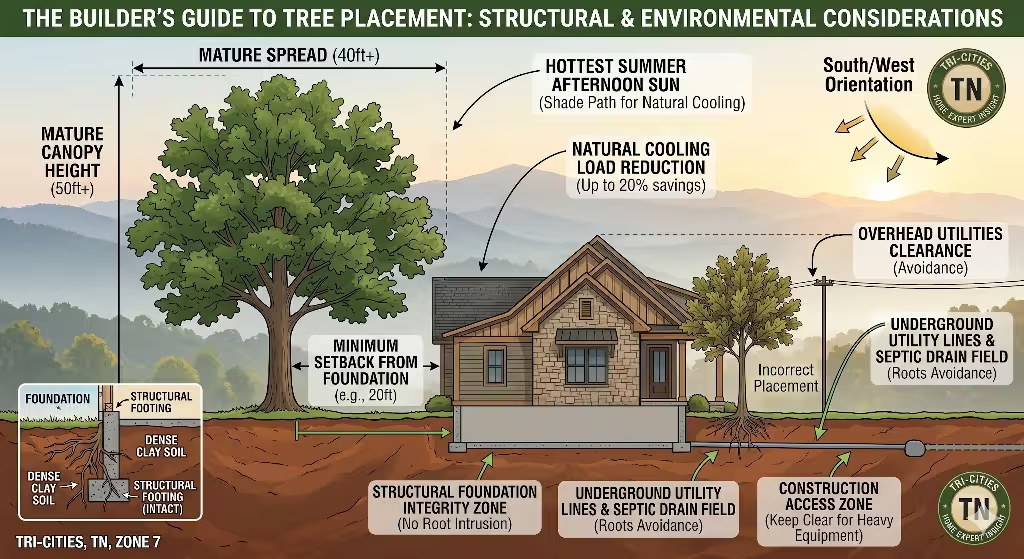
Planning where to put your shade trees is just as important as choosing the species. Something else important is to look at the sun’s path. In Tennessee, the sun is highest and hottest in the south and west. If you want to lower your power bill, you should plant your shade trees on the south and west sides of your home.
When the sun hits your walls and windows in the afternoon, it heats up your house like an oven. A well-placed tree can block that heat before it ever touches your siding. This can save you as much as twenty percent on your cooling costs. That is real money back in your pocket. It is a smart, competent way to manage your home.
But you have to be careful with the distance. I use a simple rule: look at the mature height and width of the tree. If a tree is going to be fifty feet wide when it is full grown, you should plant it at least twenty-five feet away from the house. This keeps the branches from rubbing against your roof. It also keeps the roots from putting pressure on your foundation. Many beautiful homes ended up with cracked foundations because a tree was planted just five feet away. Don’t make that mistake.
Maintenance for Longevity
Once your shade trees are in the ground, your job is not over. The first two years are the most important. Think of a new tree like a new baby. It needs a lot of attention until it can stand on its own. In the Tri-Cities, we often have very dry spells in the middle of summer. You must water your new shade trees during these times. A deep soak once a week is much better than a light sprinkle every day. You want the water to go deep into the soil so the roots grow downward.
Mulching is also very important. It keeps the moisture in the soil and protects the trunk from lawnmowers. But as a professional, I have to tell you: do not build a “mulch volcano.” This is when people pile mulch up against the trunk of the tree. This traps moisture against the bark and can cause the tree to rot. Instead, make a flat ring of mulch that looks like a donut. Keep the mulch a few inches away from the trunk itself.
Lastly, think about structural pruning. When a tree is young, a professional can prune it to have one strong central leader. This is like the main pillar of a house. If a tree has two main trunks, it is much more likely to split during a storm. Spending a little money on an arborist when the tree is small will save you thousands of dollars in the future. It is a precise way to ensure your shade trees live a long and healthy life.
The Living Blueprint
Building a home is about more than just the structure. It is about the environment you create around it. When you choose long-lived shade trees, you are making a statement. You are saying that you care about the future. You are creating a legacy that will last long after you are gone.
For a builder, whether it is the carpentry in a kitchen or the trees in a yard, doing it right the first time is the only way to go. Here in East Tennessee, we have the perfect environment to grow some of the most beautiful trees in the world. From the hills of Kingsport to the neighborhoods of Johnson City, let’s plant things that matter.
Take your time. Do your research. Look at your soil and the layout of your land. Pick shade trees that fit your vision for your home. When you do, you will find that your house feels cooler, your yard looks better, and your heart feels a little more at peace. There is nothing quite like sitting under a tree you planted yourself and watching the sun go down over the mountains.
Protecting Your Home Investment
When we talk about home value, we often talk about granite counters or hardwood floors. But the landscaping and the shade trees you choose are just as important. A house with mature, healthy trees often sells for more than a house with a bare yard. It gives the property a sense of history and “curb appeal.”
Let’s face it first impressions matter. When a buyer pulls up to a house and sees a beautiful White Oak or a glowing Sugar Maple, they feel a connection. They see a place where they can imagine their own children playing. Shade trees provide a sense of privacy that a fence just cannot match. They soften the lines of the house and make it feel like part of the earth.
If you are currently building a custom home, talk to your builder about saving the existing shade trees on the lot. Many builders want to clear everything to make it easier for the machines. But it takes fifty years to grow a good tree and only five minutes to cut it down. If you can save a healthy tree, you are starting with a huge advantage. It shows integrity to protect the natural beauty that was already there.
The Role of Shade Trees in Local Ecosystems
We also have to think about our community. The Tri-Cities area is famous for its natural beauty. When we plant native shade trees, we are helping the local birds and bees. Tennessee has lost many of its old forests to development. By planting an oak or a maple in your yard, you are creating a small “island” of habitat.
Think about the birds that migrate through our area. They look for those big canopies to rest and find food. When you plant shade trees, you are participating in the health of the whole region. It is a small act that has a big impact. It is a way to be a good neighbor to the creatures that live here with us.
Native trees are also better at handling our local pests. They have lived here for thousands of years. They know how to deal with the bugs and the fungi that live in Tennessee. This means you will not have to use as many chemicals to keep them healthy. It is a cleaner, safer way to manage your yard for your family and your pets.
Making the Final Choice
So, which one will you pick? Will it be the mighty White Oak that stands for centuries? Or perhaps the colorful Sugar Maple that celebrates every autumn? Maybe the tough Shumard Oak is the right fit for your clay soil. Or the elegant Bald Cypress could be the unique touch your modern home needs. And don’t forget the Ginkgo, the golden survivor that never gives up.
Whatever you choose, remember that you are the architect of your yard. You have the power to create a space that is cool, beautiful, and lasting. Use your competence and your precision to plan it well. Be direct with your landscaper about what you want. Ask for shade trees that are built to last.
In the end, a home is more than just a place to sleep. It is a place to grow. And nothing grows quite like a well-loved tree. We hope this guide has helped you feel more confident in your choices.
Planting shade trees is a gift to yourself, but it is also a gift to the person who will live in your house fifty years from now. Let’s make sure it is a gift they will truly cherish. Happy planting, and enjoy the cool breeze under your new canopy!
Summary Table for Tennessee Zone 7 Shade Trees
To help you be precise in your decision, we have put together a quick look at the trees we discussed. This can help you compare them at a glance.
| Tree Species | Lifespan | Growth Rate | Best Feature |
| White Oak | 200+ Years | Slow | Strong wood and legacy |
| Sugar Maple | 100+ Years | Medium | Amazing fall colors |
| Shumard Oak | 100+ Years | Medium-Fast | Great for heavy clay |
| Bald Cypress | 500+ Years | Medium | Wind and ice resistant |
| Ginkgo Biloba | 1,000+ Years | Slow-Medium | Pest and disease proof |
Each of these shade trees has something special to offer. Think about what your yard needs most. If you have a lot of wind, go with the Cypress. If you want a show every October, go with the Maple. If you want to plant a “forever” tree, the White Oak is your best bet. Being precise in your choice today means a better home for tomorrow.
As we wrap up this look at the best shade trees for our area, we want to remind you that your local nurseries are a great resource. People in the Tri-Cities are friendly and usually very happy to share their knowledge. Go visit them. See these trees in person. Touch the bark and look at the leaves. When you find the right one, you will know. It will feel like it belongs on your land.
Building a life in East Tennessee is a wonderful thing. We have the mountains, the rivers, and the beautiful seasons. By adding the right shade trees to your property, you are making this beautiful place even better. You are adding to the integrity of our landscape. Thank you for caring about your home and our community. I look forward to seeing more beautiful, tree-filled yards all across the Tri-Cities!