Building a new home in the rolling hills of Northeast Tennessee is a significant goal, a chance to create a space that perfectly fits your life amidst the beauty of our region. Many people begin this journey with a clear vision of the finished product; the kitchen where family will gather, the porch with a view of the mountains, the quiet study for focused work. But between that vision and the day you receive the keys lies a complex process, and the most common question is also the most fundamental: “What is it actually going to cost?”
The answer isn’t a single number. Generally a successful project is built on a foundation of clear expectations. The final price tag on a new home is not one large expense; it is the sum of hundreds of distinct decisions and variables. The purpose of this guide is not to give you an elusive magic number, but to provide something far more valuable: a clear understanding of the factors that drive the cost. We will walk through the entire process, dissecting the costs into four primary categories: the groundwork and land preparation, the plans and permits, the physical construction, and finally, the interior finishes that make a house your home.
Factor 1: The Groundwork – Land Acquisition & Site Preparation
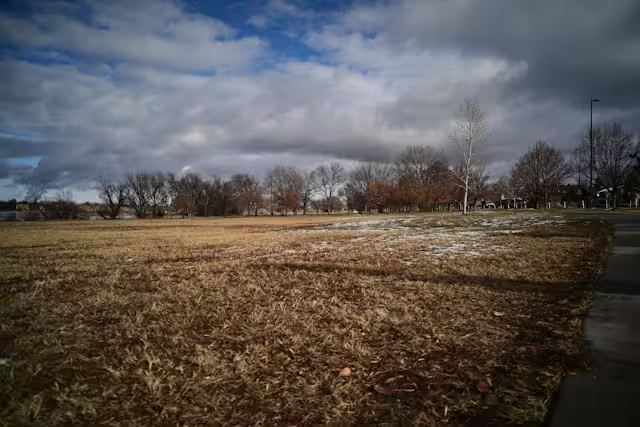
Before you can think about floor plans or paint colors, you have to consider the ground your home will stand on. These initial costs are some of the most important and variable parts of the entire budget. Getting this stage right is critical, as mistakes made here can be incredibly expensive to fix later.
Land Purchase Price
The first major line item is the land itself. In the Tri-Cities, the price of a parcel of land is influenced by more than just its acreage. A half-acre lot in a developed Johnson City subdivision with existing roads and utilities will carry a different price than five acres of undeveloped land in rural Sullivan County. Key factors include:
- Location: Proximity to city centers, schools, and amenities always plays a role.
- Topography: A flat, easily accessible lot will generally cost less to build on than a steeply sloped lot, even if the sloped lot has a stunning view.
- Access: Does the property have direct access to a publicly maintained road?
- Amenities: Features like mountain views or proximity to Boone Lake or the Watauga River can increase the land’s value.
Due Diligence: The Non-Negotiables
Once you’ve identified a piece of land, there are a few essential steps you must take before finalizing the purchase to understand what you’re truly buying.
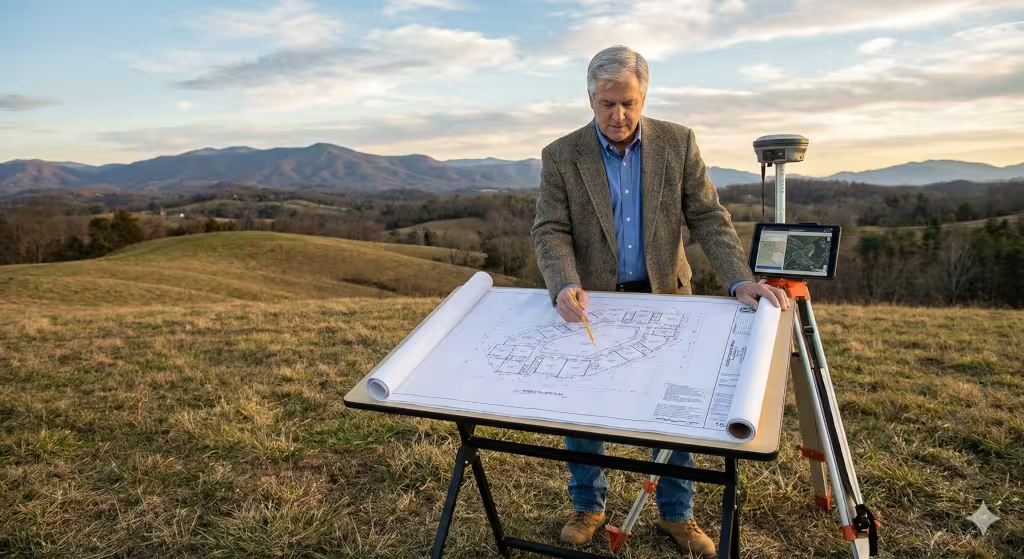
- Surveys: A boundary survey marks the exact legal lines of your property, ensuring you don’t build on a neighbor’s land. A topographical survey maps out the elevation changes and features of the lot, which is vital for deciding where the house will sit and how the driveway will run.
- Soil Testing (Geotechnical Report): This might be the most important test you’ll conduct. Think of it as a report card for your soil. A professional will take core samples to determine the composition of the ground. In East Tennessee, we have everything from rich soil to dense clay and solid limestone. This report tells us how stable the ground is and if we are likely to hit rock during excavation. It dictates the specific engineering requirements for your foundation, saving you from catastrophic surprises down the road.
Site Preparation Costs
This category covers all the work needed to get your raw land ready for construction.
- Clearing & Grading: This is the process of removing trees, rocks, and brush, and then shaping the land to ensure proper drainage and create a stable, level area for your home’s foundation.1 The cost here depends entirely on the condition of your lot. A lightly wooded, flat lot will be far less expensive to clear than a heavily forested, steep hillside.
- Excavation & Foundation: After the land is graded, we excavate, or dig out, the area for the foundation. The cost of this step is heavily influenced by the soil test results. If we hit unexpected, large formations of rock, bringing in heavy equipment like hydraulic hammers will add significant cost. From there, you will need a foundation. There are three basic types:
- Slab-on-Grade: A concrete slab poured directly onto the ground. This is often the most cost-effective option for a flat lot.
- Crawlspace: The home is elevated off the ground, creating a short space underneath. This is common in our region and allows for easier access to plumbing and electrical systems.
- Basement: A full-height foundation that can be finished into additional living space. While it has the highest upfront cost, it also adds the most square footage and value to the home.
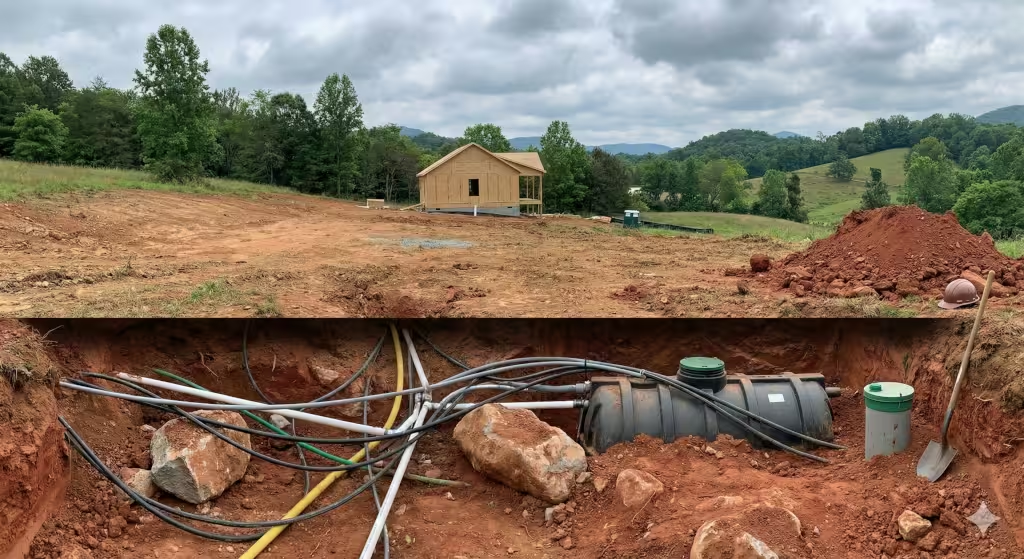
- Utility Connections: Getting power, water, and internet to your home is a major step. The complexity and cost depend on your location.
- In the City: If you are building within city limits (Johnson City, Kingsport, Bristol), you will pay “tap fees” to connect to the municipal water and sewer lines. You will also pay a fee to a provider like BrightRidge or Bristol Tennessee Essential Services (BTES) to run power to your home site.2
- In the County: If you are building in a more rural area of Washington, Sullivan, or Carter County, you will likely need your own systems. This involves the cost of drilling a well for water and installing a septic system for waste. A septic system requires a soil analysis (called a “perc test”) and approval from the Tennessee Department of Environment and Conservation (TDEC).
- Driveway Installation: People often forget to budget for a driveway. The cost depends on the length, steepness, and material. A long, winding gravel driveway will be the least expensive upfront, while a paved asphalt or poured concrete driveway represents a larger investment.
Factor 2: The Blueprint – Design, Engineering, and Permitting (Soft Costs)

“Soft costs” refer to the non-physical items you need before construction can begin. This is the planning phase, where your vision is translated into a technical blueprint that builders and inspectors can follow.
Architectural & Design Fees
This is the cost of your actual house plans. You have two primary paths:
- Stock Plans: You can purchase pre-drawn plans online. This is the most affordable option, with costs typically ranging from $1,000 to $3,000. However, these plans are generic and will likely need modifications by a local designer to fit your specific lot and to comply with local building codes.
- Custom Design: You can hire an architect or a residential designer to create a unique plan from scratch. This process is more expensive and time-consuming, but the result is a home perfectly tailored to your family’s needs, your lifestyle, and your property’s unique characteristics.
Engineering
Depending on the complexity of your home’s design or the challenges of your building site, you may need a structural engineer. They ensure the home’s integrity, especially with features like large open-concept spaces, complex rooflines, or foundations on a steep slope. Their stamp of approval is often required to get a building permit.
Navigating Local Permits & Fees
Before any construction begins, your plans must be submitted to the local authorities for approval. This ensures the home is being built to modern safety standards. Each municipality has its own fee structure, and a builder will typically handle this process for you. You will need to get permits from your local codes department, such as Johnson City Development Services or Sullivan County Planning & Codes. These fees cover the review of your plans and the necessary inspections that occur at key stages of the build (foundation, framing, electrical, plumbing, etc.). While it’s an added cost, the permitting and inspection process is there to protect you and the value of your investment.
Factor 3: The Build Itself – Hard Construction Costs
This is the largest portion of your budget and what most people think of when they imagine building a house. Hard costs cover all the physical materials and the labor required to assemble them into a finished home.
The Cost-Per-Square-Foot Question
One of the first questions people ask is, “What’s the average cost per square foot to build in the Tri-Cities?” While it’s a common metric, it can be very misleading.
Think of it like asking for the “price per pound” of a vehicle. A basic pickup truck and a luxury European sports car might weigh the same, but their price per pound is vastly different because of the quality of their components, their engineering, and their features. A home is the same. A 2,000-square-foot home with standard finishes and a simple rectangular design will have a much lower cost per square foot than a 2,000-square-foot home with a complex architectural design, vaulted ceilings, and high-end finishes.
As of late 2025, a realistic starting point for a quality custom home in our area often falls in the range of $185 – $285+ per square foot. Use this only as a very preliminary budgeting tool. The real cost will be determined by the specific components below.
Structural & Exterior Components
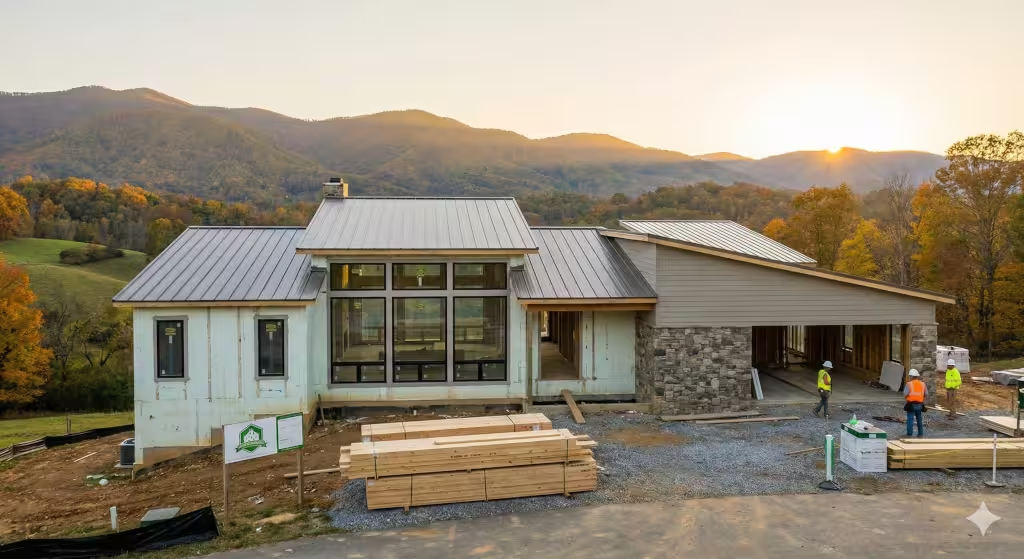
- Framing: This is the skeleton of your house. The cost is driven by the price of lumber, which can fluctuate with market conditions, and the complexity of the design. A simple one-story home is less expensive to frame than a two-story home with numerous corners and a complicated roof system.
- Exterior Finishes: This is the “skin” of your home. There is a wide cost range here:
- Good: Vinyl siding is the most affordable option.
- Better: Fiber cement siding (like HardiePlank) is more durable and expensive.
- Best: Brick and stone are the most durable and carry the highest price tag for both materials and labor.
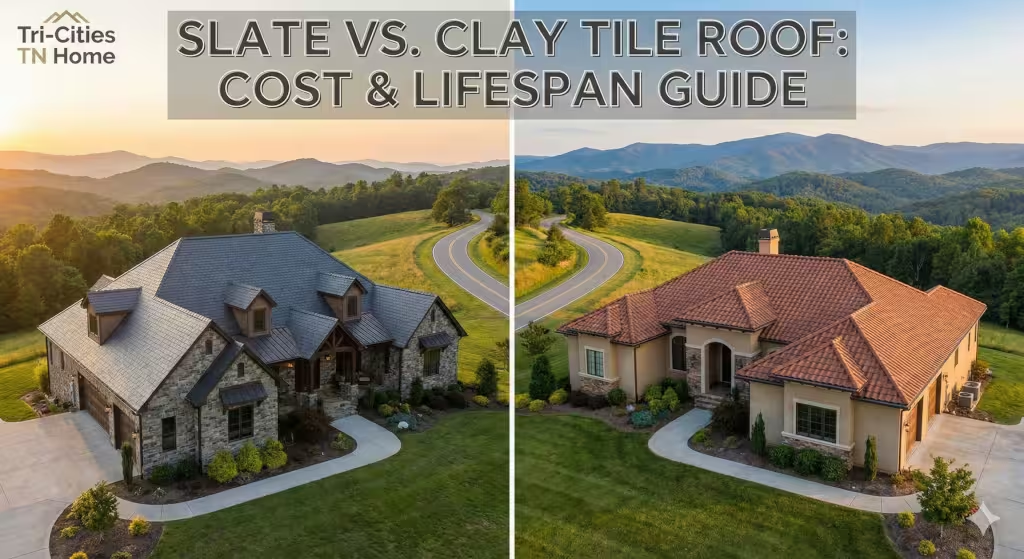
- Roofing: The two most common options are architectural asphalt shingles, which are cost-effective and have a lifespan of 25-30 years, and a standing-seam metal roof, which costs significantly more but can last 50 years or longer.
- Windows & Doors: This is a key area where quality matters for long-term energy efficiency. The cost depends on the material (vinyl is standard, wood or fiberglass is a premium) and the energy rating (known as the U-factor). More windows and larger doors will increase the cost.
Interior Systems (The “Guts” of the Home)
These are the critical systems hidden behind your walls that make your home comfortable and functional.
- HVAC (Heating, Ventilation, and Air Conditioning): The cost depends on the size of your home and the efficiency of the unit. A higher SEER rating (think of it like MPG for your car) costs more upfront but will save you money on your electric bill for years to come.
- Electrical: The price is determined by the number of outlets, switches, light fixtures, and dedicated circuits needed for appliances. Features like recessed lighting, home automation systems, or an electric vehicle charger will add to the cost.
- Plumbing: The primary driver of plumbing costs is the number of fixtures. Every toilet, sink, shower, and tub adds to the material and labor expense. The type of water heater (tankless vs. traditional tank) also affects the price.
Factor 4: The Personal Touch – Interior Finishes
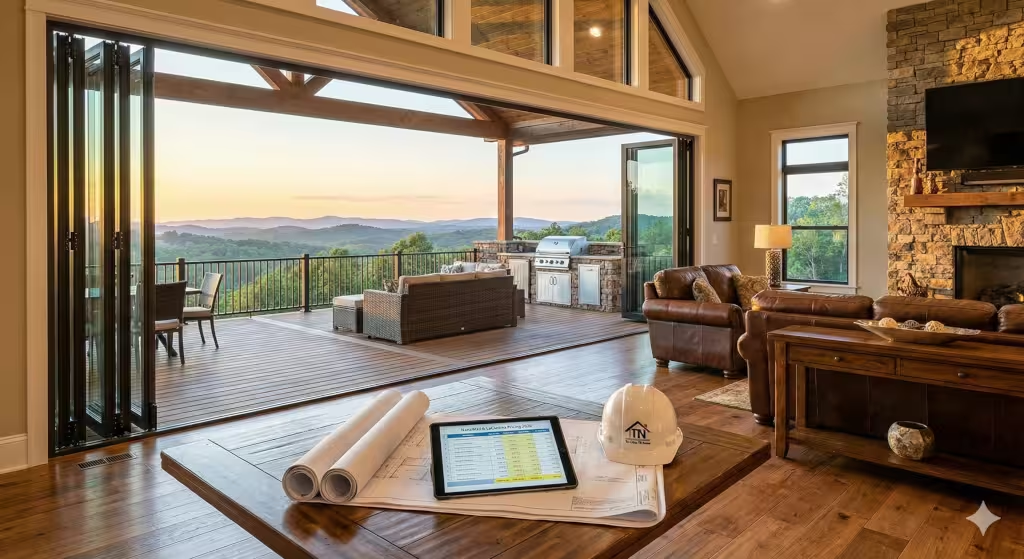
This is the stage where your personal style comes to life, and it’s also the area where budgets can most easily expand. The choices you make for the surfaces you see and touch every day have a massive impact on the final cost.3
The “Allowances” Trap
In a building contract, an “allowance” is a budget placeholder for items you will select later, like appliances or light fixtures. For example, a builder might include a $5,000 appliance allowance. If you fall in love with a professional-grade range and fridge that cost $12,000, that $7,000 difference is an overage you have to pay. It’s crucial to have realistic allowances from the start to avoid budget shock later.
Cost Tiers by Category
- Flooring: Luxury Vinyl Plank (LVP) is a popular, durable, and cost-effective choice. Engineered hardwood costs more, while site-finished solid hardwood is a premium option. Tile, especially with complex installation patterns, can be one of the most expensive flooring choices.
- Cabinetry & Countertops: This is a major expense, especially in the kitchen.
- Cabinets: Stock cabinets from a big-box store are the most affordable. Semi-custom gives you more options for style and size. Full custom cabinets are built to your exact specifications and carry the highest cost.
- Countertops: Laminate is the most budget-friendly. Granite offers a wide range of prices. Quartz is a premium, highly durable engineered product.
- Appliances: A basic set of kitchen appliances might cost $4,000, while a high-end, commercial-grade package can easily exceed $20,000.
- Fixtures: This includes everything from faucets and showerheads to chandeliers and ceiling fans. A builder-grade lighting package might cost $2,000, but a designer lighting package could be $15,000 or more. These small choices add up quickly.
- Trim & Millwork: The size and style of baseboards, window casings, and crown molding affect the cost. A simple trim package is standard, while multi-piece crown molding and custom built-ins are significant upgrades.
Is it Cheaper to Build or Buy in the Tri-Cities?
This is a question without a simple yes or no answer. It depends on the housing market and your personal priorities.
- Buying an Existing Home: The primary advantage is a known final cost and a faster move-in timeline. However, you are buying someone else’s choices and may face unexpected repair costs for aging systems like the roof or HVAC. In a competitive market, you may also face bidding wars.
- Building a New Home: Building almost always requires a higher initial financial outlay than buying a comparable existing home.4 However, you are in complete control of the design, layout, and finishes. Everything is brand new and under warranty, and modern building codes mean your home will be far more energy-efficient, saving you money every month. You are not just buying a house; you are creating your home.
Ultimately, the decision comes down to value. If your priority is customization, energy efficiency, and having a home perfectly suited to your needs with no deferred maintenance, the value of building is often unmatched.
Conclusion: Your Partner in Precision
As you can see, the final cost of building a home in the Tri-Cities is a complex equation with dozens of variables. The journey from an empty lot to a finished home is a significant undertaking, but it does not have to be overwhelming. The key is to understand where your money is going and to make informed decisions at every step. The most important factors that will influence your final budget are the cost and condition of your land, the size and complexity of your home’s design, and the quality of the interior finishes you choose.
A competent, experienced local builder does more than just manage subcontractors. They serve as your guide through this entire process, providing transparent pricing, helping you navigate the complexities of permitting, and offering expert advice to help you get the most value for your investment. Building a home is a partnership, and it is my firm belief that when that partnership is built on precision and integrity, the result is an incredibly rewarding experience and a home your family will cherish for generations.