If you have a large family, you know exactly what Monday morning looks like. It is a scene of absolute chaos. There are shoes missing their partners, shirts that looked fine yesterday but are now wrinkled beyond recognition, and a frantic search for that one specific jacket. Many families have this friction every day. It is not just about being messy. It is a failure of engineering.
When people endeavour to build homes in Kingsport or Johnson City, they often focus on square footage. They look at the size of the bedroom or the flow of the kitchen. However, what is often ignored is the volume of the storage space. A standard closet with a single wire rod is simply not designed to handle the dynamic load of a family of five or six. It is a static solution to a dynamic problem.
However, a home as a machine for living. Every part of that machine needs to work efficiently. Your closet is not just a box with a door. It is a processing center. It takes in clean laundry, stores it, and dispenses it when you need it. If that machine is broken, your whole morning routine breaks down.
For large families, the cheap wire shelves you buy at the big box store usually fail. They cannot handle the weight. They cannot adapt when your toddler becomes a teenager and their clothes get longer. We need to look at systems that offer structural integrity and modularity. We need a closet system that works as hard as you do.
Analyzing the Load: What Large Families Actually Need
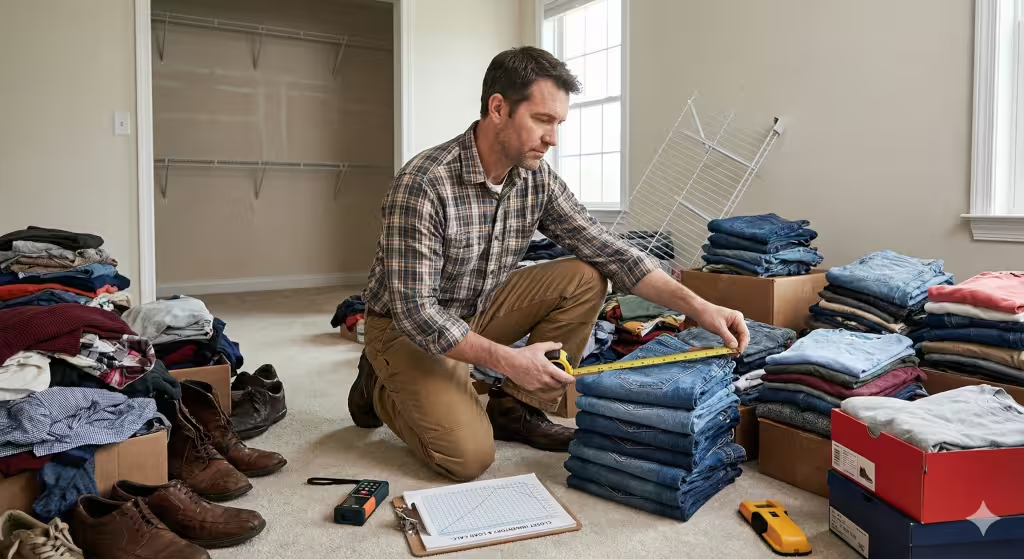
Before we ever pick up a drill or buy a shelving kit, we have to look at the data. In engineering, we never build without a blueprint. The same rule applies to your closet organization. Most people skip this step, and that is why their organization efforts fail within six months.
You need to perform an audit of what you actually own. I call this the inventory assessment. You need to pull everything out. Yes, everything. You cannot engineer a solution if you do not know the variables. Count the pairs of shoes. Measure the linear feet of hanging clothes. How many of those items are long dresses versus short shirts?
I use the 80/20 rule when advising clients on closet design. You and your family likely wear 20 percent of your clothes 80 percent of the time. Those high-use items need to be at eye level and easy to reach. The other 80 percent, like formal wear or seasonal coats, can go up high or down low.
We also have to talk about durability. In a home with children, a closet system takes a beating. Kids do not gently place hangers on a rod. They pull. They climb. They slam things. I have seen standard drywall anchors rip right out of the wall in homes across Tennessee because the installer did not account for the live load. The weight of denim jeans alone is substantial. When you add the weight of a child tugging on a coat, you need a system that is anchored into the wood studs, not just the drywall.
Material Science: Wire vs. Laminate vs. Wood
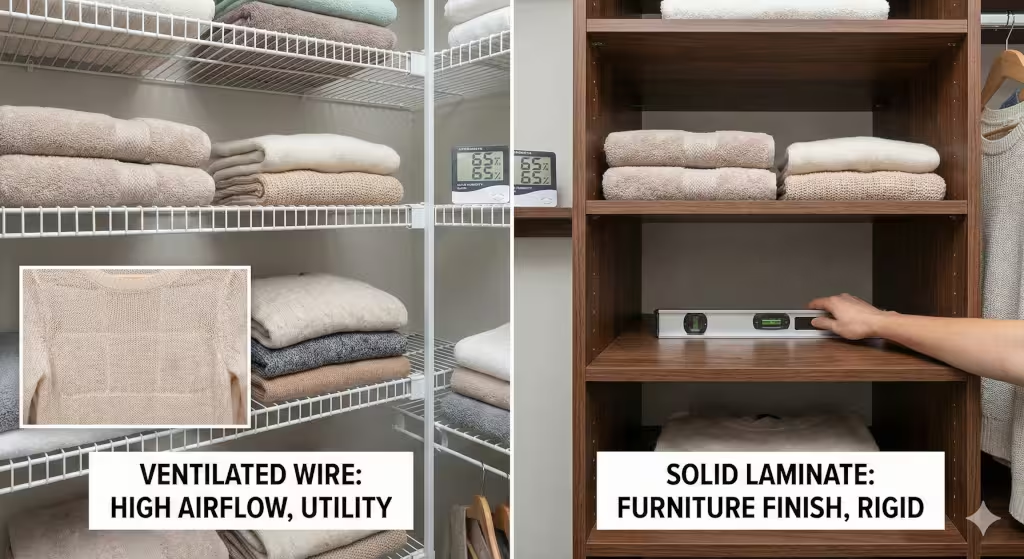
When you start shopping for a closet system, you will generally see two main categories. You have ventilated wire systems and you have solid wood or laminate systems. Both have their place, but they perform differently depending on the environment.
Ventilated wire is very common in our area, for one main reason: airflow. Here in the south, humidity is a real factor. If you pack a closet tight with clothes, air needs to move to keep things fresh. This is especially true for teenage boys or for storing hunting and fishing gear. Wire shelves let the air circulate. They are also usually adjustable, which is key for growing families. However, wire has a downside. If you have thin sweaters, the wire can leave “waffle marks” on the fabric. Small items can also tip over on the wire slats.
Solid laminate or wood systems look much better. They give you that furniture feel. In a master bedroom closet, this adds real value to your home. Solid shelves prevent the waffle marks and allow you to stack things neatly. The downside is the weight. These systems are heavy. They put a lot of shear force on your walls. They are also harder to modify. Once you cut a wood shelf to size, that is it. You cannot stretch it back out.
For a large family, I often recommend a hybrid approach. Use the solid systems in the master closet where appearance matters. Use the heavy-duty wire systems in the kids’ rooms and the pantry where durability and adjustability are the priority.
The “Grow-With-You” Choice: The Container Store Elfa
If I had to pick one system that sits at the intersection of durability and flexibility, it would be the Elfa system from The Container Store. From an engineering standpoint, this system is brilliant. It uses a top track that you mount horizontally at the very top of the wall. This is the only piece that must be screwed into the studs. Everything else hangs vertically from that track.
This design is superior for families because gravity does the work. The weight of the clothes actually pulls the vertical standards tighter against the wall. But the real magic is the modularity.
Let’s say you have a three-year-old. You can arrange the closet rods low so they can reach their own shirts. You can use baskets for toys at the bottom. Five years later, that child is eight. You do not need to buy a new closet. You just unhook the brackets, move the rod up two feet, and snap it back in. The steel they use is epoxy-bonded. I have seen these systems last for 20 years without rusting or bending. It is an investment, but for a large family, it prevents you from having to buy cheap organizers over and over again.
The Best Value and Durability Ratio: Rubbermaid Configurations
Not everyone wants to spend a fortune on a closet. I understand that. If you need a solid system that you can pick up at a local hardware store today, look at the Rubbermaid Configurations or FastTrack series.
This system is similar to Elfa but at a lower price point. It is widely available at stores like Lowes or Home Depot here in the Tri-Cities. The steel is strong enough to hold heavy winter coats. The brackets are easy to move.
For a large family on a budget, this is often the right choice. You can start with a basic kit and then add more shelves or baskets as you get the money. The weight capacity is generally higher than the standard wire shelving builders put in new homes. If you have teenagers with a lot of heavy jeans or sports gear, this system holds up well. Just make sure you discard the cheap wall anchors that come in the box. Go buy your own high-quality toggle bolts or find the studs. It makes a huge difference in the longevity of the closet.
The “Custom Look” DIY: ClosetMaid SuiteSymphony
Sometimes you want the closet to look like it was built by a carpenter, but you do not want to pay carpenter prices. That is where systems like ClosetMaid SuiteSymphony come in. These are laminate systems that mimic the look of built-in wood cabinetry.
These usually come in towers. You put a tower of shelves or drawers in the center of the closet, and then run rods out to the walls. It creates a very symmetrical, organized look. This is great for a shared closet for siblings. You can put the tower in the middle to act as a divider. One child gets the left side, the other gets the right side.
However, a word of caution from your friendly neighborhood builder: this is particle board. It is not solid oak. Particle board is dense and heavy, but it is brittle.4 If you try to move it around too much, or if it gets wet, it can fail. If you choose this system, build it carefully. Do not over-tighten the screws or you will strip the wood. Once it is installed, it looks fantastic and adds a lot of organization to a room, but it is not as abuse-proof as the steel wire systems.
The Heavy Duty Choice: Gladiator and Garage Styles
In our area, families are active. We have hunters, fishermen, and hikers. We have kids who play football and baseball. Standard bedroom closet systems are often too delicate for heavy gear.
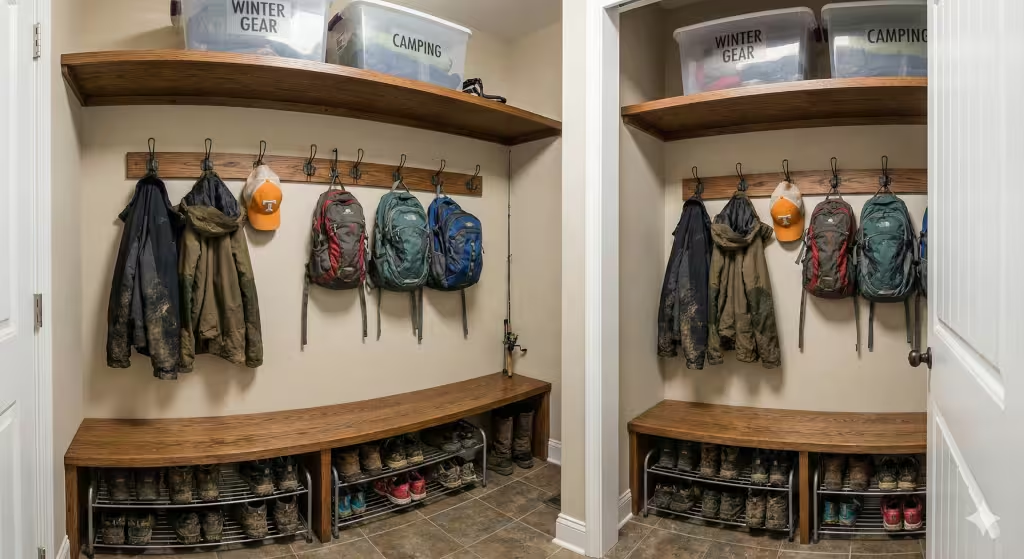
For the mudroom, the garage, or a dedicated “gear closet,” I actually recommend looking at garage storage systems like Gladiator. These are designed to hold heavy tools, so they can easily handle Dad’s heavy hunting coat or a bag of baseball bats.
These systems usually mount directly to the bare studs or use a heavy-duty slat-wall system. You can get hooks, baskets, and bins that lock into place. It is rugged. It looks industrial, so you might not want it in your master bedroom. But for a back hallway or a mudroom where the kids dump their school bags and muddy cleats, it is perfect. It can be hosed down or wiped off without damage. That is a level of utility a large family needs.
Strategic Design for the Tri-Cities, TN Home
Living in East Tennessee presents specific challenges. We have four distinct seasons. That means a large family has four distinct wardrobes. You have bulky winter coats, rain gear, light summer clothes, and layers for the fall. A single closet rod cannot handle all of that at once.
You need to think about vertical utilization. Most closets in our area have a standard eight-foot ceiling, but the shelf is at six feet. That leaves two feet of dead air at the top. In a closet, air is wasted space. You should install a high shelf up there. That is where you put the bins of clothes for the off-season. In July, the winter parkas go in a bin on the top shelf. In November, you swap them. This keeps the main active area of the closet clear for what you are actually wearing.
Another strategy for large families is the “mudroom effect.” Many older homes in Johnson City do not have dedicated mudrooms. You walk right into the living room. You need to create a transition zone. You can take a coat closet near the door and remove the hanging rod. Install heavy hooks for backpacks and coats. Put a shoe rack at the bottom. This stops the clutter at the door before it spreads into the rest of the house.
Zoning for Siblings
Sharing a room is common in large families. Sharing a closet can be a war zone if you do not design it right. The secret is zoning. You cannot just have one long rod and expect kids to keep their clothes separate. They will mix, and then they will fight.
I recommend using a vertical divider. It could be a shelving tower or just a vertical board. This creates a physical boundary. “This is your side, this is my side.” It sounds simple, but physically separating the space solves the psychological friction.
You should also use color coding. Get blue hangers for one child and red hangers for the other. It makes sorting laundry much faster. You can look at a shirt on the floor, see the hanger color, and know exactly which side of the closet it belongs to.
Installation: A Builder’s Guide to Doing It Right
You can buy the best closet system in the world, but if you install it poorly, it will fail. I have fixed enough collapsed shelves to know this is true.
First, you need the right tools. You need a stud finder. Do not guess where the studs are. You need a good level. A laser level is best if you have one, but a standard bubble level works. And you need a drill driver.
The most critical step is the anchor point. For track systems like Elfa or Rubbermaid, that top rail is everything. It must be level. If it is crooked, every shelf hanging off it will be crooked. And it must hit the studs. Drywall anchors are fine for the vertical standards to keep them from swinging, but the weight needs to be transferred to the wooden frame of the house.
If you are drilling into plaster walls, which we see in some historic homes in downtown Kingsport, you have to be extra careful. Plaster can crack.5 You might need masonry bits or special toggle bolts. If you are unsure, this is the time to ask a pro.
Common Questions About Closet Systems
I get asked a lot of questions when I am on a job site. Here are a few that come up regarding storage.
“How much does a custom closet cost?”
It varies wildly. A DIY wire setup might cost you two to five hundred dollars depending on the size. A modular laminate system will run between one and three thousand. If you hire a professional custom closet company, you are looking at five thousand and up. For most families, the mid-range modular systems offer the best return on investment.
“What is the best depth for shelves?”
Standard depth is usually 12 to 14 inches. For a closet, 14 inches is the sweet spot for folded jeans and sweaters. If you go deeper, like 16 or 20 inches, things get lost in the back. You end up with a mess behind the front row of clothes. For kids’ shoes, 12 inches is plenty.
“How do I organize a corner?”
Corners are the enemy of efficiency. Clothes rods that meet in a corner often overlap, creating a dead zone where you cannot reach the clothes. The best way to handle a corner is to use it for shelves, not hanging space. Put a curved corner shelf unit in, or run shelves on one wall and stop the hanging rod on the other wall before it hits the corner.
The Psychology of Space
There is a mental aspect to this as well. When you open a closet door and items fall out on you, it starts your day with stress. It raises your cortisol levels. When you open a door and see order, it gives you a sense of calm. It makes you feel competent.
For a large family, that peace of mind is priceless. If you can save ten minutes every morning because no one is screaming about lost shoes, that is nearly an hour of time you get back every week. Over a year, that is days of your life.
This is why I say a closet is a machine. It produces time and order. If you invest the time to set it up correctly, it pays you back every single day.
Maintenance and the Purge
No system runs forever without maintenance. A closet is no different. As your kids grow, the system needs to change.
I recommend a seasonal review. twice a year, when the weather changes in East Tennessee, go through the closet. If a piece of clothing has not been worn in a year, get rid of it. Donate it or sell it. A closet cannot function if it is at 110 percent capacity. You need some breathing room for the system to work.
Check the hardware. Tighten the screws. Make sure the brackets are seated correctly. Kids can be rough, and things can work loose over time. A five-minute check-up can prevent a shelf from falling down later.
Conclusion: Order is Peace of Mind
Building a custom home or renovating an existing one is about improving your quality of life. We often think that means knocking down walls or adding bathrooms. But sometimes, the biggest improvement comes from simply organizing what you already have.
The best closet systems for large families are the ones that are tough, adjustable, and installed correctly.9 Whether you choose the modular steel of Elfa, the value of Rubbermaid, or the built-in look of ClosetMaid, the key is to have a plan. Measure your space. Count your inventory. Anchor to the studs.
Competence leads to a better life. When your home functions efficiently, you have more energy for the things that matter—like spending time with your family, going hunting, or just relaxing.