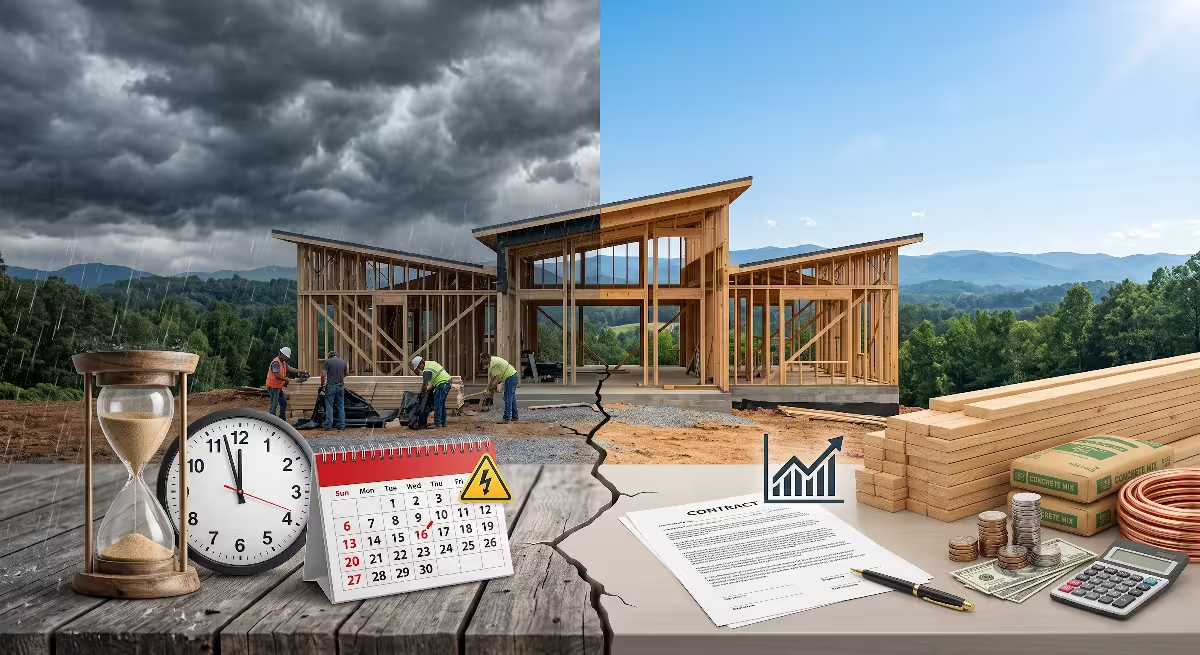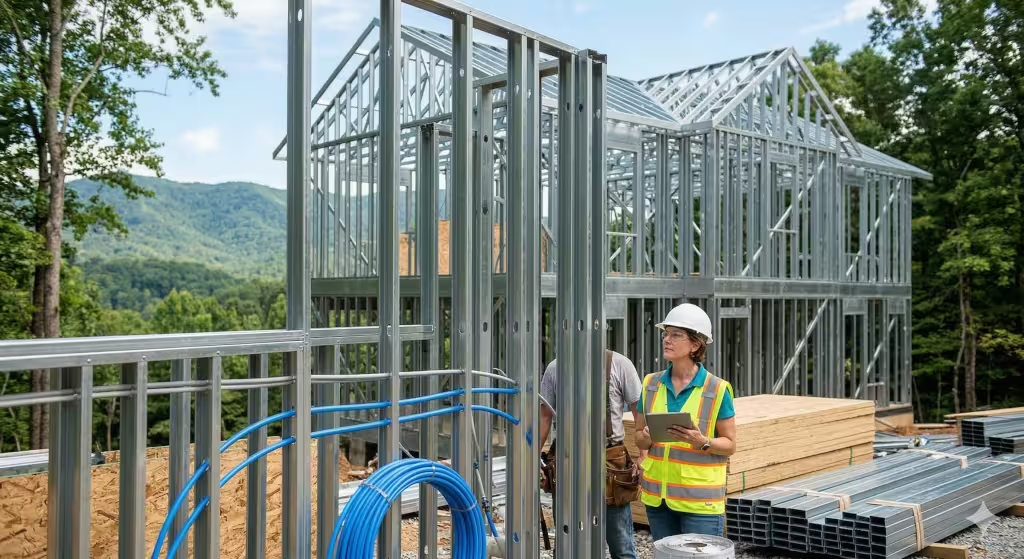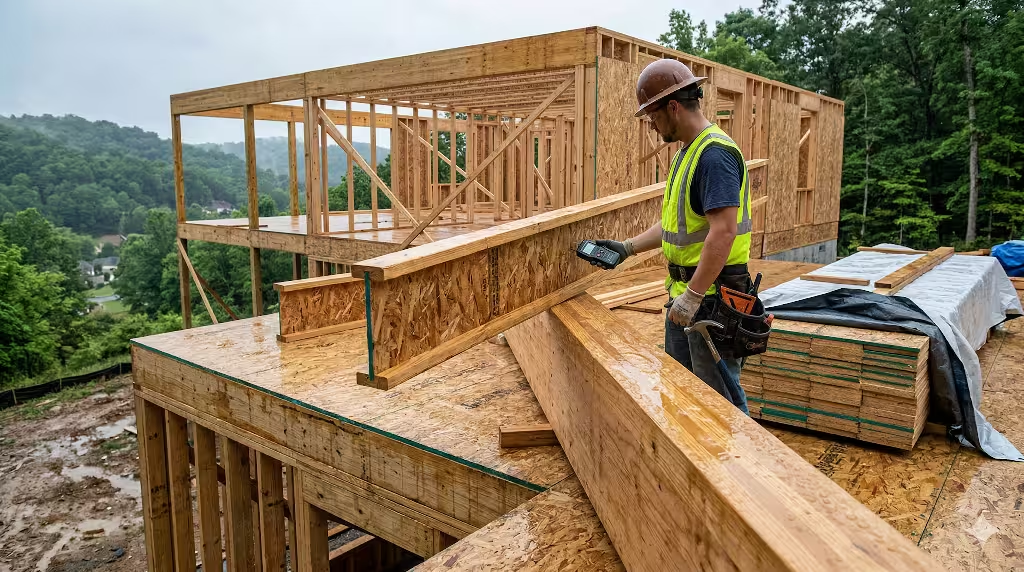


It was a Tuesday evening in Johnson City, and the sky was that deep, bruised purple we only see right before a big Appalachian thunderstorm. John was sitting on his porch, watching the rain start to lash against the ridges. While most people were worried about their gardens or their patio furniture, John’s mind wondered about the foundation of his house.
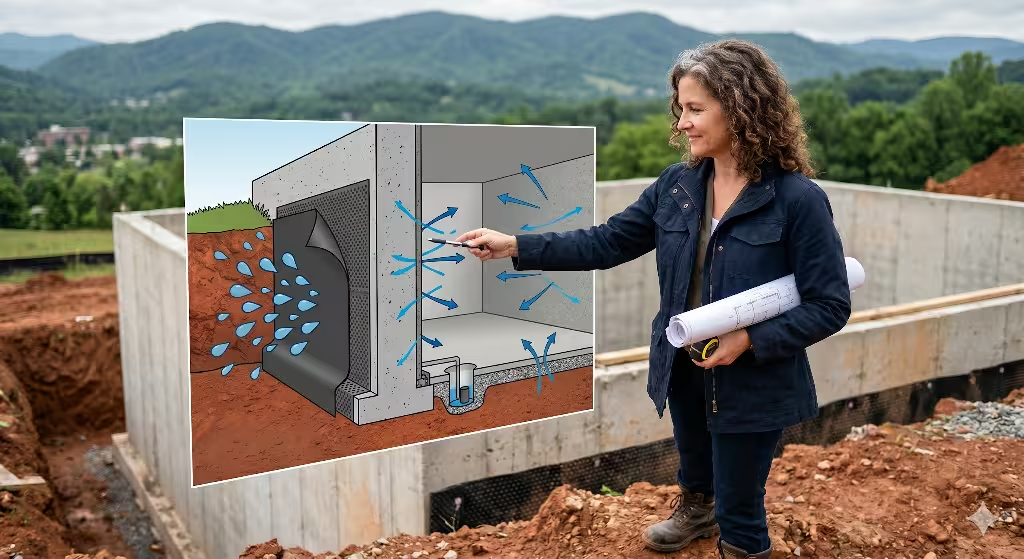
Down here, our dirt isn’t just dirt. It’s that heavy, stubborn red clay that holds onto water like a sponge. When the ground gets saturated, the pressure against a basement wall is immense. Buyers of custom homes have seen beautiful their homes ruined because a builder tried to save a few dollars on the one thing you can never easily fix later: the waterproofing.
Choosing the right system is a big decision for any homeowner. You want your house to be a sanctuary, a place where you feel safe and dry. But when you start looking at the options, it can get confusing. You’ll hear people talk about bentonite waterproofing vs. liquid rubber, and it feels like you need an engineering degree just to understand the brochure. That is where a qualified builders comes in.
In this article we want to pull back the curtain on these two heavy hitters. We are going to look at the science, the cost, and the reality of how these materials behave in our local soil. This isn’t just about keeping water out. It is about protecting the heart of your home for the next fifty years. By the time we are done, you will know exactly why the debate of bentonite waterproofing vs. liquid rubber matters so much for your peace of mind and your family’s health.
Understanding Bentonite Waterproofing (The Self-Healing Choice)
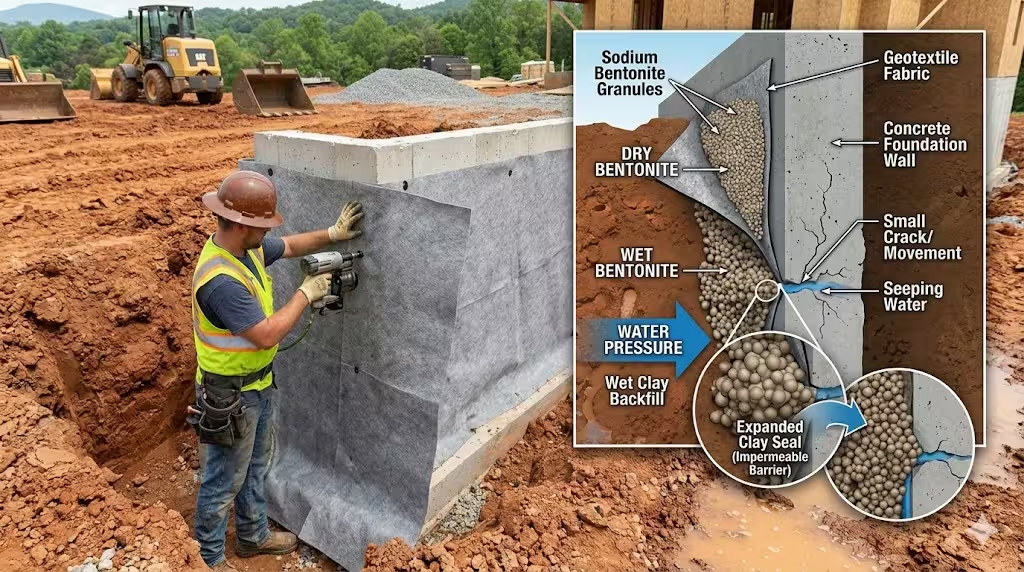
Bentonite is one of nature’s most interesting materials. It is a type of clay that comes from volcanic ash. What makes it special for a home is how it reacts when it gets wet. When water touches bentonite, the clay swells up. It can grow to be fifteen or even twenty times its original size. In the world of construction, we usually use it in the form of sheets or panels. These sheets have the clay tucked inside a fabric or a mesh. When we talk about bentonite waterproofing vs. liquid rubber, we are talking about a system that uses physical expansion to stop water.
The magic of bentonite is that it is self-healing. Imagine a small crack forms in your foundation wall because the ground shifted slightly. With most materials, that crack is a highway for water. But with bentonite, the clay just swells into that crack and plugs it up. It is like a permanent, living seal that stays active for the life of the building. Because it is a natural mineral, it does not dry out or get brittle over time. This makes bentonite waterproofing a favorite for many engineers who are looking for a solution that will last as long as the concrete itself.
However, bentonite needs something to push against. It only works if it is “confined.” This means it needs the weight of the dirt or backfill to hold it tight against the wall so it can swell inward and create a seal. If there is a gap between the clay and the wall, the water will find a way in. This is a big point to remember when comparing bentonite waterproofing vs. liquid rubber. Bentonite is a powerhouse in the right conditions, but it requires a very specific installation process to make sure that swelling action works in your favor.
Understanding Liquid Rubber Membranes (The Seamless Shield)
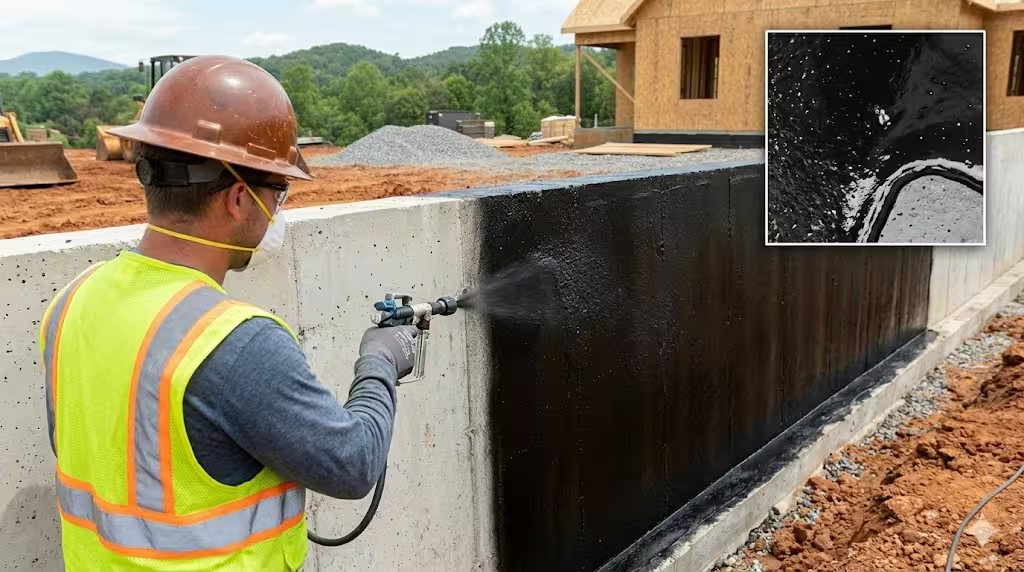
On the other side of the ring, we have liquid rubber membranes. These are modern, high-tech coatings that we apply directly to the concrete. You can think of it like a heavy-duty, rubberized skin that wraps around your foundation. When builders discuss bentonite waterproofing vs. liquid rubber, they often point to the “seamless” nature of the liquid option. Because it is sprayed or rolled on as a liquid, there are no joints or seams where water can sneak through.
Liquid rubber is what we call an “elastomeric” material. That is a fancy way of saying it is very stretchy. A good liquid rubber membrane can stretch to several times its original length without breaking. This is vital in the Tri-Cities because our hilly terrain often leads to minor settling in new homes. If the house moves a little bit, the rubber membrane just stretches with it. In the battle of bentonite waterproofing vs. liquid rubber, the rubber membrane wins on flexibility and ease of application around complex shapes. If your home has a lot of corners, footings, or pipe penetrations, liquid rubber can wrap around them perfectly.
The catch with liquid rubber is the preparation. The concrete wall has to be clean, dry, and free of dust for the rubber to stick. If the builder tries to apply it on a rainy day or over dirty concrete, it might peel off later. Also, once it is on the wall, it can be punctured easily by rocks during the backfilling process. That is why we always use a protection board over the rubber. When you look at bentonite waterproofing vs. liquid rubber, you have to consider the extra steps needed to keep that rubber skin safe until the dirt is all moved back in place.
Head-to-Head Comparison: The Technical Breakdown
When we really get into the weeds of bentonite waterproofing vs. liquid rubber, we have to look at the technical specs. First, let’s talk about hydrostatic pressure. This is the weight of the water in the soil pushing against your walls. Bentonite thrives under pressure. The more the water pushes, the more the clay swells, and the tighter the seal becomes. This makes it excellent for deep basements or areas with a high water table.
Liquid rubber, however, relies on its bond to the concrete. It can handle a lot of water pressure, but if that bond ever fails, the water can travel behind the membrane. This is a key distinction in the bentonite waterproofing vs. liquid rubber debate. One is a physical barrier that grows, and the other is a chemical barrier that sticks.
Temperature also plays a role. In our Tennessee winters, liquid rubber can be harder to apply because it needs a certain temperature to cure properly. Bentonite sheets can often be installed in colder or even slightly damp weather, which can be a huge help if your construction schedule gets pushed into the late fall. However, if it rains too much before the bentonite is covered with dirt, it might swell prematurely, which can ruin the panels. Each material has its own “perfect” day for installation, and your builder has to time those days just right.
Durability and Life Expectancy: Which Lasts Longer?
If you are building your forever home, you want to know which one will still be working in forty years. Bentonite is an inorganic mineral. It was formed millions of years ago, and it isn’t going anywhere. It doesn’t rot, it doesn’t decay, and it doesn’t lose its ability to swell. In the long-term comparison of bentonite waterproofing vs. liquid rubber, bentonite has a slight edge on pure longevity. As long as the clay stays in place and isn’t washed away by moving groundwater, it will work forever.
Liquid rubber is a synthetic product. While modern chemistry has made these membranes incredibly durable, they do eventually have a lifespan. Most high-quality liquid rubber systems are rated for twenty to thirty years, though they can last much longer if they are protected from UV light and soil chemicals. When weighing bentonite waterproofing vs. liquid rubber, you have to ask yourself about the long-term environmental factors of your specific lot. Are there chemicals in the soil? Is there a risk of the rubber becoming brittle? In most residential cases, either one will outlast the mortgage, but bentonite is the “geological” choice for the truly long view.
The Tri-Cities Factor: Local Considerations
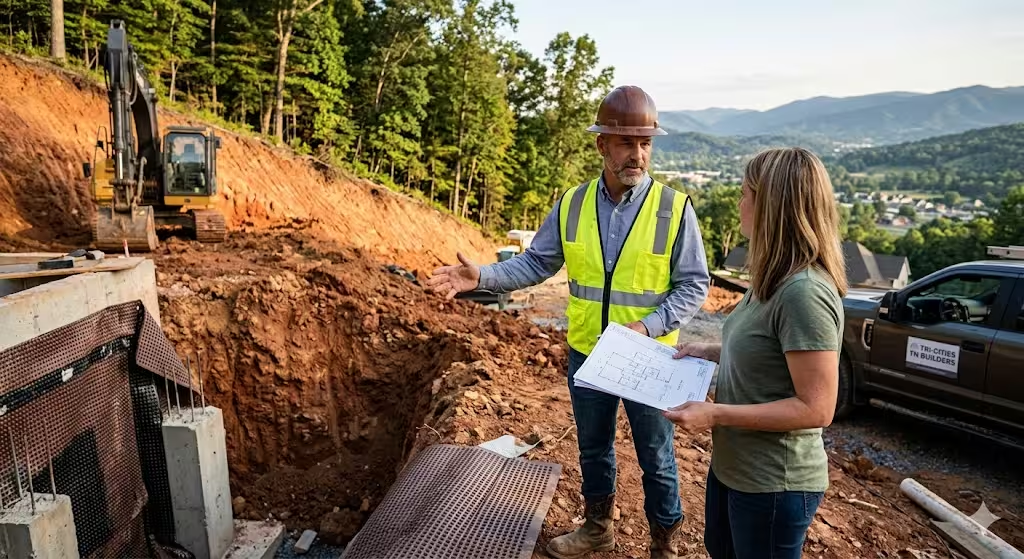
Here in Kingsport and Johnson City, we get a lot of rain, and we have very distinct seasons. Our soil is mostly clay, which is heavy and slow-draining. This means that after a big storm, your foundation might be sitting in wet mud for days. When looking at bentonite waterproofing vs. liquid rubber for a local project, we have to think about the slope of the land.
Many of our homes are built on ridges. This means one side of the basement might be fully underground while the other side is a “walk-out.” This transition creates a lot of stress on the foundation. Liquid rubber is often better for these walk-out basements because it handles the transition from below-grade to above-grade very gracefully. You can bring the rubber up just above the soil line and cover it with a finish. Bentonite waterproofing is harder to use in these spots because it must stay buried to work. If you are building on a steep lot in the Tri-Cities, the bentonite waterproofing vs. liquid rubber choice often leans toward rubber for its versatility on uneven ground.
Also, we have to consider the local labor market. Most of our local waterproofing contractors are very familiar with liquid rubber membranes. They have the spray rigs and the experience. Bentonite requires a bit more finesse and a very specific type of backfilling. If you choose bentonite, you have to make sure your contractor has done it before. In the battle of bentonite waterproofing vs. liquid rubber, the best material is the one that is installed correctly. A poorly installed bentonite panel is worse than a perfectly applied rubber coat every single time.
Common Questions about Bentonite Waterproofing vs. Liquid Rubber
One question that builders get all the time is, “Is bentonite waterproofing better than rubber?” The honest answer is that it depends on your soil. If you have very rocky soil that might puncture a membrane, bentonite is often the safer bet. If you have a very complex foundation with lots of odd angles, liquid rubber is usually better.
Another common query is, “How long does a liquid rubber foundation membrane last?” Generally, you can expect thirty years of solid performance. If the builder uses a high-quality product and a proper protection board, it could last fifty. When comparing bentonite waterproofing vs. liquid rubber, durability is a top concern for most buyers.
Another question is, “Can you apply bentonite in the rain?” Technically, you shouldn’t. While the clay loves water once it is buried, if the panels get soaked before the dirt is put back, they will swell and become heavy and hard to manage. It can even cause the panels to pull away from the wall. So, in the bentonite waterproofing vs. liquid rubber comparison, both materials really prefer a dry window of time for the best results.
Finally, “Which is more cost-effective?” Initially, liquid rubber is often cheaper because the application is faster. However, if you have a site with a high risk of movement or very aggressive water, the “self-healing” nature of bentonite might save you thousands in repairs down the road. You have to look at the total cost of ownership, not just the bid you get today.
The Homeowner’s Journey: Peace of Mind and Health
However, women often look at homes a little differently. They don’t just see concrete and steel; they see a place where children will play on the floor and where families will sleep. A wet basement is more than a structural problem. It is a health problem. Dampness leads to mold and mildew, which can cause allergies and asthma. When a builder helps a family decide between bentonite waterproofing vs. liquid rubber, they are thinking about the air quality inside the home.
If you are the type of person who wants the most “natural” solution that will never wear out, bentonite might be your favorite. If you want the most “technologically advanced” and seamless shield, liquid rubber is the way to go. Both are excellent choices, but they require different levels of attention during the build.
The generally always tells clients that the waterproofing is the “insurance policy” for the rest of the house. You can spend $50,000 on a kitchen, but if the basement smells like a swamp, you won’t enjoy that kitchen nearly as much. Taking the time to understand bentonite waterproofing vs. liquid rubber shows that you are a smart, competent homeowner who is looking out for the long-term value of your investment.
Installation Details: The Importance of the Protection Board
No matter which side of the bentonite waterproofing vs. liquid rubber debate you fall on, there is one step you cannot skip. That is the protection board. When the heavy equipment comes in to move the dirt back against your foundation, there are rocks and clumps of clay that can scrape, tear, or puncture your waterproofing.
For liquid rubber, a protection board is a must. It is usually a tough, plastic dimpled mat or a foam board that sits between the rubber and the dirt. It acts like a shield. For bentonite, the fabric itself is quite tough, but a drainage mat is still a great idea. These mats create a “path of least resistance” for the water. Instead of the water sitting against your wall and trying to find a way in, it hits the mat and falls straight down to your French drain. When we discuss bentonite waterproofing vs. liquid rubber, we are really talking about a complete system, not just a single product.
The Role of the French Drain
We cannot talk about bentonite waterproofing vs. liquid rubber without mentioning the French drain. This is the perforated pipe that sits at the bottom of your foundation. Its job is to collect the water that the waterproofing has blocked and carry it away from the house.
If your French drain is clogged or installed incorrectly, it doesn’t matter if you used the most expensive bentonite or the best liquid rubber. The water will eventually build up so much pressure that it will find a way in. In my experience in the Tri-Cities, many “leaky basements” aren’t actually a failure of the waterproofing material itself; they are a failure of the drainage system. Whether you choose bentonite waterproofing vs. liquid rubber, make sure your builder uses plenty of clean gravel around that drain pipe and wraps it in filter fabric so it doesn’t get choked with our local red clay.
Cost Analysis: Short-Term vs. Long-Term
Let’s talk numbers. In the Tri-Cities area, the cost of bentonite waterproofing vs. liquid rubber can vary. Generally, liquid rubber is more labor-intensive in terms of wall prep but faster to apply. Bentonite panels are more expensive to buy but can sometimes be faster to install if the weather is being difficult.
On average, you might pay a little more for a high-end bentonite system. However, we want you to think about the “hidden costs.” If a liquid rubber membrane is punctured during backfill because someone was in a hurry, the cost to dig it back up and fix it is astronomical. Because bentonite is self-healing, it has a bit more “forgiveness” for those minor accidents. When you are looking at your budget, don’t just look at the line item for “waterproofing.” Look at the warranty and the reputation of the person installing it. In the long run, the difference in cost between bentonite waterproofing vs. liquid rubber is small compared to the cost of a single foundation repair.
Environmental Impact and Safety
For many modern families, the environmental impact of their home is a major concern. Bentonite is a natural clay. It is about as “green” as it gets. It doesn’t release any fumes or chemicals into the soil. For people who are sensitive to smells or concerned about “off-gassing,” bentonite is a very clean choice.
Liquid rubber products have come a long way. Most of the ones we use today are water-based and have very low VOCs (Volatile Organic Compounds). This means they are much safer for the workers and the environment than the old solvent-based tars we used decades ago. Still, in the comparison of bentonite waterproofing vs. liquid rubber, the clay is the more natural option.
Maintenance: What Happens After You Move In?
The best part about both of these systems is that they are “set it and forget it.” Once they are buried under six feet of dirt, you never want to see them again. However, you should still keep an eye on things. Make sure your gutters are clean and that your downspouts are carrying water at least ten feet away from the house.
If you do ever see a damp spot in your basement, the way you fix it depends on your choice of bentonite waterproofing vs. liquid rubber. With a rubber membrane, a professional might inject a polyurethane foam into the crack from the inside. With bentonite, often the clay will eventually find the leak and plug it itself, but you should still consult an expert. Knowing which system you have is the first step in being a responsible homeowner.
Case Studies: Real-World Scenarios in Tennessee
Imagine the case study of a house in Bristol that was sitting at the bottom of a long slope. Every time it rained, the water would come rushing down the hill right toward the back wall of the house. The builder knew the hydrostatic pressure was going to be extreme. In that case, the builder went with bentonite. They wanted that swelling action to combat the sheer volume of water. Ten years later, that basement is as dry as a bone.
On another project in a more suburban part of Johnson City, the house had a very modern design with a lot of “step-downs” in the foundation. It would have been a nightmare to cut and fit bentonite panels around all those corners. In this case, the builder used a high-grade liquid rubber membrane. Because it was sprayed on, it covered every nook and cranny perfectly. In the debate of bentonite waterproofing vs. liquid rubber, the architecture of the house often makes the decision for us.
Making the Final Call: My Professional Recommendation
So, where do we land on bentonite waterproofing vs. liquid rubber? If you are building a home with a straightforward, deep basement in heavy, wet soil, I often recommend bentonite. Its ability to heal itself and its natural longevity make it a “one and done” solution that I trust. It’s precise, it’s competent, and it has integrity, just like my core values.
If you are building a home with a complex foundation, or if you are on a site where the soil is very stable and well-drained, liquid rubber is a fantastic, modern choice. It provides a seamless, flexible skin that moves with your home. It is professional and highly effective when done by a skilled crew.
The most important thing we can tell you is this: Don’t leave this decision entirely up to the lowest bidder. Talk to your builder. Ask them why they prefer one over the other. Ensure they are using a protection board and a proper drainage system. When you understand the difference between bentonite waterproofing vs. liquid rubber, you are taking control of the most important part of your home.
Your Home, Your Sanctuary
Building a home in the Tri-Cities is a wonderful journey. We live in one of the most beautiful parts of the country, but our landscape requires respect. Protecting your foundation is how you show that respect to the land and to your future. Whether you choose the expanding power of volcanic clay or the flexible shield of a rubber membrane, you are making a choice for the health and safety of your family.
We hope this deep dive into bentonite waterproofing vs. liquid rubber has helped clear up the confusion. It can feel like a lot of technical talk, but at the end of the day, it’s about making sure that when those big Appalachian storms roll in, you can curl up on your sofa and listen to the rain without a single worry about what’s happening behind your basement walls. You’ve worked hard for your home; make sure you build it on a foundation that is dry, strong, and built to last.
Stay dry out there, and happy building!
Summary Checklist for Homeowners
Check your soil: Is it heavy clay or loose sand?
Evaluate your lot: Is it a steep slope or a flat plain?
Review the design: Does the foundation have many corners or is it a simple box?
Interview your contractor: Have they installed your chosen system before?
Insist on drainage: Are you getting a high-quality French drain and protection board?
Consider the long-term: Which material matches your goals for the house over the next thirty years?
By keeping these points in mind, the choice between bentonite waterproofing vs. liquid rubber becomes much clearer. You aren’t just buying a product; you are investing in a system that keeps your world safe. In the Tri-Cities, we build things to stay, and a dry foundation is where it all begins. Regardless of which path you take in the bentonite waterproofing vs. liquid rubber comparison, doing your homework today prevents a headache tomorrow. That is the hallmark of a truly competent homeowner.