Imagine when you step into a newly framed home, and your eyes are immediately drawn upward. That soaring, two-story great room is a statement. It represents openness, luxury, and the very heart of a custom-built home. It has an undeniable “wow factor.”
But then, weeks after move-in, the reality of living in that great room begins to set in. This is the problem I see homeowners face: this grand, impressive space can feel cold. It can feel impersonal, and as many clients have told me, it can feel “cavernous.” The sheer volume of the great room, the 20-foot-high walls of plain drywall, and the echo can make the people living in it feel small and exposed.
Decorating this large room is not like decorating any other room. You are not just managing floor space; you are managing vertical volume. This guide is our advice on solving this problem. We are moving beyond just throw pillows and color choices. We will focus on the foundational, structural principles of design. Having a successful great room depends on three things: mastering scale, controlling light, and adding texture.
This guide provides precise, builder-approved strategies. We will make your two-story great room feel just as impressive as you dreamed, but also just as comfortable and inviting as you deserve.
The Foundation: Creating “Human Scale” with Furniture & Layout
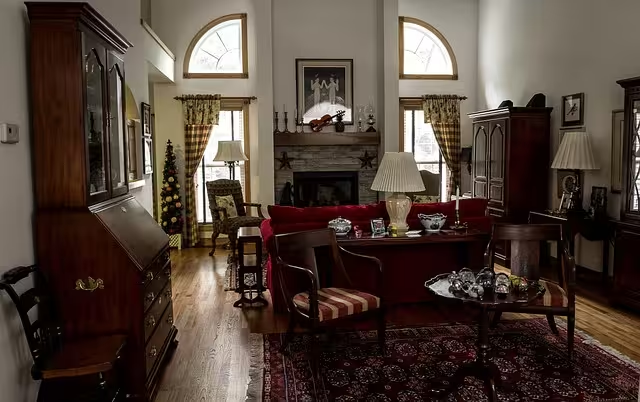
The number one goal in a large great room is to create a sense of “human scale.” This means you are designing a comfortable, functional area within the larger space. You are essentially building a cozy room inside a much bigger one. The biggest mistake is treating the great room as one single entity.
How do you arrange furniture in a large 2-story living room?
Our first piece of advice is always the same: stop pushing your furniture against the walls. In a standard room, this can work. In a massive great room, it creates a void, a “dead zone” in the middle of the room that feels like a waiting area. This is where you must be bold.
Solution 1: Create Zones, Not a Showroom
Your great room is likely the hub of the home, so it needs to be multi-functional. The best way to manage the space is to “float” your furniture away from the walls and create distinct zones.
The Primary Conversation Zone: This is the main seating area. It should be centered on the great room’s focal point, which is usually the fireplace or the main media wall. This zone might include a large sofa and two accent chairs.
The Secondary Zone: You will still have a lot of space left in your great room. Use it. Create a smaller, secondary zone. This could be a “reading nook” with a single comfortable chair, an ottoman, and a floor lamp placed in a quiet corner. It could be a small game table with two chairs by a window.
By creating these zones, you break up the vastness of the great room. You give the eye a place to rest, and you give the room multiple functions. This approach makes the entire great room feel more thoughtfully designed and usable.
Solution 2: Anchor the Space with a Substantial Area Rug
The single most effective tool for defining a zone is an area rug. This is the “anchor” for your primary conversation area. The rug’s job is to visually ground your floating furniture and add a crucial layer of warmth and texture.
Precision is important here. A small 5×7 or 8×10 rug in a massive great room will look like a postage stamp. It will actually make the great room feel bigger and more out of balance.
You must use a rug that is proportional to the furniture, not the whole great room. The rule is simple: at least the front legs of every piece of furniture in your conversation zone (the sofa, the chairs) should be on the rug. This visually connects all the pieces and creates a single, unified, and cozy space. Do not be afraid of a 10×14 or even a 12×15 rug. In a two-story great room, a large rug is a necessity.
Solution 3: Choose Furniture That Fits the Scale
This is a common and very costly mistake. People bring their furniture from a previous home, often one that is smaller with 8-foot ceilings, and wonder why it looks like doll furniture in their new great room.
A delicate, low-profile sofa will be completely lost. The volume of the great room will simply swallow it. You must choose furniture that has “visual weight” and matches the grand scale of the room.3
Sectional Sofas: These are often the perfect solution for a great room. They are large, they anchor a corner well, and they clearly define a casual, comfortable seating area.
Facing Sofas: For a more formal great room, a classic layout of two full-sized, matching sofas facing each other is powerful. This creates a beautiful, symmetrical conversation zone.
High-Back Chairs: When choosing accent chairs, look for pieces with high backs. A high-back chair helps to fill some of that vertical space, drawing the eye up slightly and making the seating feel more substantial and protected.
When you furnish a great room, you must think big. Substantial furniture will make the great room feel balanced and proportional.
Conquering the Vertical: What to Do with Tall Great Room Walls
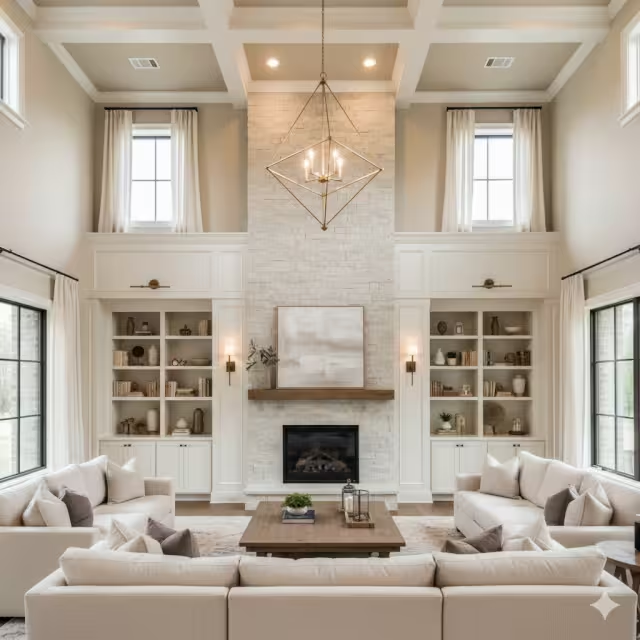
Once the floor plan is set, the next challenge is the most intimidating: those soaring, 20-foot walls. This is what I call the “elevator shaft” problem. A blank wall of drywall that high makes a great room feel like a commercial lobby, not a home. You must add texture and interest to these walls.
What do you put on a high wall in a great room?
Your goal is to break up the “sea of drywall.” You can do this with art, but from my perspective as a builder, the best solutions are architectural.
Solution 4: Use Large-Scale Art (Correctly)
If you choose to use art, the same rule of scale applies. A scattered “gallery wall” of small 4×6 or 8×10 frames will look like clutter. It will be completely lost and will only emphasize the emptiness of the wall.
In a two-story great room, you need impact. This means using a single, massive piece of canvas art. Think 5 feet wide and 7 feet tall. An oversized piece like this can stand up to the scale of the wall and act as a powerful focal point. Another great option is a “diptych” (a single image on two panels) or a “triptych” (three panels). This allows you to fill a large horizontal space over a sofa in a way that feels intentional and proportional to the great room.
Solution 5: Install Architectural Elements for Texture
This is my preferred solution. As a builder and a carpenter by training, I know that adding architectural elements is the most effective way to add permanent value, character, and warmth to a great room. This is how you make a “builder-grade” great room look truly custom.
Wainscoting or Board and Batten: In a normal room, a chair rail is 36 inches high. In a two-story great room, you can install a much taller wainscot or a “board and batten” grid. By applying this detail to the lower 8, 9, or even 10 feet of the wall, you create a strong horizontal line. This is a powerful visual trick. It “brings the ceiling down” to a more human level. The lower part of the great room feels cozier and more defined, while you still get the “wow factor” of the open space above.
Shiplap or Reclaimed Wood: Texture is your best friend in a great room. An accent wall of horizontal shiplap (popular in modern farmhouse designs) or reclaimed wood adds immense warmth. It breaks up the flat, boring drywall and becomes a feature. I typically recommend this for the main fireplace wall, as it enhances the great room’s natural focal point.
Custom Built-in Shelving: This is the ultimate solution for both form and function. Flanking your fireplace with floor-to-ceiling built-in bookcases is a classic and highly effective design. These units instantly fill that awkward vertical space. They provide a home for books, family photos, and decor, which adds personality. And they provide much-needed storage. This must be a custom job. A store-bought, 6-foot-tall bookcase will look just as silly as a small sofa. The built-ins must go all the way up to match the scale of the great room.
The Focal Point: Designing a Floor-to-Ceiling Fireplace
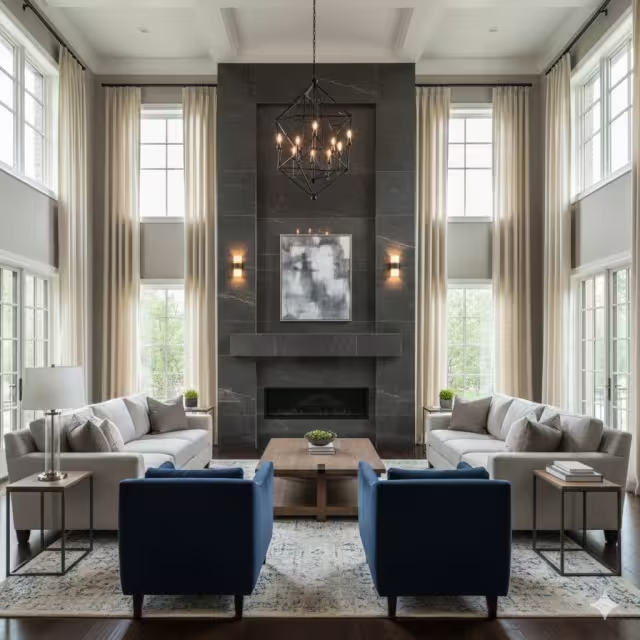
In 99% of the custom homes built in East Tennessee, the fireplace is the natural heart of the great room. It is the anchor for your entire furniture plan. In a two-story great room, you have a unique opportunity to make this focal point truly special.
Solution 6: Draw the Eye Up Intentionally
The biggest design mistake I see is stopping the fireplace material (the stone or tile) at the mantel. In a standard room, this is fine. In a two-story great room, it creates a small, stubby feature on a giant wall, leaving a huge, awkward blank space above it.
From a builder’s perspective, this is a missed opportunity. You must extend the fireplace material all the way to the ceiling.
This single, precise decision solves the “tall wall” problem. It draws the eye upward intentionally. It makes the height of the great room a feature, not a bug. It creates a powerful, stunning focal point that anchors the entire great room and gives it a sense of purpose.
When choosing materials, think about texture:
Stacked Stone: This is a classic choice for a reason. It adds rustic warmth, texture, and a senseof permanence.
Large Format Tile or Porcelain Slabs: For a more modern or contemporary great room, using large slabs of tile that look like marble or concrete creates a very sleek, dramatic, and sophisticated feature.
Plaster or Concrete Finish: A smooth, hand-troweled Venetian plaster or a concrete-style finish is a great option for a minimalist or industrial great room.
Whether you choose a modern linear fireplace (the long, horizontal style) or a traditional masonry fireplace, taking the finish to the ceiling is the key. This makes the fireplace feel proportional to the grand scale of the great room.
A Precise Lighting Plan: From the Ceiling Down
You cannot light a two-story great room with a single light. This is a technical problem that requires a technical solution. One flush-mount light in the center of a 20-foot ceiling is what I call a “pinprick.” It does nothing. It leaves the entire living area in shadow.
Lighting is what makes a great room feel cozy. You must use layers.
How do you handle lighting in a two-story room?
You have to light the “volume” of the great room (the upper air) and the “living” part of the great room (the human level) separately.
Solution 7: The “Statement Chandelier”
This is non-negotiable. That large, open volume of air in the middle of your great room is crying out for a “sculpture.” This is the job of the statement chandelier.
This is the jewelry of the great room. It is a design element first and a light source second. Precision in sizing and height is critical.
Sizing: A 24-inch-wide chandelier in a 20×20 foot great room is too small. It will be lost. You need something substantial, often 3, 4, or even 5 feet in diameter, depending on the room’s proportions.
Hanging Height: Do not hang the chandelier way up by the 20-foot ceiling. It needs to relate to the living space. The bottom of the chandelier should typically hang around 10 to 12 feet from the floor. This is still high above everyone’s head, but it’s low enough to feel connected to the room and the furniture. It helps to visually “lower” the ceiling and create that sense of intimacy.
Solution 8: Layer Your Light
A chandelier provides ambient (general) light, but it will not be enough. You must bring the light down to the human level. This is what makes a great room feel warm and functional at night.
Task Light: This is the light you use for activities. Place floor lamps next to accent chairs for reading. Put table lamps on end tables next to your sofa. This layered light creates warm pools of illumination right where you live, making the huge great room feel cozy.
Accent Light: This is the “secret weapon” for a two-story great room. Install wall sconces. The trick is where to install them. Do not install them 15 feet up the wall. Install them at a “normal” height, around 8 or 9 feet from the floor. This creates another strong horizontal line, similar to wainscoting. It reinforces the “human scale” part of the room and adds a beautiful, soft glow.
Tri-Cities TN Home Tip: Use a Ceiling Fan for Efficiency
A lot of people hesitate to put a ceiling fan in a beautiful great room, but it is a very smart decision. A large, well-designed ceiling fan (with a light kit) is an HVAC tool.
Warm air rises. In the winter, all your expensive heat is pooling up by that 20-foot ceiling. By running your ceiling fan in reverse (clockwise) on a low speed, you create a gentle downdraft. This pushes that trapped warm air back down to the living level where you are. This is a precise, competent solution that will make your great room more comfortable and can save you money on heating bills.
Dressing the Windows: Balancing Light, Privacy, and Scale
The last major challenge is the windows. A two-story great room often features a massive wall of windows, sometimes stacked on top of each other. They let in beautiful light, but they also create privacy issues, heat gain, and that “echo chamber” effect.
How do you handle window treatments for two-story windows?
Plain, uncovered windows will make your great room feel cold, loud, and unfinished. You must “dress” them.
Solution 9: Full-Height Drapery Panels
This is our number one solution for fixing the “echo” problem. Fabric absorbs sound. Installing full-height drapery panels is the single most effective way to soften the acoustics in a great room.
They also add softness, color, and texture. The key is installation. You must be precise.
Mount the curtain rod high, just a few inches below the ceiling or crown molding.
Let the panels fall all the way to the floor, just “kissing” it or “puddling” slightly.
“High-water” drapes that stop a few inches off the floor look terrible in any room, but in a grand great room, the mistake is magnified. Full-length drapes draw the eye up, celebrate the height, and frame the view beautifully.7
Solution 10: The Practical Solution: Motorized Shades
For those upper windows (called clerestory windows) that are impossible to reach, motorized shades are a practical, modern investment.
With the push of a button, you can control the light and glare. This is especially important if your great room faces west or south. Those high windows can beam in hot sun, fading your furniture and raising your cooling costs. Motorized shades solve this problem.
Solution 11: Layer Treatments for the Best Result
The best, most custom solution is to layer both.
Use motorized shades (like cellular shades or roller shades) for the function. They handle the light control and privacy.
Then, add stationary drapery panels on the far sides of the window wall. These panels do not need to close. They are purely for aesthetics. They “frame” the entire wall of windows, add that crucial softness and sound absorption, and give the great room a finished, designer look.
Is the Two-Story Great Room “Outdated?”
Buyers of custom homes often ask the question above. They worry that this grand feature is a trend from the 1990s that is now “out.”
Are two-story great rooms outdated?
The short answer is: No, but the execution of them has changed.
The “builder-grade” two-story great room of the 90s is absolutely outdated. That was the empty drywall box. It had no character, a tiny fireplace, a “pinprick” light, and bad acoustics. That cold, empty great room is what people rightly dislike.
The modern two-story great room is an intentionally designed space. It requires the elements we have just discussed. A modern great room has texture from a floor-to-ceiling stone fireplace. It has architectural detail like wainscoting or ceiling beams. It has a stunning, sculptural chandelier. It has a purposeful, layered lighting plan. A great room that is designed with these principles is timeless.
A great room is a decision with long-term consequences. You must consider the higher HVAC costs to heat and cool that massive volume. You must consider the noise transfer to the upstairs bedrooms that overlook the great room. And you must consider the simple, practical cost of owning it. When that statement chandelier needs a new lightbulb, you will be renting scaffolding or hiring a specialist.
A great room is a wonderful feature, but it must be a precise and well-planned decision.
Your Great Room is a System, Not Just a Room
A successful two-story great room is not just a big room. It is a “system,” where scale, light, and texture must work in harmony. Its success is never accidental; it is always the result of precise planning.
You do not have to be intimidated by the scale. You just have to meet it.
Key Takeaways:
Define a Human-Scale Zone: Use a large area rug and “floating” furniture to create a cozy “room within a room.”
Add Vertical Texture: Use floor-to-ceiling architectural elements like a stone fireplace, built-in shelving, or board and batten.
Layer Your Light: Combine a large “statement” chandelier with lower-level task lighting (floor lamps, table lamps, and sconces).
Planning these foundational elements before construction is the most effective and cost-efficient way to achieve your vision. If you are planning a custom home in the Johnson City or Tri-Cities area, these are the exact details that can be integrated directly into your build.