

Clients in the Tri-Cities of Tennessee often discuss kitchen layouts, flooring types, and exterior finishes. These are the visible, exciting parts of a new home. But the most important conversations, the ones that have the biggest impact on a family’s long term wealth and comfort, are about the things you don’t see. Like the house wrap, this unseeable is also about performance.
Many people use the terms “green building” or “eco friendly.” I prefer the term “high performance.” This means we are building a home that works as a complete, fine tuned system. It is not just about adding extra insulation or installing a fancy thermostat. It is about how the home’s shell, its heating and cooling systems, and its windows all work together. This system creates a home that is vastly superior in energy efficiency, comfort, health, and durability. These are truly energy-efficient homes.
This advanced approach often comes with a higher price tag. That leads to the single most common question from clients: “Is it really a good investment?”
This article aims to give you a direct answer. A high performance, energy efficient home is not an expense. It is one of the single best financial investments you can make. The sticker price is only one part of the story. The real story is about the total cost of ownership. Here we will break down the true costs versus the long term payback, so you can see the numbers for yourself. Building smart, energy-efficient homes is the future.
Video Version of this Article
The “Cost” Side: Deconstructing the Upfront Investment
Does an energy-efficient home cost more? Yes, building high performance, energy-efficient homes costs more upfront. You can expect the initial price to be anywhere from 4% to 10% higher than a standard home built just to meet the minimum building code.
Many people ask, “Why?” It is a fair question. The extra cost is not for fancy brand names. It is for better materials and the skilled labor needed to install them with precision. A standard home is built to pass inspection. A high performance home is engineered to perform.
Here is a simple breakdown of where that extra money goes when we build energy-efficient homes.
1. Better Building Materials
This is the biggest factor. To make a home efficient, you first have to control its “building envelope.” Think of this as the shell of the house: the foundation, walls, and roof.
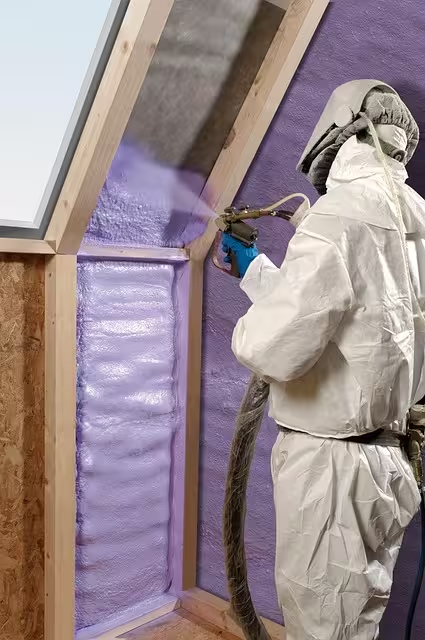
- Advanced Insulation: We do not just put fiberglass batts in the walls. We often use a system of continuous insulation. This is a layer of rigid foam board on the outside of the wall framing. It is like wrapping your entire house in a warm blanket, stopping heat from escaping through the wood studs themselves. In the attic and foundations, we use materials like spray foam or high density cellulose. These materials have a higher R value, which is the measure of how well they stop heat. More R value means more comfort and less energy use.
- High Performance Windows: Windows are a weak point in most houses. In quality energy-efficient homes, we use windows that are a major upgrade. These are often triple pane (three layers of glass) or advanced double pane windows. The spaces between the panes are filled with a harmless, invisible gas, like argon. This gas insulates much better than plain air. The frames are also insulated, and special coatings on the glass reflect heat in the summer and keep heat in during the winter.
- Air and Vapor Barriers: This is a step many builders skip. In high performance energy-efficient homes, we meticulously seal every single crack, joint, and penetration. We use special tapes and membranes to make the house virtually airtight. This stops drafts, but it also stops moisture. Controlling moisture is key to making a house last.
2. Advanced Mechanical Systems
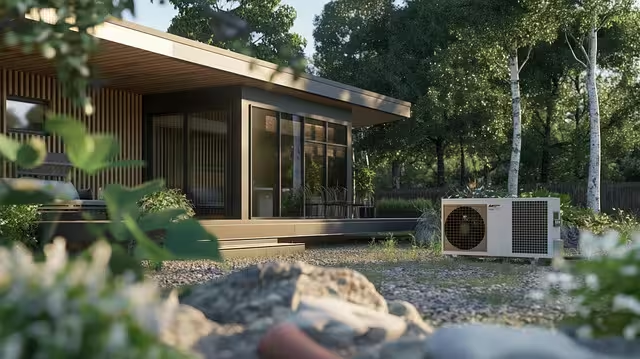
When you have a very airtight and well insulated home, you do not need a giant, power hungry HVAC system. You can use smaller, smarter, and more efficient systems.
- High Efficiency Heat Pumps: These are not the old heat pumps you might remember. Modern, cold climate heat pumps are incredibly efficient. They work by moving heat, not creating it. In the summer, they move heat out of your house. In the winter, they find heat in the cold outside air and move it into your house. They use a fraction of the electricity of a traditional furnace or air conditioner.
- Tankless Water Heaters: Why keep 40 or 50 gallons of water hot in a tank all day long? A tankless system, also called an on demand system, heats water instantly, right when you need it.12 This saves a significant amount of energy.
- Energy Recovery Ventilators (ERV): This is the most important part of healthy, energy-efficient homes. An airtight home needs to breathe. An ERV is the “lungs” for your home.14 It runs quietly 24/7, pulling stale, polluted indoor air out and bringing fresh, clean outdoor air in. In the winter, it passes the two streams of air past each other. The heat from the outgoing air is transferred to the incoming fresh air. This means you get fresh air without wasting the energy you already paid to create.
3. Specialized Labor and Testing
Putting these high end materials and systems together takes more time and skill and precision is everything. You cannot be sloppy when you are trying to make a house airtight.
There are also tests that are performed to prove the home’s performance. The main test is a Blower Door Test. Here a powerful fan is put in the front door and pull air out of the house. This lets us measure exactly how airtight the house is. We find and seal leaks that are invisible to the naked eye. This commitment to quality is part of the cost, and it is also part of the value.
When you see the higher price tag for energy-efficient homes, this is what you are paying for. It is an investment in better engineering, better materials, and better health. You are paying a little more now to buy down your utility bills for the next 30 years.
The “Benefit” Side: Analyzing Your Return on Investment (ROI)
This is the part that truly matters. The upfront cost is a single number. The return on that investment lasts for the life of the home. When clients ask about the benefits of energy-efficient homes, I tell them the return comes in three powerful ways.
1. The Financial ROI: Lower Total Cost of Ownership
Most people only think about their mortgage payment. The Total Cost of Ownership is your mortgage payment plus your average monthly utility bills (gas, electric, water). This is the number that truly affects your budget.
This is where energy-efficient homes completely change the math.
- Drastic Utility Savings: A certified high performance home can be 30% to 50% more efficient than a brand new home built just to minimum code. Some energy-efficient homes, like “net zero” homes, can be 100% more efficient, producing as much energy as they use.
- Tri Cities Context: Think about the climate here in Tennessee. We have hot, humid summers that send air conditioners into overtime. We have cool, damp winters that require steady heating. In a standard home, this means high bills from our utility provider. In a high performance home, that super insulated and airtight shell means your HVAC system just sips energy. It runs less often and more gently. This translates directly into hundreds of dollars in savings every year.
- Positive Cash Flow: This is a key concept. Let’s do some simple math. Say the upgrades for building energy-efficient homes add $20,000 to your 30 year mortgage. At a 6% interest rate, that adds about $120 per month to your mortgage payment. But what if those same upgrades save you $150 per month on your energy bills? You are positive $30 every month from the day you move in. You are not “paying off” the upgrades. The energy savings are paying for them, with money left over. This is the precise, competent way to build.
Building energy-efficient homes is not about spending more money. It is about allocating your money in a smarter way. You shift it from a variable, high utility bill (that will only go up) to a fixed, low mortgage payment. You are locking in your savings.
2. The Lifestyle ROI: Unmatched Comfort and Health
This is the return you feel every single day. You cannot put a dollar sign on it, but it may be the most valuable part.
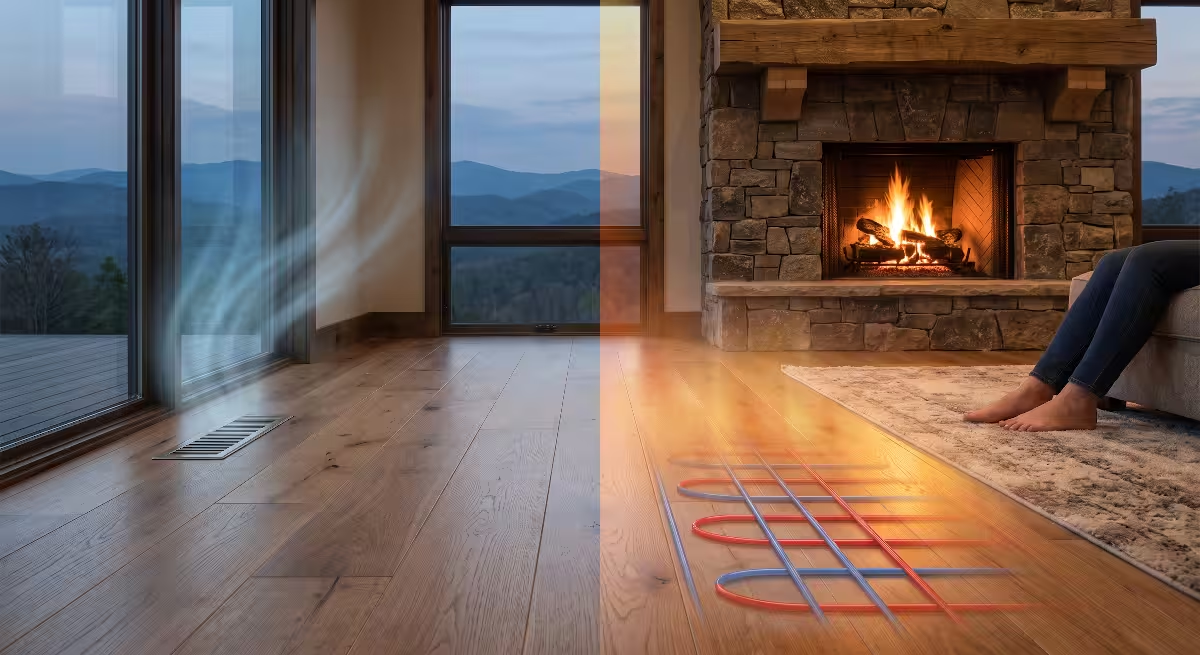
- Superior, Stable Comfort: In standard homes, you have “problem” rooms. The bonus room over the garage is always hot. The north facing bedroom is always cold. You have drafts near the windows. You feel cold spots on the floor. In high performance energy-efficient homes, these problems are gone. The advanced insulation, quality windows, and airtight shell create a “cocoon” of comfort. The temperature is incredibly stable and even in every single room, on every floor. You can walk barefoot on your hardwood floors in January without a chill. This is a quiet, background luxury that you will appreciate every day.
- Better Indoor Air Quality (IAQ): This is a serious health benefit. The EPA warns that indoor air can be 2 to 5 times more polluted than outdoor air. Think about it. We seal up our homes and then fill them with “stuff” that releases gasses. New carpets, paints, cabinets, and cleaning supplies all release chemicals (called VOCs) into the air. Add in dust, pet dander, and allergens, and you are breathing a chemical soup. In an airtight home without proper ventilation, this is a real problem. But in high performance energy-efficient homes, we solve this with the ERV (Energy Recovery Ventilator). That “lungs” of the house works 24/7, pulling out the stale, polluted air and bringing in fresh, filtered outdoor air. If you or your children have allergies or asthma, this system can be life changing. It is a home engineered for health.
- A Truly Quiet Home: A wonderful side effect of building high performance energy-efficient homes is the silence. The same features that stop air and heat from moving also stop sound. The thick, dense insulation in the walls and attic, plus the high quality, multi pane windows, create an amazing sound barrier. The noise of a barking dog, a loud neighbor, or a busy road just melts away. Your home becomes a true sanctuary.
You are not just investing in an asset. You are investing in your family’s daily comfort and long term health.
3. The Asset ROI: Higher Resale Value and Durability
As an engineer and builder, I build homes to last. This is a matter of integrity. A home is the biggest asset most people will ever own. Building it right protects that asset.
- Proven Higher Resale Value: This is not a guess. Studies have consistently shown that homes with energy efficient certifications sell for more money and sell faster. How much more? Depending on the market, the premium can be 2% to 8% higher than a similar, non efficient home. Buyers are getting smarter. They know that a lower utility bill is a huge selling point.
- The “Proof” is in the Label: How do you prove to a future buyer that your home is better? You use a third party certification. The most common is the Home Energy Rating System (HERS) Index. Think of it as an “MPG” or “miles per gallon” sticker for your house. A standard new home built to code scores a 100 on the HERS Index. Every point below 100 means it is 1% more energy efficient. The energy-efficient homes we build often score a 60, a 50, or even lower. This means they are 40% to 50% more efficient than the competition. When you list your home for sale, you can show a buyer a certificate with a number that proves it costs less to own. This gives you a massive advantage. Other labels like ENERGY STAR Certified Homes also provide this proven, marketable value.
- Built to Last (Durability): High performance, energy-efficient homes are simply built better. The meticulous air sealing and advanced moisture management mean the home is far more resilient. Water and moisture are the number one enemy of a house. They lead to rot, mold, and structural failure. Because we are so focused on controlling how air and moisture move through the wall system, we are building a house that will stand strong for generations. This is the “integrity” part of the investment. You are buying a quality product that will not need to be fixed.
When you combine the day to day financial savings, the huge boost in comfort and health, and the proven increase in your home’s long term asset value, the conclusion is clear. High performance, energy-efficient homes are not just a good investment. They are the smartest investment you can make in today’s housing market.
Making it Happen: How to Finance Your High-Performance Home

Even after seeing the benefits, I know that 4% to 10% premium can feel like a barrier. But here is the good news: you do not have to pay for it all out of pocket. There are specific financial tools designed to help you build smart, energy-efficient homes.
1. Federal Tax Credits
The government wants builders to build more energy-efficient homes. One of the best incentives available is the 45L New Energy Efficient Home Credit. This is a tax credit that goes to the builder (like me) for building a home that meets high standards, like ENERGY STAR or the DOE Zero Energy Ready Home program.
How does this help you? As your builder, I can factor that tax credit into the cost of construction. It is a powerful incentive that helps me lower your total price, making it much easier to afford the necessary upgrades. It is a true win win.
2. Local Utility Rebates (TVA)
We are fortunate to be in the Tennessee Valley Authority (TVA) region. The TVA and our local power companies often offer rebates and programs to encourage energy efficiency. These can include cash back for installing a qualifying high efficiency heat pump, a smart thermostat, or an efficient water heater.
As your builder, my team and I stay on top of these programs. We can design your home to meet the rebate requirements, and we will help you with the paperwork. It is another way to help buy down that initial cost and make building energy-efficient homes the easy choice.
3. Energy Efficient Mortgages (EEMs)
This is the most powerful tool of all, and one that not enough buyers know about. An Energy Efficient Mortgage (EEM) is a special home loan. It allows the bank to lend you more money than you would normally qualify for, with the extra funds dedicated to making the home more energy efficient.
Here is how it works:
- We design the high performance, energy-efficient home.
- We get a HERS rater to analyze the plans and project the monthly energy savings.
- The lender takes those projected savings (say, $150/month) and adds it to your income when qualifying you for the loan.
- This allows your loan amount to be increased to pay for the upgrades.
The bank is smart. It knows that you are a safer bet in an energy efficient home. You are less likely to default on your loan because your total monthly bills (mortgage + utilities) are lower and more predictable. An EEM is a fantastic tool that rolls the cost of the upgrades right into your mortgage, so you get all the benefits with no extra money down. It makes building smart, energy-efficient homes possible for almost everyone.
The Builder’s Verdict
So, let’s go back to the original question: Are high performance, energy-efficient homes a good investment?
When you look past the initial sticker price and analyze the complete picture, the answer is a clear and resounding yes.
Viewing a high performance home only by its upfront cost is a mistake. It is like comparing a cheap, poorly made tool to a precise, well crafted one. The cheap tool will only cost you frustration and will need to be replaced. The quality tool will perform perfectly for a lifetime.
When you invest in energy-efficient homes, you are making a:
- Competent Investment: You are lowering your total cost of ownership from day one.
- Precise Investment: You are buying a product with measurable, third party certified performance (like a HERS score).
- High-Integrity Investment: You are building a durable, resilient home that will protect your family’s health and your financial asset for decades.
Here in the Tri-Cities, we are committed to building homes that are not just beautiful, but are also smart, healthy, and responsible. A high performance home is the new standard of quality. It is the foundation of a modern custom home.