

Many regions in the country claim to have “four seasons,” but here in Northeast Tennessee, we do not just experience them. We live them. Our four distinct seasons are not just a background feature; they are an active part of our lifestyle. From the explosion of dogwoods and redbuds in the spring to the legendary, deep auburn of the Appalachian fall, our climate is a powerful force. The true four seasons, are likely the single most important factor to consider when you plan your life and your custom home here.
This article is more than just a weather report. Understanding what are the four seasons like in Northeast Tennessee is an important first step in designing a home that is not only beautiful but durable, efficient, and comfortable for decades to come. The weather is not just small talk here; it is a critical design parameter. Let us break down what these seasons mean for you, and how we build for them.
Video Version of the Article
The Climactic “Why”: The Role of the Appalachian Mountains
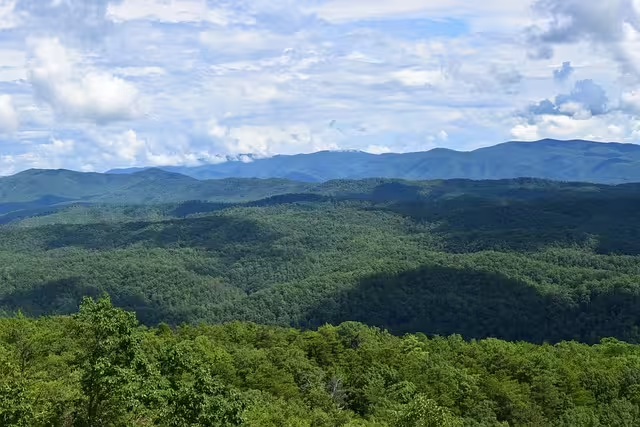
Before we detail the feel of our four seasons, you must first understand the why. From a technical standpoint, Northeast Tennessee is in a “humid subtropical” climate zone. But that label is misleading. Our weather is fundamentally shaped, moderated, and defined by one massive entity: the Appalachian Mountains.
We are located in what is known as the Great Valley of East Tennessee, nestled between the Blue Ridge Mountains to the east and the Cumberland Plateau to the west. This unique geography, or topography, is the reason our seasons are so pleasant.
First, the mountains act as a natural shield. They protect the Tri-Cities area—Johnson City, Kingsport, and Bristol—from the most severe weather systems that track across the country. Our friends in Middle Tennessee face a much higher risk of tornados. Our risk is not zero, but it is significantly lower because these massive mountains disrupt and weaken many of the most violent systems.
Second, the elevation is our natural air conditioner. This topography creates countless “microclimates.” The temperature and weather can change drastically depending on your elevation. The climate on the valley floor in Kingsport, at around 1,200 feet, is very different from the climate near the top of Roan Mountain, which soars to over 6,200 feet. This is why you can see snow-capped peaks in the distance while you are comfortable in a light jacket in the city.
This matters for site selection. When you plan your custom home, the specific plot of land you choose will have its own unique set of weather patterns. The mountains are the reason we have four distinct, beautiful seasons, and not the oppressive, singular seasons of the deep south or the brutal winters of the north. They are the defining feature of our region and our homes.
Spring in Northeast Tennessee: Vibrant Growth and Foundational Challenges

The spring season here is a truly vibrant time. It is a period of re-awakening that begins in late March and extends through May. The entire region explodes in color. The dogwoods, redbuds, and wildflowers create a stunning landscape. Average temperatures are wonderful, climbing from the 50s up into the comfortable 70s. People are back outside, hiking, fishing, and enjoying the end of the cooler seasons.
But spring has a dual nature. It is also, by a wide margin, our wettest of the four seasons.
One common question is “How much rain does East Tennessee get?” The answer is that we average between 50 and 55 inches of rain annually. A large portion of that precipitation arrives in the spring. This is fantastic for our lush, green landscape, but it presents a serious technical challenge for a home builder.
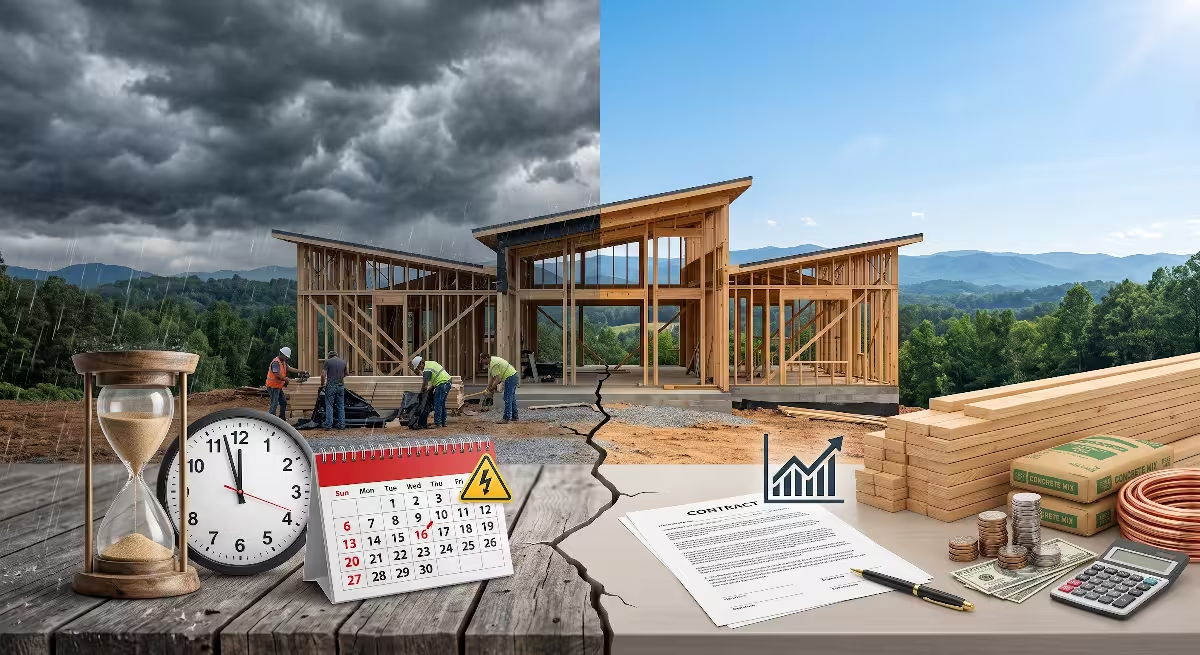
From a project management standpoint, spring rains are the single biggest hurdle to starting a new custom home. You cannot, or at least you should not, pour a concrete foundation in a muddy, saturated pit. The integrity of your entire home rests on its foundation. My past role as a General Manager for a regional builder taught me that you must respect the seasonal conditions. If you try to rush excavation and concrete work on wet soil, you risk poor compaction and a weaker foundation.
Another seasonal challenge of spring is pollen. The same trees that give us our beauty also release a massive amount of pollen, covering everything in a fine, yellow-green dust.
How We Design for the Spring Season:
When you plan for a home look for these exact conditions.
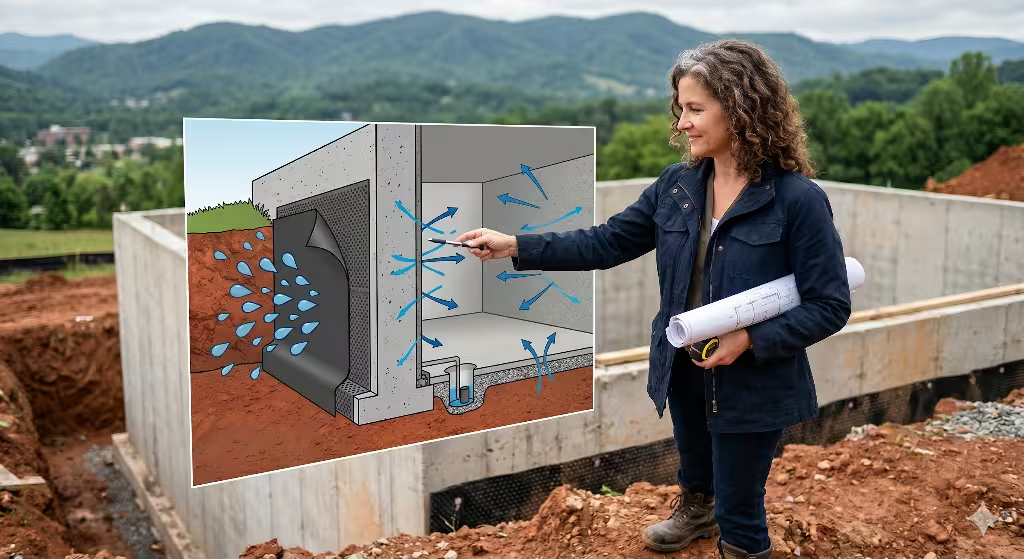
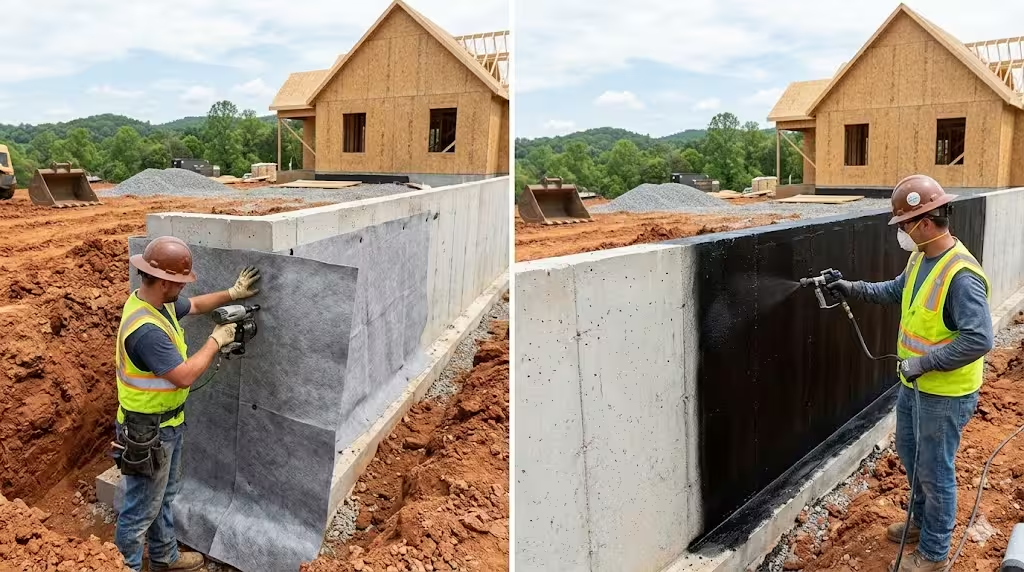
- Water Management: Because of the heavy spring rain, we must engineer a robust water management system. This includes proper grading, French drains, and foundation waterproofing. This is not an area where you cut corners.
- Outdoor Living: To help you enjoy the pleasant temperatures of this season without the rain, we often design large covered porches or screened-in decks. This creates a functional “transition space” between your home and the outdoors.
- Indoor Air Quality: To combat the pollen, we design the home’s “building envelope” to be as airtight as possible. We then use a high-quality fresh air ventilation system with high-MERV filters. This system brings in fresh air but scrubs the pollen out before it ever enters your living space. This is a precise solution for a seasonal problem.
The spring seasons are a time of beauty and challenge. A well-built home allows you to enjoy the first while being completely protected from the second.
Summer: Managing Humidity with Precise Engineering

Our summer season, which typically runs from June through August, is warm and green. If you are moving from Florida or the Gulf Coast, you will find our summers quite pleasant. Average high temperatures are in the mid-to-upper 80s. We will have occasional heat waves that push into the 90s, but it is not a daily occurrence. The mountain elevations mean our nights cool down pleasantly.
When people ask, “How hot does it get in Johnson City, TN?” I tell them they are asking the wrong question. In Northeast Tennessee, the temperature is not the enemy. The humidity is.
Because we are in a “humid subtropical” zone, our summers carry a lot of moisture in the air. This humidity, or dew point, is the metric I track. It is what makes the air feel “sticky” or “heavy.” It is also the season for afternoon thunderstorms, which can be brief but powerful. This is the season when residents flock to Watauga Lake and Boone Lake to cool off.
From a construction standpoint, the long daylight hours of the summer season are excellent for productivity. Framing, roofing, and exterior work can proceed quickly. However, the high humidity is a technical factor that must be managed. For example, paint will not cure correctly in very humid conditions. Hardwood flooring, if delivered and installed without proper acclimation, can absorb moisture from the air and will swell, leading to buckling and gaps when the dry seasons of winter arrive. A precise builder understands how materials behave in all seasons.
How We Design for the Summer Season:
This season is where my engineering background is most critical. Managing humidity is not about just a powerful air conditioner; it is about a total systems approach.
- Right-Sized HVAC: This is the most common mistake I see. A builder trying to save money will install an air conditioner that is too large for the home. This oversized unit cools the house too quickly, so it only runs for a few minutes at a time. This is a critical failure. An A/C unit only removes humidity when it is running. By cooling the air too fast, it satisfies the thermostat and shuts off before it has had time to pull the moisture out of the air. This leaves you with a house that is cool, but feels damp and sticky. We perform precise calculations to install an HVAC system that is exactly sized for your home. It will run longer, quieter, and more efficiently, and it will properly dehumidify the air, giving you true comfort during the humid seasons.
- A Sealed Building Envelope: My commitment to competence means this is non-negotiable. We must stop that humid, outdoor air from getting into your house in the first place. This is achieved through a meticulous process of air sealing. We use high-quality house wrap and tape every seam. We use special flashing around every window and door. We use foam and caulk to seal every tiny penetration where a wire or pipe enters the home.
- High-Performance Insulation: After sealing the “skin” of the home, we insulate it. I am a firm believer in high-R-value insulation, often using spray foam in the attic and walls. This creates a continuous thermal barrier. It is like a perfect cooler, it keeps the hot, humid air out and the cool, dry air in.
- Controlled Ventilation: Once the house is tight, we must control the air. You cannot just open a window in a humid season. We install an Energy Recovery Ventilator, or ERV. This is a brilliant piece of engineering. It is a smart box that manages your fresh air. It pushes your stale, indoor air out, and at the same time, it pulls fresh, outdoor air in. But here is the precise part: as the two air streams pass each other, the machine transfers the “coolness” of the outgoing air to the warm, incoming air. Even better, it strips out most of the humidity. This means you get fresh air all summer long without paying to re-cool it and without importing all that moisture.
The summer seasons in Northeast Tennessee are wonderful. A home that is precisely engineered to manage humidity is the key to enjoying them in complete comfort.
Autumn: The “Golden Season” for Living and Building
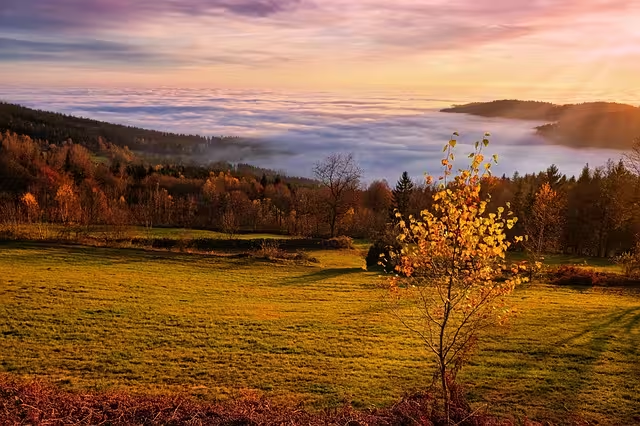
After the work of managing the summer humidity, the autumn season is our region’s great reward. This is, without question, the most beloved of our four seasons. It is why people travel from all over the world to drive the Blue Ridge Parkway or hike the Appalachian Trail.
The season begins in September, as the humidity finally breaks. The air becomes crisp, clear, and dry. October is the driest month of our entire year. Temperatures are ideal, with daytime highs in the 60s and 70s and cool, comfortable nights. And then, there is the color. The “fall foliage” here is not just a nice event; it is a spectacular, all-encompassing experience. The deep reds, oranges, and yellows of the maples, oaks, and hickories create a new landscape.
For a builder, this is the “golden season” of construction.
The mild, dry weather is absolutely perfect for the most critical phase of building: the foundation. The ground is dry, stable, and easy to work with. This allows us to excavate and pour concrete footers and walls with precision. We are not fighting the mud of the spring seasons.
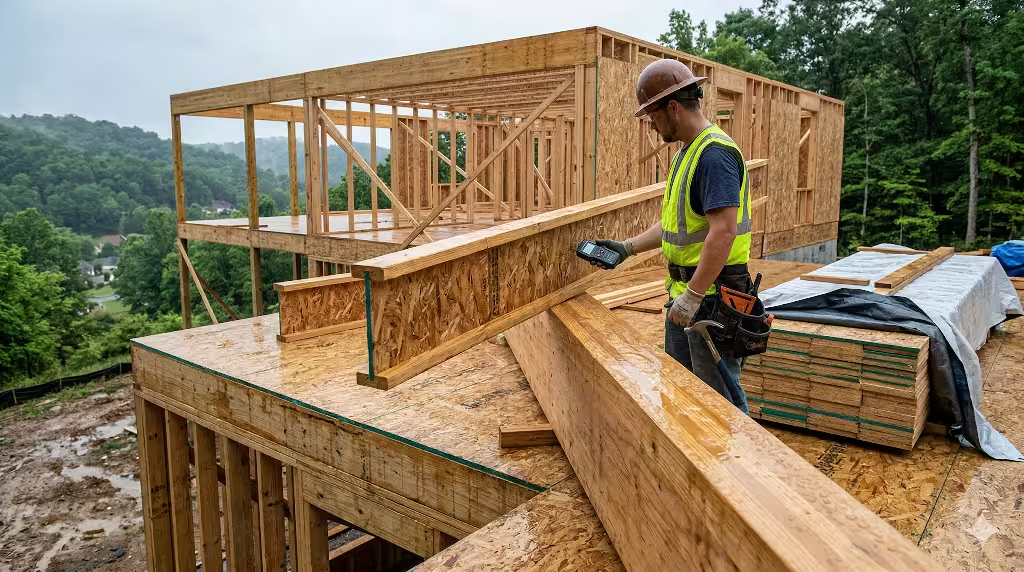
My entire goal as a project manager during the summer is to be “ready for fall.” The autumn season is a race against the clock. We use this dry, clear window to get the foundation in, get the home framed, and get it “dried in.” This is a builder’s term that means the roof is on, the windows and doors are installed, and the house wrap is complete. Once a home is dried in, the structure is protected from the elements. This is a critical milestone. It means all interior work—electrical, plumbing, insulation, and drywall—can continue all winter long, no matter what the weather does.
How We Design for the Autumn Season:
The design choices for this season are all about maximizing your enjoyment of the perfect weather.
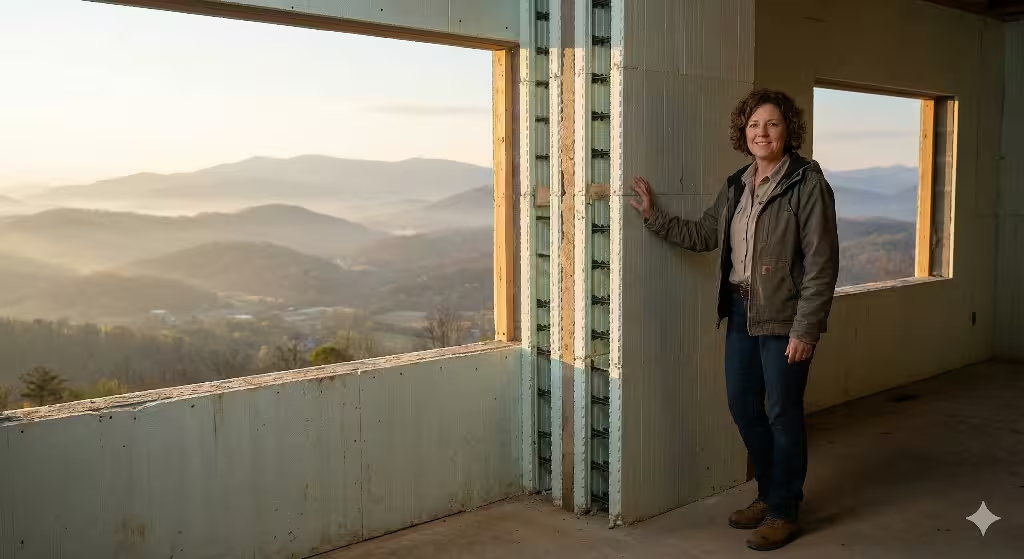
- Windows, Windows, Windows: This is why we invest in large, high-performance windows. When I design a home, I walk the site to orient the main living spaces and master bedroom to frame the best possible mountain views. During the brilliant autumn seasons, those windows become like living art. We use Low-E coated glass, which is a technical detail that means the glass blocks harmful UV rays and heat, but allows all that beautiful visible light to come through.
- Outdoor Living Spaces: This is the season when outdoor living spaces truly shine. A home’s design should not stop at the walls. We work with clients to design functional and beautiful outdoor rooms. Stone patios, fire pits, and outdoor fireplaces become the most popular part of the home from September to November. We can build a space that truly connects your indoor and outdoor life during the best seasons of the year.
Winter: Mild, with a Focus on Efficiency

Our winter seasons in Northeast Tennessee are generally mild and cool, which is a major draw for people relocating from the north. This season typically runs from mid-November through February. Average daytime high temperatures are in the 40s, and average lows dip near or just below freezing.
A common question is, “Does it snow in Johnson City, TN?” The answer is yes, but it is variable and depends entirely on your elevation. In the main valleys of the Tri-Cities, we may only see a few light snowfalls a year, totaling an average of 10-15 inches for the whole season. These snows are beautiful and usually melt within a day or two.
However, if you build on a mountain, you will be in a different microclimate. The higher elevations, like Roan Mountain, can receive 100 inches of snow or more and look like a winter wonderland for months.
From my perspective, the more significant threat during our winter season is not snow; it is ice. Sleet and freezing rain can be a bigger challenge, both for driving and for your home.
From a construction standpoint, the arrival of the cold seasons means most exterior work stops. You cannot pour concrete, paint, or install most roofing materials in freezing temperatures. This is why getting the home “dried in” during the fall season is so critical. If that milestone is met, my team moves inside. The house itself becomes a conditioned workshop, and we can work efficiently all winter on the interior systems: plumbing, electrical, insulation, drywall, and trim.
How We Design for the Winter Season:
This is the season where all the precise engineering we did for the summer pays off again, but in reverse.
- The Thermal Envelope: That same airtight “building envelope” and high-R-value insulation that kept the summer humidity out now works to keep the warm, comfortable air in. This is the key to energy efficiency. A home built with competence and precision has incredibly low heating bills. It does not waste energy. It is a quiet, comfortable, draft-free space.
- Preventing Ice Dams: This is a technical problem that I see all the time in older or poorly built homes. An “ice dam” happens when heat from inside your house escapes into the attic. This heat warms the underside of the roof, melting the snow. That water runs down the roof until it hits the cold edge of the gutter, where it refreezes. This creates a “dam” of ice. The water from the melting snow above it has nowhere to go, so it backs up under your shingles and leaks into your home. This is a failure of design.We prevent this with precise attic ventilation and insulation. By sealing the attic floor and ensuring proper airflow, we keep the attic cold. A cold attic means the snow on the roof does not melt from below, and an ice dam can never form. This is a simple, competent design that protects your home.
- Practical, Sane Design: Integrity in building means thinking about how you will live in the home during all seasons. A small but critical detail is the driveway. I have seen architects design beautiful homes with incredibly steep driveways. This might look fine in the summer, but it becomes a dangerous, unusable sheet of ice during the winter seasons. We plan for this from day one, siting the house and grading the driveway for safe, easy access, even on an icy day.
Conclusion: A Home Built with Integrity for All Four Seasons
So, what are the four seasons like in Northeast Tennessee? They are the very definition of a “best-of-all-worlds” climate.
- Spring is a vibrant, lush, and wet season of rebirth.
- Summer is warm and green, a season where we must engineer for humidity.
- Autumn is our golden season, crisp, dry, and spectacularly beautiful.
- Winter is mild and cool, a quiet season that rewards an efficient home.
These seasons are a gift. But to enjoy them fully, your home cannot be an afterthought. It cannot be an “off-the-shelf” plan that was designed for a different climate. A custom home must be a precise, technical response to this specific environment. It must be built with a deep understanding of how heat, air, and moisture behave through all four seasons.