
Introduction to the High-Performance Building Envelope
Imagine two coolers. One is a cheap, flimsy Styrofoam box from the gas station; the other is a premium, heavy-duty model designed for serious outdoor adventures. If you fill both with ice and drinks, which one will keep your items cold longer, especially on a scorching summer day in the Tri-Cities? The answer is obvious. The premium cooler, with its thick, well-sealed walls, simply performs better.
Now, apply that same idea to your home. Just like the cooler, your house has an “envelope”,a shell that separates the comfortable inside from the unpredictable outside. This building envelope includes your walls, roof, foundation, windows, and doors. In a standard home, this envelope might be more like that cheap Styrofoam cooler—it does the job, but not very well, constantly letting your carefully heated or cooled air escape. A high-performance building envelope, on the other hand, acts like that premium cooler, keeping your home perfectly comfortable and energy efficient year-round.
For anyone planning a custom home in areas like Johnson City, Kingsport, or Bristol, understanding the building envelope isn’t just a technical detail; it’s about making the smartest investment for your future comfort, health, and finances. This article will explain exactly what makes a building envelope “high-performance” and dive deep into the five crucial benefits you’ll gain from prioritizing it in your custom home project. We’ll show you why this unseen hero of your home is worth every bit of attention.
What Exactly Makes a Building Envelope “High-Performance”?
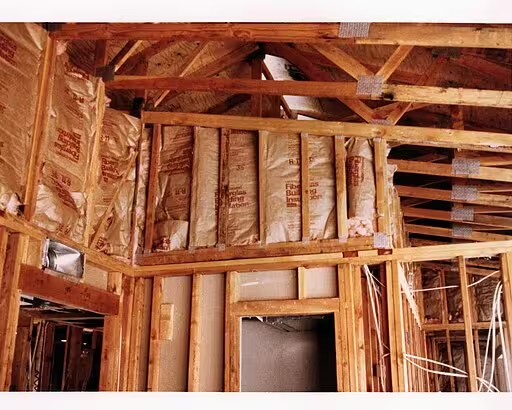
When we talk about a high-performance building envelope, it’s not about a single magical product or a fancy new type of paint. Instead, it’s about a complete system—a thoughtful and precise combination of materials and construction methods working together. Think of it like a finely tuned engine where every part plays a crucial role in making the whole machine run smoothly and efficiently. Many people wonder, “What are the components of a high performance building envelope?” The answer lies in how these different layers and elements control the flow of air, heat, moisture, and water.
At its core, a high-performance building envelope is designed to create a very strong barrier between your indoor living space and the outdoor environment. This means preventing unwanted things from getting in (like drafts, humidity, or pests) and preventing desirable things from getting out (like your expensive heated or cooled air). It’s about being incredibly intentional with every single part of the building envelope.
To achieve this, experts focus on what are called “control layers.” These are four essential barriers that must be continuous and well-integrated throughout the entire building envelope:
- A Continuous Water-Resistant Barrier: This is the first line of defense against rain and other forms of liquid water. Imagine your home getting soaked during a heavy Tri-Cities thunderstorm. Without a proper water-resistant barrier as part of your building envelope, that water could easily seep into your wall cavities, leading to mold, rot, and structural damage over time. This barrier isn’t just the exterior siding; it’s typically a layer underneath the siding, like house wrap or specialized membranes, designed to shed water away from the structure. For a high-performance building envelope, this layer is meticulously installed, overlapping correctly and sealed at all penetrations (like windows and doors) to ensure no gaps where water can sneak in.
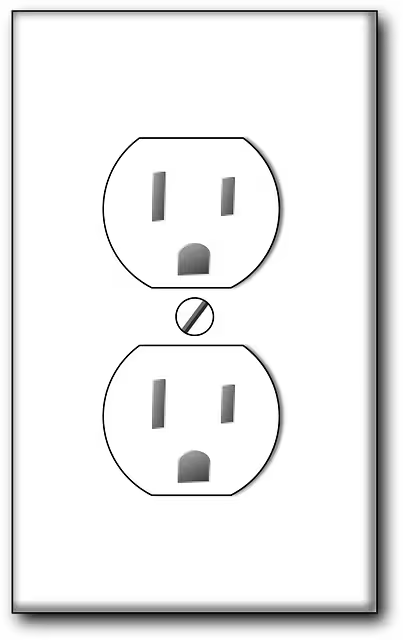
- A Continuous Air Barrier: This is arguably the most critical component for achieving true high performance in a building envelope, and it’s often the most overlooked in standard construction. An air barrier’s job is simple but vital: stop uncontrolled air leaks. Think about all the tiny cracks and gaps that can exist in a typical home—around electrical outlets, light switches, where walls meet floors, or where pipes and wires pass through walls. In a standard home, these small openings add up to a significant amount of air leakage. It’s like leaving a window slightly ajar all the time. Your expensive conditioned air is constantly escaping, and unconditioned, often humid or dusty, air is constantly being pulled in.A continuous air barrier in a high-performance building envelope means meticulously sealing every single one of these potential leak points. This involves using tapes, caulks, gaskets, and specialized membranes on the interior and/or exterior of the building envelope, creating an almost airtight seal. The goal isn’t to make the home airtight to the point of being stuffy (we’ll talk about ventilation later), but to control where air enters and exits. By controlling air movement, you prevent drafts, significantly reduce energy loss, and make your home feel much more comfortable. This is a hallmark of a truly efficient building envelope.
- A Continuous Thermal Barrier (Insulation): This is the component most people think of when they hear “energy efficiency.” Insulation’s job is to resist the flow of heat. In winter, it keeps the expensive heat you’ve generated inside. In summer, it keeps the scorching heat outside. But for a high-performance building envelope, it’s not just about how much insulation (its R-value), but also how it’s installed.The key word here is “continuous.” In many standard homes, insulation is placed between wall studs or roof rafters, creating gaps where the wood framing itself can act as a “thermal bridge.” A thermal bridge is like a cold spot that allows heat to easily escape or enter the home, bypassing the insulation. Think of a chain with a weak link—even if the rest of the chain is strong, that one weak link compromises the whole.A high-performance building envelope minimizes these thermal bridges. This often involves using continuous insulation on the exterior of the wall framing (like rigid foam boards), or advanced framing techniques that reduce the amount of wood in the walls, allowing for more insulation. The aim is to create an uninterrupted blanket of insulation around the entire house, ensuring uniform temperature control and efficiency across the entire building envelope.
- A Vapor Control Layer: Water vapor, or moisture in gas form, can also cause big problems within your walls if not managed correctly. Imagine warm, humid air from your shower or kitchen moving into a cold wall cavity during winter. If it hits a cold surface, it can condense into liquid water, similar to how condensation forms on a cold drink. This condensation within the wall can lead to mold, mildew, and rot, even if your water-resistant barrier is perfect. A vapor control layer (sometimes called a vapor barrier or vapor retarder) is a material specifically designed to slow or stop the movement of water vapor into or out of the wall assembly. The placement of this layer in the building envelope is crucial and depends heavily on the local climate. In a cold climate, it’s usually placed on the warm side of the insulation to prevent indoor moisture from reaching the cold exterior sheathing. In a hot, humid climate, it might be on the exterior side to prevent outdoor humidity from reaching the cool interior. For the Tri-Cities, which has both cold winters and hot, humid summers, careful design of the vapor control layer within the building envelope is essential to prevent moisture problems year-round.
Beyond these four control layers, specific physical components are essential to a high-performance building envelope. This includes using high-performance windows and doors with multiple panes of glass, low-emissivity coatings, and excellent air sealing. The roof and foundation assemblies are also integral parts of the building envelope, receiving the same meticulous attention to detail regarding insulation, air sealing, and moisture control. Every joint, every seam, and every penetration (like pipes, vents, and wires) through the building envelope is carefully sealed to ensure the entire system works flawlessly. This detailed approach is what transforms a standard house into an energy-efficient, comfortable, and durable home.
Benefit #1: Drastic Reductions in Energy Consumption and Utility Costs
One of the most immediate and impactful advantages of investing in a high-performance building envelope is the significant reduction in energy consumption and, consequently, your monthly utility bills. This benefit directly addresses the common question, “How does a building envelope save energy?” The answer lies in its ability to minimize energy waste.
Think about how a standard home operates. During a hot summer day in Johnson City, the sun beats down on your roof and walls, transferring heat into your home. Meanwhile, any unsealed cracks or gaps in your building envelope allow hot, humid outdoor air to infiltrate, while your expensive, conditioned indoor air escapes.16 Your air conditioning system has to work incredibly hard, running almost constantly, to try and keep up with this constant battle against the elements.
The same principle applies in winter: your furnace struggles to maintain warmth as heated air leaks out and cold air seeps in through a compromised building envelope. This constant struggle means your HVAC (heating, ventilation, and air conditioning) system consumes a massive amount of energy, leading to high utility bills.
A high-performance building envelope fundamentally changes this dynamic. By creating a superior air barrier, it dramatically reduces air leakage, meaning your heated or cooled air stays inside where it belongs. The continuous thermal barrier (insulation) prevents heat from easily passing through your walls, roof, and floor. This significantly reduces the “heating and cooling load” on your home. In simpler terms, your HVAC system doesn’t have to work nearly as hard. It runs less frequently, for shorter periods, and can maintain your desired indoor temperature with much less effort.
Consider a tangible example: imagine a beautifully built custom home in Kingsport with a high-performance building envelope. On a mild spring day, if you turn off the HVAC system, you might find that the indoor temperature remains comfortable and stable for many hours, sometimes even an entire day, because the building envelope is so effective at keeping the outside out and the inside in.
In contrast, a home with a standard building envelope would quickly begin to feel stuffy, hot, or cold as outside air and temperatures rapidly influence the interior. This ability to “coast” for longer periods without active heating or cooling is a direct result of the superior thermal and air-sealing qualities of the building envelope.
The initial investment in a high-performance building envelope might seem like an added expense upfront. However, it’s crucial to view this not as a cost, but as a strategic, long-term investment that yields significant financial returns. Every month, as your utility bills arrive, you’ll see the dividends of that investment. Over the lifespan of your home—which could be 50, 75, or even 100 years—the cumulative savings on energy costs will be substantial.
For a custom home, where longevity and efficiency are often primary goals, prioritizing the building envelope is one of the most financially astute decisions you can make, contributing to both your immediate budget and your long-term financial health. The U.S. Department of Energy consistently highlights that energy efficiency improvements are among the most reliable ways homeowners can save money, and the building envelope is at the heart of those savings.
Benefit #2: A New Level of Homeowner Comfort
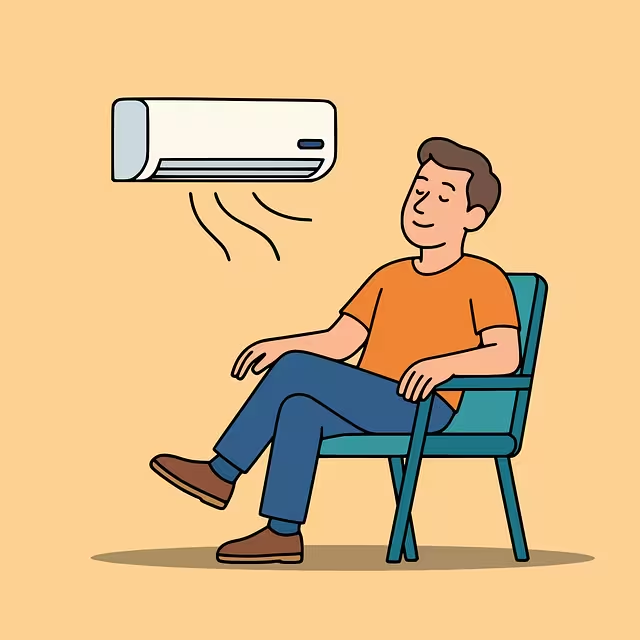
Beyond the financial savings, one of the most immediately noticeable and appreciated benefits of a high-performance building envelope is the dramatic improvement in homeowner comfort. This isn’t just about the temperature; it’s about the overall feeling of living in your home.
Think about common complaints in many standard homes: cold drafts near windows or outlets, rooms that are always too hot in summer or too cold in winter, and noisy neighbors or street traffic disrupting your peace. A high-performance building envelope addresses all these issues head-on, transforming your living space into a consistently pleasant and tranquil sanctuary.
Elimination of Drafts: In a standard home, especially older ones, the air barrier is often incomplete or nonexistent. This means tiny cracks and gaps in the building envelope allow outside air to constantly infiltrate. On a chilly winter day in Bristol, you might feel a noticeable cold draft near a window, an exterior wall, or even from an electrical outlet. These drafts aren’t just annoying; they make you feel colder than the thermostat reading, prompting you to crank up the heat, wasting energy.
With a high-performance building envelope, the continuous air barrier meticulously seals these pathways. The result? A home free from annoying drafts, where every corner feels uniformly warm and cozy. You’ll no longer need to layer up or huddle under blankets to feel comfortable indoors.
Consistent Temperatures Throughout Your Home: Another common frustration in many homes is inconsistent temperatures. Some rooms might be noticeably hotter in the summer or colder in the winter than others. The room over the garage, a sun-facing bedroom, or a basement often falls into this category. This disparity in temperature is frequently caused by a poorly insulated or leaky building envelope that allows heat to easily transfer in or out of specific areas.
With a continuous thermal barrier and a superior air barrier, a high-performance building envelope ensures that heat transfer is minimized across all exterior surfaces. This means your home maintains a much more uniform temperature from room to room, floor to floor. The room over the garage can be just as comfortable as your main living area, without needing extra heating or cooling. This consistent comfort means you can utilize every square foot of your custom home as intended, without dreading certain “problem” areas.
Acoustic Insulation: While often overlooked, the same properties that make a building envelope excellent at controlling heat and air also make it fantastic at controlling sound. A well-sealed and heavily insulated building envelope acts as a powerful acoustic barrier. It muffles outside noises, whether it’s traffic from a busy road in Johnson City, neighborhood sounds, or even harsh weather like strong winds and heavy rain. Imagine the peace and quiet inside your home, a serene escape from the hustle and bustle of the outside world.
This enhanced sound control contributes significantly to the overall sense of tranquility and comfort within your custom home, making it a true haven. This benefit of the building envelope provides a sense of calm that is invaluable.
The feeling of stepping into a high-performance home is distinctly different. It’s a subtle yet profound sense of calm and stability. The air feels still and comfortable, not subject to sudden drafts or temperature swings. The environment feels controlled and peaceful. This improved comfort directly enhances your quality of life within your custom home, making it a more enjoyable and relaxing place to live every single day.
Benefit #3: Superior Durability and Structural Longevity
When you invest in a custom home, you’re not just thinking about the next five or ten years; you’re envisioning a legacy, a home that will stand strong for generations. This is where the long-term benefit of superior durability and structural longevity, thanks to a high-performance building envelope, becomes incredibly important. This aspect is often less glamorous than energy savings or comfort, but it’s foundational to the enduring quality of your home.
The number one enemy of a house’s structure, and its long-term health, is uncontrolled moisture. Water, whether in liquid form (rain, leaks) or vapor form (humidity), can wreak havoc within wall assemblies, leading to a cascade of problems if not properly managed by the building envelope. These problems include mold, mildew, rot, and even structural weakening, which can be incredibly costly to repair and compromise the safety and value of your home.
A high-performance building envelope is meticulously designed with moisture management as a top priority. Let’s break down how each control layer contributes to this vital durability:
- Water-Resistant Barrier: This layer is specifically engineered to keep bulk water, rain, snowmelt, and condensation from the exterior, from penetrating the wall assembly. In standard construction, there might be gaps or poorly sealed areas. In a high-performance building envelope, this barrier is installed with extreme care, with all seams lapped correctly, and all penetrations (like around windows, doors, and utility pipes) are thoroughly flashed and sealed. This acts like a raincoat for your house, ensuring that water is shed harmlessly away from the structure, protecting the critical elements of the building envelope.
- Air Barrier: Believe it or not, the air barrier plays a huge role in moisture control. Uncontrolled air leakage can transport significant amounts of moisture (as water vapor) into wall cavities. For example, during winter, warm, humid indoor air can be pushed through cracks in the building envelope into a cold wall cavity. When this humid air hits a cold surface (like exterior sheathing), it condenses into liquid water, similar to how moisture forms on a cold glass. This hidden condensation can lead to rot and mold within the wall, unseen until significant damage has occurred. By creating an airtight building envelope, you eliminate these uncontrolled pathways for moisture-laden air, significantly reducing the risk of hidden condensation.
- Vapor Control Layer: As discussed, this layer specifically manages the movement of water vapor. Its careful placement within the building envelope, tailored to the Tri-Cities’ climate (which experiences both cold winters and humid summers), ensures that moisture doesn’t accumulate within the wall assembly. It works in conjunction with the other layers to allow any incidental moisture that might get in to dry out safely, preventing it from getting trapped and causing damage. This thoughtful design of the building envelope is crucial for longevity.
The cumulative effect of these well-designed and precisely installed control layers is a home that is inherently more resilient and durable. By preventing moisture infiltration and managing vapor movement, a high-performance building envelope safeguards the integrity of your structural components, such as wood framing and sheathing. This means less risk of:
- Mold and Mildew Growth: Which can cause health problems and degrade building materials.
- Wood Rot: Which compromises the structural stability of your home.
- Pest Infestations: Many pests are attracted to damp wood or can exploit openings in a poorly sealed building envelope.
- Degradation of Insulation: Wet insulation loses its effectiveness and can break down over time.
Investing in a superior building envelope means you are building a home that is designed to last, resisting the challenges of weather and time with much greater success. This drastically reduces the need for costly, disruptive repairs down the line, saving you money and headaches over the decades you’ll live in and enjoy your custom home. It ensures that the beauty and functionality of your home endure, solidifying its place as a lasting asset in the Tri-Cities.
Benefit #4: Healthier Indoor Air Quality (IAQ)
In an age where we spend a significant portion of our lives indoors, the quality of the air we breathe within our homes has become a critical concern. A high-performance building envelope plays a pivotal role in creating a healthier indoor environment, addressing issues that can impact everything from allergies to overall well-being. This benefit speaks directly to the modern homeowner’s desire for a safe and healthy living space.
The concept behind healthy indoor air quality in an energy-efficient home is often summarized as: “Build it tight, ventilate it right.” This phrase perfectly encapsulates how a high-performance building envelope contributes to a healthier living environment.
- “Build it Tight”: Preventing Unwanted Pollutants from Entering:
- External Pollutants: In a standard home with a leaky building envelope, outdoor air constantly infiltrates through every crack and gap. This means that whatever is in the outdoor air, pollen from local Tri-Cities vegetation, dust, vehicle exhaust, industrial pollutants, wildfire smoke, or even pesticides from a neighbor’s yard, can easily be drawn into your home. A high-performance building envelope, with its meticulous air barrier, dramatically reduces this uncontrolled infiltration. By sealing the envelope so effectively, you create a controlled environment that largely prevents these unwanted external pollutants from entering your living space.
- Pests: Small cracks and openings in a standard building envelope are also entry points for pests like insects and rodents. These creatures can bring in their own allergens and contaminants, further compromising indoor air quality. An airtight building envelope effectively seals off these entry points, creating a much less hospitable environment for pests.
- Dust and Dirt: A leaky home is also a dusty home. Outdoor dust and dirt particles are constantly being drawn in. An airtight building envelope helps to keep the interior significantly cleaner, reducing the amount of airborne dust that settles on surfaces and gets circulated through your HVAC system.
- “Ventilate it Right”: Controlling and Filtering Indoor Air:
- While sealing the building envelope tightly is excellent for keeping unwanted things out, it also means that indoor pollutants could build up if not properly managed. This is where the “ventilate it right” part comes in. High-performance homes are almost always paired with mechanical ventilation systems, most commonly Energy Recovery Ventilators (ERVs) or Heat Recovery Ventilators (HRVs).
- Fresh, Filtered Air: These systems continuously bring in a controlled amount of fresh outdoor air and exhaust stale indoor air. Critically, before the fresh air enters your home, it passes through high-efficiency filters. This means you get a constant supply of clean, fresh air, free from pollen, dust, and other airborne particles, without having to open windows and let in unfiltered air or extreme temperatures.
- Moisture and Odor Control: ERVs and HRVs also help manage indoor humidity levels, which is crucial for preventing mold growth (even from indoor sources like cooking and showering) and maintaining comfort. They also remove common indoor pollutants like volatile organic compounds (VOCs) released from furniture and building materials, pet dander, and cooking odors.
For individuals or families with allergies, asthma, or other respiratory sensitivities, the difference in indoor air quality provided by a high-performance building envelope and mechanical ventilation system is transformative. It creates an environment where triggers are minimized, leading to improved health and fewer symptoms. Even for those without specific sensitivities, breathing cleaner air contributes to overall better health, improved sleep, and a greater sense of well-being within their custom home. This focus on the building envelope ensures that your home is not just beautiful and efficient, but also a truly healthy place to live for decades to come.
Benefit #5: Increased Resale Value
When you’re making a substantial investment in a custom home, you’re naturally thinking about its long-term worth. While features like granite countertops, hardwood floors, and custom cabinetry are appealing, a truly high-performance building envelope offers a deeper, more fundamental value that significantly boosts your home’s resale potential. This benefit directly answers the crucial financial question, “Is a high performance building envelope worth the cost?” The answer is a resounding yes, because it translates into a higher property value and a more attractive offering to future buyers.
In today’s real estate market, buyers are becoming increasingly sophisticated and educated. They’re looking beyond superficial aesthetics to understand the true cost of homeownership and the quality of the building itself. A custom home in the Tri-Cities with a proven high-performance building envelope is a premium product that stands out in a crowded market because it delivers tangible, ongoing benefits that modern buyers highly value:
- Lower Operating Costs: This is perhaps the most compelling selling point. Imagine being able to tell prospective buyers that your utility bills are significantly lower than comparable homes in the area. This is a direct, measurable financial advantage that makes your home more affordable to own month after month. Low energy bills are a powerful incentive, especially as energy costs continue to fluctuate and generally trend upward. A superior building envelope makes this a reality.
- Exceptional Comfort: Buyers understand and appreciate comfort. Being able to market a home as “draft-free,” “uniformly comfortable year-round,” and “peacefully quiet” are enormous advantages. These are qualities that transform a house into a haven, and a well-designed building envelope delivers them effortlessly. Homebuyers are willing to pay a premium for a home where they know they will feel consistently comfortable.
- Superior Durability and Reduced Maintenance: A home built with a high-performance building envelope is inherently more durable and requires less maintenance related to moisture issues, mold, and structural degradation. This translates into peace of mind for future homeowners. They know they’re buying a solid, well-built house that will stand the test of time, reducing their potential future repair costs and headaches. This benefit of the building envelope is often overlooked, but it contributes to long-term value.
- Healthier Indoor Environment: With growing awareness of indoor air quality, a home that offers filtered, fresh air and fewer allergens is a huge selling point. This is especially true for families with children, individuals with allergies or asthma, or anyone simply prioritizing a healthier lifestyle. A high-performance building envelope, coupled with proper ventilation, provides this valuable health benefit.
- Future-Proofing: As energy codes become stricter and environmental awareness grows, homes with superior energy efficiency are increasingly seen as “future-proof.” They are better positioned to meet evolving standards and maintain their value over the long term, unlike older, less efficient homes that may become expensive to operate or difficult to sell.
Furthermore, homes built to high-performance standards often come with third-party certifications, such as ENERGY STAR Certified Homes or even Passive House (PHIUS) certification. These certifications provide objective, verifiable proof of your home’s superior performance. When it’s time to sell, these labels are powerful marketing tools, providing immediate credibility and trust. They tell prospective buyers that the home has been rigorously tested and meets stringent standards for energy efficiency, comfort, and durability. This takes the guesswork out of assessing the home’s quality, making it a highly attractive option in the market for any custom home in the Tri-Cities area.
While the initial investment in a high-performance building envelope might be slightly higher than standard construction, the enhanced comfort, reduced operating costs, increased durability, improved health benefits, and demonstrably higher resale value make it one of the smartest and most financially rewarding decisions you can make for your custom home. It ensures that your home is not only a joy to live in but also a valuable asset for decades to come.
Conclusion: The Foundation of a Truly Custom Home
We’ve journeyed through the intricate components and profound advantages of a high-performance building envelope, unveiling it as the unseen hero of any truly custom home. We started by comparing it to a premium cooler, a simple analogy that underscores its fundamental role in creating a controlled, comfortable environment. We then delved into its sophisticated construction, explaining how continuous water, air, thermal, and vapor barriers work together in harmony to create an impervious shell around your home. Every detail of the building envelope is carefully considered.
The five core benefits we’ve explored, Drastic Reductions in Energy Consumption and Utility Costs, A New Level of Homeowner Comfort, Superior Durability and Structural Longevity, Healthier Indoor Air Quality, and Increased Resale Value, are not isolated advantages. Instead, they are interconnected facets of a single, powerful investment in your home’s fundamental quality and your family’s well-being. From the consistent temperatures and quiet tranquility within your living spaces to the significant monthly savings on utility bills and the peace of mind that comes with a durable, long-lasting structure, a high-performance building envelope enhances every aspect of homeownership.
Moreover, by preventing the infiltration of external pollutants and allowing for controlled fresh air ventilation, it cultivates a healthier indoor environment, a priceless benefit in today’s world. Finally, this commitment to excellence in the building envelope translates directly into a more valuable asset, making your custom home a highly desirable and future-proof investment for any discerning buyer.
It’s crucial to remember that while the visible elements of your custom home, the countertops, the fixtures, the landscaping, are often the focus of excitement and conversation, these are ultimately things that can be changed or updated over time. The building envelope, however, is a permanent decision. It is the very foundation of your home’s performance, its long-term efficiency, its comfort, and its resilience. Getting it right from the outset is not just a smart choice; it is the single most important decision a custom home buyer can make, one that will influence your quality of life and financial outlook for decades to come.
For those contemplating the construction of a custom home in the beautiful and diverse climate of the Tri-Cities area, whether in the vibrant communities of Johnson City, the historic charm of Kingsport, or the growing landscapes of Bristol, making the building envelope a priority in your discussions with your builder is paramount. It should be one of the very first and most in-depth conversations you have.
Your builder can guide you through the specific choices and technologies that will optimize your home’s building envelope for the local conditions, ensuring that your investment delivers maximum returns in comfort, savings, and peace of mind. By focusing on a high-performance building envelope, you’re not just building a house; you’re crafting a sanctuary, a truly custom home that will serve you and your family exceptionally well for generations.