

One of the most significant changes in building science has been how we treat the attic. For generations, the attic was just a hot, dusty space we vented to the outside. But today, we have the option to create a sealed attic. This decision changes the entire way your home performs.
The concept is simple. In a traditional home, your “thermal boundary” or “building envelope” is at your ceiling. Think of it as a flat lid on your living space. The insulation is on the attic floor. This means your attic is outside your home’s conditioned bubble, making it extremely hot in the summer and cold in the winter.
A sealed attic changes the shape of that bubble. Instead of a flat lid, the boundary moves up to the roofline itself. We apply insulation, almost always spray foam, directly to the underside of the roof deck. This method brings the attic inside the conditioned bubble, creating an unvented or sealed attic.
But is a sealed attic the right choice for your custom home in Tennessee? Well we can tell you it is a high-performance option with significant benefits. However, it carries serious risks if not done perfectly. This article give you the complete, unvarnished engineering breakdown so you can make an informed decision.
The Tool for the Job: Understanding the Two Types of Spray Foam
Before we can even discuss the pros and cons of a sealed attic, we must understand the material that makes it possible: Spray Polyurethane Foam (SPF).
This is not a product you buy in a bag. It is a chemical product manufactured on-site, in your attic, by a trained professional in a truck. The foam is sprayed as a liquid, and it expands in seconds to fill every single crack and gap, creating both insulation and an air barrier. This air-sealing quality is what makes a sealed attic possible.
But not all spray foam is the same. The choice between the two types is the most critical decision you will make in this process, as it completely changes how your sealed attic will handle moisture.
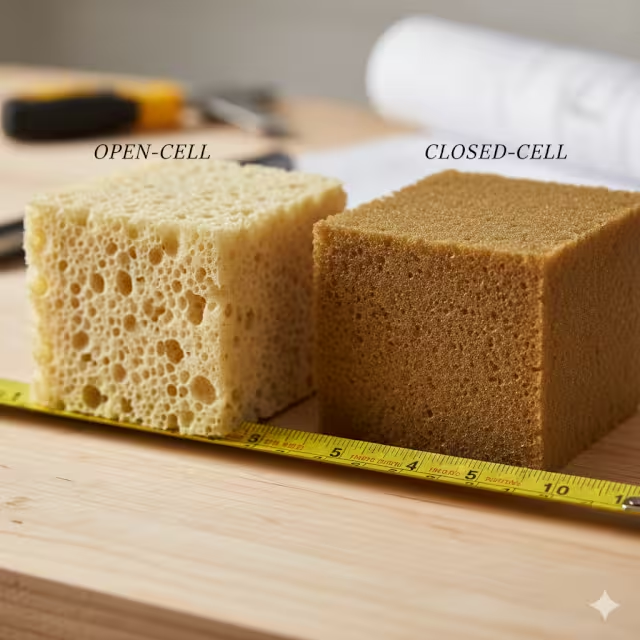
A. Open-Cell Spray Foam (OCSPF)
Think of open-cell foam as a soft, flexible sponge. Its cells are a “low density” material (about 0.5 pounds per cubic foot). During application, the cells are intentionally left open.
- Air Barrier: It does an excellent job of stopping air movement. This is its primary benefit in creating a sealed attic.
- Sound: Because it’s soft and spongy, it’s a great sound dampener. It makes for a very quiet home.
- R-Value: Its insulation value, or R-value, is good, but not great. It provides about R-3.8 per inch of thickness. R-value is simply a measure of how well a material stops heat from passing through it.
- Vapor: This is the most important part. Open-cell foam is vapor-permeable. This means it “breathes.” It will stop air, but it will allow water vapor (humidity) to slowly pass through it.6 This is a key feature we will discuss in the “Cons” section.
B. Closed-Cell Spray Foam (CCSPF)
Think of closed-cell foam as a hard, rigid foam coffee cup. It’s a “high density” material (about 2.0 pounds per cubic foot). Its cells are tiny bubbles, all closed off from each other.
- Air Barrier: It is a perfect air barrier.
- R-Value: It has a very high R-value, at about R-7 per inch. You get twice the insulation power in the same amount of space.
- Structural: Because it’s so dense and hard, it actually adds structural strength to your roof deck. It glues the sheathing to the rafters.
- Vapor: This is its defining trait. Closed-cell foam is vapor-impermeable. It is a true vapor barrier. It blocks air, it blocks heat, and it blocks all water and water vapor. It does not breathe.
The type of foam your installer uses will fundamentally change how your sealed attic performs, especially when it comes to moisture, which is our biggest enemy here in Tennessee.
The “Pros”: The Engineering Case for a Sealed Attic
Why would a builder or engineer go through the trouble and expense of creating a sealed attic? The advantages are not small. They represent a complete upgrade in how a home “works.”
Pro 1: Superior Energy Efficiency & Air Sealing
This is the number one reason to build a sealed attic. In a traditional vented attic, the ceiling is full of holes. You have can lights, electrical wires, bathroom fans, and plumbing vents. Each one is a small chimney, letting your expensive conditioned air leak out.
Worse, the “vents” in a traditional attic (at the soffits and ridge) are designed to let air move.7 This moving air, called “wind washing,” blows through your fiberglass insulation, drastically reducing its real-world R-value.
A sealed attic, created with spray foam, solves this. The foam expands to create one solid, continuous, “monolithic” piece. There are no gaps, no seams, and no leaks. It stops air leakage completely. This air-sealing performance is far more important than R-value alone. A sealed attic will simply outperform a traditional attic in energy efficiency every time, lowering your heating and cooling bills for the life of the home.
Pro 2: A “Conditioned Attic” Protects Your HVAC
This is the biggest practical advantage for a custom home in the Tri-Cities. Where does your builder want to put your HVAC system and all its ductwork? In the attic. It’s the easiest and cheapest place to run it.
In a traditional vented attic, that means your air handler and ducts are sitting in an “oven.” On a hot Johnson City afternoon, that attic can reach 140 degrees. Your air conditioner is working hard to create 55-degree air, but it has to send it through ducts that are baking in a 140-degree space. The energy waste is massive.
A sealed attic completely solves this. By moving the insulation to the roof deck, the attic becomes a “conditioned” or “semi-conditioned” space. It’s now inside the bubble with your house. That same 140-degree attic might now be only 80 degrees.
It is the difference between putting your refrigerator in a hot garage versus in your air-conditioned kitchen. The sealed attic allows your HVAC system to work smarter, not harder. It uses far less energy, and the equipment itself will last much longer.
Pro 3: Improved Indoor Air Quality & Comfort
A traditional vented attic is not your friend. It is constantly pulling in outside air. In our area, that means it’s pulling in pollen, dust, humidity, and insulation fibers. Because your house “breathes,” much of that attic air gets pulled down into your living space.
A sealed attic stops this. By sealing the attic, you take control of your home’s air. You are no longer drawing in that hot, humid, dirty air. This results in cleaner indoor air and a much easier environment to manage for people with allergies.
It also improves comfort. You will no longer have “hot spots” on your ceiling in the rooms below the attic. This creates a much more even, consistent temperature throughout your entire home.
Pro 4: Usable, Clean Storage Space
This is a simple, direct benefit. A traditional attic is a terrible place for storage. It’s dusty, full of pests, and the extreme temperatures will destroy your family photos, clothes, and furniture.
A sealed attic, because it is now part of the clean, semi-conditioned space, becomes a perfect storage room. You can floor it and have hundreds of square feet of clean, usable space where the temperature is stable. For many homeowners, this is like gaining an entire new room.
The “Cons”: The Real-World Risks and Costs
As a builder, my job is to manage risk. And I must be direct: a sealed attic, done improperly, is one of the biggest risks in modern home building. The failures can be catastrophic, and they are almost always related to moisture or installation error.
Con 1: High Upfront Cost
There is no way around this. A sealed attic with spray foam is significantly more expensive than blowing fiberglass or cellulose into a vented attic. The material costs more, and the labor is highly specialized.
You have to look at this as a long-term investment. Will the energy savings from Pro 1 and Pro 2 pay you back over time? Yes, they will. But the initial check you write to the insulation contractor will be much larger. This can be a major hurdle for a custom home budget.
Con 2: Installation is Everything
This is my single biggest warning. Spray foam is not a “product.” It is a chemical reaction that happens in your attic. This is not a project for a “low-bid” contractor or a DIY enthusiast.
If the installer is not a highly-trained, certified professional, many things can go wrong.
- Bad Mix: The two chemicals (A and B) must be mixed at a precise ratio and temperature. If the mix is wrong, the foam may not cure properly. It can shrink, pull away from the rafters, or worse.
- Off-Gassing: A bad mix can result in a persistent, fishy chemical odor that can linger for months or even years, making the home unlivable. This is the most common complaint I hear.
- Gaps: The installer must get a continuous, even coat. A sealed attic with gaps is not a sealed attic. I have seen jobs where installers missed small areas, which then channeled all the home’s moisture to one spot, creating mold.
You are not just hiring a contractor; you are hiring a chemist. You must vet them, check their certifications, and get references.
Con 3: The Hidden Moisture & Roof Leak Problem
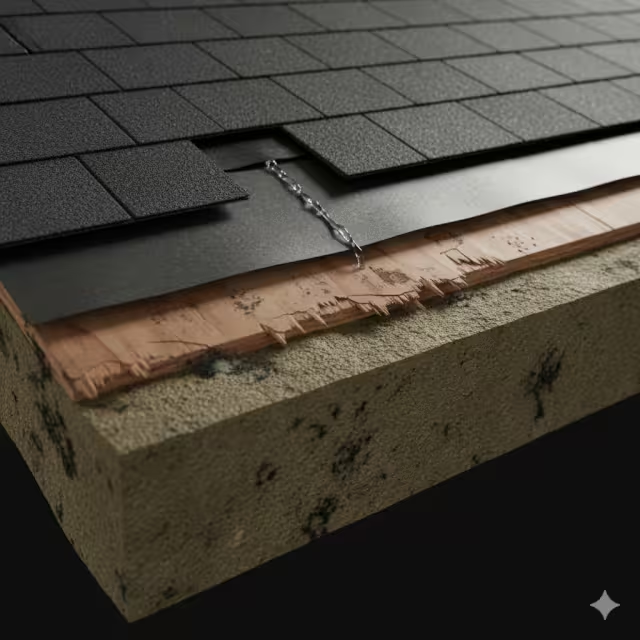
This is the most terrifying risk of a sealed attic. It creates a new problem: you can no longer see a roof leak.
Think about it. In a traditional attic, a shingle fails and water drips in. You see it on the attic floor. You see a water stain on your ceiling. You call a roofer and fix it.
Now, imagine a sealed attic:
- With Closed-Cell Foam: A shingle fails. Water gets in and hits the top of the roof sheathing. But it cannot pass through the rigid, vapor-proof closed-cell foam. You will not see a drip on your ceiling. The water is now trapped between the roofing and the foam. It will sit there, slowly rotting your roof deck and rafters for years. By the time you discover it, you may need a multi-thousand-dollar structural repair, not just a new shingle. It hides the evidence of a failure until it’s too late.
- With Open-Cell Foam: A shingle fails. Water gets in. Because open-cell foam is “permeable” (like a sponge), it will let the water pass through, and you will see the drip on your ceiling. This is a huge advantage. However, the foam itself is now saturated with water. It is a giant sponge. If you do not get a professional in immediately with special drying equipment, you now have a massive mold factory attached to your roof.
A sealed attic turns a simple roof leak into a much more complex and dangerous problem.
Con 4: Future Modifications are Difficult
This is a practical downside. In a traditional attic, if you want to add a new recessed light or run a cable for a new TV, you go up, push the fiberglass aside, do your work, and push it back.
In a sealed attic, you cannot. The foam is rigid and glued to everything. To run that same wire, you must cut a channel through the hardened foam. It’s messy, difficult, and you have now broken the “seal” of your sealed attic. You must then patch it, usually with a can of foam, but it’s difficult to get that perfect air seal back. Any future work in the attic becomes a much bigger project.
Answering Your Key Questions
Most clients on a custom build ask these questions.
Q: Does a sealed attic need ventilation?
No. The entire purpose of a sealed attic is that it is unvented. The code even calls it an “unvented attic assembly.” You close all soffit vents, all gable vents, and all ridge vents.
BUT—and this is the most critical detail—the attic must be conditioned. It must be connected to your home’s HVAC system. A sealed attic that is left stagnant is a problem. You need a small supply and a small return air vent in the attic. This does not “heat” or “cool” the attic; it simply circulates the air and, most importantly, dehumidifies it. A sealed attic that is not conditioned is a prime location for moisture and mold to build up.
Q: Will spray foam destroy my shingles? (The “Hot Roof” Myth)
This is a common myth. The idea is that by insulating the roof deck, you trap heat and “cook” the shingles from below, causing them to fail early. This assembly is often called a “hot roof.”
The building science on this is clear: it is mostly a myth. Research has shown that a sealed attic will raise the temperature of your shingles by only 2 to 5 degrees. This is not enough to cause damage. What shortens a shingle’s life is sun exposure and shingle color (dark shingles get much hotter), not a sealed attic.
However, my “precise” advice is this: You must check your shingle manufacturer’s warranty. Ten years ago, many warranties were voided by a sealed attic. Today, most major manufacturers (like GAF and CertainTeed) explicitly approve their shingles for use over a sealed attic, if it is installed to code. You just need to verify it.
Q: Can you have mold in a sealed attic?
Yes. 100% yes. A sealed attic is not a magic bullet. It simply changes the source of the moisture.
In a vented attic, mold comes from hot, humid outside air. In a sealed attic, mold comes from inside your house.
All the moisture you create from showering, cooking, and even breathing rises. This warm, humid air will find its way into the sealed attic. If that attic is not being properly conditioned (see Q1), that humidity will get trapped. It will find a cold spot (like a nail head) and condense, and you will have mold. A sealed attic only works as part of a whole-house moisture management plan.
Q: What about my furnace or water heater in the attic?
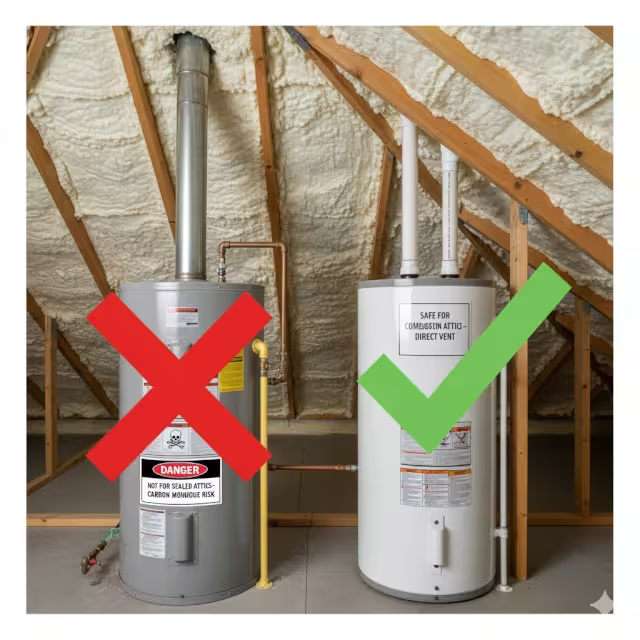
This is not a “con.” It is a life-or-death safety rule.
You cannot have “atmospheric combustion” appliances in a sealed attic. These are older-style furnaces and water heaters that have a metal flue pipe and draw their combustion air from the room around them.
In a sealed attic, there is not enough “fresh” air for them to breathe. They will starve for air and fail to burn properly. This can cause them to “backdraft,” pulling deadly Carbon Monoxide (CO) down the chimney and into your home.
Any appliance you put in a sealed attic must be a “sealed-combustion” or “direct-vent” unit. These have two PVC pipes that go directly outside. One pipe sucks in fresh air from outdoors, and the other pipe pushes exhaust fumes out. They are a completely closed system and are perfectly safe for a sealed attic.
The Tri-Cities Factor: Humidity and Climate Zone 4A
Now, let’s bring this home. Why does a sealed attic matter here in Kingsport, Johnson City, and Bristol?
We live in a “Mixed-Humid” climate. Our enemy is humidity.
In a traditional vented attic, our hot, humid summer air is the problem. That wet air is pulled into the attic vents and hits your cold HVAC ducts. This causes the ducts to “sweat” (condensate), dripping water onto your insulation and ceiling, and leading to mold and rot.
A sealed attic is an excellent solution for our specific climate. It completely stops that hot, humid outside air from ever getting into your attic. It keeps your HVAC ducts in a dry, stable environment. From a building science perspective, a sealed attic is a great way to handle a mixed-humid climate.
However, it also makes the choice between foam types critical.
- Closed-Cell’s Advantage: In our climate, it acts as a vapor barrier, which is good. It stops humidity.
- Open-Cell’s Advantage: It allows the roof deck to “dry to the inside” if it ever gets wet, which is a safer approach if you are concerned about hidden leaks.
My professional opinion for this area? Both can work. But if you have a complex roof with many valleys and a high risk of leaks, I lean toward open-cell foam. I would rather be able to see a leak and deal with it, rather than have it hidden by closed-cell foam. The ability to find a leak is, to me, more important than the higher R-value.
The Final Verdict: A System, Not a Product
Here is our direct advice for a custom home builder looking at a sealed attic.
- View it as a System. A sealed attic is not just insulation. It is a fundamental change to your entire building envelope. It affects your HVAC design (must be sealed combustion), your HVAC equipment (must condition the attic), your roofing warranty, and your moisture management plan. You are not “buying spray foam”; you are designing a high-performance system.
- When It Makes Sense. A sealed attic is an excellent, top-tier choice if:
- You are placing your HVAC equipment in the attic.
- You are building a custom home and want superior energy performance.
- You have the budget to do it right the first time.
- My Non-Negotiable Requirements:
- Hire a Certified Expert. This is not the part of your build to save money on. Get a contractor who is certified, insured, and can explain their chemical process and safety plan.
- Condition the Space. You must have a small supply and return air vent in the sealed attic. I consider this non-negotiable for mold prevention.
- Install a Fire Barrier. All spray foam is flammable. Building code (IRC) requires it to be covered by a 15-minute “thermal barrier,” like 1/2-inch drywall. Do not skip this step.
A sealed attic is a high-performance, high-cost option. Done correctly, it’s a precise piece of engineering that will make your home more comfortable and efficient. Done wrong, it is a very expensive, and often irreversible, mistake.