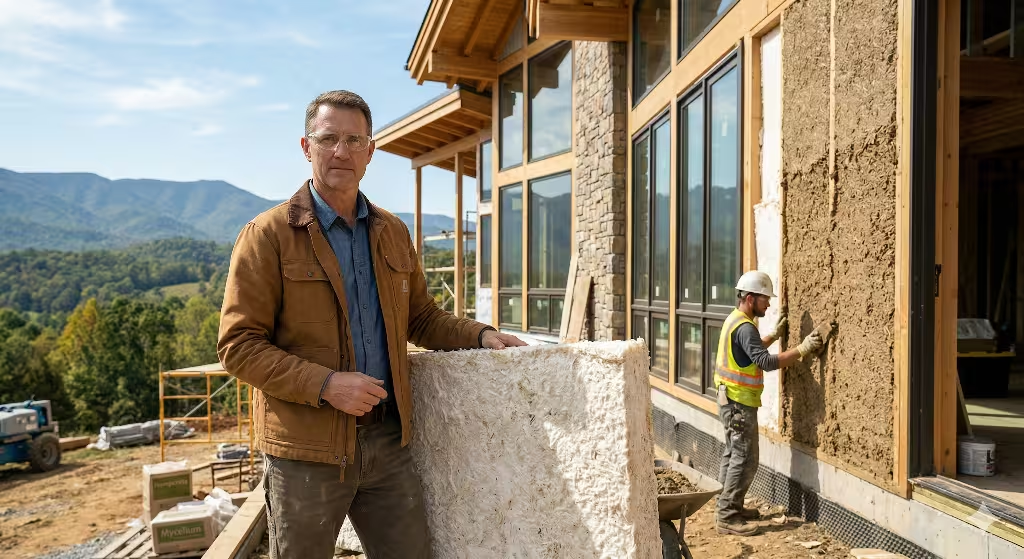

When you start the journey of building a custom home, you focus on the things you will see and touch every day. You imagine the granite countertops, the hardwood floors, and the color of the front door. These are the exciting decisions. However, often the most important decisions you will make are about the parts of the home you will never see.
The long term health and comfort of your home depend on an unseen shield, a protective layer that keeps the weather out and the comfort in. This brings us to one of the most important technical questions in modern home building: the choice of a weather resistive barrier, which often comes down to a direct comparison of Tyvek vs. ZIP System.
The debate over Tyvek vs. ZIP System is not about which one is good and which is bad. Both are excellent products. Instead, it is about understanding two different philosophies for protecting your home’s structure. One is a time tested, traditional method, while the other is a modern, integrated system.
This article will give you a complete breakdown of the Tyvek vs. ZIP System discussion. We will look at how each one performs, what the installation process looks like, and how the costs compare. By the end, you will understand this critical choice and be ready to have a productive conversation with your builder, ensuring your new Tennessee home is built to last.
What is a Weather-Resistive Barrier and Why Does It Matter?
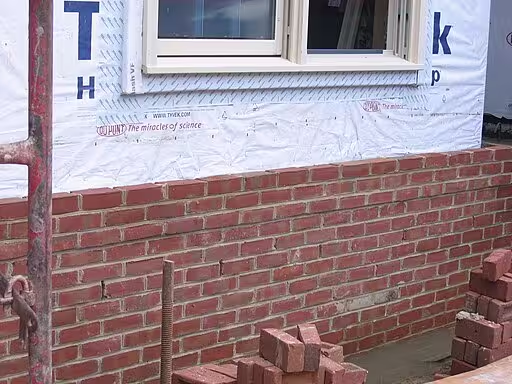
Before we dive into the specifics of Tyvek vs. ZIP System, let’s start with the basics. What is a weather resistive barrier, or WRB for short? Think of a WRB like a high tech jacket for your house. Your winter coat does two things very well. First, it stops wind and rain from getting to you. Second, it is breathable, meaning it lets sweat and moisture from your body escape so you do not get clammy and cold.
A WRB does the exact same job for your home. It is a special material that goes on the outside of your home’s wooden frame, right behind the final siding, whether that is brick, vinyl, or fiber cement. Its first and most important job is to stop bulk water. Rain can be driven by wind and find tiny cracks in your siding. The WRB is the last line of defense, catching that water and directing it down and away from the sensitive wood structure. Without it, water could soak into your walls, leading to wood rot and dangerous mold growth.
Its second job is to be breathable. Your family creates a surprising amount of moisture inside the home from cooking, showering, and even just breathing. This moisture exists as water vapor. The WRB needs to be permeable, which is a technical word for breathable. It has to let this indoor water vapor pass through the wall and escape to the outside. If that vapor gets trapped, it can turn back into liquid water inside your walls, again causing rot and mold.
Here in Northeast Tennessee, a good WRB is not just a good idea; it is essential. Our humid summers mean there is a lot of moisture in the air, and our winters can bring driving rain and snow. Managing this moisture correctly is the key to building a healthy, durable home. So, when we talk about Tyvek vs. ZIP System, we are really talking about the best way to wrap your home in that protective, breathable jacket.
The Traditional Approach: DuPont Tyvek HomeWrap
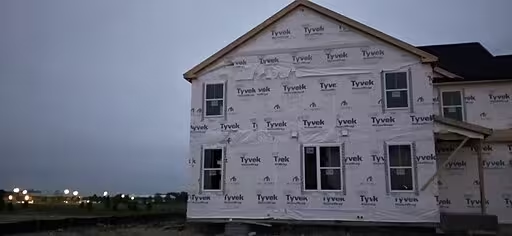
When people think of a house under construction, they often picture a wooden frame covered in a white sheet with a big logo on it. That is usually DuPont Tyvek HomeWrap. For decades, Tyvek has been the go to choice for builders and the standard for house wraps. It is a familiar sight on job sites from Johnson City to Kingsport.
Tyvek is made from very fine, high density polyethylene fibers that are spun together and then bonded with heat and pressure. It feels a bit like a papery fabric. It is not a solid sheet, but a fibrous web. This structure is what makes it work so well. The gaps between the fibers are too small for liquid water droplets to squeeze through, but they are more than large enough for single molecules of water vapor to pass through easily. This is how it stops rain but lets the wall breathe.
The installation process for Tyvek is a traditional, two step method. First, your builder installs the structural sheathing on your home’s frame. This is usually a wood panel like OSB or plywood that gives the wall its strength.
Second, the large rolls of Tyvek are stretched over that sheathing, like wrapping a present. The wrap is attached with special staples or nails that have a plastic cap to prevent tearing. Each course of the wrap must overlap the one below it, like shingles on a roof, so water always flows down and out.
Finally, all the seams where two pieces of Tyvek meet must be sealed with a special tape, usually Tyvek brand tape, to stop air and water leaks. The decision between Tyvek vs. ZIP System often hinges on how you feel about this multi step process.
Let’s look at the pros and cons of this trusted method.
Pros of Tyvek:
- Excellent Breathability: Tyvek is extremely permeable. It is one of the most breathable materials on the market, which gives many builders peace of mind. They know that if any moisture does get into the wall, it has a very easy path to escape.
- Proven Performance: This product has been used on millions of homes for over 40 years. It has a long, well documented history of performing well when it is installed correctly. There is a certain comfort in using a product that is so established in the industry.
- Lower Material Cost: When you compare prices at the lumber yard, a roll of Tyvek and the OSB sheathing to go under it will almost always cost less than the equivalent number of ZIP System panels. For builders and homeowners focused heavily on the initial material budget, this is a major selling point.
Cons of Tyvek:
- Installation is Everything: The biggest weakness of Tyvek is that its performance depends entirely on the skill and care of the installation crew. If the seams are not taped perfectly, if the wrong tape is used, or if the wrap is not overlapped correctly, it will leak air and possibly water.
- Vulnerable During Construction: A house wrap can be exposed to the elements for weeks or even months during construction. Strong winds, common in our region’s rolling hills, can tear the wrap or pull it loose from its fasteners. This requires time and money for repairs and can compromise the final quality of the barrier.
- Potential for Trapped Water: While Tyvek itself is a barrier, it is a separate layer from the wood sheathing. It is possible for water to get behind the Tyvek and become trapped against the wood. While the Tyvek is breathable, it can slow the drying process in this specific scenario, especially if the siding itself is not installed with a proper drainage gap. This is a key point of discussion in the Tyvek vs. ZIP System comparison.
The Integrated System: Huber ZIP System
The challenger to Tyvek’s long reign is the Huber ZIP System. You can spot it easily on a job site by its distinctive green or brown colored panels. The ZIP System takes a completely different approach. Instead of a two step process, it is an all in one, integrated system.
The ZIP System panel is a high quality OSB structural sheathing panel with the weather resistive barrier already bonded to the surface in the factory. There is no separate house wrap to install. The panels themselves provide the structure and the weather protection in a single step. The magic of the system, however, is not just in the panel but in the tape. All the seams between the panels are sealed with a very aggressive, high performance acrylic tape called ZIP System Flashing Tape. When this tape is applied correctly with a special roller, it fuses to the panel surfaces and creates a continuous, seamless barrier against both air and water.
This integrated approach is a fundamental difference in the Tyvek vs. ZIP System debate. It aims to simplify the building process and remove some of the chances for human error. There is also a version of the product called ZIP-R Sheathing, which are the brown colored panels. These panels include a layer of rigid foam insulation bonded to the interior side, providing an extra layer of thermal protection for your home.
Pros of the ZIP System:
- Exceptional Air Tightness: Because the seams are taped instead of just overlapped, the ZIP System creates an incredibly airtight building envelope. This is a huge advantage for energy efficiency. Less air leakage means your heating and cooling systems do not have to work as hard, which saves you money on your utility bills every month for the life of the home.
- Faster and Simpler Installation: By combining sheathing and the WRB into one panel, the ZIP System eliminates a major step in the construction process. This can save a lot of time on the job site. A faster build means lower labor costs and less time your home’s structure is exposed to the weather.
- Superior Durability: The factory bonded WRB on a ZIP panel is tough. It is not going to tear or blow off in the wind during construction. The panels are rated to be exposed to the weather for up to 180 days without any damage, which provides great flexibility and peace of mind during the building process.
Cons of the ZIP System:
- Higher Material Cost: There is no getting around it, the ZIP System panels and tape cost more upfront than OSB sheathing and a roll of Tyvek. This higher initial cost can be a hurdle for some budgets, making it a critical factor in the Tyvek vs. ZIP System decision.
- Lower Permeability: The ZIP System is less breathable than Tyvek. It is considered semi permeable. This is not necessarily a bad thing, but it is a different approach to moisture management. In a super airtight home built with ZIP, it becomes even more important to have proper ventilation and to manage interior humidity levels. The wall has less natural ability to dry out to the exterior.
- Tape Application is Key: Just like Tyvek depends on a good installation, the ZIP System depends on perfect taping. The tape must be applied to a clean, dry surface, and every inch of it must be pressed down firmly with a roller to ensure a proper bond. A lazy taping job can create leaks at the seams.
Head to Head: A Direct Comparison of Tyvek vs. ZIP System

To make the best choice for your custom home, let’s put these two systems side by side and compare them on the factors that matter most. The outcome of the Tyvek vs. ZIP System battle for your project will depend on your priorities.
Air and Water Resistance
This is the main job of the WRB. When it comes to stopping bulk water from rain, both a properly installed Tyvek and a properly installed ZIP System do an excellent job. The difference comes down to air resistance. An airtight home is an energy efficient home. In this category, the ZIP System has a clear advantage. The solid panels and the aggressive tape applied to every seam create a much more effective and consistent air barrier than a flexible wrap with overlapped seams.
While a very careful Tyvek installation can be quite airtight, the ZIP System is designed from the ground up to excel at this, making it the winner for homeowners focused on maximum energy performance. Thinking about Tyvek vs. ZIP System from an energy standpoint often leads people to ZIP.
Installation Speed and Labor Cost
Time is money on a construction site. The ZIP System’s one step process is almost always faster than the two step process of installing sheathing and then Tyvek. A framing crew can cover a house in ZIP panels and have it weatherproofed in a fraction of the time. This speed can translate directly into labor savings for the builder, and ultimately, for you.
Furthermore, Tyvek installation can be delayed by a windy day, whereas ZIP panels can be installed in most weather conditions. The question of labor cost is a major part of the real world Tyvek vs. ZIP System cost analysis. These potential savings on labor can help close the gap created by the higher material cost of the ZIP System.
Total Project Cost
This is often the deciding factor for many people weighing Tyvek vs. ZIP System. As we have mentioned, the upfront material cost for the ZIP System is higher. For a typical 2,500 square foot home in the Tri-Cities, you might expect the ZIP materials to cost a few thousand dollars more than the OSB and Tyvek materials. However, you must look at the total project cost. You have to subtract the potential labor savings from the faster ZIP installation. You also have to consider the long term savings.
A more airtight home built with the ZIP System will save you money on energy bills every single month. Over 10, 20, or 30 years, those savings can add up to be much more than the initial extra cost. The financial side of the Tyvek vs. ZIP System question is about both short term and long term investment.
Durability During Construction
A construction site can be a chaotic place. Materials need to be tough. Here again, the ZIP System shows its strength. The integrated coating is very resistant to damage from tools, ladders, and weather. Tyvek, being a flexible fabric, is much more susceptible to rips, tears, and punctures during the construction process. Every hole has to be carefully patched and taped to maintain the integrity of the barrier. The durability of ZIP panels means less worry and less repair work, leading to a more reliable final product.
Vapor Permeability (Breathability)
This is the one category where Tyvek has a distinct technical advantage. It is significantly more breathable, or permeable, than the ZIP System. For builders who follow a “let the walls breathe” philosophy, Tyvek is the preferred choice. It provides an easier path for any trapped moisture to escape. This does not mean the ZIP System is bad; it just works differently. It relies on creating such a perfect barrier that moisture does not get into the wall in the first place. The discussion around permeability is one of the more technical aspects of the Tyvek vs. ZIP System choice, but it is important for your builder to consider based on your home’s specific design and our local climate.
The Verdict for Tri-Cities Home Builders
So, after looking at all the facts, which system is recommend for people building custom homes here in the Johnson City, Kingsport, and Bristol area? Every project is unique, but for most new homes where performance and long term value are the top priorities, we give the edge to the Huber ZIP System.
Here is our reasoning. First, the superior air sealing of the ZIP System is a massive benefit for energy efficiency. Our utility costs are not going down, and building a home that actively saves you money every month is a smart investment. Second, the installation is more reliable and less dependent on the mood or skill of the crew on a particular day. In building, anything that removes a variable and leads to a more consistent result is a huge win.
Finally, its durability during our region’s unpredictable weather gives me, as a builder, more confidence that the barrier protecting your home’s structure is perfect before the siding even goes on. The Tyvek vs. ZIP System question for us comes down to predictable, high performance.
With that said, Tyvek is still an excellent choice in certain situations. If the upfront material budget is the absolute number one concern, and you are working with a building crew that has a long and proven track record of meticulous, high quality house wrap installations, Tyvek can perform wonderfully. It has protected homes for decades and will continue to do so.
Building a Resilient Home Starts with Smart Choices
The choice of Tyvek vs. ZIP System is more than just a technical detail. It is about your philosophy for building a quality home. Both products can create a durable, dry, and comfortable house for your family. The decision is not about a good product vs. a bad product. It is a choice between a proven, traditional wrap and a modern, integrated sheathing system. The ZIP System offers a more streamlined path to achieving a high performance, energy efficient home. Tyvek offers excellent breathability at a lower initial material cost, but requires more skill and care during installation.
Ultimately, the most critical factor is not the material itself, but the quality of the labor that installs it. A perfectly installed Tyvek system will always be better than a sloppy ZIP system installation, and vice versa. We encourage you to have this conversation with your builder. Ask them which system they prefer and why. Talk about the costs, the benefits, and how your choice will impact the long term performance of your new home. Making an informed decision about this unseen shield is one of the most important steps you can take toward building a home in the Tri-Cities that is truly built to last.