

When you build a custom home in the mountains of East Tennessee, your master suite should be more than just a place to sleep. It should be a quiet sanctuary where you start your day with energy and end it in comfort. A mountain modern master bathroom must do two things equally well. It must look stunning, and it must work effortlessly for the people living in it every single day.
Too many design magazines showcase spaces that look gorgeous in photos but turn out to be cold, drafty, and impossible to keep clean. A real modern master bathroom needs practical engineering behind the drywall. It needs proper ventilation, smart heating, rock-solid subflooring, and storage that actually fits your morning routine. In this comprehensive guide, we go through ten essential design and engineering standards. Whether you are building from the ground up or planning a major renovation, these principles will help you create a modern master bathroom that brings long-term peace of mind, physical comfort, and lasting home value.
Architectural Siting and View Framing: Balancing Vista Windows with Thermal Privacy
When designing a modern master bathroom in the rolling hills of the Tri-Cities, our first question is always about orientation. How do we capture the morning light over Holston Mountain or the ridgelines of
Many homeowners dream of soaking in a tub while looking out over a private wooded hollow. That is a wonderful goal, but you must remember that sightlines change with the seasons. A ridge that looks completely hidden behind summer leaves can become wide open to a neighbor or a hiking trail once the trees drop their foliage in November. During the architectural planning phase of your modern master bathroom, walk the building envelope during the winter months. Look back at the proposed bathroom location from nearby roads, driveways, and property boundaries.
The height and placement of your glass make all the difference. Placing large picture windows with dropped sills directly next to a tub sounds romantic, but it can leave you feeling exposed at night when the interior lights are on.
A favorite architectural solution for a modern master bathroom is the intentional
Thermal performance is just as critical as privacy. In our region, mountain winter mornings regularly drop into the twenties or teens. If you install cheap double-pane glass, cold air will wash down across the floor, making your modern master bathroom uncomfortable to stand in without heavy slippers. We always specify triple-pane glass with
Finally, think about how you will control light and privacy as the sun moves. For maximum peace of mind, equip your modern master bathroom with motorized shades recessed into the ceiling framing, or install switchable privacy smart glass. With smart glass, you can keep the glass clear during the day to enjoy the sunlight, and then frost it with the touch of a wall switch when you step into the bath at night. A well-planned modern master bathroom gives you the freedom to connect with nature without ever feeling vulnerable.
The Biophilic Material Palette: Pairing Warm Appalachian Timbers with Crisp Industrial Elements
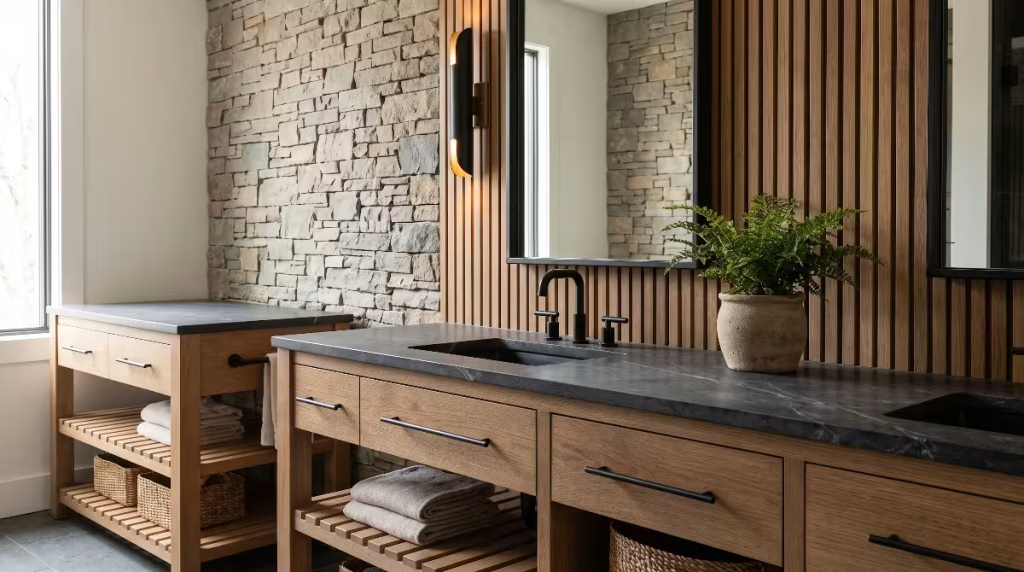
The heart of mountain modern style lies in biophilic design, which simply means bringing the patterns, textures, and materials of the natural outdoors inside our living spaces. A successful modern master bathroom should feel warm, grounded, and calming. It should never feel like a cold hospital room or a sterile art gallery. At the same time, we do not want a dark, heavy log cabin look that feels dated and visually crowded.
To achieve the right balance in a modern master bathroom, I use a simple rule of thumb: forty percent organic texture and sixty percent clean, smooth surfaces. The forty percent organic texture comes from local Appalachian hardwoods, unpolished stone, and tactile accents. The sixty percent clean surfaces come from large-format tiles, smooth drywall, frameless glass, and crisp architectural lines. This combination gives your modern master bathroom an open, light-filled atmosphere that still feels deeply connected to our East Tennessee mountain landscape.
When
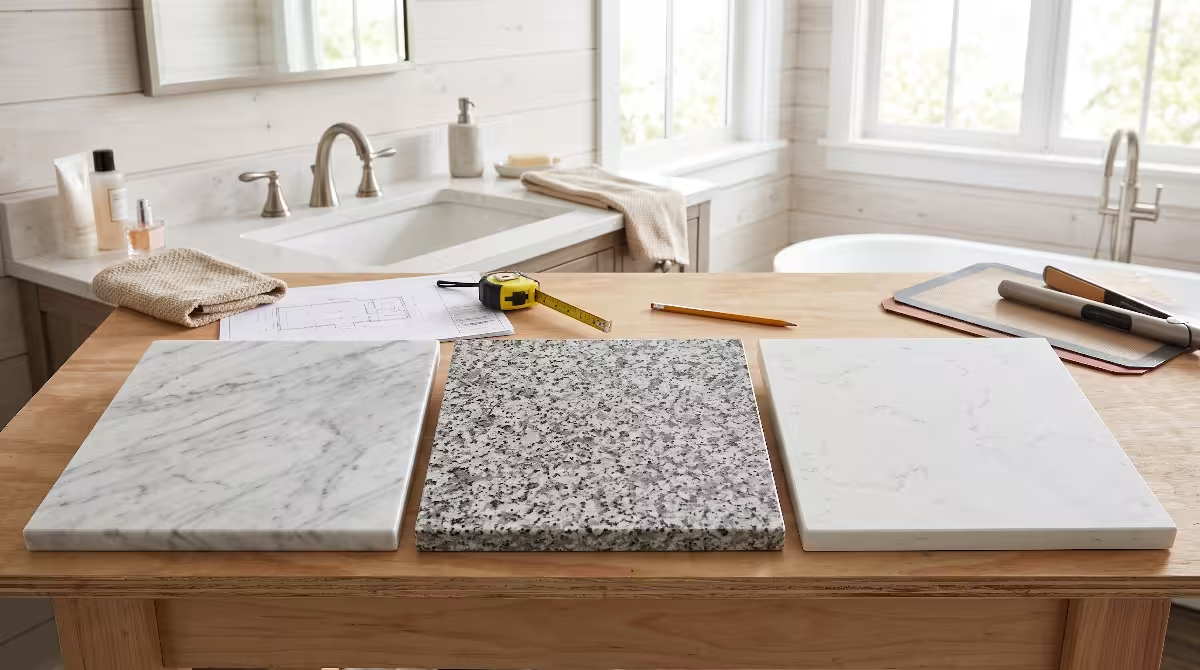
Pair these warm timbers with clean industrial metals and stone surfaces. Matte black steel, blackened bronze, and charcoal soapstone create grounding visual weight that balances the natural glow of the wood. For vanity countertops in a modern master bathroom, consider honed quartz or natural soapstone instead of high-gloss polished marble. Polished surfaces reflect glare from vanity lights and show every single water droplet, stray hair, and smudge. A honed or leathered finish absorbs light softly, feels velvety to the touch, and hides daily wear and tear beautifully.
Do not overlook local stone accents. A low feature wall crafted from thin-cut
Wet Room Engineering: Curbless Zero-Threshold Showers and Linear Drains
One of the most practical and elegant upgrades you can make in a modern master bathroom is the zero-threshold
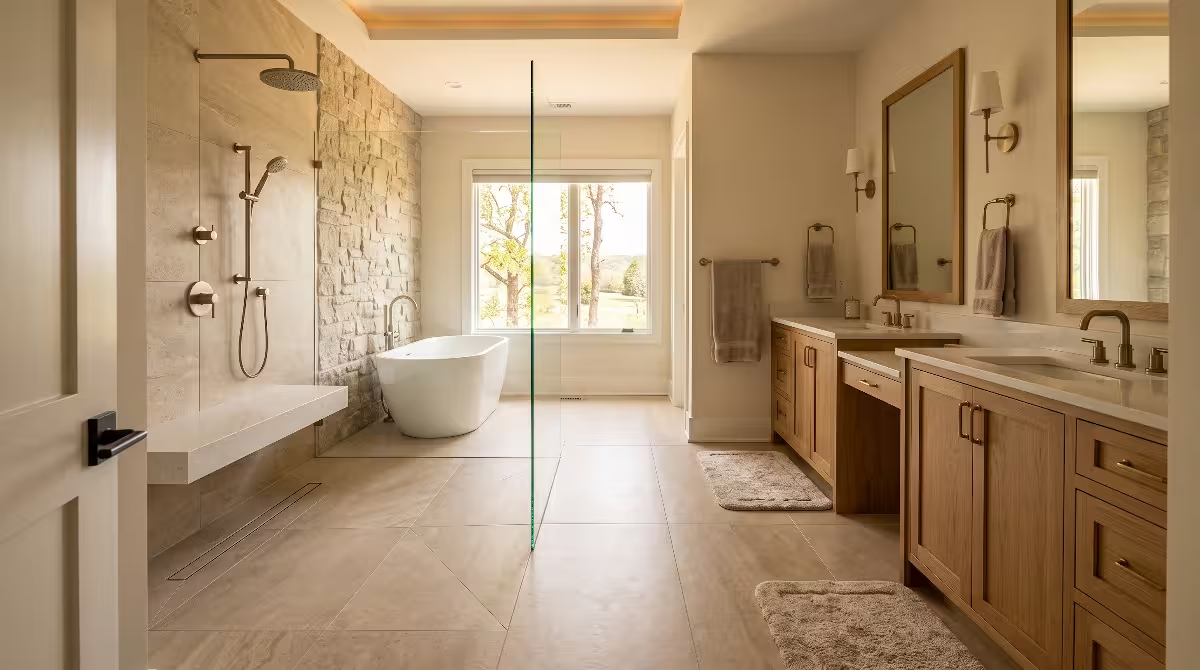
A zero-threshold shower removes the curb entirely. The main floor of your modern master bathroom flows directly into the shower without any bump, step, or barrier. This creates an open, unbroken floor plan that makes the entire room feel twice as large. From a female-centric and family-focused living perspective, a curbless shower in a modern master bathroom is a true game-changer. Cleaning becomes effortless because you can mop or squeegee the entire floor in one continuous motion. There are no nasty metal door tracks to scrub with an old toothbrush, and no dirty corners where water sits stagnant.
Achieving a true
In a modern master bathroom, a linear drain is the perfect partner for a curbless floor. Traditional center drains require a bowl-shaped floor that slopes in four directions, forcing the installer to use small mosaic tiles. A linear drain, on the other hand, runs along the entire back wall of the shower.
This allows the floor to slope in a single, flat plane, meaning you can use the exact same large-format tiles in the shower that you use across the rest of your modern master bathroom floor. Many builders prefer tile-in linear drains, where an actual piece of your floor tile is inserted into the top of the drain cover. The drain disappears into a tiny, sleek perimeter slot that catches water quickly and keeps the floor looking clean and continuous.
Waterproofing is where you must demand absolute perfection from your general contractor. The entire shower floor, the linear drain assembly, and the surrounding walls must be covered in a continuous, bonded waterproofing membrane, such as the Schluter-KERDI system. In a modern master bathroom, we extend this waterproof membrane at least six feet beyond the shower opening across the main bathroom floor. This protects your subfloor from dripping towels, splashing tubs, and damp footprints, ensuring that your home remains structurally sound and mold-free for decades to come.
The Sculptural Freestanding Tub: Form, Loungability, and Floor Load Engineering
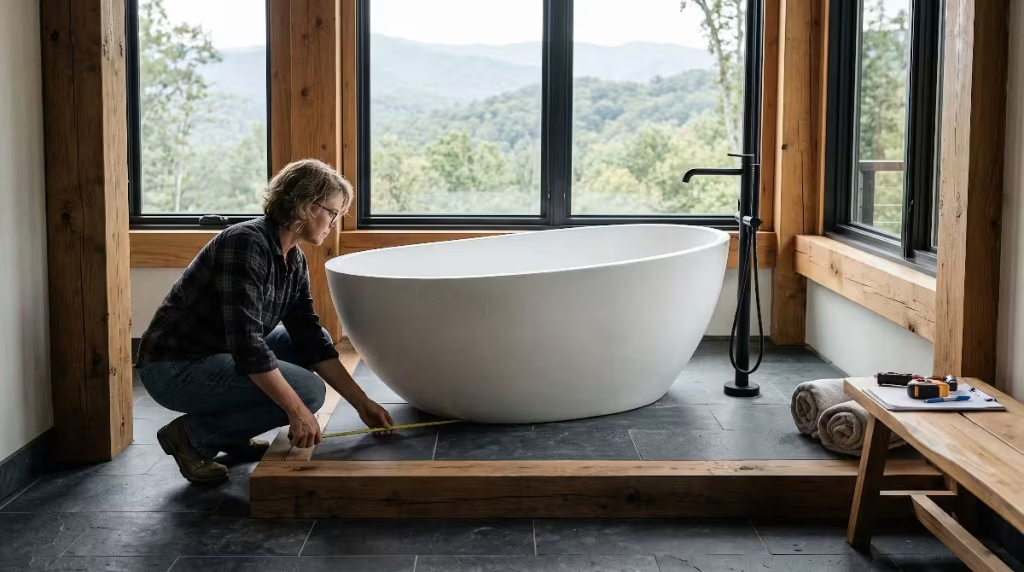
A
Let us start with the material. Standard acrylic tubs are lightweight, inexpensive, and readily available, but they have major drawbacks in a mountain home. Acrylic cools down quickly, meaning your hot bath can turn lukewarm after only fifteen minutes in the winter. Acrylic tubs can also feel hollow, flexible, and squeaky underfoot.
For a truly luxurious modern master bathroom, builders recommend a stone resin or cast mineral composite tub. Stone resin is made from pulverized natural stone blended with high-grade resins. It feels solid, heavy, and velvety smooth against bare skin. More importantly, it has high thermal mass, which means it holds heat for an extended period, allowing you to enjoy a long, relaxing soak without constantly running extra hot water.
Ergonomics are just as vital as material choice. When you are shopping for a tub for your modern master bathroom, do not be shy: take off your shoes and sit inside the floor models at the plumbing showroom. Pay close attention to the slope of the backrest. A backrest angle between twenty-eight and thirty-three degrees provides optimal support for your spine, neck, and shoulders without forcing you into an awkward upright slouch.
Check the depth of the tub as well. A soaking depth of fourteen to sixteen inches to the overflow drain gives you full water immersion without making it difficult to step in and out safely. Also, look for a tub with a wide, flat rim on at least one side. Having a sturdy, flat ledge to rest a cup of tea, a book, or a washcloth makes your daily soak far more enjoyable.
From a structural engineering standpoint, a stone resin tub requires serious planning. A solid composite tub can easily weigh three hundred to four hundred pounds empty. When you fill that tub with sixty to seventy gallons of water, and add the weight of an adult bather, the total concentrated weight on your floor can easily exceed one thousand pounds. If your modern master bathroom is located on a second story or over an open basement, standard residential floor framing may deflect or sag under that load.
To prevent sagging floors and cracked tile grout, we always double the floor joists directly beneath the tub location and install solid wood blocking between the joists. We also verify that the subfloor is constructed with a minimum of three-quarter-inch tongue-and-groove plywood, topped with a sturdy cement backer board or an uncoupling membrane.
Do not forget the plumbing rough-in. To fill a large soaking tub quickly before the water begins to lose heat, install a dedicated three-quarter-inch hot water supply line rather than a standard half-inch line. Pair this with a high-flow thermostatic tub filler valve. Position the floor-mounted tub filler so that you can easily reach the handles to adjust the water temperature while you are sitting comfortably inside the tub. Thoughtful engineering ensures that your modern master bathroom centerpiece delivers pure relaxation every time you use it.
Custom Vanity Architecture: Dual Functional Stations, Lighting Ergonomics, and Built-In Power
The vanity area is the hardest-working zone in any modern master bathroom. It is where you get ready for the day and where you wind down before bed. In production homes, builders often throw in a generic double-bowl cabinet with a flat mirror and a row of blinding overhead globe lights. That setup fails to serve the daily needs of two busy adults sharing a home. A thoughtfully designed modern master bathroom treats the vanity as two distinct, personalized workstations tailored to real-life routines.
First, let us talk about space and separation. Whenever the floor plan allows, I prefer separating the two sink stations with a tall linen tower, a bank of drawers, or even placing them on opposite walls. This physical separation gives each partner their own dedicated zone, eliminating the frustration of bumping elbows while brushing teeth or styling hair. Floating vanities are an outstanding choice for a modern master bathroom.
Because they hang from the wall with open floor space beneath, they make the room feel light, airy, and expansive. To support a heavy floating vanity topped with solid stone, we frame heavy two-by-six horizontal blocking directly into the wall studs before the drywall is hung. We also add soft, motion-activated LED strip lighting underneath the vanity. This provides a warm, low-glare nightlight that guides your path safely without blinding you if you wake up in the middle of the night.
Organization and clutter control are central to female-centric bathroom design. The countertop of a modern master bathroom should remain clean and serene, not covered in tangled electrical cords, makeup bottles, and hot hair tools. To solve this problem, we install custom deep drawers equipped with internal, heat-resistant metal canisters and integrated in-drawer GFCI electrical outlets. This allows you to keep your blow dryer, curling wand, and flat iron plugged in and stored neatly inside the drawer, ready for instant use without cluttering the counter or risking burns.
If space permits, incorporate a dedicated seated makeup vanity into your modern master bathroom layout. A seated vanity station should have a dropped counter height of thirty inches, compared to the standard thirty-six-inch height of standing sink vanities. This lower counter allows you to sit comfortably in an ergonomic chair while applying skincare or makeup. Place this station near natural side light, and equip it with a pull-out magnifying mirror that has integrated color-corrected lighting.
Speaking of lighting, bad lighting can completely ruin an otherwise beautiful modern master bathroom. Recessed can lights placed directly over a sink cast harsh shadows under your eyes, nose, and chin, making daily grooming frustrating. In a modern master bathroom, mirror lighting must come from the sides at eye level. Install vertical wall sconces mounted sixty to sixty-five inches above the finished floor on either side of the mirror. Choose fixtures with a high Color Rendering Index of ninety or higher, and select a warm color temperature between 2700K and 3000K. This creates soft, even, flattering light across your entire face that mimics natural daylight, ensuring that your modern master bathroom supports your morning routine perfectly.
Hydronic and Electric Radiant Floor Heating: Cold-Climate Comfort and Thermal Mass
If you have ever stepped out of bed on a freezing January morning in East Tennessee and placed your bare feet onto ice-cold bathroom tile, you know how unpleasant that shock can be. Even in a well-insulated home, dense stone and porcelain tiles conduct heat away from your skin rapidly. In a luxury modern master bathroom, radiant floor heating is not an extravagance; it is an essential comfort feature that transforms the entire living experience.
Radiant floor heating works by warming the floor surface directly, which then radiates gentle, even heat upward into the room. Unlike forced-air heating systems that blow dry, noisy air from ceiling vents and push warm air toward the ceiling, radiant floor heating keeps the warmth right where your body needs it. It creates a quiet, draft-free environment that makes your modern master bathroom feel like a high-end mountain resort every single day.
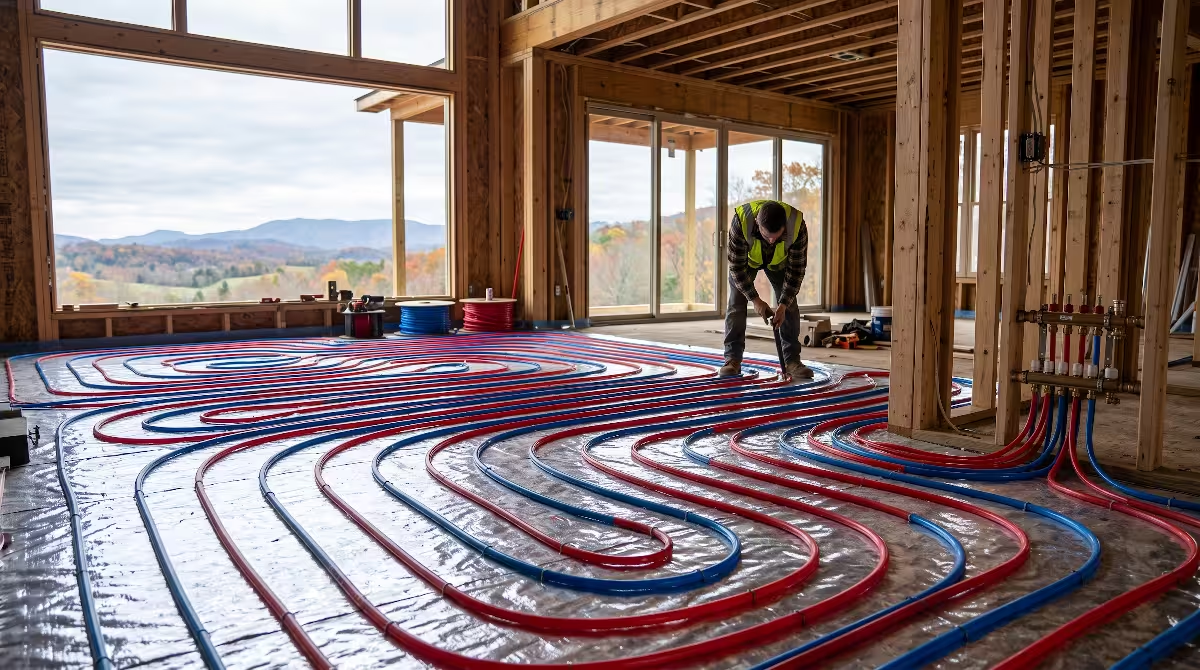
There are two primary ways to heat the floor of a modern master bathroom: electric heating cables and hydronic water tubing. For single-room bathroom remodels and custom additions, electric radiant systems, such as Schluter DITRA-HEAT or SunTouch, are the most practical and cost-effective choice. These systems feature thin heating cables snapped into an engineered uncoupling mat that is mortared directly to the subfloor beneath your tile. For whole-home custom builds that use a high-efficiency geothermal or air-to-water heat pump, hydronic radiant tubing embedded in a thin concrete slab provides exceptional whole-house energy efficiency.
One detail that separates an amateur installation from a master-level modern master bathroom is extending the heating system into the shower floor and across the built-in shower bench. Stepping onto a pre-warmed shower floor feels wonderful, but the engineering benefits are even more impressive. A heated shower floor and bench evaporate moisture rapidly after you turn off the water. By drying the tile and grout joints quickly, radiant heat prevents soap scum buildup, stops mildew growth before it can start, and keeps your modern master bathroom smelling fresh and clean.
To control the system efficiently, install a smart programmable thermostat equipped with dual sensors: an ambient air sensor and an embedded floor temperature probe. You can program the floor of your modern master bathroom to warm up to eighty degrees thirty minutes before your morning alarm rings, drop back to an energy-saving sixty-five degrees while you are at work, and warm up again for your evening routine.
When choosing flooring materials to pair with radiant heat, natural slate, dense porcelain, and quartzite are the best performers. These materials have high thermal mass, meaning they absorb the heat from the cables and hold it for hours. Always check the slip resistance rating of your tile as well. For a modern master bathroom, select a tile with a Dynamic Coefficient of Friction rating of 0.42 or higher when wet. This ensures that your warm, beautiful floor remains safe and slip-resistant for everyone in your family.
Moisture Management and Ventilation Physics: Safeguarding Natural Wood in Humid Spaces
A modern master bathroom is an environment of intense thermal and moisture extremes. Every time you take a hot shower or soak in a steaming tub, you release pints of water vapor into the air. If that moisture is not captured and exhausted properly, it will condense on cold walls, penetrate behind baseboards, warp custom woodwork, and eventually lead to hidden structural mold. When designing a modern master bathroom that features rich Appalachian wood accents, sound moisture management is your first line of defense.
Effective ventilation starts with air movement physics. Many production builders install cheap, noisy exhaust fans that move only fifty cubic feet of air per minute. Homeowners rarely turn these fans on because the loud rattling noise ruins the calm atmosphere of the room. In a modern master bathroom, your ventilation system must be powerful, efficient, and virtually silent.
To determine the proper fan capacity for your modern master bathroom, follow professional engineering standards. You need a minimum of one cubic foot per minute of exhaust capacity for every square foot of floor space. For example, if your bathroom measures fifteen feet by twelve feet, you have one hundred and eighty square feet of space, requiring an exhaust fan rated for at least one hundred and eighty CFM. If you include an enclosed toilet closet, a steam shower, or a high-capacity soaking tub, add an extra fifty to one hundred CFM of capacity to handle the extra moisture load.
We always specify ultra-quiet, continuous-duty exhaust fans, such as the Panasonic WhisperWarm or WhisperCeiling series, rated at 0.3 sones or less. At that sound level, the fan is so quiet you can barely hear it running. Pair the fan with an automatic digital condensation sensor rather than a simple manual wall switch. The sensor monitors relative humidity in the modern master bathroom continuously. When you step into the shower and humidity spikes, the fan turns on automatically and continues running until the room returns to a safe, normal humidity level below fifty percent.
The physical ductwork that carries moisture out of your modern master bathroom is just as critical as the fan unit itself. Never allow a builder to terminate an exhaust duct into an open attic space or soffit vent. In our East Tennessee winters, warm, humid air dumped into a cold attic will condense immediately on the roof rafters, causing wood rot and mold blooms. The exhaust duct must be constructed of smooth, rigid metal pipe, insulated to prevent condensation inside the pipe, and vented directly through an exterior gable wall or roof cap.
If you plan to install a tongue-and-groove wood ceiling in your modern master bathroom, take extra precautions during construction. Ensure that every wood plank is back-primed or sealed with a breathable finish on all six sides before installation. This prevents the wood from absorbing moisture from the air and cupping or warping. Behind the wood paneling, install a continuous vapor retarder and a small furring strip air gap. This allows air to circulate behind the timber, keeping your modern master bathroom ceiling structurally stable, fresh, and beautiful for decades.
Tactile Textures and Biophilic Details: Bringing the Outdoors Indoors
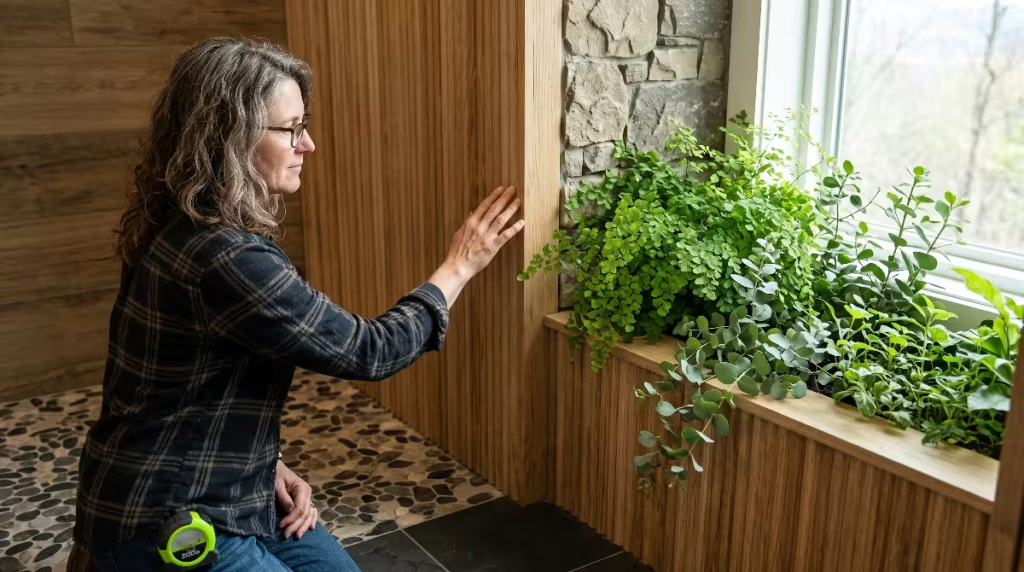
When people think about interior design, they usually focus entirely on what a room looks like. But our experience of a home is deeply tactile. It is about how surfaces feel when we touch them with our hands and walk across them with bare feet. In a modern master bathroom, introducing diverse physical textures breaks up flat surfaces and creates an inviting, grounded environment that calms your nervous system after a demanding day.
One of the most satisfying biophilic features you can incorporate into a modern master bathroom is a flat-sliced river pebble floor section. Sliced pebbles have been cut completely flat on top, leaving a smooth, level walking plane that does not hurt sensitive feet. When laid in the bottom of a curbless shower or around the perimeter of a soaking tub, the natural river stones provide a gentle, therapeutic foot massage that stimulates circulation. Because the pebbles are flat, water drains away smoothly between the stones, and squeegeeing the floor remains simple and hassle-free.
Wood textures can also be used in subtle, elegant ways outside wet zones. Consider adding a fluted or slatted wood accent wall behind your vanity mirrors in your modern master bathroom. The vertical lines of the slats draw the eyes upward toward the ceiling, creating an illusion of greater room height while absorbing sound echoes. Bathrooms with large glass panels and hard tile surfaces can often sound loud and reverberant. The natural acoustic dampening of a slatted wood wall makes conversations in your modern master bathroom feel quiet, intimate, and calm.
Live greenery is another powerful biophilic tool. A modern master bathroom provides an ideal microclimate for humidity-loving indoor plants like maidenhair ferns, bird of nest ferns, and eucalyptus. Create a recessed, waterproof display niche with an overhead accent light, or design a deep window ledge where potted plants can thrive on natural morning light and ambient shower steam. Having vibrant living greenery inside your modern master bathroom cleans the air and provides an uplifting visual connection to the natural world outside.
However, you must exercise restraint and wisdom when choosing textured surfaces. I always caution custom home clients against installing rough, split-face stacked stone inside a shower enclosure. While stacked stone looks dramatic in photos, its jagged, porous surface catches soap scum, shampoo residue, and hard water minerals. Within a few months, cleaning that wall becomes an impossible, frustrating chore. In a modern master bathroom, keep rough, rustic textures in dry areas where they can be appreciated without getting splashed, and use large-format, smooth porcelain or honed stone slabs inside the shower spray zone for effortless cleaning.
Hardware Finishes and High-Performance Plumbing Fixtures
The plumbing fixtures and cabinet hardware are the functional jewelry of your modern master bathroom. They are the components you touch every single day, so their weight, finish, and mechanical reliability matter immensely. When selecting fixtures, look for options that marry dependable performance with timeless mountain modern style.
Selecting the right metal finish sets the visual tone for the entire room. In our Appalachian climate, where well water and municipal supplies often carry natural minerals, high-polish chrome and polished nickel can be frustrating to maintain because they show every single dried water droplet and fingerprint. For a modern master bathroom, I prefer living or matte finishes that age with grace. Matte black fixtures provide a crisp, architectural contrast against warm wood vanities and soft stone tiles. Unlacquered brass and oil-rubbed bronze are also spectacular choices. Unlacquered brass develops a rich, organic patina over time that deepens with use, adding warmth and authentic character to your modern master bathroom.
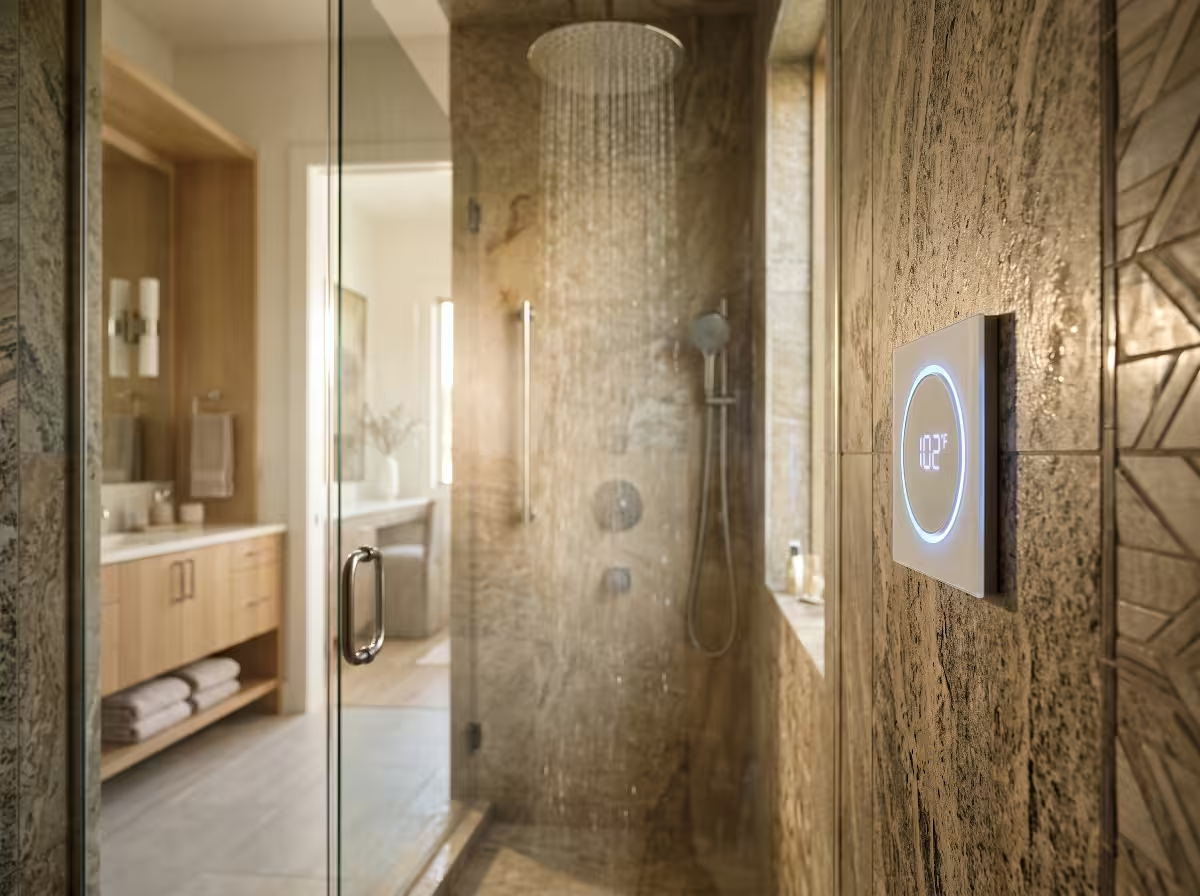
When it comes to shower fixtures, demand precision performance. A well-engineered modern master bathroom shower should feature a thermostatic valve system with independent volume controls. A standard pressure-balanced valve simply mixes hot and cold water based on water pressure, which means your shower temperature can suddenly plunge or scald if someone flushes a toilet or starts a washing machine elsewhere in the house. A thermostatic valve, by contrast, uses a wax motor or bi-metal strip to measure the exact temperature of the water. It maintains your desired water temperature within one degree, regardless of pressure fluctuations in the plumbing system.
Pair your thermostatic valve with at least two shower outlets: an overhead rain shower head and a multi-function handheld sprayer mounted on an adjustable vertical slide bar. An overhead rain head provides a relaxing, immersive downpour that washes away the fatigue of the day. But for everyday practical living, a handheld wand is indispensable in a modern master bathroom. It allows you to wash your body without getting your hair wet, makes shaving your legs comfortable and safe, and turns rinsing down the shower walls and glass panels into a quick two-minute task at the end of the week.
Do not overlook the toilet. In a high-end modern master bathroom, an in-wall, wall-hung smart toilet is an exceptional investment. By mounting the toilet tank inside the wall cavity and suspending the ceramic bowl several inches above the floor, you eliminate the awkward, dust-collecting base of a traditional toilet. Cleaning the floor beneath the bowl takes just one swipe of a mop. Modern smart toilets also feature heated seats, adjustable warm-water bidet wands, warm-air dryers, and automatic deodorizing filters, bringing clean, personalized comfort into your everyday modern master bathroom routine.
Cost Engineering, Budget Allocations, and High-ROI Splurges
Building or remodeling a custom modern master bathroom represents a significant financial investment. As an engineer and former general manager for a regional home builder, I know how easily bathroom budgets can spiral out of control if you do not establish clear priorities from the start. Smart cost engineering is not about cutting corners or buying cheap materials; it is about allocating your dollars where they deliver the highest return in comfort, structural durability, and long-term home value.
When planning your budget for a modern master bathroom, divide your expenses into three clear categories: structural essentials, everyday sensory touchpoints, and decorative finishes. The structural essentials are the components you will never see once the room is finished, but they protect your home from catastrophic failures. You should never cut costs on subfloor reinforcement, high-grade waterproofing membranes, premium shower valves, or top-tier ventilation systems. Fixing a failed shower pan or warped subfloor down the road can easily cost three to four times more than doing it right during initial construction.
The second category includes your everyday sensory touchpoints. These are the items you touch, step on, and use every single day in your modern master bathroom. This is where spending a little extra money pays enormous personal dividends. Splurge on radiant floor heating, a comfortable stone resin soaking tub, custom vanity storage with built-in power, and high-CRI lighting fixtures. These features directly enhance your daily comfort, making you feel pampered and organized every morning and evening.
The third category is decorative finishes, and this is where you can save substantial money without sacrificing beauty. For example, instead of cladding an entire modern master bathroom in expensive, fragile natural Calacatta marble that requires constant sealing and special cleaning products, choose high-definition, large-format porcelain slabs. Modern porcelain manufacturing is so advanced that it perfectly replicates the delicate veining and texture of natural marble at a fraction of the material and labor cost. Porcelain is non-porous, highly scratch-resistant, and completely impervious to water and makeup stains.
From an appraisal and resale standpoint, an expertly built modern master bathroom is one of the strongest value drivers in the East Tennessee real estate market. Discerning home buyers recognize the difference between cheap builder-grade finishes and thoughtful, high-performance construction. When you combine rock-solid engineering with timeless biophilic materials, your modern master bathroom will not only enrich your daily life today, but it will also protect your financial investment for years to come.
The Pre-Drywall Quality Verification Checklist
Before your general contractor installs drywall or backer board in your new modern master bathroom, schedule an on-site walkthrough with this engineering verification checklist in hand:
- Subfloor Framing and Deflection: Verify that floor joists beneath the soaking tub location are doubled and blocked, ensuring structural capacity exceeds one thousand pounds of concentrated load without deflection.
- Shower Pan Pre-Slope: Confirm that the subfloor beneath the curbless shower has been recessed and pre-sloped toward the linear drain at a consistent pitch of one-quarter inch per linear foot.
- Plumbing Rough-In Line Sizes: Ensure that a three-quarter-inch hot water supply line is routed to the soaking tub filler and master shower thermostatic valve to guarantee adequate flow rates.
- Flood Testing Waterproofing: Mandate a twenty-four-hour standing water flood test on the shower pan and linear drain assembly before any tile installation begins to verify zero leaks.
- Electrical In-Wall Blocking: Confirm that solid wood backing is installed behind all floating vanity mounting tracks, heavy glass door hinges, and wall-mounted grab bars.
- In-Drawer Electrical Rough-Ins: Inspect the dedicated GFCI circuits installed inside vanity cabinet framing for hair tool styling drawers and electric toothbrush charging stations.
- Exhaust Duct Routing: Verify that the bathroom exhaust fan is connected to rigid, insulated metal ductwork that vents directly through an exterior wall or roof, with zero sagging or loose flexible foil pipe.
- Radiant Heating Sensor Resistance: Test both the primary and backup radiant floor heating sensors with an ohmmeter before and after mortar application to ensure no wiring was damaged during installation.
By following this disciplined engineering roadmap, your modern master bathroom will serve as a durable, beautiful, and restorative retreat tailored perfectly to mountain living in the Tri-Cities.