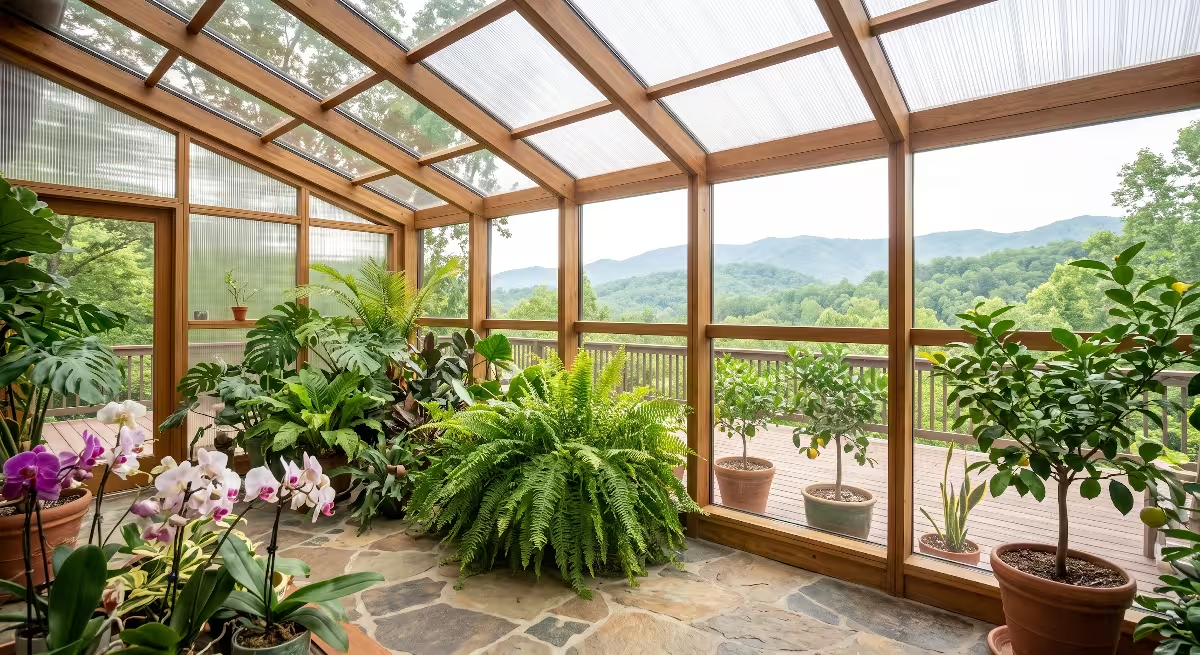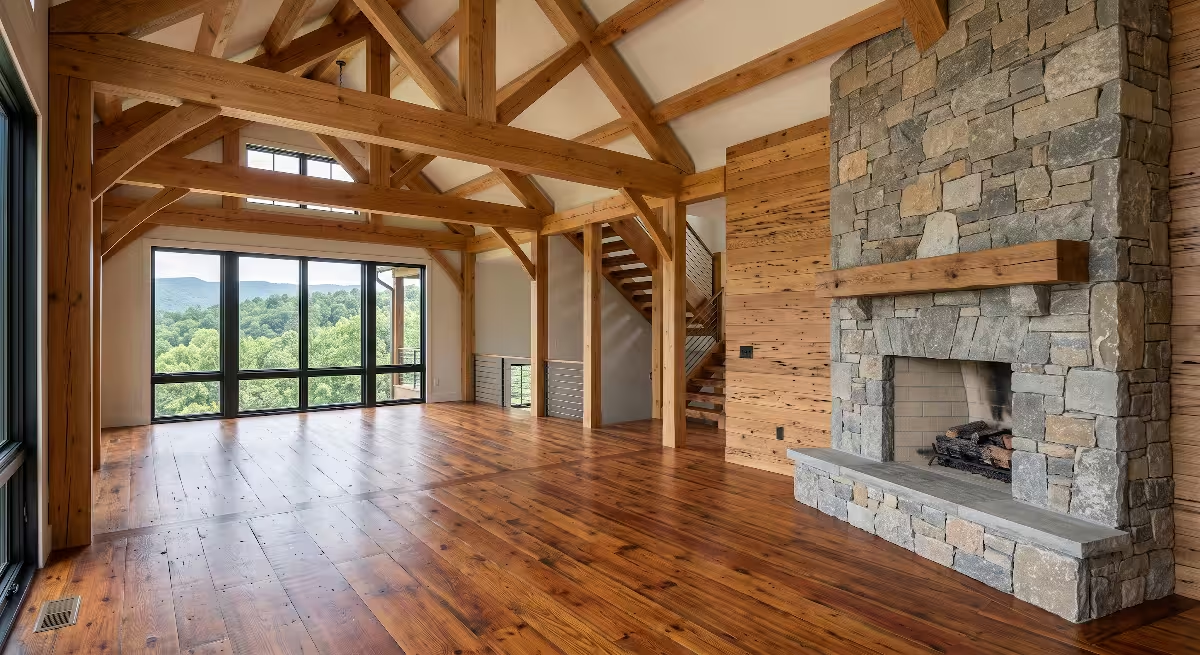


Introduction to Smart Glass Coatings
Living in the Tri-Cities region means experiencing a unique climate challenge known as Climate Zone 4A. We live in a region where summers bring high humidity, intense sunlight, and heavy heat loads, while winters bring cold mountain winds, freezing temperatures, and bright, clear days. Traditional building designs often force homeowners into an uncomfortable compromise. To keep houses cool during our hot summers, people install heavy drapes, blinds, or tinted dark glass. However, covering your windows cuts off your visual connection to the surrounding trees, mountains, and natural sunlight. This creates a dark indoor environment that feels disconnected from nature and disrupts our natural daily rhythms. In the winter, static dark glass prevents beneficial solar heat from warming your home, forcing your heating system to work much harder than necessary.
This dilemma is solved through the application of advanced smart glass coatings. By utilizing smart glass coatings, homeowners can actively or passively adjust how much solar energy enters their home throughout the year. Instead of blocking light permanently or relying on dust-collecting blinds, smart glass coatings allow glass windows to change their optical properties based on electrical signals or outdoor temperatures. During hot summer days in East Tennessee, smart glass coatings adjust to block invisible solar heat while allowing soft daylight to illuminate your rooms. During cold winter mornings, smart glass coatings return to a clear state, allowing free solar heat to enter and naturally warm your interior living spaces.
In this guide, we will explore how smart glass coatings provide the ideal balance between modern building physics and biophilic architectural design. We will look closely at active and passive technology types, analyze how solar heat gain is managed across four distinct seasons, discuss the health benefits of maintaining constant views of nature, and examine practical retrofitting options for homes throughout the Tri-Cities.
The East Tennessee Solar Paradox (Climate Zone 4A Dynamics)
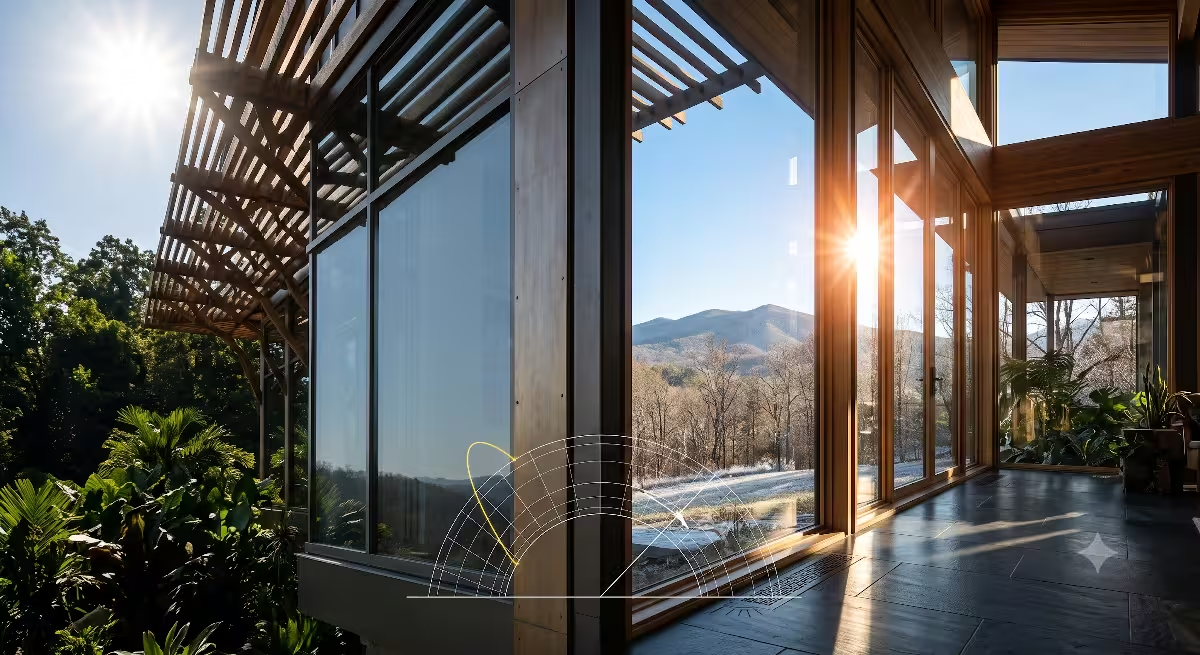
The Tri-Cities area of East Tennessee sits within Climate Zone 4A, a mixed-humid climate zone defined by significant seasonal temperature shifts. Homes in Johnson City, Kingsport, and Bristol experience a wide variety of weather conditions throughout the twelve months of the year. During June, July, and August, solar radiation hits rooflines and window glass from high angles in the sky. The ambient air temperature often rises above ninety degrees Fahrenheit, and relative humidity frequently exceeds seventy percent. Under these conditions, standard window glass acts like a greenhouse panel, allowing massive amounts of solar radiation to enter the house. This forces air conditioning units to run continuously to manage both the heat and the moisture in the air.
When winter arrives in late November, the solar geometry changes completely. The sun sits much lower on the southern horizon, casting longer rays of sunlight through south-facing and west-facing windows. On clear January days, the outdoor temperature can hover near freezing, yet the sun remains bright and powerful. In a well-designed biophilic home, this low winter sunlight is a valuable source of free heating energy. If a home uses traditional low-emissivity glass that permanently reflects solar heat, it misses out on this natural warmth. The home remains cold, forcing electric heat pumps or gas furnaces to burn extra energy to keep rooms comfortable. This seasonal conflict is what building scientists call the solar paradox of Climate Zone 4A.
Static glass windows simply cannot adapt to these changing conditions. Standard window glazing has fixed optical properties that remain identical every day of the year. If you select glass designed to keep out summer heat, you lock out beneficial winter warmth. If you select clear glass that allows winter heat inside, your living rooms will overheat during the summer months. Historically, the only solution was to install mechanical window coverings such as fabric shades, exterior shutters, or heavy drapes. While these coverings do block solar heat, they defeat the primary purpose of having windows. They block natural daylight, obscure views of local oak and pine forests, and force residents to live in artificial light.
Smart glass offers a dynamic solution that resolves the solar paradox without sacrificing indoor visual quality. By incorporating smart glass coatings into residential glass assemblies, the window panel itself becomes an active, responsive thermal barrier. Smart glass coatings can change their solar heat gain capability on demand or automatically in response to sunlight and heat. When solar radiation is intense during summer peak hours, smart glass coatings reduce heat entry without creating dark, murky interiors. When winter sunlight strikes the building in January, smart glass coatings permit maximum solar energy transfer into the living space.
Using smart glass coatings allows home designs in the Tri-Cities to achieve complete thermal efficiency while supporting biophilic design goals. Homeowners no longer need to choose between low energy bills and gorgeous views of Buffalo Mountain or the Holston River. With smart glass coatings, the building envelope adapts directly to the local climate, keeping interior spaces comfortable, energy-efficient, and filled with natural daylight year-round.
Smart Glass Technologies: Active vs. Passive Coatings
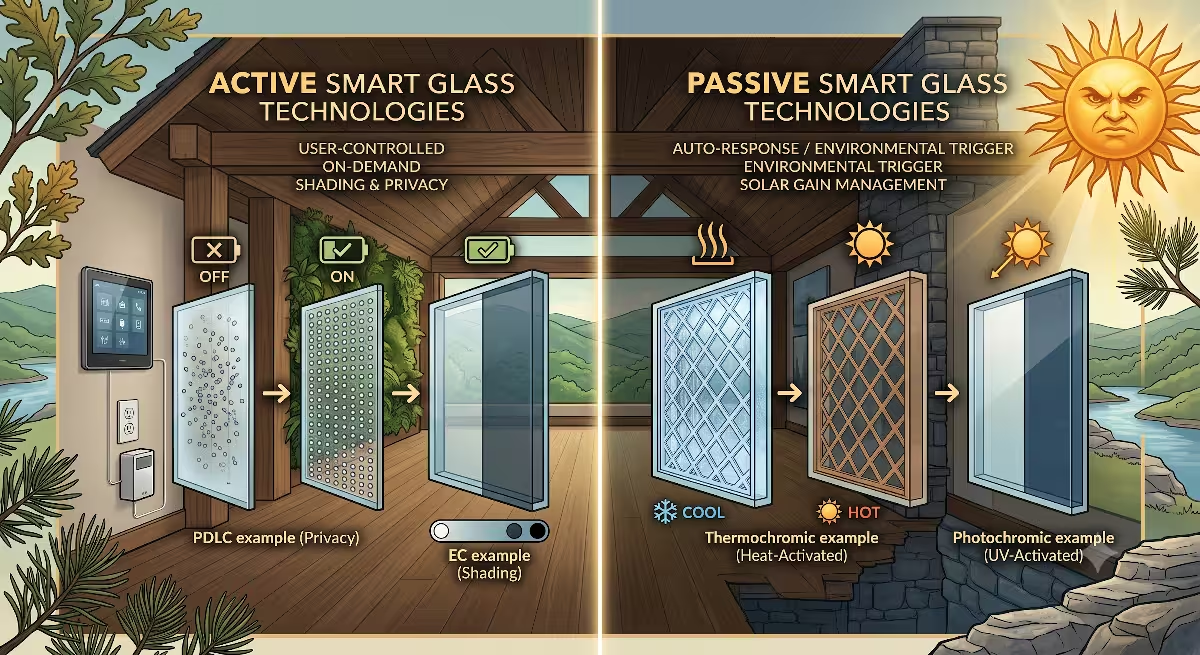
To make informed decisions for your home, it is essential to understand the different technical mechanisms behind modern smart glass coatings. Engineers divide these technologies into two major categories: active smart glass coatings and passive smart glass coatings. Active systems rely on electrical power and control circuits to alter optical properties, while passive systems react automatically to environmental changes such as heat or light levels without using electrical power.
Active smart glass coatings offer precise user control and integration with modern home automation systems. The most widely used active technology in residential architecture is electrochromic glass. Electrochromic smart glass coatings consist of multiple micro-layers of metal oxides, such as tungsten oxide, deposited onto the glass surface. When a tiny electrical voltage, usually less than five volts, passes through these conductive layers, lithium ions move between the material layers. This chemical movement causes the coating to change color and density, darkening the glass. Electrochromic smart glass coatings can adjust through multiple tint levels, allowing homeowners to set exact daylight levels using a smartphone app, wall switch, or automated building controller.
Another prominent active technology involves suspended particle devices. Suspended particle smart glass coatings contain millions of microscopic light-absorbing particles suspended in a thin liquid film sandwiched between layers of glass. When no electric current is present, the particles are randomly scattered, blocking light and solar heat from passing through. When an electrical voltage is applied, the particles align perfectly, allowing light to pass through clearly. Suspended particle smart glass coatings transition very quickly, changing from clear to tinted in a fraction of a second. This makes suspended particle smart glass coatings popular for large glass walls, sunrooms, and patio doors where fast light control is desired.
A third active category is polymer dispersed liquid crystal technology. Polymer dispersed liquid crystal smart glass coatings operate by scattering light rather than absorbing it. When power is off, liquid crystal droplets scatter incoming light rays, making the glass appear milky and opaque for visual privacy. When electric power is turned on, the crystals align and the glass becomes transparent. However, polymer dispersed liquid crystal smart glass coatings are primarily designed for privacy control rather than solar heat rejection. For managing solar heat in East Tennessee homes, electrochromic smart glass coatings remain the superior choice.
Passive smart glass coatings adjust their performance based directly on local weather conditions without needing electrical wiring or digital controllers. Thermochromic smart glass coatings react directly to changes in glass surface temperature. As intense summer sunlight heats the outer pane of glass, the thermochromic layer automatically darkens, blocking solar infrared radiation before it enters the home. As the glass cools down in the evening or during winter months, the coating clears up automatically. Photochromic smart glass coatings react to ultraviolet light levels, darkening when direct sunlight hits the window.
Choosing between active and passive smart glass coatings depends on your budget, house design, and desired level of manual control. Active smart glass coatings give you full authority to set window tint levels whenever you choose, making them ideal for living rooms and master suites facing south or west. Passive smart glass coatings provide a simple, self-regulating option that works continuously without electrical installation, making them ideal for upper clerestory windows or high gable glass that is hard to wire.
| Smart Glass Coating Type | Operating Mechanism | Solar Heat Control Range | Main Benefit for TN Homes | Best Application |
| Electrochromic | Active (Electric voltage) | 0.09 to 0.45 SHGC | Dynamic seasonal heat control | South and West windows |
| Suspended Particle Device | Active (Electric voltage) | 0.05 to 0.40 SHGC | Instant glare reduction | Sunrooms and patio doors |
| Polymer Dispersed Liquid Crystal | Active (Electric voltage) | Minimal heat control | Instant visual privacy | Bathrooms and interior walls |
| Thermochromic | Passive (Surface heat) | 0.12 to 0.38 SHGC | Self-adjusting heat blocking | High gable and skylight glass |
| Photochromic | Passive (UV light) | 0.15 to 0.42 SHGC | Automatic sunlight response | West-facing dormers |
Both active and passive smart glass coatings provide significant benefits over static glass options. By selecting the right combination of smart glass coatings, homeowners in Johnson City and Kingsport can customize their building envelope to perform flawlessly in every season.
Managing Solar Heat Gain Coefficient (SHGC) Across TN Seasons
To understand how smart glass coatings save energy and improve indoor comfort, we must look at how building scientists measure window performance. The three most critical metrics are the Solar Heat Gain Coefficient, Visible Light Transmittance, and the U-Factor. Understanding these metrics shows why smart glass coatings are so effective in East Tennessee homes.
The Solar Heat Gain Coefficient, commonly abbreviated as SHGC, measures the fraction of incident solar radiation admitted through a window pane. SHGC is expressed as a number between zero and one. A window with an SHGC of 0.70 allows seventy percent of total solar heat to pass through into the room. A window with an SHGC of 0.10 allows only ten percent of solar heat to pass through. In Climate Zone 4A, ideal window design requires a low SHGC during hot summer months to block solar radiation, but a high SHGC during cold winter months to capture free solar heating.
Static Low-E glass usually has a fixed SHGC around 0.25 to 0.30. While this fixed rating provides decent performance in shoulder seasons like spring and autumn, it fails during weather extremes. In July, an SHGC of 0.30 still allows too much solar heat into west-facing rooms during late afternoon hours, overloading air conditioners. In January, an SHGC of 0.30 blocks seventy percent of the free solar warmth that could naturally heat your hardwood floors and interior stone walls.
Smart glass coatings solve this limitation by offering a variable SHGC rating. During summer, active electrochromic smart glass coatings darken, lowering their SHGC rating down to 0.09. This blocks over ninety percent of incoming solar infrared heat, dramatically reducing peak summer cooling loads. During cold winter days, the same smart glass coatings clear up, raising their SHGC rating up to 0.45 or higher. This permits direct winter solar radiation to penetrate deep into living spaces, providing natural radiant warmth and lowering winter heating bills.
Visible Light Transmittance, or VLT, measures the percentage of daylight that passes through the glazing. High-quality smart glass coatings are spectrally selective. This means smart glass coatings specifically block invisible infrared heat waves while allowing visible light wavelengths to pass through safely. Even when smart glass coatings darken to block intense summer heat, they maintain sufficient visible light transmission so that living rooms remain naturally bright without glare.
Summer Performance (July Dynamics)
- High Solar Altitude Angle and High Ambient Humidity.
- Smart glass coatings transition to fully tinted state (SHGC 0.09).
- Solar Heat Admission: Only 9 percent of incident solar infrared radiation enters the living area.
- System Result: Prevents room overheating, maintains open views of mountain scenery, and reduces air conditioning electrical draw by up to 30 percent.
Winter Performance (January Dynamics)
- Low Solar Altitude Angle and Crisp Atmospheric Clarity.
- Smart glass coatings return to fully transparent state (SHGC 0.45).
- Solar Heat Admission: Up to 45 percent of incident solar warmth enters the home naturally.
- System Result: Captures free passive solar energy, warms interior thermal mass such as stone and hardwood, and lowers winter heating fuel consumption.
Another important benefit of smart glass coatings is the complete blocking of harmful ultraviolet rays. Ultraviolet radiation causes long-term damage to interior finishes, causing hardwood floors, oriental rugs, artwork, and timber framing to fade and deteriorate over time. Advanced smart glass coatings block up to ninety-nine percent of incoming ultraviolet rays in both clear and tinted states. This preserves your valuable interior finishes while allowing you to keep window blinds wide open every day of the year.
By managing the Solar Heat Gain Coefficient dynamically, smart glass coatings allow homes in the Tri-Cities to achieve remarkable energy balance. Your home remains cool during humid July afternoons, cozy during crisp January mornings, and naturally illuminated throughout the entire year.
Biophilic Design & Circadian Integration in East Tennessee Architecture
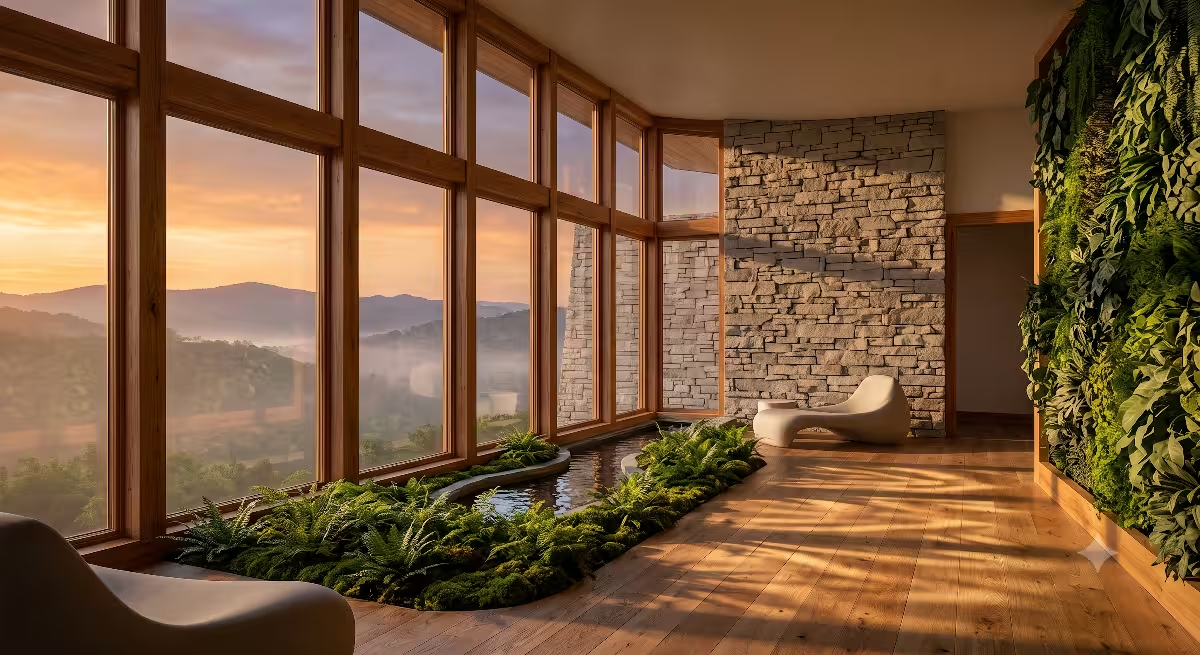
Biophilic design is the practice of connecting human beings with natural systems within the built environment. As human beings, our nervous systems evolved in close contact with natural landscapes, changing weather patterns, and continuous daylight cycles. Modern living often confines people inside dark, enclosed rooms with artificial overhead lighting. Research from environmental psychology and neuroscience proves that long periods spent in artificially lit, windowless environments increase stress, elevate blood pressure, and impair sleep quality.
In the Appalachian region, we are blessed with incredible natural surroundings, including rolling hills, rich mountain forests, and vibrant seasonal foliage. Traditional architectural approaches to energy efficiency often sever our connection to these surroundings. Standard practice involves covering large window openings with thick blinds or installing dark static glass tinting to prevent room overheating. When you pull down blinds to block summer heat, you lock out views of local wildlife, wind moving through tree canopies, and passing clouds. You end up living inside a dimly lit box, completely disconnected from the natural beauty of East Tennessee.
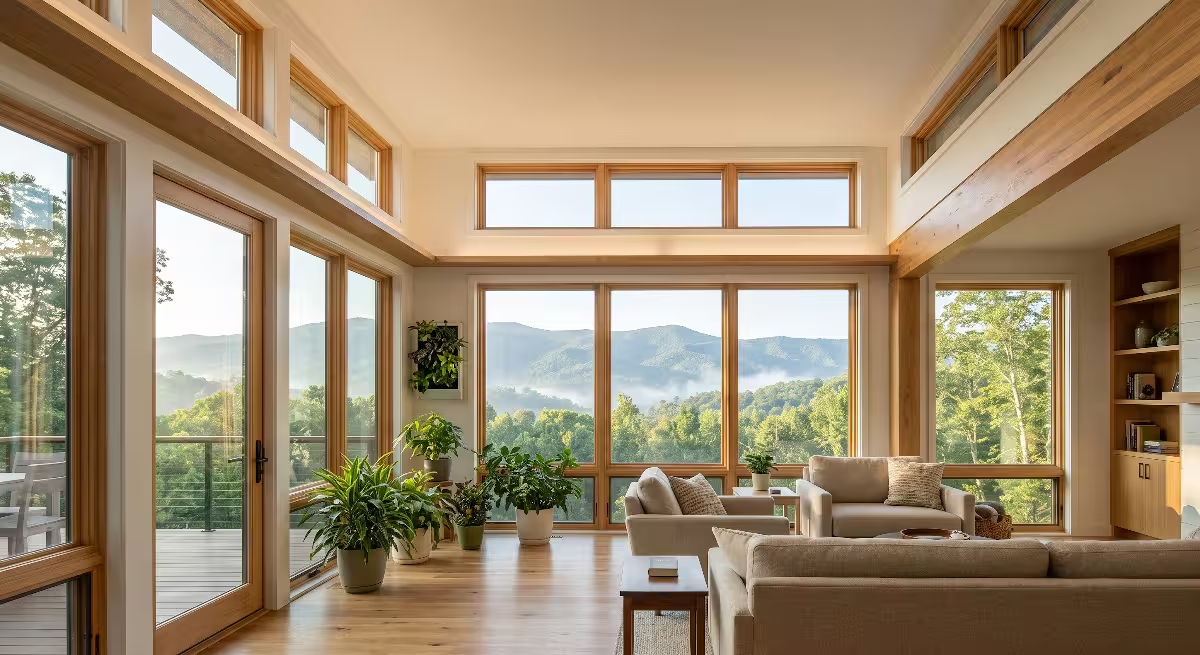
Smart glass coatings eliminate the need for window blinds, curtains, and heavy overhangs. By applying smart glass coatings to large living room windows, sliding glass doors, and sunrooms, you preserve clear views of the outdoor landscape three hundred and sixty-five days a year. Even when smart glass coatings transition to their darkest tint state on bright summer afternoons, the glass remains visually clear. You can look directly through smart glass coatings to watch summer rainstorms roll across Buffalo Mountain or observe green mountain ridges without experiencing blinding glare or intense radiant heat.
Maintaining clear visual connections to nature through smart glass coatings directly supports human physical health through circadian rhythm alignment. Human biological clocks are regulated by exposure to natural daylight cycles. Morning sunlight, rich in blue light frequencies, signals the brain to stop producing melatonin and start producing cortisol, making us feel alert and energetic. As afternoon transitions to evening, the shift in natural light quality signals the body to prepare for rest.
When homes rely entirely on artificial interior lighting because window blinds remain lowered, occupant circadian rhythms become disrupted. This disruption leads to poor sleep quality, chronic fatigue, and reduced immune function. Smart glass coatings allow dynamic daylight harvesting throughout the day. By continuously modulating incoming daylight levels, smart glass coatings keep interior rooms filled with soft natural daylight while preventing harsh glare on computer screens and televisions.
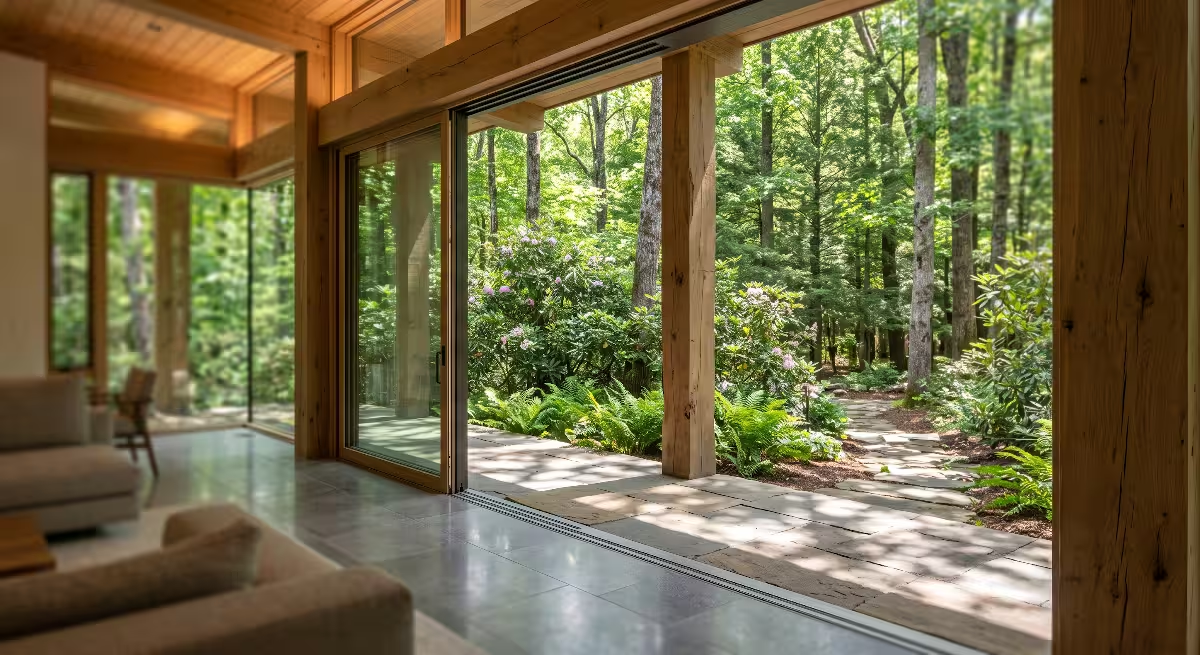
Smart glass also integrates beautifully with local East Tennessee building materials. In biophilic architecture, we emphasize using natural, regionally sourced materials such as Tennessee limestone, stacked slate, white oak flooring, and heavy native timber beams. These natural materials carry tactile warmth, unique grain patterns, and biophilic textures. However, exposed natural timber and organic fabrics are vulnerable to solar heat degradation and UV fading. Smart glass coatings protect these raw natural materials from sunlight damage while highlighting their rich colors under natural daylight.
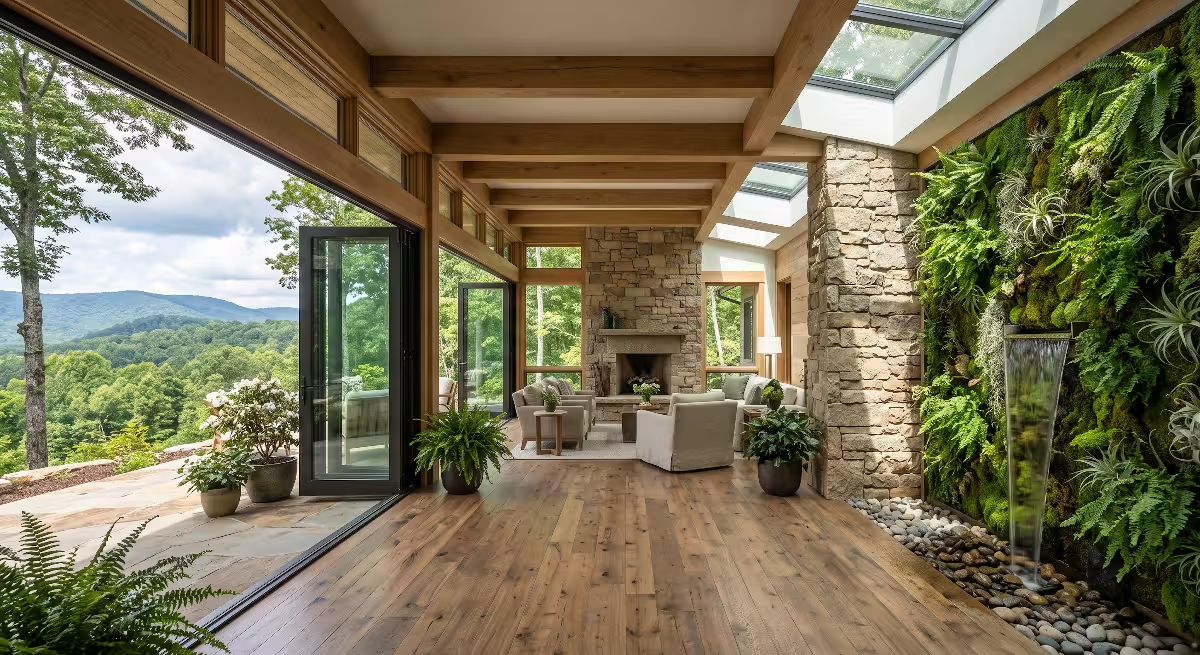
By combining natural local materials with smart glass coatings, homeowners create interior living spaces that feel alive, expansive, and healthy. Your living room becomes an extension of the outdoor landscape, offering uninterrupted views of changing mountain weather while protecting your health, energy balance, and visual comfort.
Regional ROI, Energy Codes, and Retrofit vs. New Construction
Investing in high-performance building materials requires understanding long-term return on investment, energy code compliance, and practical installation options. For homeowners and homebuilders in Johnson City, Kingsport, and Bristol, incorporating smart glass coatings into building plans yields substantial financial and operational benefits over the lifespan of the structure.
Building energy codes in Tennessee continue to evolve toward higher energy efficiency standards. The International Energy Conservation Code for Zone 4A sets strict requirements for window U-factor and SHGC ratings. Standard single-pane or basic double-pane windows fail to meet these modern efficiency benchmarks. While high-grade static Low-E windows can meet basic code standards, smart glass coatings far exceed minimum requirements by dynamically optimizing thermal performance across all twelve months of the year.
When planning a project with smart glass, homeowners must choose between factory-manufactured insulated glass units and field-applied smart glass coatings films:
- Factory-Manufactured Insulated Glass Units: For new home construction or full window replacement projects, factory-built insulated glass units incorporating smart glass coatings represent the absolute best standard. These double or triple-pane units feature smart glass coatings sealed inside an airtight, argon-gas-filled glass assembly. This design protects the micro-coatings from physical wear and moisture while delivering optimal thermal insulation.
- Applied Smart Glass Coatings Films: For existing homes where replacing window frames is impractical or overly expensive, retrofit smart glass coatings films offer an accessible alternative. These flexible, multi-layer polymer films contain smart glass coatings technology and apply directly to the interior surface of existing double-pane glass. Retrofit smart glass coatings films provide dynamic solar heat rejection at a lower initial material cost.
HVAC Tonnage Savings Comparison
- Standard Low-E Glazing: Peak solar heat gain equals 36,000 BTU per hour. Requires a 3.0 Ton heat pump system.
- Dynamic Smart Glass Coatings: Peak solar heat gain equals 24,000 BTU per hour. Requires only a 2.0 Ton heat pump system.
- Mechanical Impact: Net reduction of 1.0 Ton in required cooling equipment capacity.
A major economic benefit of smart glass is the ability to right-size HVAC cooling equipment. In traditional homes with large glass areas, builders must install oversized air conditioning units or heat pumps to handle peak summer heat loads on hot July afternoons. Oversized HVAC systems are expensive to purchase, run inefficiently during mild weather, and struggle to manage indoor humidity effectively.
By installing smart glass coatings, peak summer solar heat entry is reduced by up to thirty percent. This drastic reduction in peak thermal load allows mechanical engineers and HVAC contractors to specify smaller tonnage heat pumps. The financial savings achieved from buying smaller heating and cooling equipment directly offsets a significant portion of the initial cost of smart glass coatings. Furthermore, running smaller, highly efficient HVAC units leads to lower monthly power bills year after year.
Financial analysis of homes in the Tri-Cities area demonstrates that smart glass coatings provide continuous operational payback through reduced electricity usage, lower equipment maintenance costs, and extended HVAC service life. Additionally, homes equipped with modern biophilic features and smart glass coatings command higher resale value in the East Tennessee real estate market, as buyers increasingly prioritize low energy costs, natural daylighting, and modern smart home technology.
Frequently Asked Questions about Smart Glass Coatings
Is electrochromic glass worth it for residential homes in Tennessee?
Yes, electrochromic smart glass coatings are highly worthwhile for residential homes in Tennessee, particularly on south-facing and west-facing window elevations. In Climate Zone 4A, west-facing glass receives intense late-afternoon solar exposure during hot, humid summer months. By dynamically adjusting solar heat rejection, smart glass coatings reduce summer cooling bills by up to thirty percent while allowing free passive solar heat to warm the home during cold winter days. This dual-season capability provides long-term utility savings and unmatched indoor comfort.
Can smart glass coatings be controlled automatically with smart home systems?
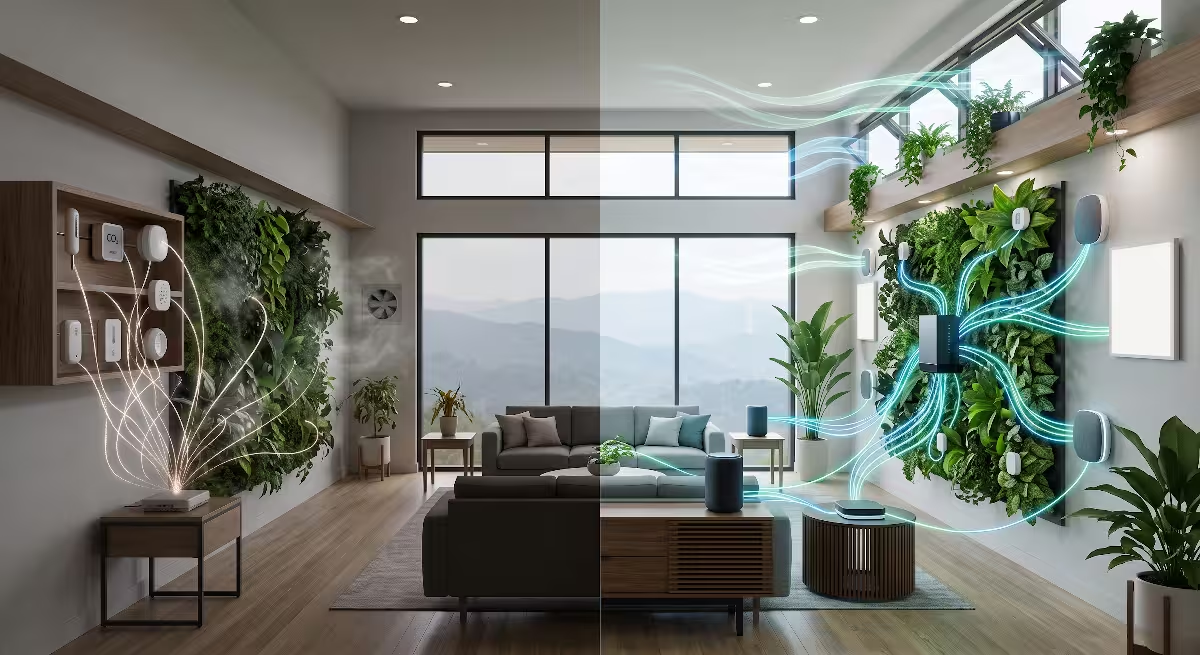
Active smart glass coatings integrate seamlessly with modern smart home automation systems, digital thermostats, and mobile devices. Using digital control units, smart glass coatings can automatically adjust tint levels based on input from external solar sensors, indoor temperature readings, or time-of-day schedules. For example, your smart home system can darken smart glass coatings on west-facing windows automatically at three o’clock on July afternoons, then restore full transparency at sunset without requiring any manual effort.
How do smart glass coatings handle humidity and condensation in East Tennessee?
High humidity during East Tennessee summers and cold temperatures in winter often lead to unwanted window condensation on standard glass. Factory-manufactured double and triple-pane windows equipped with smart glass coatings utilize warm-edge spacer bars and inert argon gas fills between glass panes. This high-performance assembly keeps the inner surface temperature of the glass close to the indoor air temperature. As a result, smart glass coatings effectively eliminate glass surface condensation, preventing indoor mold growth and protecting wood window frames from moisture damage.
What is the difference between active and passive smart glass coatings?
Active smart glass coatings rely on low-voltage electricity to change optical properties and tint levels. This allows users to control window clarity manually using wall switches, remote controls, or automated home software. Active options include electrochromic, suspended particle, and liquid crystal technologies. Passive smart glass coatings react automatically to environmental changes like heat or sunlight levels without needing electrical wiring. Passive options include thermochromic and photochromic smart glass coatings, which adjust based on glass surface temperature or UV exposure.
Do smart glass coatings actually block heat or just light?
Advanced smart glass coatings are spectrally selective, meaning smart glass coatings specifically target and block invisible near-infrared solar radiation, which is responsible for heat transfer. Standard tinted window glass simply blocks visible light, making rooms darker without effectively stopping radiant heat transfer. In contrast, electrochromic smart glass coatings can block up to ninety percent of solar infrared heat while maintaining high levels of visible light transmittance. This keeps your home cool while preserving natural daylight and clear views of the outside landscape.
How durable are smart glass coatings over long periods of use?
Factory-sealed smart glass coatings are exceptionally durable and built to last for decades. In insulated glass units, smart glass coatings are applied to interior glass surfaces inside sealed gas chambers, completely protecting them from weather exposure, physical touching, and chemical cleaners. Leading manufacturers test smart glass coatings through tens of thousands of continuous tinting cycles, equivalent to over thirty years of daily residential operation, ensuring long-term performance in East Tennessee conditions.
A Biophilic Design Action Plan for TN Homeowners
Smart glass coatings represent a major step forward in building science and sustainable residential design. For homeowners in Johnson City, Kingsport, Bristol, and surrounding areas, smart glass coatings resolve the long-standing conflict between energy efficiency and biophilic daylighting. By actively managing seasonal solar heat gain, smart glass coatings allow us to build open, daylight-filled homes that stay cool in summer, warm in winter, and deeply connected to nature year-round.
If you are planning to build a new custom home or remodel an existing residence in the Tri-Cities region, follow this simple action plan to incorporate smart glass coatings effectively:
- Conduct a Solar Orientation Assessment: Map out your home building footprint to identify south-facing and west-facing window elevations. These key elevations receive the highest solar heat loads and will benefit most from smart glass coatings.
- Select the Right Smart Glass Coatings Technology: Work with your architect or design specialist to choose the ideal coating type for each window location. Use active electrochromic smart glass coatings for primary living areas requiring precise manual control, and passive thermochromic smart glass coatings for high gable windows or clerestories.
- Right-Size Your HVAC System: Collaborate with your mechanical contractor to calculate heat loss and heat gain using the dynamic SHGC ratings of your smart glass coatings. Right-sizing your heat pump system saves significant upfront equipment costs and ensures efficient operation.
- Integrate Local Biophilic Elements: Pair your dynamic smart glass coatings with natural regional materials such as native Tennessee stone, local hardwood flooring, and exposed timber beams. Enjoy continuous views of the Appalachian landscape and healthy indoor daylighting for years to come.