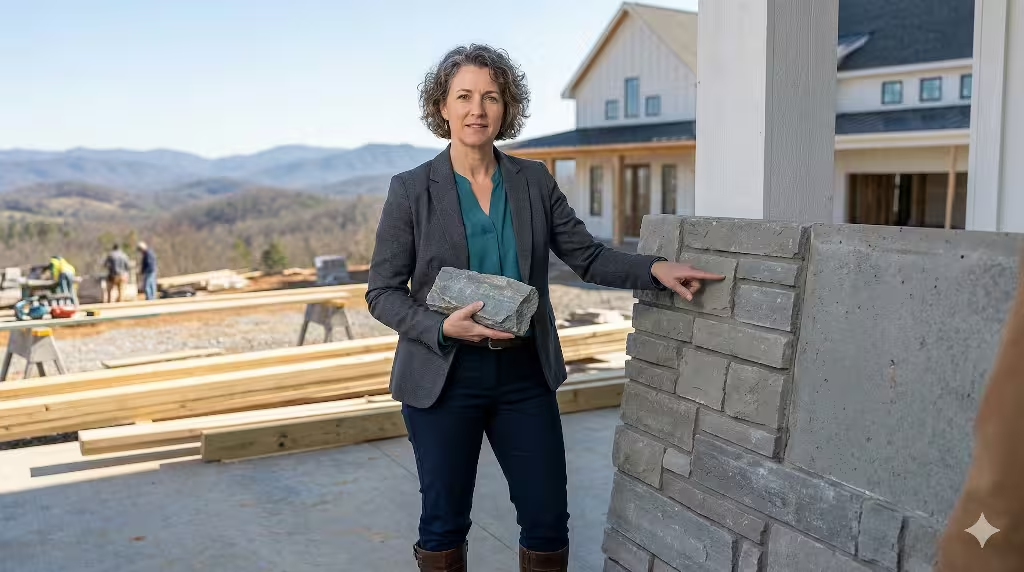


Today, we are looking into a favored natural building material in the east Tennessee area: authentic Appalachian fieldstone. In this guide, we will explore local quarries near Bristol, examine material grades, answer key cost questions, and share step-by-step buyer tips. By the end of this article, you will know exactly how to source and select Appalachian fieldstone to build a healthier, more beautiful home in East Tennessee.
Sourcing Authentic Appalachian Fieldstone in the Tri-Cities Region
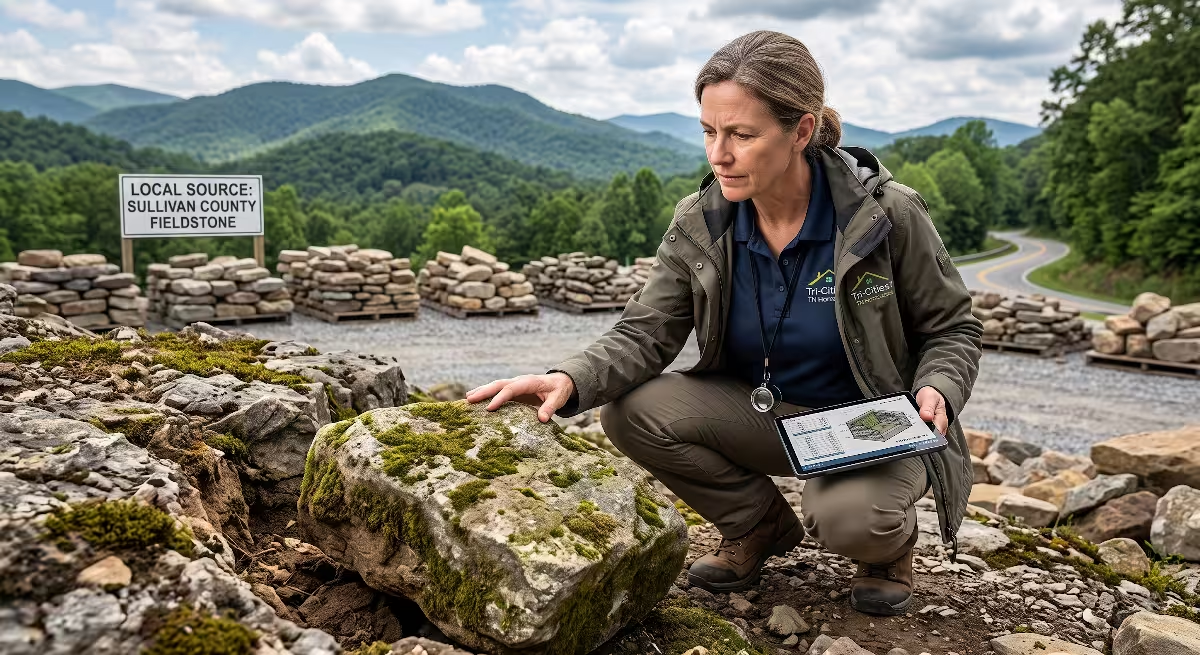
When you walk through the forests around Bristol, Tennessee, you walk across millions of years of earth history. The stones lying on top of the ground are not just rocks. They are natural elements shaped by time, rain, wind, and plant life. Sourcing authentic Appalachian fieldstone for your home allows you to bring that deep history directly into your living space.
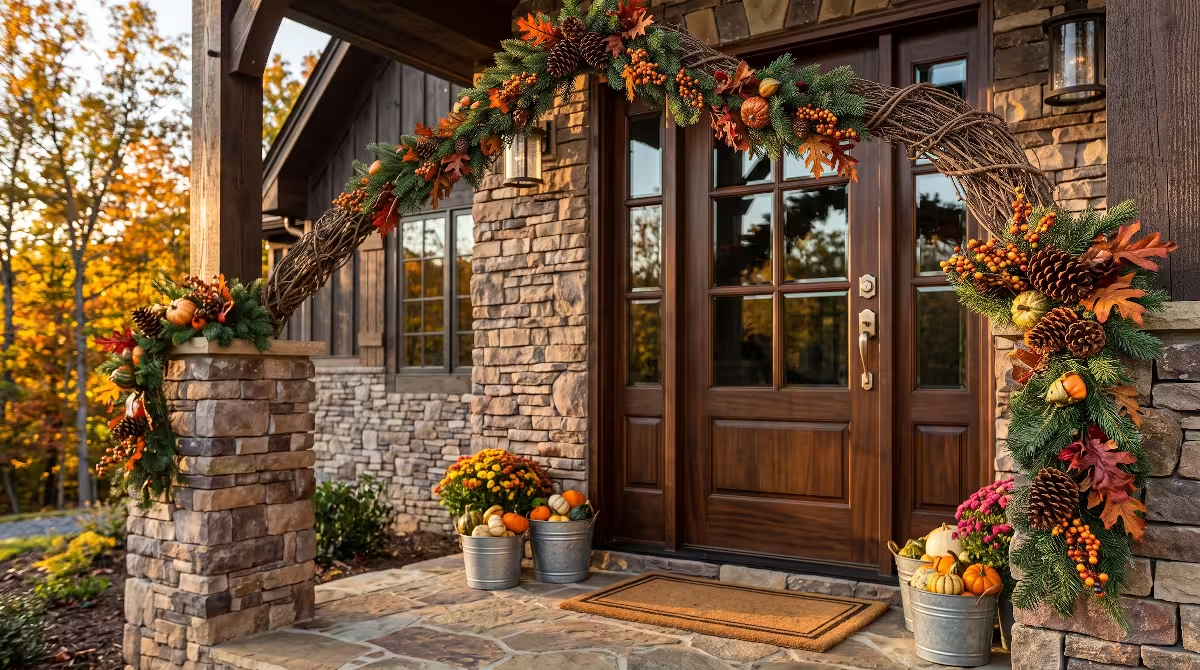
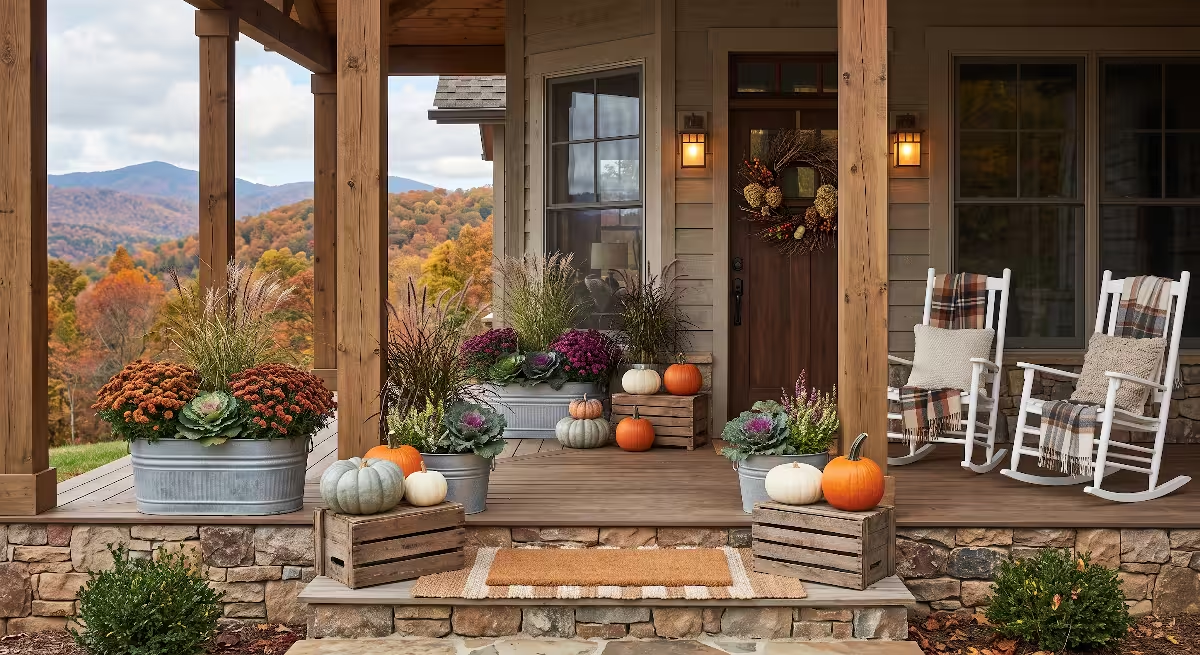
Biophilic design focuses on bringing natural elements into human buildings. When we use natural stone inside or outside a home, our brains react in a positive way. Natural textures, earthy colors, and rough patterns help lower human stress levels. They also make a house feel grounded and stable. Using Appalachian fieldstone creates an instant link between your living room or front porch and the surrounding East Tennessee hills.
There is a huge difference between surface fieldstone and rock mined deep underground. Deep quarry ledgerock is blasted out of the earth with explosives. It has sharp edges, fresh split faces, and uniform colors. In contrast, Appalachian fieldstone is harvested right from the surface or upper dirt layers. Over hundreds of thousands of years, water, frost, and soil acids smooth its edges. Native mosses and lichens grow on its face. This long natural process creates a weathered rind that cannot be made in a factory or cloned in a quarry pit.
Using local Appalachian fieldstone also supports sustainable home building. Sourcing stone from local fields and ridge supply yards in Sullivan County or nearby counties keeps shipping distances short. Short shipping routes mean less diesel fuel burned in transport trucks. This dramatically reduces the carbon footprint of your building project. Furthermore, native Appalachian fieldstone belongs to the Ridge and Valley geological zone of East Tennessee. Using it ensures your home matches the regional landscape. A house built with local Appalachian fieldstone looks like it grew naturally out of the Tennessee soil.
+-------------------------------------------------------------------------+
|                    GEOLOGICAL FORMATION COMPARISON                      |
+-------------------------------------------------------------------------+
| FEATURE             | APPALACHIAN FIELDSTONE  | DEEP QUARRY LEDGEROCK   |
+---------------------+-------------------------+-------------------------+
| Harvesting Location | Ground Surface / Topsoil| Deep Underground Pits   |
| Surface Texture     | Weathered, Smooth Edges | Sharp, Angular Breaks   |
| Biological Life     | Natural Moss & Lichens  | Clean, Bare Mineral     |
| Color Variation     | Rich Iron Oxide Patina  | Uniform Internal Color  |
| Carbon Footprint    | Very Low (Local Pickup) | Higher (Heavy Mining)   |
+-------------------------------------------------------------------------+
When you select Appalachian fieldstone for a fireplace, an exterior wall, or a garden retaining wall, you choose a material that never goes out of style. Synthetic stone veneers fade under the bright Southern sun. Concrete blocks crack and crumble after years of winter freezing and summer heat. Real Appalachian fieldstone handles freeze and thaw cycles easily. It gets more beautiful as it ages, acquiring a rich character that synthetic products can never equal.
Top Regional Quarries and Stone Suppliers Serving Bristol, TN/VA
Finding the right supplier for Appalachian fieldstone requires knowing where local stone comes from and how it reaches the market. Bristol sits on the state line between Tennessee and Virginia. This location gives homeowners and builders access to several great sourcing options across Sullivan County, Washington County, and the broader mountain belt.
Direct aggregate quarries, local masonry supply yards, and specialized mountain stone yards all play a role in supplying Appalachian fieldstone. For example, large mineral operations like Vulcan Materials on Highway 11 West in Bristol produce crushed stone and base gravels. However, when you need decorative wall stone or weathered fieldstone, you will often work with specialized regional suppliers, landscape stone yards, and direct harvest operations. These yards collect Appalachian fieldstone from private land clearing projects, mountain farms, and regional ridges, then sort and palletize the stone for delivery.
Regional Supplier & Sourcing Matrix
To help you compare your options near Bristol, the table below outlines where different types of Appalachian fieldstone and aggregate materials are sourced:
| Supplier Type / Location Radius | Primary Stone Types Offered | Best Architectural Application | Primary Sourcing Method |
| Bristol Local Yards (Highway 11 W / Sullivan Co.) | Crushed limestone, heavy wall stone, river rock | Foundations, drainage beds, heavy retaining walls | Direct Pit Mining & Local Yards |
| Southwest VA Outlets (Abingdon / Washington Co.) | Appalachian sandstone, weathered fieldstone, boulders | Structural hearths, landscape accents, retaining walls | Surface Harvesting & Extraction |
| East TN Regional Yards (Cumberland/Unaka Outlets) | Mossy thin-stack, medium-stack fieldstone, flat caps | House siding veneer, indoor fireplaces, water features | Direct Ridge Harvesting & Sorting |
Distinguishing Direct Quarry Harvesting from Regional Stone Distributors
Understanding how Appalachian fieldstone travels from the mountain ground to your construction site will save you time and money. Direct fieldstone harvesters operate teams that walk land tracts, pick up surface rocks, and pack them directly onto wooden pallets. These pallets are sorted by stone size, thickness, and moss coverage. Direct harvesters usually sell their stone by the full truckload. Buying direct from a fieldstone harvester works best if you are building a full home or a large commercial structure that needs tens of tons of Appalachian fieldstone.
On the other hand, local Bristol masonry supply yards buy wholesale truckloads from harvesters and store them in their local yards. When you visit a local stone yard, you can inspect individual pallets of Appalachian fieldstone in person. You can pick out the exact colors and shapes you like. Local supply yards let you purchase smaller quantities, such as a single pallet or a few hundred pounds of Appalachian fieldstone. You will pay a slightly higher price per ton at a local retail yard to cover their storage and handling costs. However, for most residential fireplace projects or outdoor garden walls, buying from a local Bristol distributor is the most convenient option.
Frequently Asked Questions About Appalachian Fieldstone
To help you make informed decisions, let us answer the most common questions homeowners and builders ask about Appalachian fieldstone.
What is the difference between fieldstone and quarry stone?
Fieldstone is harvested directly from the surface of the earth or from topsoil layers during land clearing. Because fieldstone sits out in the weather for thousands of years, rain, wind, frost, and soil acids smooth its edges. Fieldstone features a weathered outer surface often covered with natural mosses, lichens, and mineral stains.
Quarry stone is extracted from deep underground rock layers using drilling, blasting, and mechanical saws. Freshly mined quarry stone has sharp, angular edges and flat, clean break lines. It shows no natural weathering or moss. While quarry stone is uniform and easy to cut into exact rectangles, fieldstone offers an organic, soft shape that works wonderfully in biophilic home designs.
How much does Appalachian fieldstone cost per ton in East Tennessee?
In the Bristol and wider East Tennessee area, raw Appalachian fieldstone generally costs between $180 and $350 per ton. The exact price depends on several key factors:
- Stone Sorting & Thickness: Thin-stack fieldstone requires more labor to harvest and sort than heavy boulders, making thin stone more expensive per ton.
- Moss & Lichen Coverage: Pallets carefully packed to preserve live moss and lichens command premium prices.
- Delivery Distance: Shipping heavy stone adds freight costs. Buying local Appalachian fieldstone keeps delivery charges low.
In terms of coverage, one ton of thin-stack Appalachian fieldstone (1 to 3 inches thick) typically covers 50 to 60 square feet of wall area. One ton of medium-stack Appalachian fieldstone (3 to 5 inches thick) covers about 35 to 45 square feet. Heavy walling stone or full-depth building stone may only cover 25 to 30 square feet per ton.
+-------------------------------------------------------------------------+
|                  COVERAGE YIELD PER TON BY STONE GRADE                  |
+-------------------------------------------------------------------------+
| STONE GRADE             | THICKNESS RANGE | ESTIMATED WALL COVERAGE     |
+-------------------------+-----------------+-----------------------------+
| Thin-Stack Fieldstone   | 1" to 3"        | 50 to 60 Sq. Ft. per Ton    |
| Medium-Stack Fieldstone | 3" to 5"        | 35 to 45 Sq. Ft. per Ton    |
| Heavy Wall Stone        | 5" to 8"        | 25 to 30 Sq. Ft. per Ton    |
+-------------------------------------------------------------------------+
Is authentic fieldstone better than manufactured cultured stone?
Authentic Appalachian fieldstone is far superior to manufactured cultured stone in durability, appearance, and value. Cultured stone is made by pouring concrete into plastic molds and painting the surface with iron oxide dyes. Over time, sunlight causes synthetic stone colors to fade. If a piece of concrete cultured stone gets chipped by a lawnmower rock or a toy, the bright gray concrete underneath shows through.
Real Appalachian fieldstone is solid natural rock all the way through. Its colors never fade in the sun. If real Appalachian fieldstone gets chipped, it reveals natural internal stone grain that looks completely fine. Real stone handles Bristol’s freezing winter weather without cracking or flaking. In addition, real Appalachian fieldstone adds lasting market value to your home. Home buyers quickly spot the difference between cheap concrete stone siding and real mountain stone.
How do you identify authentic Appalachian fieldstone versus imported look-alikes?
You can identify authentic Appalachian fieldstone by looking closely at its surface details:
- Iron Oxide Patina: Real regional fieldstone displays subtle rust-red, tan, and soft brown tones caused by natural iron weathering out of the rock.
- Native Lichen & Moss: Authentic local fieldstone often carries small circular colonies of Parmelia lichens or dark mountain mosses that grew while the stone lay in the woods.
- Grain Structure: Local stone from the Appalachian range consists of dense sandstone, quartzite, or weathered limestone with tight grain layers.
- Smooth Rind: Imported or freshly crushed stone often shows white impact marks and sharp jagged edges. Authentic Appalachian fieldstone has a smooth, weathered outer rind with gentle corners.
Selecting the Right Fieldstone Grade for Architectural Applications
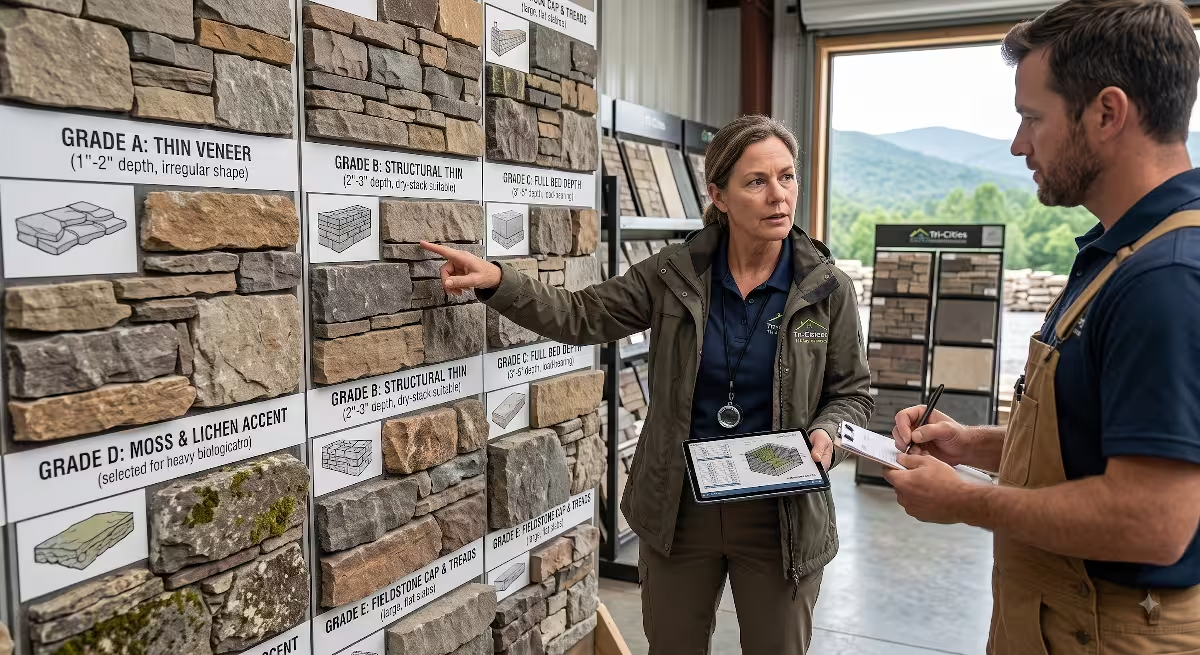
When you order Appalachian fieldstone from a local supplier, you will need to specify the exact grade and thickness for your building project. Harvesters sort Appalachian fieldstone into distinct categories based on size, shape, and surface condition.
+-------------------------------------------------------------------------+
|                    FIELDSTONE GRADE CLASSIFICATIONS                     |
+-------------------------------------------------------------------------+
|                                                                         |
|  [ THIN-STACK ]         [ MEDIUM-STACK ]          [ CAPS & STEPPERS ]   |
|  Thickness: 1" - 3"     Thickness: 3" - 5"        Thickness: 2" - 4"    |
|  Face: Flat, Narrow     Face: Deep Bed            Face: Large Broad     |
|  Use: Siding Veneer     Use: Structural Walls     Use: Hearth & Paths   |
|                                                                         |
+-------------------------------------------------------------------------+
Thin-Stack & Medium-Stack Fieldstone
Thin-stack Appalachian fieldstone features stone pieces between 1 and 3 inches thick. The individual stones have flat top and bottom faces with relatively thin front profiles. Thin-stack Appalachian fieldstone is ideal for building indoor fireplace surrounds, kitchen accent walls, and exterior house siding veneer. Because thin pieces weigh less per square foot, masons can apply them to vertical walls quickly without placing excessive weight on support ledges.
Medium-stack Appalachian fieldstone consists of pieces that are 3 to 5 inches thick. These thicker stones provide deep bed depth and horizontal strength. Medium-stack Appalachian fieldstone works wonderfully for load-bearing retaining walls, outdoor fire pits, structural gate pillars, and heavy exterior foundations. It gives a building a solid, rugged look that matches rustic Appalachian cabins and mountain lodges.
Fieldstone Caps & Steppers
Fieldstone caps are large, flat slabs of Appalachian fieldstone that range from 2 to 4 inches thick with wide surface areas. Masons use cap stones to cover the top of retaining walls, chimney tops, and outdoor kitchen counters. Placing a wide cap stone over a wall sheds rainwater away from mortar joints underneath, protecting the wall from winter freeze damage.
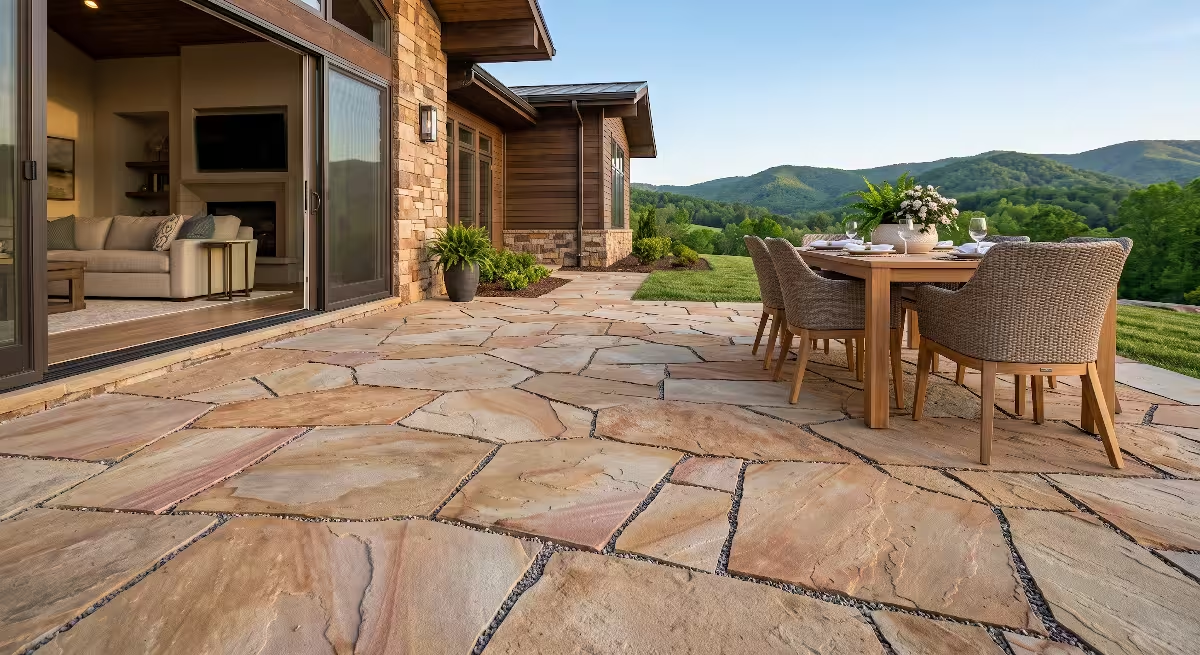
Stepping stones, or steppers, are broad slabs of Appalachian fieldstone used in landscape pathways and garden steps. They provide flat, durable walking surfaces while letting grass, thyme, or moss grow between the joints. Walking on a pathway made of flat Appalachian fieldstone provides a tactile connection to the mountain earth right in your back yard.
Moss & Lichen Premium Grade
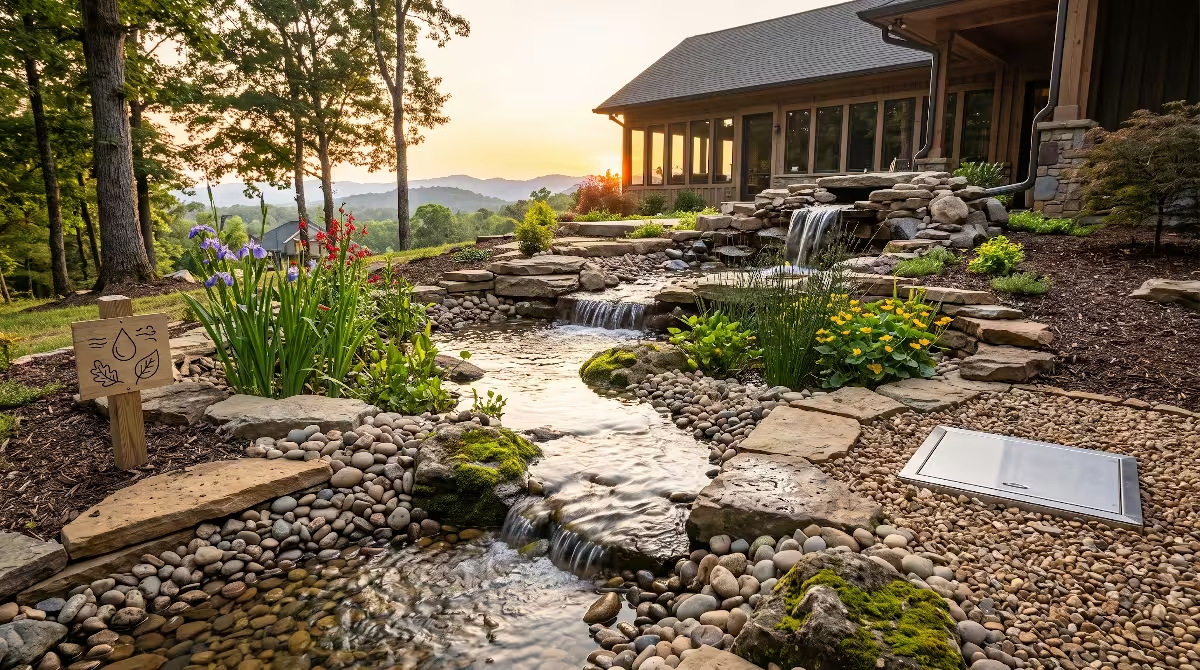
For high-end biophilic projects, suppliers sort out mossy Appalachian fieldstone. These stones feature living colonies of mountain moss and crustose lichens on their front faces. Living biological growth turns a stone wall into a vibrant micro-ecosystem.
To preserve moss and lichens on Appalachian fieldstone, special care is required during transport and installation:
- Pallet Protection: Suppliers must pack mossy stone in shaded, ventilated crates using wood excelsior to cushion the faces.
- Keep Shaded: Store mossy pallets in a cool, shady spot on the job site prior to installation.
- No Harsh Chemicals: Masons must never clean mossy Appalachian fieldstone with muriatic acid or harsh pressure washers.
- Gentle Mortar Work: Masons must wipe excess mortar off stone faces carefully using clean water and soft brushes to avoid killing live plants.
+-------------------------------------------------------------------------+
|                  MOSS & LICHEN PRESERVATION CHECKLIST                   |
+-------------------------------------------------------------------------+
| [ ] Keep pallets stored in full shade on the construction site.          |
| [ ] Do NOT use pressure washers on mossy stone faces.                   |
| [ ] NEVER apply muriatic acid or chemical cleaners to live stone.       |
| [ ] Clean excess mortar using only fresh water and soft sponges.        |
| [ ] Mist installed stone during hot summer weeks to establish moss.     |
+-------------------------------------------------------------------------+
Integrating Fieldstone into Sustainable East Tennessee Homes
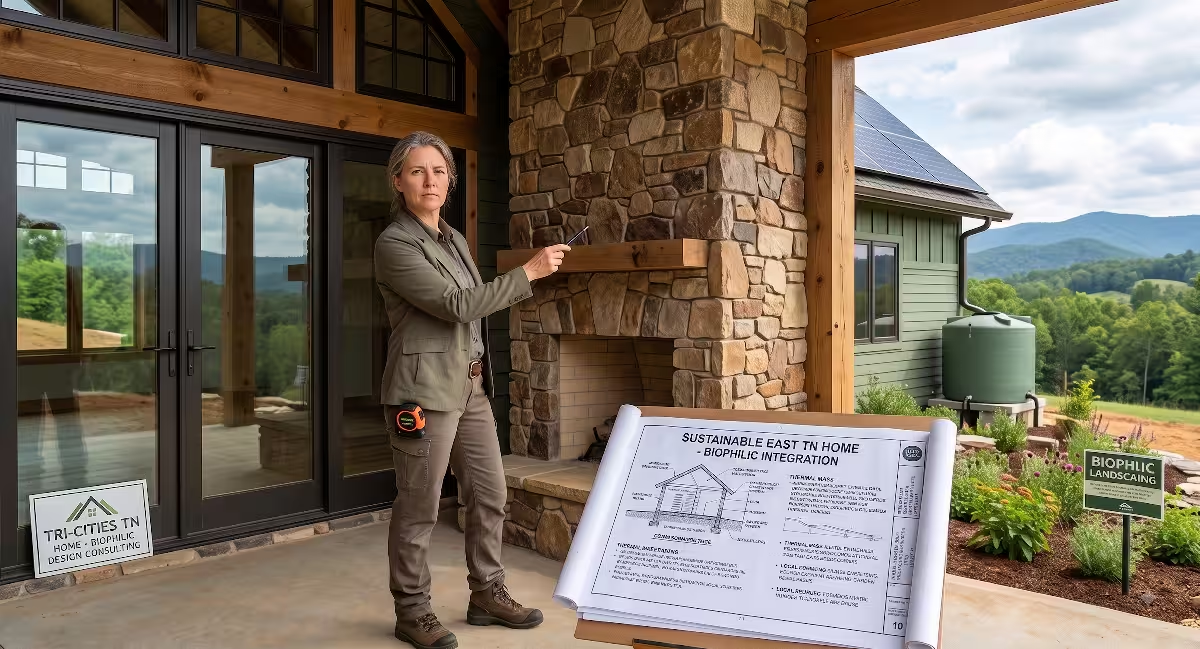
Proper installation is critical to ensure your stone masonry looks beautiful and lasts for generations. Here are key engineering and design practices for using Appalachian fieldstone in East Tennessee homes.
Natural Thin Stone Veneer (NTV) vs. Full Bed Depth
When planning a stone wall, you must decide between full bed depth stone and natural thin stone veneer. Full bed depth Appalachian fieldstone is 3 to 6 inches deep. Full bed stone requires a heavy concrete footing or an angle iron support ledge built directly into your home’s foundation. Full bed stone provides authentic structural depth, but it adds substantial structural load to your building frame.
Natural thin stone veneer is created by sawing the back off authentic Appalachian fieldstone, leaving a thin stone face about 1 to 1.5 inches thick. Thin stone veneer can be applied directly to framed wood or concrete block walls using polymer-modified mortar over metal lath. Thin stone veneer gives you the exact look of full-depth Appalachian fieldstone without requiring expensive foundation ledges. This makes thin stone veneer an excellent choice for interior remodeling, upper-story accent walls, and chimney retrofits.
+-------------------------------------------------------------------------+
|                 FULL BED VS. THIN STONE VENEER WALL CROSS-SECTION       |
+-------------------------------------------------------------------------+
|                                                                         |
| FULL BED DEPTH WALL                   THIN STONE VENEER WALL            |
|                                                                         |
|  [Wall Studs]                         [Wall Studs]                      |
|  [Plywood Sheathing]                  [Plywood Sheathing]               |
|  [Building Wrap]                      [Drainage Mat]                    |
|  [2" Air Cavity]                      [Mortar Scratch Coat]             |
|  [Full 4"-6" Fieldstone]              [Thin 1" Fieldstone Veneer]       |
|  ====================                 ===========================       |
|  Requires Heavy Foundation Ledge      Supported by Wall Framing         |
|                                                                         |
+-------------------------------------------------------------------------+
Mortar Choice & Moisture Management
East Tennessee experiences wet springs and humid summers, followed by freezing winter nights. This climate pattern requires careful attention to mortar selection and moisture control behind Appalachian fieldstone walls:
- Selecting the Right Mortar: Use Type N mortar for standard exterior walls and interior fireplaces. Type N mortar offers great flexibility and bond strength, allowing stone walls to expand and contract without cracking. For heavy retaining walls or structural footings below ground level, use stronger Type S mortar.
- Drainage Planes: Water will eventually get behind exterior stone veneer during heavy mountain downpours. Always install a vapor barrier and a textured drainage mat behind exterior Appalachian fieldstone veneer. This creates a drainage space where trapped water can flow safely down to the bottom of the wall.
- Weep Holes and Flashing: Install continuous metal flashing and open weep holes at the base of your stone walls. Weep holes let trapped moisture escape before winter frost can freeze the water and push the stone away from the wall framing.
Thermal Mass Optimization
Thermal mass refers to a material’s ability to absorb heat energy, store it, and release it slowly over time. Dense Appalachian fieldstone has high thermal mass performance. You can use this natural physical property to make your home more energy efficient.
In biophilic home design, we often build thick interior walls out of Appalachian fieldstone directly opposite south-facing windows. During cold winter days in Bristol, low sunlight streams through windows and warms the dark Appalachian fieldstone wall. The stone absorbs heat energy all day long. At night, as the indoor air cools down, the Appalachian fieldstone slowly radiates its stored warmth back into the living room. This passive solar heating process keeps your home cozy while reducing heating bills.
+-------------------------------------------------------------------------+
|                  PASSIVE SOLAR THERMAL MASS DYNAMICS                    |
+-------------------------------------------------------------------------+
|                                                                         |
|      DAYTIME (Heat Absorption)              NIGHTTIME (Heat Release)    |
|                                                                         |
|    Sunlight Through Windows                Stored Heat Radiates         |
|         \   \   \                                < < < < <              |
|          v   v   v                              < < < < <               |
|      [ FIELDSTONE WALL ]                    [ FIELDSTONE WALL ]         |
|       (Absorbs Thermal Energy)              (Warms Indoor Air)          |
|                                                                         |
+-------------------------------------------------------------------------+
How to Buy Fieldstone in Bristol: A Step-by-Step Checklist
Buying stone for a building project can feel overwhelming if you have never done it before. Follow this step-by-step buyer checklist to make sure your Appalachian fieldstone purchase goes smoothly.
Step 1: Calculate Your Stone Coverage Needs
Before visiting a Bristol stone yard, measure your project area carefully:
- Calculate Surface Area: Multiply wall height by wall width to get total square footage.
- Subtract Openings: Subtract the square footage of all doors and windows.
- Measure Corner Units: Measure corner length in linear feet. Corner stones take special fitting work.
- Add Waste Factor: Add 10% to 15% extra stone to your order total. This accounts for stone cutting, fitting adjustments, and natural shape variations in your pallet load.
Step 2: Inspect Pallets in Person
Never buy Appalachian fieldstone over the phone without inspecting the pallets first. Visit the stone yard and check these key items:
- Face Color Balance: Look at the palette of colors on the stone faces. Ensure you see a balanced mix of tans, browns, grays, and rust tones.
- Stone Density: Tap two stones together gently. A solid ring indicates dense, high-quality rock. A dull thud can mean soft or cracked stone.
- Excess Mud: Avoid pallets packed with heavy mud. Excessive mud hides bad stone shapes and adds useless water weight to your load.
- Edge Fractures: Check that stone corners are intact and free of fresh split fractures.
+-------------------------------------------------------------------------+
|                    PALLET QUALITY INSPECTION STEPS                      |
+-------------------------------------------------------------------------+
| STEP 1: Check Color Mix (Tans, Grays, Rust Tones evenly mixed)          |
| STEP 2: Sound Test (Tap stones together, listen for solid ring)         |
| STEP 3: Mud Inspection (Verify minimal mud or dirt filler)              |
| STEP 4: Edge Review (Confirm intact corners, no fresh transit breaks)   |
+-------------------------------------------------------------------------+
Step 3: Verify Authentic Sourcing Origin
Ask the stone supplier where the stone was harvested. Confirm that the material is authentic Appalachian fieldstone harvested from local regional mountain tracts. Authentic regional stone performs best in East Tennessee climate conditions because it naturally belongs to our local environment.
Step 4: Plan Delivery Logistics and Site Access
Appalachian fieldstone is extremely heavy. A single pallet weighs between 3,000 and 4,000 pounds. Plan your delivery carefully:
- Flatbed Truck Clearance: Ensure your site driveway can accommodate a large flatbed delivery truck equipped with a forklift.
- Slope and Mud Safety: Bristol building sites often feature steep hills and soft clay soil. Identify a flat, stable staging area near your building footprint where the driver can set pallets down safely.
- Protect the Material: Cover delivered pallets with breathable tarps to keep mud off stone faces until your masonry team begins work.
Final Design Advice
Building a home with authentic Appalachian fieldstone connects your living space to the natural history of the East Tennessee landscape. Whether you are adding a cozy living room fireplace surround, building a grand front entry porch, or creating garden terraces, local Appalachian fieldstone offers unmatched beauty, strength, and biophilic benefits.
By sourcing your stone from reputable regional suppliers, selecting the right material thickness, and applying proper moisture-control masonry techniques, you build a structure that will stand strong for generations. Authentic Appalachian fieldstone is not just a building material, it is a lasting investment in the comfort, value, and character of your home.
If you have questions about integrating natural stone into your upcoming building or remodeling project, feel free to reach out to our team at Tri-Cities TN Home. We are always here to help you design healthy, beautiful, nature-inspired spaces across the Tri-Cities region.