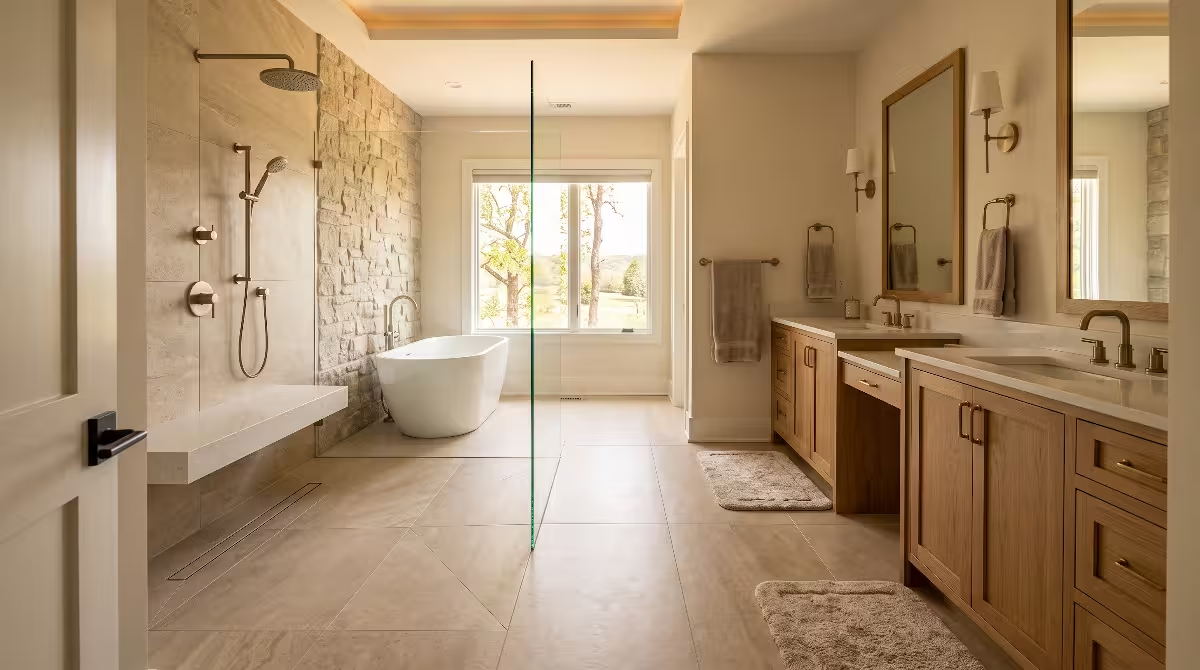

When you step into a custom home today, the primary bathroom is rarely just a room for quick hygiene. Oftentimes, the primary bathroom is a personal retreat. It is the place where you start your day before the morning rush begins, and where you decompress after hours of work, family activities, and community obligations.
Bathroom fixtures have undergone major transformations in the past several years. We have moved far beyond standard chrome knobs and fiberglass inserts. Today, many custom home clients ask about new bathroom technology. Specifically, they want to know: what is a digital shower system, how does it work, and does it actually make sense for a busy household?
In this comprehensive guide, we will examine every single aspect of this technology. We will look at it through the practical eyes of an engineer who cares about mechanics and valves, the hands-on perspective of a carpenter who cares about framing and installation, and the realistic view of a homeowner who wants daily comfort, safety, and long-term value.
The Evolution of the Morning Routine
Beyond the Standard Pressure-Balancing Valve
For decades, the standard American shower has relied on a basic mechanical valve hidden inside the wall. Most homes built throughout East Tennessee over the last forty years feature either a traditional two-handle setup or a single-handle pressure-balancing valve.
A traditional pressure-balancing valve works on a simple principle. Inside the wall, a small brass or plastic spool reacts to water pressure changes. When someone flushes a toilet downstairs or starts the dishwasher in the kitchen, the cold water pressure suddenly drops. The mechanical valve slides over to choke off the hot water supply by an equal amount so you do not get burned. While that mechanical design prevents severe scalding, it often leaves you with an annoying drop in water volume.
Even worse, finding your preferred water temperature with a traditional manual valve requires an awkward morning dance. You turn the handle, wait twenty seconds, stick your hand into the cold spray, nudge the handle a fraction of an inch to the left, wait again, and hope for the best. If you bump the handle with your elbow while washing your hair, your perfect water temperature is gone.
A modern digital shower completely changes this experience. Instead of forcing you to rely on a manual brass cartridge that wears out and shifts with seasonal groundwater temperatures, a digital shower replaces mechanical guesswork with electronic precision. It brings the bathroom into the modern era, treating water delivery as a controlled home system rather than an unpredictable chore.
What Is a Digital Shower System?
To put it in clear terms, a digital shower is a shower system that uses an electronic processor and a thermostatic digital mixing valve to control your water temperature, flow rate, and water outlets.
In a traditional setup, the handle on your shower wall is physically connected to the valve that mixes the hot and cold water. With a digital shower, that physical link is broken. The wall control you touch inside the shower is an electronic interface, similar to a sleek digital thermostat on your living room wall.
The actual mixing of hot and cold water happens inside a separate, digitally controlled processor unit. When you press a button to request a temperature of 101 degrees, the digital shower sends a low-voltage electrical signal to the processor. The processor uses electronic sensors and tiny, high-precision stepper motors to blend the hot and cold water lines to that exact degree before sending the water up to your showerhead.
Because the system relies on digital sensors rather than mechanical friction, a digital shower maintains your exact target temperature within a fraction of a degree. It constantly monitors incoming water lines, compensating instantly for temperature swings and pressure changes. You get the exact same shower temperature on a freezing January morning in the mountains as you do on a humid afternoon in July, without ever having to adjust a handle by hand.
The Engineering vs. Everyday Living Lens
When I look at a digital shower through my engineering background, I see a brilliant piece of fluid dynamics and process control. The engineering side of my brain loves the steady-state thermal mixing, the solid-state digital sensors, the reduced wear on mechanical gaskets, and the elimination of physical valve friction behind your shower tile. An engineer appreciates that a digital shower isolates water mixing from the decorative wall interface, creating a safer and more reliable mechanical environment.
However, custom homes are not lived in by blueprints; they are lived in by real people and busy families. When you look at a digital shower through the lens of daily family life, the appeal becomes even clearer.
For many homebuyers, the morning routine needs to be effortless and calm. They do not want to fight a stubborn shower handle or stand naked on cold tile waiting for hot water to finally travel through the pipes. A digital shower allows you to turn on the water from outside the stall, or even from your bed, and know with complete confidence that the water will be at your exact favorite temperature before you even step through the glass door.
For parents with young children, a digital shower offers absolute peace of mind against accidental scalding. For homeowners thinking about aging in place, a digital shower removes the physical strain of twisting stiff, slippery handles with wet hands. It blends high-level mechanical precision with quiet, everyday convenience that makes your home feel truly customized to your life.
How It Works: Under the Hood of a Digital Shower
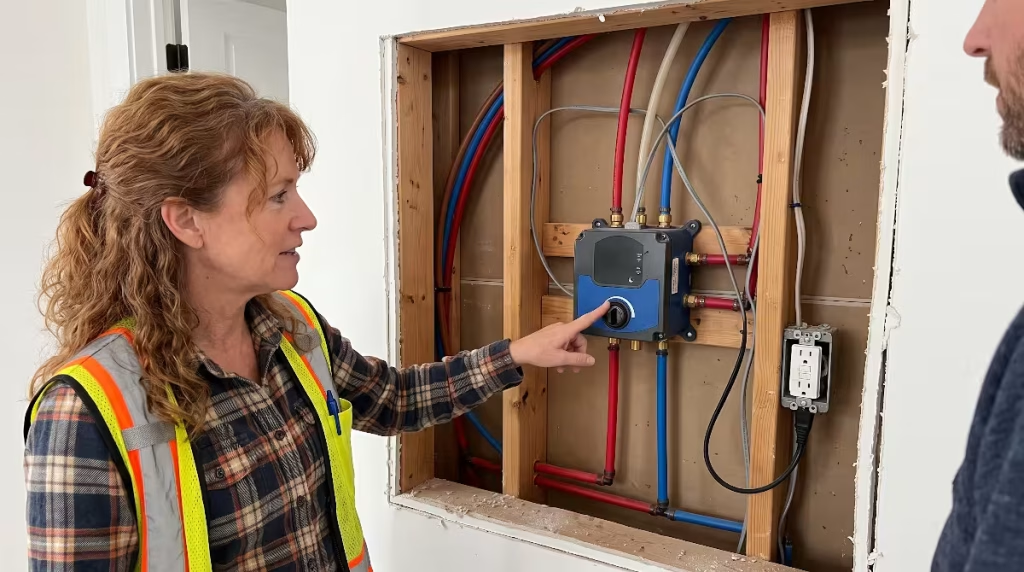
To really understand what makes a digital shower so reliable, we need to take a look at the components that make up the system. A complete digital shower package consists of three main elements: the user interface, the brain or digital mixing processor, and the communication pathways that connect them.
The User Interface
The user interface is the part of the digital shower that you interact with every day. Depending on the brand and model you choose, this interface can be a sleek wall-mounted panel, a compact push-button keypad, a full-color glass touchscreen, or even a smartphone app.
Unlike a traditional shower handle that requires physical muscle to turn a heavy brass valve inside the wall, a digital shower wall controller operates with a light touch. Most digital shower controllers feature clear digital readouts that show the exact water temperature in numbers. If you like your shower at 102 degrees, you simply look at the screen to confirm that 102 degrees is displayed.
Many digital shower controllers also include intuitive LED lighting. A common design feature uses a glowing light ring around the buttons that pulses blue while the water is warming up, turns bright white when the water reaches your chosen temperature, and flashes red if you select a high temperature. This gives you a clear visual signal across a steamy bathroom without requiring you to squint at small numbers.
Because the digital shower user interface is strictly an electronic control, it carries no high-voltage electrical current and has no direct water running through it. It is completely waterproof, sealed against humidity, and runs on safe, low-voltage direct current.
The Brain: Digital Mixing Valve and Processor
If the wall controller is the face of the digital shower, the digital mixing valve is its brain and muscle. In the building industry, we refer to this unit as the processor.
The processor is a compact, enclosed box that connects directly to your home’s hot and cold water supply lines. Inside this box, you will find rapid-response thermostatic sensors, electronic solenoid valves, and motorized mixing cartridges.
When you select your settings on the wall controller, the digital shower processor goes to work immediately. Its electronic sensors measure the temperature of the incoming hot and cold water lines multiple times per second. Tiny electric stepper motors then adjust the internal mixing valves to blend the two streams to match your command.
If someone in your home turns on an outside hose bib or runs a load of laundry, the digital shower processor detects the shift in water pressure before your skin could ever feel a temperature change. The internal motors adjust the hot and cold water inlets in milliseconds, maintaining a rock-steady water temperature throughout your entire shower.
Additionally, the processor controls the water diverter. In a luxury bathroom with multiple showerheads, such as a primary overhead rain head, an adjustable wall wand, and horizontal body sprays, the digital shower processor directs the blended water to whichever outlet you choose with the push of a single button.
Signal Pathways: Low-Voltage Cabling vs. Wireless Control
How does the wall controller talk to the processor box hidden away in your walls? Manufacturers use two primary methods: low-voltage physical cabling or wireless radio frequency communication.
In most high-end new construction projects, we recommend installing a digital shower that uses a physical, low-voltage data cable. During the rough-in framing stage, electricians and plumbers run a thin, shielded data wire from the processor location directly to the wall controller box inside the shower stall. This wired connection provides instant communication and delivers steady low-voltage power directly to the digital shower controller, eliminating the need to ever change batteries inside the shower wall.
Other digital shower models use wireless communication, relying on secure radio frequencies or Bluetooth signals between the controller and the processor. A wireless digital shower setup can be very helpful during light bathroom remodels where opening up finished drywall or running new wiring through existing wall studs is difficult. In a wireless digital shower installation, the wall controller operates on long-lasting lithium batteries, while the main processor remains plugged into an electrical outlet near your plumbing lines.
Many modern digital shower systems also include built-in Wi-Fi cards inside the processor. This allows the shower to connect to your home’s wireless network, letting you start your shower, set user profiles, and track water consumption through a secure smartphone app.
Traditional Mechanical Valves vs. Digital Shower Systems vs. Smart Showers
Homeowners often hear the terms traditional valve, digital shower, and smart shower used interchangeably, but they represent three distinct levels of bathroom plumbing technology.
A traditional mechanical valve is entirely manual. It uses no electricity, has no sensors, and relies on manual hand pressure to turn a brass or ceramic cartridge. You adjust the temperature purely by feel, and you switch between showerheads using a physical, mechanical diverter pull-knob that often clogs with mineral deposits over time.
A digital shower introduces electronic microprocessors, electronic temperature regulation, and push-button control. It replaces manual handles with an electronic interface and a digital mixing valve. The main benefit of a digital shower is absolute thermal stability, push-button ease, and precise digital readouts. A digital shower does not necessarily need an internet connection to perform its core job; it simply uses digital technology to run your shower perfectly every day.
A smart shower takes the foundation of a digital shower and adds network connectivity. A smart digital shower connects to your home automation system, your Wi-Fi router, and voice-control devices like Amazon Alexa or Google Home. With a smart digital shower, you can use voice commands to start the water while you are making your bed, receive phone alerts when your shower is warmed up, and set customized lighting or music routines that turn on the moment you step into the stall.
Every smart shower is built on a digital shower foundation, but a digital shower can operate independently as a self-contained, closed-loop system without needing an internet connection.
Key Features That Resonate with Homeowners
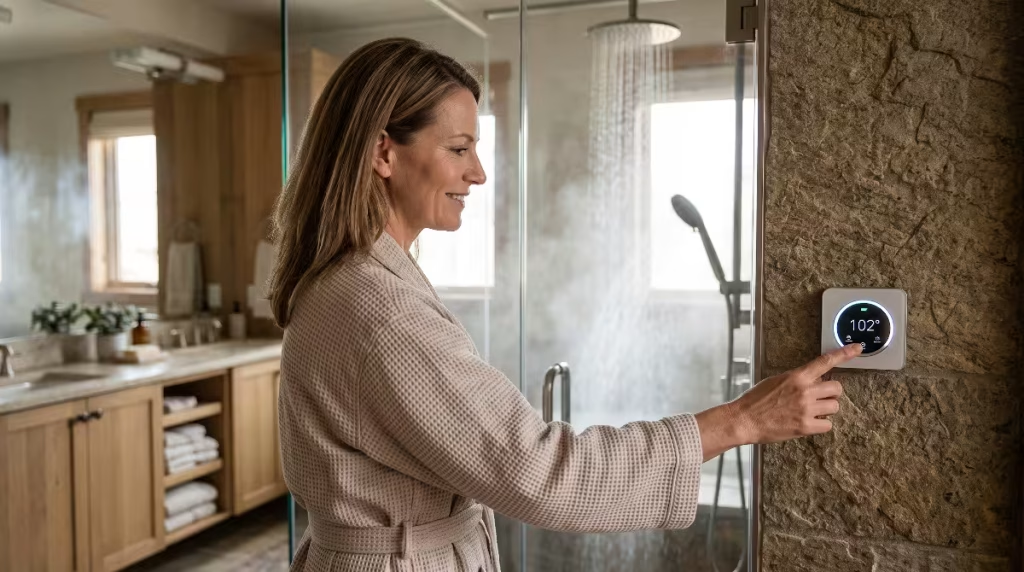
When designing a primary suite, custom home buyers look for features that deliver genuine everyday comfort rather than gimmicks that lose their appeal after a week. A digital shower offers several practical features that quickly become indispensable once you experience them in daily life.
Custom User Presets
In a shared primary bathroom, one of the most common morning frustrations is water temperature disagreement. What feels like a warm, relaxing shower to one person can feel like scalding hot water to someone else. In traditional showers, each person has to spend time searching for their individual sweet spot every single morning.
A digital shower solves this problem completely with custom user presets. Most digital shower controllers feature multiple memory buttons, often labeled as User 1, User 2, or custom profile names.
With a digital shower, you can program your exact personal preferences into the system memory. For example, your personal preset might activate the overhead rain shower at exactly 102 degrees with full water volume. Your partner’s preset might activate both the rain shower and the handheld wand at 99 degrees with a softer water flow.
When you enter the shower, you simply press your personal button. The digital shower instantly reads your profile, starts the requested water outlets, and balances the water to your exact temperature. There is no guessing, no fiddling with knobs, and no wasted time.
Warm-Up and Pause Modes for Water Savings
We have all developed the habit of turning on the shower, walking away to brush our teeth, pick out clothes, or pack a bag, and letting hot water pour down the drain for several minutes. This habit wastes dozens of gallons of treated water and uses up a significant amount of electricity or gas from your water heater.
A digital shower eliminates this waste through an automated warm-up and pause feature. When you turn on your shower, the system begins drawing hot water to purge the cold water sitting in your pipes. As soon as the internal temperature sensors detect that the water has reached your chosen setpoint, the digital shower automatically pauses the water flow.
The digital shower holds that hot water ready at the valve and alerts you with a gentle chime, an LED light change, or a smartphone notification. When you are ready to get in, you step into the shower stall and press the pause button. The digital shower instantly resumes flow at your exact target temperature. You never have to step into an icy blast, and you never leave gallons of hot water running down the drain while you finish your morning preparations.
Multi-Outlet Coordination
In modern luxury custom homes, primary bathrooms frequently feature multiple water fixtures. A standard high-end layout might include an overhead ceiling rain head, a wall-mounted massage head, a handheld sprayer for easy rinsing, and two or three horizontal body jets.
With a traditional plumbing setup, controlling four separate water outlets requires an intimidating wall of brass valves. You might need one main temperature handle and three or four separate diverter knobs. Figuring out which knob controls which fixture can feel like operating an industrial boiler room, especially for houseguests.
A digital shower cleans up this operational clutter. Every water outlet is wired directly to the central digital shower processor. On the wall controller, each fixture is represented by a simple, clearly labeled push button or touch icon.
With a digital shower, you can turn your rain head on or off with a light tap. If you want to add the handheld wand to rinse your hair, you press a second button. You can run individual outlets independently or fire multiple outlets at the same exact time, all while the shower valve maintains equal pressure and rock-steady temperature across every fixture.
Ergonomics and Clean Tile Lines
From an architectural and design standpoint, a digital shower transforms the appearance of your shower walls.
When you invest in expensive imported tile, natural marble, or custom mosaic patterns, the last thing you want to do is cut multiple large holes through your stone to mount heavy, bulky metal trim plates. A traditional multi-outlet valve setup requires a massive brass valve body embedded in the wall, covered by a wide metal plate that collects water spots and soap scum.
A digital shower replaces all that bulky hardware with a single, ultra-slim electronic interface. The wall controller of the shower often has a profile of less than half an inch, sitting flush and clean against your tile.
Furthermore, because the digital shower controller communicates via a thin low-voltage cable rather than physical water pipes, you are not forced to mount the controller directly over the plumbing supply stack. You can place the digital shower controller right at the entrance of your shower door, allowing you to turn on the water without leaning into the stall or getting your arm wet. This layout keeps your primary shower wall looking like a clean, unbroken work of art.
The Builder and Engineering Checklist
Great building ideas fail when the technical details are ignored. A digital shower is an advanced electromechanical system, and installing one requires careful planning between your general contractor, licensed plumber, and licensed electrician.
Here is the exact technical checklist to use when planning a digital shower in a new custom home or major master bathroom renovation.
Electrical Requirements and Dedicated Circuits
A traditional shower valve is purely mechanical, meaning it needs zero electricity. A digital shower, however, relies on microprocessors, electric stepper motors, and digital sensors. That means reliable electrical power is mandatory.
The main processor box of a digital shower requires a standard 110-volt or 120-volt alternating current electrical supply. Because this equipment is associated with a bathroom plumbing system, national and local building codes require this electrical outlet to be protected by a Ground Fault Circuit Interrupter, commonly known as a GFCI.
When roughing in the electrical wiring for a digital shower, I always specify a dedicated 15-amp or 20-amp GFCI circuit for the processor. You do not want the processor sharing an electrical circuit with high-draw bathroom appliances like high-wattage hair dryers or curling irons, which could trip a breaker and suddenly shut off your shower.
Additionally, the electrical outlet must be installed in a completely dry location outside of the wet shower zone. We typically mount the GFCI outlet inside an adjacent cabinet or closet where it remains accessible and safe from moisture.
The Mechanical Access Panel
This is the single most important rule of installing a digital shower: you must never bury the digital mixing processor permanently behind a tiled wall.
Every mechanical device with moving parts will eventually need service, inspection, or replacement. A digital shower processor contains electronic valves and internal filter screens that capture sediment from your municipal or well water supply. If your plumber buries that processor behind sealed cement board and expensive custom tile, you will face an expensive demolition job just to clean a simple inlet screen.
When designing a home with a digital shower, it helps to plan for an accessible mechanical location. Great locations for a digital shower processor include:
- Inside an adjacent master bedroom linen closet, hidden behind a neat access door.
- Underneath a nearby bathroom double vanity cabinet, easily accessed through a cabinet door.
- In a clean, conditioned attic space directly above the master bathroom.
- In an unfinished basement or mechanical room directly below the primary bathroom floor framing.
Keeping the digital shower processor in an accessible location makes initial installation straightforward and ensures that future maintenance takes minutes rather than days.
Plumbing Sizing and Flow Rates
Water volume is another critical engineering consideration. Many custom home buyers want a digital shower specifically so they can operate a massive overhead rain head and multiple body jets at the same time.
However, high-flow fixtures require adequate water delivery. Standard residential plumbing rough-ins often use half-inch PEX or copper supply lines. A half-inch pipe can comfortably deliver around five to seven gallons of water per minute under standard household pressure. If your digital shower processor is feeding three separate high-flow outlets at once, half-inch water lines will starve the system, causing a noticeable drop in water volume.
When building a bathroom with a multi-outlet digital shower, we run three-quarter-inch hot and cold water supply lines directly from your main plumbing trunk to the shower processor. A three-quarter-inch line can deliver twelve to sixteen gallons per minute, giving the shower plenty of water volume to feed every fixture simultaneously.
You also need to verify that your water heating system can support your digital shower layout. If you run a high-flow digital shower with multiple heads for twenty minutes, a traditional 50-gallon tank water heater will run out of hot water quickly. For homes with a multi-outlet digital shower, I strongly recommend pairing the system with a high-capacity, high-efficiency tankless water heater that provides continuous hot water on demand.
Power Outage Contingency Plans
Because a digital shower relies on an electric processor to open its internal solenoid valves, homeowners often ask what happens when the power grid goes down during a severe storm.
In its standard configuration, if the electrical power goes out, a digital shower will not turn on. For safety reasons, the internal electronic valves are designed as normally closed, meaning they shut off automatically if power is cut. This prevents the shower from running continuously or overflowing if the power drops while you are away from home.
To prevent you from being left without a working shower during a winter ice storm or summer thunderstorm, leading digital shower manufacturers offer optional battery backup packs. These backup packs mount right next to the processor and contain heavy-duty rechargeable or lithium batteries.
If the main household electrical power fails, the battery system engages instantly, providing enough low-voltage electrical power to run your shower for multiple days of normal use. When designing a custom home, I always include a battery backup pack as a standard specification for every digital shower installation.
Cost Breakdown and Budgeting: Upfront vs. Long-Term Value
Building a custom home or remodeling a primary bathroom requires careful budget management. Let us look honestly at what a digital shower costs compared to a traditional setup.
Hardware Costs
The initial hardware cost of a digital shower is higher than that of a standard manual mechanical valve.
A high-quality traditional mechanical valve and decorative trim plate from a trusted manufacturer typically costs between $200 and $600. If you add a manual three-way diverter valve to run multiple showerheads, your total traditional plumbing hardware cost might reach $500 to $1,000.
By comparison, a complete digital shower hardware package, which includes the digital mixing processor, the digital wall controller, and the necessary data cables, generally ranges from $900 to $2,800.
- Entry-level digital shower systems that control a single showerhead sit at the lower end of that range, around $900 to $1,300.
- Mid-range digital shower packages that control two separate outlets (such as a primary showerhead and a handheld wand) typically cost between $1,400 and $2,000.
- High-end digital shower systems that control three or four independent outlets, complete with full-color touchscreens, Wi-Fi connectivity, and integrated audio controls, range from $2,200 to $3,500.
While that is a noticeable price difference, you must remember that a multi-outlet digital shower replaces multiple individual manual valves, diverter handles, and extra wall trim plates.
Installation Costs
Installation costs for a digital shower also differ from traditional plumbing.
Installing a traditional shower valve is a job handled entirely by a licensed plumber. The plumber solders or crimps the valve into the pipe framing, tests for leaks, and walks away until the tile installer finishes the wall. A typical traditional rough-in plumbing labor charge runs between $400 and $900.
A digital shower installation requires collaboration between two trades: your licensed plumber and your licensed electrician.
- The plumber mounts the digital shower processor, runs the three-quarter-inch hot and cold supply lines, and plumbs the outlet lines to your various showerheads.
- The electrician runs a dedicated 120-volt line, installs the GFCI outlet in your access cabinet, and pulls the low-voltage communication wire through the wall studs from the processor to the digital shower controller mounting bracket.
Because of this coordination, labor costs for installing a digital shower usually run between $800 and $1,800, depending on whether you are working in new construction or remodeling an older home. In new construction, running these wires and pipes is very fast because the wall studs are completely open. In a remodel, fishing wires through existing finished walls can add extra labor hours.
Return on Investment and Resale Value
Is a digital shower worth the financial investment when it comes time to sell your home?
In the custom home market, primary bathrooms and kitchens drive appraisal value and buyer decisions more than almost any other rooms in the house. When prospective buyers walk through a primary suite, they look for features that signal quality construction, modern design, and thoughtful engineering.
A digital shower serves as an immediate visual and functional centerpiece. It communicates to buyers that the home was built with high standards and forward-thinking technology. In growing markets like the Tri-Cities, where many relocating professionals and retirees are looking for high-end, move-in-ready custom homes, a bathroom featuring a modern digital shower stands out dramatically against homes with standard builder-grade fixtures.
Beyond resale value, you also have to consider daily operational savings. The automatic warm-up and pause features of a digital shower save hundreds of gallons of heated water every month. Over years of ownership, those utility savings on your water bill and power bill help offset the initial hardware investment.
Common Questions Answered about Digital Showers
When homeowners research bathroom plumbing online, they run into dozens of common questions and misconceptions. Here are straightforward, expert answers to the most common search queries regarding digital shower systems.
Are Digital Showers Worth the Money?
Yes, a digital shower is worth the money if you value consistent thermal comfort, safety, water conservation, and clean modern aesthetics.
If your daily routine involves simply jumping into a basic shower for three minutes without caring about exact temperature, a traditional mechanical valve will serve your basic needs at a lower upfront cost.
However, if you are investing in a custom primary bathroom with multiple water outlets, expensive custom tile, and premium finishes, a digital shower provides a level of luxury and daily convenience that mechanical valves cannot match. It protects your family from scalding, eliminates water waste while warming up, and removes the visual clutter of multiple mechanical knobs. For custom home builders and high-end remodelers, the daily satisfaction of using a digital shower easily justifies the cost difference.
What Happens to a Digital Shower If the Power Goes Out?
If your home loses electrical power, a standard digital shower will turn off and will not operate until power is restored.
This happens because the internal valves inside the processor are driven by electric solenoids that remain safely closed when de-energized. This is an intentional engineering safety feature designed to prevent continuous running or flooding during municipal power disruptions.
However, you can completely avoid this issue by installing an optional manufacturer battery backup pack with your digital shower. The backup battery pack stays continuously charged and automatically supplies power to the shower processor during an outage, allowing your family to take normal hot showers even when the main power grid is down.
Do Digital Showers Require Wi-Fi to Work?
No, a digital shower does not require a Wi-Fi connection to perform its core functions.
The essential operations of a digital shower, including turning on the water, mixing hot and cold streams to your exact temperature, adjusting flow volume, and switching between showerheads, are handled directly through a hardwired or local radio connection between the wall controller and the processor.
Wi-Fi is only required if you choose a smart-enabled digital shower and want to use advanced remote features, such as starting the shower from a smartphone app, integrating with voice-assistant devices, or downloading firmware updates. If your home internet goes down, your digital shower will continue to work perfectly from the wall controller.
Can You Turn an Existing Regular Shower into a Digital Shower?
Yes, you can convert an existing regular shower into a digital shower, but the ease of the project depends on your bathroom layout and wall access.
The ideal time to install a digital shower is during a full bathroom remodel when the wall studs are exposed. This allows your trades to easily run new water supply lines, mount the processor, and install the electrical outlet.
If you are not tearing down your shower tile, you can still retrofit a digital shower if you have access to the plumbing wall from the opposite side, such as through a drywall partition in an adjoining bedroom or closet. Your plumber can remove the old mechanical valve from behind, cap the old plumbing lines, install the digital shower processor in the closet, and run a slim low-voltage wire or wireless controller to the shower area.
Specialty retrofit cover plates are available to cover the hole left by your old mechanical handle, allowing you to mount your new digital shower controller cleanly over the existing tile opening.
Do Digital Showers Increase Water Pressure?
A standard digital shower does not physically boost or increase your home’s incoming municipal or well water pressure.
A digital shower is a precision mixing and diverting system; it distributes the water pressure that your home already provides. If your home has low incoming water pressure, typically below 40 pounds per square inch (PSI), a standard digital shower will deliver that same low pressure to your fixtures.
However, because a digital shower uses motorized valves rather than restrictive mechanical rubber gaskets, it often provides a more consistent, unrestricted flow rate than an older, mineral-encrusted mechanical cartridge. In homes with severe low-pressure challenges, such as properties fed by low-yield gravity wells or high-elevation mountain supplies, specialized pumped digital shower systems are available that incorporate an internal booster pump to actively raise water pressure.
How Long Do Digital Shower Systems Last?
A properly installed, high-quality digital shower has an expected operating lifespan of 10 to 15 years or more, which is fully comparable to high-end mechanical plumbing fixtures.
Traditional mechanical shower valves suffer from constant physical friction. Every time you turn a heavy brass handle, rubber seals and ceramic discs grind against each other. In areas with hard water, mineral scale builds up quickly inside mechanical cartridges, leading to leaks, stiff handles, and failed pressure balancing within five to eight years.
A digital shower isolates its moving parts inside an enclosed processor and uses smooth stepper motors to make micro-adjustments, reducing physical mechanical wear. Leading manufacturers like Moen, Kohler, and Grohe back their digital shower processors and controllers with comprehensive warranties, often covering parts for five years to a lifetime for original residential owners. Keeping the processor in an accessible location and installing a simple whole-house sediment filter ensures your digital shower will perform reliably for decades.
Family Safety and Aging-in-Place Advantages
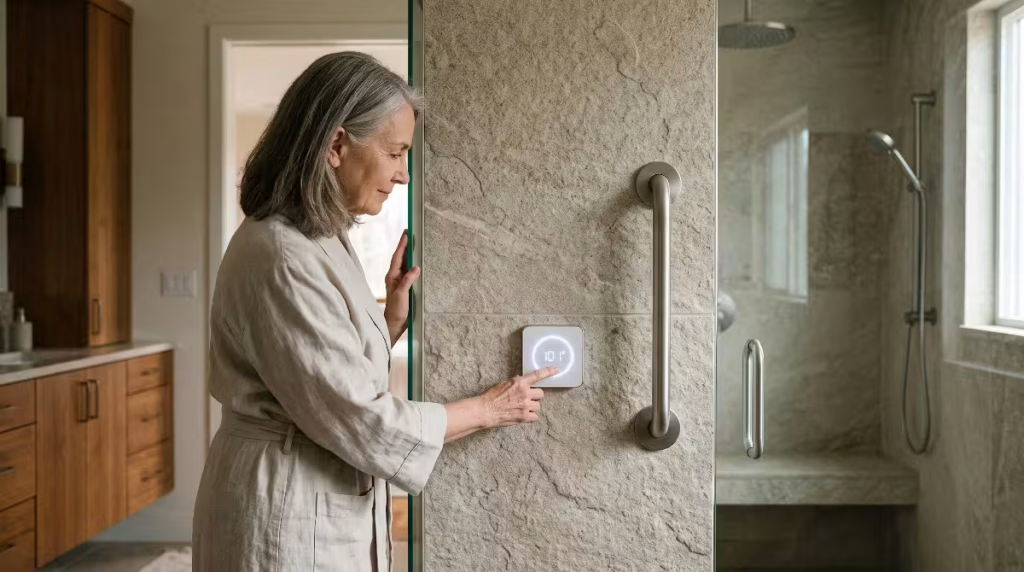
When I work with clients designing their forever homes, we spend a lot of time talking about universal design and aging in place. Good building design should serve your family at every stage of life, from toddlers learning to bathe themselves to aging parents who need safe, accessible living spaces. A digital shower is one of the most effective tools for creating a safe, multi-generational bathroom.
Anti-Scald Precision and Thermal Safety
Water scalding is a serious household hazard. Hot water at 140 degrees can cause third-degree burns to an adult in less than five seconds, and to a young child with thin skin in less than two seconds.
While traditional pressure-balancing valves offer basic protection against sudden pressure shifts, they cannot prevent someone from accidentally turning a mechanical handle too far to the hot side. Children often grab handles to balance themselves, and individuals with reduced nerve sensitivity in their hands can easily set a shower to dangerously hot temperatures without realizing it.
A digital shower provides absolute, digital anti-scald protection. Every shower processor allows the homeowner to program a strict maximum temperature limit into the system software.
For instance, you can lock the maximum allowable water temperature of your shower at 104 degrees. No matter how many times a curious toddler presses the temperature button, the digital shower processor will refuse to mix water beyond that safe threshold. Combined with rapid electronic sensors that react instantly to cold water supply drops, a digital shower offers the highest level of burn protection available in modern residential plumbing.
Accessible Placement for All Generations
Traditional shower plumbing forces the control handle to be installed directly above the water drain and directly below the showerhead. This rigid layout creates significant accessibility hurdles.
For a person using a wheelchair, reaching across a wide shower bench or stretching into a wet stall to turn a heavy mechanical handle can be dangerous. For an older adult with arthritis, gripping and twisting a slippery, round metal handle can cause significant joint pain.
A digital shower eliminates these physical obstacles. Because the shower wall controller connects via a thin electrical wire rather than rigid copper pipes, you can mount the controller anywhere that makes sense for your family.
You can mount your digital shower controller at an ADA-compliant height of 38 to 48 inches from the floor, making it easily reachable from a seated position on a built-in shower bench. You can install a primary controller near the shower bench and a secondary wireless digital shower button right outside the glass door.
This allows a caregiver or parent to start the water, verify the safe temperature on the digital screen, and assist a family member without ever having to reach into an active water spray or step onto a wet, slippery floor. The light-touch push buttons of a digital shower require zero wrist strength, making daily bathing an independent and dignified experience for everyone.
Final Verdict and Builder Recommendations
After examining the engineering, the daily living benefits, the mechanical checklist, and the long-term safety features, we return to the core question: should you include a digital shower system in your custom home or upcoming bathroom remodel?
When to Invest in a Digital Shower
It is recommended to invest in a digital shower under the following circumstances:
- Primary Suite Custom Builds: If you are building a custom primary bathroom that you plan to enjoy for years, a digital shower provides an unmatched standard of daily comfort, convenience, and luxury.
- Multi-Fixture Bathrooms: If your shower design includes a combination of rain heads, handheld sprayers, and body jets, a digital shower is far superior to an awkward, complicated wall of manual mechanical diverter knobs.
- Multi-Generational and Forever Homes: If you are designing a home to age in place, or sharing a bathroom with young children or elderly family members, the precise anti-scald protection and flexible controller placement of a digital shower provide critical safety that mechanical valves cannot match.
- Modern Architectural Aesthetics: If you have selected high-end, large-format tile or custom stone and want clean, uncluttered walls with minimal penetrations, a slim digital shower interface completes that high-end look perfectly.
When a Mechanical Valve Remains the Better Fit
At the same time, maintaining professional integrity means telling clients when a technology is not the right choice for their project. A traditional mechanical shower valve remains the better choice if:
- Secondary Guest Bathrooms: For guest bathrooms that are only used a few weeks out of the year, the added cost of a digital shower processor, dedicated electrical circuit, and digital controller is difficult to justify. A quality mechanical pressure-balancing valve is practical and cost-effective for secondary spaces.
- Tight Budget Renovations: If you are completing a quick cosmetic bathroom refresh with a strict budget cap, sticking with a mechanical valve allows you to keep your existing plumbing lines without hiring an electrician to run new electrical circuits.
- Off-Grid Cabins Without Reliable Power: If you are building a remote mountain cabin that relies on modest off-grid solar or intermittent generator power without battery backups, a purely mechanical shower valve eliminates any risk of electrical system failure.
Bringing It All Together
A home should be built to serve the people who live inside it. It should eliminate daily friction, provide comfort, protect your family’s safety, and stand the test of time through sound mechanical engineering and quality craftsmanship.
A modern digital shower is far more than a flashy electronic gadget. When properly planned, rough-wired, and plumbed by experienced professionals, a digital shower system elevates your primary bathroom into a high-performance wellness retreat. It eliminates morning temperature guesswork, saves treated water, protects your loved ones from accidental scalding, and delivers a clean, beautiful aesthetic that honors your investment in your home.
If you are planning a custom home build or primary suite remodel in the Tri-Cities or surrounding East Tennessee region, take the time to talk through these plumbing details early in your design phase. Work with a builder who understands how to coordinate your framing, electrical rough-ins, and mechanical access panels so that your shower delivers flawless performance from the very first morning you turn it on.