

Looking Beyond the Showroom Sample
When you walk into a kitchen and bath design showroom here in the Tri-Cities, it is easy to fall in love. You see gorgeous lighting, gleaming plumbing fixtures, and tiny stone sample squares that look like pieces of fine art. Most homeowners pick up a four-inch square of polished stone, hold it under the showroom lights, and imagine how lovely it will look inside their new primary suite.
However, the small showroom samples never tell the whole story. What looks breathtaking on a display rack can quickly become a source of daily frustration if it does not match your real lifestyle.
Building or remodeling a home is a large investment. You deserve spaces that look beautiful and work without giving you a headache. Many people make finishing choices based only on looks. A year later, they find themselves stressed about water rings, makeup smudges, or heat marks.
Bathrooms place
Choosing the right surface for your bathroom countertops comes down to understanding the science behind the stone. You need to know how each material behaves when life gets busy on a weekday morning. In this guide, we will look closely at the three most popular options for bathroom countertops: granite, marble, and quartz. We will evaluate how they handle moisture, heat, cosmetics, and daily wear so you can choose the best fit for your home.
Understanding the Three Core Materials
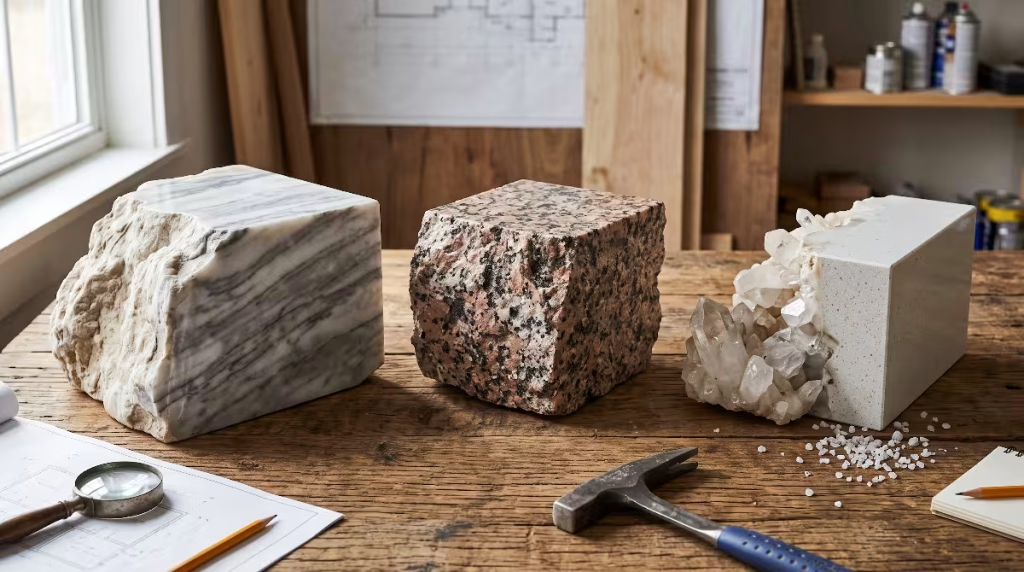
Before we test these materials against our ten living criteria, we need to understand what each stone actually is. How a stone is formed in nature, or manufactured in a plant, dictates how it will perform in your home.
Granite : Igneous Natural Stone
Granite is an authentic natural stone that forms deep beneath the crust of the earth. Over millions of years, molten magma cools and solidifies under immense heat and pressure. This slow cooling process creates a dense rock made of quartz, feldspar, mica, and other natural minerals. Because of its volcanic origin, granite is extremely hard and naturally resistant to heat.
When granite is quarried from the earth, it is cut into large slabs and polished. Every slab of granite is completely unique. You will find small mineral crystals, specks of color, and natural grain movement. Because it is a natural stone, it contains tiny capillary pathways between the mineral grains. This means untreated granite has microscopic pores that can draw in liquids if left unprotected.
Marble: Metamorphic Natural Stone
Marble also comes directly from nature, but its story is quite different. Marble begins as limestone, which is mostly calcium carbonate. Over ages of geological activity, intense underground heat and pressure transform that soft limestone into metamorphic marble. This geological baking recrystallizes the stone, creating its famous soft glow and flowing, elegant veins.
Marble has been a symbol of luxury since the days of ancient Greece and Rome. Its visual softness and cool touch give bathrooms an undeniable spa feeling. However, from an engineering viewpoint, marble remains composed of calcium carbonate. That mineral makeup makes it naturally soft, porous, and chemically reactive to acids.
Quartz: Engineered Stone
Unlike granite and marble, quartz does not come out of the earth as a solid slab. Instead, quartz is an engineered stone created inside a manufacturing facility. It was developed in Italy during the nineteen-seventies using what is known as the Bretonstone process.
Fabricators take roughly ninety to ninety-three percent crushed natural quartz crystals, which are among the hardest minerals on earth. They blend those quartz crystals with about seven to ten percent polymer resins, polyester binders, and colored pigments. The mixture is compacted under intense vibration and vacuum pressure, then cured with heat.
The resulting slab gives you the visual beauty of stone without the natural microscopic pores. Because of this manufacturing process, quartz surfaces provide uniform strength, pattern consistency, and moisture resistance across the entire vanity surface.
The 10 Livability and Engineering Criteria for Bathroom Countertops
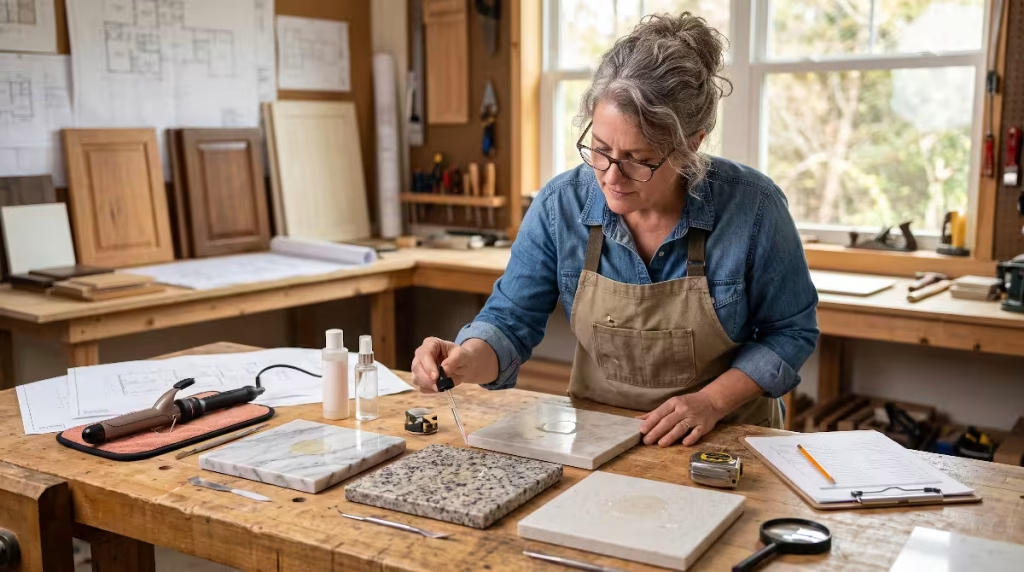
To pick the right surface for your morning routine, you need to look at how these materials perform under everyday conditions. Here are the ten criteria that matter most when evaluating bathroom countertops.
Criteria 1: Moisture and Porosity
In any bathroom, water is the primary constant. You wash your hands, brush your teeth, wash your face, and splash water around the sink basin. Water pools around soap dispensers and sits under bottles of lotion. Because of this, moisture absorption is the first thing an engineer evaluates when looking at bathroom countertops.
Natural stone has natural pores. If you place a drop of water on an unsealed piece of marble, the stone will drink that water in like a dry sponge. The water moves into the tiny microscopic channels between the calcium crystals. While the water itself will eventually evaporate, it leaves behind a dark, wet shadow that can take days to clear. If the water contains dissolved minerals or soaps, those residues stay trapped inside the stone.
Granite is significantly denser than marble, but it still has a porous structure. A high-quality, dark granite has tiny pores and absorbs very little liquid. Lighter granites, which are very popular in current home design, tend to have larger pores. If light granite is not sealed properly, standing water around your faucet will soak into the slab, creating dark rings around the plumbing cutouts.
Quartz solves this problem through chemical engineering. Because crushed stone is bound together in solid resin under a heavy vacuum, there are no air pockets or pores left inside the slab. The water absorption rate of quartz is less than zero point zero five percent. Water simply cannot get inside.
When you have standing water on quartz bathroom countertops, that water sits on top until you wipe it away. It will never create dark, water-logged shadows beneath your soap dishes. For busy family spaces and guest rooms, this non-porous surface provides peace of mind.
Criteria 2: Hard Water and Mineral Buildup
Here in East Tennessee, many homes rely on local municipal water or private well systems that carry dissolved minerals, especially calcium and magnesium. When tap water sits on a vanity deck and evaporates, those dissolved minerals stay behind as chalky white crusts or cloudy rings.
The way your surface handles hard water deposits depends on its chemical makeup. On quartz bathroom countertops, mineral crusts sit entirely on the surface. Because the resin is chemically stable, you can safely dissolve light mineral deposits with a mild white vinegar mixture or scrape them away with a plastic putty knife without hurting the slab.
With granite bathroom countertops, hard water requires more care. If the granite is well-sealed, mineral deposits will sit on top of the sealer barrier. However, if the sealer has started to wear thin around the faucet base, hard water can work its way into the stone pores. Once mineral scale crystallizes inside stone pores, it becomes very difficult to pull out without pulling color out with it.
Marble bathroom countertops present the highest challenge with hard water. Because marble is made of calcium carbonate, it is chemically similar to the minerals in hard water. You cannot use vinegar, lemon juice, or typical lime-scale removers on marble.
Any acid used to clean away a hard water ring will eat into the marble itself. Homeowners often find themselves stuck between living with a white mineral ring or accidentally damaging their polished stone with a cleaning spray.
Criteria 3: Skincare, Cosmetics, and the Etching Problem
Many of us use daily skincare routines that involve active ingredients. Our medicine cabinets and vanity drawers hold vitamin C serums, glycolic acid toners, salicylic acid washes, retinols, liquid foundations, and perfumes. We also use nail polish removers, hair dyes, and self-tanning lotions. Every one of these beauty products carries chemical compounds that can alter bathroom countertops.
To understand this risk, we must separate staining from etching:
- Staining happens when a dark pigment sinks into the pores of a material, leaving a colored mark behind.
- Etching is a chemical burn. It happens when an acid eats away the surface layer of a stone, leaving a dull, rough spot where the shiny polish used to be.
Marble is vulnerable to chemical etching. Calcium carbonate reacts instantly with acids. If you drop a single drop of vitamin C serum or lemon-based face toner onto polished marble bathroom countertops, a chemical reaction starts immediately. Even if you wipe it up thirty seconds later, the high-gloss finish will be gone. In its place, you will see a cloudy, dull circle that looks like a water smudge you cannot wipe away.
Etching cannot be cleaned off with soap; the stone must be mechanically ground down and repolished by a stone restoration specialist. Acetone from nail polish remover can also dissolve surface sealers on marble, allowing oils and liquid foundations to seep deep into the stone.
Granite stands up much better to skincare chemicals. The quartz and feldspar in granite do not react with household acids. Glycolic acid, salicylic acid, and perfumes will not etch granite bathroom countertops. The only risk with granite is pigment absorption. If you spill dark hair dye or liquid foundation on light-colored granite that needs sealer, the pigments can soak into the pores and create a stubborn stain.
Quartz offers the best defense against daily cosmetic spills. Because it has no pores, liquid pigments cannot sink into the slab. Liquid lipstick, foundation, and hair toner stay on the surface and wipe clean with soap and water.
However, quartz does have one chemical weakness: strong industrial solvents. Pure acetone, such as heavy-duty nail polish remover, can soften or cloud the polymer resins in quartz bathroom countertops if left sitting on the surface for a prolonged period. When using nail polish remover around quartz, it is wise to work over a small towel.
Criteria 4: Hot Tools and Thermal Shock (Curling Irons and Straighteners)
The daily morning rush often involves hot hair tools. Curling wands, flat irons, and hot air brushes are an essential part of getting ready. Many of these tools reach operating temperatures between three hundred and fifty and four hundred and fifty degrees. Where do you place that hot iron when you need to pin up a section of hair?
This is where the natural stones outperform engineered stone on bathroom countertops.
Granite was born in volcanic fire. Its crystalline structure easily handles high heat without burning, cracking, or discoloring. You can set a four-hundred-degree curling wand directly onto granite bathroom countertops without any fear. The stone will safely absorb and disperse the heat without leaving a mark. For people who do not want to worry about trivets or silicone mats, granite is an exceptional choice.
Marble also handles heat quite well. It will not scorch, melt, or burn under a hot hair tool. The only small risk with marble is thermal shock. If you lay an extremely hot iron down on a very cold marble slab, the rapid temperature swing can cause a micro-fracture along an existing natural calcite vein. In normal bathroom use, however, marble easily handles daily styling heat.
Quartz requires caution when it comes to hot tools. Remember that quartz is held together by polymer resins. Those plastic resins are sensitive to high temperatures. While quartz can handle temperatures up to about one hundred and fifty degrees without issue, sustained heat above three hundred degrees will soften and scorch the resin binders.
If you set a four-hundred-degree flat iron directly onto quartz bathroom countertops, you can leave a permanent burn mark. This heat damage usually looks like a faint yellow or golden-brown scorch ring. Once resin scorches, you cannot buff it out; the resin itself has been altered by heat.
If you choose quartz for your bathroom countertops, you must train yourself to use a heat-resistant silicone mat, a decorative ceramic tray, or a vanity drawer with a built-in metal styling holster.
Criteria 5: Structural Hardness and Scratch Resistance
A vanity deck holds heavy items, metal makeup organizers, ceramic soap pumps, glass perfume bottles, and sharp tweezers. Over years of use, items get dragged across the surface. How well your surface resists scratches depends on its mineral hardness.
In engineering and geology, we measure material hardness using the Mohs Scale. This scale rates minerals from one (very soft, like talc) to ten (the hardest, like diamond):
- Quartz rates at about seven on the Mohs Scale. Because quartz crystals are so hard, quartz bathroom countertops are very difficult to scratch. Sliding a heavy ceramic tray, a metal jar, or a glass bottle across quartz will not leave scratches. It maintains its smooth finish through years of heavy family use.
- Granite rates between six and seven on the Mohs Scale. Like quartz, granite resists daily abrasions easily. Dropped jewelry or metal containers will not gouge granite bathroom countertops. It holds its polished edge through decades of service.
- Marble rates between three and four on the Mohs scale. This makes marble a soft stone in the context of residential construction. You can scratch polished marble bathroom countertops with an ordinary metal key, a dropped pair of nail scissors, or the rough ceramic foot of a soap dispenser. Over time, marble in high-traffic bathrooms will develop a network of small hairline scratches and worn spots.
Some homeowners appreciate this softening of the stone, calling it an authentic antique patina. Other homeowners find scratches frustrating. Knowing your personality before you buy helps ensure you love your selection down the road.
Criteria 6: Daily Maintenance, Cleaning, and Sealing Demands
How much time do you want to spend caring for your bathroom? Between work, family, and home life, most people prefer surfaces that do not require specialized cleaning routines.
Quartz bathroom countertops are the clear winner for low maintenance. Because they are non-porous and chemically stable, they never need to be sealed. You do not need to buy specialty stone sprays or apply polish.
Daily cleaning takes just warm water, mild dish soap, and a soft microfiber cloth. If a smudge of dried toothpaste or hairspray sticks to the surface, a non-scratch sponge wipes it away. Quartz makes life simple because it requires zero ongoing maintenance beyond regular wiping.
Granite bathroom countertops require moderate care. To keep water and cosmetic oils out of the stone pores, granite must be sealed on a regular basis. In a bathroom, this typically means applying a penetrative stone sealer every twelve to twenty-four months.
Fortunately, sealing is not difficult. You spray a liquid stone sealer across the clean vanity deck, let it sit for ten to fifteen minutes so it can soak into the pores, and then buff the excess off with a dry towel. It takes about fifteen minutes on a Saturday morning.
You can test whether your granite bathroom countertops need a fresh coat of sealer with the simple water drop test:
- Place a few drops of water on the vanity surface.
- Let them sit for ten minutes.
- If the water beads tightly like droplets on a freshly waxed car, your seal is strong.
- If the water spreads flat and starts to darken the stone underneath, your sealer has worn down, and it is time for a new coat.
Marble bathroom countertops require the highest level of care. Because marble is both porous and chemically sensitive, you must seal it every three to six months in a high-moisture bathroom.
Sealing helps slow down liquid absorption, but it is important to remember that sealer does not stop acid etching. A sealer fills pores; it does not put a plastic shield over the calcium carbonate.
When you live with marble bathroom countertops, you must wipe up water splashes and makeup drips right away. You also must be careful with cleaning products. You cannot use bleach, ammonia, vinegar, or foaming bathroom sprays. You must clean marble with pH-neutral stone cleaners made specifically for delicate surfaces.
Criteria 7: Hygiene, Grout-Free Cleanliness, and Mold Prevention
Bathrooms are humid spaces where steam and water create breeding grounds for bacteria, mildew, and mold. The area around the sink basin is especially prone to dampness.
Because quartz bathroom countertops are engineered without internal pores, bacteria, mildew, and viruses have no place to hide or multiply. The surface is naturally antimicrobial and hygienic. When you wipe quartz with warm water and soap, you remove germs from the surface entirely. There are no microscopic crevices where damp residue can collect.
Granite and marble bathroom countertops can also provide clean, hygienic surfaces, but their cleanliness depends directly on how well the stone is sealed. If a natural stone has open pores, moisture, skin cells, and soap scum can sink into those micro-channels, creating dark lines or musty odors around wet sink edges.
Proper caulking is another essential detail. When installing any of these materials, the seam between the stone and an undermount sink basin must be sealed with high-grade, mold-resistant silicone caulk.
Because quartz bathroom countertops have perfectly smooth undersides, the silicone creates a tight, water-tight bond that prevents mold from growing beneath the sink rim. Natural stones must be carefully checked around the cutouts to ensure the stone is sealed right up to the silicone bead.
Criteria 8: Aesthetic Character: Veining, Consistency, and Visual Calm
Beyond all the engineering data and technical tests, your vanity needs to look beautiful. It sets the visual tone for your morning and evening routines. The visual appeal of each material comes down to the difference between natural individuality and engineered perfection.
Marble offers an organic beauty that human manufacturing has never fully matched. True Carrara or Calacatta marble has a luminous, milky white background with soft, feathery grey or gold veining.
Because light penetrates slightly into the surface calcite crystals before reflecting back out, marble has a gentle visual depth. It brings a feeling of quiet luxury and classical calm to a primary suite. Every slab is a one-of-a-kind creation shaped by the earth.
Granite provides bold, dynamic visual character. It tends to feature speckled mineral patterns, contrasting flecks of black tourmaline, pink feldspar, and grey quartz crystals.
Some granites offer wild, sweeping movement that looks like running water or mountain ridges. Granite brings an earthy, grounded warmth to a room. It pairs naturally with stained wood cabinets and traditional or rustic home designs.
Quartz bathroom countertops provide visual consistency and pattern control. Because quartz is manufactured, what you see on the sample board is very close to what will be installed in your home.
If you are designing a modern, clean, or minimalist space, you can choose pure, solid white or uniform soft gray quartz bathroom countertops with zero unexpected spots or color shifts.
Over the past decade, manufacturers have developed advanced printing techniques that create quartz with realistic marble-look veining. While engineered veining does not have the translucent crystal depth of authentic marble, it gives you eighty-five to ninety percent of the look with none of the staining or etching worries.
Criteria 9: Fabrication, Cutouts, and Structural Chipping
A piece of stone does not arrive at your job site ready to install. It must be measured, cut with water jets or diamond saws, edge-profiled, and cut out for sink basins and faucet stems. The physical structure of each stone determines how clean those cuts are and how durable the edges remain over time.
Quartz is a tough material because its resin binders give it slight tensile flexibility. When a fabricator cuts an opening for an undermount sink, quartz holds crisp, clean lines without crumbling.
Its edges are strong and resist chipping when bumped by heavy glass bottles or cleaning buckets. If a small chip does occur on the rim of quartz bathroom countertops, a trained surface repair technician can fill the spot with color-matched epoxy that blends in smoothly.
Granite is very hard, but it is also brittle. During fabrication, cutting narrow strips of stone behind a sink basin requires steel rod reinforcement embedded in the underside of the slab. Once installed, granite edges are very durable, but sharp impacts from heavy metal items can knock small chips out of square edges.
To prevent this, good builders always specify an eased or bullnose edge profile for granite bathroom countertops. Softening the sharp ninety-degree edge helps deflect accidental impacts and prevents chips.
Marble is the softest and most brittle of the three materials. It can chip easily along sharp corners and around undermount sink cutouts during both fabrication and daily use. If you bump the edge of a marble sink cutout with a heavy ceramic jar or a metal grooming tool, you can pop a small flake of stone free.
Marble requires an experienced fabricator who understands how to reinforce delicate spans with fiberglass mesh backing and structural under-mount supports.
Criteria 10: Installed Cost vs. Resale ROI
Budget matters on every build and remodel. When comparing prices, it helps to look at the total installed cost, which includes the raw slab, shipping, digital templating, fabrication labor, edge finishing, sink cutouts, and physical installation.
Here is what you can expect for typical installed costs across the Tri-Cities region:
- Granite Bathroom Countertops: Typically range from $45 to $100 per square foot installed. Common, widely quarried granites offer an economical choice for secondary baths, kids’ rooms, and guest suites. Exotic granites with unusual colors or dramatic veining can push higher, reaching $120 or more per square foot. Granite delivers strong value and durability for the price.
- Quartz Bathroom Countertops: Typically range from $65 to $140 per square foot installed. Entry-level solid colors sit at the lower end of that range, while premium quartz with complex, through-body marble veining sits near the top. Because quartz is in high demand among today’s homebuyers, installing quartz bathroom countertops offers high return on investment and broad appeal when it comes time to sell.
- Marble Bathroom Countertops: Typically range from $75 to $200+ per square foot installed. Common Carrara marble can sometimes be found near eighty dollars a square foot, but high-grade Italian Calacatta or specialty colored marbles can easily exceed two hundred dollars per square foot.
Beyond the initial price tag, consider the long-term resale value. Quartz and granite bathroom countertops are crowd-pleasers that require almost no explanation during home showings.
Marble can be a selling point in a luxury primary bathroom, but buyers who know natural stone may inspect it closely for etch marks, water stains, and scratches. If the marble has not been maintained properly, those marks can make the surface look worn rather than luxurious.
Side-by-Side Comparison Matrix
To help you compare the three options at a glance, here is a summary of how quartz, granite, and marble perform across key categories:
| Feature / Criteria | Quartz Bathroom Countertops | Granite Bathroom Countertops | Marble Bathroom Countertops |
| Material Origin | Engineered (90-93% stone, 7-10% resin) | 100% Natural Igneous Rock | 100% Natural Metamorphic Stone |
| Porosity Rate | Non-porous (< 0.05% absorption) | Low to Medium porosity | High porosity |
| Moisture Absorption | Impervious to water shadows | Good resistance when sealed | Absorbs water readily; shows dark spots |
| Acid / Etch Resistance | Immune to household skincare acids | Immune to household skincare acids | Highly sensitive; etches on contact with acids |
| Cosmetic Stain Resistance | Excellent against dyes and makeup | Good when properly sealed | Poor; makeup oils and dyes soak in |
| Hot Tool Heat Safety | Vulnerable above 300°F (resins scorch) | Highly heat-proof up to 1,200°F | Heat-resistant; slight thermal shock risk |
| Scratch Resistance | High (Mohs ~7) | High (Mohs 6-7) | Low (Mohs 3-4); scratches easily |
| Sealing Required? | Never | Every 12 to 24 months | Every 3 to 6 months |
| Cleaning Needs | Mild dish soap and water | Mild dish soap or stone cleaner | pH-neutral stone cleaner only |
| Pattern Predictability | High; matches showroom sample | Moderate; natural slab variation | Variable; natural dramatic veining |
| Average Installed Cost | $65 to $140 per sq. ft. | $45 to $100 per sq. ft. | $75 to $200+ per sq. ft. |
The Daily Livability Verdict: Which Fits Your Lifestyle?
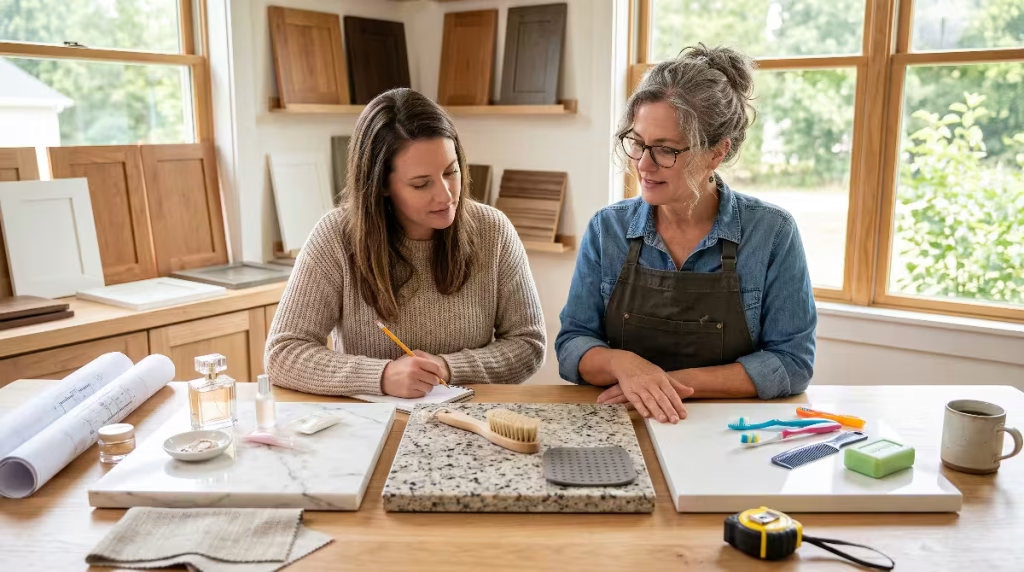
Every home is different, and every homeowner has their own morning routine. There is no single right answer for everyone. The best choice is the material whose strengths match your priorities and whose weaknesses you are comfortable managing.
Choose Quartz Bathroom Countertops If:
- You want a clean, bright, modern look with zero sealing or maintenance chores.
- You use colorful cosmetics, skin care serums, hair dyes, or facial oils and do not want to worry about stains.
- You are building a busy family bathroom, a children’s bathroom, or a guest suite where visitors might leave wet products on the counter.
- You prefer visual consistency and want your installed vanity to match the showroom sample.
- The tradeoff you accept: You must use a heat-proof silicone mat or drawer holster for hot curling irons and hair straighteners.
Choose Granite Bathroom Countertops If:
- You want a durable, worry-free surface that handles hot hair tools without trivets or pads.
- You love the natural, earthy look of crystalline rock and want a unique, one-of-a-kind stone slab.
- You want high durability at a sensible price point for custom primary or secondary baths.
- You do not mind spending fifteen minutes once a year applying a simple wipe-on sealer.
- The tradeoff you accept: You will see natural pattern variations, and you need to reapply sealer periodically to keep lighter stone from absorbing water.
Choose Marble Bathroom Countertops If:
- You are designing a peaceful, luxury primary bathroom where classical beauty and authentic stone depth matter most.
- You love the natural veining of historic European stone and are willing to care for it properly.
- You accept that the stone will age with time, developing a natural patina of soft wear and faint etchings.
- You have a separate sit-down dressing vanity for high-risk beauty products and hot tools.
- The tradeoff you accept: You must commit to frequent sealing, use gentle pH-neutral cleaners, and wipe away water drops, serums, and makeup immediately.
Builder Technical Tips for Custom Bathroom Countertop Installation
In custom home construction, good results come down to the small technical details. As a builder, I pay close attention to structural support, edge profiles, and water transitions. Here are three practical tips to keep in mind before your stone fabricator cuts your slabs.
1. The Undermount Sink Cutout Check
Most modern custom homes use undermount sinks for vanity decks. An undermount sink sits beneath the stone, leaving the cut edge of the slab exposed inside the sink basin.
Always ask your fabricator for an eased or slightly rounded edge profile along that interior cutout. A sharp, square-cut edge on bathroom countertops chips easily if struck by a heavy perfume bottle, a glass glass, or a metal water bottle while rinsing. Softening that edge protects the stone and feels much smoother when you clean around the bowl.
2. Backsplash Strategy: Stone Risers vs. Tile Transitions
You have two great options for finishing the back edge of your vanity deck:
- You can install a matching three-inch or four-inch stone riser made from the same material as your bathroom countertops. This provides a clean look and creates a solid moisture barrier along the back wall.
- Alternatively, you can bring a tiled wall backsplash down to meet the vanity deck. If you choose this modern tile look, remember an important carpentry rule: never use hard grout at the seam between the stone deck and the tiled wall.
Houses expand, contract, and settle with the seasons. A hard grout line will crack and crumble within a year, letting water seep behind the cabinet. Always have your installer seal that horizontal joint with a flexible, color-matched, mildew-resistant silicone caulk.
3. Cabinet Structural Support and Floating Vanities
A square foot of three-centimeter stone weighs fifteen to twenty pounds. A double-sink vanity top can easily weigh three hundred pounds before adding the weight of sinks, heavy brass faucets, and full water basins.
If you are using traditional, floor-standing vanity cabinets, standard cabinet construction handles this weight easily. However, floating vanities, which mount to the wall to create open space underneath, are very popular in modern bathrooms.
If you plan to use floating cabinets under heavy granite, marble, or quartz bathroom countertops, your builder must install heavy-duty steel support brackets anchored directly into your wall studs before the drywall goes up.
Never rely on cabinet screws alone to hold heavy stone in the air. Proper framing and structural planning ensure your vanity stays level and secure for decades.
Frequently Asked Questions about Bathroom Countertops
Here are straightforward answers to the questions homeowners ask most often when shopping for bathroom vanity surfaces:
What is the best countertop material for a bathroom vanity?
For most homeowners, quartz is the best all-around material for bathroom countertops. Its non-porous structure resists water, cosmetics, skin care acids, and bacteria without needing any sealing.
However, if you frequently set hot hair tools directly on your vanity, granite is the best choice because of its high heat resistance.
Is quartz or granite better for a bathroom?
Quartz is generally better for busy, high-moisture bathrooms because it never absorbs water and does not require maintenance.
Granite is better if you prefer natural stone patterns, need complete immunity to hot hair tools, and do not mind applying a quick sealer coat once every year or two.
Can you put a hot curling iron or straightener on quartz countertops?
No, you should never place a hot styling tool directly on quartz bathroom countertops.
Quartz contains roughly seven to ten percent polymer resin binders that can soften, yellow, or scorch at temperatures above three hundred degrees. Hair straighteners and curling irons easily reach four hundred degrees and can leave permanent heat marks on quartz. Always use a silicone resting pad or a heat-resistant tray.
Does makeup, nail polish remover, or skincare ruin marble countertops?
Yes, everyday beauty products can damage marble bathroom countertops. Acidic skincare products like vitamin C serums, glycolic toners, and salicylic acid washes will chemically etch the surface on contact, leaving dull spots.
Nail polish remover strips stone sealers, and liquid makeup, dark hair dyes, and facial oils can soak into the open pores, leaving stains that are difficult to remove.
How often do you need to seal bathroom countertops?
- Quartz: Never requires sealing.
- Granite: Every twelve to twenty-four months in a bathroom, depending on use. Use the water drop test to see if water still beads on the surface.
- Marble: Every three to six months to maintain protection against water and cosmetic pigments.
Which is more expensive: quartz, granite, or marble?
In general, marble is the most expensive material for bathroom countertops, averaging $75 to $200 or more per square foot installed.
Quartz sits in the middle, running between $65 and $140 per square foot installed.
Granite offers the widest range, starting around $45 for common slabs and going up to $100 or more per square foot for exotic stones.
Final Thoughts
Your home should be a comfortable sanctuary that makes daily life simpler. Building or remodeling a primary suite is a big project, and the decisions you make during the design phase shape how you feel in the space every morning.
When choosing between quartz, granite, and marble bathroom countertops, remember that the best material is the one that fits your real habits:
- If you want low maintenance, stain resistance, and a clean, modern aesthetic, choose quartz and use a heat mat for your hair tools.
- If you want natural stone character and a heat-proof surface that can handle anything you throw at it, choose granite and take fifteen minutes to seal it once a year.
- If you want timeless beauty and love the quiet elegance of authentic natural stone, choose marble with open eyes and care for it with patience.
Take your time visiting local stone yards, talk openly with your fabricator, and test samples with your favorite products before you finalize your order. When you match the right stone to your daily routine, your bathroom countertops will bring you joy and reliable service for years to come.