The Mechanics of Accessibility
When you picture a luxury home, what do you see? Maybe you see high ceilings, granite countertops, or a massive deck overlooking the ridges of East Tennessee. But in looking into the future, when you are older, luxury can be seen through a different lens. True luxury is a home that works for you, not against you. It is a home where you don’t have to think about where you step. This brings us to the concept of the zero-step entry home.
A zero-step entry home is not just about wheelchairs or medical needs. It is about “visitability.” It is about rolling a heavy cooler into the house after a fishing trip on the Holston River without lifting it. It is about pushing a stroller right into the living room. It is about moving a new refrigerator in without bruising your knuckles or scratching the door frame. However, achieving this seamless flow requires precise engineering. We are fighting physics here. Specifically, we are fighting water that wants to flow downhill and find the path of least resistance.
In the building industry, the standard way to keep rain out of a house is to elevate the floor system above the ground. When we remove that step, we remove our primary defense against water intrusion. That means we have to be smarter. We have to be more precise. And yes, that precision impacts the budget.
Many people ask and are curious about the cost to build a zero-step entry home because they are planning their “forever home.” They want to age in place here in Johnson City or Kingsport. My goal is to walk you through every single factor that changes the price tag. We will look at the dirt work, the concrete, the framing, and the specialized waterproofing. We will move past the guesswork and look at the real mechanics of how we build a home that lasts a lifetime.
The Breakdown: Analyzing the Cost Factors
When we talk about the cost to build a zero-step entry home, we have to look at the skeleton of the house. You cannot just pour a normal slab of concrete and hope for the best. If you do that, water will run right under your front door the first time we get a heavy spring rain.
To make the floor inside match the ground outside, we usually have to manipulate the foundation. If you are building on a slab, which is a solid piece of concrete on the ground, the cost difference is actually quite low. We just have to grade the dirt very carefully.
However, most custom homes in our area use a crawlspace or a basement. This is where the cost goes up. We have to create a “notch” in the foundation wall. Imagine the concrete wall that holds up your house. We have to lower a section of that wall right where the door goes. Then, we have to hang the floor joists differently so the subfloor sits flush with the porch concrete.
This requires extra labor. It requires more time for the framing crew to measure and cut. In the building world, time is money. You might be looking at a moderate increase in your framing and concrete budget, typically a few thousand dollars, just to get the geometry right.
Site Work and Grading
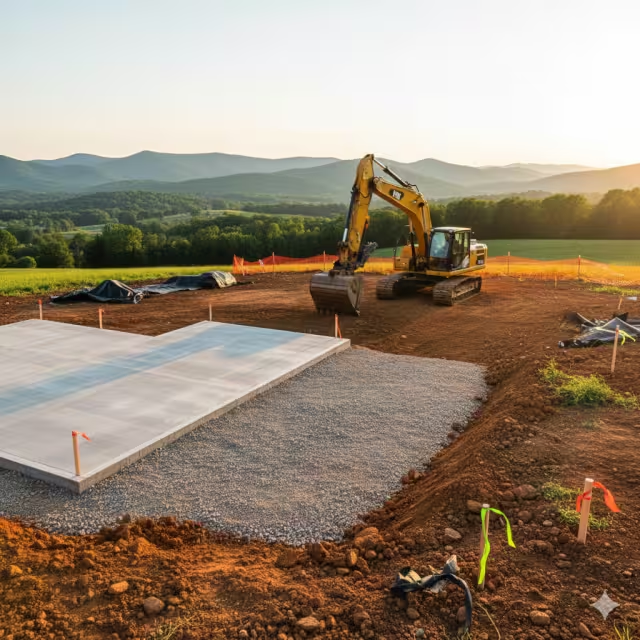
Before we even pour concrete, we have to look at the dirt. The cost to build a zero-step entry home is heavily influenced by the slope of your land. In a standard home, we can just build steps to accommodate a steep hill. With a zero-step entry, we have to bring the earth to us.
This involves excavation. We have to move dirt around to create a gentle slope up to the door. We cannot have a steep ramp that looks like a skate park. It needs to be a gentle, imperceptible rise.
We also have to focus on “positive drainage.” This is an engineering term that simply means water must flow away from the house. Since the door is at ground level, the ground immediately outside that door must slope away instantly. If your lot is very steep, like many spots in Kingsport, we might have to bring in truckloads of fill dirt or build retaining walls to create a flat landing area. Retaining walls can be expensive, and they add to the overall site development costs.
The “Hidden” Cost: Waterproofing
If one thing could be emphasized, it would be this: water always wins. If you give water a chance to get in, it will. In a standard home, the step up acts as a dam. In a zero-step entry home, we removed the dam.
To keep your floors dry, we have to use specialized waterproofing systems. We cannot use the standard metal flashing you see on typical tract homes. We often use heavy-duty rubber membranes that wrap under the door threshold and up the sides of the frame. This is similar to the material we use to waterproof commercial roofs.
We also often install a linear trench drain. This is a long, narrow grate that sits in the concrete right in front of the door. It catches driving rain and pipes it away from the house.
A standard door installation might cost a few hundred dollars in labor and materials. A zero-step door installation, with trench drains and membranes, can cost significantly more. You are paying for the assurance that your hardwood floors won’t buckle after a storm. When calculating the cost to build a zero-step entry home, never skimp on this line item.
Doors and Thresholds
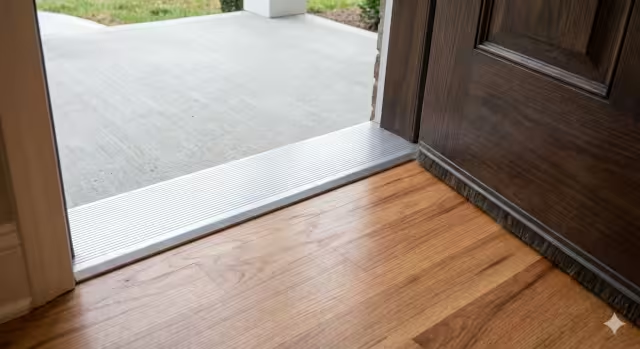
The door itself is another factor. You cannot use a standard threshold found at a big box store. Those usually have a lip that is about an inch high. That one inch defeats the whole purpose of a zero-step entry home.
We have to order ADA-compliant thresholds. These are very low profile. They are often made of heavy-duty aluminum or bronze. Because they are specialized, they cost more.
Furthermore, because the threshold is so low, the door needs to have better weatherstripping on the bottom. We call this a “door sweep.” High-quality door sweeps that seal tight against air and water drafts add to the material cost. When you multiply this upgrade across every exterior door you want to be accessible, front door, back door, garage door, the price adds up.
Comparative Cost Analysis
Let’s look at the numbers. It helps to compare a standard build to a zero-step build so you can see where the money goes.
For the foundation, a standard pour is business as usual. For a zero-step entry home, we are looking at a 5% to 10% increase in foundation costs. This covers the complex formwork and the extra time the concrete crew spends getting the levels perfect.
For the doors, a standard threshold is included in the price of the door. For our specialized entry, you might pay an extra $200 to $500 per door for the low-profile threshold and the high-performance weatherstripping.
For waterproofing, a standard home uses basic flashing tape. The cost to build a zero-step entry home includes trench drains and fluid-applied membranes. This can add $1,000 to $3,000 to the budget depending on how many doors you have.
Finally, for grading, it depends entirely on your land. If you have a flat lot, the cost is low. If you are on a ridge, the grading costs could increase by 15% to ensure water flows away properly.
Universal Design Entities
We need to talk about the bigger picture. In the industry, we call this “Universal Design.” A zero-step entry home is just one part of a house that is designed for everyone.
When you commit to the cost to build a zero-step entry home, you should also look at the interior. It makes no sense to have a flat front door if you have a narrow hallway or a bathroom you can’t turn around in.
We often pair zero-step entries with “curbless showers.” This is the same concept but in the bathroom. There is no step to get into the shower. This requires sloping the bathroom floor and using a special drain.
We also look at “accessible floor plans.” This means wider doorways (36 inches wide instead of the standard 30 or 32 inches) and wider hallways. Widening a hallway takes up square footage. In building, square footage costs money. However, the flow and the open feel you get from wider halls are worth the investment, even if you never use a wheelchair.
Aging in Place: The ROI
Building a zero-step entry home can result in a high return on investment (ROI) on your later years. The cost to build a zero-step entry home might seem high right now. You might spend an extra $5,000 to $10,000 total on the project to get these details right.
But compare that to the cost of a nursing home or an assisted living facility. Those costs can exceed $5,000 per month or much more depending on the care you need. If building a zero-step entry home allows you to stay in your own house for just two extra years, the investment has paid for itself many times over.
There is also the cost of retrofitting. Buyers often ask about adding a ramp to their existing home because a parent is moving in. Building a wooden ramp is ugly and requires maintenance. Pouring a concrete ramp is expensive and can ruin the curb appeal of the house. Trying to modify an existing foundation to create a zero-step entry is a structural nightmare that costs a fortune.
Spending the money upfront during the new construction phase is the most logical financial decision you can make. It is efficient, it is integrated into the design, and avoids headaches and costs later on.
Regional Specifics: The East Tennessee Challenge
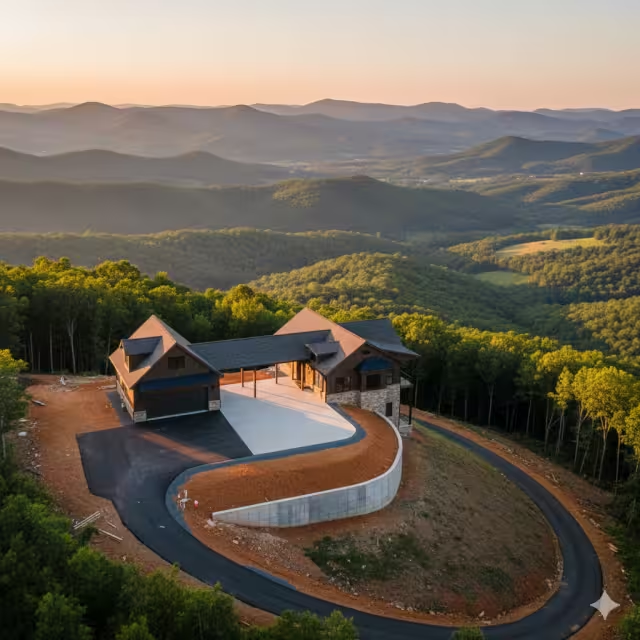
Here in the Tri-Cities of east Tennessee, we do not have flat land, it is hilly. We do not have the flat sandy soil of Florida. We have clay, rock, and hills. This affects the cost to build a zero-step entry home.
In many of our subdivisions, the driveway might be at a 15% grade. Getting a zero-step entry at the front door can be very difficult if the front yard slopes sharply down to the road.
In these cases, we have to be creative. Sometimes, we design the zero-step entry to be from the garage. It is much easier to pour the garage slab flush with the kitchen floor than it is to grade the entire front yard.
We also use breezeways. We might connect the garage to the house with a covered, flat walkway. This gives you that luxury entry without having to fight the severe topography of the Appalachian Mountains. Understanding local codes and steep slope ordinances is vital. This is why you need a builder who understands the specific challenges of our region.
Common Questions about Zero-Step Entry Homes
Here are some specific questions that people often ask when searching about the cost to build a zero-step entry home.
Is a zero-step entry home more expensive to build?
Yes, generally speaking. You should budget an extra 1% to 3% of your total structural budget for this feature. The money goes toward water management and foundation complexity. It is not a massive increase, but it is a measurable one.
Can you retrofit a zero-step entry?
You can, but it is rarely recommended. To retrofit a zero-step entry home, you have to jack up the house or cut into the foundation. It is messy, risky, and very expensive. It is much cheaper to build a ramp, even though ramps are not as attractive. If you are building new, do it right from the start and avoid the question of the ramp.
What are the risks of zero-entry homes?
The main risk is water intrusion. If the builder does not understand waterproofing, your floors will get wet, and lead to the possibility of moisture damage or mold. This is why the cost to build a zero-step entry home includes those trench drains and membranes I mentioned earlier. You are paying for risk mitigation.
Design Aesthetics and Resale Value
Some people worry that a zero-step entry home will look “institutional” or like a hospital. This is a misconception. When done correctly, a zero-step entry looks sleek, modern, and high-end.
Think about high-end hotels. They rarely have steps at the entrance. They have smooth, gliding automatic doors and flat entries. That is the vibe we are going for. We use stone pavers, beautiful concrete stains, and wide porches to make the entry look inviting.
This adds to the resale value. The market for the cost to build a zero-step entry home is growing. The “Baby Boomer” generation is retiring. They are looking for homes that are safe and comfortable. If you sell your home in ten years, having a zero-step entry will make your home stand out to a massive segment of buyers. It is a feature that separates your home from the standard inventory.
The Role of the Porch
A crucial element in protecting your investment is the porch roof. In our area, we get plenty of rain. To protect a zero-step threshold, we need deep overhangs.
A standard home might have a small stoop with a tiny roof. For a zero-step entry home, I recommend a porch that is at least six to eight feet deep. This keeps the rain far away from that sensitive door threshold.
Building a larger porch increases the framing and roofing material costs. However, it also creates a wonderful outdoor living space. It is another example of how accessibility features actually improve the quality of life for everyone living in the home.
The Value Proposition
When you look at the bottom line, the cost to build a zero-step entry home is an investment in your future freedom. It is about competence in design and precision in execution.
Yes, there are extra costs involved. You have to pay for the foundation notches, the waterproofing membranes, the trench drains, and the precise grading. You have to hire a builder who is willing to supervise the site work closely.
But in exchange, you get a home that is safer. You get a home that is easier to live in. You get a home that welcomes guests of all abilities. You get a home that holds its value in a competitive market.
The problem of gravity and water is a tough one, but with the right budget and the right engineering, we can solve it. The result is a home that serves you for decades.