Here in the Tri-Cities area of Tennessee, we understand the value of family. It is becoming more common to see three generations living under one roof. Maybe you are building an in-law suite for your aging parents in Kingsport, or perhaps your adult children have moved back home in Johnson City to save money. While living together has many benefits, it also brings challenges. The biggest source of conflict in these homes is almost always the bathroom.
As many home builders can atest, they have seen how a poor bathroom layout can cause daily stress. A standard five-by-eight bathroom works fine for a single person or a couple, but it fails when you have a toddler, a teenager, and a grandmother all trying to use the space. The friction points are obvious. There is never enough privacy. The room is often dangerous for seniors who might slip. It can be a tight squeeze for anyone helping a child get ready for school.
The solution is not just making the room bigger. The solution is smart design. You need a bathroom layout that uses “Universal Design” principles. This means building a space that works for everyone, regardless of their age or ability level. In this article, we will look at specific floor plans and design choices that solve these problems. We will explore how to create a bathroom layout that offers privacy, ensures safety, and adds value to your home. Whether you are building from scratch or remodeling, getting the bathroom layout right is the key to a happy multigenerational home.
Core Principles: The “Why” Behind the Layout
Before we start moving walls or picking out tile, we need to understand the logic behind a successful bathroom layout. Many people confuse Universal Design with ADA (Americans with Disabilities Act) requirements. While they are related, they are not the same thing. ADA requirements are strict legal rules for public buildings. Universal Design is a broader concept. It means designing a home so that it is usable by the widest range of people possible without the need for special adaptation.
Most builders when they look at a set of blueprints, are thinking about how the bathroom layout will function ten years from now. This is often called “aging in place.” You might not need a wheelchair today, but a knee surgery or a bad back could change that tomorrow. A good bathroom layout anticipates these changes. It removes barriers before they become problems.
Zoning for privacy is another core principle. In a shared bathroom, privacy is usually the first thing to go. If one person is in the shower, can someone else brush their teeth? In a standard bathroom layout, the answer is no. In a multigenerational bathroom layout, the answer must be yes. We achieve this by creating distinct zones within the room.
Finally, we have to think about safety. The bathroom is the most dangerous room in the house. Water and smooth surfaces create a high risk for falls. A smart bathroom layout minimizes these risks through spacing, lighting, and material choices. When you get the core principles right, the bathroom layout feels natural. It does not look like a hospital room. It looks like a high-end spa that just happens to be safe for your grandmother and your toddler.
Layout Strategy A: The “Compartmentalized” Bathroom
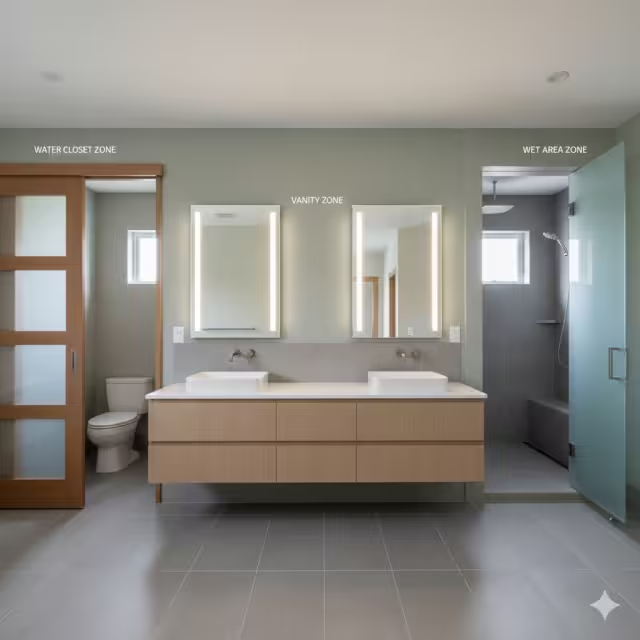
One of the most effective ways to handle high traffic is the compartmentalized bathroom layout. This design takes the functions of the bathroom and separates them into different zones. This allows multiple people to use the room at the same time without seeing each other. In the building industry, we see this replacing the old “Jack and Jill” style because it offers much better privacy.
The first zone in this bathroom layout is the vanity area. We place the double vanity right near the entrance. This area does not have a locking door separating it from the hallway, or if it does, it is often left open. This allows someone to wash their hands, brush their teeth, or do their hair without blocking the rest of the room. The vanity area acts as a hub.
The second zone is for the toilet. In this bathroom layout, the toilet gets its own small room, often called a water closet. This small room is accessed through a door inside the main bathroom area. A pocket door is a great choice here because it slides into the wall and saves floor space. By isolating the toilet, you ensure that one person can use the facilities while another person is at the sink.
The third zone is the wet area, which includes the shower or tub. This area is separated from the vanity zone by a frosted glass door or a solid wall. This separation keeps the steam and humidity contained. It also provides visual privacy. A teenager can take a shower in zone three while dad shaves in zone one.
This bathroom layout requires a bit more square footage than a standard bath, but the payoff is huge. It effectively functions as two or three bathrooms in one. When planning this bathroom layout, you need to ensure the walkways are wide enough. We try to keep at least 42 inches of walkway space in the main vanity area so people can pass behind someone standing at the sink.
Layout Strategy B: The Curbless “Wet Room”
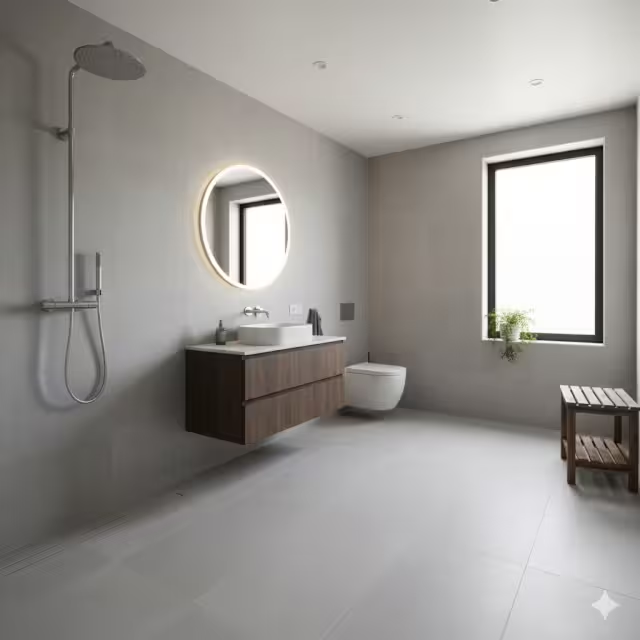
If you have a family member with significant mobility issues, or if you just want a modern, luxurious look, the “wet room” bathroom layout is a top contender. In a traditional bathroom, the shower is a separate box with a curb you have to step over. In a wet room bathroom layout, the barriers are removed.
The defining feature of this bathroom layout is the floor. We tile the entire room, or at least a large section of it. The floor is gently sloped toward a drain. This allows us to eliminate the shower curb entirely. You can walk, or roll a wheelchair, right into the shower area without tripping. This is what we call “zero-threshold” entry.
In a wet room bathroom layout, the shower area is usually larger than normal. We aim for a turning radius of at least five feet (60 inches). This circle allows a wheelchair user to turn around completely. Even if you do not use a wheelchair, this extra space makes the room feel massive. It also gives you plenty of room to help an elderly parent or wash a dog without banging your elbows against a wall.
Waterproofing is critical in this bathroom layout. Since water can theoretically go anywhere, we have to waterproof the floor and the walls to a higher height than usual. We use a system called a linear drain. This is a long, rectangular drain that usually sits against the back wall. It captures water efficiently and looks very sleek.
This bathroom layout is also the easiest to clean. Because there are no tight corners or shower tracks, you can spray down the surfaces easily. For a multigenerational home, this reduces the chore burden on the family. It is a practical, safe, and beautiful bathroom layout that works for every generation.
Layout Strategy C: The “Split-Access” En-Suite
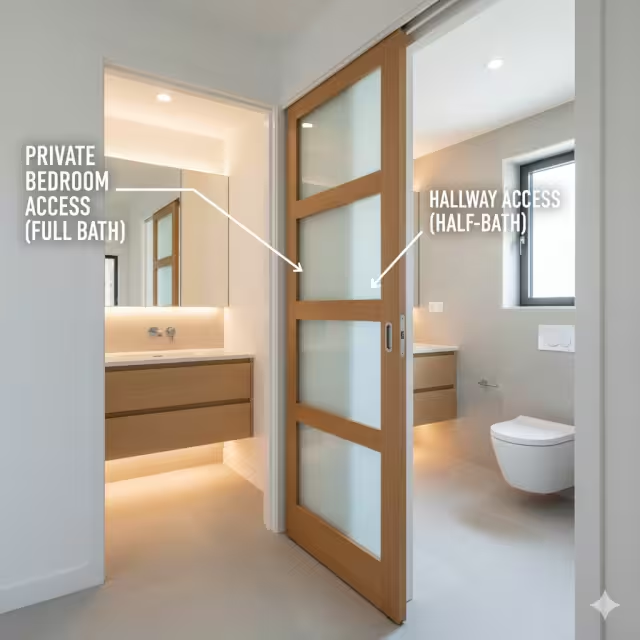
Sometimes the best bathroom layout is one that serves two different parts of the house in two different ways. The Split-Access En-Suite is a clever design that I have used in several homes around Johnson City. It is designed to be attached to a senior bedroom (the “in-law suite”) while still serving guests from the hallway.
Imagine a bathroom layout with two entrance doors. Door number one comes from the hallway. Door number two comes from the senior bedroom. But it is not just one big room. We split the functions based on who needs them.
When a guest enters from the hallway, they step into a “half-bath” zone. They have access to a toilet and a sink. This is perfect for visitors. However, the door leading to the shower area is locked from the inside of the bedroom side. This ensures that the senior living in the bedroom has a private, secure shower that guests cannot accidentally walk into.
The senior enters from their bedroom directly into the full bath zone. They have access to the shower, a vanity, and the toilet. We can use pocket doors to divide the sections. This bathroom layout gives the senior autonomy. They feel like they have their own private master bath. Yet, the home does not waste space on a separate powder room for guests because the toilet serves double duty.
This bathroom layout requires careful attention to door swings and locks. You do not want a situation where someone gets locked out of the toilet. We use communicating locksets that allow the doors to function smoothly together. It is a complex bathroom layout to build, but it saves square footage and solves the privacy issue perfectly.
Essential Fixtures & Features (The Technical Details)
A great bathroom layout is only as good as the fixtures you put in it. In a multigenerational home, standard builder-grade fixtures often fail to meet the needs of the residents. We need to select items that are easy to use for arthritic hands and safe for unsteady legs.
Let’s talk about the shower first. In your bathroom layout, avoid the shower-tub combo. Stepping over a high tub wall is the number one cause of bathroom falls for seniors. Instead, prioritize a walk-in shower. If a bathtub is necessary for bathing small children, consider a separate tub or a walk-in tub with a sealing door. Inside the shower, install a handheld showerhead on a slide bar. This allows the user to adjust the height of the spray. It is great for a seated senior, a standing adult, or for rinsing off a child.
For the toilet, height matters. A standard toilet is about 15 inches high. This can be hard to stand up from if you have weak knees. In your bathroom layout, specify a “Comfort Height” or “ADA Height” toilet. These are 17 to 19 inches tall, similar to a dining chair. It makes a huge difference in usability. I also highly recommend installing an electrical outlet near the toilet in your bathroom layout. This allows you to install a bidet seat later. Bidet seats are excellent for hygiene assistance for older adults.
Vanities are another key component of the bathroom layout. The standard height for a vanity has gone up in recent years to 36 inches, which saves your back. However, you might want to include a section of the vanity that is lower, or a “floating” vanity with open space underneath. This allows someone to sit on a stool while grooming. This is helpful for someone who cannot stand for long periods. Also, always choose faucets with lever handles rather than knobs. Levers are much easier to operate if you have limited hand strength.
Safety, Lighting, and “Hidden” Support
There are elements of a bathroom layout that you cannot see, but they are arguably the most important. As a builder, I always insist on “blocking” the walls. Blocking means nailing 2×6 wood boards between the studs before the drywall goes up. We place this wood exactly where grab bars might be needed in the future—around the toilet and in the shower. If you do not do this during the build, you have to rely on wall anchors later, which are not nearly as strong. By planning your bathroom layout with blocking, you make the room future-proof.
Lighting is a safety feature that often gets ignored in the bathroom layout. As we age, our eyes need more light to see clearly. A single fixture above the mirror creates shadows on the face. A better bathroom layout uses sconces on either side of the mirror for even light.
We also need to think about navigation at night. A senior or a child needing the restroom at 2 AM should not have to navigate in the dark. I love using toe-kick lighting in the bathroom layout. These are LED strips installed under the bottom edge of the vanity cabinet. They can be connected to a motion sensor. When you walk in, a soft light washes over the floor. It is enough light to see where you are walking, but not so bright that it wakes you up completely.
Another safety aspect of the bathroom layout is the floor surface. Polished marble looks beautiful, but it is a skating rink when wet. We look for tile with a high Coefficient of Friction (COF). You want a rating of 0.60 or higher for safety. Smaller tiles are often better for the shower floor because the grout lines provide extra grip for your feet.11
Legal & Code Considerations (Tri-Cities Context)
Building codes are the minimum standard for safety, but for a multigenerational bathroom layout, we often want to exceed the code. However, you must at least meet the requirements. In Tennessee, we generally follow the International Residential Code (IRC).
One of the biggest constraints on your bathroom layout is door width. A standard interior door is often 24 or 28 inches wide. This is too narrow for a walker or a wheelchair. For a proper accessible bathroom layout, we need 36-inch doors. When open, this provides a clear passage width of about 32 inches, which is the standard requirement for wheelchair access.
Another code issue is “clear floor space.” The code requires specific distances between fixtures. For example, you generally need 21 inches of clearance in front of a toilet. In a multigenerational bathroom layout, I try to double that. We want 48 inches if possible. This allows a caregiver to stand next to the toilet to assist someone without being cramped.
Plumbing codes also dictate safety valves. You must install anti-scald valves in the shower. These valves balance the pressure so that if someone flushes a toilet elsewhere in the house, the shower water does not suddenly turn scalding hot. This is non-negotiable in any bathroom layout, especially with children and seniors who may have reduced sensation in their skin and cannot react quickly to temperature changes.
If you are renovating an older home in the historic districts of Johnson City or Kingsport, you might face space limitations. You may need to steal space from a closet or an adjacent bedroom to make the bathroom layout legal and functional. It is always best to check with the local building department before starting.
Cost vs. Value Analysis
Homeowners often wonder if spending extra money on a universal design bathroom layout is worth it. The answer is always yes. From a financial standpoint, a bathroom layout that works for all ages increases the resale value of the home. It expands your pool of potential buyers. A young couple sees a luxury spa; a family with a special needs child sees a necessity; a retiree sees a forever home.
The cost drivers in a bathroom layout project are usually plumbing and tile. If you are on a slab foundation, moving a toilet drain can be expensive because we have to jackhammer the concrete. If you are on a crawlspace foundation, which is very common here in East Tennessee, moving plumbing is much easier and cheaper. This influences which bathroom layout you should choose.
Strategy A (Compartmentalized) adds cost because of the extra walls and doors. Strategy B (Wet Room) adds cost because of the waterproofing and tile work. Strategy C (Split-Access) is often the most budget-friendly if the plumbing locations are close to existing lines.
However, the true value of a good bathroom layout is not just monetary. It is the value of independence. If a bathroom layout allows your mother to bathe herself safely, that preserves her dignity. If it allows your family to get ready in the morning without fighting, that preserves your peace of mind. You cannot put a price tag on that. When you amortize the cost over the years you will live in the home, the extra investment in a proper bathroom layout is pennies a day.
Conclusion
Designing a bathroom for a multigenerational home is a puzzle, but it is a solvable one. It requires you to shift your thinking from “how does this look” to “how does this work.” By focusing on a bathroom layout that prioritizes privacy, safety, and flexibility, you create a space that serves your family through every stage of life.
We have looked at the compartmentalized bathroom layout for busy mornings, the wet room for maximum accessibility, and the split-access suite for flexible privacy. We have discussed the importance of blocking, lighting, and non-slip floors. These details matter.
Our advice to you is to plan for the worst-case scenario but design for the best. Plan the plumbing for a wheelchair, even if you are running marathons today. Put the blocking in the walls, even if you don’t buy the grab bars yet. A thoughtful bathroom layout is the foundation of a home that cares for its inhabitants.
If you are in the Tri-Cities area and are thinking about building or remodeling, take the time to sit down with a professional. Sketch out your bathroom layout. Walk through the motions of your daily routine. Make sure the space fits you, rather than forcing yourself to fit the space.