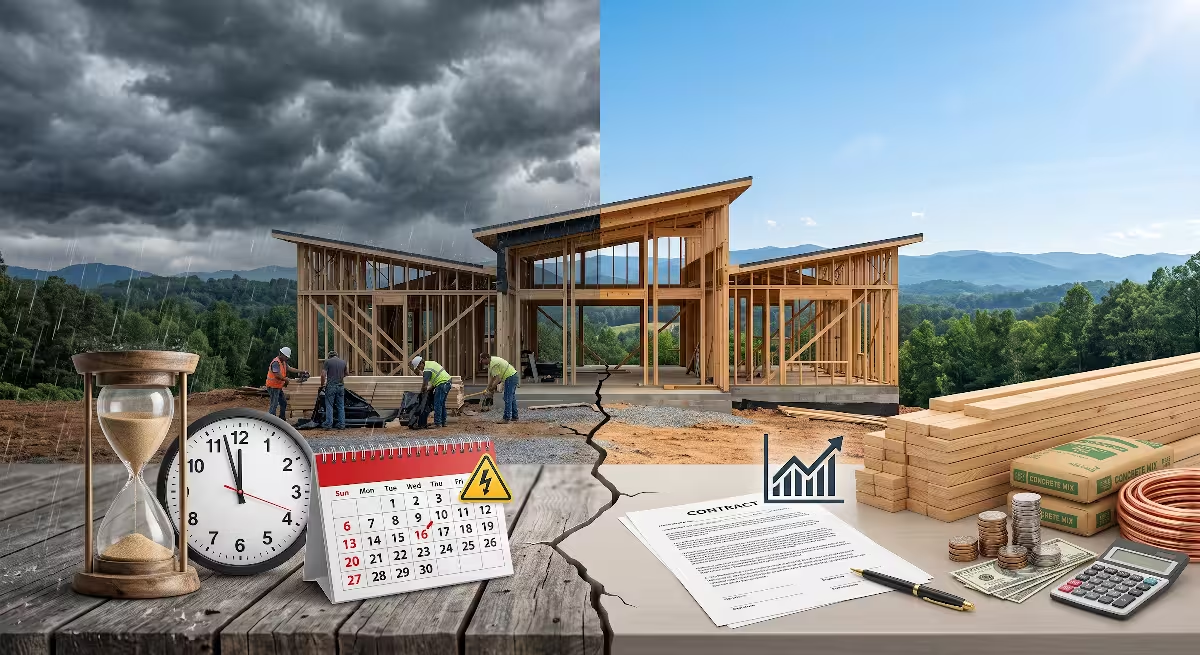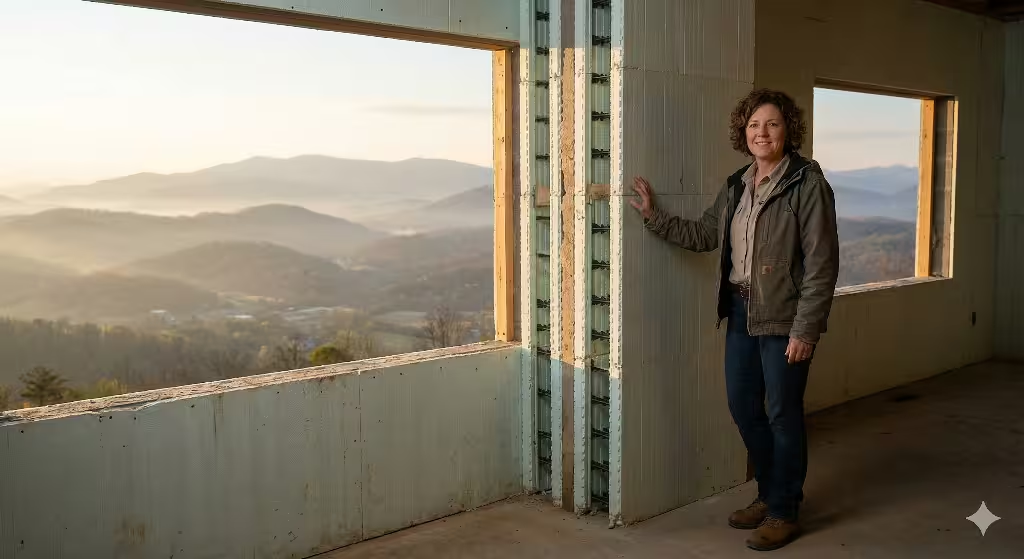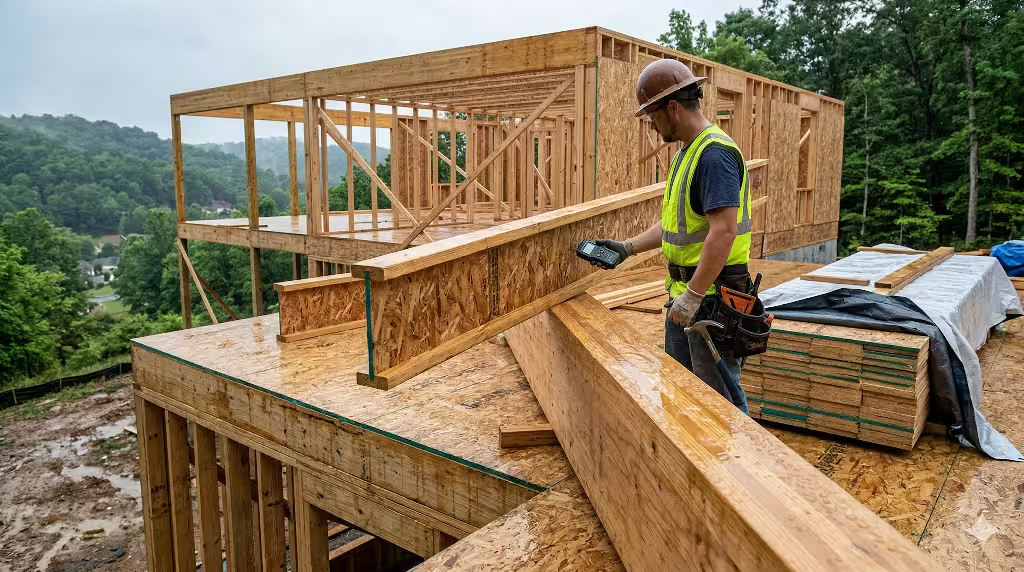


Building a custom home is one of the most exciting and rewarding journeys you can undertake. The idea of turning a piece of land into a place filled with your personal touches, from the layout of the kitchen to the view from the master bedroom, is a powerful dream. However, for many people, that excitement is mixed with a very real and understandable concern: the fear of going over budget. It’s the number one worry that clients often have, and it’s a valid one. A poorly managed home construction budget can turn a dream project into a source of significant stress.
Alleviating stress almost always comes down to how well the home construction budget is planned and managed. The goal of this article is not to give you complicated formulas but to provide a clear, logical framework for managing your funds. This guide will walk you through the essential steps, from the earliest planning stages to the final payment, ensuring you maintain financial control and peace of mind throughout your project.
The Foundation: Understanding the Three Pillars of Your Construction Budget
Before you can create a detailed home construction budget, you need to understand its main parts. Think of it like the foundation of your house; if these core concepts are not solid, the rest of the structure is at risk. Every cost associated with building your home will fall into one of three categories: hard costs, soft costs, and your contingency fund. Understanding these pillars is the first step toward mastering your home construction budget.
Hard Costs: The Bricks and Mortar
Hard costs are the most straightforward part of your home construction budget. These are the tangible, physical costs of building your house. When you picture construction, these are the things you see and touch. They include every material that goes into the home and all the labor required to put it all together.
Examples of hard costs include:
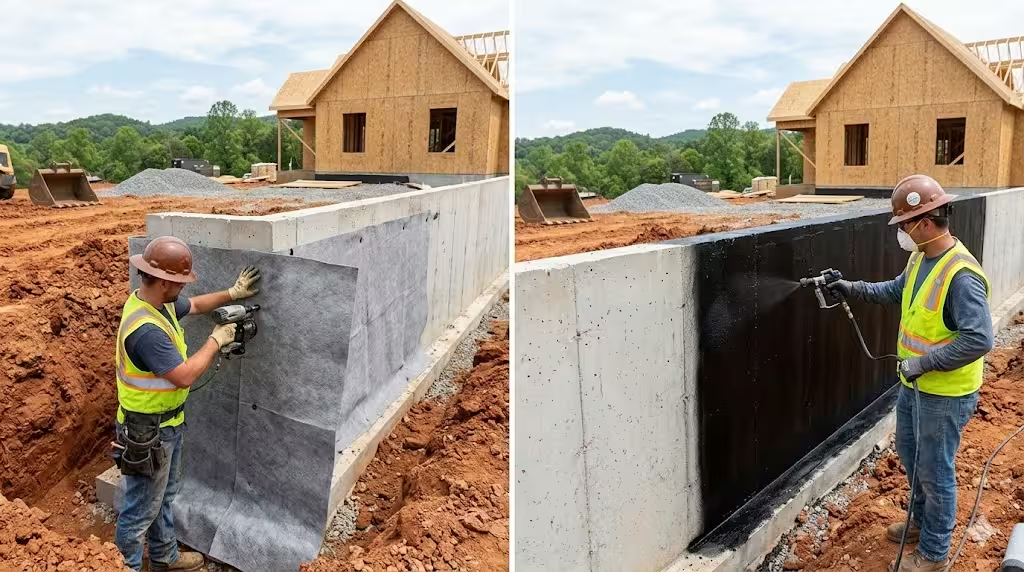
- The concrete for your foundation.
- The lumber for framing the walls and roof.
- Shingles, siding, and windows for the exterior.
- Drywall, insulation, and paint for the interior.
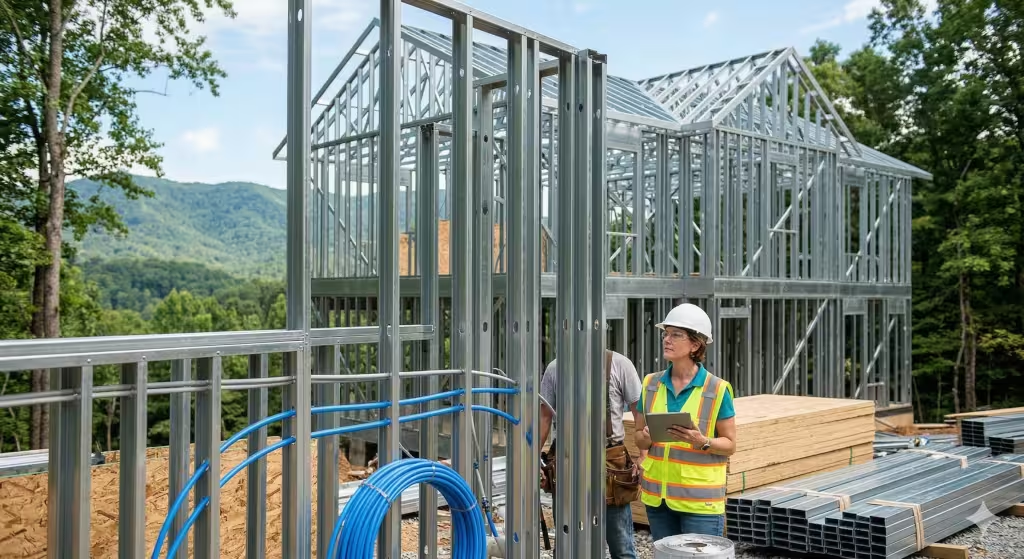
- All the systems that make a house functional, like plumbing pipes, electrical wiring, and the HVAC (heating, ventilation, and air conditioning) unit.
- The wages for every skilled tradesperson on the job site, from the carpenters and electricians to the plumbers and roofers.
These costs make up the largest portion of your home construction budget, typically around 70 to 75 percent. They are directly tied to your building plans, and their total can be estimated with a good degree of accuracy by an experienced general contractor.
Soft Costs: The Invisible Structure
If hard costs are the body of the house, soft costs are the brain and nervous system. These are the indirect costs that are absolutely necessary to get the project planned, approved, and legally built, but they are not part of the physical structure itself. Newcomers to home building often overlook or underestimate these expenses, which can be a critical mistake when managing a home construction budget.
Examples of soft costs include:
- Architectural and Design Fees: The cost to have your home professionally designed by an architect or home designer.
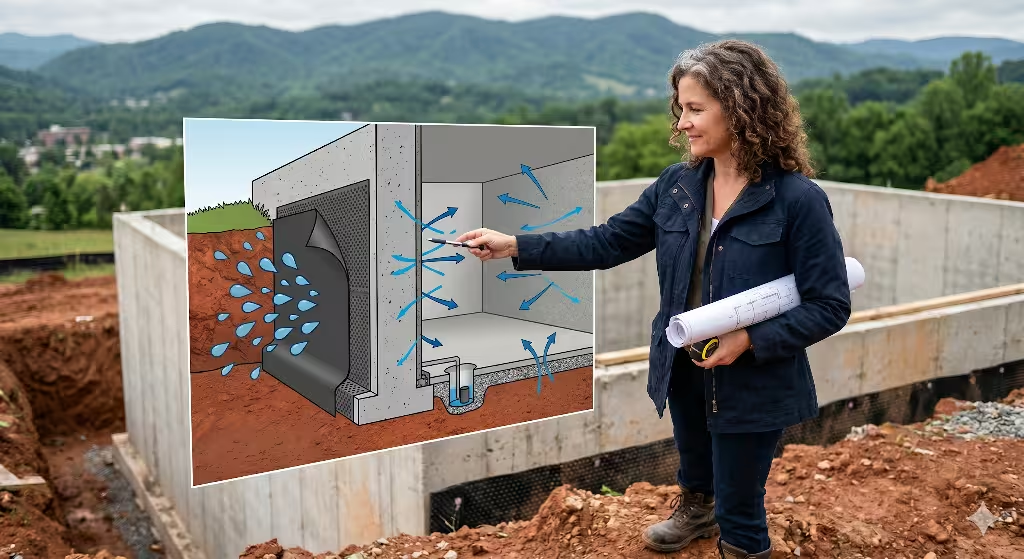
- Engineering Fees: This might include a structural engineer to ensure the home’s integrity or a civil engineer to design the septic system and manage water drainage on your property.
- Building Permits and Impact Fees: Every city, including Johnson City and others in the Tri-Cities, requires permits to ensure the home is built to safety codes. These fees can vary significantly.
- Appraisal and Loan Fees: When you get a construction loan, the lender will require an appraisal and will have its own set of fees for originating and managing the loan.
- Insurance: You will need specific insurance, often called builder’s risk insurance, to cover the property during construction.
- Surveys and Soil Tests: Before you build, you will need a land survey to mark your property lines and may need soil tests to ensure the ground can support your foundation.
Soft costs can account for a substantial portion of your overall home construction budget, sometimes as much as 15 to 25 percent. It is crucial to identify and account for all of them early in the planning process.
The Contingency Fund: Your Financial Safety Net
The third pillar of your home construction budget is perhaps the most important for your peace of mind: the contingency fund. No matter how perfectly you plan, home construction is a complex process with many variables. Unforeseen issues will arise. The purpose of a contingency fund is to have money set aside specifically to deal with these surprises without derailing your entire home construction budget. This is not a fund for upgrades; it is a safety net for genuine, unexpected problems. We will discuss this in greater detail later, but for now, understand that this is a non negotiable part of any responsible home construction budget.
Pre-Construction: Setting a Realistic and Detailed Budget
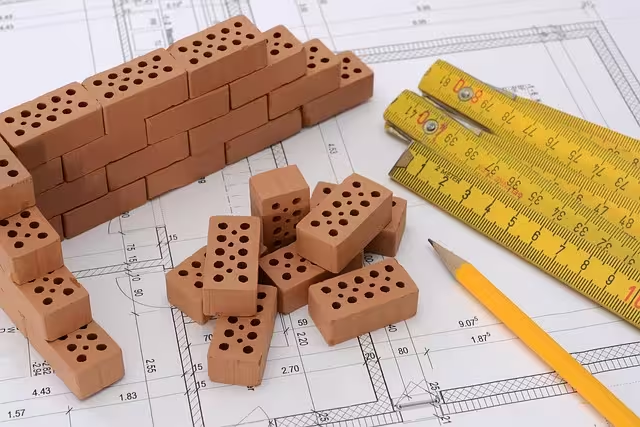
The most critical work on your home construction budget happens long before the first scoop of dirt is moved. The decisions you make during this pre-construction phase will have the biggest impact on your final costs. Rushing this stage is a recipe for overspending. A carefully planned and detailed home construction budget is your single most powerful tool for a successful build.
Start with Financing: Know Your Numbers First
Before you fall in love with a specific house plan or expensive finishes, you must determine what you can realistically afford. The first step is to speak with a lender who specializes in construction loans. They will review your finances, including your income, savings, and debts, to determine the maximum loan amount you qualify for. This process is called getting pre-approved.
Getting pre-approved for a construction loan is essential because it sets the ceiling for your home construction budget. It gives you a concrete number to work with. However, it is vital to remember this key principle: just because you can borrow a certain amount does not mean you should spend it all. It is often wiser to set your total home construction budget slightly below your maximum approval amount. This creates a buffer and reduces financial pressure, giving you more flexibility and peace of mind as the project moves forward.
Creating Your Budget Breakdown and Wish List
Once you know your total budget, the next step is to break it down. Start by listing everything you want in your new home. It is helpful to divide this list into two categories: “needs” and “wants.”
- Needs: These are the non negotiables. Things like the number of bedrooms and bathrooms, a two car garage, or a main floor master suite.
- Wants: These are the features you would love to have if the budget allows. This could be a large back deck, high end quartz countertops, or custom built in bookshelves.
This exercise helps you prioritize your spending. When you have to make tough decisions later, you will have a clear guide for what is most important to you.
Next, you will want to create a detailed spreadsheet for your home construction budget. You can find many templates online, or your builder can provide one. This spreadsheet should list all the potential cost categories, from site work and foundation to framing, plumbing, electrical, and interior finishes. An experienced builder can help you assign estimated percentages to each category based on projects in our area. For example, a typical construction cost breakdown might look something like this:
- Site Work, Foundation, and Flatwork: 15%
- Framing and Exterior Finishes (roofing, siding, windows): 20%
- Major Systems (Plumbing, Electrical, HVAC): 15%
- Interior Finishes (drywall, paint, flooring, cabinets): 25%
- Final Touches (landscaping, driveways): 10%
- Soft Costs and Fees: 15%
This breakdown is just an example, but it gives you a framework for allocating the funds in your home construction budget.
The Importance of “Allowances”
One area of a builder’s estimate that often causes confusion is “allowances.” An allowance is a specific dollar amount that the builder sets aside in the home construction budget for items that you, the homeowner, will select later. For example, the builder cannot know if you will choose a $200 light fixture from a big box store or a $2,000 custom chandelier for your dining room. So, they will put an “allowance” of, say, $3,000 for all the light fixtures in the house.
Common items covered by allowances include:
- Flooring (carpet, tile, hardwood)
- Kitchen and bathroom cabinets
- Countertops
- Plumbing fixtures (faucets, sinks)
- Light fixtures
- Appliances
Allowances are a necessary part of the process, but they can also be a dangerous trap for your home construction budget. If the builder provides an allowance based on standard, builder grade materials, but your heart is set on luxury, high end finishes, you will quickly exceed those amounts. It is crucial to have honest conversations with your builder about your tastes and expectations. Ask to see examples of the quality of materials their allowances are based on. If you know you want premium finishes, it is better to increase the allowance amount in your home construction budget from the very beginning rather than being surprised by overages later.
Assembling Your Team and Getting Accurate Bids

The professionals you choose to design and build your home are your partners in this process. Their expertise and communication style will have a massive effect on your experience and your ability to stick to your home construction budget. Choosing the right team is one of the most important decisions you will make.
Working with an Architect and a General Contractor
You will primarily work with two key professionals: an architect (or a home designer) and a general contractor.
- The Architect: This is the professional who will take your ideas, needs, and wants and turn them into a detailed set of blueprints. The quality of these plans is paramount. Vague or incomplete plans are a primary cause of budget problems. If a detail is not specified on the plans, the builder is forced to make an assumption about what you want, and their assumption might not match yours. The more detail in your plans, the more accurate your home construction budget will be.
- The General Contractor (GC): The GC is the person who manages the entire construction process. They hire and schedule all the subcontractors (plumbers, electricians, etc.), order materials, and oversee the day to day work on site. A good GC is an expert in logistics, communication, and managing a home construction budget.
In the Tri-Cities, we have many talented architects and contractors. Look for professionals with a strong local reputation, a portfolio of work similar to what you want, and references you can speak with. Most importantly, choose people you trust and with whom you can communicate openly.
How to Compare Builder’s Estimates
Once your plans are complete, it is time to get bids from several general contractors. It is a good practice to get at least three detailed bids. However, when the bids come in, it is critical that you do not simply look at the final number at the bottom of the page. The lowest bid is not always the best choice.
To properly compare bids and protect your home construction budget, you need to conduct an “apples to apples” comparison. This means you need to make sure each builder is bidding on the exact same scope of work and quality of materials. Read through each bid line by line.
- Look for Detail: A good bid will be highly detailed, breaking down the costs for each phase of construction. A bid with vague categories like “Interior Finishes: $50,000” is a red flag.
- Check the Allowances: Compare the allowance amounts each builder has provided. If one builder’s bid is significantly lower, it might be because they have used unrealistically low allowances for key items like cabinets or flooring.
- Verify Materials: Are they all bidding on the same brand of windows? The same thickness of granite? The same quality of lumber? These details matter and have a big impact on the cost.
Ask questions. If one bid seems much higher or lower than the others, ask the builder to explain their numbers. A professional and transparent builder will be happy to walk you through their estimate. Choosing a builder based on trust, detail, and clear communication is a far better strategy for your home construction budget than choosing based on the lowest price alone.
Actively Managing the Budget During Construction
Once construction begins, your role shifts from planning to monitoring. Staying engaged and actively managing your home construction budget during the build is essential. This is not about micromanaging your builder; it is about being an informed and proactive partner in the process.
The Unshakeable Rule: Never Touch the Contingency Fund (Unless Necessary)
We introduced the concept of the contingency fund earlier. Now, let’s discuss how to manage it. Your contingency fund should be between 10 and 15 percent of your total hard and soft costs. If your total estimated cost to build is $400,000, you should have an additional $40,000 to $60,000 set aside in a separate account.
This money has one purpose and one purpose only: to cover true, unforeseen expenses. For example, if the crew starts digging the foundation and discovers a massive layer of rock that needs to be blasted and removed at a significant cost, that is a legitimate use of the contingency fund. It is an unexpected problem that was impossible to plan for.
What is a contingency fund not for? It is not for upgrades. It is not for deciding halfway through the build that you want to add a screened in porch. Using your safety net for optional upgrades is one of the fastest ways to put your entire home construction budget at risk. If you absolutely must have an upgrade, the cost should be covered by other savings, not your contingency fund. Protect this fund fiercely. If you are lucky and do not need to use it, you will have a nice bonus at the end of the project.
Tracking Every Penny: Your Budget Spreadsheet is Your Best Friend
The detailed home construction budget spreadsheet you created during the planning phase is now your primary tool. As construction progresses, your builder will provide you with invoices and draw requests. It is your responsibility to review these documents carefully and update your spreadsheet in real time.
Track every single expense. When you receive an invoice for the plumbing rough in, enter that amount into your spreadsheet next to the budgeted amount. This allows you to see exactly where your money is going and how your actual costs are comparing to your estimates. If you see a category that is trending over budget, you can have a conversation with your builder about it immediately. This allows you to make adjustments, perhaps by cutting back in a future category, before the problem gets out of control. Staying on top of the numbers weekly prevents small overages from snowballing into a major crisis for your home construction budget.
Managing Change Orders: The #1 Budget Buster
Without a doubt, the single biggest threat to a home construction budget is the change order. A change order is a formal, written document that amends the original construction contract. It is used whenever there is a change to the scope of work, the materials used, or the timeline, and it details the associated change in cost.
Changes are a natural part of the custom home process. You might walk through the framed house and realize you want to add a window in the living room. Or you might decide to upgrade from carpet to hardwood in the bedrooms. These changes are possible, but they must be managed formally.
Here is how a change order should work:
- You request a change. You tell your general contractor you are thinking about upgrading the countertops.
- The builder prices the change. The GC will calculate the cost difference, including any extra materials and labor, and any potential delays to the schedule.
- You receive a formal change order. The document will state exactly what the change is and the total cost to make it happen.
- You approve and sign. No work on the change should begin until you have signed the document, officially approving the change to the scope and the additional cost to your home construction budget.
This formal process is crucial because it eliminates misunderstandings. It ensures you know the exact cost of a change before you commit to it. Casual, verbal agreements like, “Hey, can we add a couple of extra outlets here?” are dangerous. Those small changes add up, and without a formal change order process, you could be hit with a massive bill for extras at the end of the project that you never formally approved. Minimizing changes by making as many decisions as possible upfront is the best strategy, but when changes are necessary, a formal process is the only way to protect your home construction budget.
Common Budget Pitfalls (and How to Avoid Them)
Being aware of the common pitfalls is the first step in avoiding them and keeping your home construction budget on track.
Pitfall 1: Underestimating Site Work and Landscaping
The cost to prepare your land for building can be highly variable and is often underestimated in a preliminary home construction budget. Here in the Tri-Cities, many beautiful lots are on hillsides or have rocky soil. The costs for excavation, grading for proper drainage, and potentially building retaining walls can be substantial. A standard allowance for site work might not be sufficient for a challenging lot. Always get a thorough site evaluation done before finalizing your home construction budget.
Similarly, homeowners often forget to budget for the final touches outside the house, such as a driveway, walkways, and basic landscaping. These items are not always included in a standard builder’s contract and can add thousands of dollars to your final cost.
Pitfall 2: The “Upgrade Creep”
This is a subtle but dangerous threat to your home construction budget. It happens slowly, one small decision at a time. It is the temptation to say, “Well, it is only a few hundred dollars more for the upgraded faucet.” Or, “For just a little extra, we can get the next level up in carpet padding.” Each individual decision seems small and manageable. But when you make dozens of these “small” upgrades over the course of a six to nine month build, they can add up to a five figure overage.
The best way to combat upgrade creep is to stick to the decisions you made during the planning phase. Remind yourself that you created a thoughtful home construction budget for a reason and that every choice was made to fit within that plan.
Pitfall 3: Not Accounting for Final Costs
The builder hands you the keys, and you are thrilled to move in. But the spending is not over yet. Many homeowners get so focused on the home construction budget that they forget to plan for the costs that come immediately after. These can include:
- Furniture: Your old furniture might not fit the scale or style of your new home.
- Window Treatments: Blinds, shades, or curtains for an entire house can be a significant expense.
- Utility Hookup Fees: There can be final connection fees from the electric, water, and gas companies.
- Loan Closing Costs: There will be a final set of closing costs to convert your construction loan into a permanent mortgage.
Be sure to set aside a separate budget for these move in ready expenses so they do not come as a shock at the end of an already expensive process.
Conclusion: Building Your Dream Home with Financial Peace of Mind
Building a custom home in our beautiful Tri-Cities region is an incredible opportunity to create a space that is perfectly suited to you and your family. The process should be one of excitement and anticipation, not financial anxiety. The key to ensuring a positive experience lies in the diligent management of your home construction budget.
Let’s recap the most important principles. Plan meticulously before you ever break ground. Build a detailed home construction budget that accounts for every known cost and includes a healthy contingency fund of 10 to 15 percent for the unknowns. Choose your builder based on their detail, transparency, and reputation, not just the bottom line price. During construction, track every expense against your budget, and manage any and all changes through a formal, written change order process. By being aware of common pitfalls like underestimating site work and succumbing to upgrade creep, you can proactively protect your finances.
Managing a construction budget does not have to be an overwhelming task. With precision, integrity, and clear, open communication with your builder, you can ensure the process is as rewarding as the final product. Your new home in Johnson City, Kingsport, or Bristol should be a lasting source of pride and comfort, not a reminder of financial regret. A well managed home construction budget is the blueprint that makes that possible.