
Beyond the Blueprint: Crafting Your Legacy in the Tri-Cities
There’s a unique character to our corner of East Tennessee. It’s in the morning mist that settles over the Appalachian ridges and the afternoon sun that glints off Boone and Watauga Lakes. It’s a region that balances a reverence for its history with a steady, forward-looking growth. For many, the decision to build a home here is about more than just shelter; it’s a deliberate choice to create a personal sanctuary that reflects that same blend of enduring quality and modern living.
The process of creating a luxury custom home can feel daunting, a complex map of architectural plans, zoning laws, and budget sheets. The purpose of this guide is to flatten that map, offering a clear, step-by-step perspective on navigating the journey from a simple idea to a beautifully realized home. As a expert who has spent decades shaping landscapes and homesites here in Johnson City, Kingsport, and Bristol, I’ve learned that the most successful projects are built not just on a foundation of concrete, but on one of shared understanding and meticulous planning.
1. Defining “Luxury Custom Home” in East Tennessee
Before we can discuss plans, we must first establish a common language. The terms “luxury” and “custom” are used frequently in real estate, but for our purposes, they have very specific meanings. Understanding this distinction is the first critical step in aligning your vision with the realities of the building process.
A spec home is built by a builder who makes all the design choices, hoping to sell it on the open market. A tract home is one of several pre-designed models in a large development, offering limited customization options. A luxury custom home, by contrast, is a complete one-of-a-kind creation. It begins not with a pre-existing plan, but with a blank page and a conversation. It is a collaborative effort between you, an architect or designer, and a builder to create a home tailored precisely to your family’s lifestyle, your aesthetic preferences, and the unique characteristics of your chosen piece of land.
In the Tri-Cities, “luxury” is defined by more than mere size. It’s a qualitative measure, a commitment to a higher standard across several key areas:
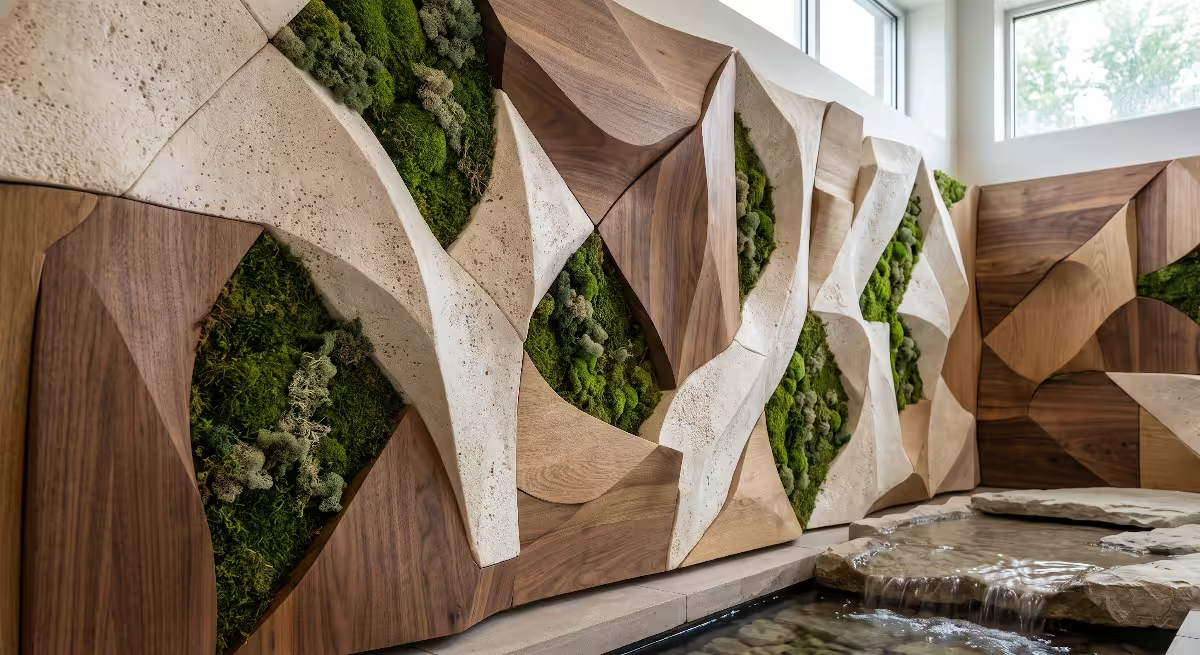
- Superior Materials and Craftsmanship: This is the tangible heart of luxury. It means using authentic Tennessee fieldstone for a fireplace, not a thin veneer. It’s the substantial feel of solid core doors, the flawless finish on custom cabinetry built by a local craftsman, and the durability of a standing-seam metal roof designed to last for fifty years. It’s choosing premium window packages from brands like Pella, Marvin, or Andersen that not only offer superior energy efficiency but also frame the stunning mountain views like works of art. The craftsmanship is in the details—the tight joinery of trim work, the perfectly level installation of sand-and-finish hardwood floors, and the thoughtful execution of complex rooflines.
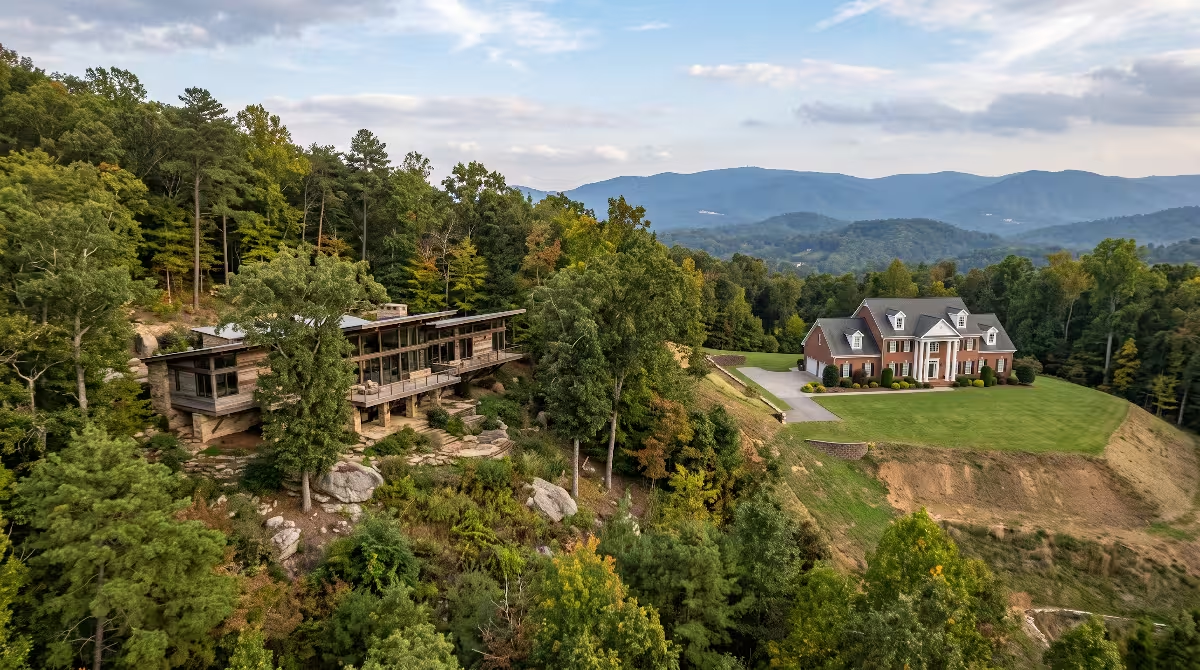
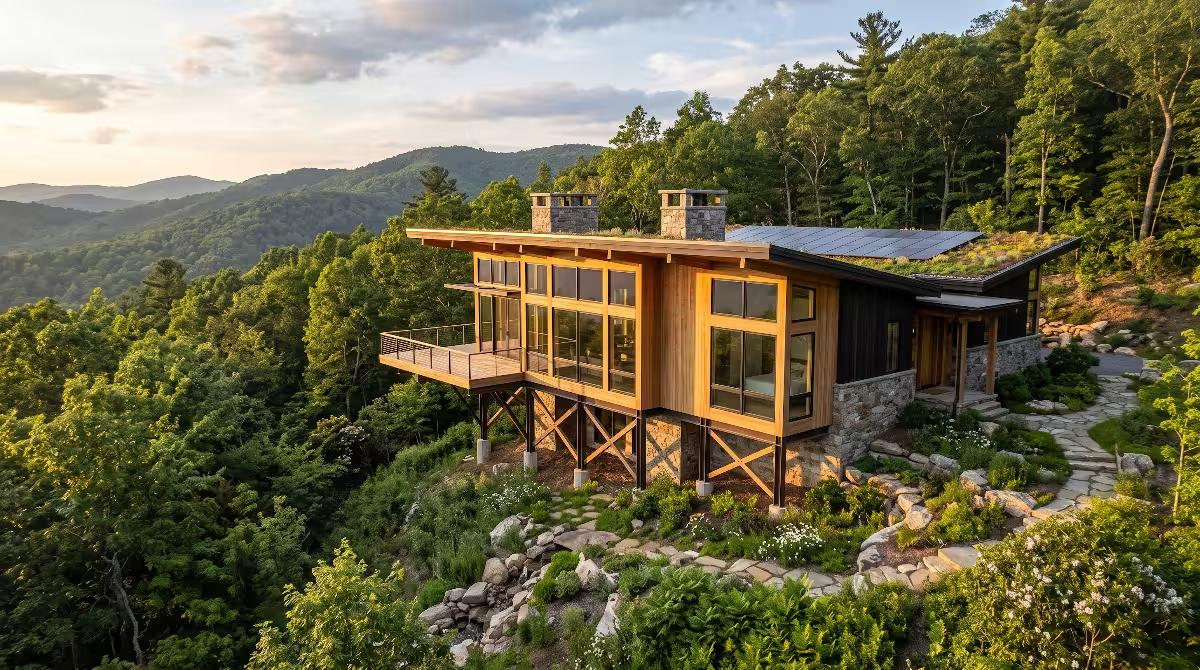
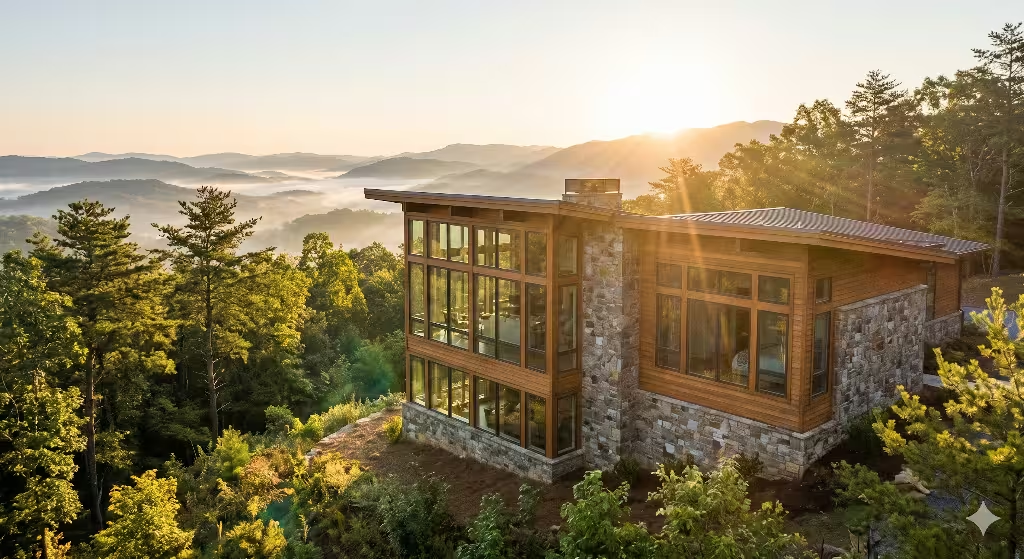
- Seamless Integration with the Landscape: A luxury home in our region doesn’t just sit on the land; it communicates with it. On a sloped lot in the mountains overlooking Johnson City, this means a design with a walk-out basement that creates multiple levels of outdoor living space. On a waterfront property on Boone Lake, it means orienting the primary living areas and master suite to capture panoramic water views and morning light. It involves careful site planning to preserve mature trees, minimize grading, and position the home to feel like a natural extension of its environment.
- Advanced Home Technology and Systems: True luxury is effortless. In a modern custom home, this is achieved through technology. This goes far beyond a smart thermostat. It means structured wiring, a central hub for all data, video, and audio cables that ensures robust connectivity throughout the home. This is especially critical in our hilly terrain where cellular and Wi-Fi signals can be a challenge. It includes multi-zone HVAC systems for consistent comfort, sophisticated security systems with integrated cameras, and whole-home audio that provides a seamless soundtrack to your life. The goal is technology that enhances your lifestyle without being obtrusive.
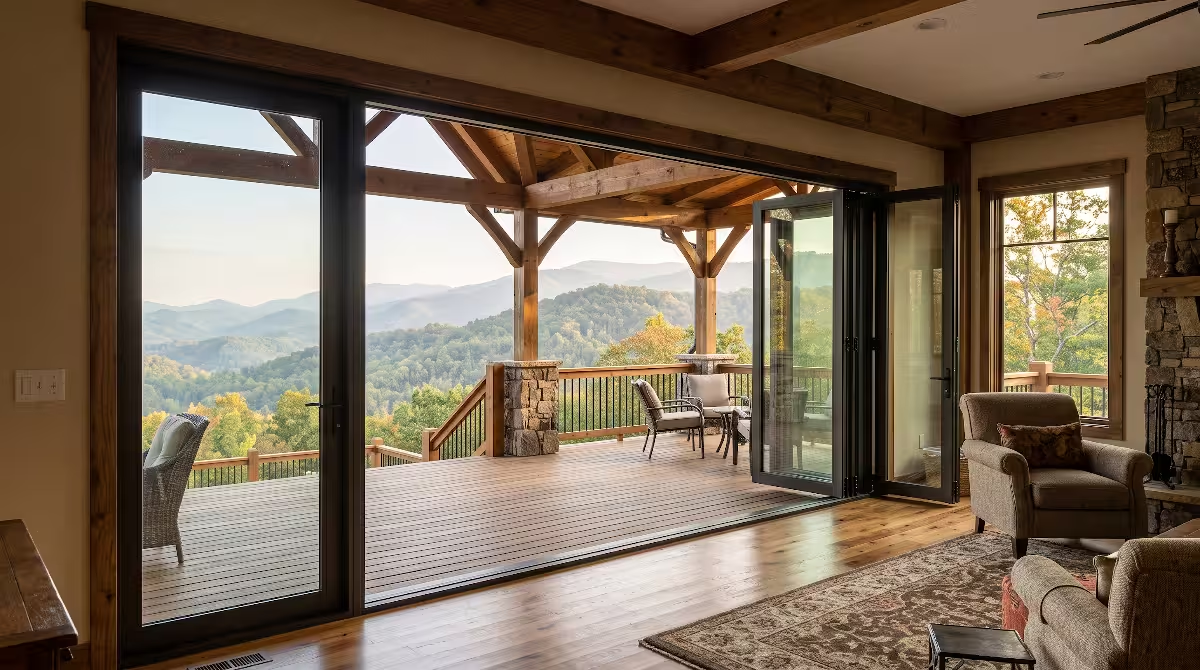
- Thoughtful and Expansive Design: Luxury design prioritizes flow, function, and feeling. This often translates to open-concept living areas that are grand yet inviting, perfect for both large-scale entertaining and quiet family evenings. A defining feature is often the primary suite on the main level, a private retreat with a spa-like bathroom, custom walk-in closets, and often its own private access to a patio or deck. The gourmet kitchen is another centerpiece, designed not just for aesthetics with professional-grade appliances from brands like Sub-Zero, Wolf, or Thermador, but for serious culinary work, incorporating principles of efficient workflow and ample storage. Finally, the connection between indoor and outdoor living is paramount. Expansive covered porches with their own fireplaces and outdoor kitchens are no longer an afterthought but a core component of the home’s design.
2. The Starting Point: Developing Your Custom Home Plan

The phrase luxury custom home plans Tri-Cities TN is what most people search for, but a “plan” isn’t something you simply find and buy. It’s something you create. This is the most personal and, for many, the most exciting phase of the entire process. It’s where your abstract ideas about your dream home begin to take on tangible form.
This phase is a dialogue. It starts with you. Before you ever speak to a professional, you should begin compiling your vision. Create a detailed “needs and wants” list. Be specific. How many bedrooms and bathrooms do you need now versus in ten years? Do you work from home and require a dedicated, quiet office? Do you love to entertain, suggesting a need for a formal dining room or a large, open kitchen island? Are you a hobbyist needing a workshop, an artist needing a studio with northern light, or a fitness enthusiast wanting a home gym? Collect images from magazines, Houzz, and Pinterest that capture the feeling you want your home to evoke.
With this personal brief in hand, you engage the professionals who will translate it into a buildable blueprint. You have a few options for your design team:
- The Architect: For a truly unique, high-end luxury home, a licensed architect is the traditional and often best choice. An architect does more than just draw floor plans. They conduct a thorough site analysis to determine the best placement and orientation of the home. They are trained in creative problem-solving, structural principles, and the artful use of space and light. They will guide you through multiple design revisions, from initial sketches to highly detailed construction documents that specify every material, from the foundation rebar to the cabinet hardware. Their fee is typically a percentage of the total construction cost, but their value in creating a cohesive, beautiful, and functional home is immeasurable.
- The Design-Build Firm: This model has gained significant popularity. A design-build firm offers both architectural design and construction services under one roof. The primary advantage is having a single point of contact and responsibility, which can streamline the process, improve communication, and potentially control costs more effectively. The designers and builders are part of the same team, collaborating from day one to ensure the design is both inspiring and buildable within your budget. When selecting a design-build firm, it’s crucial to review their portfolio to ensure their design aesthetic aligns with yours and to speak with past clients about their experience with the entire process, from design through final construction.
- The Home Designer/Draftsman: For less complex custom homes, a certified home designer or draftsman can be a viable option. They are skilled at producing detailed construction drawings based on your ideas and sketches. While they may not offer the same level of creative design input as an architect, they provide the essential blueprints needed for permitting and construction at a lower cost.
No matter which path you choose, the goal of this phase is to produce a complete set of construction documents. This is far more than a floor plan; it includes detailed elevations (what the house looks like from the outside), foundation plans, framing plans, electrical and plumbing plans, and cross-sections that show how the entire structure fits together. This set of plans is the language that will be used by every person who works on your home, from the excavator to the master electrician.
3. The Crucial Question: Unpacking the Cost of a Luxury Build
Any homebuilding conversation demands a direct and honest conversation about cost. Anyone who gives you a flat, simple price for a custom home without knowing every detail is not being truthful. The final cost is a complex equation with many variables. However, we can break down the components to give you a realistic framework for budgeting. The fundamental formula is:
Land Cost + Site Preparation Cost + Hard Costs (Construction) + Soft Costs = Total Project Cost
Let’s dissect each component:
- Land Cost: This is the most variable part of the equation. A one-acre lot in a standard subdivision in Washington County will have a vastly different price than a waterfront lot on Boone Lake or a golf-course lot within The Ridges in Johnson City. You must establish your land budget first, as this will dictate what remains for the home itself.
- Site Preparation Cost: This is the most frequently underestimated expense. An undeveloped lot is rarely “ready to build.” Site prep can include a surprising number of items: soil testing to ensure the ground can support the foundation, clearing trees and rock, extensive grading to create a level building pad and proper drainage, the cost of a long driveway, and bringing utilities (water, sewer/septic, electricity, gas) to the homesite. On a steep mountain lot, this can require expensive retaining walls. If your lot isn’t served by city sewer, you’ll need a septic suitability test and the installation of a complete septic system, which can easily cost $10,000-$20,000 or more. These costs are incurred before any construction on the house even begins.
- Hard Costs (Construction): This is the cost to physically build the house, and it’s typically discussed in terms of cost per square foot. For a luxury custom home in the Tri-Cities area in 2025, you should realistically budget for a range of $250 to $400+ per heated square foot. The final number within this wide range depends almost entirely on your choices:
- A
$250/sq fthome might feature luxury vinyl plank flooring, granite countertops, high-quality but standard-sized windows, and a mid-to-high-end appliance package. - A $400+/sq ft home will include features like wide-plank, sand-and-finish hardwood floors; custom-built cabinetry throughout; quartzite or marble countertops; professional-grade appliances like a 48″ Wolf range; a complex, multi-gabled roofline; and extensive stone and masonry work on the exterior.The complexity of the design also plays a major role. A simple, rectangular two-story home is far more cost-effective to build than a sprawling one-story home with numerous corners, complex roof angles, and deep foundations.
- A
- Soft Costs: These are the necessary expenses that aren’t physical materials or labor. They include architectural and engineering fees (which can be 5-15% of the construction cost), building permit fees from the city or county (Johnson City, Kingsport, etc.), construction loan interest and fees, and the builder’s fee (which covers their project management, insurance, and profit margin).
Understanding this formula allows you to have an intelligent, informed conversation with your builder and lender, ensuring there are no major financial surprises down the road.
4. The Building Process, Demystified: A Step-by-Step Timeline
Building a home is a marathon, not a sprint. A true luxury custom home, from the first design sketch to the day you receive the keys, can easily take 14 to 24 months. Patience and an understanding of the sequence are essential.
Phase 1: Pre-Construction (3-6 Months)
This is the strategic planning phase. It involves securing your financing via a construction loan, which is different from a standard mortgage. You’ll assemble your team—builder, architect, and perhaps an interior designer. The bulk of this time is spent on the design process, going through revisions of the plans until they are perfect. This phase concludes when you have a final set of architectural and engineering plans and a signed contract with your builder.
Phase 2: Permitting & Site Prep (1-2 Months)
Your builder submits the plans to the relevant local authority (e.g., Washington County Planning Office, Sullivan County Building Inspections) to obtain a building permit. While waiting for the permit, work can often begin on site preparation. This is when the excavators arrive to clear the lot, dig the foundation, and grade the site according to the plan. Trenches for utilities are dug, and the groundwork is laid.
Phase 3: Construction (9-18+ Months)
This is the longest and most visible phase, where the house takes physical shape. It follows a logical sequence:
- Foundation: The concrete footers are poured, and the foundation walls (either for a crawlspace, basement, or slab) are constructed.
- Framing: The “skeleton” of the house, the floor, walls, and roof trusses, is assembled. This is a rapid and exciting stage where you can finally walk through the rooms and get a feel for the space.
- Drying In: The home is made watertight. This involves installing the roof sheathing and covering, wrapping the exterior walls, and installing windows and exterior doors.
- The Mechanical Rough-In: This is a critical, behind-the-walls stage. Plumbers, electricians, and HVAC technicians run all the pipes, wires, and ductwork through the interior walls. You will do a walkthrough with the electrician to finalize the placement of every outlet, switch, and light fixture.
- Insulation: The exterior walls and attic are insulated. This is a key step for long-term energy efficiency. High-end builds often use spray foam insulation for its superior sealing properties.
- Drywall: The walls and ceilings are hung, taped, and finished. Suddenly, you have actual rooms.
- Exterior & Interior Finishes: This is a long stage where the character of the home emerges. On the outside, siding, brick, or stone is installed. Inside, a sequence of events unfolds: trim work and interior doors are installed, cabinetry is set, priming and painting begin, and flooring and tile are laid.
- Finals: The finish line is in sight. Plumbing fixtures (sinks, toilets, faucets), light fixtures, and appliances are installed. Countertops are templated and set. The driveway is poured, and landscaping begins.
Phase 4: Final Touches & Move-In (1 Month)
Your builder will conduct a final walkthrough with you to create a “punch list”—a small list of any items needing correction or adjustment. Once this is complete and the local inspector has issued a Certificate of Occupancy (CO), the home is officially yours.
5. Location Spotlight: Finding the Perfect Tri-Cities Homesite
The “where” is just as important as the “what.” Each area of the Tri-Cities offers a distinct lifestyle and building environment.
- Johnson City: As the largest city in the region, Johnson City offers a more dynamic, fast-paced environment. It’s home to ETSU and a major medical center, attracting many professionals. For luxury building, The Ridges is the premier golf course community, offering stunning homesites with mountain views and a highly regulated, prestigious environment. Building here means adhering to strict architectural review board guidelines, which protects property values for everyone.
- Kingsport: With its well-planned historic districts and strong industrial roots, Kingsport offers a more established, family-oriented feel. There are beautiful, mature neighborhoods and opportunities for building on larger parcels of land in the surrounding county. Proximity to the Holston River provides unique recreational opportunities.
- Bristol: Straddling the Tennessee-Virginia state line, Bristol has a unique culture centered around music heritage and NASCAR. Luxury building is often focused around communities like the Blackthorn Club, another premier golf development offering a mix of mountain and course views.
- Lakefront & Mountain Living: Many are drawn to our area for the natural beauty. Building on Boone Lake or the more expansive Watauga Lake presents unique challenges, including dealing with TVA regulations for docks and shoreline management, and often requires more extensive foundation work due to the topography. Similarly, building on a mountainside to capture a view of the Appalachian Mountains requires a builder experienced with steep-slope construction, driveway engineering, and geotechnical analysis.
6. Assembling Your A-Team: The Key to a Successful Build
You cannot build a luxury home alone. The success of your project will depend almost entirely on the quality, experience, and integrity of the team you assemble.
Your builder is your most important partner. When vetting a custom builder, don’t just look at their finished product. Ask to speak with clients who built with them one to two years ago to see how the home is performing. Ask them about their communication process, do they use a software portal for updates? How often will you meet on-site? Verify their license and insurance. Ask about their warranty program. A professional builder will welcome these questions. Check their reputation with local suppliers and the Home Builders Association of Tennessee (HBAT).
Your architect or designer should have a portfolio that excites you. You are hiring them for their vision, so make sure it aligns with yours. But just as important, ensure they are a good listener who is willing to translate your dream, not impose their own.
A great team communicates seamlessly. The best projects happen when the architect, builder, and interior designer have a collaborative relationship, working together from the beginning to value-engineer the plans and solve problems proactively. This synergy is the secret ingredient to a smooth, efficient, and enjoyable building experience.
Conclusion: Your Vision, Built with Precision
The journey of building a luxury custom home in the Tri-Cities is a significant undertaking, an investment of time, resources, and emotion. It’s a path that winds through creative design, financial planning, and the logistical complexities of construction. Yet, the final reward is unparalleled: a home that is a true reflection of your identity, built with quality craftsmanship to house your family’s legacy for generations to come.
The ultimate luxury is not extravagance for its own sake, but the quiet satisfaction of a space that works perfectly for you, nestled in the beauty of the East Tennessee landscape. It is achieved through a clear vision, a precise plan, and a partnership with a team built on a foundation of competence and integrity.