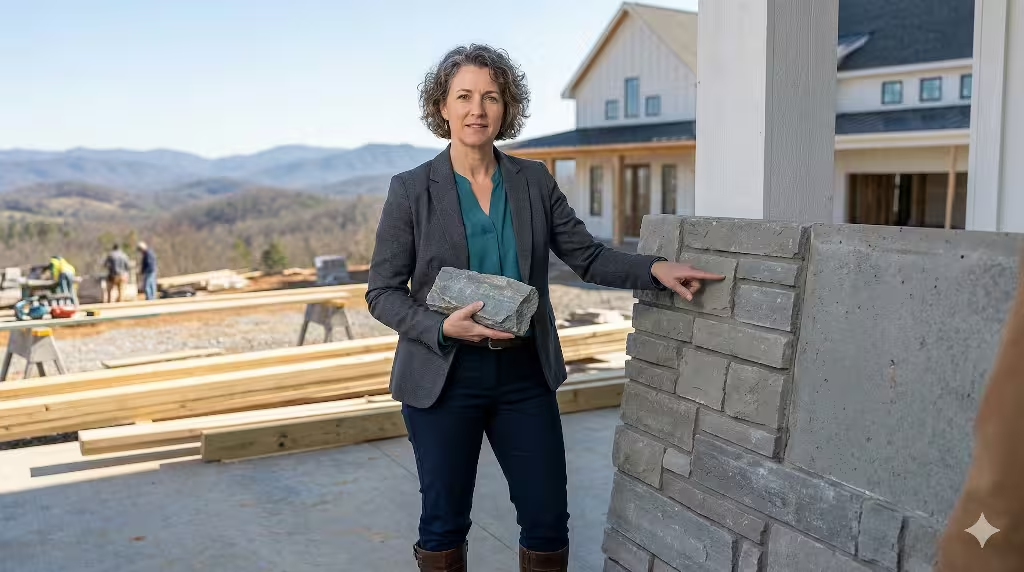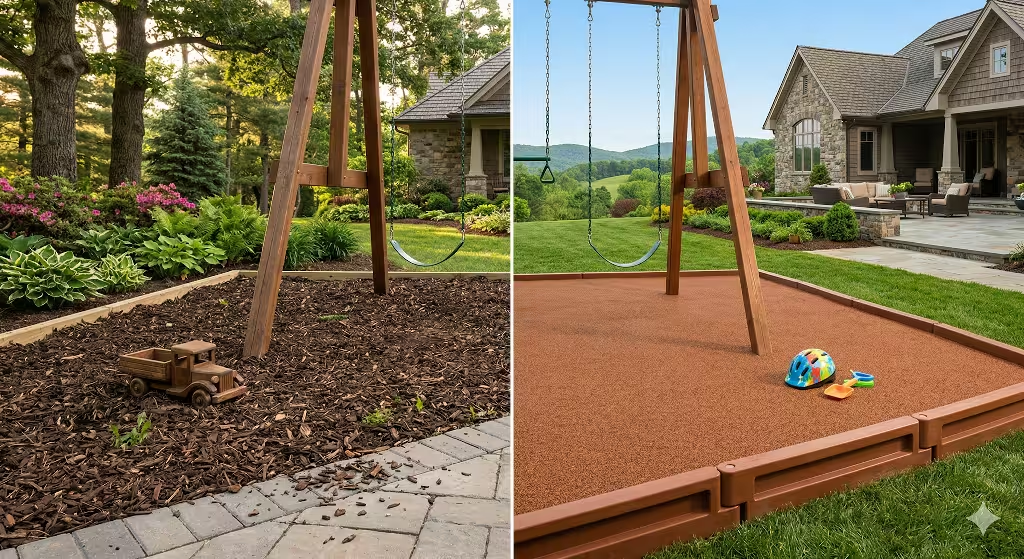

Building a custom home on a hillside in Northeast Tennessee offers breathtaking views of the Appalachian landscape, a reward that few other locations can match. But that beauty comes with unique engineering challenges. The most critical of these, and often the most misunderstood, is the retaining wall. Many aspiring homeowners get sticker shock when they see the budget line item for a properly engineered retaining wall, an expense that can sometimes feel disproportionate to its simple name. An inaccurate budget for this single element can derail an entire project before the first foundation is even poured.
Our goal with this article is to provide a clear, comprehensive breakdown of the factors that determine the retaining wall cost for a hillside home, specifically for those living and building in the Johnson City, Kingsport, and Bristol areas. We will move beyond simple per foot estimates to give you a true, competent understanding of the total investment. This is not just a wall; it’s a foundational piece of your home’s safety, longevity, and usability. Understanding its cost is the first step to mastering the slopes of the Tri-Cities and building the home of your dreams with precision and integrity.
Video Version of this Article
Why a Retaining Wall Isn’t Just a “Wall”
When you hear the term “wall,” you might picture a simple brick garden wall or a decorative stone fence. A retaining wall on a hillside is an entirely different beast. It is a highly engineered structure designed for one primary purpose: to hold back, or retain, tons of soil. Think of the immense, constant pressure that a hillside full of wet, heavy earth exerts. The retaining wall is the structure that fights back against that pressure, day in and day out. It’s not a passive feature; it’s an active structural element.
Its key tasks are fundamental to the safety and success of your home site.
- Preventing Erosion: First and foremost, a retaining wall is your home’s primary defense against erosion and soil slippage. On a slope, gravity is always at work, pulling soil, rocks, and everything else downhill. A properly built retaining wall stabilizes the slope, protecting your home’s foundation, your driveway, and your yard from slowly washing away during heavy Tennessee rains.
- Creating Usable Space: One of the greatest benefits of a hillside lot is the view, but the downside is a lack of flat, usable land. A retaining wall allows you to carve out level areas from an otherwise unusable slope. This is how you get a flat space for a patio, a driveway, a garden, or a small lawn for your kids and pets to play on. It transforms a challenging piece of land into a functional and enjoyable property.
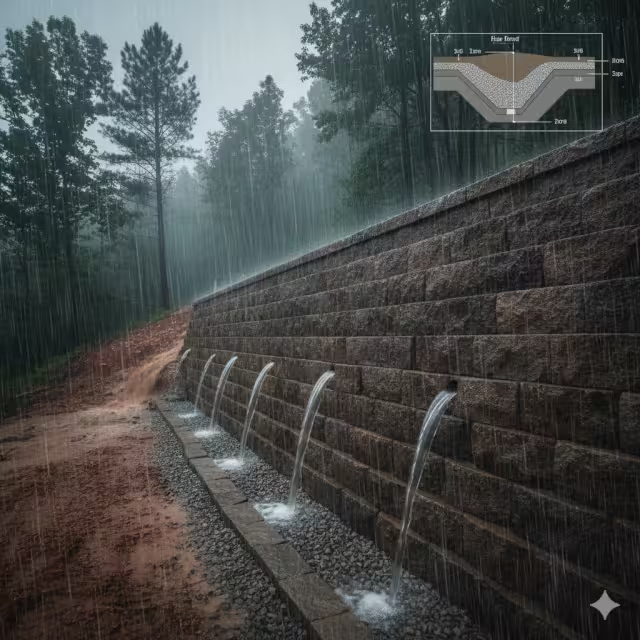
- Managing Water: This is perhaps the most critical and often overlooked function of a retaining wall. Water is the number one enemy of any retaining structure. When soil becomes saturated with water, it gets incredibly heavy and exerts immense force known as hydrostatic pressure. A well designed retaining wall is also a sophisticated drainage system.8 It is built to channel water away safely, relieving that pressure and preventing the wall from bowing, cracking, or failing completely.
The best analogy is to think of the retaining wall as the foundation for your landscape. You would never dream of cutting corners on your home’s concrete foundation, as you know the entire structure rests upon its integrity. The same principle applies to your retaining wall. It is foundational to the stability and safety of your entire property.
The Major Cost Factors: A Detailed Breakdown
Estimating the cost of a retaining wall is not as simple as measuring the length and multiplying by a set number. The total cost is a complex calculation based on several interconnected factors. Understanding these components will help you see why a quote might be higher than you initially expected and empower you to have an intelligent conversation with your builder.
1. Wall Size (Height and Length)
This is the most obvious factor, but its impact is more dramatic than most people realize. While the length of the retaining wall affects the cost in a straightforward way (a longer wall requires more material and labor), the height is a different story. The cost of a retaining wall increases exponentially, not linearly, with its height.
Why? Because as a retaining wall gets taller, the force of the soil behind it increases dramatically. A four foot high wall has to hold back significantly more than twice the pressure of a two foot high wall. To counteract this force, a taller retaining wall requires a deeper footing, more reinforcement inside the wall, more extensive drainage systems, and a much wider base of excavated land behind it. For example, doubling the height from four feet to eight feet could easily triple or even quadruple the total cost of the project.
2. Material Selection
The material you choose for the face of your retaining wall is a major cost driver, affecting both the price of the materials themselves and the type of labor required to install them. A simple timber wall will have a lower material cost than a natural stone wall, but the biggest differences often come down to the labor and engineering involved. We will cover the specific pros, cons, and costs of each material in the next section, but it is important to understand that your choice of aesthetics is directly tied to the project budget.
3. Site Access & Preparation
This is a huge variable, especially here in the hills of East Tennessee. The cost of building the exact same retaining wall can vary significantly based on the characteristics of your specific lot. How difficult is it for heavy equipment like an excavator or a cement truck to get to the construction site? A steep, narrow, wooded lot in the hills outside Kingsport will require more time, specialized equipment, and therefore more money to prepare than a clear, gently sloping lot with easy road access.
This phase includes excavation and grading. We must dig out the earth to create a stable, level base for the wall’s footing and to clear the area behind the wall for backfill and drainage. The more soil that needs to be moved, and the harder it is to move it, the higher the cost.
4. Labor
Building a retaining wall, especially one that is structurally critical to a hillside home, is not a job for a general handyman. It requires a skilled crew that understands grading, compaction, drainage, and the specific installation techniques for the chosen material. Labor can often account for 50% or more of the total project cost. This is an area where cutting corners is a recipe for disaster. A failed retaining wall is not just an expensive repair; it’s a serious safety hazard that can compromise your home’s foundation. The cost of skilled, experienced labor is an investment in peace of mind.
5. The “Unseen” Engineering
Much of what you are paying for in a quality retaining wall is completely invisible once the project is finished. These are the critical engineering components that ensure the wall will last for decades.
- Soil Conditions: East Tennessee is known for its clay soil. Clay expands significantly when it gets wet and shrinks when it dries, which puts unique stresses on a structure. In many cases, especially for larger or more complex walls, a geotechnical engineer may need to be consulted to analyze a soil report. This tells us precisely what we are up against and how to design the wall’s footing and drainage to handle the specific soil on your property.
- Drainage Systems: This is non negotiable. A proper drainage system is the life insurance policy for your retaining wall. This typically includes a layer of clean, crushed gravel directly behind the wall, a perforated pipe (often called a French drain) at the base to carry water away, and weep holes in the wall itself to relieve pressure. Without these elements, water will build up and push against the wall until it fails.
- Reinforcement: For taller walls (generally anything over four feet), reinforcement is essential. This might involve steel rebar placed inside poured concrete or concrete blocks. For segmental block walls, it involves laying down a high strength polymer mesh called geogrid fabric in horizontal layers extending back into the hillside as the wall is built. This fabric essentially ties the retaining wall to the earth behind it, dramatically increasing its strength and stability.
Comparing Materials: Pros, Cons, and Ballpark Costs
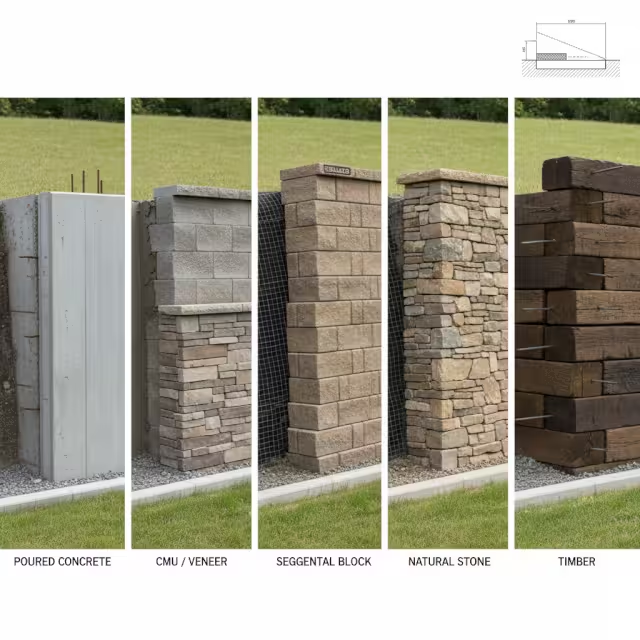
The material you choose for your retaining wall dictates its appearance, its lifespan, and a large portion of its cost. Here is a look at the most common options we use in the Tri-Cities area, along with their strengths, weaknesses, and estimated costs. Note that these costs are all inclusive estimates covering material, labor, and basic site prep, but can vary widely based on the factors we just discussed.
Poured Concrete
A poured concrete retaining wall is the workhorse of the industry. It’s built by setting up forms and pouring wet concrete, often reinforced with a grid of steel rebar.
- Estimated Cost: $40 to $75+ per square foot.
- Pros: It is incredibly strong, solid, and durable when built correctly. It’s the go to choice for very tall, critical walls where sheer strength is the most important factor. The finish can also be customized with stamps or stains to improve its appearance.
- Cons: The look can be very utilitarian and industrial, like a highway overpass. It requires a highly skilled crew to form and pour correctly, and it is prone to cracking if control joints are not properly installed.
- Best For: Tall, load bearing walls, such as those supporting a driveway, a garage, or the foundation of the home itself.
Concrete Masonry Units (CMU) or Cinder Blocks
This type of retaining wall is built by stacking hollow concrete blocks, which are then typically filled with concrete and reinforced with rebar.
- Estimated Cost: $30 to $60 per square foot.
- Pros: CMU walls are very strong and versatile. They are an excellent structural choice and can be faced with a more attractive material like stone veneer or brick to improve the aesthetics.
- Cons: Like poured concrete, the raw appearance is industrial and unappealing to most homeowners. The construction process is very labor intensive.
- Best For: Heavy duty applications and tiered walls where strength is paramount but where a veneer finish is planned for the final look.
Segmental Retaining Wall Blocks
These are the most popular choice for residential retaining wall projects today. These are high density, engineered concrete blocks from brands like Belgard or Keystone that are designed to interlock.
- Estimated Cost: $25 to $55 per square foot.
- Pros: They offer a great balance of strength, cost, and appearance. They come in a huge variety of colors, textures, and styles to match any home design. For shorter walls, they can even be a DIY friendly project, though professional installation is always recommended for walls on a hillside. The system is engineered to work with geogrid reinforcement, allowing for the construction of very tall, stable walls.
- Cons: They have height limitations without proper engineering and reinforcement. Some people feel they can look a bit mass produced compared to natural stone.
- Best For: Almost any residential application, from landscaping walls to tall, engineered structural walls supporting driveways and patios. This is often the most cost effective solution for a beautiful and permanent retaining wall.
Natural Stone
A natural stone retaining wall is built by a skilled stonemason who fits individual, irregular stones together. It can be a dry stacked wall or a mortared wall.
- Estimated Cost: $35 to $80+ per square foot.
- Pros: The beauty is unmatched. Each wall is a unique piece of craftsmanship that adds significant character and value to a property. It’s also extremely durable and will last a lifetime.
- Cons: This is by far the most expensive option, primarily due to the highly specialized and time consuming labor required. Finding a true, experienced stonemason can also be a challenge.
- Best For: High end custom homes where the budget allows for a premium, artisanal aesthetic and the retaining wall is a major landscape feature.
Timber / Wood
A wood retaining wall is typically built using pressure treated railroad ties or large landscape timbers.
- Estimated Cost: $20 to $45 per square foot.
- Pros: It generally has the lowest upfront material and installation cost. The rustic look can be appealing for certain home styles and natural settings.
- Cons: Wood has the shortest lifespan of any retaining wall material. Even when properly treated, it is susceptible to rot, decay, and insect damage. You can expect a lifespan of 15 to 20 years, after which it will need to be completely replaced. This makes it a poor long term investment for a critical wall.
- Best For: Short, non critical landscape walls and garden tiers where replacement in the future would not be a major structural issue. I would not recommend it for any wall over three feet high or any wall supporting a driveway, patio, or foundation.
Answering Your Top Questions
When homeowners start researching a retaining wall, they often have the same key questions. Here are direct answers to the most common queries we hear from clients in the Tri-Cities.
Q: Do I need an engineer for a retaining wall?
A: For a hillside home, the answer is almost certainly yes. Most local building codes, including those in Johnson City, Sullivan County, and Washington County, have a rule of thumb: any retaining wall over four feet in height requires a building permit and a design stamped by a licensed structural engineer.
Furthermore, any retaining wall that is supporting a significant load, like a driveway, a swimming pool, or your home’s foundation, will require an engineer’s approval regardless of its height. The engineer’s job is to analyze the soil, calculate the forces at play, and create a precise plan that specifies the wall’s footing depth, drainage system, and reinforcement schedule. This is a crucial step that ensures the safety and permanence of the structure.
Q: What is the cheapest type of retaining wall?
A: If you are only looking at the upfront installation cost, a simple timber retaining wall is often the cheapest. However, this is a classic case of “you get what you pay for.” Because of its limited lifespan and susceptibility to rot, it is not the most cost effective choice in the long run, especially for a critical structural wall. For a permanent, engineered retaining wall on a hillside, a segmental block system is frequently the most cost effective solution. It provides an excellent blend of engineered strength, long term durability, and attractive aesthetics at a more accessible price point than poured concrete or natural stone.
Q: Does a retaining wall add value to a property?
A: Absolutely. A well built, attractive retaining wall adds significant value to a property in several ways. First, it adds functional value by increasing the amount of usable land on your property, creating spaces for outdoor living that would otherwise be impossible on a steep slope. Second, it adds aesthetic value and curb appeal; a beautiful stone or block wall is a major landscape feature that enhances the home’s overall appearance.
Finally, and most importantly, it adds value by providing structural safety and peace of mind.32 A stable, professionally installed retaining wall protects your largest investment, your home, from damage.33 Conversely, a failing or poorly built retaining wall is a major liability that can significantly decrease your property’s value and be a major red flag for potential buyers.
Q: How do you build a retaining wall on a steep slope?
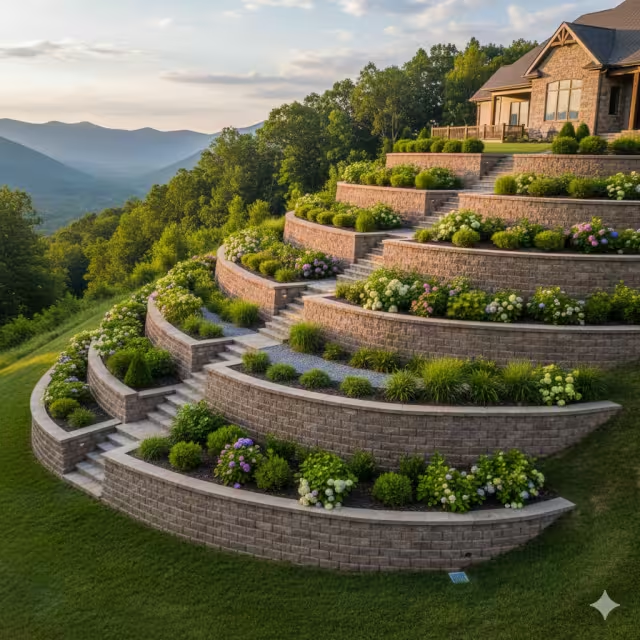
A: The best practice for handling a very steep or tall slope is to build tiered retaining walls. Instead of one single, massive, and visually imposing wall, the slope is cut back in a series of steps. A shorter retaining wall is built at each step.
This approach is superior for several reasons. Structurally, it is far more stable because each individual wall is only retaining a small portion of the total hillside. This reduces the pressure on any single wall. Aesthetically, it looks much more natural and pleasing to the eye. The flat terraces created between the walls are also perfect spots for planting gardens, shrubs, and small trees, which helps to soften the look of the structure and integrate it beautifully into the landscape.
Conclusion: Budgeting with Precision and Integrity
As we have seen, the cost of a retaining wall for your hillside home is far more than a simple price per foot. It is a detailed calculation based on the wall’s size, the materials you choose, the specific challenges of your property, and the critical, often invisible, engineering that ensures it will last a lifetime. The biggest mistake a homeowner can make is to underestimate this cost or to cut corners on design and installation.
When you are planning your custom home in the Tri-Cities, my best advice is to treat the retaining wall with the same seriousness as your home’s foundation. The investment you make in proper engineering and professional installation is not just an expense; it is a permanent improvement that protects your property, enhances its beauty, and secures your peace of mind for decades to come.
If you are planning a custom home in our area and want to build safely and beautifully on your hillside property, understanding these costs is the first step. Contact us to discuss your project. We can help you navigate the complexities and ensure your home is built on a foundation of competence and integrity from the ground up.