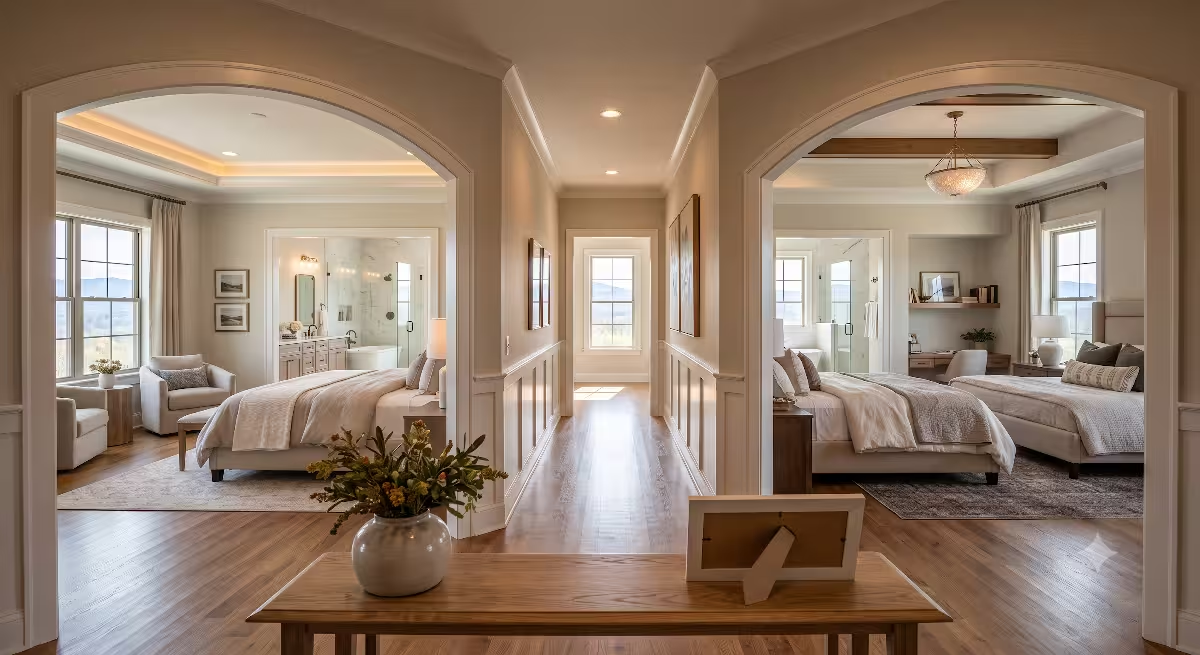

A common thread with buyers of custom homes, especially in the Johnson City, Kingsport, and Bristol areas, is that people are not just building a house. They are investing in what they hope will be their “forever home.” This is a home that should serve them just as well the day they move in as it does twenty or thirty years down the road. But to achieve that goal, the design must be smart, competent, and precise. It must be built with integrity.
From an engineering and building perspective, the single most important factor in a “forever home” is its circulation. This is simply the term we use to describe how you move through your home. Think of it as the home’s “flow.” It’s the path from your car to the kitchen with armloads of groceries. It’s the ease of walking from your bedroom to the bathroom in the middle of the night. It’s the flow of guests from the entryway to the living room. When circulation is poor, the home creates friction, frustration, and even hazards. When circulation is good, it feels effortless.
This is the core of universal design. It is a design philosophy, not a specific style. Its goal is to create spaces and environments that are usable by all people, to the greatest extent possible, without needing to adapt or install specialized equipment later. The concept was pioneered by architect Ronald Mace, who envisioned a world where spaces were built for all abilities from the start.
A question people often ask is, “What is the difference between universal design and ADA-compliant design?” It’s a critical distinction.
- ADA (Americans with Disabilities Act) Design is a legal, civil rights requirement for public spaces. It is a set of specific rules to ensure access for people with known disabilities. Think of a steel ramp added to the side of a restaurant or a specific stall in a public restroom. It is often functional, but it can feel clinical and separate.
- Universal Design is a proactive philosophy for all spaces, especially private homes. It is not about accommodating one specific disability; it’s about creating a better, more comfortable, and more convenient space for everyone. It benefits a toddler learning to walk, a parent pushing a stroller, a person with a temporary sports injury, and an aging resident who wants to live independently.
Good universal design is invisible. It’s just good design. It ensures your home’s circulation works for every person, at every stage of life.
The 7 Principles of Universal Design (and How They Define Circulation)
To understand universal design from a builder’s perspective, we must look at the seven core principles. These were developed at the Center for Universal Design at North Carolina State University.4 I use these principles to guide my clients in making precise, long-lasting decisions about their home’s floor plan and flow.
1. Equitable Use: The Same Experience for All

- What it is: This principle states that the design should be useful and marketable to people with diverse abilities. Most importantly, it should provide the same means of use for all users. It avoids segregating or “othering” anyone.
- How it impacts home circulation: This principle directly attacks the most common barrier in a home: the front entrance. How many homes in our area have a beautiful set of brick stairs leading to the front door, and a sloping grass path around to a single, concrete step at the back or garage door? This creates two different, and unequal, experiences.
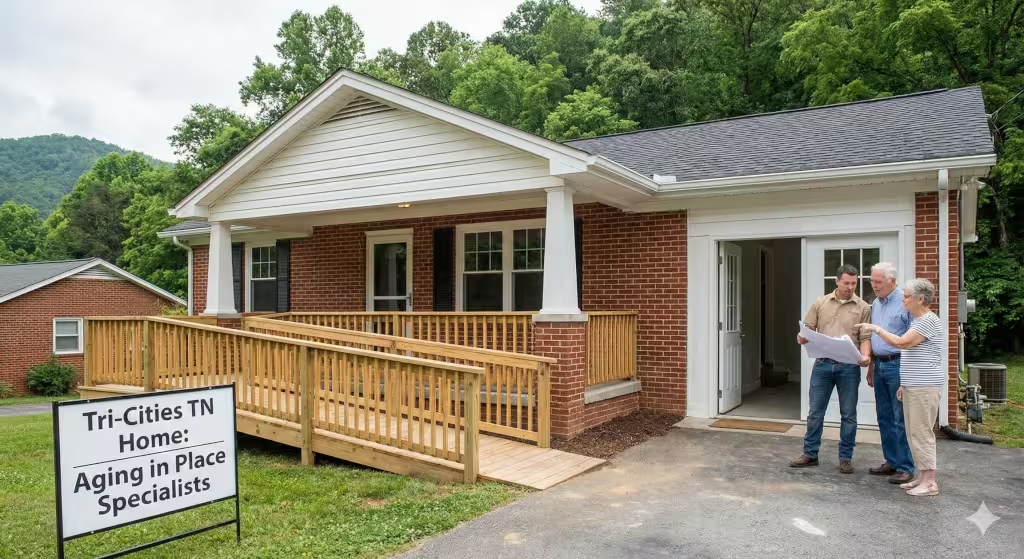
- Practical Application: The gold standard of universal design is the zero-step entry. This means your main entrance, the one guests use, has no steps. The threshold is flat, allowing a seamless transition from the porch or walkway right into the foyer. This isn’t just for wheelchair users. It’s for parents with strollers, for moving furniture, for rolling luggage, or for when your knee is acting up. Everyone gets the same, dignified, and easy entry. Equitable use in universal design means no one has to use a “special” entrance.
2. Flexibility in Use: Choices and Range of Abilities

- What it is: This principle means the design accommodates a wide range of individual preferences and abilities. It provides choice.
- How it impacts home circulation: Moving from room to room involves passing through doorways. The hardware on those doors can either be an obstacle or an afterthought. The traditional round doorknob, for example, requires a tight grip and a twisting motion. This can be difficult for someone with arthritis, a child, or a person carrying a laundry basket.
- Practical Application: The universal design solution is the lever-style door handle. It can be opened with a closed fist, an elbow, or a single finger. It offers flexibility. This same idea applies to faucets (lever handles instead of twist knobs) and even closet storage. An adjustable closet rod system, which can be high for an adult or low for a child or someone in a chair, is a perfect example of flexible universal design. This approach allows the home to adapt to you, rather than forcing you to adapt to the home.
3. Simple and Intuitive Use: Clarity in Design

- What it is: The design should be easy to understand, regardless of the user’s experience, knowledge, language skills, or current concentration level.
- How it impacts home circulation: Have you ever been in a home with a confusing floor plan? You open the front door and are faced with a wall, or a narrow hall that splits in three directions. This is poor intuitive use. Good circulation is intuitive. The flow of the home should make sense. A guest should be able to find the main living area or the powder room without needing a map.
- Practical Application: As a builder, this principle is all about the blueprint. We design a clear path, or “line of sight,” from the entryway to the primary gathering space (like the great room or kitchen). This creates a welcoming, easy-to-navigate feel. This principle also applies to the home’s controls. Rocker-panel light switches are a classic universal design feature. They are large, flat, and require no fine motor skills. You can find them in the dark and operate them with an elbow. They are simply more intuitive than a small toggle switch. A well-designed smart home system is also a great example of this. Using your voice to turn on lights is simple, intuitive, and a feature of universal design.
4. Perceptible Information: Communicating the Space
- What it is: This principle states that the design should communicate necessary information effectively to the user, regardless of ambient conditions or the user’s sensory abilities.
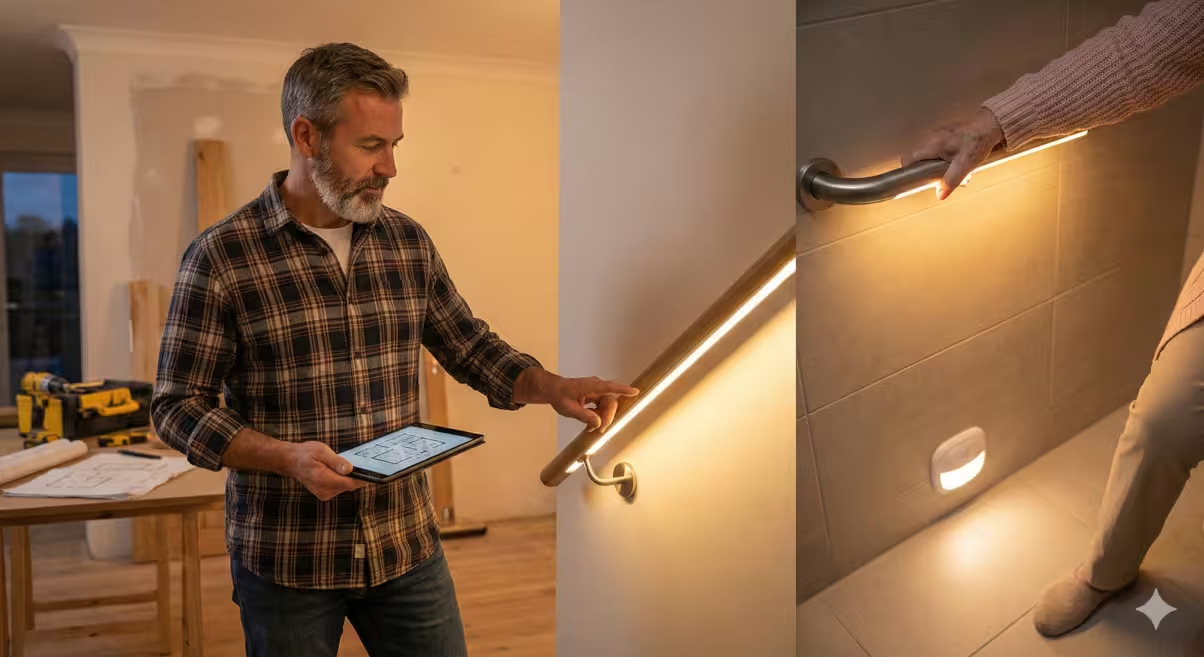
- How it impacts home circulation: Moving safely through a home means you need to “perceive” the path. The biggest factor here is lighting. A dark hallway or a poorly lit staircase is a major hazard. This principle is about using different modes—sight, sound, and touch—to make the home’s circulation clear.
- Practical Application: A robust universal design plan includes layered lighting.
- Ambient Light: Good overhead lighting in all hallways and rooms.
- Task Light: Focused light for specific actions, like under-cabinet lights in the kitchen or bright lights over the shower.
- Pathway Light: Low-level, motion-sensor lights on the path from the bedroom to the bathroom for safe navigation at night.
- It also includes contrast. For someone with low vision, contrast is key. This can be as simple as choosing a dark-colored countertop to contrast with light-colored cabinets, or using a different flooring material to subtly, and perceptibly, mark the transition from the living room to the kitchen.
5. Tolerance for Error: Minimizing Hazards

- What it is: This is the safety principle. It means the design minimizes hazards and the adverse consequences of accidental or unintended actions.
- How it impacts home circulation: From an engineering standpoint, this is about identifying and eliminating the most common points of failure. When moving through a home, where are you most likely to fall? The answer is almost always in the bathroom or on the stairs.
- Practical Application: The single most important universal design feature here is the curbless shower, also called a roll-in shower. A traditional shower has a 4-to-6-inch curb you must step over. This is a significant trip hazard. A curbless shower has a floor that is flush with the main bathroom floor, with the drain integrated into a sloped design. It is safer for everyone and is a cornerstone of modern universal design.
- Other examples of this universal design principle include:
- Anti-slip flooring in bathrooms, mudrooms, and kitchens.
- Rounded corners on countertops (less hazardous if you bump into them).
- Non-glare surfaces (high-gloss floors can create disorienting reflections).
- Placing the microwave at counter height or below, rather than above the stove, to avoid lifting hot liquids over your head.
6. Low Physical Effort: Designing for Efficiency

- What it is: This principle means the design can be used efficiently and comfortably with a minimum of fatigue.
- How it impacts home circulation: This is where we talk about “aging in place.” The single greatest physical effort in most homes is climbing stairs. While a two-story home is common, relying on those stairs for daily, essential tasks is a design flaw in a “forever home.”
- Practical Application: The best universal design strategy for a custom home is one-story living. This means designing the floor plan so that all essential functions are on the main floor. This includes:
- The primary bedroom.
- A full, accessible bathroom.
- The laundry room.
- The kitchen and main living area.
- A zero-step entry into the home.
- This universal design layout means that if a resident ever has a mobility issue, whether temporary (like a broken leg) or permanent, the home is already 100% functional for them. They are not isolated in a downstairs room. This efficient design reduces daily fatigue and is the key to independence and a core feature of universal design.
7. Size and Space for Approach and Use: Room to Move
- What it is: This principle states that the design must provide appropriate size and space for approach, reach, and use, regardless of a person’s body size, posture, or mobility.
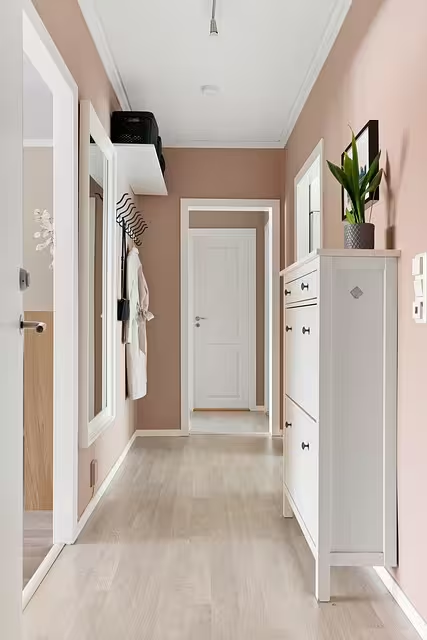
- How it impacts home circulation: This is the most direct and technical part of home circulation. It’s the “engineering” of the flow. If hallways are too narrow or doorways too small, the home becomes a frustrating maze. This is a common shortcut I see in production-built homes, and it’s a mistake.
- Practical Application: In universal design, we follow specific, precise measurements.
- Wider Hallways: A standard hallway might be 36 inches wide. A universal design hallway should be a minimum of 42 inches wide. This extra 6 inches is the difference between feeling cramped and feeling open. It allows two people to pass each other without turning sideways.
- Wider Doorways: A standard interior door opening is often 28 or 30 inches. A universal design doorway must provide at least 32 inches of clear passage. To get this, you must install a 34-inch or, ideally, a 36-inch door slab. This extra width is essential for moving furniture, carrying large items, or using a walker or wheelchair.
- Clear Floor Space: This means leaving enough open floor space in key rooms for a person to turn around. The standard is a 5-foot (60-inch) turning radius. We design this clear space into the kitchen (between the island and counters), in the primary bathroom, and in the entryway.
- This principle of universal design is not about building a bigger home; it’s about building a smarter home by allocating the square footage correctly.
The Practical Benefits: Why Custom Home Buyers in Johnson City & Kingsport Should Care
As a builder who values competence and precision, I always focus on the practical, real-world benefits for my clients. Implementing universal design is not just a “nice idea”; it is a precise strategy that saves you money, improves your quality of life, and increases the value of your home.
Is Universal Design Expensive?
This is the most common question I get. The answer is direct: No, not if you plan for it.
The cost of universal design is all about when you implement it. It is exponentially more cost-effective to integrate these principles during the new construction phase than to retrofit a home later.
Let me give you a precise, practical example: Grab Bars.
In a universal design home, we know that someone may want to add grab bars in the shower or by the toilet one day. During the framing stage, before any drywall goes up, we install solid wood “blocking” (simple 2×6 or 2×8 boards) inside the walls at the correct heights. The cost of this material and labor? Maybe fifty dollars.
Years later, when you need to install those grab bars, the installer can screw them directly into that solid wood. The installation is fast, secure, and clean.
Now, let’s say you didn’t plan for this. To retrofit grab bars, the installer has to cut open the drywall, install blocking, patch the drywall, tape, mud, sand, and repaint… then install the grab bars. A fifty-dollar proactive step just became a $1,500 reactive repair.
This same logic applies to everything:
- Widening a hallway on a blueprint costs nothing. Widening it in an existing home means demolishing, reframing, and moving electrical and HVAC.
- Creating a curbless shower during the build is about properly sloping the subfloor. Creating one later means a full, $20,000+ bathroom demolition.
Planning for universal design from the start is the single most competent financial decision you can make in a custom build.
Does Universal Design Look Institutional or Ugly?
This is the biggest myth about universal design, and I am happy to say it is completely false. Good universal design is invisible. It is simply good design.
The “institutional” look people fear comes from ADA-compliant retrofits in public buildings. Your home is different. The universal design features we build are often the very same features you see in high-end, luxury, and spa-like homes.
- A curbless shower with seamless floor-to-wall tile is not a “hospital” feature.19 It is a luxurious, spa-like feature that makes the room feel larger and more elegant.
- A wide, 42-inch hallway does not feel “clinical.” It feels grand, open, and airy.
- Lever door handles and rocker light switches are not “medical” looking. They come in thousands of high-end designer finishes from brands like Emtek, Baldwin, and Lutron.
- A floating vanity that allows a wheelchair to roll under it also happens to be a very popular, modern design trend that makes a bathroom easier to clean.
You do not have to choose between beauty and function. The entire point of universal design is to blend them so perfectly that you only notice how comfortable and easy your home feels.
Long-Term Value & Marketability
As an expert in Tri-Cities development trends, I can tell you that the market is changing. The large Baby Boomer generation is actively seeking “aging in place” homes. The AARP reports that the vast majority of seniors want to stay in their own homes as they age.
By building a home with universal design, you are not limiting your market. You are massively expanding it.
Your home will appeal to:
- Young families with small children and strollers.
- Anyone with a temporary injury.
- Families practicing multi-generational living (with aging parents moving in).
- Retirees and “pre-retirees” looking for their forever home.
A home with a main-floor primary suite, wide hallways, and a zero-step entry is, from a real estate perspective, a more competent and valuable asset. It has a build integrity that standard-built homes lack. This thoughtful approach to universal design will pay dividends when it comes time to sell.
A Practical Checklist for Your Custom Home Build

When you are ready to discuss your plans, here is a precise checklist based on my engineering and carpentry background. These are the key items for ensuring your home’s circulation is built on universal design principles.
Exterior & Entry
- [ ] Zero-Step Entry: Ensure at least one entry (ideally from the garage or the main walkway) has no steps and a threshold no higher than 1/2 inch.
- [ ] Clear Pathways: Walkways from the driveway to the door should be at least 36 inches wide (42 inches is better) and made of a smooth, stable surface.
- [Covered Entryway:] A porch or awning that protects you (and your packages) from rain and snow while you are unlocking the door.
- [ ] Good Lighting: All pathways and the entry door lock should be well-lit.
Interior Hallways & Doors (Horizontal Circulation)
- [ ] 42-Inch Hallways: Specify a minimum of 42 inches for all main hallways.
- [ ] 36-Inch Doors: Specify 36-inch (3′-0″) door slabs for all interior doors, or at a minimum, for the primary bedroom, a main-floor bathroom, and the laundry room. This gives you the required 32-34 inches of clear passage.
- [ ] Lever Hardware: Install lever-style handles on all doors.
- [ ] Rocker Switches: Install rocker-style light switches.
- [ ] Switch & Outlet Heights: This is a precise detail. Place light switches lower (42-48 inches from the floor) and electrical outlets higher (15-18 inches from the floor). This makes switches reachable from a chair and outlets reachable without bending over completely. This is a core universal design detail.
Key Rooms (The “Hubs” of Circulation)
- [ ] Main-Floor Living: This is the #1 priority for a “forever home.” The floor plan must include a primary bedroom, a full bathroom, and the laundry facilities all on the main level.
- [ ] The Kitchen:
- [ ] Ensure 42-48 inches of clear space between all counters, islands, and appliances.
- [ ] Plan for pull-out shelves in base cabinets (low physical effort).
- [ ] Consider a side-hinged “wall oven” instead of a traditional one (safer access).
- [ ] Consider varied-height counters. A section of a counter at 30-32 inches is perfect for baking or for working while seated.21
- [ ] The Bathroom:
- [ ] Curbless (Roll-in) Shower. This is non-negotiable for a true universal design home.
- [ ] Solid Wall Blocking. Install 2×8 blocking in the walls around the toilet and inside the shower (at 33-36 inches) for future grab bar installation.
- [ ] 5-Foot Turning Radius. Ensure there is a 60-inch-diameter clear circle of floor space.
- [ ] Comfort-Height Toilet. These are 2-3 inches taller and easier to use.
Vertical Circulation (Stairs)
- [ ] For Two-Story Homes: If you have stairs, they should be at least 42 inches wide.
- [ ] Handrails: Install secure handrails on both sides of the stairway.
- [ ] Proper Lighting: Ensure the stairs are well-lit from both the top and the bottom.
- [ ] The Future-Proofing “Shaft”: This is my top expert tip. If you are building a two-story home, design the floor plan with closets of the same size (about 5’x5′) stacked on top of each other. This creates an open shaft inside the home’s structure. It costs nothing extra to frame. Years from now, this shaft can be easily and inexpensively converted to accommodate a residential elevator. This single, precise bit of planning is the ultimate expression of universal design.
Conclusion: Your Best Home Building Experience
Universal design is not about planning for a worst-case scenario. It is about engineering a best-case scenario. It’s about building a home that is smarter, safer, more comfortable, and more convenient for every single person who walks through the door. It is the only way to build a true “forever home.”
As a builder and engineer, my core values are competence, precision, and integrity. A home built with universal design principles is the very definition of those values. It is a home that is competently planned for the future, precisely engineered for performance, and built with the integrity to serve your family for a lifetime.
When you’re ready to discuss the floor plan for your custom home in the Tri-Cities, contact us. We can ensure these principles of universal design are engineered into your home from day one, giving you the best possible home building experience and a home that truly lasts.