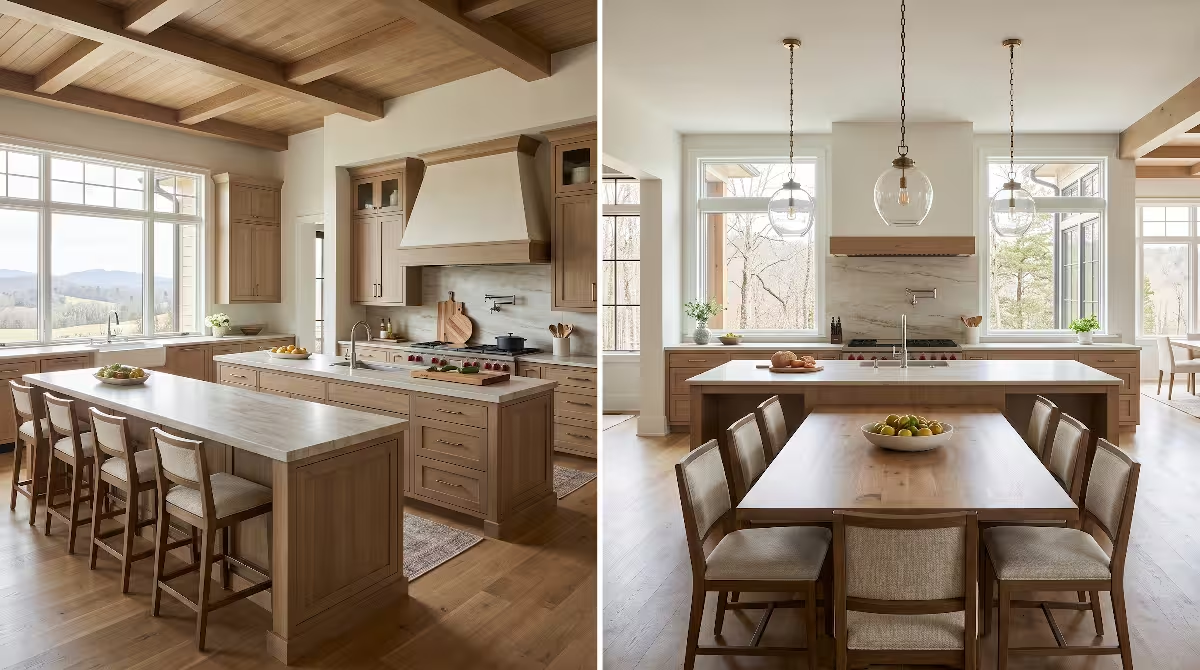

A kitchen should be the heart of the home for everyone, regardless of their age or mobility. It’s a place for nourishment, conversation, and creating memories. When a kitchen becomes difficult or unsafe to use, it can limit a person’s freedom within their own home. This is why an accessible remodel isn’t just a renovation project; it’s a major investment in safety, independence, and comfort for years to come. Many homeowners are hesitant to start this journey because the costs seem daunting and the process unclear. They worry about unforeseen expenses and whether the final result will truly meet their needs.
A well designed kitchen can transform a person’s daily life, restoring their confidence and ability to care for themselves. This guide will provide a clear, precise breakdown of the costs involved in an accessible kitchen remodel. We will walk through every factor, from cabinets to appliances, helping you create a realistic budget for a kitchen that truly works for you or your loved ones. You will learn about the average cost ranges, see a detailed breakdown of where the money goes, understand the key features that impact the final price tag, and discover information on grants, financial aid, and practical ways to save.
Video Version of this Article
The Bottom Line: What’s the Average Cost of an Accessible Kitchen Remodel?

Every project is unique, tailored to the specific needs of the individual and the existing layout of the home. As such there is no single answer as to the cost of a remodel. However, based on national averages, most homeowners can expect the cost of an accessible kitchen remodel to fall somewhere between $15,000 and $50,000. This is a wide range, so to make it more useful, I like to break it down into different tiers of work.
Basic Modifications ($9,000 – $15,000): This tier is for homeowners who don’t need a complete overhaul but want to make significant, high impact improvements. The focus here is on modifying the existing space rather than starting from scratch. Changes might include installing pull-down shelving units in upper cabinets, replacing cabinet knobs with easier to use D-shaped pulls, swapping out a standard faucet for a touchless or lever handled model, and improving task lighting over key work areas. This level of investment can dramatically improve the usability of a kitchen without the expense of a full demolition. The cost of an accessible kitchen remodel at this level is focused on targeted upgrades.
Mid-Range Remodel ($20,000 – $40,000): This is the most common scope for an accessible kitchen remodel. It involves a more comprehensive renovation, often including the replacement of major components. In this range, you could expect to install new, lower countertops with multiple height levels, create a dedicated roll-under workspace and sink area, purchase a full suite of ADA compliant appliances, and lay down new non-slip flooring. This tier offers a balance between significant functional improvements and budget, resulting in a kitchen that is fundamentally safer and more accessible. A mid-range project represents a very typical cost of an accessible kitchen remodel for families planning for the long term.
High-End, Fully Integrated Remodel ($50,000+): For those seeking a fully customized, universal design kitchen, this is the top tier. These projects often involve gutting the kitchen down to the studs, possibly moving walls to improve the layout and create more turning radius for a wheelchair. This budget allows for high end custom cabinetry with automated features, premium accessible appliances, smart home integration for lighting and faucets, and luxury finishes throughout. The focus is on creating a seamless environment that is beautiful, highly functional, and usable by every person, regardless of their ability. At this level, the cost of an accessible kitchen remodel reflects a complete transformation of the space.
Cost Factor Breakdown: Where Does Your Money Go?

Understanding the final cost of an accessible kitchen remodel requires looking at its individual parts. Each component plays a role in both the function and the budget of the project. Here’s a detailed look at where your investment goes.
Cabinetry (25-35% of Budget)
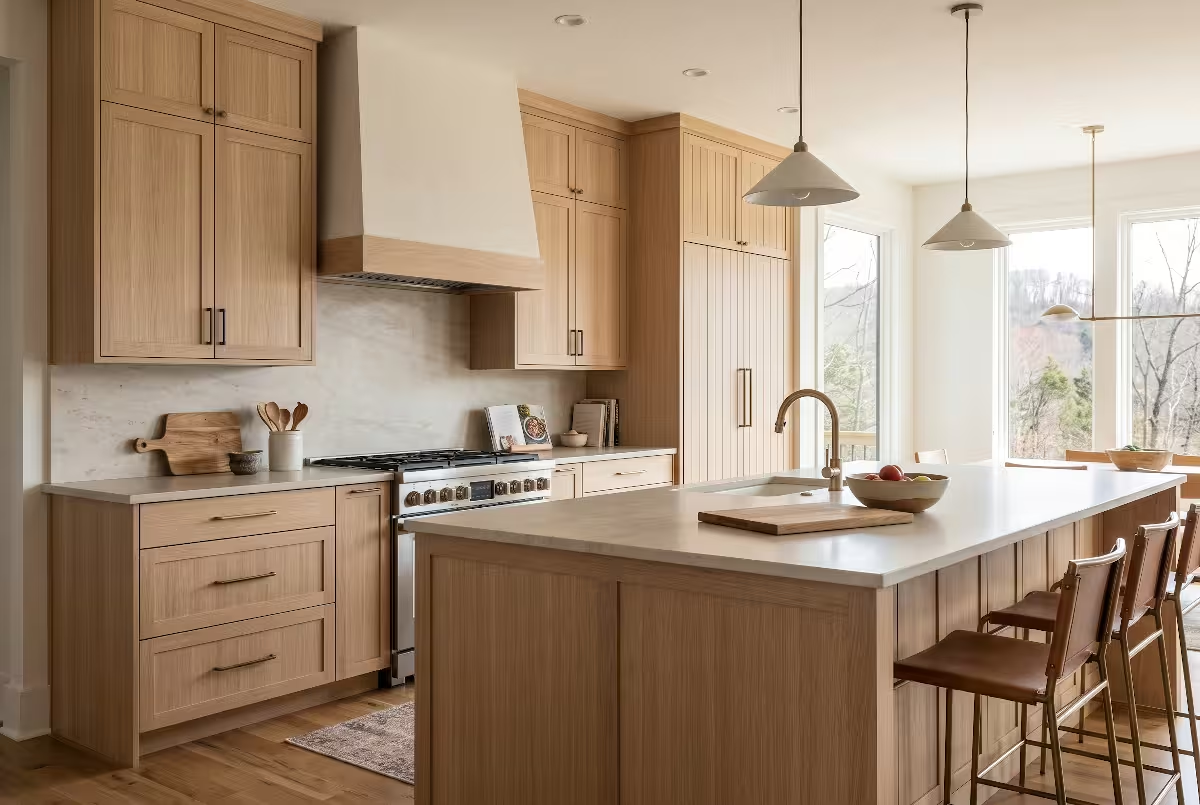
Cabinets are often the largest single expense in a kitchen remodel, and for an accessible design, they are critically important. The choice is between modifying your existing cabinets or replacing them entirely. Replacement offers more flexibility but comes at a higher cost.
- Key Features & Costs: The features you choose will greatly influence the cost. Simple D-shaped pulls might only cost a few hundred dollars for the entire kitchen, while specialized hardware can be more. Pull-down shelving units, which bring the contents of an upper cabinet down to countertop level, are a fantastic feature and typically cost $300 to $700 per cabinet. Instead of traditional shelves behind doors, full extension drawers in base cabinets are much easier to access and see into. A bank of large drawers can be more expensive than standard cabinet bases, but the functional gain is immense. To create essential knee space for a seated user, we often remove a base cabinet under the sink or a section of the countertop. This modification itself is simple, but it requires finishing the surrounding cabinets and floor, which adds to the labor cost. The overall cost of an accessible kitchen remodel is heavily influenced by these cabinetry choices.
Countertops (10-15% of Budget)
Countertops are a major visual and functional element.4 For accessibility, the key is providing varied heights and safe edges.
- Multi-level Surfaces: The standard countertop height is 36 inches, which is too high for a seated user. We often design kitchens with sections at 34 inches, 30 inches, and sometimes even lower. This creates comfortable work surfaces for everyone. Creating these different levels requires more complex fabrication and installation, increasing the cost compared to a single-level installation.
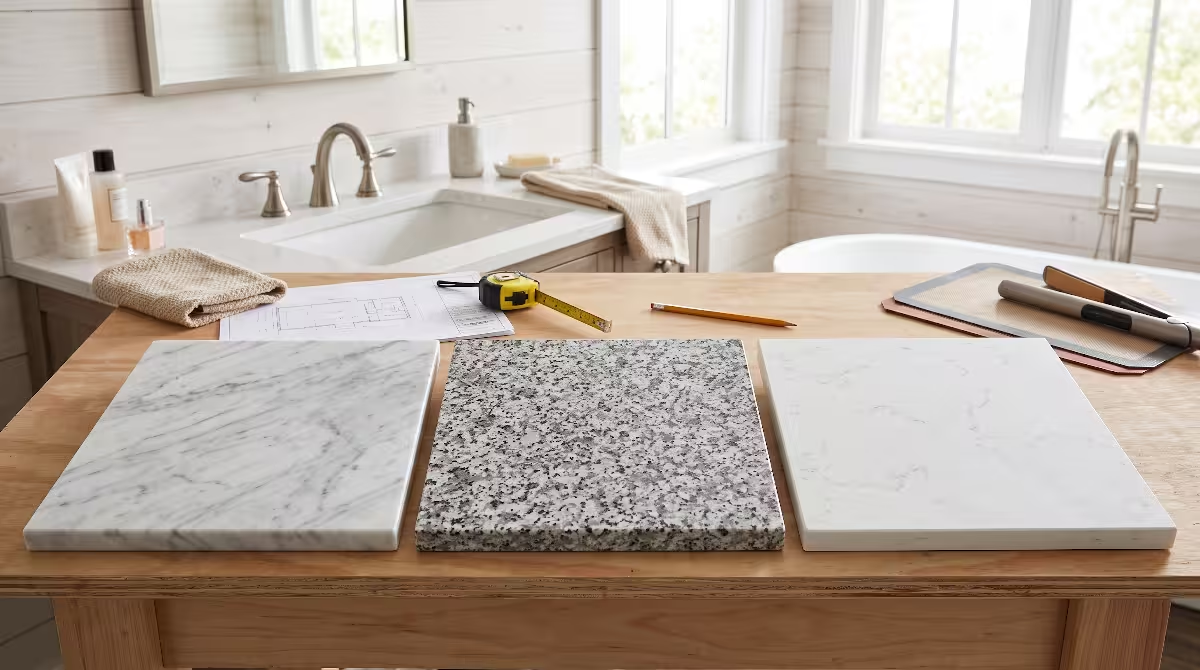
- Material Costs: The material you choose has a huge impact on the budget. Laminate is the most affordable option and comes in many styles. Granite and quartz are extremely durable and popular but can cost two to three times as much as laminate.
- Safety Features: Sharp corners on countertops can be a hazard. We always specify rounded or beveled edges for safety, which is a small but important detail in the fabrication cost.
Accessible Appliances (15-20% of Budget)
Appliances designed for accessibility offer safer and more convenient operation, but they often come at a premium price. Expect to pay about 10% to 25% more for an ADA compliant model compared to its standard counterpart.
- Ovens and Cooktops: A side-opening wall oven is a game changer, as it eliminates the need to lift heavy dishes over a hot drop-down door. For cooktops, we recommend front-control models to avoid reaching over hot pots and pans. Induction cooktops are a great choice as the surface itself doesn’t stay hot, reducing the risk of burns.
- Dishwashers & Microwaves: Drawer-style dishwashers can be installed at a higher level, requiring less bending to load and unload.8 Similarly, placing a microwave on a countertop or in a base cabinet, rather than over the range, makes it much more accessible.
- Refrigerators: A side-by-side refrigerator provides access to both fresh and frozen foods from top to bottom, which is far more convenient for a seated user than a top freezer model.
Sinks & Faucets (5-10% of Budget)
The sink area is one of the most used parts of the kitchen, and making it accessible is crucial.
- Roll-under Sinks: A proper roll-under sink needs to be shallow, typically 6 to 7 inches deep, to provide enough knee clearance. The plumbing and disposal must be located toward the back of the cabinet, and the hot water pipes must be insulated to prevent burns. These specialized sinks and the extra labor for plumbing placement add to the cost.
- Faucets: Faucets with lever handles or touchless, motion sensor controls are essential for individuals with limited hand strength or arthritis. These models are widely available and the cost difference is often minimal compared to the functional benefit they provide.
Flooring (5-7% of Budget)
Safety starts from the ground up. The right flooring is non-slip, non-glare, and smooth enough for easy movement.
- Material Comparison: When considering the cost of an accessible kitchen remodel, flooring is a key safety investment. Luxury Vinyl Tile (LVT) is one of my top recommendations. It’s durable, water resistant, comfortable to stand on, and comes in countless styles. Cork and linoleum are also excellent choices for their slip resistance and slight cushioning. While ceramic tile is durable, it can be very hard and slippery when wet, and the grout lines can create a bumpy surface for wheels.
Lighting & Electrical (10-15% of Budget)
Good lighting is a matter of safety. A well-lit kitchen reduces the risk of accidents.
- Task Lighting: We always include under-cabinet LED lighting to illuminate countertops directly. This eliminates shadows and makes tasks like chopping vegetables much safer.
- Rocker Switches & Lowered Outlets: Moving light switches and electrical outlets to more accessible locations is a common task. Rocker panel switches are easier to operate than standard toggle switches. The cost here is primarily labor from a licensed electrician.
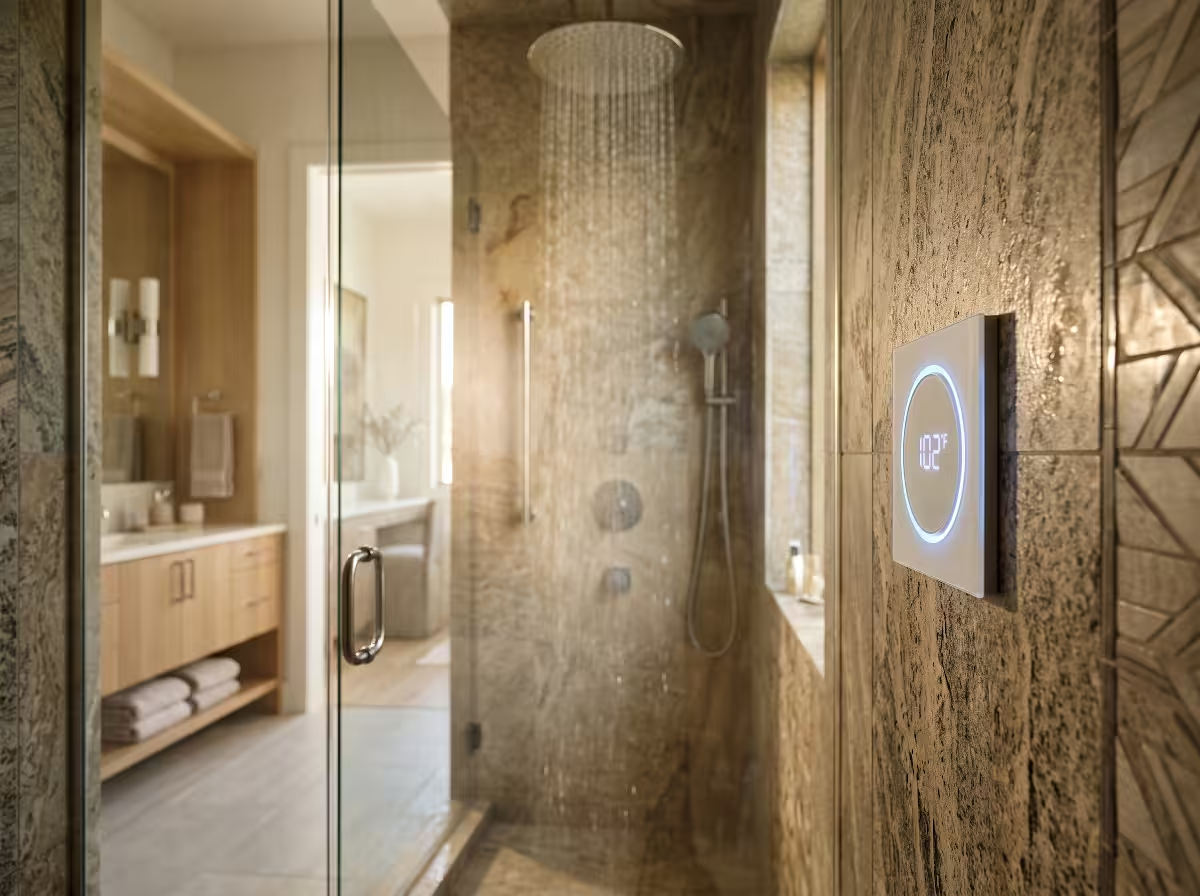
- Smart Home Integration: While it adds to the cost, integrating voice-activated controls for lights can be a fantastic feature for users with very limited mobility.
Labor & Professional Fees (15-25% of Budget)
This portion of the budget covers the expertise and work of the people building your kitchen. Never underestimate the value of hiring qualified professionals.
- The Value of a Certified Aging-in-Place Specialist (CAPS): When you are planning for the cost of an accessible kitchen remodel, hiring a contractor with a CAPS designation is one of the best investments you can make. This certification, offered by the National Association of Home Builders (NAHB), means your contractor has been specially trained in the unique requirements of designing and building for people who want to age in place. A CAPS professional understands how to blend safety, function, and aesthetics. They can anticipate needs you might not have considered and help you avoid costly mistakes that could make the kitchen less functional or even unsafe. Their expertise ensures your project is done right the first time.
Answering Your Questions
Homeowners often have similar questions when they begin researching this type of project. Let’s address some of the most common ones.
What makes a kitchen ADA compliant?
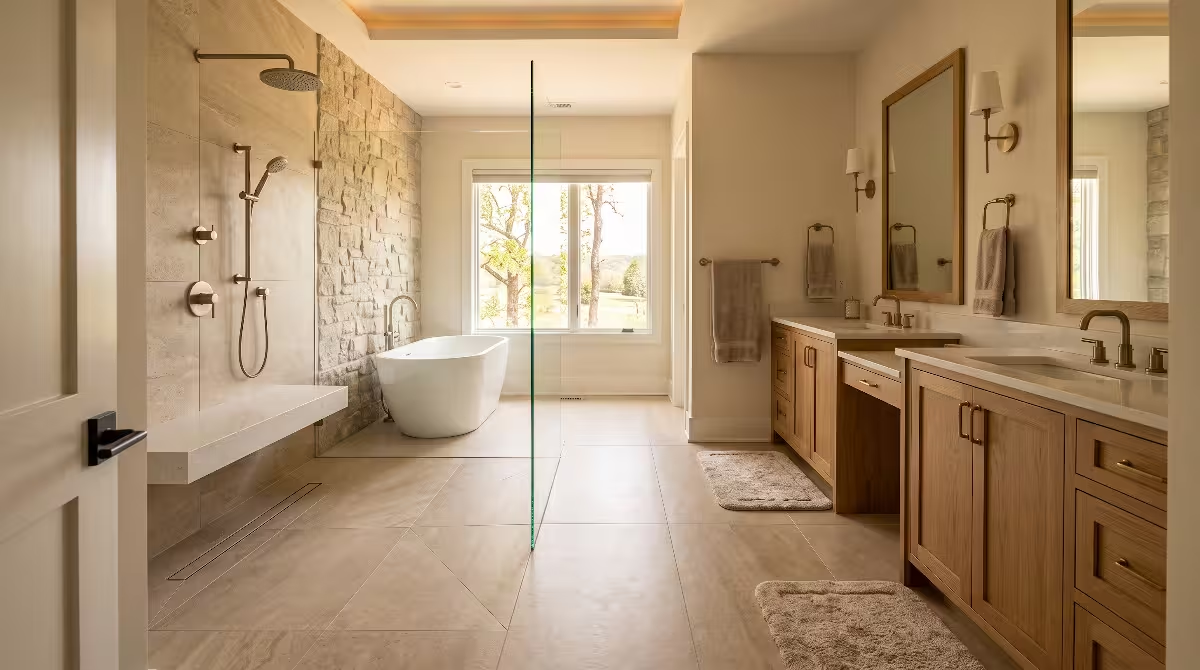
The Americans with Disabilities Act (ADA) provides specific guidelines for creating accessible spaces. While these are mandatory for public buildings, they serve as an excellent blueprint for residential design. Key guidelines include providing a clear floor space of 30 by 48 inches for a wheelchair, ensuring a 60 inch diameter clear space for a 180 degree turn, setting counter heights at a maximum of 34 inches, and providing knee clearance under sinks and workspaces that is at least 27 inches high. Following these guidelines is fundamental to creating a truly usable space and is a core consideration in the cost of an accessible kitchen remodel.
How can I remodel for a wheelchair user on a budget?
If the total cost of an accessible kitchen remodel seems out of reach, don’t be discouraged. An effective remodel can be done on a budget by focusing on priorities. Start with the most critical needs. For example, creating a safe and usable sink and food preparation area might be more important initially than replacing all the appliances. You can also phase the project over time. Perhaps this year you address the countertops and sink, and next year you replace the flooring and improve the lighting. Choosing cost effective materials, like laminate countertops and LVT flooring, can also significantly reduce the total cost without compromising safety or function.
What is “Universal Design” vs. “Accessible Design”?
These terms are often used together, but they mean slightly different things. Accessible Design focuses on solving a problem for a specific person or disability. For instance, creating a 30 inch high counter section is an accessible design feature for a wheelchair user.
Universal Design is a broader and more inclusive concept. It’s about designing spaces that are usable by all people, to the greatest extent possible, without the need for specialized adaptations. A great example of universal design is the lever door handle. It helps someone with arthritis, but it also helps a parent carrying a child or someone with their hands full of groceries. In the kitchen, a side-by-side refrigerator is a universal design feature. It’s easier for a seated person to use, but it’s also more convenient for children and shorter adults.
Thinking in terms of universal design can make your kitchen more comfortable for everyone and adds long term value to your home. Integrating these principles is a smart way to approach the cost of an accessible kitchen remodel.
Financial Assistance: Funding Your Accessible Remodel

The cost of an accessible kitchen remodel can be a significant financial undertaking, but there are resources available to help. It’s worth taking the time to research these options, as they can make a big difference in your budget.
Federal & State Programs
- For Veterans: The U.S. Department of Veterans Affairs (VA) offers several grants to help veterans with service connected disabilities live more independently. The Specially Adapted Housing (SAH) grant can be used to build or remodel a home to be fully accessible. The Home Improvements and Structural Alterations (HISA) grant provides funding for medically necessary improvements, which can absolutely include an accessible kitchen remodel.
- State and Local Programs: Many states have their own assistance programs, sometimes called waiver programs, that can help cover the costs of home modifications for seniors or individuals with disabilities. Check your state’s Department of Health and Human Services website for information.
Non-Profit Organizations
There are numerous non-profit organizations at both the national and local levels dedicated to helping people live more independently. Organizations like Rebuilding Together and local chapters of the United Way or Area Agency on Aging may offer grants or volunteer labor to help with home modifications such as accessible kitchens.
Tax Deductions
It’s important to know that some of the expenses from your remodel may be tax deductible. If the modifications are deemed medically necessary to accommodate a disability, you may be able to deduct the costs as a medical expense. This can be a complex area, so I always give this disclaimer: you should consult with a qualified tax professional to understand what expenses you can legally deduct based on your specific situation. This potential deduction is an important factor when weighing the total cost of an accessible kitchen remodel.
Conclusion: A Worthwhile Investment in Your Home and Future
We have covered a lot of ground, from the average cost of an accessible kitchen remodel to the specific details of appliances, lighting, and funding. The key takeaway is that planning is essential. A successful and cost effective project begins with a clear understanding of your needs and a realistic budget. While the initial cost can seem high, it is vital to see it as more than just a home improvement project. It is an investment in your future.
The return on this investment is measured not in dollars, but in the enhanced safety, prolonged independence, and improved quality of life it provides. A kitchen that is safe, comfortable, and easy to use allows a person to remain in their cherished home for longer, maintain their dignity, and continue participating in the daily rhythms of family life.
An accessible kitchen requires precision, foresight, and expertise. If you are in the Tri-Cities area and considering a remodel, I urge you to contact a certified professional. Working with an expert will ensure your project is designed thoughtfully, built correctly, and truly meets your needs for years to come. The final cost of an accessible kitchen remodel is a small price to pay for the peace of mind and freedom it brings.