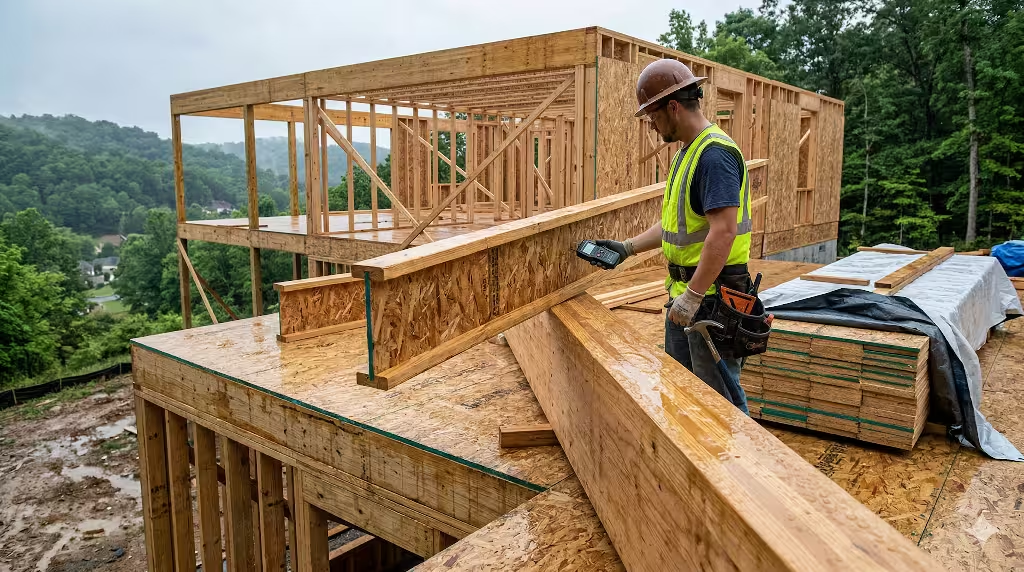

Building a custom home is an incredible journey. Here in the Tri-Cities, I’ve seen people take a piece of land and turn it into a legacy for their family. It’s one of the biggest, most exciting investments you will ever make. But long before the first shovel of dirt is turned, your entire project rests on a stack of paper. That paper is your builder contract.
Things turn out great when the document is clear. But there is heartbreak when it is not.
Which brings up the question, “Should I have a lawyer review my builder contract?” They seem to feel it implies a lack of trust in their builder.
Let’s be direct: Yes. You absolutely should have a qualified lawyer review your builder contract before you sign it.
This is not about mistrust. It’s about precision. A home is a complex system, and the builder contract that defines it is just as complex. You are an expert in your field; a lawyer is an expert in theirs. Having a legal expert review your builder contract is not an “expense” in your build. It is the single most important investment you can make to protect your family, your money, and your relationship with your builder.
A good builder contract is the foundation for a good project. A bad one is a crack in that foundation before you’ve even poured the concrete. In this article, we’ll explain why this review is so critical, what a lawyer is looking for, and how to handle the process in a way that creates clarity, not conflict.
The “Why”: What Your Builder’s Contract is Really Designed to Do

First, you must understand what a builder contract is. Generally, the builder contract you are handed was almost certainly written by the builder’s lawyers.
What is its primary purpose? To protect the builder.
This is not evil. It is not malicious. It is standard, smart business. The builder contract is a tool designed to manage the builder’s risk, define their responsibilities (and limits), and ensure they get paid. It is, by its very nature, a one-sided document. It is written to favor the person who wrote it.
Your signature on that builder contract means you agree to their terms. The problem is that most buyers don’t understand what those terms actually mean in the real world.
The risks of signing a builder contract without a review are immense. Generally, these are the most common and costly mistakes.
- Vague Scope of Work: This is the number one cause of conflict in home building. The builder contract says “builder-grade fixtures.” Your builder is thinking of a $50 faucet. You are picturing a $350 faucet. Who is right? The one whose definition is backed by the builder contract. A vague builder contract is a breeding ground for disappointment and arguments over money.
- Hidden Costs and Allowances: Your builder contract will have “allowances” for items like tile, lighting, and countertops. For example, it might list a $5,000 allowance for all your kitchen cabinets. But when you go to the showroom, the cabinets you discussed with the designer cost $12,000. You are now responsible for that $7,000 difference, and you have no choice but to pay it. A lawyer will spot where these allowances are unrealistic and push for more precise specifications.
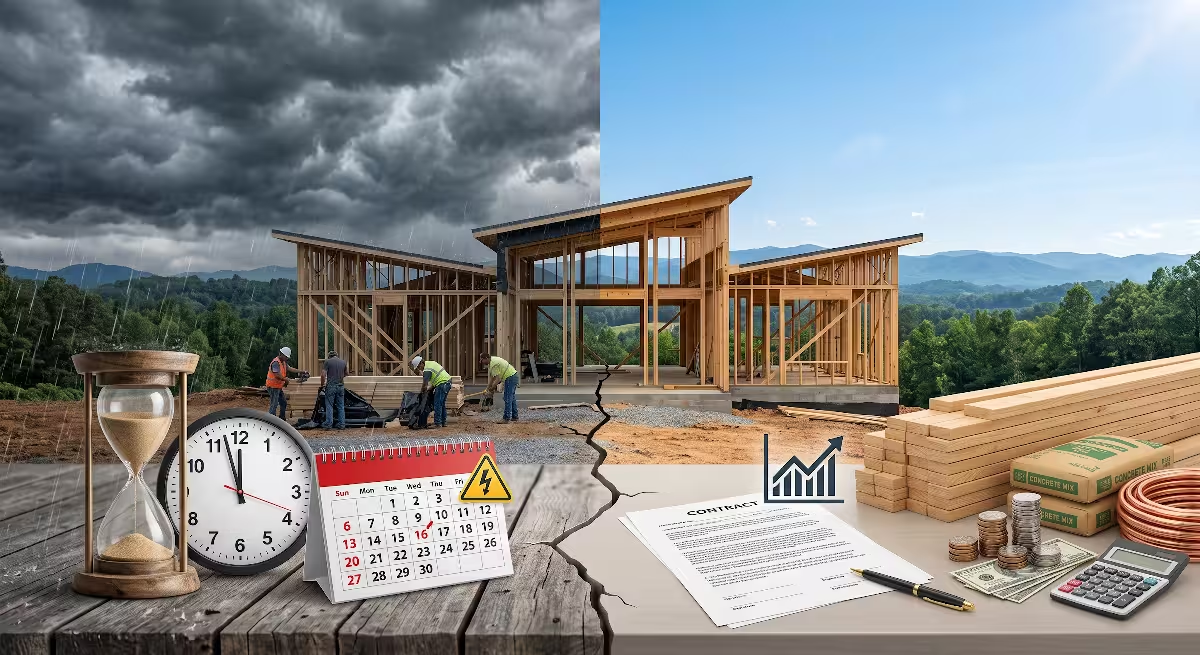
- Unfair Risk Allocation: Building a home has risks. Lumber prices might skyrocket. A subcontractor might go out of business. There might be a month of solid rain. A builder contract assigns that risk. Who pays for the price increase? Who absorbs the cost of the delay? If you don’t read the fine print, you may find that you have agreed to pay for all of it, even if it’s the builder’s fault.
- Waiving Your Legal Rights: This is the most dangerous and hidden trap. Many builder contract documents will include clauses that force you into “binding arbitration.” This means you give up your right to ever sue the builder in a court of law. Instead, you must use a private judge, or arbitrator. This process can sometimes be stacked in the builder’s favor. An unreviewed builder contract might also have you waive your “implied warranties” given to you by Tennessee law in exchange for the builder’s much weaker one-year warranty.
When you sign that builder contract, you are locking in all of these terms. A lawyer’s job is to unlock them for you before they become your problem.
The “What”: 8 Key Clauses Your Attorney Will Scrutinize

When you give your builder contract to an attorney, they are not just reading for spelling mistakes. They are stress-testing the document against a career’s worth of problems. They are looking for specific, high-risk clauses.
Here are the eight sections of your builder contract that a good lawyer will focus on immediately.
1. The Scope of Work & Specifications
This is the heart of the builder contract. It is the “What am I actually buying?” section. If this part is weak, the entire builder contract is weak.
A good builder contract should not say “hardwood floors.” It should say, “3/4-inch solid Red Oak hardwood, 3-inch plank width, satin finish, in ‘Gunstock’ color, installed in all areas of the first floor except bathrooms and laundry.”
A lawyer will hunt down and kill vague words like “similar to,” “builder-grade,” or “at builder’s discretion.” They will ensure that the builder contract references the exact set of blueprints (by date and revision number) and the specific “Finish Schedule” or “Specifications Sheet” that lists every material, brand, and model number. This part of the builder contract should be many pages long. If it’s short, it’s a major red flag.
2. Payment Schedule & Retainage
This section answers, “When does the builder get my money?” A builder needs consistent cash flow to pay for materials and labor. But you need to hold your money until work is actually done.
A risky builder contract will have a payment schedule based on dates. For example, “Pay $50,000 on March 1st.” What if March 1st arrives and the builder is three weeks behind? You still have to pay.
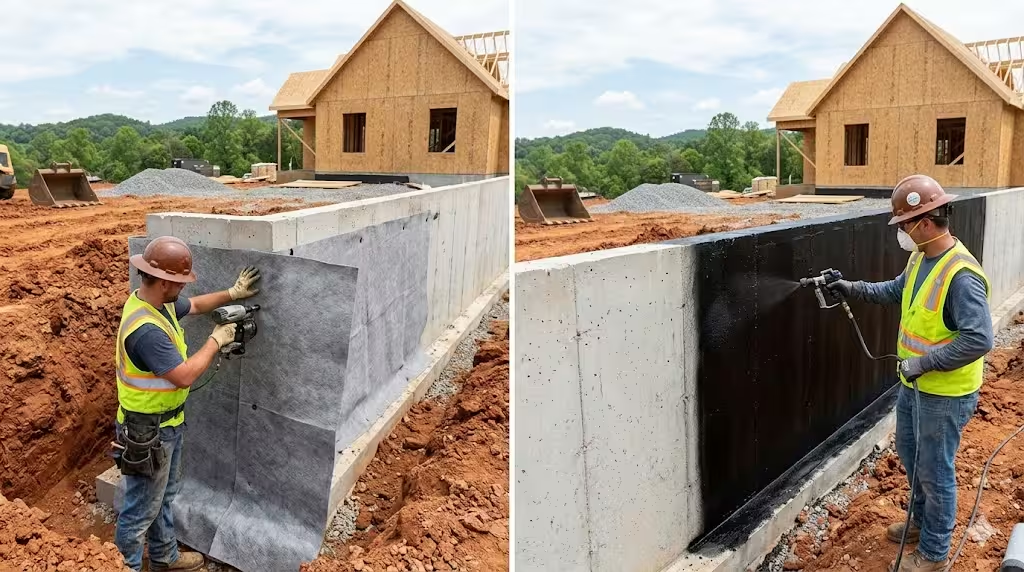
A good lawyer will change this. They will tie the payment schedule in the builder contract to verifiable, completed milestones. For example: “Pay $50,000 after the foundation is poured, waterproofed, and passed inspection.” This way, you never pay for work that isn’t finished.
They will also look for “retainage.” This is a key concept. It means you hold back a small percentage (maybe 5% or 10%) of the entire builder contract price until the very end. This is your leverage to make sure the builder fixes all the small paint touch-ups, adjusts the sticky door, and finishes every last item on the “punch list.” Without it, you might be chasing them for months.
3. The Change Order Process
It is mostly not possible for a custom home to be built without a single change. You will change your mind. The builder will hit an unexpected issue. Changes happen. The question is, how does the builder contract handle them?
A bad builder contract has a vague or verbal process. You’re walking the site and say, “Can we add a window here?” The site supervisor says, “Sure, no problem.” Then, at the end of the month, you get a surprise bill for $2,500.
A good builder contract requires a written change order process. It must state that:
- The change must be requested in writing.
- The builder must provide a written quote for the cost (or credit) and the time delay for that change.
- You (the homeowner) must sign and approve that quote in writing before any work begins.
This simple process, when enforced in the builder contract, eliminates 90% of all budget-busting arguments.
4. Timelines, Delays, & “Time is of the Essence”
This section of the builder contract defines when your home will be done. Buyers want a firm date, but builders know that weather, material delays, and inspections can make that impossible.
A lawyer will look for fairness. The builder contract should allow for “excusable delays” for things outside the builder’s control (like a hurricane, a pandemic, or a supply shortage of windows).
But what about “inexcusable delays”? What if the builder just mismanaged the schedule, or their framing crew didn’t show up for two weeks? Your lawyer will fight to make sure the builder contract holds the builder accountable for those delays. They may add a “liquidated damages” clause, which states that if the builder is late for reasons they could control, they have to pay you a certain amount of money for every day you are delayed (to cover your rent, for example).
5. Builder’s Warranty (Express & Implied)
The warranty is the builder’s promise to fix things after you move in. You need to pay close attention to this part of the builder contract.
There are two types of warranties:
- Express Warranty: This is the warranty that is written in your builder contract. It’s usually a “1-2-10” warranty: one year on workmanship (like paint and drywall), two years on systems (like plumbing and HVAC), and ten years on the structure (like the foundation).
- Implied Warranty: This is a warranty that the law gives you, even if it’s not in the builder contract. In Tennessee, for example, the law “implies” that your home is built in a workmanlike manner and is “fit for its purpose” (it’s safe and livable).
Here is the trap: Many, many builder contract documents will have a clause where, in exchange for their “Express Warranty,” you waive (give up) all of your “Implied Warranties.” This is a terrible trade. The implied warranties from the state are often much stronger than the builder’s limited warranty. A lawyer will spot this immediately and fight to remove that waiver from your builder contract.
6. Dispute Resolution
Even with a great builder contract, a serious disagreement might happen. How do you solve it? This section explains the rules.
- Litigation (Court): This is the default. It’s public, very slow, and incredibly expensive.
- Arbitration: This is a private trial with a paid “arbitrator” instead of a judge. It’s faster. But be careful. The builder contract might name a specific arbitration company that is known to be very builder-friendly. Your lawyer will check this.
- Mediation: This is the best first step. A neutral third-party “mediator” helps you and the builder find a compromise. They cannot force a decision.
A good lawyer will often re-write this clause in the builder contract to require mediation first. This gives both sides a chance to solve the problem calmly and cheaply. Only if mediation fails do you then move to arbitration or court.
7. Termination Clause
What happens if things go terribly wrong? How do you fire your builder? And how can they fire you? This is the “breakup” clause.
A one-sided builder contract makes it very easy for the builder to walk away (for “convenience”) but almost impossible for you to fire them, even for terrible work. It might say you have to give them 30 days to “cure” the problem, and even if you do fire them, you owe them all their profit on the entire job, even the part they didn’t build.
A lawyer will work to make this clause fair. They will define, in clear terms, what “for cause” means (e.g., failure to pay, failure to follow plans, significant delays) and create a fair financial settlement for both parties if a split has to happen.
8. Insurance & Lien Waivers
This is a non-negotiable, project-killing item. It’s also the one most buyers skip over.
First, the builder contract must require the builder to have two key insurance policies:
- General Liability Insurance: This covers damage to property. What if the builder’s excavator hits your neighbor’s fence? This pays for it.
- Worker’s Compensation: This covers injuries to the builder’s employees. If they don’t have it and a worker gets hurt on your land, you could be sued.
Your lawyer will demand that the builder provide a “Certificate of Insurance” naming you as an “additional insured” before work starts.
Second, and even more important, is the mechanic’s lien. Please read this carefully.
Imagine your builder hires a plumber to install your pipes. You pay your builder the $10,000 for that phase of work. The builder, for whatever reason, doesn’t pay the plumber.
Under Tennessee law, that plumber can file a “mechanic’s lien” against your property. Your house is now the collateral for the builder’s debt. To sell your home or get your final mortgage, you will have to pay that plumber the $10,000 again to get the lien removed.
A lawyer solves this. They will add language to your builder contract that requires the builder to provide you with a “Lien Waiver” from every single subcontractor and material supplier before you release the final payment. A lien waiver is a simple receipt. It’s a document from the plumber that says, “I have been paid in full.”
This system of lien waivers, built into your builder contract, is the only thing that protects you from paying for your house twice.
Frequently Asked Questions

Even after explaining all this, many buyers in the Tri-Cities can still be hesitant. It feels like a confrontation. Let’s address those concerns directly.
Is it really necessary if my builder is reputable and I trust them?
Trust is the most important part of a builder-client relationship. But a good builder contract is what protects that trust.
Think of it this way: trust is based on a verbal understanding. A builder contract is based on a shared understanding. A clear builder contract prevents the misunderstandings that break trust.
A truly reputable, professional builder will not be offended. They will respect your diligence. In fact, a builder who gets angry or defensive when you say you’re having a lawyer review the builder contract is showing you a massive red flag. A good builder wants a clear builder contract because it protects them, too.
How much does it cost to have a lawyer review a builder contract?
This is a common worry. While every attorney is different, a flat-fee review of a standard builder contract will likely cost a few hundred to a couple of thousand dollars.
Now, pause and think about that number. Compare it to the cost of your home. Compare it to the cost of a single dispute, a $10,000 allowance overrun, a $15,000 lien, or a $20,000 delay.
A legal review is the best and cheapest insurance policy you will ever buy. It’s like a high-level home inspection for the paperwork. The peace of mind alone is worth the price.
Will my builder get offended or see it as hostile?
This all comes down to your approach. You are not “lawyering up” for a fight. You are taking a calm, precise step to ensure clarity for a complex project.
Here is the best way to handle it. Do not just send the builder a document covered in red ink from your lawyer.
- First, tell your builder, “We’re very excited to work with you. This is a huge investment for us, so as a matter of due diligence, we’re having our attorney review the builder contract just to make sure we understand everything.”
- Have your lawyer explain every clause to you.
- The lawyer will find “Red Flag” items (that must change, like a waiver of warranties) and “Yellow Flag” items (that are one-sided but standard).
- You can then go back to your builder and say, “Our lawyer explained the builder contract, and we’re ready to sign. We just have a few items we’d like to clarify and adjust to make it fair for both of us.”
This approach is professional, non-confrontational, and based on my core values: competence and integrity.
A Note for Home Buyers in the Tri-Cities
While these principles are universal, building here in our corner of Tennessee has local factors.
- Check the License: Before you do anything, verify your builder’s license with the Tennessee Board for Licensing Contractors. Your builder contract must include this license number. A lawyer will check this, but you can too.
- Varying Codes: Building codes are not uniform. Johnson City, Kingsport, and Bristol, as well as Washington and Sullivan counties, may have slightly different requirements. A good builder contract will state that all work will comply with all local building codes and ordinances.
- Tennessee Law (TCA): Your attorney will be familiar with the Tennessee Code (TCA), especially the parts that protect home buyers. They will ensure your builder contract does not violate any state laws.
- A Major Red Flag: If a builder ever asks you to pull the permits in your name, walk away. This is a common trick. When the permit is in your name, you become the general contractor in the eyes of the law. You become legally and financially responsible for everything, including injuries and failed inspections. A licensed, insured builder will always pull their own permits.
The Foundation of a Good Build is a Good Contract
The smoothest projects—the ones that end with happy clients and proud builders—are the ones that start with clear, precise, and fair agreements.
All the arguments, delays, and budget nightmares I’ve seen could have been prevented by a few hours of legal review before the signing.
Spending the time and money to have a construction law attorney or an experienced real estate lawyer review your new construction contract is the most important first step you will take. It sets the rules for the game. It ensures you, your family, and your builder are all on the same team, reading from the same playbook.
It is the embodiment of the carpenter’s golden rule: “Measure twice, cut once.” Do not cut corners on your builder contract.