

The Psychoacoustics of Biophilic Architecture
Modern building practices have changed how we live and work indoors. Contemporary architecture frequently features open floor plans, large glass panels, polished concrete, and drywall surfaces. While these components look clean and modern, they create a harsh acoustic environment. Hard surfaces reflect sound waves, causing voices, typing, phone rings, and foot traffic to bounce around spaces. At the same time, mechanical systems like air conditioners and heat pumps hum constantly in the background. Outside, traffic rumbling and construction add more unwanted noise.
This steady exposure to acoustic chaos takes a measurable toll on the human nervous system. When the brain hears unpredictable, sharp, or repetitive mechanical noises, it remains on alert. The sympathetic nervous system turns on, pushing cortisol levels up and producing mental fatigue. People living and working in noisy, echo-prone spaces often feel tired and irritable without realizing that room acoustics are the source.
Biophilic design offers a direct solution to this modern dilemma. As a design philosophy, biophilia recognizes that humans have an innate biological connection to nature. For millions of years, human senses evolved in natural environments filled with moving air, rustling leaves, and flowing water. In nature, the presence of moving water has always signaled safety, clean hydration, and lush surroundings. When the human auditory system hears water flowing, it triggers a parasympathetic response. The heart rate slows, muscle tension drops, and breathing deepens.
The main idea behind using indoor water features in biophilic architecture goes beyond simple visual decorating. Incorporating indoor water features into a home or commercial building is an intentional acoustic engineering choice. These installations do not simply lower decibel readings on a meter like acoustic foam tiles do. Instead, indoor water features act as active, organic masking systems that balance the room frequency response, softening harsh background sounds and turning stressful indoor rooms into supportive, healthy spaces.
The Problem: Architectural Hardscaping and Cognitive Fatigue
Modern residential and commercial architecture relies heavily on hard construction materials. Polished concrete floors, quartz countertops, floor-to-ceiling windows, and painted drywall all have very low acoustic absorption. Sound energy hits these rigid boundaries, cannot penetrate them, and reflects back into the room. This bounce creates long reverberation times, meaning noises linger in the air long after the source stops making sound.
When multiple conversations happen at once in an open-concept space, people naturally raise their voices to overcome lingering room reflections. This behavior is called the Lombard effect: as background noise gets louder, talkers speak louder, creating an escalating spiral of room noise. For an office worker or a family gathered in an open kitchen, this acoustic buildup makes it difficult to understand clear speech. The human auditory cortex has to work much harder to filter out stray reflections and track a single voice.
Over hours of exposure, this continuous filtering exhausts mental reserves. Cognitive fatigue sets in, impairing working memory, shortening attention spans, and lowering problem-solving speed. Urban sounds leaking in from outside, such as delivery trucks, emergency sirens, and regional road noise, make this issue worse by adding sudden, jarring peaks to the ambient noise floor. Adding indoor water features introduces continuous, natural acoustic energy that breaks up this harsh environment, transforming how sound travels through open rooms.
Biophilic Acoustic Hypothesis: Natural Sounds and Evolutionary Safety
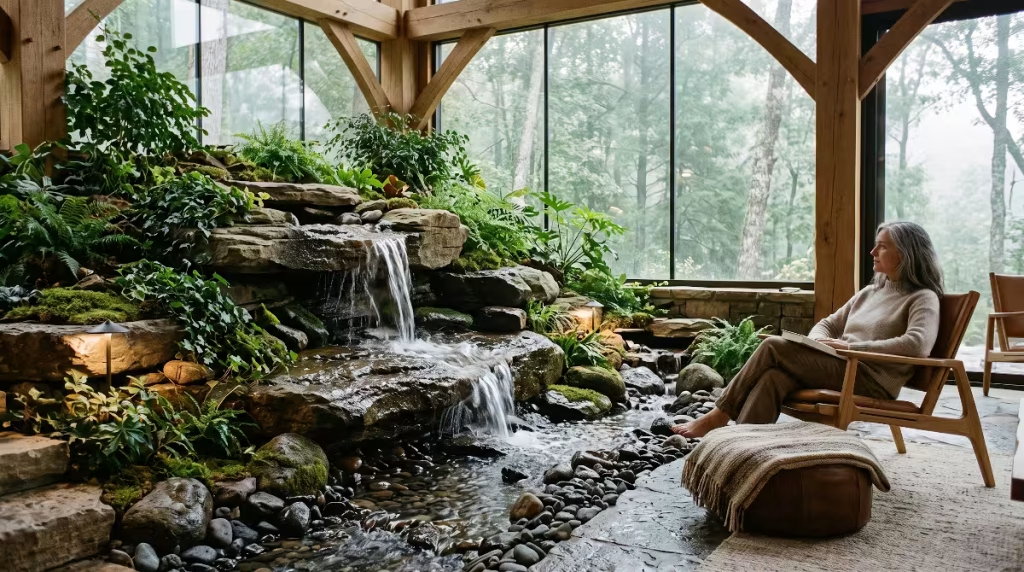
To understand why water works so well indoors, we have to look at human evolutionary biology. Our ears do not turn off when we sleep, work, or focus. The auditory system functions as an early warning network, constantly monitoring surroundings for threats. In ancient landscapes, dead silence often signaled the presence of an apex predator, while harsh, irregular snaps or mechanical crashes signaled imminent danger.
Conversely, the sound of water has always signaled a stable, resource-rich habitat. Flowing creeks, waterfalls, and gentle rills meant drinkable water, edible plant life, and game animals. The auditory brain processes water noise as safe acoustic background information. Unlike sudden artificial sounds, natural hydrodynamic sounds communicate environmental stability.
Biophilic acoustic design harnesses this evolutionary adaptation. By introducing indoor water features into modern buildings, we reintroduce a sensory input that the human brain is primed to recognize as calming. Instead of scanning an artificial, unpredictable soundscape for threats, the subconscious auditory processing centers relax. This sensory shift calms the autonomic nervous system, moving the body away from chronic stress toward restorative balance.
Active Organic Masking Systems
A common misconception in interior design is that managing noise requires deadening all sound until a room is quiet. In practice, completely silent rooms feel unnatural, sterile, and uncomfortable. In a dead-quiet room, every tiny sound—a clicking mouse, a pen drop, a quiet footstep, or a refrigerator compressor kicking on—becomes an annoying distraction that shatters focus.
Indoor water features provide an active, organic alternative to synthetic sound masking systems. While acoustic foam panels and fabric baffles passively absorb sound waves, well-designed indoor water features dynamically generate their own pleasant sound envelope. They introduce a layer of organic sound energy that sits over distracting noises without overwhelming the room.
Because water sound contains a rich mix of acoustic frequencies, it effectively fills the acoustic dips and softens the spikes within an interior room. It masks unwanted speech and mechanical buzzes, smoothing out the room soundscape. As an active acoustic tool, indoor water features turn sharp, disruptive noises into soft, unrecognizable background energy, restoring balance to spaces lined with hard materials.
Acoustic Physics and Sound Masking Dynamics
Understanding the physics of sound helps clarify how indoor water features improve room acoustics. Sound travels through air as pressure waves, moving outward from a source as alternating bands of compression and rarefaction. When these waves encounter boundaries like walls, furniture, or water surfaces, their energy divides into three paths: transmission through the material, absorption into heat energy within the material, or reflection back into the room.
To analyze room acoustics, engineers look at both passive reduction and active auditory masking. While passive absorption requires soft, porous materials, active sound masking uses controlled acoustic energy to cover up unwanted sounds. Adding indoor water features brings active sound generation into a room, softening speech and mechanical noises through natural physical behavior.
Decibel Attenuation Versus Auditory Masking
Many homeowners and facility managers believe that adding indoor water features will lower the overall decibel level in a room. From a physics perspective, this is incorrect. A water feature produces sound, meaning it adds physical acoustic energy to a space. If you measure the room with a sound level meter, the overall decibel reading will remain the same or increase slightly.
The real benefit comes from auditory masking rather than decibel reduction. Auditory masking occurs when the presence of one sound raises the hearing threshold for another sound. In an open-plan building, distinct speech is the most common distraction. The human brain cannot easily ignore recognizable human voices; it automatically tries to decode words and follow sentences. This involuntary listening degrades focus and spikes cognitive workload.
Architects measure speech intelligibility using the Speech Transmission Index, which scores privacy on a scale from zero to one. A high score means words can be heard clearly from far away, while a lower score means speech fades into the background. Indoor water features produce steady, broad-spectrum sound that fills the vocal frequency range, especially between 250 Hertz and 4,000 Hertz.
+---------------------------------------------------------------+
|                      THE SOUND ENVIRONMENT                    |
|                                                               |
|  Intelligible Speech Spikes         HVAC & Traffic Rumble     |
|   (Words decoded by brain)        (Mechanical stressor)       |
|            |                                |                 |
|            v                                v                 |
|       [ ~ ~ ~ ~ ~ ~ ~ ~ ~ ~ ~ ~ ~ ~ ~ ~ ~ ~ ~ ~ ]             |
|       [     Indoor Water Features Sound Layer   ]             |
|       [   (Continuous Organic Pink Noise Mask)  ]             |
|       [ ~ ~ ~ ~ ~ ~ ~ ~ ~ ~ ~ ~ ~ ~ ~ ~ ~ ~ ~ ~ ]             |
|                                                               |
|                           RESULT:                             |
|          High Speech Privacy + Low Mental Distraction         |
+---------------------------------------------------------------+
When indoor water features operate, the delicate consonants and syllables of distant conversations blend into the water sounds. You can still tell that someone is speaking, but your brain can no longer decode the words. Once speech loses its clarity, the brain stops trying to process the conversation, allowing concentration to return.
The Spectral Signature of Water: Pink and Brown Noise Analogs
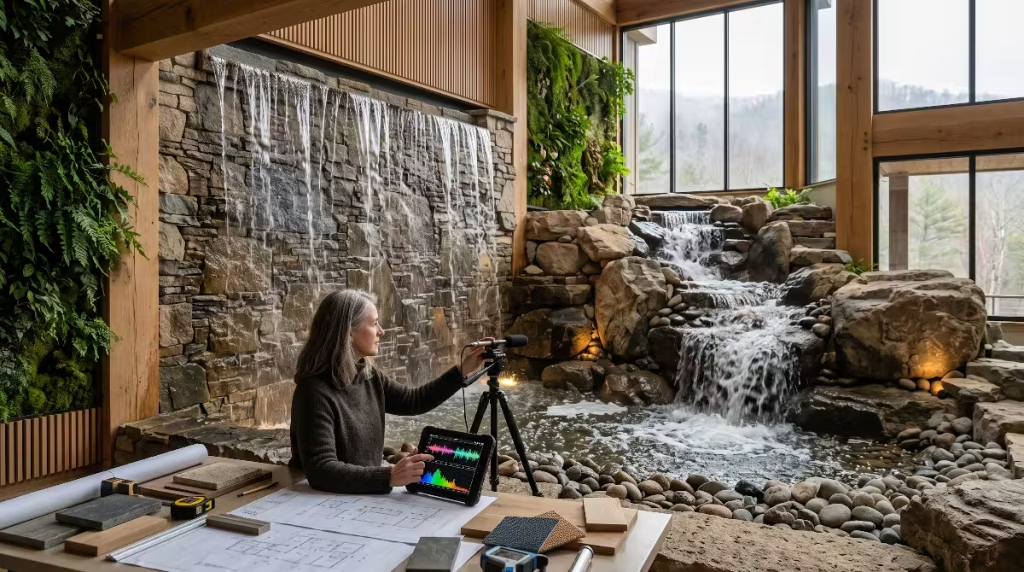
Acoustic scientists classify sound profiles by color, depending on how energy is distributed across different frequencies. White noise contains equal energy across all frequency bands. Because human hearing is more sensitive to high frequencies, pure white noise sounds like a sharp, hissing static television screen. Many people find electronic white noise grating and irritating over long periods.
Pink noise distributes energy evenly across musical octaves. Because frequency doubles with every octave, keeping energy equal per octave requires power to drop by 3 decibels for every step up in octave. This frequency curve matches human hearing mechanics well. In pink noise, low, mid, and high frequencies feel balanced, producing a full, soothing sound like a steady rainfall or rustling leaves.
Brownian or brown noise drops energy even faster, decreasing by 6 decibels per octave. This profile yields a deep, low-frequency rumble, similar to ocean surf or distant thunder.
| Sound Profile | Spectral Energy Distribution | Common Auditory Analogy | Psychological Response |
| White Noise | Equal energy across all frequencies | TV static, high-pressure air leaks | Irritating, sharp, mechanical |
| Pink Noise | Energy drops 3 dB per octave | Steady rain, rustling leaves | Calming, restorative, natural |
| Brown Noise | Energy drops 6 dB per octave | Heavy surf, distant thunder | Deeply relaxing, grounding |
The acoustic output of indoor water features naturally matches the slopes of pink and brown noise. As drops strike water, thin sheets cascade down slate, and bubbles form and collapse, thousands of tiny acoustic events happen every second. These movements produce a rich, layered acoustic spectrum. Unlike mechanical HVAC blowers that drone on a single low pitch, or artificial sound generators that repeat synthetic loops, indoor water features generate a dynamic, organic pink noise spectrum that feels comfortable to human ears.
Acoustic Horizon Adjustment in Residential and Commercial Spaces
The acoustic horizon marks the maximum distance at which a specific sound can be clearly heard and understood in an indoor space. In an untreated room with hard floors and high ceilings, the acoustic horizon can extend 40 to 50 feet. A phone call made in the kitchen easily travels into the living room, home office, or adjoining bedrooms, disrupting everyone nearby.
Indoor water features allow designers to tune the acoustic horizon. By placing water elements between distinct living or working zones, you create a natural sound boundary. The steady sound of moving water establishes an acoustic privacy barrier that contains noise within a smaller area.
In an open residential layout, placing indoor water features between a busy kitchen and a study pulls the acoustic horizon inward to roughly 10 or 12 feet. Family members can cook and talk in the kitchen while someone works in the study without being distracted by every word. In corporate offices, indoor water features set between conference zones and individual desks create speech privacy zones without requiring solid walls that block natural daylight.
Neurological and Physiological Health Benefits
The acoustic benefits of indoor water features reach beyond basic sound masking; they also support overall physical health. Noise pollution is a recognized environmental health hazard. The World Health Organization has found that long-term exposure to everyday background noise contributes to high blood pressure, sleep disturbances, impaired concentration, and chronic stress.
Modern buildings often expose occupants to low-grade auditory irritations like whining electronic power supplies, cycling refrigerator motors, external traffic, and duct vibrations. The human body interprets these unnatural, repeating sounds as persistent low-level stressors. Incorporating indoor water features into biophilic spaces replaces artificial noise with calming, natural soundscapes, promoting neurological balance.
Stress Reduction via Parasympathetic Activation
The autonomic nervous system has two main branches: the sympathetic system, which manages the fight-or-flight response, and the parasympathetic system, which controls resting, digesting, and recovery. In modern built environments, erratic, artificial noises keep the sympathetic system subtly engaged throughout the day, increasing heart rates, tightening blood vessels, and keeping cortisol elevated.
Listening to the organic sounds produced by indoor water features helps reverse this physical stress response. Clinical studies measuring autonomic nervous system activity show that listening to flowing water increases vagal nerve stimulation. This shift brings down resting heart rates, lowers systolic blood pressure, and relaxes muscle tension in the neck and shoulders.
Blood tests and salivary assays confirm that listening to water sounds reduces circulating stress hormones, including cortisol and adrenaline. Replacing artificial mechanical noises with the dynamic tones of indoor water features signals safety to the brain, helping the body shift into a restorative parasympathetic state.
Cognitive Restorative Theory and Attention Restoration
Attention Restoration Theory, developed by environmental psychologists Rachel and Stephen Kaplan, explains that human focus divides into two main modes: directed attention and involuntary attention. Directed attention requires conscious effort. We use it when reading technical documents, writing code, balancing budgets, or engaging in detailed problem-solving. This type of attention requires mental energy and tires out after sustained periods of hard work.
When directed attention tires, we become easily distracted, make more mistakes, and feel mentally drained. To recover focus, we must rest directed attention. Complete sensory deprivation does not work well because the brain quickly becomes bored and restless. Instead, focus recovers through involuntary attention, driven by what psychologists call soft fascination.
Soft fascination happens when sensory inputs gently catch our interest without requiring active thought. Indoor water features provide this balance. The changing sounds of moving water—the rhythm of tiny splashes, bubbles, and trickles—attract gentle awareness without demanding mental analysis. As an occupant enjoys the organic soundscape, the brain rests its directed attention circuits. Incorporating indoor water features into homes and offices creates brief moments of restorative calm that help people stay focused, clear-headed, and productive.
Sleep Architecture and Deep Rest
Good sleep depends on a stable acoustic environment. The brain keeps monitoring sounds throughout the night, even during deep slow-wave sleep and rapid eye movement phases. While the sleeping brain can adjust to steady ambient sounds, sudden, sharp noises quickly trigger a startle response. A barking dog, an acceleration run by a distant car, or an air conditioning unit kicking on can jolt the nervous system, pulling the brain into light sleep or waking the person up entirely.
Indoor water features offer an effective way to protect restful sleep. The steady, broadband sound profile smooths out bedroom acoustics, masking sudden exterior noises and keeping them below the wakefulness threshold.
Unlike mechanical fan motors that generate drone or dry out bedroom air, indoor water features supply comfortable sound alongside gentle humidity. The layered frequencies protect deeper stages of sleep, helping people wake up feeling rested and clear.
Engineering and Typology: Acoustic Profiling by Feature Design
Water features create different sound profiles depending on how they are built. How water moves, drops, impacts surfaces, and gathers in basins completely changes its sound signature. Installing a loud, splashy fountain in a small home office can create too much noise, making it hard to take phone calls, while a quiet trickle wall in a large commercial lobby will get lost in the room echo.
Architects and biophilic designers choose specific types of indoor water features based on the acoustic needs of each space. Matching the physical dynamics of the water element to the room ensures the installation delivers effective sound masking without becoming a distraction.
Sheet Waterfalls and Rain Curtains
Sheet waterfalls and rain curtains are high-energy water features designed for larger spaces. A sheet waterfall directs water over a smooth weir edge, allowing a continuous sheet of water to fall through the air into a basin below. Rain curtains use fine, spaced nozzles or vertical guide wires to drop water droplets across a tall opening.
       SHEET WATERFALL                         RAIN CURTAIN
   [====================]                 [====================]
             ||                                  |  |  |  |  |
             ||  (Smooth                         |  |  |  |  |  (Fine Droplet
             ||   Cohesive Sheet)                |  |  |  |  |   Guide Wires)
             ||                                  |  |  |  |  |
   ~~~~~~~~~~vv~~~~~~~~~~                 ~~~~~~~~~~vv~~~~~~~~~~
   [   Open Splash Basin]                 [  Submerged Catch   ]
   (High Amplitude / Broad)               (Mid Amplitude / Soft)
These indoor water features generate broad acoustic profiles with strong mid-range and high-frequency sound energy. As water droplets strike the surface of the basin, air bubbles form and pop rapidly, producing steady sound masking across a broad frequency band.
These designs work well in large commercial atriums, double-height residential entryways, and open-plan hotel lobbies. Their wide sound profile helps mask road traffic and the echo of passing footsteps on stone and tile. In large spaces, these indoor water features create an acoustic privacy barrier that keeps public conversations contained.
Trickle Columns, Slate Walls, and Living Water Walls
Where quiet speech privacy is needed, trickle columns, slate water walls, and living water walls work best. These indoor water features do not let water drop freely through the air. Instead, they guide water smoothly down textured surfaces such as natural slate, fluted granite, woven bronze mesh, or plant-covered living wall panels.
Because the water clings to the surface as it moves downward, it experiences friction that slows its speed and limits direct impact splashes. The acoustic signature shifts toward a quiet, textured pink noise profile. The sound is soft and continuous, free of sharp splashing peaks.
These indoor water features fit well in executive home offices, therapy clinics, conference spaces, and reading areas. They raise the acoustic privacy threshold just enough to mask distant voices while keeping sound levels quiet enough for comfortable conversation and video meetings.
Bubblers, Rills, and Pebble Basins
Bubblers, shallow rills, and pebble basins produce a distinct, rhythmic sound profile with richer low-frequency tones. Bubbler features use submerged directional nozzles that push water up from underneath the surface of a deep basin. As water breaks the surface, it pulls in air pockets, producing gentle, resonant bubbling tones rather than sharp impact splashes.
Rills are narrow channels that direct water over gentle elevation drops, often through beds of smooth river pebbles. The pebbles break up the water flow, creating tumbling liquid textures and low-frequency resonance. Pebble-lined collection basins also soften the return splash, keeping overall volume low.
These indoor water features suit master bedrooms, personal meditation rooms, and private spa baths. The rhythmic, deeper tones generate a comforting acoustic backdrop that encourages rest, meditation, and quiet reflection.
Controlling the Mechanical Variables: Drop Height, Flow Volume, and Substrates
Tuning the acoustic output of indoor water features comes down to three physical design factors: drop height, flow volume, and impact substrate. By adjusting these three details, a designer can dial in the sound to suit any room.
- Drop Height ($h$): The distance water falls before hitting the surface sets its impact speed. Greater drop heights allow gravity to accelerate the water, creating louder impacts and higher-frequency splashes. Reducing drop height softens the sound, bringing the volume down to a gentle whisper.
- Flow Volume ($Q$): The amount of water moving through the system, measured in gallons per minute, sets the body of the sound. Low flow rates create distinct, individual trickling sounds. Higher flow rates merge those individual droplets into a full, continuous sound blanket that effectively masks distracting background noises.
- Substrate Texture: The surface material inside the splash basin shapes the final sound profile. An open, deep-water basin creates hollow, resonant splashes with sharp high-frequency peaks. Covering the impact zone with tumbled river stones, angled slate, or coarse open-cell aquarium foam breaks up falling water, turning harsh splashes into smooth, pleasant pink noise.
Integration Strategies: Pairing Water with Material Architecture
An indoor water feature should not be designed in isolation. Dropping a water feature into an untreated room with hard, reflective surfaces can create an echoing, noisy space. If sound waves bounce freely between bare drywall and tile floors, water sounds can muddy together into a loud, metallic rush.
Successful biophilic design pairs indoor water features with sound-absorbing materials. Designing the room as an integrated acoustic ecosystem ensures the water element delivers soothing sound masking while keeping overall room sound clean, clear, and balanced.
Mitigating Reverberation: RT60 Optimization
Reverberation time, written as RT60, measures how many seconds it takes for a sound to drop by 60 decibels after the sound source stops. Rooms lined with hard surfaces, such as polished concrete, expansive glass, and painted drywall, often have RT60 times over 1.5 to 2.0 seconds. In spaces with long reverberation times, speech quickly sounds muddy, and water noise can build into an unpleasant, echoing drone.
For good acoustic comfort, living spaces and home offices should have an RT60 between 0.5 and 0.7 seconds. Achieving this balance alongside indoor water features requires adding sound-absorbing finishes to the room. Adding soft materials like wool rugs, upholstered seating, acoustic plaster ceilings, and heavy fabric drapes lowers the reverberation time.
Controlling room reflections keeps the water feature sounding clear and natural. Occupants can enjoy the soothing textures of flowing water without having sound waves bounce endlessly across the room.
Multi-Sensory Synergy: Living Walls, Moss Panels, and Natural Timber
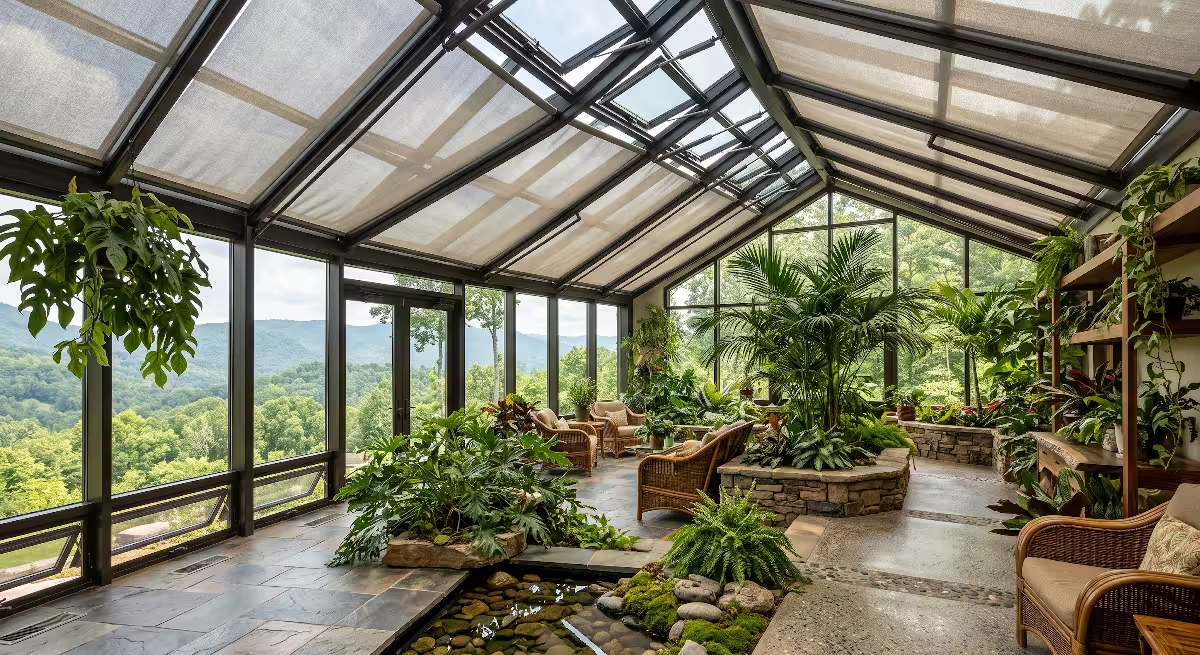
Biophilic design works best when multiple natural materials are combined. Installing indoor water features alongside vertical living walls, preserved moss panels, and natural wood slats creates both visual beauty and excellent acoustic performance.
+---------------------------------------------------------------+
|                 BALANCED ACOUSTIC ECOSYSTEM                   |
|                                                               |
|   [ Preserved Moss Panels ]        [ Slatted Timber Baffles ] |
|   High Sound Absorption (NRC ~0.85) Low-Frequency Resonance   |
|                 \                     /                       |
|                  \                   /                        |
|                   v                 v                         |
|              [  Indoor Water Features  ]                      |
|              Dynamic Pink Noise Generation                    |
|                                                               |
|   RESULT:                                                     |
|   Controlled Reverberation (RT60 ~0.5s) + Soothing Masking    |
+---------------------------------------------------------------+
Preserved moss panels and vertical living walls absorb sound exceptionally well. Plant leaves, roots, and growing substrates naturally scatter and absorb mid- and high-frequency sound waves, delivering a high Noise Reduction Coefficient. Slatted wood wall paneling backed by acoustic felt absorbs low-frequency sound while scattering high frequencies.
Placing indoor water features next to a living wall creates a balanced acoustic ecosystem. The water element generates smooth, active sound masking, while the surrounding plants and wood surfaces absorb excess reflections. This material mix keeps the water sound crisp, natural, and calming.
Mechanical Isolation: Decoupling Pumps and Eliminating Structure-Borne Vibration
A common mistake when installing indoor water features is failing to isolate mechanical pump vibrations. Electric submersible pumps use spinning impellers to move water. This motor movement creates a low-frequency vibration, usually between 50 and 60 Hertz.
If a water pump sits directly on the bottom of a fiberglass basin or connects rigidly to a home framing wall, the structure acts like a sounding board. Low-frequency vibrations travel straight into the floor joists and wall studs, turning the entire room into an amplifier for an annoying mechanical hum. This mechanical noise ruins the calming benefits of the water feature.
Eliminating mechanical noise requires complete structural decoupling:
- Vibration Isolation Pads: Place the pump on a pad made of closed-cell neoprene, heavy silicone, or specialized vibration-damping rubber rather than resting it directly on the basin floor.
- Flexible Tubing Connectors: Never run rigid PVC pipe straight from the pump to the fountain weir. Always install a flexible braided silicone or heavy EPDM hose section between the pump outlet and the main plumbing line to keep vibrations from traveling down the pipes.
- Basin Isolation: Line the basin cavity with dense elastomeric damping membranes before final installation to stop vibrations from transferring into the building floor.
- Electronic Flow Tuning: Select variable-speed direct-current pumps over fixed-output alternating-current models. DC pumps run quieter and allow fine-tuning of water flow rates to match room acoustic targets.
Regional Case Note: Designing for the Southern Appalachian Foothills (Tri-Cities Region)
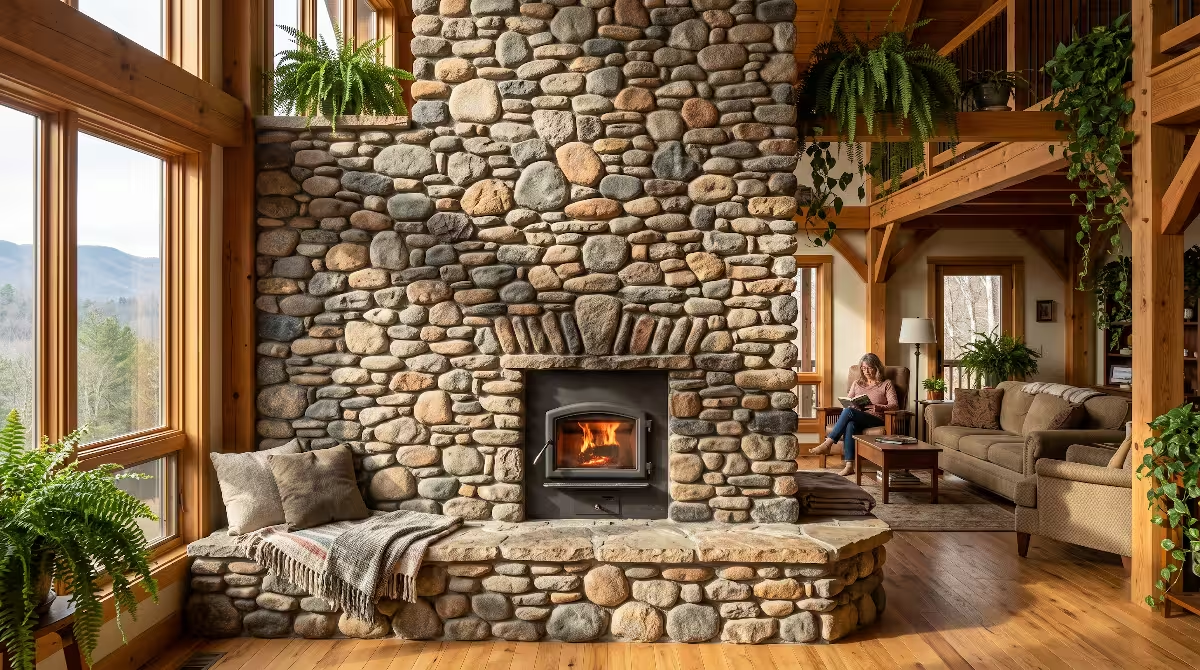
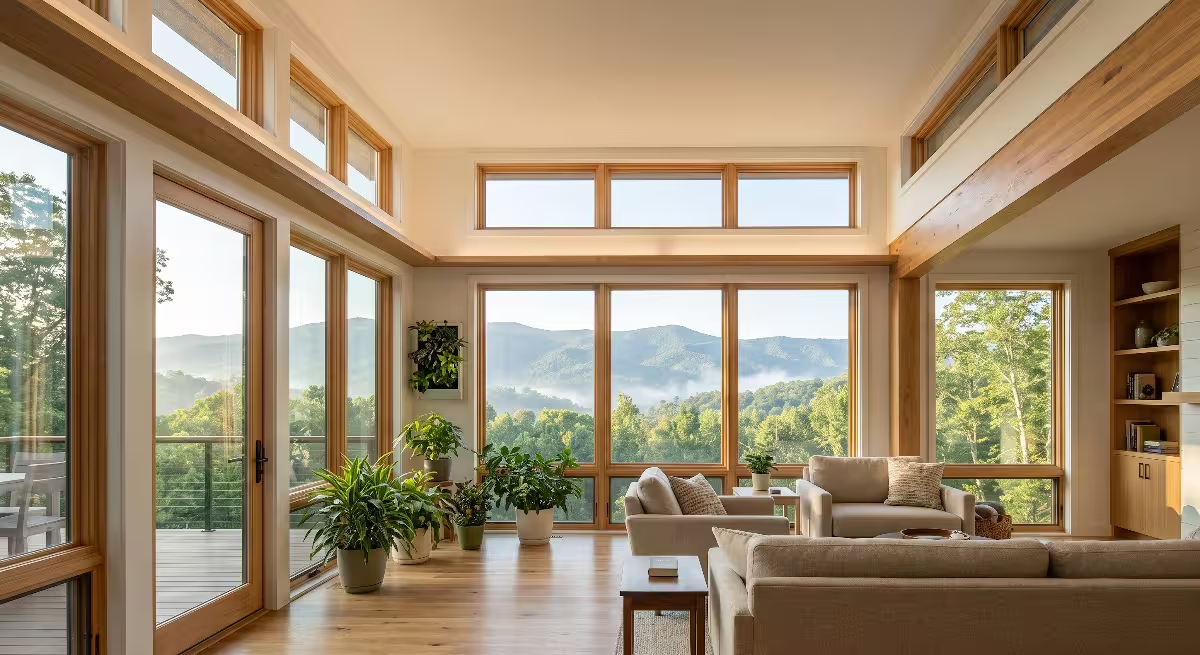
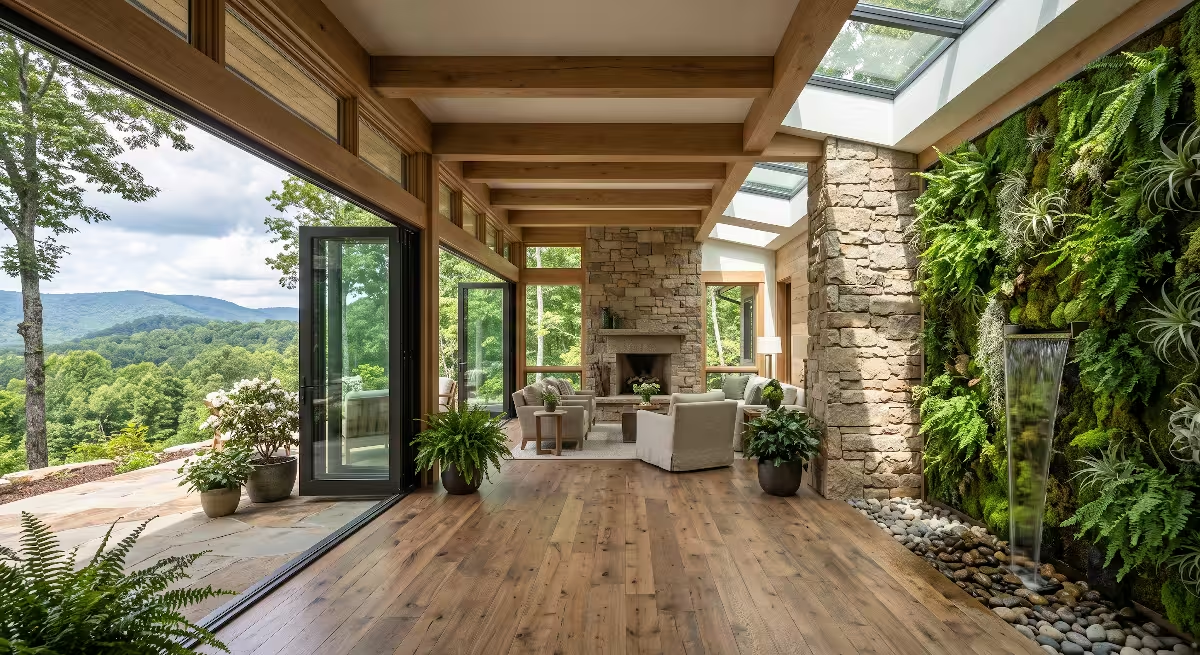
Designing indoor water features for the Southern Appalachian foothills—including Johnson City, Kingsport, and Bristol, Tennessee—calls for balancing regional architecture, local geology, and mountain climate shifts. Homes across East Tennessee often feature open-concept great rooms, exposed wood beams, and tall cathedral ceilings finished with tongue-and-groove boards or drywall.
These high-volume spaces create unique acoustic challenges. The tall ceilings cause long reverberation times, while winter heating cycles dry out the indoor air. Bringing indoor water features into Tri-Cities homes solves both issues, offering balanced acoustics and comfortable indoor humidity.
Regional Architectural Context: Integrating Native Stone
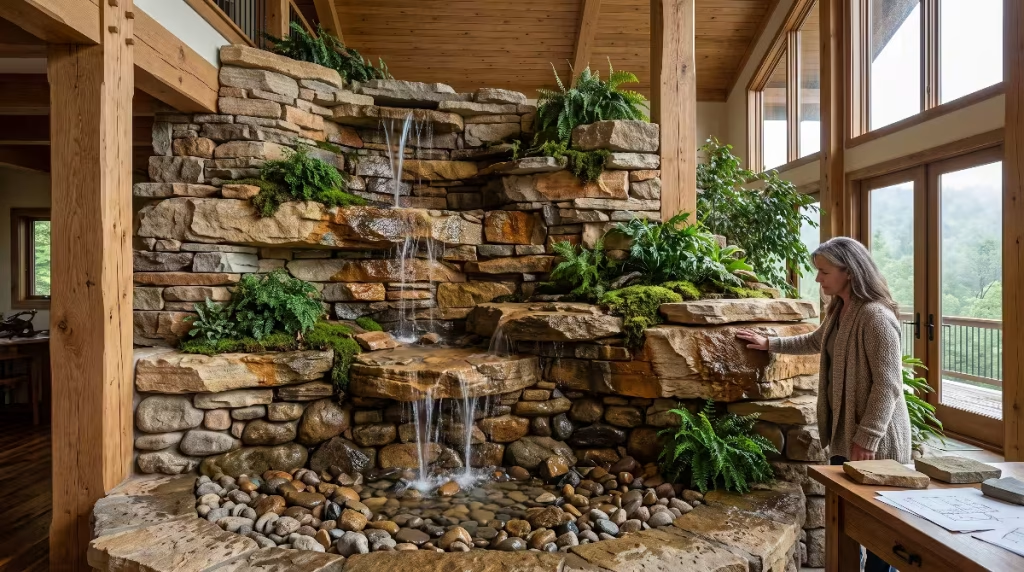
East Tennessee has a rich tradition of masonry and stonework. Incorporating regional stone into indoor water features creates a natural connection between local geology and the home interior.
- Crab Orchard Sandstone: Quarried on the Cumberland Plateau, Crab Orchard sandstone is famous for its rich tan, buff, and gray colors. Its rough, cleft surface breaks up water flow, creating delicate trickling sounds and broad acoustic diffusion. It works exceptionally well on vertical water walls where quiet speech privacy is needed.
- Tennessee Fieldstone: Collected throughout the regional valleys, round Tennessee fieldstone river rocks make an ideal impact surface for water basins. Placing these stones along the bottom of indoor water features softens falling drops, turning sharp splashes into a warm, gentle sound.
- Local Hardwoods: Pairing native white oak, black walnut, and mountain cherry woodwork with stone water installations honors the Appalachian landscape while adding acoustic absorption that keeps sound clear.
+---------------------------------------------------------------+
|         APPALACHIAN MATERIAL-ACOUSTIC HARMONIZATION           |
|                                                               |
|   Crab Orchard Sandstone Weir     Native River Pebble Basin   |
|   Textured water distribution     Breaks droplet impacts      |
|   Smooth, wide pink noise         Eliminates hollow splashes  |
|                 \                     /                       |
|                  v                   v                        |
|            [ Regional Indoor Water Features ]                 |
|                                                               |
|                            ^                                  |
|                            |                                  |
|               White Oak and Walnut Slats                      |
|               Absorbs unwanted room reflections               |
+---------------------------------------------------------------+
Microclimate and Seasonal Shifts: Acoustic and Thermal Comfort
The climate in the Tri-Cities region brings hot, humid summers and cold, dry winters. Most modern homes in Northeast Tennessee rely on ducted electric heat pumps for winter warmth. These heating systems push warm, dry air through rooms, frequently dropping indoor relative humidity below 25 percent.
Very dry winter air alters sound travel. Dry air absorbs high-frequency sounds less effectively, making indoor spaces sound brighter and sharper. At the same time, dry air dries out skin and nasal passages, increasing physical discomfort.
Installing indoor water features balances these winter shifts. As water moves through the feature, gentle evaporation raises indoor relative humidity into the healthy 40 to 50 percent range. This added moisture improves air quality, protects indoor woodwork from cracking, and balances acoustic transmission across all frequencies.
During summer, the sight and sound of water provides psychological cooling, making indoor spaces feel refreshing even on humid afternoons.
Questions Answered about Indoor Water Features
Do indoor water features reduce noise?
Indoor water features do not absorb sound waves like acoustic foam, fiberglass panels, or heavy curtains. Instead, they improve acoustics through auditory masking. Moving water produces broad-spectrum sound that raises the ambient noise floor across key speech frequencies.
This added layer covers up conversations, keyboard clicks, and mechanical rumbles, making them much less noticeable. Decibel readings remain steady, but the room feels quieter and calmer because jarring noises are masked by the gentle sound of water.
What type of water feature is quietest for an office?
For an office or private workspace, a vertical slate, mirror, or glass water wall with a submerged collection basin is the quietest option. In these indoor water features, water runs down a smooth surface rather than dropping freely through the air. Friction slows the water, preventing loud splashes.
Submerging the return catch beneath river stones or open-cell foam stops bubbling noises, producing a gentle whisper of pink noise. This sound covers up distracting noises without interrupting phone calls or video meetings.
Are water sounds considered white noise or pink noise?
Water sounds generally follow pink and brown noise frequency profiles rather than white noise. White noise contains equal energy across all frequencies, creating a sharp, hissing sound like television static that can feel irritating over time.
Energy
 ^
 |  [White Noise: Equal energy across all frequencies (hissing)]
 |  -------------------------------------------------------------
 |
 |  [Pink Noise: Drops 3 dB per octave (waterfall, rain)]
 |  \
 |   \
 |    \
 |     \
 |      [Brown Noise: Drops 6 dB per octave (heavy surf)]
 |       \
 |        \
 +-------------------------------------------------------------> Frequency
Indoor water features produce sound from thousands of tiny, varied bubble formations and impacts. This movement yields sound energy that decreases as frequency rises, matching natural pink noise. Human ears find this balanced sound profile comfortable and soothing for long periods.
Can an indoor fountain cause too much echo?
An indoor fountain can create an unpleasant echo if installed in a room with long reverberation times. When a high-energy splashing fountain sits in a space with bare drywall, large windows, and tile floors, sound waves bounce repeatedly off the hard boundaries.
The water sound can turn into a loud, hollow, metallic roar that makes it hard to talk. To prevent this, pair indoor water features with sound-absorbing finishes like rugs, acoustic ceiling treatments, moss walls, and upholstered furniture to keep reverberation under control.
How do you maintain indoor water feature acoustics over time?
Maintaining the acoustic profile of indoor water features requires regular maintenance:
- Prevent Mineral Scaling: Hard water leaves calcium and lime deposits on fountain weirs. These mineral crusts disrupt water flow, causing smooth sheets to break into noisy, irregular streams. Use distilled or reverse-osmosis water, or treat the water with gentle scale inhibitors.
- Maintain Water Levels: As water evaporates, the water level in the basin drops. If the level falls too low, the pump will pull in air bubbles, creating a loud, sputtering noise. Installing an automatic water fill valve keeps water depth consistent, keeping the pump completely quiet.
- Clean Pump Impellers: Clean the pump periodically to clear out dust and debris. A clean impeller spins smoothly and quietly, preventing low-frequency hums and vibrations.
- Rinse Basin Media: Over time, dust can settle between the river rocks in the basin, altering how water drains. Rinsing the stones keeps the basin draining freely, preserving the original sound tuning.
Implementation Checklist and Architectural Guidelines
To ensure indoor water features provide balanced acoustics and biophilic comfort, use this step-by-step checklist during the design and installation process:
+---------------------------------------------------------------+
|             ACOUSTIC WATER FEATURE DESIGN FLOW                |
|                                                               |
|  [Room Audit]       --> Measure RT60, ambient decibels,       |
|                         and surface reflectivity.             |
|        |                                                      |
|        v                                                      |
|  [Feature Choice]   --> Match typology (sheet, trickle, or    |
|                         bubbler) to room privacy goals.       |
|        |                                                      |
|        v                                                      |
|  [Decoupling]       --> Isolate pump with neoprene pads and   |
|                         flexible silicone plumbing lines.     |
|        |                                                      |
|        v                                                      |
|  [Tuning]           --> Adjust drop height, flow rate, and    |
|                         basin stone depth to hit target dBA.  |
|        |                                                      |
|        v                                                      |
|  [Material Synergy] --> Balance hard surfaces with living     |
|                         walls, moss panels, or timber slats.  |
+---------------------------------------------------------------+
1. Perform a Room Acoustic Audit
- Calculate the room volume and estimate the RT60 reverberation time.
- Identify reflective surfaces like windows, tile floors, and drywall.
- Measure baseline ambient noise levels caused by HVAC fans, appliances, and street traffic.
- Determine the primary acoustic goal: sound masking in an open area, speech privacy between zones, or gentle relaxation in a bedroom.
2. Select the Appropriate Water Feature Typology
- Large Atriums / Entryways: Choose sheet waterfalls or rain curtains to project sound across expansive rooms.
- Home Offices / Study Spaces: Choose vertical slate walls, glass panels, or living water walls to generate quiet pink noise.
- Bedrooms / Spas: Choose submerged bubblers or stone rills to produce deep, soothing tones.
3. Apply Mechanical Decoupling Methods
- Place the pump on a closed-cell neoprene or heavy silicone isolation pad.
- Connect the pump outlet to the water weir using flexible silicone tubing rather than rigid pipe.
- Line the basin structure with sound-damping membranes to isolate the unit from floor joists.
- Use a variable-speed direct-current pump to allow easy water flow and sound adjustments.
4. Tune Acoustic Flow Variables
- Keep sound levels in work and living areas between 42 and 48 dBA.
- Adjust the weir drop height to balance volume against splashing.
- Layer smooth river stones or open-cell filter media across the basin to break up direct droplet impacts.
- Adjust the water pump flow rate until the sound profile forms a continuous, soothing acoustic blanket.
5. Pair with Biophilic Sound Absorbers
- Place moss panels or living plant walls behind or beside the water installation.
- Install slatted wood wall panels backed with acoustic felt to absorb low-frequency rumble.
- Add soft furnishings, wool rugs, or heavy drapes to keep room reverberation times around 0.5 to 0.7 seconds.
Architectural Soundscapes for Modern Well-Being
Modern indoor architecture often prioritizes clean, minimalist visuals at the expense of everyday acoustic comfort. Designing spaces with hard, reflective materials and open floor plans leads to harsh echoes, poor speech privacy, and ongoing cognitive fatigue. Relying solely on synthetic white noise generators or clinical acoustic foam panels treats the symptoms of bad acoustics, but it misses the opportunity to create truly restorative environments.
Incorporating indoor water features into biophilic architecture solves acoustic problems naturally and effectively. By producing organic pink and brown noise profiles, moving water gently covers up disruptive speech and mechanical hums without adding harshness to the room. The soothing sounds of moving water engage the human auditory system, supporting parasympathetic recovery, lowering stress hormones, and resting directed focus.
Whether designing an open-concept mountain home with native Crab Orchard sandstone in the Southern Appalachian foothills, or refining a busy corporate office, balancing water features with sound-absorbing materials creates a healthy sensory ecosystem. Indoor water features transform loud, echo-prone rooms into calm, balanced environments where people can focus, rest, and thrive.