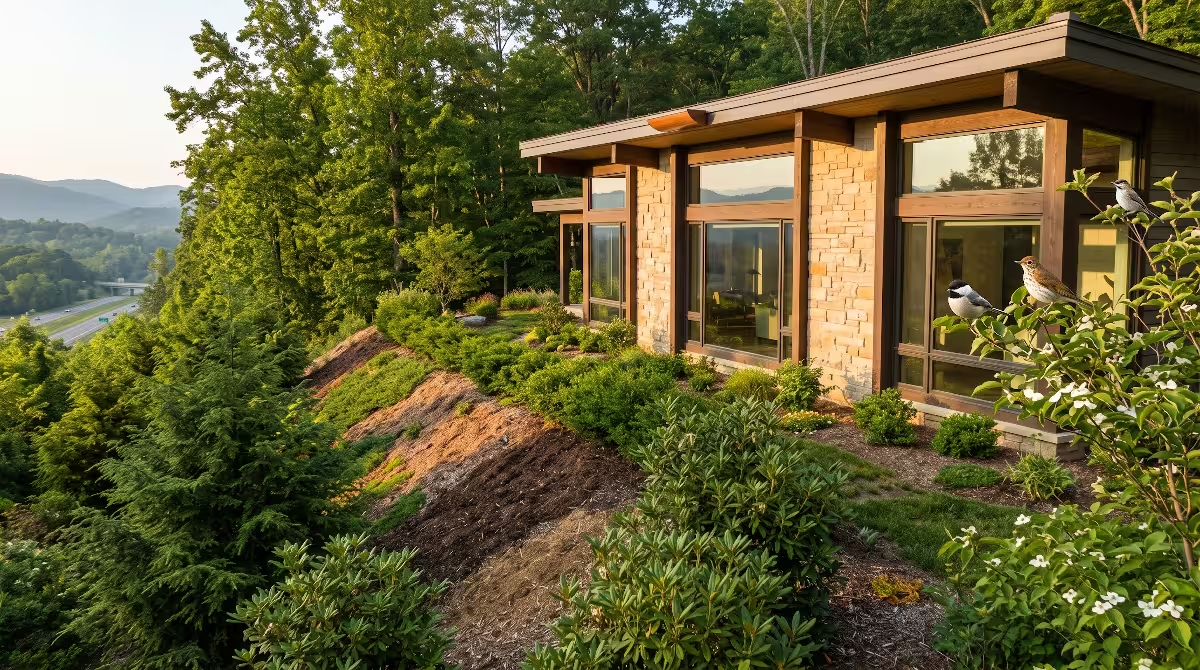
One of the most common issues facing landowners near Interstate 26 and Interstate 81 is constant, intrusive traffic noise. In this comprehensive guide, we will explain how mitigating I-26 and I-81 traffic noise with biophilic landscaping can transform loud outdoor yards into peaceful living spaces. We will look at the science of sound waves, earth berm construction, native East Tennessee plant choices, and natural water features to create an effective living barrier against traffic noise.
The Acoustic Reality of East Tennessee Freight Corridors
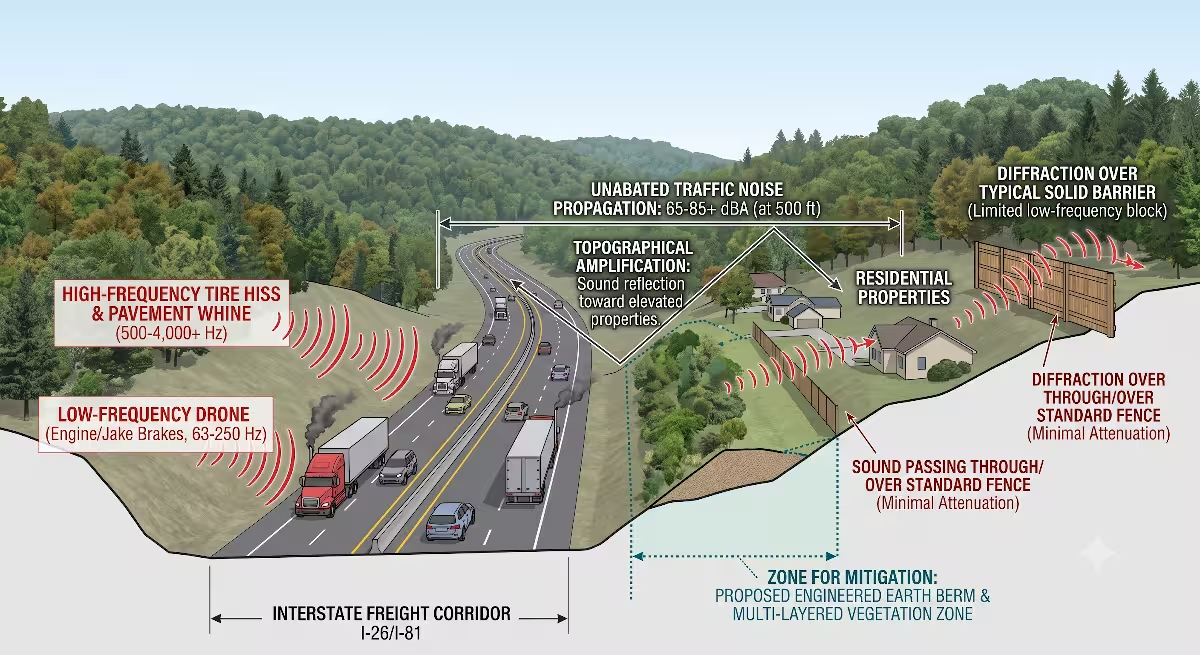
The Tri-Cities region has grown into an important hub for commerce and transportation. Interstate 81 acts as a primary freight corridor along the Eastern Seaboard, while Interstate 26 connects Southwest Virginia down through Johnson City, Kingsport, and onward to Asheville. While these highways keep our economy moving, they also produce high levels of highway traffic noise that spill into nearby neighborhoods.
+-----------------------------------------------------------------------------------+
|                        HIGHWAY SOUND PROPAGATION MECHANICS                        |
+-----------------------------------------------------------------------------------+
|                                                                                   |
|    [Heavy Truck Engine / Jake Brake] --------> Low-Frequency Waves (63-250 Hz)    |
|    [Tire-Pavement Contact Zone] -------------> Mid-High Frequency Whine (500+ Hz) |
|                                                                                   |
|    Appalachian Terrain Effect: Ridge-and-valley slopes bounce sound upward,        |
|    focusing traffic noise directly onto elevated residential properties.          |
|                                                                                   |
+-----------------------------------------------------------------------------------+
Understanding how sound moves from the highway into your yard is the first step toward reducing it. Highway sound is not just one simple hum; it is a mix of different sound frequencies created by different parts of moving vehicles.
Freight Traffic and Engine Braking Noise
Heavy commercial trucks generate some of the most disruptive sounds along I-26 and I-81. When large semi-trucks slow down on highway inclines, drivers often use engine compression brakes, commonly known as Jake brakes. This process creates low-frequency sound waves ranging between 63 Hertz and 250 Hertz.
These low-frequency sound waves carry tremendous energy. Unlike high-pitched sounds, low-frequency sound waves travel long distances through the air and easily bend around hard obstacles. Standard privacy fences often fail to stop low-frequency traffic noise because the long sound waves pass right over or through light fences.
Tire and Pavement Interface Noise
At speeds of 65 to 70 miles per hour, tire contact with the road becomes the dominant source of high-frequency traffic noise. The air trapped in tire treads gets compressed against concrete and asphalt surfaces, creating a continuous whine.
This tire-pavement sound usually sits between 500 Hertz and 4,000 Hertz. At distances of 500 feet from I-81 or I-26, unabated traffic noise from tires regularly measures between 65 and 85 decibels. For context, normal conversation occurs around 60 decibels, meaning this constant highway noise is loud enough to interrupt outdoor activities and disturb sleep indoors.
Terrain Amplification in the Ridge and Valley Region
The topography of East Tennessee adds another layer of complexity to traffic noise control. The Tri-Cities region is part of the Ridge and Valley province of the Appalachian Mountains. Steep hillsides, open valleys, and exposed rock cuts act as natural reflectors for sound.
If your home sits on a ridge above I-26 or I-81, sound waves travel directly up the slope toward your property without hitting ground barriers. In valley locations, sound waves reflect off opposite hills, causing traffic noise to echo and sound much closer than it actually is. Traditional concrete or wooden noise walls often bounce sound onto nearby properties, worsening traffic noise for neighbors across the road.
The Biophilic Engineering Alternative
Biophilic landscaping offers a smarter, nature-based answer to traffic noise. Instead of building rigid, artificial walls that reflect sound waves elsewhere, biophilic engineering uses living plant structures, natural soil slopes, and strategic water elements to absorb, scatter, and mask traffic noise.
By mitigating I-26 and I-81 traffic noise with biophilic landscaping, you can build a natural defense system that grows stronger and denser every year. This green infrastructure absorbs highway sound while restoring local habitat, purifying the air, and raising your home’s property value.
Bio-Acoustic Physics: How Vegetation and Soil Attenuate Highway Noise
Many homeowners ask a fundamental question: Do plants actually block highway traffic noise, or do they just hide it from view?
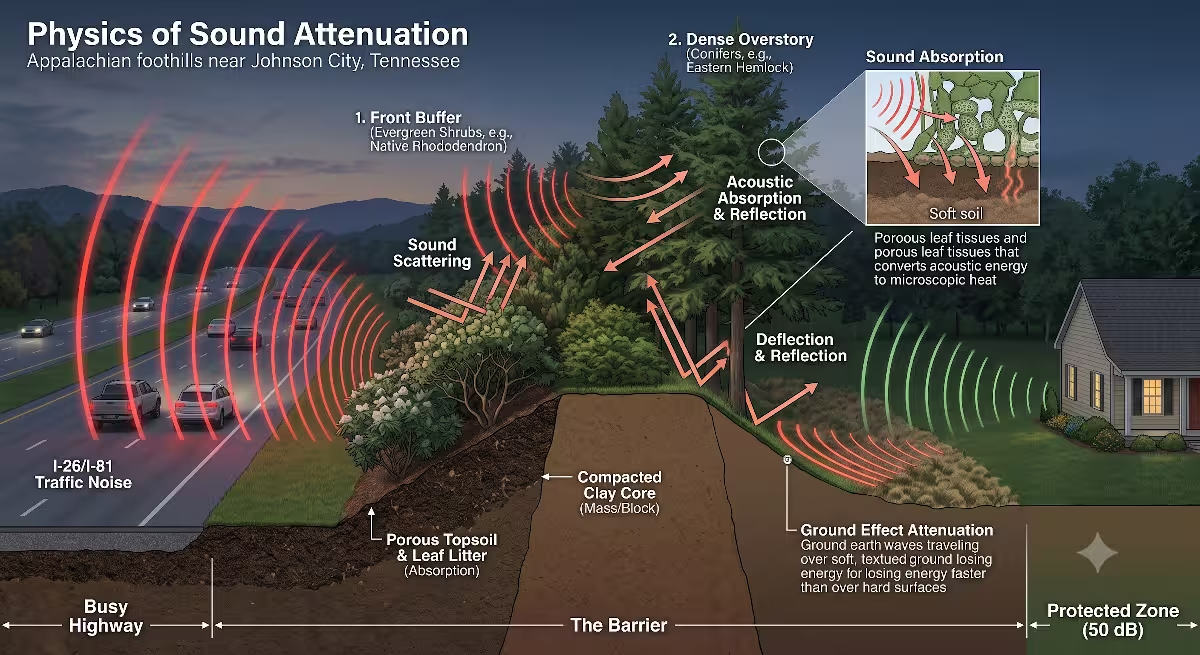
The answer comes down to bio-acoustic physics. Plants and soil do not just hide vehicles from view; they physically reduce sound wave energy through four natural processes. When arranged properly in a landscaping design, vegetation breaks down traffic noise before it hits your home.
+-----------------------------------------------------------------------------------+
|                        4 MECHANISMS OF VEGETATIVE ATTENUATION                     |
+-----------------------------------------------------------------------------------+
|                                                                                   |
|  1. ABSORPTION  --> Leaf tissue & porous soil turn sound energy into tiny heat.   |
|  2. DEFLECTION  --> Solid trunks & thick limbs bounce sound back toward highway.  |
|  3. SCATTERING  --> Flexible twigs break unified sound waves into tiny fragments. |
|  4. GROUND ADJ  --> Uncompacted soil & leaf litter trap low-frequency drone.      |
|                                                                                   |
+-----------------------------------------------------------------------------------+
1. Sound Absorption
Sound absorption happens when sound wave energy converts into small amounts of heat. When traffic noise hits flexible plant leaves, twigs, and stems, the plant parts vibrate slightly. This slight movement turns kinetic sound energy into thermal energy.
High-frequency traffic noise, such as tire squeal and high-speed road hiss, is easily absorbed by dense leaves and evergreen needles. Plants with thick, broad leaves or dense needle clusters provide millions of tiny surfaces that soak up high-frequency traffic noise instead of letting it pass through.
2. Deflection and Reflection
Solid objects deflect sound waves.Heavy tree trunks, thick limbs, and dense branches act as solid obstacles to traffic noise. When sound waves hit dense wood, a portion of the sound bounces back toward the highway or reflects up into the sky.
To deflect traffic noise effectively, a planting buffer must have significant physical mass. A thin row of spaced trees lets sound pass through small gaps. However, a thick, multi-layered row of trees creates an interconnected wooden barrier that reflects traffic noise back toward its source.
3. Refraction and Scattering
When a uniform sound wave hits a rough, uneven surface, it breaks apart. This process is called acoustic scattering or refraction. Traffic noise coming off I-26 or I-81 travels in large, organized waves.
When these large sound waves hit a multi-layered landscape buffer made of varying leaf shapes, branch heights, and textures, the unified wave breaks down into tiny, diffuse fragments. These smaller sound fragments bounce off each other and lose energy quickly, turning harsh traffic noise into a soft, ambient background hum.
4. Ground Impedance (The Soil Effect)
The ground surface between the highway and your home plays a major role in how sound travels.Hard surfaces like concrete, packed asphalt, or bare clay bounce sound waves along the ground, letting traffic noise travel farther without losing power.
Uncompacted, porous soil filled with organic matter acts like an acoustic sponge. As sound waves travel low across loose soil, decomposing leaf litter, and mulch beds, air trapped in the porous soil captures low-frequency traffic noise. Adding rich organic topsoil and organic mulch along your yard boundary reduces ground-level traffic noise dramatically.
| Acoustic Mechanism | Targeted Frequency Range | Best Landscape Element | Real-World Acoustic Impact |
| Sound Absorption | High ($1,000 – 4,000+\text{ Hz}$) | Dense evergreen foliage & leaf mass | Soaks up tire hiss and wind shear. |
| Sound Deflection | Mid-to-High ($500 – 2,000\text{ Hz}$) | Heavy wood trunks & thick limbs | Bounces sound back toward source. |
| Acoustic Scattering | All Frequencies ($63 – 4,000\text{ Hz}$) | Varying branch textures & layers | Breaks up organized sound fronts. |
| Ground Impedance | Low ($63 – 500\text{ Hz}$) | Loose topsoil, leaf litter, & mulch | Traps low-frequency engine hum. |
Expected Decibel Reductions
Understanding sound measurement helps set realistic expectations for your landscaping project. Decibels are measured on a logarithmic scale. Every 10-decibel drop in sound represents a 50 percent drop in perceived volume to the human ear.
A single row of thin trees will only reduce traffic noise by 1 to 2 decibels, an amount barely noticeable to human ears. However, an engineered biophilic barrier that combines a raised earth berm with a 25-foot deep band of multi-layered evergreen plants can reduce traffic noise by 5 to 12 decibels. This reduces perceived highway traffic noise by up to half, transforming a loud, disruptive yard into a quiet retreat.
Structural Engineering: Earth Berms and Multi-Tiered Layering
To maximize sound reduction, biophilic landscaping relies on structural site planning. Planting trees in a straight line is rarely enough to block highway traffic noise. Effective design combines earthmoving techniques with a multi-tiered planting strategy.
+-----------------------------------------------------------------------------------+
|                  CROSS-SECTION: THE 4-ZONE BIOPHILIC NOISE BERM                   |
+-----------------------------------------------------------------------------------+
|                                                                                   |
|                      [Zone 2: Berm Crest - Canopy Conifers]                       |
|                                     /\                                            |
|                                    /  \                                           |
|   [Zone 1: Windward Base]         /    \          [Zone 3: Leeward Midstory]      |
|   Evergreen Foundations          /      \         Broadleaf Evergreens            |
|   ______________________________/        \____________________________________    |
|   [Highway Side]               Compacted Clay Core         [Zone 4: Home Side]    |
|   I-26 / I-81 Traffic Noise    + Mycorrhizal Topsoil       Water Features & Patio |
|                                                                                   |
+-----------------------------------------------------------------------------------+
The Sightline Principle
The most important rule in noise control engineering is the Sightline Principle. If you can stand on your patio and directly see the trucks or cars on I-26 or I-81, sound waves are traveling straight to your ears without interruption.
Sound travels in straight lines from its source. On high-speed interstates, heavy truck exhaust pipes sit 8 to 12 feet above the road pavement, while car tires sit at ground level.
To block this direct line of sound, your biophilic barrier must be tall enough to break the visual line of sight between the highway noise sources and your outdoor living spaces. The top of your barrier must rise higher than a line drawn from an elevated truck exhaust stack straight to your eye level.
Engineering an Earth Berm
An earth berm is a raised mound of soil built along your property boundary.Berms are an effective way to block traffic noise because dense earth provides solid mass that sound waves cannot easily penetrate. An earthen mound instantly stops low-frequency traffic noise at ground level.
When building a sound berm in East Tennessee, use the following engineering guidelines:
- Slope Ratio: Build berm slopes with a ratio of 3:1 or 4:1 (3 to 4 feet of horizontal width for every 1 foot of vertical height). Steep slopes can erode during heavy Southern Appalachian rainfall, while gentler slopes stay stable and are easy to plant.
- Core Material: Construct the center core of the berm using dense local clay. Compacted clay creates an impermeable mass that stops sound waves.
- Surface Layer: Cover the clay core with 8 to 12 inches of uncompacted, rich organic topsoil. This loose topsoil layer absorbs sound energy and supports healthy plant roots.
- Height Goals: Aim for a berm height of 4 to 6 feet. Adding 10 to 15-foot evergreen trees on top of a 5-foot berm creates a 20-foot barrier at a fraction of the cost of planting mature trees.
The 4-Zone Layered Vegetative Buffer Model
Once your earth berm is in place, install plants using a four-zone model. This layered approach creates an interconnected green wall with no gaps for sound to leak through.
Zone 1: Roadside Base (Windward Side)
This zone sits on the highway side of the berm. Plants here face harsh conditions, including highway wind, exhaust fumes, and winter road salt spray from Tennessee Department of Transportation (TDOT) maintenance trucks. Use hardy, low-growing evergreen shrubs like dwarf junipers and salt-tolerant broadleaf evergreens. Zone 1 absorbs low-level tire noise before it hits the berm.
Zone 2: Berm Crest (Top Layer)
The crest of the berm needs tall, dense evergreen trees. These trees form the main vertical defense, lifting the total barrier height above the line of sight to block high-altitude exhaust noise from heavy trucks. Plant tall conifers closely together so their lower branches interlock over time, leaving no open space near the ground.
Zone 3: Leeward Midstory (Homeowner Side)
Located on the quiet side of the berm sloping down toward your property, Zone 3 fills the middle space between ground level and tree canopies. Use dense broadleaf evergreen shrubs and medium-sized trees. This layer catches sound waves that bend over the berm crest, absorbing mid-frequency traffic noise before it enters your living space.
Zone 4: Interior Living Zone (Yard Space)
Zone 4 is your private outdoor yard space. Here, biophilic landscaping shifts from stopping sound to improving human experience. Incorporate soft lawn turf, thick mulch beds, groundcovers, and custom water features to mask any remaining traffic noise.
Botanical Selection: Native East Tennessee Species for Sound Absorption
Selecting the right plant species is crucial when mitigating I-26 and I-81 traffic noise with biophilic landscaping. Plants must thrive in East Tennessee’s clay soils (USDA Hardiness Zone 7a/7b) while offering high foliage density to block sound year-round.
Deciduous trees lose their leaves in autumn, leaving your property exposed to winter traffic noise when air is cold and sound travels fast.Evergreen trees and shrubs keep their foliage year-round, providing consistent acoustic protection through every season.
+-----------------------------------------------------------------------------------+
|                   TOP NATIVE EVERGREEN CHOICES FOR NOISE BUFFERS                 |
+-----------------------------------------------------------------------------------+
|                                                                                   |
|  OVERSTORY CONIFERS:                                                              |
|    - Pinus strobus (Eastern White Pine) ---> Fast grower, fine needle bundles     |
|    - Tsuga canadensis (Eastern Hemlock) ---> Dense shade tolerance, deep branches |
|    - Thuja 'Green Giant' (Arborvitae) -----> Impenetrable ground-to-top canopy   |
|                                                                                   |
|  MIDSTORY BROADLEAF EVERGREENS:                                                   |
|    - Ilex opaca (American Holly) ----------> Thick leathery leaves deflect sound  |
|    - Rhododendron maximum (Great Laurel) --> Heavy mountain foliage mass          |
|    - Prunus caroliniana (Cherry Laurel) ---> Fast dense infill for middle gaps    |
|                                                                                   |
+-----------------------------------------------------------------------------------+
Overstory Conifer Anchors
Tall conifers provide year-round structural mass along the crest of your sound barrier.
Eastern White Pine (Pinus strobus)
Eastern White Pine is native to the Appalachian region and grows rapidly, often adding 2 to 3 feet of height per year. Its long, soft needles grow in dense bundles that break up high-frequency traffic noise. White Pines tolerate acidic soils well. Plant them in alternating, staggered rows so their branches interlock as they grow.
Eastern Hemlock (Tsuga canadensis)
Eastern Hemlock produces fine, soft evergreen needles and dense branching structures. It thrives in shaded valley sites across East Tennessee. Hemlocks can be pruned into dense living walls, making them ideal for properties with limited space along highway borders.
Green Giant Arborvitae (Thuja occidentalis x plicata ‘Green Giant’)
While a hybrid, Green Giant Arborvitae performs exceptionally well across Sullivan and Washington counties. It grows up to 3 feet per year, forming a dense, pyramid-shaped green wall. Crucially, Green Giant maintains its foliage all the way down to ground level, preventing traffic noise from sneaking underneath the tree canopy.
Broadleaf Evergreens for Midstory Fill
Broadleaf evergreens have thick, leathery leaves that bounce and absorb traffic noise better than thin deciduous foliage.
American Holly (Ilex opaca)
American Holly is a native broadleaf evergreen tree with stiff, leathery leaves. Its rigid leaves reflect sound waves back toward the highway, while its dense branch structure blocks visual sightlines completely. Holly trees tolerate poor clay soils and dry summer spells effortlessly.
Great Laurel / Rosebay Rhododendron (Rhododendron maximum)
Native to mountain ridges and stream banks throughout East Tennessee, Great Laurel produces massive, thick evergreen leaves. Its broad leaf surfaces provide outstanding sound damping for mid-frequency traffic noise. Plant Rhododendrons along the quiet leeward side of your earth berm, where they receive partial shade from overstory pines.
Carolina Cherry Laurel (Prunus caroliniana)
Carolina Cherry Laurel is a fast-growing, evergreen broadleaf shrub or small tree. It features dark green, glossy leaves and dense branching that quickly fills middle-tier gaps between 5 and 15 feet high. Cherry Laurel is resilient against heat and roadside exhaust fumes.
Mountain Laurel (Kalmia latifolia)
Mountain Laurel is another native broadleaf evergreen that performs well on sloping berms. It features gnarled, dense branch structures and tough, leathery foliage that scatters sound waves efficiently.
Bark Surface Mechanics and Low-Frequency Noise
An overlooked aspect of bio-acoustic landscaping is bark texture. Smooth tree bark reflects sound waves cleanly, while deeply fissured, corrugated bark absorbs and scatters low-frequency vibration.
Mature native Oaks (Quercus alba, Quercus montana) and aged White Pines feature rough, deeply grooved bark. When low-frequency engine vibrations from heavy trucks hit these rough tree trunks, the uneven surface breaks up sound energy. Mixing rough-barked trees into your vegetative sound buffer helps dampen low-frequency traffic noise.
Psychoacoustic Masking: Re-Engineering Human Auditory Perception
Biophilic landscaping goes beyond physical sound barriers. It also uses psychoacoustics, the study of how the human brain perceives and processes sound.
+-----------------------------------------------------------------------------------+
|                        THE PSYCHOACOUSTIC MASKING PRINCIPLE                       |
+-----------------------------------------------------------------------------------+
|                                                                                   |
|  UNWANTED SOUND: Highway Traffic Noise (Low-Frequency Hum & Tire Hiss)            |
|  DESIRABLE SOUND: Natural White Noise (Water Splashes & Rustling Leaves)          |
|                                                                                   |
|  BRAIN FOCUS: Human auditory processing centers prioritize local, dynamic,        |
|               pleasant sounds over distant, monotonous noise.                     |
|                                                                                   |
|  RESULT: The brain shifts focus to pleasant backyard sounds, making remaining    |
|          traffic noise fade into unnoticed background hum.                        |
|                                                                                   |
+-----------------------------------------------------------------------------------+
Your brain naturally prioritizes close, pleasant sounds over distant, steady noise. By introducing natural, pleasing sounds into your outdoor living space, you can mask lingering traffic noise and make your yard feel quieter.
The Science of Sound Masking
Sound masking occurs when a pleasant background sound covers an unwanted sound. To work effectively, the masking sound must match or exceed the frequencies of the unwanted noise without becoming overly loud or irritating.
Low-frequency highway traffic noise can be difficult to eliminate through physical barriers alone. Adding dynamic, pleasant sounds close to your outdoor sitting areas tricks the human brain into ignoring background highway traffic noise.
Acoustic Plants for Breeze-Generated White Noise
Certain plants make delightful, natural sounds when moved by gentle breezes. These plants act as organic white noise generators right in your backyard.
Quaking Aspen (Populus tremuloides) and Bigtooth Aspen (Populus grandidentata)
Aspen trees have unique, flattened leaf stems (petioles). Even in a slight breeze, Aspen leaves flutter rapidly against each other, producing a high-frequency rustling sound. This crisp, rustling noise masks high-frequency tire whine from nearby highways.
Inland Sea Oats (Chasmanthium latifolium)
Inland Sea Oats is a native perennial grass with dangling, seed heads. As wind moves through the grass, the seed heads rustle gently. Planting clusters of Inland Sea Oats around outdoor patios creates localized acoustic masking right where you relax.
Native Bamboo Alternates and Ornamental Grasses
While invasive bamboos should be avoided in East Tennessee, native Switchgrass (Panicum virgatum) and Prairie Dropseed (Sporobolus heterolepis) produce soft whispering sounds in autumn and winter breezes, providing year-round masking of traffic noise.
Designing Hydrological Biophilic Water Features
Moving water is one of the most effective ways to mask traffic noise. However, a simple fountain with a thin trickle of water will not cover highway sounds. The key is tuning the water feature’s sound output to match the volume and frequency profile of nearby traffic noise.
+-----------------------------------------------------------------------------------+
|                        WATER FEATURE ACOUSTIC TUNING GUIDE                        |
+-----------------------------------------------------------------------------------+
|                                                                                   |
|  Target Frequency       Ideal Water Feature Style      Design Focus               |
|  ----------------       -------------------------      ------------               |
|  High Tire Hiss         Broad, Sheet Fall Splashes     12-18 inch drop onto rock  |
|  Low Engine Rumble      Deep, Tumbling Cascades        Multi-tier stone basin     |
|  Variable Traffic Noise Multi-Drop Streams             Varying splash heights     |
|                                                                                   |
+-----------------------------------------------------------------------------------+
Water Drop Height and Sound Pitch
The pitch of splashing water depends on fall height and volume:
- High-Pitch Water Sounds: Water falling 6 to 12 inches onto smooth river stones produces high-frequency splashing ($2,000 – 8,000\text{ Hz}$). This crisp sound masks high-speed highway tire whine.
- Low-Pitch Water Sounds: Water dropping 18 to 36 inches into a deep basin creates a low, resonant splash ($250 – 1,000\text{ Hz}$). This deep splashing masks heavy truck engine rumbles and low-frequency traffic noise.
Building a Biophilic Waterfall
To effectively mask traffic noise from I-26 or I-81, install a multi-tiered cascading waterfall using local East Tennessee river rock. Position the water feature between your outdoor seating area and the highway.
Placing the water feature within 10 to 15 feet of your patio ensures that fresh, pleasant water sounds reach your ears before distant traffic noise.
Soil Chemistry, Microclimates, and Regional Site Implementation
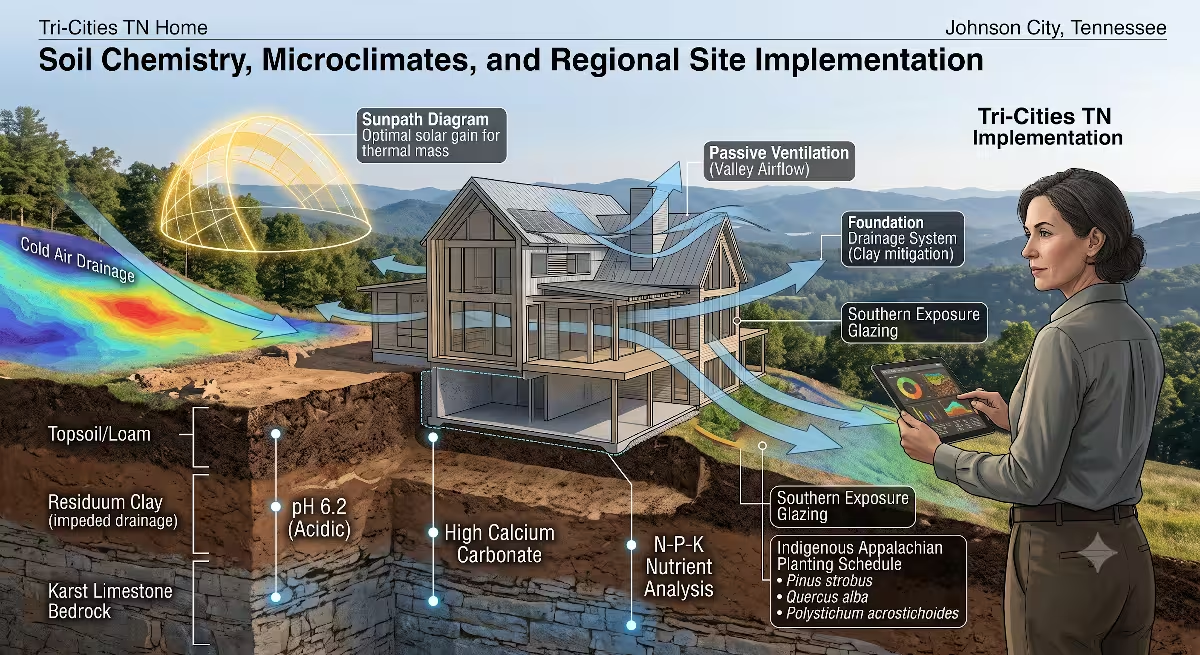
Installing a biophilic sound barrier in the Tri-Cities requires paying close attention to local soil conditions, highway microclimates, and municipal building codes.
+-----------------------------------------------------------------------------------+
|                   REGIONAL SOIL & MICROCLIMATE CONSIDERATIONS                     |
+-----------------------------------------------------------------------------------+
|                                                                                   |
|  SOIL FACTOR: Heavy East TN Clay                                                  |
|  ACTION: Core berms with clay for mass; top-dress with compost for soil porosity  |
|          and ground acoustic absorption.                                          |
|                                                                                   |
|  HIGHWAY FACTOR: TDOT Deicing Salt Spray & Exhaust Particulates                   |
|  ACTION: Select salt-tolerant edge plants (Junipers/Hollies); use dense needle    |
|          and waxy foliage to capture airborne particulate matter.                 |
|                                                                                   |
|  LOCAL REGULATIONS: Municipal Setbacks & HOA Rules                                |
|  ACTION: Verify easements in Johnson City, Kingsport, & Bristol prior to grading. |
|                                                                                   |
+-----------------------------------------------------------------------------------+
Managing East Tennessee Clay Soils
Much of Sullivan, Washington, and Carter counties features dense, clay-heavy soils. Heavy clay packs tightly, creating a hard surface that can bounce sound waves instead of absorbing them.
When building an earth berm, break up compacted subsoil before adding topsoil. Mix rich organic compost, aged bark mulch, and expanded shale into the top 12 inches of soil. This organic matter improves plant growth, prevents waterpooling, and creates a soft soil structure that absorbs ground-level traffic noise.
Roadside Environmental Stressors
Plants grown near busy interstates face harsh environmental conditions. Your botanical selections must tolerate specific highway stressors:
- Deicing Salt Tolerance: During winter storms, TDOT salt trucks spray sodium chloride across I-26 and I-81. Plants near the highway line must tolerate salt spray. Species like American Holly, Eastern Redcedar (Juniperus virginiana), and Carolina Cherry Laurel withstand roadside salt exposure effortlessly.
- Particulate Matter Filtering ($\text{PM}_{2.5}$ and $\text{PM}_{10}$): Heavy diesel trucks release fine particulate matter into the air. Dense evergreen barriers serve a dual purpose: they block traffic noise while capturing soot and dust on waxy leaf surfaces, helping clean the air around your home.
HOA and Municipal Guidelines in the Tri-Cities
Before starting earthwork or planting along property borders, check local municipal rules and home association covenants in Johnson City, Kingsport, or Bristol.
- Utility Easements: Always call 811 before digging to mark buried electric, gas, and water lines along your property edge.
- Setback Lines: Most cities enforce property setback rules that limit how close earth berms or fences can sit relative to road rights-of-way.
- HOA Restrictions: While traditional concrete sound walls are often banned by neighborhood associations, biophilic living barriers are usually welcomed as attractive landscape upgrades.
Common Asked Questions Answered about I-26 and I-81 Traffic Noise
How many decibels (dBA) can biophilic landscaping reduce traffic noise from I-26 or I-81?
A single, thin row of trees will only reduce traffic noise by 1 to 2 decibels, an amount barely noticeable to human ears.
However, a professionally engineered biophilic barrier—combining a 4 to 6-foot earth berm with a 20 to 30-foot deep multi-tiered planting band of native evergreens—can reduce traffic noise by 5 to 12 decibels. Because sound intensity is measured on a logarithmic scale, a 10-decibel drop cuts the perceived loudness of traffic noise in half.
What is the fastest-growing evergreen sound barrier for properties along I-81?
The fastest-growing evergreen trees adapted to East Tennessee clay soils are Green Giant Arborvitae (Thuja ‘Green Giant’) and Eastern White Pine (Pinus strobus). Both species can add 2 to 3 feet of height per year under good soil conditions.
Green Giant Arborvitae grows in a tight pyramid shape that keeps its lower branches close to the ground, blocking traffic noise near the soil line. Eastern White Pine grows rapidly into a tall overstory canopy, scattering mid-to-high frequency traffic noise across high sightlines.
Is a living plant barrier better than a traditional wood or concrete noise wall?
Traditional concrete noise walls reflect sound waves, bouncing traffic noise back onto nearby properties or across the highway. Concrete walls are expensive to construct and degrade over time. Wood privacy fences often rot, warp, and develop gaps that let traffic noise pass through.
Living biophilic barriers absorb sound energy, preventing echo and reflection. Furthermore, living barriers grow denser and more effective every year, purify the air by trapping highway exhaust particulates, provide wildlife habitat, and boost property values across the Tri-Cities region.
When is the best time of year to plant a biophilic noise barrier in the Tri-Cities area?
The ideal window for planting trees and shrubs in East Tennessee is late autumn through early spring (October through March).
Planting during winter dormancy allows tree roots to establish in cool clay soils without facing harsh summer heat. By the time summer arrives, well-rooted evergreens can withstand dry spells while providing dense foliage to absorb seasonal traffic noise.
Action Plan & Next Steps for Tri-Cities Landowners
If you are ready to reclaim your yard from constant highway noise, follow this step-by-step action plan to design an effective biophilic sound barrier.
+-----------------------------------------------------------------------------------+
|                     4-STEP BIOPHILIC LANDSCAPE ACTION PLAN                        |
+-----------------------------------------------------------------------------------+
|                                                                                   |
|  STEP 1: Acoustic Audit --------> Map peak noise times & measure decibel levels.  |
|  STEP 2: Sightline Mapping -----> Identify elevated sound paths from I-26/I-81.  |
|  STEP 3: Earthwork & Soil ------> Build 3:1 clay berms topped with loose soil.    |
|  STEP 4: Tiered Installation ---> Plant 4 distinct layers + add water masking.    |
|                                                                                   |
+-----------------------------------------------------------------------------------+
Step 1: Conduct an Acoustic Audit
Spend a few days observing traffic noise patterns on your property. Note peak traffic times along I-26 or I-81, such as weekday morning and evening rush hours. Use a decibel meter app on your smartphone to record noise levels at different locations across your yard. Identify where traffic noise is loudest and where you want to build quiet outdoor spaces.
Step 2: Map Sightlines
Stand in key outdoor living areas—such as your patio, deck, or porch—and look toward the highway. Note any locations where you can directly see highway traffic or elevated truck exhaust stacks. Mark these areas with tall stakes along your property boundary. These visual markers show where your sound barrier needs maximum height to break the direct path of traffic noise.
Step 3: Prepare the Earthwork and Soil
Hire a local grading contractor to construct a 4 to 6-foot earth berm along your property boundary. Ensure the berm core uses compacted local clay for sound-blocking mass. Top the berm with 8 to 12 inches of loose, compost-rich topsoil to create a healthy root environment and an sound-absorbing ground layer.
Step 4: Install Multi-Tiered Plantings and Water Features
Plant your living barrier using the four-zone model:
- Anchor the berm crest with fast-growing tall conifers like Green Giant Arborvitae and Eastern White Pine.
- Fill the midstory slope with dense broadleaf evergreens like American Holly and Cherry Laurel.
- Add breeze-activated sound masking plants like Quaking Aspen and native grasses near sitting areas.
- Install a tuned stone waterfall near your outdoor patio to cover any lingering background traffic noise with pleasing water sounds.
By mitigating I-26 and I-81 traffic noise with biophilic landscaping, you can turn a noisy, highway-adjacent lot into a peaceful sanctuary. Living green buffers do more than block unwanted sound—they bring natural beauty, cleaner air, and quiet tranquility back to your East Tennessee home.