

The Mountain Modern Kitchen
Building a custom home in the mountains of East Tennessee brings unique design choices. When you design a kitchen for a modern mountain home in areas like Johnson City, Kingsport, or Bristol, you want materials that honor the natural beauty outside while keeping a clean, updated look inside. The two most popular wood choices for high-end mountain kitchens today are live edge walnut and rift-sawn white oak. Both woods bring exceptional character to a home, but they serve very different design and structural purposes.
A modern mountain kitchen balances sleek architectural lines with warm, rustic textures. Choosing between live edge walnut and rift-sawn oak is not just about looks. It is about how the wood handles humidity shifts in our Appalachian climate, how it stands up to daily family use, and how it fits into your overall home budget. Understanding the engineering, anatomy, and maintenance of both materials will help you make the best investment for your custom build.
Architectural Style and Design Intent: Organic Focal Point vs. Minimalist Uniformity
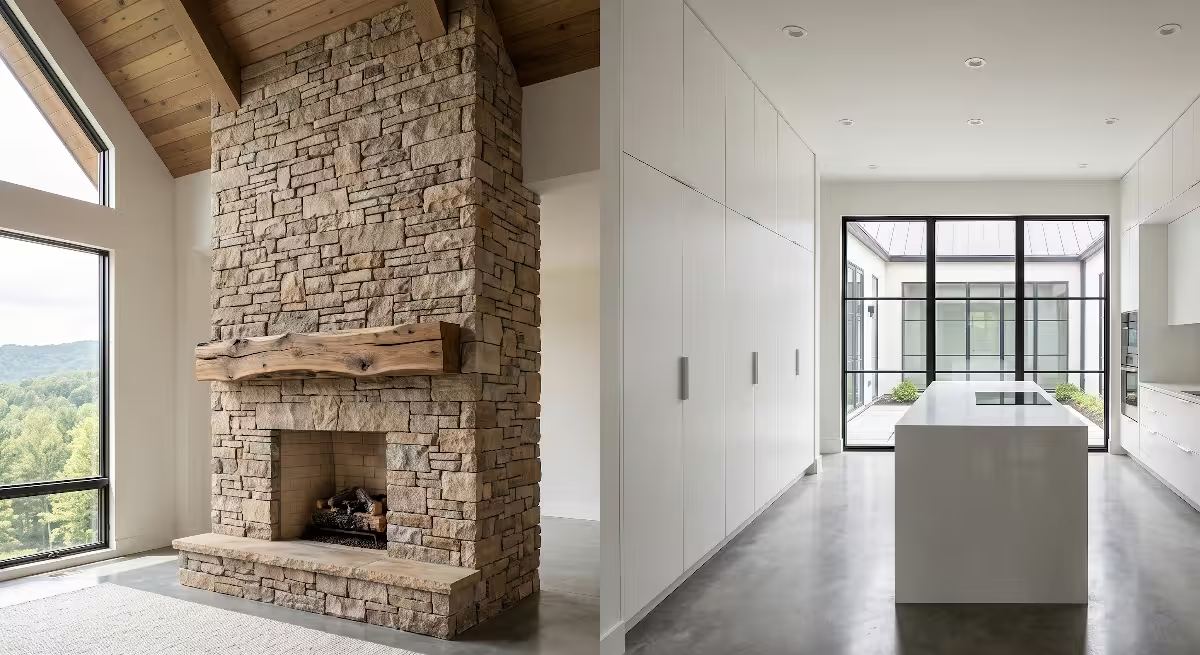
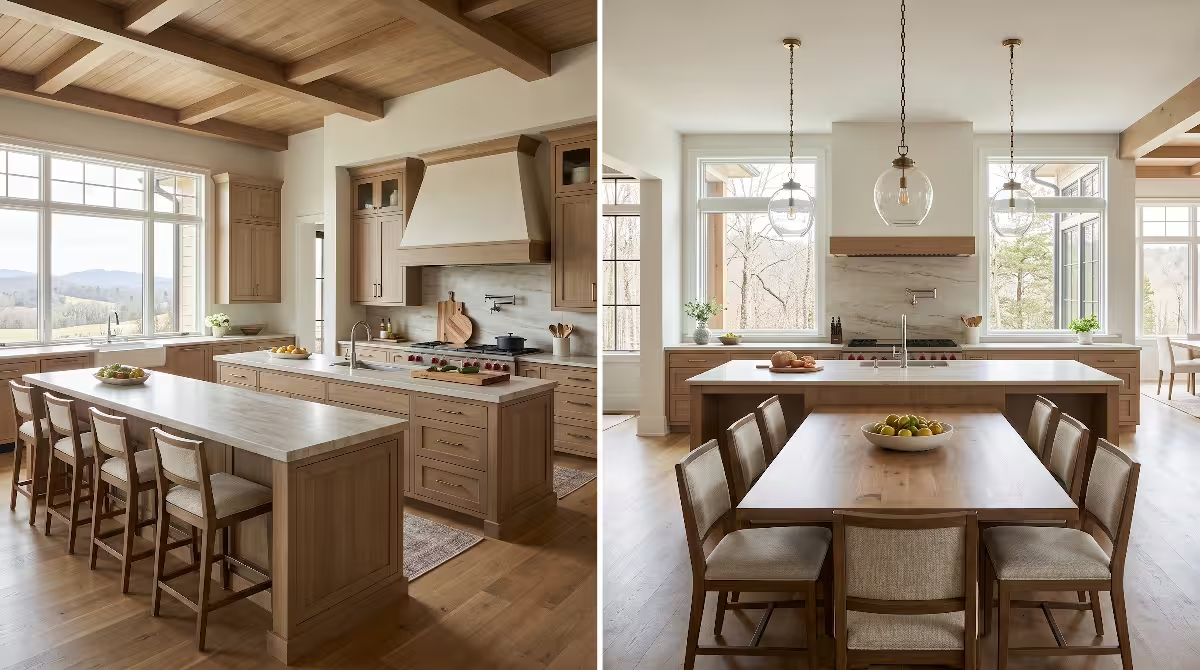
Modern mountain architecture combines heavy timber, structural steel, glass, and natural stone. The goal is to connect the indoor living space with the surrounding mountain views. Kitchen cabinetry and countertops play a central role in achieving this harmony.
Biophilic Modern Mountain Design
Biophilic design focuses on our natural connection to the outdoors. Using natural wood shapes inside the home reduces stress and makes large spaces feel welcoming. A live edge walnut slab serves as the ultimate biophilic feature. Because a live edge walnut piece keeps the original shape of the tree right under the bark, it introduces soft, organic curves into a room that is otherwise filled with straight walls and sharp corners.
In a large open-concept layout with vaulted ceilings, a live edge walnut island acts as an organic anchor. It brings the eye down to a warm, natural surface that tells a story through its grain, knots, and wild edges. When people walk into a mountain home, a live edge walnut counter invites them to touch the wood and gather around the kitchen.
Modern Minimalist and Alpine Modern Aesthetics
If your style leans toward clean lines and visual calm, rift-sawn oak is the gold standard. Alpine modern design strips away extra clutter to focus on pure form and function. Rift-sawn oak offers a quiet, uniform look. The milling process produces tight, vertical grain lines that run straight from top to bottom.
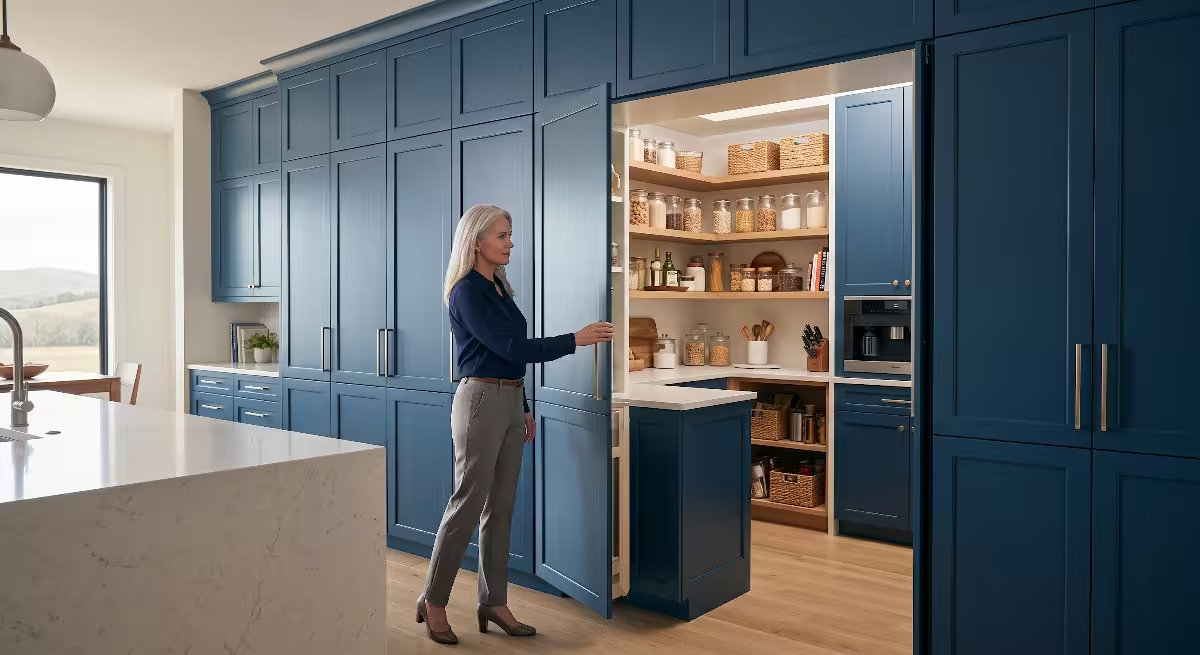
This straight grain creates a tailored backdrop. When you use rift-sawn oak across a long wall of tall cabinets or hidden pantry doors, it provides warmth without visual distraction. The consistent pattern lets large window frames, mountain views, and statement lighting take center stage.
Establishing Visual Hierarchy
Every great kitchen needs a clear visual hierarchy. If every surface has heavy movement, the space feels busy and overwhelming. If every surface is flat and plain, the room can feel cold and commercial.
- The Focal Point: A live edge walnut countertop or dining bar immediately claims attention as the primary feature.
- The Background Anchor: Rift-sawn oak cabinets provide a steady, uniform foundation that supports bolder design choices.
- The Texture Balance: Pairing the wild natural edge of live edge walnut with the neat discipline of rift-sawn oak creates a kitchen that feels balanced and timeless.
+-----------------------------------------------------------------------------------+
|                            KITCHEN DESIGN HIERARCHY                               |
+-----------------------------------------------------------------------------------+
|  [ PRIMARY FOCAL PIECE ]     -->  Live Edge Walnut Island / Waterfall Counter     |
|  [ ARCHITECTURAL BACKDROP ]  -->  Rift-Sawn White Oak Perimeter Cabinetry         |
|  [ STRUCTURAL ACCENTS ]      -->  Blackened Steel Hardware & Honed Quartzite Tops |
+-----------------------------------------------------------------------------------+
Wood Anatomy and Milling Science: Slabs vs. Radial Sawing
To understand how these woods behave in your kitchen, you must look at how they grow and how sawmills cut them into usable lumber.
Live Edge Black Walnut Anatomy
American Black Walnut (Juglans nigra) is one of the most prized hardwoods native to the Appalachian region. When a log is cut for a live edge walnut slab, the sawyer cuts straight through the tree trunk from top to bottom. This method is called slab sawing or “through-and-through” cutting.
                    LIVE EDGE WALNUT CROSS SECTION
       _________________________________________________________
      (____Sapwood____|_______Dark Heartwood_______|____Sapwood____)
      ^                                                            ^
  Live Edge Bark Line                                      Live Edge Bark Line
A live edge walnut slab contains two main wood zones:
- The Heartwood: The rich, dark chocolate-brown center of the tree. It is dense, durable, and packed with natural color variations ranging from deep cocoa to smoky purple undertones.
- The Sapwood: The outer living layer of the tree just beneath the bark. In walnut, the sapwood is a light blonde or creamy tan color.
In a live edge walnut top, the contrast between the pale sapwood along the outer edge and the dark heartwood in the center creates a striking natural frame. Live edge walnut also features unique grain figures around branch junctions, including crotch figure, burl clusters, and curly wave patterns. To stabilize natural fissures and drying checks, custom woodworkers install hardwood butterfly keys (also called Dutchmen joints) or fill small voids with clear, structural black epoxy.
Rift-Sawn White Oak Milling
White Oak (Quercus alba) grows abundantly across the hills of East Tennessee. However, rift-sawn oak is cut using a very specific and labor-intensive milling technique.
Standard lumber is plain sawn, which produces wide arches known as cathedral grain patterns. Quarter-sawn oak is cut at a 90-degree angle to the growth rings, revealing shiny flake marks called medullary rays.
Rift sawing cuts the log at a precise angle between 30 and 60 degrees to the growth rings (ideally 45 degrees). This radial orientation eliminates both the wide cathedral patterns and the shiny ray flakes. The result is pure, parallel vertical grain lines across the entire face of the board.
                     LOG MILLING GRAIN ORIENTATION

       PLAIN SAWN                  QUARTER SAWN                 RIFT SAWN
    (Cathedral Grain)            (Medullary Rays)            (Vertical Linear)
     _______________              _______________             _______________
    (  ( ( ( ) ) )  )            ( ||||||||||||| )           ( ///////////// )
     ---------------              ---------------             ---------------
Milling Waste, Yield, and Sustainability
The milling science behind these two cuts explains their pricing:
- Rift-Sawn Oak Waste Factor: Cutting logs at radial angles creates significant triangular waste between cuts. Rift sawing yields only about 50 to 60 percent usable lumber from a log. This high waste factor makes rift-sawn oak substantially more expensive than standard flat-sawn oak.
- Live Edge Walnut Yield: Milling a live edge walnut slab utilizes nearly the entire width of the tree trunk. However, the tree must grow for 50 to 80 years to reach a trunk diameter wide enough for a kitchen island. High-grade live edge walnut trees with wide, solid heartwood centers are rare and highly sought after by local craftsmen.
Structural Stability and Climate Engineering in Mountain Microclimates
Mountain homes experience wide swings in weather. In the Tri-Cities region, our summers are warm and humid, while winter brings cold, dry mountain air. If your home has large glass walls or uses radiant floor heat and wood stoves, your indoor humidity levels will fluctuate. Wood is a hygroscopic material, meaning it constantly absorbs and releases moisture, expanding and contracting across the seasons.
Seasonal Relative Humidity Fluctuations
During a muggy July in East Tennessee, indoor relative humidity can climb to 60 percent or higher. In January, running a central heating system can drop indoor humidity down to 20 percent.
When wood takes in moisture, it swells. When it dries out, it shrinks. If this movement is restricted incorrectly, solid wood will cup, twist, or split along the grain.
Tangential vs. Radial Wood Movement
Wood movement depends directly on grain orientation:
- Rift-Sawn Oak Stability: Because the growth rings run diagonally through the thickness of the board, rift-sawn oak expands and contracts uniformly. It has nearly equal radial and tangential movement rates. This makes rift-sawn oak the most dimensionally stable cut of solid hardwood available. Cabinet doors built from rift-sawn oak will stay flat and true through every season without sticking against frames.
- Live Edge Walnut Slab Movement: A wide live edge walnut slab contains flat-sawn, rift, and quarter-sawn grain all across a single piece. A 40-inch wide live edge walnut slab can expand or contract by as much as 1/4 to 3/8 of an inch across its width between summer and winter. Planning for this natural movement is essential when installing a live edge walnut countertop.
+---------------------------------------------------------------------------------------+
|                       WOOD MOVEMENT & CLIMATE TOLERANCE                               |
+---------------------------------------------------------------------------------------+
|  Wood Type          | Grain Direction  | Expansion Risk | Engineering Requirement     |
+---------------------+------------------+----------------+-----------------------------+
|  Live Edge Walnut   | Mixed Tangential | Moderate-High  | Steel C-channels + Slots    |
|  Rift-Sawn Oak      | Linear Radial    | Very Low       | Standard Cabinet Mounts     |
+---------------------------------------------------------------------------------------+
Mechanical Fastening and Stress Relief
To keep a live edge walnut island flat over decades of use, professional builders use specific structural techniques:
- Kiln Drying Standards: A live edge walnut slab must be properly dried down to a stable 6 to 8 percent moisture content using a dehumidification or vacuum kiln. Air-drying alone is not enough for indoor kitchen slabs.
- Underside Steel C-Channels: Heavy-duty carbon steel C-channels are routed flush into the underside of the live edge walnut slab. These steel channels provide rigid mechanical support across the width to prevent cupping.
- Slotted Fasteners: The screws securing the steel C-channels and cabinet bases to the live edge walnut top must pass through slotted, oval holes rather than tight circular holes. This allows the live edge walnut slab to slide freely side to side during seasonal humidity changes without cracking around the fasteners.
- Balanced Sealing: Every surface of a live edge walnut slab, including the bottom face, end grain, and bark edge, must receive an equal number of finish coats. Sealing only the top surface will cause the bottom to absorb moisture faster, resulting in immediate warping.
              STEEL C-CHANNEL INSTALLATION (UNDERSIDE)
  =================================================================  <- Live Edge Top
      |===|       [Slotted Screw]      [Slotted Screw]       |===|
      |   |------------(  O  )-------------(  O  )-----------|   |  <- Steel Channel
      |===|                                                  |===|
  =================================================================
Kitchen Applications and Ergonomics
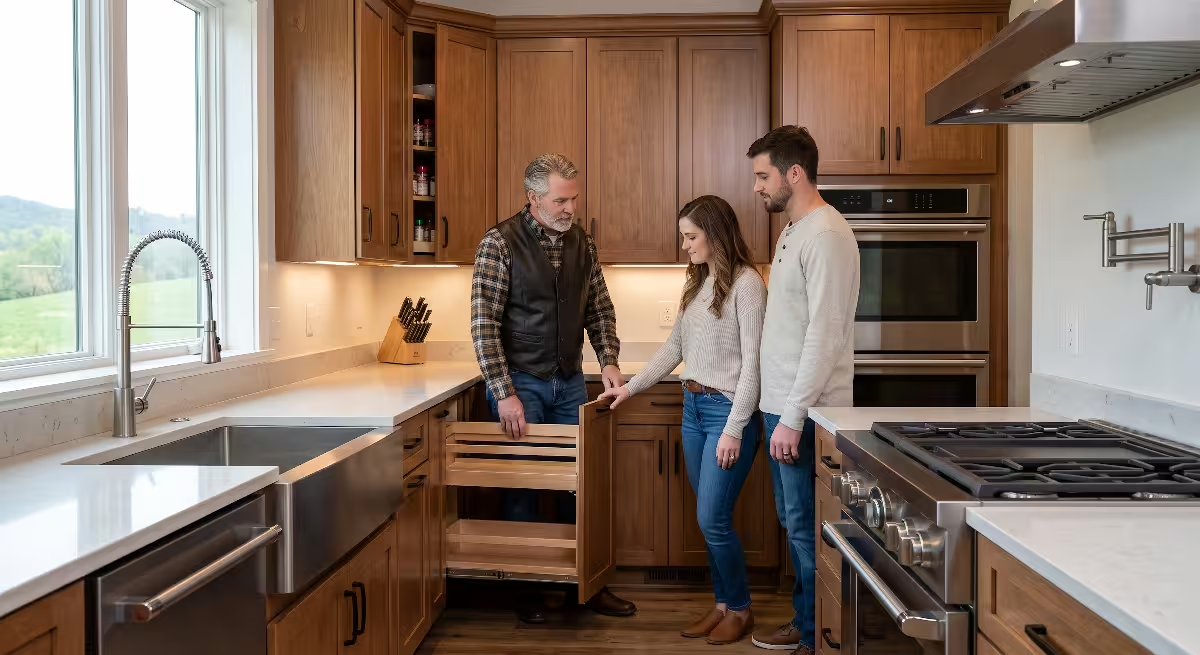
Deciding where to place live edge walnut and rift-sawn oak depends on how you use your kitchen every day.
Live Edge Walnut Kitchen Applications
Because of its rich figure and natural edge, live edge walnut performs best in areas meant for gathering, relaxing, and serving:
- Waterfall Island Slabs: Cutting a live edge walnut slab with a 45-degree mitered corner allows the natural wood grain and live edge to flow seamlessly off the top counter and down to the floor. A waterfall live edge walnut island serves as the central showpiece of the home.
- Cantilevered Breakfast Bars: A live edge walnut slab can be mounted on steel brackets extending from a stone or quartz island. This creates a warm dining ledge where elbows rest comfortably on solid wood rather than cold stone.
- Open Display Shelving: Thick floating shelves made of live edge walnut add warmth against tile or stone backsplashes, providing an ideal spot to display heirloom cookware or local pottery.
- Integrated Banquette Tables: A custom live edge walnut table built into a kitchen breakfast nook provides lasting durability and comfort for daily family meals.
Rift-Sawn Oak Applications
Rift-sawn white oak is the ultimate material for high-traffic, hardworking kitchen cabinetry:
- Full-Height Flat Panel Doors: Modern slab-style cabinet doors showcase the clean, continuous vertical grain lines of rift-sawn oak from floor to ceiling.
- Hidden Appliance Panels: Front panels for integrated dishwashers and built-in refrigerators look sleek when built from matching rift-sawn oak, concealing bulky stainless steel appliances.
- Concealed Pantry Passages: Matching rift-sawn oak wall panels can hide secret, push-to-open doors leading into walk-in pantries or prep kitchens.
- Acoustic Wall Slatting: Rift-sawn oak slats installed over sound-absorbing felt help reduce echo on kitchen accent walls and kitchen island kickplates.
Ergonomics, Usability, and Cleaning
Working around natural wood edges requires thoughtful planning for food prep and cleaning:
- Bark Removal: Never leave natural tree bark on a live edge walnut kitchen counter. Over time, kitchen heat and moisture will cause bark to loosen, harbor food particles, and fall off. Professional builders carefully strip the bark and sand the underlying sapwood smooth to create an easy-to-clean, comfortable live edge walnut contour.
- Working Prep Surfaces: Flat, square stone surfaces like quartzite or granite remain the best choice around primary cooktops and under-mount prep sinks where raw meats and water splash frequently. Installing a live edge walnut top on the dry island side or raised breakfast bar keeps the wood looking pristine while providing a comfortable dining surface.
- Countertop Clearances: When designing walkways around a live edge walnut island, account for the natural variance in the edge. Measure your minimum 42-inch or 48-inch aisle clearances from the widest point of the live edge walnut curve to ensure your kitchen meets building standards and allows easy passage.
Finishing Technologies and Long-Term Maintenance
Wood finishes protect against kitchen grease, coffee spills, and moisture while determining how the wood feels under your hands.
+------------------------------------------------------------------------------------+
|                         FINISHING TECHNOLOGY COMPARISON                            |
+------------------------------------------------------------------------------------+
|  Feature             | Hardwax Oils (Rubio/Osmo)  | 2K Polyurethane / Conversion   |
+----------------------+----------------------------+--------------------------------+
|  Surface Feel        | Natural, raw wood texture  | Smooth, protective top film    |
|  Stain Resistance    | High (when maintained)     | Maximum industrial barrier     |
|  Scratch Repair      | Easy spot buffing at home  | Requires full sanding/refinish |
|  Water Resistance    | Good                       | Impermeable                    |
|  Sheen Level         | Matte to Velvet Low-Luster | Matte, Satin, or Semi-Gloss    |
+------------------------------------------------------------------------------------+
Hardwax Oils
Hardwax oils, such as Rubio Monocoat and Osmo Polyx-Oil, have become the top choice for custom live edge walnut surfaces. These finishes bond molecularly with the raw cellulose wood fibers rather than forming a thick plastic coating over the top.
- The Benefits: Hardwax oil preserves the authentic, velvety feel of natural live edge walnut. You feel the actual grain of the wood under your fingers. It will never crack, peel, or blister.
- Spot Repairs: If a live edge walnut counter gets scratched by a dropped pan, you do not have to strip the entire island. You can lightly sand the damaged spot with fine sandpaper and hand-buff a small drop of fresh oil right into the wood. The new oil blends seamlessly into the surrounding live edge walnut finish.
- Care Routine: Clean your hardwax-finished live edge walnut with pH-neutral, specialty surface soaps. Avoid harsh chemical cleaners, ammonia, or bleach, which break down natural wax oils. Apply a liquid renewal wax once every year or two to keep your live edge walnut nourished.
Conversion Varnishes and 2-Part Polyurethanes
For perimeter cabinetry made from rift-sawn oak, commercial cabinet makers rely on post-catalyzed conversion varnishes or two-component (2K) waterborne polyurethanes.
- Industrial Protection: These finishes create a tough, chemical-resistant film across the wood surface. They protect rift-sawn oak cabinet fronts from steam around dishwashers, cooking oils near ranges, and repeated daily scrubbings.
- Clear Look: Modern 2K waterborne polyurethanes contain specialized UV inhibitors. Unlike old solvent lacquers that turned amber or orange over time, high-performance polyurethanes keep rift-sawn white oak looking light, natural, and modern.
Color Drift and UV Management Over Decades
All hardwoods react to sunlight, but walnut and oak age in completely opposite ways:
- Walnut Lightens: Freshly cut American walnut has deep, dark, almost black-purple tones. Over years of exposure to natural sunlight streaming through large mountain windows, live edge walnut will gradually lighten into a warm, golden honey-brown patina. Using a finish with added UV blockers slows this process and keeps your live edge walnut rich and dark for longer.
- Oak Ambers or Darkens: White oak tends to darken or turn slightly more golden as it ages under sunlight. To maintain the light, Scandinavian look on rift-sawn oak, builders often apply a pre-treatment containing a hint of white pigment (such as a 5% white-tinted base coat) before applying a dead-flat topcoat.
Tactile and Acoustic Performance in Open Mountain Great Rooms
Modern mountain homes often feature soaring timber beams, tall stone fireplaces, and polished concrete or hardwood floors. While these features look magnificent, they create a major architectural challenge: sound management.
+-----------------------------------------------------------------------------+
|                          ACOUSTIC & COMFORT FACTORS                         |
+-----------------------------------------------------------------------------+
|  Hard Surfaces (Quartz / Stone / Glass)   --> Reflects sound / Echoes       |
|  Natural Wood (Live Edge Walnut / Oak)     --> Absorbs & diffuses sound waves|
|  Tactile Temperature (Wood vs. Stone)     --> Wood stays warm to the touch  |
+-----------------------------------------------------------------------------+
Acoustic Softening in Vaulted Great Rooms
Large sheets of glass and hard stone countertops bounce sound waves across an open room, creating an echo chamber where conversation and kitchen noise become loud.
Wood acts as a natural sound dampener. Incorporating a thick, solid live edge walnut island top helps absorb and scatter sound waves rather than reflecting them. When paired with vertical rift-sawn oak slat walls or textured wood cabinet panels, wood significantly reduces echo. The kitchen feels quieter, calmer, and more intimate, even during busy family gatherings.
Thermal Comfort and the Human Touch
Stone countertops like granite, quartz, and marble are excellent thermal conductors. They pull heat away from your skin, making them feel cold to the touch, especially on chilly mountain mornings.
Wood is a natural insulator. When you sit down at a live edge walnut breakfast bar, the wood feels naturally warm and soothing against your forearms. The soft, rounded contours of a smoothed live edge walnut slab fit the natural curve of your hands, offering a tactile experience that stone simply cannot match.
Cost Breakdown, Waste Ratios, and Appalachian Sourcing
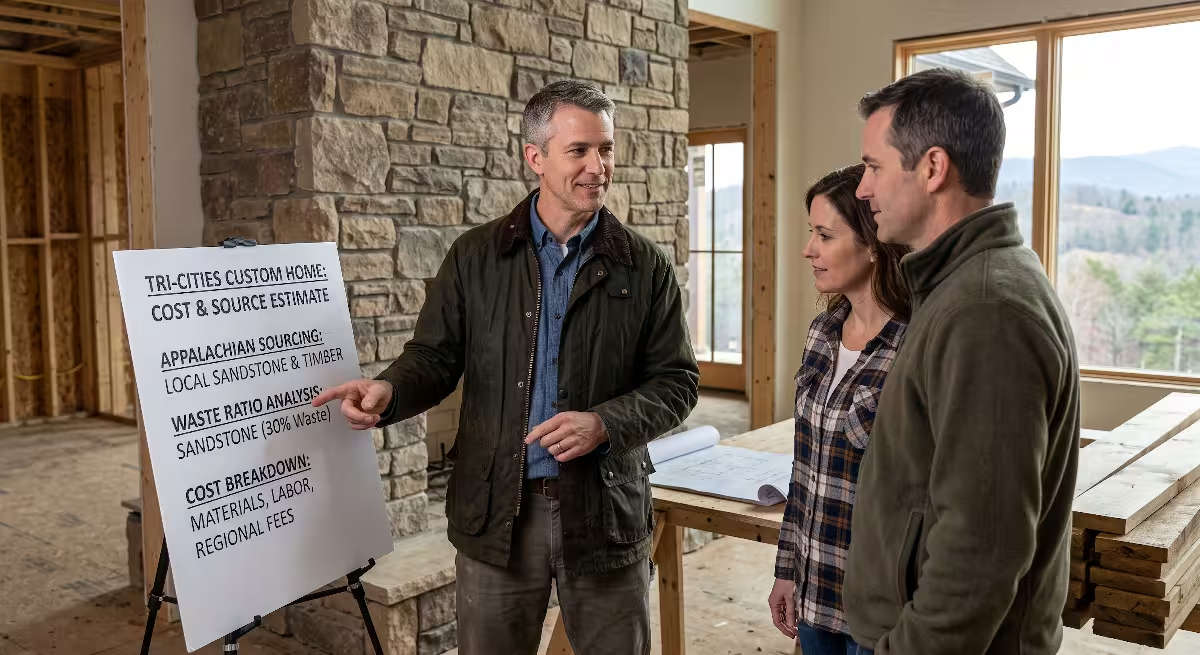
Understanding the true investment in live edge walnut and rift-sawn oak helps you allocate your custom home building budget effectively.
Material and Milling Costs
Lumber is priced by the board foot (a volume measurement equal to a piece of wood 12 inches wide, 12 inches long, and 1 inch thick, abbreviated as BF).
+---------------------------------------------------------------------------------------+
|                             ESTIMATED MATERIAL & LABOR COSTS                          |
+---------------------------------------------------------------------------------------+
|  Wood & Application           | Raw Material Cost (BF) | Finished Installation Cost   |
+-------------------------------+------------------------+------------------------------+
|  Live Edge Walnut Slab        | $14 – $24+ per BF      | $120 – $250+ per sq. ft.     |
|  Rift-Sawn White Oak          | $11 – $18+ per BF      | $90 – $180+ per linear ft.   |
|  Standard Flat-Sawn Oak       | $5 – $8 per BF         | $50 – $90 per linear ft.     |
+---------------------------------------------------------------------------------------+
- Live Edge Walnut Pricing: A single-slab live edge walnut island piece measuring 40 inches wide by 9 feet long and 2.5 inches thick can easily contain over 75 board feet of lumber. Premium live edge walnut slabs with dramatic grain, minimal sapwood rot, and proper kiln drying carry a significant raw material cost. Extra-wide single slabs demand premium pricing because they require ancient, large-diameter logs.
- Rift-Sawn Oak Pricing: While raw white oak logs are plentiful, the heavy milling waste of rift sawing drives up the cost per board foot. Rift-sawn oak costs two to three times more than standard flat-sawn white oak lumber.
Fabrication Labor: Artisan vs. Cabinet Maker
The labor required to build with these materials comes from different specialty trades:
- Artisan Slab Work for Live Edge Walnut: Crafting a live edge walnut top requires extensive manual hand labor. A slab must be flattened using a heavy-duty industrial CNC router or slab-flattening mill. The artisan must hand-carve the bark edge to clean out soft cambium layers, route and chisel hardwood bowties to secure drying splits, pour and cure structural epoxy, install flush steel underside channels, and sand through multiple grits up to a smooth finish. This high level of custom craftsmanship makes a finished live edge walnut island a true work of art.
- Precision Joinery for Rift-Sawn Oak: Building custom cabinetry from rift-sawn oak requires precision shop machinery. Craftsmen carefully align the vertical grain lines across drawer fronts and tall pantry doors so that the wood grain flows continuously from top to bottom across the entire room.
Appalachian Regional Sourcing Advantages
Building in East Tennessee gives you a major advantage when sourcing fine hardwoods. The Appalachian Mountain region produces some of the highest-density, richest-colored American Black Walnut and White Oak in the world.
Sourcing your live edge walnut and rift-sawn oak from regional sawmills and custom lumber yards across the Tri-Cities, Knoxville, and Western North Carolina reduces shipping freight costs. More importantly, regionally sourced live edge walnut has already grown and seasoned in our local climate zone, providing excellent long-term stability in your custom mountain home.
Material Palette Pairings: Stone, Metals, and Lighting
Creating a cohesive kitchen requires pairing your hardwoods with complementary countertops, backsplashes, cabinet hardware, and light fixtures.
+---------------------------------------------------------------------------------------+
|                           COMPLETE MATERIAL PALETTE PAIRINGS                          |
+---------------------------------------------------------------------------------------+
|  Element        | Live Edge Walnut Complements         | Rift-Sawn Oak Complements    |
+-----------------+--------------------------------------+------------------------------+
|  Stone Counters | Honed Taj Mahal Quartzite, Soapstone | Calacatta Gold Marble, Slate |
|  Cabinet Metals | Blackened Steel, Burnished Brass     | Matte Black, Satin Bronze    |
|  Backsplash     | Textured Zellige Tile, Dark Granite  | Hand-Glazed Ceramic, Glass   |
|  Lighting Temp  | 2700K Warm Ambient LED               | 3000K Clean Architectural LED|
+---------------------------------------------------------------------------------------+
Countertops and Backsplashes
- Pairing with Live Edge Walnut: Because a live edge walnut surface carries deep chocolate tones and rich grain movement, pair it with quieter stone perimeters. Honed Taj Mahal quartzite, matte soapstone, or soft charcoal composite quartz provide an elegant contrast that lets the live edge walnut island stand out as the hero piece.
- Pairing with Rift-Sawn Oak: The clean, vertical grain of rift-sawn white oak pairs beautifully with bold, expressive stones. Choose white marble with dramatic gray and gold veining, dark cleft-slate backsplashes, or concrete-look quartz to add visual depth to the clean oak cabinets.
Hardware and Metalwork
- Metals for Live Edge Walnut: Rich live edge walnut looks stunning when paired with warm, textured metals. Hand-forged blackened iron, oil-rubbed bronze, and aged unlacquered brass hardware complement the deep brown heartwood and golden sapwood tones.
- Metals for Rift-Sawn Oak: Clean rift-sawn oak shines with modern hardware profiles. Matte black pull bars, satin champagne bronze handles, and brushed gunmetal fixtures create crisp contrast against the straight oak grain.
Architectural Lighting Strategies
Proper lighting brings hardwood grain to life in a custom home:
- Warm Color Temperature: Use warm LED lighting between 2700K and 3000K. Cooler lighting (4000K or higher) can make the rich tones of live edge walnut look washed out and gray, while making oak feel clinical.
- Under-Counter Accent Lighting: Concealed LED strip channels mounted beneath the overhang of a live edge walnut counter cast downward grazing light across the natural, undulating edge, highlighting the organic curves of the wood at night.
- Directional Recessed Lighting: Use narrow-beam recessed ceiling lights focused directly on your live edge walnut island or rift-sawn oak cabinetry to highlight grain depth without washing out the room.
                  LIGHTING THE LIVE EDGE CONTOUR
             _______________________________________
            (________Live Edge Walnut Slab__________)
               |                                 \
             [===]  <- Concealed Warm LED Strip   \  <- Undulating Bark Edge
               |                                   \
               |  (Downward grazing light highlights \
               |   the 3D curves of the live edge)    \
The Hybrid Strategy: Blending Both Woods in a Single Kitchen
You do not have to choose just one wood for your custom home. In fact, the most striking modern mountain kitchens use a hybrid approach that blends live edge walnut and rift-sawn oak together.
+------------------------------------------------------------------------------------+
|                         THE HYBRID DESIGN FORMULA                                  |
+------------------------------------------------------------------------------------+
|  1. PERIMETER CABINETS  -->  Rift-Sawn White Oak (Vertical Grain, Floor to Ceiling)|
|  2. PERIMETER COUNTERS  -->  Solid Honed Quartzite or Granite                      |
|  3. ISLAND BASE         -->  Rift-Sawn Oak or Blackened Steel                      |
|  4. MAIN ISLAND TOP     -->  Large Slab Live Edge Walnut                           |
|  5. ACCENT SHELVING     -->  Matching Live Edge Walnut Floating Shelves            |
+------------------------------------------------------------------------------------+
The Two-Tone Mountain Modern Blueprint
The most successful kitchen layouts use rift-sawn oak for the extensive built-in cabinetry while reserving live edge walnut for high-impact accent surfaces:
- The Perimeter Foundation: Build all perimeter base cabinets, full-height pantry walls, and refrigerator enclosures from rift-sawn white oak. This creates an expansive, clean, and bright architectural surround.
- The Centerpiece Island: Top the central kitchen island with an expansive live edge walnut slab. The dark chocolate tones and organic edges instantly draw family and guests into the center of the kitchen.
- The Connecting Elements: Tie the two woods together across the room by installing matching live edge walnut floating shelves on top of rift-sawn oak paneling, or by placing a custom live edge walnut dining table nearby in the breakfast nook.
Grain and Tone Harmony
When blending live edge walnut with rift-sawn white oak, keep these harmony rules in mind:
- Balance Light and Dark: The light, neutral tones of rift-sawn oak keep the kitchen feeling bright and spacious, while the dark depth of live edge walnut provides grounding contrast.
- Contrast Grain Motion: The quiet, linear vertical grain of rift-sawn oak balances the wild, flowing cathedral grain and curved edges of live edge walnut. Because one wood is calm and the other is dynamic, they complement rather than fight each other.
- Keep Finishes Consistent: Use matching low-luster, matte protective finishes across both wood species. Matte surfaces allow the authentic texture and grain of both the live edge walnut and the rift oak to shine without distracting glare.
Frequently Asked Questions about Live Edge Walnut in Mountain Modern Kitchens
Is a live edge walnut island practical for a working kitchen?
Yes, a live edge walnut island is highly practical when designed and built correctly. To ensure complete usability, the outer bark must be completely removed, and the remaining sapwood edge must be sanded smooth so that it will not catch clothing or collect dirt. All natural voids and cracks should be filled flush with food-safe epoxy or stabilized with butterfly keys.
Use a durable, water-resistant hardwax oil or conversion finish to protect against wine, oil, and water spills. Most homeowners use their live edge walnut island for dining, serving, and light prep, while keeping heavy chopping and raw meat prep on a nearby quartz or stone perimeter surface.
+-----------------------------------------------------------------------------------+
|                        PRACTICAL DAILY USE CHECKLIST                              |
+-----------------------------------------------------------------------------------+
|  [X] Bark completely removed and edge contoured smooth                           |
|  [X] Natural drying splits stabilized with butterfly keys or epoxy                |
|  [X] Underside secured with heavy-duty steel C-channels                           |
|  [X] Sealed on all six sides with water-resistant finish                         |
|  [X] Cleaned with pH-neutral wood soap (no bleach or harsh degreasers)            |
+-----------------------------------------------------------------------------------+
Why is rift-sawn oak more expensive than plain sawn oak?
Rift-sawn oak costs more primarily because of the milling waste involved. When sawmills cut logs at a strict 30 to 60 degree angle to the growth rings, up to 40 to 50 percent of the log becomes unusable scrap.
Additionally, the sawyer must constantly reposition the log on the saw carriage, which takes significantly more time and labor. However, this milling process delivers unmatched vertical grain consistency and superior dimensional stability, making it worth the premium for high-end custom cabinetry.
+-----------------------------------------------------------------------------------+
|                         OAK MILLING COST & YIELD COMPARISON                       |
+-----------------------------------------------------------------------------------+
|  Cut Style     | Log Usability Yield | Grain Appearance   | Relative Cost Factor  |
+----------------+---------------------+--------------------+-----------------------+
|  Plain Sawn    | 80% – 90% (High)    | Arched Cathedrals  | Baseline ($)          |
|  Quarter Sawn  | 65% – 75% (Medium)  | Medullary Flecks   | 1.4x – 1.6x ($$)      |
|  Rift Sawn     | 50% – 60% (Low)     | Pure Linear Stripe | 2.0x – 2.5x ($$$)     |
+-----------------------------------------------------------------------------------+
Does walnut wood hold up to mountain climate moisture changes?
Walnut is a stable, medium-density hardwood that handles humidity shifts very well if it has been properly kiln-dried down to 6 to 8 percent moisture content before building.
Because a wide live edge walnut slab moves naturally across its width as seasons change, it must be installed using slotted screw channels and reinforced with underside steel C-channels. As long as the home maintains indoor relative humidity between 35 and 55 percent, a properly engineered live edge walnut top will remain flat, stable, and crack-free for generations.
                  SEASONAL SLAB EXPANSION MANAGEMENT
       SUMMER (High Humidity)                 WINTER (Low Humidity / Heating)
    ============================           ============================
    <- S-W-E-L-L-S  W-I-D-E ->             -> S-H-R-I-N-K-S  I-N-W-A-R-D <-
    ============================           ============================
      (Slotted fasteners slide               (Slotted fasteners slide
       freely outward in slots)               freely inward in slots)
Which is better for custom modern kitchen cabinets: Oak or Walnut?
Neither wood is universally better; the right choice depends on your design goals:
- Rift-Sawn Oak is Best for: Full runs of sleek, modern cabinetry, minimalist kitchens, lighter color palettes, and maximum dent resistance (Janka hardness rating of 1,360 lbf). It creates a bright, architectural backdrop that makes open spaces feel larger.
- Live Edge Walnut is Best for: Standout statement pieces, island countertops, floating bars, and kitchens that need rich, dark organic warmth to balance modern stone and glass (Janka hardness rating of 1,010 lbf).
+------------------------------------------------------------------------------------+
|                         DIRECT MATERIAL COMPARISON MATRIX                          |
+------------------------------------------------------------------------------------+
|  Performance Metric       | Live Edge Black Walnut    | Rift-Sawn White Oak        |
+---------------------------+---------------------------+----------------------------+
|  Hardness Rating          | 1,010 lbf (Medium-Hard)   | 1,360 lbf (Very Hard)      |
|  Best Kitchen Role        | Feature Island, Bar Tops  | Full Cabinetry Runs        |
|  Movement Tendency        | Moderate (Needs Channels) | Extremely Low (Very Flat)  |
|  Visual Character         | Dramatic, Organic, Unique | Uniform, Minimal, Linear   |
|  Color Longevity          | Lightens to Golden Amber  | Stable (Subtle Darkening)  |
|  Tactile Temperature      | Warm, Natural Texture     | Smooth, Solid Surface      |
|  Appalachian Availability | High (Regional Sourcing)  | High (Regional Sourcing)   |
+------------------------------------------------------------------------------------+
How do you prevent a live edge walnut slab from staining around sinks?
Water management is critical if you install a live edge walnut countertop near water sources. Always specify an over-mount or drop-in prep sink, or ensure the exposed end grain inside an under-mount sink cutout is completely saturated with multiple coats of marine-grade epoxy before applying the final topcoat.
Wipe up standing water around faucets promptly, and apply a fresh coat of maintenance wax or oil to high-splash zones once or twice a year. For high-volume cleanup zones, pairing a live edge walnut dry island with a durable stone sink perimeter provides the ideal functional setup.
What is the best way to clean and care for live edge walnut every day?
For daily cleaning, use a damp microfiber cloth with warm water and a few drops of mild, pH-neutral dish soap or specialized plant-based wood soap.
Avoid standard multi-surface sprays, vinegar solutions, ammonia, or abrasive scrubbing pads, as these will strip away natural protective oils and dull the finish. Wipe up acidic liquids like lemon juice, vinegar, and red wine quickly to prevent localized surface marking on your live edge walnut top.
+------------------------------------------------------------------------------------+
|                       LIVE EDGE WALNUT CARE PROTOCOL                               |
+------------------------------------------------------------------------------------+
|  DAILY ROUTINE    | Wipe with damp microfiber cloth and pH-neutral soap.           |
|  AVOID            | Bleach, ammonia, vinegar, abrasive scrubbers, standing water.  |
|  ANNUAL CARE      | Apply light coat of maintenance hardwax oil to refresh sheen.  |
|  SPOT REPAIRS     | Lightly hand-sand minor scratches and buff fresh oil into spot.|
+------------------------------------------------------------------------------------+
Choosing between live edge walnut and rift-sawn oak comes down to balancing structural engineering with personal design taste. By pairing the clean vertical lines of rift-sawn oak cabinetry with the warm organic curves of a regional live edge walnut focal piece, you can create a custom mountain kitchen that is built to handle the Appalachian climate while providing an inviting gathering space for decades to come.