

Today, I want to talk about something special for your kitchen. We are talking about soapstone countertops. People in the Tri-Cities love these. They have a classic look. But there is a big question buyers often have. Should you oil them or leave them natural? It is a choice between a dark look and a light look.
In this article, we will explain everything. We will look at the science of the stone. We will look at the style for your home. By the end, you will be an expert on soapstone countertops too.
The Soapstone Dilemma: Dark Elegance vs. Natural Gray
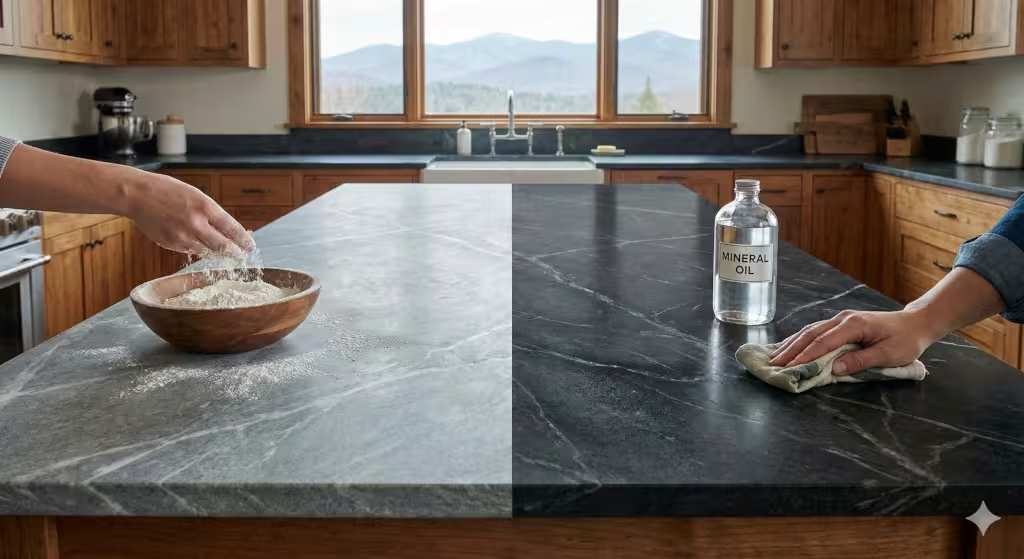
The dilemma between keeping your stone natural or giving it that dark, oiled finish is often the hardest part of the design process for buyers. It feels like a permanent decision, even though it really isn’t. When we talk about soapstone countertops, we are talking about a material that is as honest as it gets. It doesn’t pretend to be something else, and it doesn’t hide its age.
Here is a detailed look at what this dilemma really means for your home and your daily life.
The Science Behind the Choice
To understand the dilemma, you have to understand what makes soapstone countertops different from granite or marble. Most stones are like a sponge with very tiny holes. If you spill juice on them, the juice sinks in and stays there. That is why they need chemical sealers.
Soapstone countertops are different. They are made of compressed minerals that are so tight, nothing can get inside. This means that when we talk about “oiling” or “leaving it natural,” we are only talking about the surface. The dilemma is purely about the optical change, how light reflects off the stone.
The “Newness” Factor vs. The “Old World” Soul
For many homeowners in Johnson City and Kingsport, the dilemma usually boils down to how you feel about perfection.
The Natural Side: If you leave your soapstone countertops natural, you are choosing a soft, light gray. It looks like a quiet morning fog. It is very calm. However, the dilemma here is that life happens. If you set a greasy pizza box down on natural stone, the oil from the box will leave a dark mark. Over time, these marks blend together to create a “patina.” If you love the look of an old bakery or a historic farmhouse, this isn’t a problem. But if you want your counters to look brand new every single day, the natural route might stress you out.
The Oiled Side: When you oil soapstone countertops, you are taking control of that darkening process. Instead of waiting for random grease spots to darken the stone over ten years, you do it all at once with mineral oil. The dilemma here is the maintenance. You are trading the “splotchy” look for a “uniform” look, but you have to work for it. You become a bit of a caretaker for your stone.
The Lighting in Your Kitchen
One thing I always tell my custom home buyers is to look at their windows. Because soapstone countertops have a matte finish, they don’t reflect light like a mirror.
If your kitchen is small or doesn’t have many windows, the “oiling” choice might make the room feel a bit darker. That is a big part of the dilemma. On the other hand, if you have a big open kitchen with lots of Tennessee sunshine coming in, those deep, dark oiled soapstone countertops can provide a stunning contrast that keeps the room from feeling too “washed out.”
The Texture and the “Slippery” Debate
There is also a physical side to this dilemma. Natural soapstone countertops have a very dry, silky feel. It’s almost like touching a piece of heavy velvet. When you apply oil or wax, that texture changes slightly. It becomes a bit smoother and has a very faint “grip” to it. For some of my clients who do a lot of baking and rolling out dough, they prefer the dry, natural feel of the stone because the flour doesn’t stick as much.
Is It Reversible?
The best way to solve this dilemma is to remember that you can change your mind. If you start natural and realize you hate the little water spots or oil marks, you can just oil the whole thing and they disappear. If you oil your soapstone countertops and decide it’s too dark, you can actually scrub the oil off with a strong degreaser and some sandpaper to go back to gray.
In the end, the dilemma is about how you want to interact with your kitchen. Do you want a surface that you “set and forget,” or do you want a surface that grows and changes alongside your family?
Choosing the Oiled Look: Deep Charcoal and Rich Patina
Most people who buy soapstone countertops choose to oil them. Why do they do this? It is because of the color. When you put oil on the stone, it turns dark. It goes from light gray to a rich, deep black.
The oil also brings out the veins. These are the white or green lines in the stone. They look like lightning bolts. Without oil, they are hard to see. With oil, they pop. This gives your kitchen a very high-end look.
But oiling is a job. It is not a one-time thing. When you first get your soapstone countertops, you have to oil them often. You might do it once a week for a month. Then once a month for a year. Over time, the stone stays dark longer. This is called a patina. It is a natural aging process.
Keeping it Natural: The Soft, Lighter Aesthetic
What if you don’t want dark counters? You can leave your soapstone countertops natural. This is a great choice for a farmhouse style. The light gray color feels very calm. It looks great with white cabinets.
If you stay natural, you save a lot of time. You don’t have to rub oil on the stone every few weeks. You just wipe them with soap and water. It is very easy.
However, you should know one thing. Natural soapstone countertops will still change. If you spill oil from cooking, that spot will get dark. Over many years, the whole surface will get a bit darker on its own. It will look like an old kitchen in Europe. Some people love this “lived-in” look. It tells a story of all the meals you have made.
Maintenance Comparison: Oiling vs. Natural
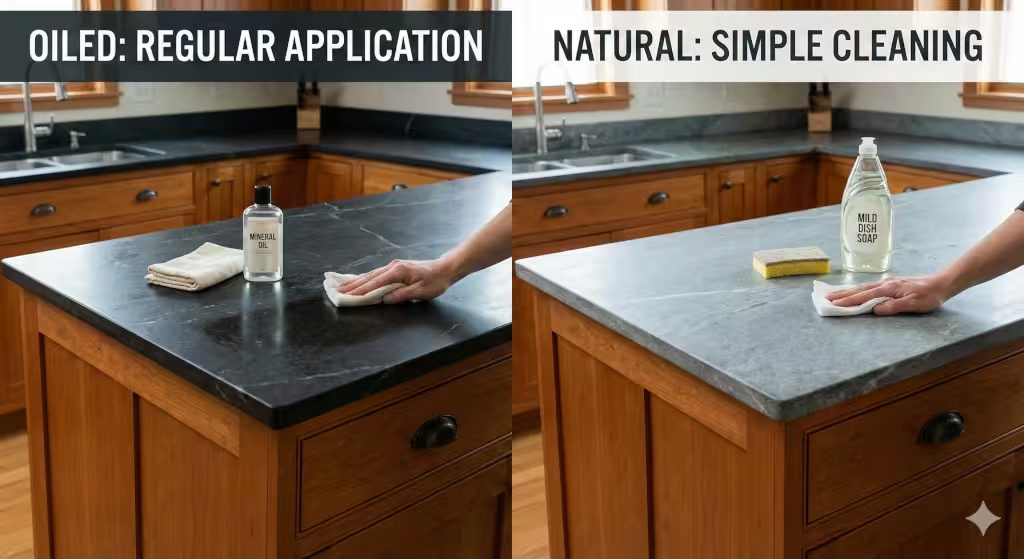
Let’s look at the chores for both. If you choose oiled soapstone countertops, you are signing up for work. You need a clean rag and a bottle of food-grade mineral oil. You pour the oil on and rub it in. Then you wait and wipe off the extra. It takes about 20 minutes for a whole kitchen.
If you choose natural soapstone countertops, you just clean them. You can use any household cleaner. Since the stone is tough, you don’t need special sprays. Soap and water are best.
Both types are heat resistant. You can take a hot pot off the stove and put it right on the stone. It will not crack or burn. This is why people love soapstone countertops for busy kitchens.
Questions about Soapstone Countertops
I get many questions about these stones. Here are the most common ones.
Does oiling protect the stone?
No, it does not. The stone is already protected by nature. It is so dense that nothing gets inside. The oil just changes the color on the surface.
How do I fix scratches?
This is the best part about soapstone countertops. Since the stone is soft, it can scratch. But you can fix it yourself. You just use a little sandpaper. Rub the scratch in a circle. If the stone is oiled, put a little more oil on the spot. It will look like new. You don’t need to call a pro.
What is the best oil to use?
Use food-grade mineral oil. You can find this at the drug store. Do not use olive oil. Olive oil can go bad and smell funny. Some people use a wax made of beeswax and mineral oil. This wax stays on the stone longer than regular oil.
Common Terms Associated with Soapstone Countertops
When you talk to builders about soapstone, these are common terms to know. It helps us know what you want for your soapstone countertops.
Talc content: This tells us how soft the stone is.
Architectural grade: This is the type used for kitchens.
Non-porous: Remind your family that the stone is clean and safe.
Honed finish: This is the smooth, matte look most people want.
The History and Science of the Stone
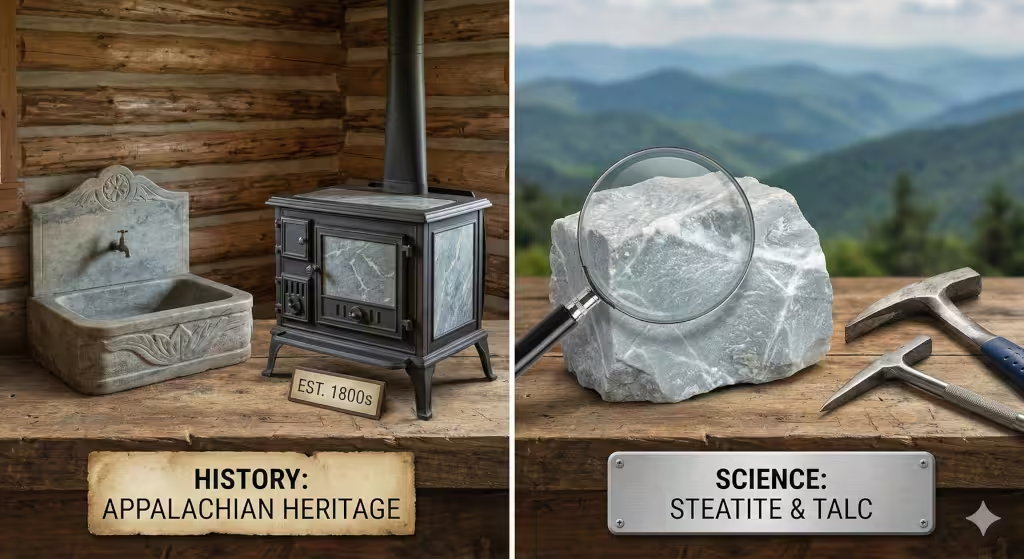
Soapstone has been around for a long time. It is a metamorphic rock. That means it was changed by heat and pressure deep in the earth. It is found in the Appalachian Mountains. That is right here in our backyard.
For hundreds of years, people used it for sinks and stoves. It holds heat very well. If you have a soapstone wood stove, it stays warm long after the fire goes out. This same quality makes soapstone countertops feel warm to the touch. Unlike granite, which feels cold, soapstone feels cozy.
Understanding the Cost of Soapstone Countertops
Price is always important. In 2026, the cost of soapstone countertops is around $70 to $120 per square foot. This includes the stone and the work to put it in.
Why is it more than some other stones? It is because the slabs are smaller. It takes more work to cut and fit them. But remember, you save money on sealers. You never have to pay a pro to seal your soapstone countertops like you do with granite.
Installation Tips for Tri-Cities Homeowners
If you live in Kingsport or Johnson City, you need to find a good local shop. Make sure they know how to work with soapstone countertops. It is different than granite.
Because the slabs are small, you might have seams. A seam is where two pieces meet. A good builder will make these seams very thin. You will hardly see them. Also, make sure they use the right glue. The glue should match the color of the stone.
Environmental Impact and Sustainability
Many of my clients care about the earth. Soapstone countertops are a green choice. They are a natural product. They are not made with chemicals or resins like quartz.
Also, they last forever. You can take them out of an old house and put them in a new one. They can be recycled. Since they don’t need chemical sealers, they keep your indoor air clean.
Design Pairings: Cabinets and Flooring
What looks good with soapstone countertops? Almost anything.
If you go with dark, oiled stone, try light wood floors. This creates a nice balance. If you go with natural gray stone, try dark navy or green cabinets. This makes a bold statement.
In our area, we see a lot of “mountain modern” homes. This style uses a lot of wood and stone. Soapstone countertops fit this perfectly. They look high-end but also very natural.
The Beauty of the Patina
Let’s talk more about the patina. This word just means “the way something looks as it gets older.” Think of an old leather jacket. It looks better because it has been worn.
Soapstone countertops are the same. Every nick and every darkened spot adds character. If you want a kitchen that looks perfect and never changes, this stone might not be for you. But if you want a kitchen that feels like a home, soapstone countertops are the best.
Comparing Soapstone to Granite and Quartz
People often ask me why they should pick soapstone countertops over granite. Granite is harder. It does not scratch as easily. But granite is porous. It needs to be sealed every year. If you spill red wine on granite and it isn’t sealed, you have a permanent stain.
Quartz is man-made. It is very tough. But you cannot put hot pots on it. The resin inside will melt. Soapstone countertops give you the best of both worlds. They are stain-proof like quartz and heat-proof like granite.
A Step-by-Step Guide to Oiling Your Counters
If you decide to go with the dark look, here is how you do it.
First, clean your soapstone countertops. Use water and a little dish soap. Make sure they are dry.
Second, pour a little mineral oil on the stone. A little goes a long way.
Third, use a clean rag to spread the oil. Cover every inch of the soapstone countertops.
Fourth, let it sit. I tell people to wait about 30 minutes.
Fifth, take a fresh rag and wipe off all the extra oil. Your soapstone countertops should not feel sticky. If they do, keep wiping.
Do this once a week for the first month. You will see the color get deeper and deeper.
Dealing with Scratches and Dents
I know it can be scary to think about scratching your new soapstone countertops. But don’t worry. I have seen it all.
One time, a client dropped a heavy cast iron pan. it left a little white mark. She was worried. I went over with a piece of sandpaper. In five minutes, the mark was gone.
Soapstone countertops are very forgiving. You are the master of your kitchen. You don’t have to be afraid to use your counters. They are meant for cooking and living.
Soapstone in the Bathroom and Laundry Room
We have talked a lot about kitchens. But soapstone countertops are great in other rooms too.
In a bathroom, they handle water and soap perfectly. They won’t get ruined by hair spray or toothpaste. In a laundry room, they can handle spilled bleach or detergent.
I often suggest using soapstone countertops for a small vanity. It adds a touch of luxury to a guest bathroom.
The Tactile Experience: Why Touch Matters
Soapstone countertops feel better than any other stone.
When you run your hand across them, they feel soft and silky. They are not cold and hard like glass. This makes your kitchen feel warm and inviting. It is a sensory experience.
In our custom homes, we want materials that people want to touch. Soapstone countertops are always the star of the show.
Long-Term Value and Resale
Will soapstone countertops help you sell your house? Yes.
Buyers in the Tri-Cities look for quality. They know that soapstone countertops are expensive and durable. It shows that you took care of the house.
Because the look is timeless, it will not go out of style. A kitchen with soapstone countertops today will still look great in twenty years.
Final Thoughts from Tri-Cities TN Home
Choosing between oil and natural is a personal choice. There is no wrong answer.
If you like the dark, dramatic look, get the oil out. If you like the soft, light gray look, leave them be. Either way, your soapstone countertops will be the heart of your kitchen.
I hope this guide was helpful. Building a home should be an exciting time. It is about making a space that reflects who you are. Soapstone countertops are a great way to show your love for natural beauty and quality.
If you have more questions about soapstone countertops, I am here to help. Whether you are in Kingsport, Johnson City, or anywhere else in our beautiful area, I want you to have the best home possible.
Conclusion and Summary
Soapstone countertops are a wonderful addition to any home. They are tough, beautiful, and easy to care for. Whether you choose to oil them for a dark look or leave them natural, they will last a lifetime.
Remember, the stone is non-porous. It won’t stain. It won’t burn. It is one of the safest materials for your family.
Don’t let the maintenance scare you. Oiling is simple. Sanding out a scratch is easy. Compared to the work of sealing other stones, soapstone countertops are a dream.