
Appalachain Kitchen Trends
When you step into a home in the mountains of East Tennessee, the kitchen should feel like it belongs to the land around it. Living here in Johnson City, The Southern Appalachians have a biological diversity and geological history that is entirely unique. For years, mountain home design leaned heavily on dark log cabins, heavy varnishes, and rustic clutter. Today, we are seeing a major change in how people build and remodel their living spaces. Modern Appalachian kitchen trends are moving away from rustic imitations and stepping directly into clean, purposeful design.
The heart of this design movement comes down to a natural pairing: native Eastern Black Walnut (Juglans nigra) and regional mountain stone. When we bring these two materials together, we create spaces that feel calm, solid, and timeless. This approach is rooted in biophilic design, which is the science of connecting people to nature inside built environments. Human biology evolved outdoors. Our eyes, nervous systems, and stress responses react positively when we are surrounded by natural wood grain, real stone textures, and organic lighting. By exploring Appalachian kitchen trends, we can see how local materials, low-toxin finishes, and smart layout choices create kitchens that support physical health and everyday comfort.
The Regional Shift: Moving Past Rustic Pastiche Toward Refined Appalachian Modernism
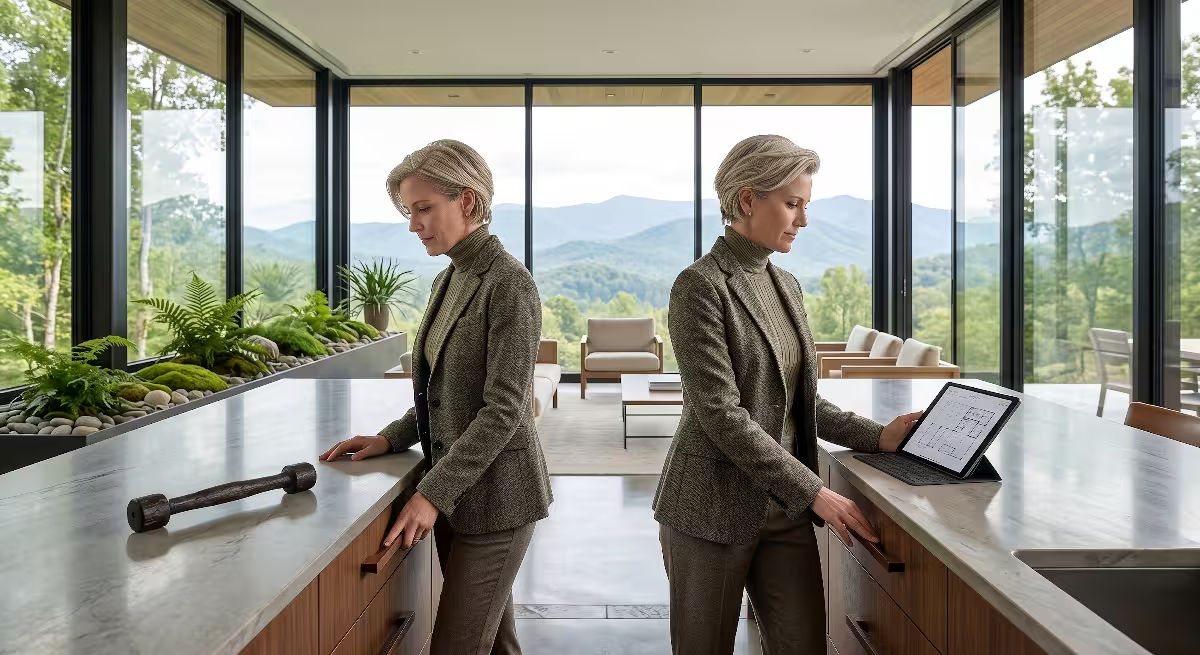
For several decades, mountain architecture relied on a theme park version of frontier life. Cabinets were often stained with dark orange tints, edges were artificially distressed with chains, and rooms were packed with decorative knickknacks. These old layouts made rooms feel dark, crowded, and closed off from the outside world. Current Appalachian kitchen trends reject these artificial decorations in favor of structural authenticity and clean lines.
Refined Appalachian modernism focuses on the real nature of materials rather than fake distressing. Instead of hiding the wood grain behind heavy synthetic stains, modern Appalachian kitchen trends celebrate the natural growth rings, knots, and color shifts of the tree. Cabinets are built with simple geometric faces that let the wood speak for itself. Walls are opened up to let in sunlight from the Blue Ridge and Great Smoky Mountains.
This regional design shift balances modern simplicity with deep local roots. You do not need to fill a room with vintage farm tools to make it feel like an authentic mountain home. When you use authentic Appalachian kitchen trends, the structure itself carries the story. The honest weight of solid hardwood and quarry stone provides all the character the room needs. Homeowners in the Tri-Cities area want kitchens that feel uncluttered, highly functional, and deeply tied to the natural landscape right outside their windows.
The Material Pairing: Why Eastern Black Walnut and Native Lithic Elements Anchor Modern Design
Every successful interior needs a balance of physical properties. In biophilic engineering, we look at how different materials balance one another in terms of color, density, texture, and temperature. The combination of Eastern Black Walnut and native stone sits at the very center of Appalachian kitchen trends because it creates an ideal sensory balance.
Eastern Black Walnut is a hardwood that provides deep visual warmth. Its heartwood contains rich chocolate browns, soft caramel streaks, and subtle violet undertones. When placed against stone countertops or stone accent walls, walnut prevents the hard mineral surfaces from feeling cold or sterile. On the other side, regional stone provides a cool, dense counterweight to the warmth of the wood. The stone grounds the kitchen, offering solid work surfaces that handle heat and heavy daily use.
In modern Appalachian kitchen trends, this material pairing reflects the natural geology and forest canopy of East Tennessee. When you walk along a mountain trail in the Unaka Range, your feet walk over exposed limestone and sandstone while walnut, oak, and tulip poplar trees rise above you. Bringing this specific palette into the home creates an intuitive sense of place. Modern Appalachian kitchen trends use this organic relationship to anchor the kitchen island, perimeter cabinetry, and cooking hearth into one cohesive environment.
Biophilic Foundations: Engaging the Senses Through Natural Patterns and Fractals
Biophilic design is not just a style choice. It is a biological tool that reduces stress hormones, stabilizes blood pressure, and improves mental focus. When studying Appalachian kitchen trends, it helps to understand how the human brain processes natural patterns. In nature, shapes are rarely straight or perfectly uniform. Instead, they form self-repeating geometries called fractals, seen in river systems, tree branches, and mineral formations.
Our visual systems process natural fractal patterns with minimal cognitive effort. When you look at synthetic plastic laminates or fake printed vinyl, your brain recognizes the repetitive, artificial nature of the pattern, which can cause subtle visual fatigue. Authentic Appalachian kitchen trends use genuine hardwood and natural stone because their surfaces provide non-rhythmic sensory stimuli. The slight variations in wood growth rings and stone sediment layers give our eyes gentle, calming visual input.
Furthermore, tactile biophilia plays a major role in how we experience a kitchen. We interact with kitchen surfaces with our hands every single day. Touching raw, oiled walnut or a matte, honed stone surface sends calming signals through the central nervous system. Modern Appalachian kitchen trends prioritize these honest, unpolished textures. By designing kitchens that stimulate touch and sight in natural ways, we turn a high-traffic utility room into a restorative living space.
Wood Properties and Grain Mechanics of Eastern Black Walnut
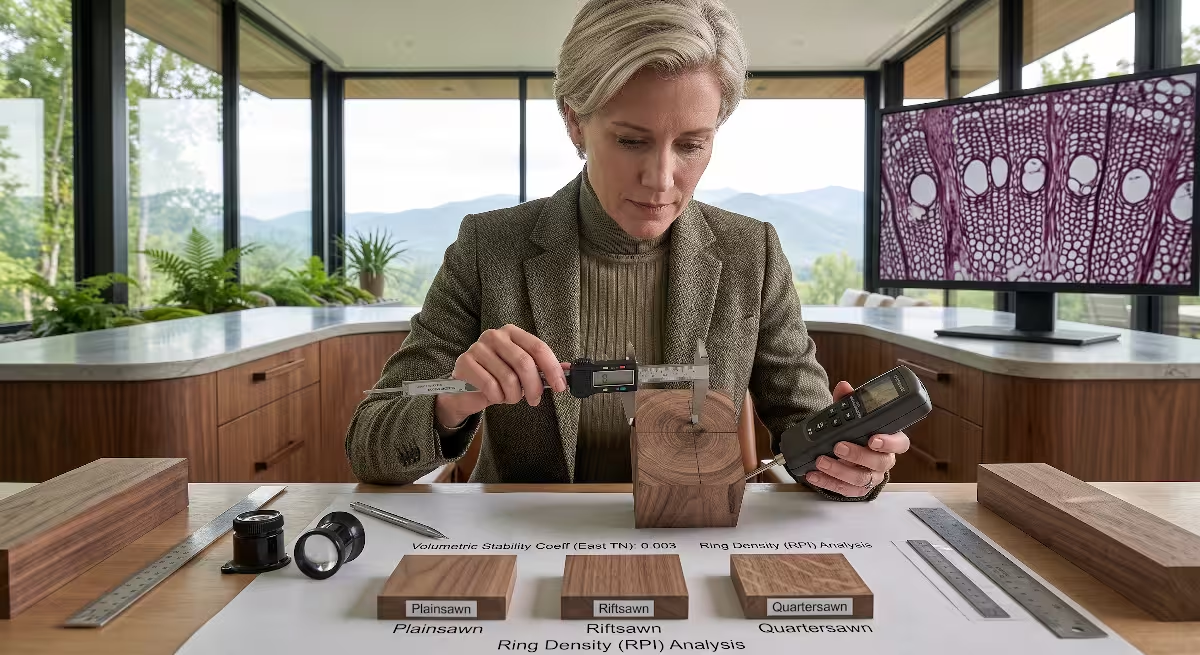
Understanding the biology of Eastern Black Walnut (Juglans nigra) is essential for anyone applying Appalachian kitchen trends to their cabinetry or millwork. Black walnut is one of North America’s most prized native hardwoods, and it grows abundantly throughout the Appalachian deciduous forest.
From a woodworking and engineering standpoint, black walnut offers exceptional dimensional stability. All wood expands and contracts as indoor humidity levels rise in the humid Tennessee summer and drop during dry winter heating. Walnut has a lower volumetric shrinkage rate than red oak or hard maple, meaning it resists warping, twisting, and seasonal movement when properly dried. On the Janka hardness scale, black walnut rates at approximately 1,010 pounds-force (lbf). This puts it in the sweet spot for kitchen cabinetry: it is dense enough to resist everyday dents and impacts, yet forgiving enough to be milled with crisp, precise joinery.
The grain mechanics of walnut also define current Appalachian kitchen trends. The heartwood, formed at the center of the tree trunk, holds the famous dark brown color and natural rot resistance. The outer layer, known as sapwood, is a lighter pale yellow or cream color. In past decades, commercial cabinetmakers steamed walnut lumber to force the dark heartwood color into the sapwood, creating a flat, uniform brown. Today, Appalachian kitchen trends celebrate the natural contrast between heartwood and sapwood. Seeing the subtle shifts in grain tells the biological story of the tree’s growth over decades.
Cabinetry Profiles: Slab Fronts and Micro-Shaker Styles
The profile of your cabinet doors sets the architectural tone for the entire kitchen. In current Appalachian kitchen trends, heavy decorative moldings, arched raised panels, and fussy details have been replaced by clean, understated cabinet profiles that highlight the wood grain.
The two dominant door styles in modern Appalachian kitchen trends are flat slab doors and micro-shaker profiles. Slab doors are built from solid core panels with thick natural wood veneers or precision edge-glued solid boards. Because there are no decorative rails, stiles, or dust-catching grooves, the unbroken vertical grain of the walnut flows seamlessly across the face of the cabinets. In open-concept floor plans, a full-height wall of slab walnut cabinets looks like a beautiful architectural feature rather than a simple row of storage boxes.
Micro-shaker profiles offer a subtle variation for homeowners who want a touch of traditional frame structure. Standard traditional shaker doors have wide frame rails of two and a half to three inches. The micro-shaker style reduces that border frame to a narrow half-inch or three-quarter-inch rim. This narrow frame provides structural depth and shadow lines while keeping the overall face sleek and light. When integrated into Appalachian kitchen trends, both slab and micro-shaker designs eliminate visual noise, letting the natural color and organic grain of the walnut stand out as the primary visual focus.
Finishes and VOC Considerations: Hardwax Oils Versus Synthetic Coatings
How you finish your cabinetry directly impacts both its visual beauty and the air quality inside your home. Traditional kitchen cabinetry has long relied on high-build polyurethane varnishes and acid-cured conversion varnishes. While these synthetic coatings create a hard, plastic-like shield, they off-gas volatile organic compounds (VOCs) that degrade indoor air quality. Furthermore, synthetic plastic topcoats seal the wood beneath a glossy film, eliminating the natural warmth and open-pore texture of the walnut.
Leading Appalachian kitchen trends focus on zero-VOC and low-VOC plant-based hardwax oils. These natural finishes are made from vegetable oils (such as linseed and sunflower oils) combined with natural waxes (like carnauba and beeswax). Instead of sitting on top of the wood like a sheet of plastic, hardwax oils penetrate deep into the cellular structure of the walnut. The oil bonds with the wood fibers from within, while the wax cures at the surface to provide water resistance and breathability.
Using hardwax oils in Appalachian kitchen trends offers several practical benefits:
- Tactile Connection: The wood pores remain open, allowing you to feel the real texture of the timber rather than a cold plastic surface.
- Matte Appearance: Natural oils produce a soft, diffuse sheen that prevents harsh light glare under modern LED lighting.
- Easy Spot Repairs: If a cabinet door gets scratched or scuffed over years of cooking, you do not need to strip the entire door. You simply clean the area, rub a drop of maintenance oil into the scratch with a cotton cloth, and let it dry.
- Clean Indoor Air: Natural plant-based oils release no toxic fumes, protecting your family’s respiratory health.
By adopting these non-toxic finishing methods, Appalachian kitchen trends ensure that the physical materials in your home protect your indoor environment just as much as they elevate your visual design.
Regional Geological Sourcing: Sandstone, Limestone, and Quartzite
Authentic regional design requires looking below the soil to the bedrock that forms our landscape. The Southern Appalachian mountain chain is one of the oldest geological formations on Earth. Incorporating locally sourced stone into Appalachian kitchen trends anchors the home to its geographical setting while supporting regional stone quarries.
Three primary stone families define modern Appalachian kitchen trends:
+---------------------------+-----------------------------------+------------------------------------------+
| Stone Variety             | Geological Origin                 | Primary Design Application               |
+---------------------------+-----------------------------------+------------------------------------------+
| Crab Orchard Sandstone    | Cumberland Plateau, Tennessee     | Range Hood Surrounds, Hearth Accents     |
| Holston Limestone         | East Tennessee Valley             | Low-Traffic Surfaces, Feature Islands    |
| Natural Quartzite         | Regional Mountain Formations      | High-Traffic Countertops, Work Sinks     |
+---------------------------+-----------------------------------+------------------------------------------+
Crab Orchard sandstone, quarried along the Cumberland Plateau of Tennessee, is famous for its dense silica matrix and distinctive earthy coloring. It features warm buffs, soft grays, tan streaks, and delicate iron oxide ribbons. In contemporary Appalachian kitchen trends, designers use split-face or sawn-edge Crab Orchard sandstone to build floor-to-ceiling range hood surrounds, backsplashes, and integrated cooking hearths. The rough, cleft stone surface creates a rich contrast against smooth walnut cabinets.
Another regional gem is Holston Formation limestone, often known commercially as East Tennessee Marble. While geologically a crystalline limestone rather than a true metamorphic marble, it takes a beautiful polish and hone. Its soft pinkish-gray, cedar brown, and dove-gray tones have been used in monumental buildings across the country. In local Appalachian kitchen trends, Holston limestone provides soft visual movement for kitchen backsplashes and low-wear vertical surfaces.
For primary work countertops that must handle knife contact, citrus juices, and hot cookware, hard natural quartzites represent the gold standard in Appalachian kitchen trends. Formed when pure sandstone undergoes intense heat and pressure deep within the Earth’s crust, quartzite is harder than granite and highly resistant to acids and staining. Choosing light, soft-veined quartzites provides the bright contrast needed to keep dark walnut kitchens feeling open and bright.
Countertop Selections and Tactile Edge Profiles

The countertop is the hardest working horizontal plane in the entire house. In past design cycles, high-gloss polished granite dominated kitchen remodels. However, highly polished stone acts like a dark mirror, bouncing harsh reflections from ceiling light fixtures straight into your eyes. Modern Appalachian kitchen trends emphasize honed, leathered, and brushed stone finishes that prioritize visual softness and touch.
A honed finish creates a smooth, completely flat matte surface without any gloss. A leathered finish goes one step further: diamond-tipped brushes run across the stone’s surface, removing softer mineral pockets while leaving harder crystals intact. This process produces a soft, undulating texture that feels warm and organic beneath your fingers. In current Appalachian kitchen trends, leathered and honed finishes are favored because they hide daily fingerprints, eliminate water spots, and reduce specular glare.
Edge profiles in modern Appalachian kitchen trends also favor clean, understated lines. Instead of traditional curved ogee or bullnose edges, modern designs use:
- Eased Edges: A clean, square edge with a microscopic bevel that softens the corner while keeping crisp shadow lines.
- Mitered Apron Edges: Assembling the countertop with a 45-degree mitered drop edge to give the stone the appearance of a solid, three-inch-thick monolithic slab.
- Chiseled or Rock-Face Accents: Leaving the outer edge of a kitchen island raw and hand-chiseled, echoing the rocky outcrops found along Appalachian ridgelines.
These edge treatments and textured finishes reinforce the grounding quality of Appalachian kitchen trends, turning your daily meal preparation into a tactile, sensory experience.
Thermal and Acoustic Balance in the Open Kitchen
A high-performance kitchen must address the invisible physics of the room, specifically temperature comfort and sound management. When designing with heavy natural materials, Appalachian kitchen trends utilize material physics to create a quieter, more comfortable living space.
Stone and solid wood interact with heat in very different ways. Natural stone has high thermal mass and high volumetric heat capacity. This means a thick stone countertop or masonry range wall absorbs excess ambient heat from ovens, ranges, and southern sunlight during the day. As the room cools down in the evening, the stone slowly radiates that stored warmth back into the space. In modern Appalachian kitchen trends, using stone strategically around cooking zones helps stabilize the room’s temperature microclimate.
Acoustic management is another critical area where Appalachian kitchen trends excel. Open-concept floor plans with tile floors, large glass windows, and drywall ceilings often suffer from excessive echo and noise reverberation. Sound waves bounce off hard surfaces, making casual conversations sound harsh and exhausting. While stone reflects high-frequency sounds, solid black walnut acts as a natural acoustic dampener. The cellular structure of open-pore hardwood absorbs sound energy, softening voices, clattering cookware, and running water.
By carefully balancing the ratio of soft-oiled walnut millwork to dense stone surfaces, Appalachian kitchen trends achieve an acoustically balanced environment where families can gather, cook, and converse without loud background noise.
Circadian Lighting Integration and Visual Warmth
Lighting is what brings natural wood and stone to life. Without thoughtful lighting design, dark black walnut cabinetry can absorb too much light, making a kitchen feel cavernous and dim. Modern Appalachian kitchen trends use multi-layered circadian lighting systems that adjust to the natural rhythm of daylight.
Our biological clocks rely on specific light spectrums to regulate sleep and energy cycles. Bright blue-toned light (5000K) mimics noon sunlight, boosting alertness, while warm golden light (2700K) encourages melatonin production and evening relaxation. Appalachian kitchen trends integrate these lighting layers to support healthy circadian biology while highlighting the natural materials:
- Ambient Natural Daylighting: Maximizing natural light through large, strategically placed windows and clerestory openings. Natural light should wash across walnut cabinets from the side, revealing the dimensional grain patterns without causing direct glare.
- Warm Task Lighting: Installing high-CRI (Color Rendering Index >95) LED channel strips beneath upper cabinets. These provide crisp, shadow-free illumination on stone countertops at a warm 3000K temperature, keeping meal preparation safe and clear.
- Concealed Accent Lighting: Using soft 2700K warm backlighting inside open niches, under toe-kicks, and behind floating stone ledges. This indirect illumination makes heavy walnut cabinets appear to float lightly above the floor.
- Organic Pendant Fixtures: Hanging central light fixtures crafted from mouth-blown glass, woven local grasses, or hammered metals above the island. These add a handcrafted focal point that ties into Appalachian craft traditions.
When lighting is planned carefully, Appalachian kitchen trends ensure your kitchen feels energizing and functional at breakfast, yet warm, cozy, and restful when winding down for dinner.
Hardware and Ancillary Material Alchemy
Cabinet hardware, plumbing fixtures, and accent metals serve as the jewelry of the kitchen. In early mountain builds, builders often installed cheap shiny chrome or fake antiqued plastic fixtures. Modern Appalachian kitchen trends use living metals that develop a rich, natural patina over time as they are handled.
Living metals interact naturally with air, moisture, and the oils from human skin. Unlacquered brass, forged iron, and blackened bronze are the primary metal selections used in Appalachian kitchen trends. Unlacquered brass starts with a soft, brushed golden tone and slowly darkens in high-touch areas, creating a unique historical record of the home’s use. Forged iron hardware, hand-shaped by local Appalachian blacksmiths, provides a strong, dark accent against chocolate walnut drawer fronts.
Ancillary materials also include handmade ceramic tiles and hand-thrown stoneware accents. The Southern Appalachian region is home to world-renowned pottery and ceramic communities, including the historic craft schools of Western North Carolina and East Tennessee. Incorporating hand-glazed clay tiles with subtle surface irregularities into your backsplash complements the natural grain of walnut and the organic texture of stone. These thoughtful material pairings elevate Appalachian kitchen trends from a temporary interior style into an enduring expression of regional craft.
Is Black Walnut Durable Enough for High-Traffic Custom Kitchens?
Homeowners planning a kitchen renovation often ask whether black walnut is tough enough for a busy, high-traffic household. Because walnut is classified as a medium-density hardwood, some worry it may show wear more quickly than rock maple, white oak, or hickory. However, when evaluating Appalachian kitchen trends, black walnut proves to be exceptionally durable and practical for custom cabinetry.
First, wood hardness must be understood in context. While species like hickory are harder on the Janka scale, extremely hard woods are prone to brittle cracking and significant seasonal movement. Black walnut possesses exceptional structural elasticity and shock resistance. It absorbs daily impacts from heavy pots, pantry doors, and busy family activities without splintering or cleaving along its growth rings.
Second, the durability of cabinetry in modern Appalachian kitchen trends depends heavily on the finish you choose. When walnut is coated in a thick, rigid polyurethane, a heavy impact can cause the plastic finish to crack, allowing moisture underneath that turns the wood gray. In contrast, when you follow Appalachian kitchen trends by applying a penetrating hardwax oil, the wood fibers themselves absorb the wear. Surface scuffs blend naturally into the dark heartwood, and any noticeable scratches can be easily repaired with a few drops of maintenance oil on a cloth. Black walnut cabinets built today will easily last for multiple generations of continuous use.
What Stone Countertop Pairs Best With Dark Walnut Cabinets?
Choosing the right countertop to pair with dark walnut cabinets is one of the most critical decisions in your kitchen layout. Because walnut carries a deep chocolate and coffee tone, pairing it with dark black granite or dark soapstone can make the room feel heavy and enclosed unless you have massive floor-to-ceiling windows. Leading Appalachian kitchen trends rely on light, highly durable natural stones to establish visual contrast and bounce light across the room.
The top stone selections in contemporary Appalachian kitchen trends include:
- Taj Mahal Quartzite: This natural stone features a soft cream and light warm-gray background with subtle, delicate gold veining. It provides the visual elegance of marble while offering extreme hardness that resists acids and scratching. It brightens the room while harmonizing with the warm undertones of walnut.
- Mont Blanc Quartzite: Featuring a pale, cool-white background with charcoal and light gray veins, Mont Blanc creates a crisp, clean contrast against rich walnut base units, keeping modern layouts airy and open.
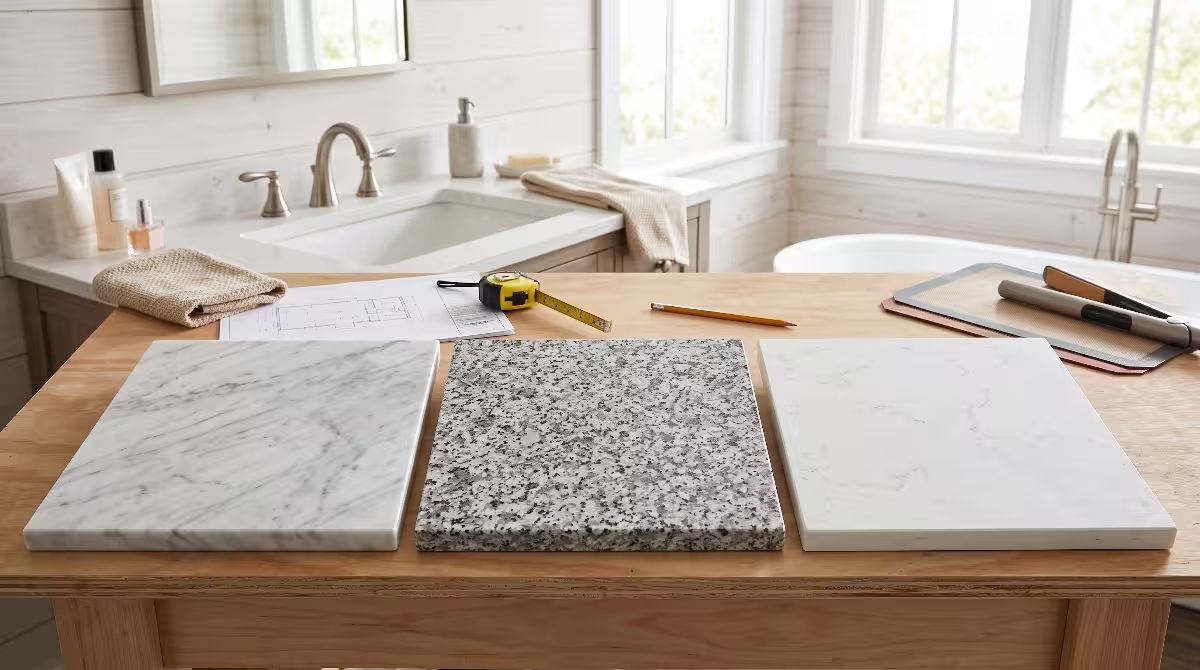
- Honed Dolomite and Light Granites: Stones like River White or honed Bianco Romano offer soft, diffuse light reflection and delicate mineral flecks that tie into the natural textures of the room.
- Engineered Sintered Stone: For homeowners seeking ultra-low maintenance, compact mineral slabs that replicate the look of honed limestone offer extreme heat and scratch resistance within Appalachian kitchen trends.
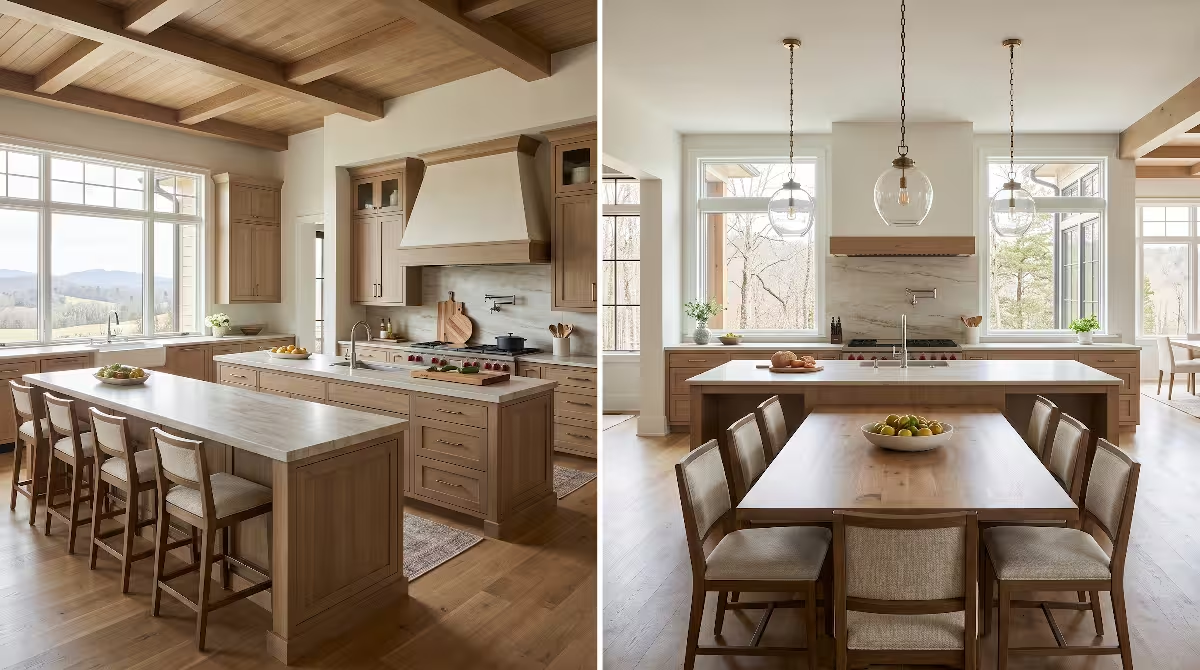
To keep the kitchen balanced, modern Appalachian kitchen trends often use a two-toned stone strategy. A light, durable quartzite is placed on the active perimeter work surfaces, while a bold feature stone, such as a leathered local limestone or textured sandstone, is featured on the central island or vertical backsplash.
How Does Biophilic Kitchen Design Affect Occupant Well-Being?
Kitchens are no longer just places where food is stored and cooked. In modern homes, they are the central living hub where families gather, start their mornings, and decompress after work. Applying biophilic engineering through Appalachian kitchen trends directly supports mental, emotional, and physical well-being.
Decades of environmental psychology and biological research show that built environments filled with synthetic materials, artificial plastic coatings, and harsh fluorescent lighting increase physiological stress. They keep our sympathetic nervous system in a state of low-level alertness. Conversely, integrating the natural elements of Appalachian kitchen trends helps activate the parasympathetic nervous system, which is responsible for rest, recovery, and digestion.
Biophilic Appalachian kitchen trends support human health through several specific mechanisms:
- Lower Cortisol Levels: Visual contact with natural wood grains and earthy stone textures has been clinically shown to lower resting pulse rates and reduce salivary cortisol levels.
- Improved Air Quality: Eliminating synthetic paints, high-VOC varnishes, and particleboard glues in favor of solid walnut and plant-based oils ensures that the air your family breathes is free of chemical toxins.
- Visual Comfort: The soft, matte sheens of honed stone and oiled timber prevent eye fatigue, creating a serene, calm atmosphere during food preparation.
- Circadian Alignment: Designing lighting that transitions from energizing morning light to warm evening tones supports deeper, more restorative sleep cycles.
By focusing on these biological connections, Appalachian kitchen trends demonstrate that good design is not merely about how a space looks, but about how it makes you feel every single day.
How Do You Protect Natural Walnut and Honed Stone From Mountain Humidity?
The Southern Appalachian climate presents unique environmental conditions for home construction. Summers in East Tennessee are warm and humid, with relative humidity levels often exceeding 80%, while winter heating can cause indoor air to become very dry. Managing this moisture cycle is essential for maintaining the woodwork and stone surfaces in Appalachian kitchen trends.
To protect solid walnut cabinetry from seasonal warping, the indoor relative humidity of your home should be maintained between 35% and 55% year-round. This is easily achieved by installing an integrated whole-house dehumidifier on your central HVAC system, paired with smart humidity sensors. When relative humidity is kept in this stable zone, the natural movement of the wood remains minimal.
Protecting honed and leathered stone within Appalachian kitchen trends requires breathable, penetrating sealers:
- Avoid Topical Film Sealers: Never apply glossy topical sealers or acrylic coatings to natural stone. They trap moisture inside the stone, which can lead to cloudy discoloration and surface flaking.
- Use Deeply Penetrating Impregnating Sealers: Modern fluoropolymer sealers penetrate deep into the microscopic pores of the stone, repelling water, cooking oils, and acidic liquids without altering the matte texture or color of the surface.
- Routine Daily Care: Clean stone surfaces using pH-neutral natural stone cleaners or simple warm water and mild castile soap. Avoid harsh chemical cleaners, bleach, or acidic vinegar sprays, which can etch limestone and dull protective stone treatments.
By following these simple maintenance practices, you can ensure that the organic surfaces defining your Appalachian kitchen trends remain pristine and durable for decades.
Working With Local Sawmills and Quarries in East Tennessee
One of the greatest advantages of embracing Appalachian kitchen trends is the ability to source building materials directly from our local region. The Southern Appalachian hardwood forest is one of the most sustainably managed timber resources in the world, and our regional quarries provide materials that carry authentic local history.
When specifying lumber for your kitchen, partnering with local sawmills and custom millwork shops in East Tennessee and Western North Carolina offers clear advantages:
+-----------------------------+------------------------------------+------------------------------------------+
| Regional Resource           | Sourcing Location                  | Sustainability & Craft Value             |
+-----------------------------+------------------------------------+------------------------------------------+
| Native Hardwood Sawmills    | East Tennessee Valley              | Low embodied carbon, chain-of-custody    |
| Dimensional Stone Quarries  | Cumberland Plateau / TN Valley     | Direct quarry access, authentic provenance |
| Local Blacksmiths & Artisans| Tri-Cities / Western NC            | Handcrafted living hardware, zero waste  |
+-----------------------------+------------------------------------+------------------------------------------+
Working with local sawmills drastically reduces the embodied carbon of your home remodel. Instead of shipping engineered wood products or exotic lumber across oceans, your cabinetry timber is harvested, solar-kilned, and milled within a 150-mile radius of your building site. Furthermore, local sawyers can provide wider board widths, book-matched slabs, and unique character timber that mass-market cabinet factories cannot match.
Similarly, sourcing stone from regional Tennessee quarries guarantees authentic provenance. You can visit local stone yards to hand-select the exact stone slabs and masonry blocks for your kitchen. By investing in regional materials through Appalachian kitchen trends, you keep construction dollars working inside our local mountain communities while crafting a home with deep regional integrity.
Lifecycle Assessment and Long-Term Value
When evaluating the cost of a kitchen renovation, looking solely at initial purchase prices can be misleading. Many budget-oriented modern kitchens are built using synthetic thermofoil cabinet wraps, plastic edge banding, and cheap composite substrates. These materials often fail within seven to ten years. When water penetrates the edge of particleboard, it swells and cannot be repaired, sending the entire kitchen to a regional landfill.
Appalachian kitchen trends represent a return to true long-term lifecycle value. Solid hardwood cabinetry and natural stone are permanent architectural investments. A solid black walnut cabinet box built with traditional mortise-and-tenon or dovetail joinery will last for a century. Because the wood is solid and finished with natural oils, it can be cleaned, maintained, and even spot-repaired without ever needing replacement.
+-------------------------------+-----------------------------------+------------------------------------------+
| Material Approach             | Expected Lifespan                 | Environmental & Value Outcome            |
+-------------------------------+-----------------------------------+------------------------------------------+
| Synthetic / Mass-Market Units | 7 - 12 Years                      | High landfill waste, frequent replacement |
| Solid Walnut & Natural Stone  | 50 - 100+ Years                   | High residual value, circular sustainability|
+-------------------------------+-----------------------------------+------------------------------------------+
From an environmental sustainability standpoint, solid wood also serves as a long-term carbon sink. The carbon absorbed by the walnut tree during its life remains locked inside your kitchen cabinetry for generations. When paired with timeless regional stone, Appalachian kitchen trends provide an exceptional return on investment, elevating the market value of your property while reducing environmental waste.
Designing a home in East Tennessee means honoring the relationship between the natural landscape outside and the living spaces inside. By stepping away from artificial rustic decor and embracing refined Appalachian kitchen trends, homeowners can create spaces that celebrate the honest beauty of our regional materials. The pairing of native Eastern Black Walnut and Appalachian stone offers the perfect balance of visual warmth, structural permanence, and tactile comfort.
When you design with natural wood grains, regional stones, non-toxic plant-based finishes, and multi-layered circadian lighting, your kitchen becomes far more than a place to prepare food. It transforms into a restorative, biophilic sanctuary that supports the long-term health, happiness, and well-being of everyone who gathers under your roof. Investing in authentic Appalachian kitchen trends ensures your home remains grounded in mountain tradition, functionally modern, and structurally sound for generations to come.