

Introduction to Building Contracts
Building a custom home here in the Tri-Cities is one of the most exciting ventures you can undertake. You move from dreaming about layouts and finishes to seeing foundation walls rise from the ground. It’s a truly rewarding process. But before the first shovel of dirt is turned, the most critical step you will take is signing the construction contract. This document is the true foundation of your project. It dictates the financial, legal, and operational terms of your entire build. Get the contract right, and you set the stage for a smooth and positive experience. Get it wrong, and you could face unnecessary stress and budget challenges.
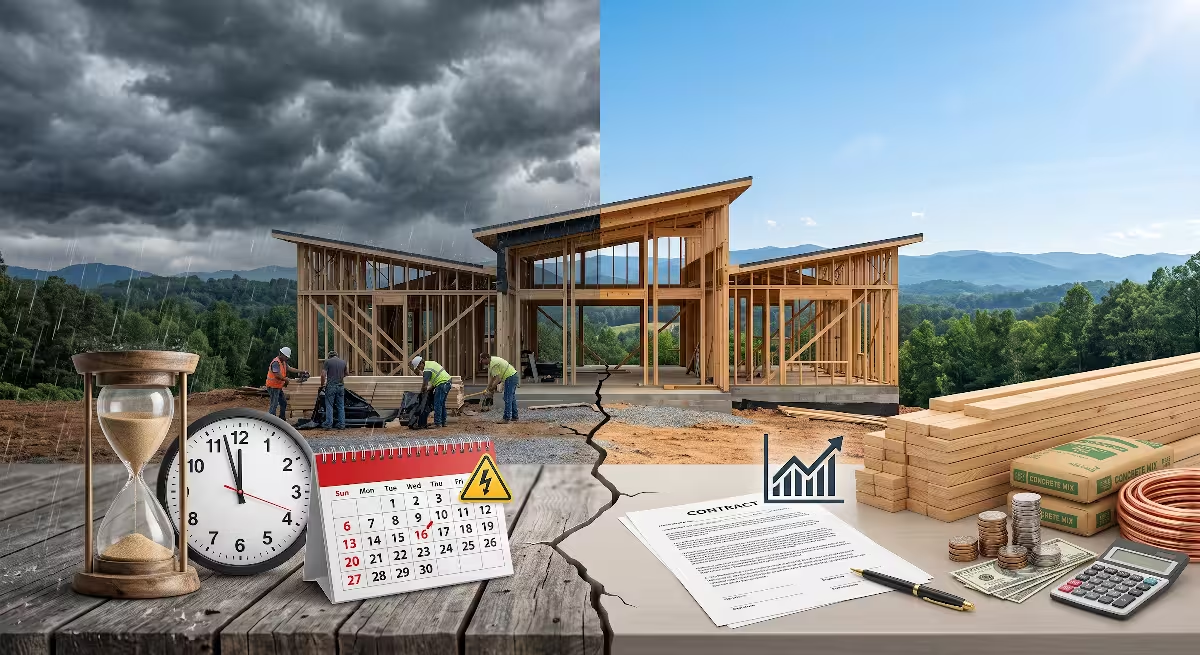
For most people interested in a custom home, the journey leads them to a core dilemma: should they use a fixed price or a cost-plus builder contract? There is a great deal of opinion on this topic, but the truth is that one is not universally better than the other. The best type of contract depends entirely on the specifics of your project, how detailed your plans are, and your personal comfort level with financial risk and involvement.
This article will help you make the choice between the contracts. We will look at both of these common types in a clear and direct way. Our hope is to give you the competent knowledge you need to discuss these options with your builder and make an informed, precise decision that protects your investment and paves the way for building the home you’ve always wanted right here in East Tennessee.
What is a Fixed-Price Contract? (The Lump-Sum Agreement)

A fixed-price contract, which is often called a “lump-sum” contract, is exactly what it sounds like. It is a legal agreement where your builder commits to completing your entire home building project for one single, predetermined price. This is arguably the most traditional and straightforward type of construction contract available to homeowners. It provides a clear financial picture from the very beginning.
How This Contract Works
To create a valid fixed-price contract, a tremendous amount of detail is required upfront. You and your builder must have a complete and highly detailed set of architectural plans and specifications. This includes everything from the foundation engineering to the model number of the kitchen faucet. The builder takes these detailed documents and calculates the exact cost of every component: the labor, the materials, the subcontractor bids, permits, and their own overhead and profit.
All of these costs are bundled together into one single number. Once you both agree on that price and sign the contract, it is locked in. From that point forward, the builder assumes the vast majority of the financial risk. If the price of lumber suddenly skyrockets or a subcontractor’s estimate was too low, the builder must absorb that extra cost. It’s their responsibility to manage the budget and deliver the home for the price they quoted. Your price is fixed, barring any changes you decide to make along the way. The payment schedule is also clearly defined in the contract, typically tied to construction milestones like “foundation complete” or “drywall installed.”
The Advantages of a Fixed-Price Contract
For many homebuyers, the benefits of this type of contract are very appealing.
- Budget Certainty: This is the number one reason people choose a fixed-price contract. You know your total cost before construction begins. This predictability is incredibly helpful for securing financing from a bank, as they can see a clear, defined cost for the project they are lending on. It provides immense peace of mind.
- Simplicity in Management: Because the total price is set, there is less for the homeowner to manage financially during the build. You don’t need to review dozens of invoices for lumber or subcontractor work. You simply make your scheduled payments when milestones are met.
- Low Financial Risk for the Owner: The risk of cost overruns is placed squarely on the builder’s shoulders. They are incentivized to be efficient, manage their crews and suppliers well, and stay on budget to protect their own profit margin. This clear allocation of risk is a major benefit for any homeowner.
The Disadvantages of a Fixed-Price Contract
While it sounds ideal, this model has its own set of potential downsides.
- Higher Initial Cost: A competent builder knows that unforeseen issues can arise. To protect themselves from losing money, they will build a contingency fund directly into the fixed price. This means your initial contract price may be 10% to 15% higher than the actual cost might have been, as you are essentially paying for an insurance policy against cost overruns.
- Less Flexibility: This is a significant drawback. A fixed-price contract is built on a very specific set of plans. If you decide halfway through the build that you want to add a window, move a wall, or upgrade your countertops, you can’t just make the change. You must initiate a “change order.” This is a mini-renegotiation of the contract that can be expensive and slow down the project. Builders often charge a premium for change orders because they disrupt the workflow.
- Potential for Conflict Over Quality: In a scenario where a builder is facing rising material costs, an unethical one might be tempted to cut corners to preserve their profit. They might substitute a lower grade of material than what was specified, hoping you won’t notice. This is why working with a builder who has a strong reputation for integrity is crucial, no matter which contract you choose.
A fixed-price contract is an excellent choice for projects where the plans are 100% complete, the homeowner has made all their selections, and very few changes are anticipated.
What is a Cost-Plus Contract? (The Open-Book Approach)

A cost-plus contract takes a fundamentally different approach. Instead of a single upfront price, this contract structure is based on transparency. The agreement states that the homeowner will pay the actual cost of the construction, which includes all labor, materials, and subcontractor fees, plus a pre-agreed upon fee to the builder. This builder’s fee covers their overhead and profit. It is often called an “open book” contract because the homeowner has the right to see every single invoice and receipt related to their project.
How This Contract Works
Under a cost-plus contract, the builder collects all the bills for the project, from the concrete supplier to the electrician. They present these direct costs to you, typically on a monthly basis, and you reimburse them. Then, the builder’s fee is added on top. This fee can be structured in two main ways:
- Percentage Fee: The builder’s fee is a set percentage, for example 15%, of the total project costs. So, if a month’s worth of work and materials costs $50,000, the builder’s fee would be $7,500.
- Fixed Fee: The builder estimates the total scope of the project and charges a single, fixed fee for their services. This fee does not change, even if the project costs go up or down.
To provide homeowners with a level of budget protection, a cost-plus contract often includes a clause for a “Guaranteed Maximum Price” (GMP). This sets a ceiling on the total project cost. The builder guarantees the home will not cost more than this amount. If the project comes in under the GMP, the savings are often shared between the homeowner and the builder, creating an incentive for the builder to be efficient. This type of arrangement requires a deep level of trust between you and your builder.
The Advantages of a Cost-Plus Contract
This model offers a unique set of benefits, particularly for truly custom projects.
- Full Transparency: You see exactly where every dollar is being spent. This open-book nature helps build trust and ensures you are paying the true market price for materials and labor. There are no hidden fees.
- Greater Flexibility: This is a major advantage. With a cost-plus contract, making changes is simple. If you want to upgrade your appliances or add built-in bookshelves, you simply pay the actual cost of that change plus the builder’s fee. It encourages a more collaborative and evolving design process.
- Potential for Cost Savings: You pay the actual cost, not an inflated estimate. If your builder negotiates a great price on lumber or the excavation work costs less than expected, those savings are passed directly to you. You are not paying for a large contingency fund that may never be used.
The Disadvantages of a Cost-Plus Contract
The flexibility of this contract comes with its own risks that homeowners must understand.
- Budget Uncertainty: The biggest drawback is that you do not know the final price of your home when you start. While your builder will provide a detailed estimate, it is still just an estimate. The final number can and often does change. This can make the financing process more complex.
- Higher Financial Risk for the Owner: In this model, the homeowner bears the risk of cost overruns. If material prices rise or an unexpected issue arises, those costs are your responsibility. A GMP can mitigate this risk, but it is still a significant factor to consider.
- Requires More Homeowner Oversight: Because the final cost is not fixed, this type of contract requires more involvement from you. You will need to review invoices and stay in close communication with your builder about the budget. It demands a strong, trusting relationship with a highly organized and competent general contractor.
This contract is an excellent fit for complex or unique architectural projects, renovations where unforeseen issues are common, or for homeowners who want maximum control and flexibility during the build.
Direct Comparison: Key Differences at a Glance
To make the choice clearer, let’s look at a direct comparison of these two contract structures. Sometimes seeing the main points side by side can help simplify the decision making process. This table breaks down the main differences in how each contract handles the most important aspects of a home build.
| Feature | Fixed-Price Contract | Cost-Plus Contract |
| Risk Allocation | Builder assumes the risk of cost overruns. | Homeowner assumes the risk of cost overruns. |
| Cost Transparency | Opaque. The total price is known, but individual costs are not. | Fully transparent. Homeowner sees all invoices and receipts. |
| Flexibility for Changes | Low. Changes require formal, often expensive change orders. | High. Changes are easily incorporated by paying the actual cost. |
| Final Project Cost | Predictable and known upfront. | Variable and not known until the project is complete. |
| Owner Involvement | Lower. Less financial oversight is needed day to day. | Higher. Requires regular review of invoices and budget tracking. |
| Builder Incentive | To control costs and maximize efficiency to protect profit. | To build to the highest quality, as there is no penalty for cost. |
Understanding these distinctions is key to making the best decision that aligns with your project goals and your personal comfort level with the building process.
Questions about Contracts

Many people in Johnson City and the other Tri-Cities of TN ask the same questions about their builder contract. Let’s address some of the most common ones.
- Which is better for the owner? There is no single answer to this. The “better” contract is the one that best fits your project and your personality. If you are someone who needs absolute budget certainty to sleep at night and you have a very clear vision with finalized plans, the fixed-price is likely better for you. It’s predictable and requires less of your direct financial management. However, if you are building a highly customized home, enjoy being involved in the details, and value flexibility and transparency over a fixed initial price, then a cost-plus contract is probably the better choice. It’s about matching the contract to the circumstances.
- What are the biggest risks of a cost-plus contract? The single biggest risk is the budget. Without a Guaranteed Maximum Price (GMP) clause in the contract, there is technically no ceiling on the final cost. This is why a cost-plus contract should only be used with a builder you trust implicitly—one with a long track record of accurate estimating and transparent accounting. An unorganized or dishonest builder could let costs spiral out of control. The second risk is a lack of incentive for the builder to be frugal. In a pure cost-plus-percentage model, the more the project costs, the more the builder makes. This is why many people prefer a cost-plus with a fixed fee, as it removes this potential conflict of interest.
- How do builders calculate their fee in a cost-plus contract? As mentioned, there are two common methods. The percentage fee is where the builder charges a set percentage, usually between 10% and 20%, on all project costs. This is straightforward but can create a perverse incentive. The fixed fee is where the builder analyzes the project’s complexity, estimates their time and management needs, and proposes a single flat fee for their services. This fee is paid out over the course of the project. I often find that a fixed fee structure aligns the interests of the homeowner and builder more effectively, as the builder’s profit is not tied to increases in the project cost.
- What is a “change order” and how does it work? A change order is a formal written amendment to the original construction contract. It becomes necessary anytime there is a deviation from the initial plans in a fixed-price agreement. Let’s say you decide you want to upgrade from laminate countertops to granite. Your builder would create a change order that details the new scope of work (installing granite) and the additional cost. You must sign and approve this document before the work is done. This process can sometimes feel adversarial and can add significant costs and delays to a project. Under a cost-plus contract, the concept of a formal change order doesn’t really exist in the same way. You would simply tell your builder you want granite, and the actual added cost of the new material and any extra labor would be added to your next invoice. This highlights the flexibility of the cost-plus contract model.
Making the Right Choice for Your Tri-Cities Home
Now that you understand the mechanics, advantages, and disadvantages of each type, how do you make the final decision? It comes down to honestly evaluating three key areas.
First, assess your project’s complexity and completeness. Do you have a full set of architectural drawings where every single detail is specified? Or is your vision more fluid, with many decisions yet to be made? The more complete and finalized your plans are, the better suited your project is for a fixed-price contract. The more unique, complex, or undefined your project is, the more you will benefit from the flexibility of a cost-plus contract.
Second, evaluate your personal risk tolerance and desire for involvement. Be honest with yourself. Would a budget that fluctuates make you anxious, or do you feel comfortable managing that uncertainty in exchange for more control and potential savings? If you need a hard number to secure your financing and feel at ease, the fixed-price contract is the path for you. If you enjoy the process, want to be involved in the financial details, and value the ability to make changes on the fly, a cost-plus contract will be a better fit.
Finally, and this is the most important point, recognize the immense importance of a competent and trustworthy builder. A well written contract can provide a framework for success, but it cannot fix a bad builder-client relationship. Your builder’s integrity, communication skills, and competence are more important than the type of contract you sign. Take the time to check references, look at past projects, and have frank conversations with any potential builder. A great builder will have your best interests at heart regardless of the contract structure. They will be transparent, organized, and dedicated to quality. A contract is a tool for clarification, but trust is the glue that holds a successful construction project together.
In summary, for most standard custom homes here in the Tri-Cities where the buyer has clear plans, a fixed-price contract offers wonderful peace of mind and budget security. For larger, more complex architectural homes or significant renovations with many unknowns, a cost-plus contract with a Guaranteed Maximum Price (GMP) often provides the ideal blend of flexibility and financial protection. By understanding these options, you are now equipped to have a productive conversation with your builder and choose the contract that will best serve you on your journey to creating your new home.