
Designing a Home with Intention
Building a house is a big task, but building a true sanctuary is an art. Many buyers pick a plan because it looks pretty in a book. But after moving in, they realize the house does not fit their life. We want to help you avoid that. Designing a home with intention is about more than just picking paint colors. It is about understanding the “why” behind every room. In the Tri-Cities of Tennessee, we have a unique chance to blend our beautiful mountains with smart, modern living.
This guide will show you how to build a home that feels right the moment you walk through the door.
The Psychology of Space: Why Your Layout Affects Your Mood
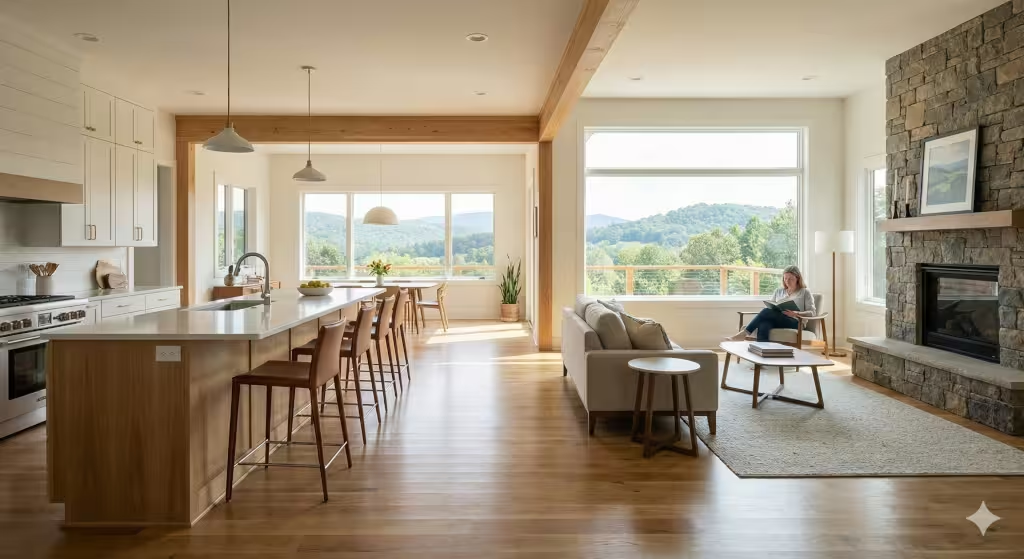
Have you ever walked into a room and felt instantly relaxed? Or maybe you walked into a house and felt cluttered and stressed? That is the psychology of space at work. When we talk about designing a home with intention, we must think about how a building makes us feel. A house should be a tool that helps you live your best life.
Many people ask: “How can home design improve mental health?” The answer is found in how we move through our rooms. In Johnson City and Kingsport, we are surrounded by natural beauty. An intentional house brings that peace inside. We use something called “spatial flow.” This means the path from your kitchen to your living room should be easy. You should not have to walk around a couch every time you want a glass of water. When a house has good flow, your brain does not have to work as hard. This lowers your stress every single day.
We also look at “psychogeography.” This is a fancy word for how our environment changes our mood. In the mountains of East Tennessee, we have lots of trees and hills. If your house is dark and cramped, it clashes with the world outside. An intentional house uses high ceilings and wide paths to mimic the open feeling of the outdoors. This makes your home feel like it belongs in the landscape.
The Purpose-First Approach: Defining Your “Why”
Before you draw a single line on a blueprint, you need to know your purpose in building a home. For instance, “What does a perfect Tuesday morning look like for you?”
If you love to cook while your kids do homework, your kitchen needs to be the heart of the house. If you are a writer who needs total silence, your office should not be next to the laundry room. This is called functional programming. It is the core of designing a home with intention. You are not just building a building. You are building a stage for your life.
Think about your future too. As you get older, you might want to think about “aging in place.” This means making sure your house is easy to live in as you get older. Wider doors and fewer stairs can be very intentional choices that save you a lot of trouble later. When you put your needs first, the house becomes a partner in your happiness.
Appalachian Materiality: Bringing the Outside Into Your Home
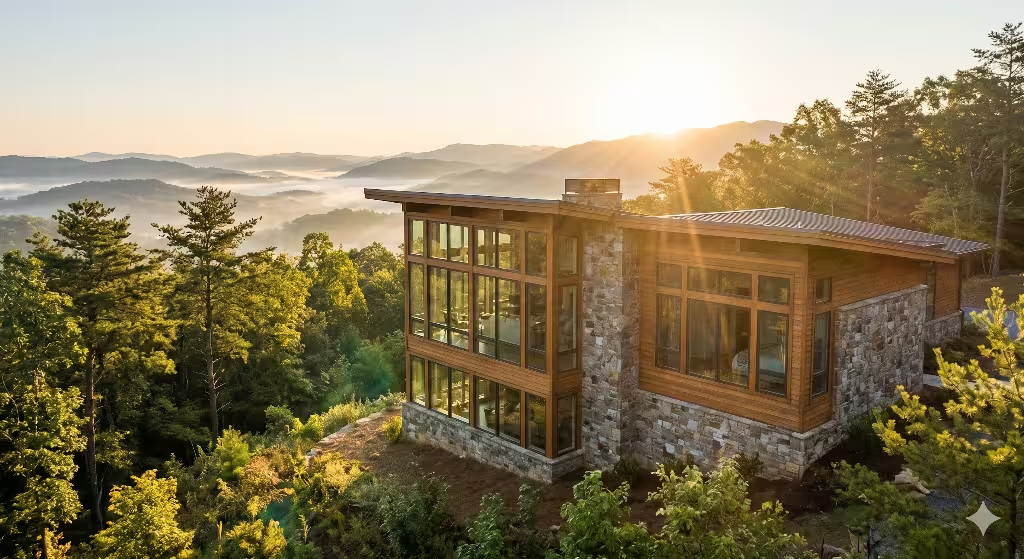
In the Tri-Cities, we are lucky to have amazing natural materials. Using local stone and wood is a great way to show intention. It connects your house to the history of Tennessee. In E Tennessee, people love using Tennessee Fieldstone for fireplaces. It is heavy, strong, and honest. It gives a house a sense of integrity.
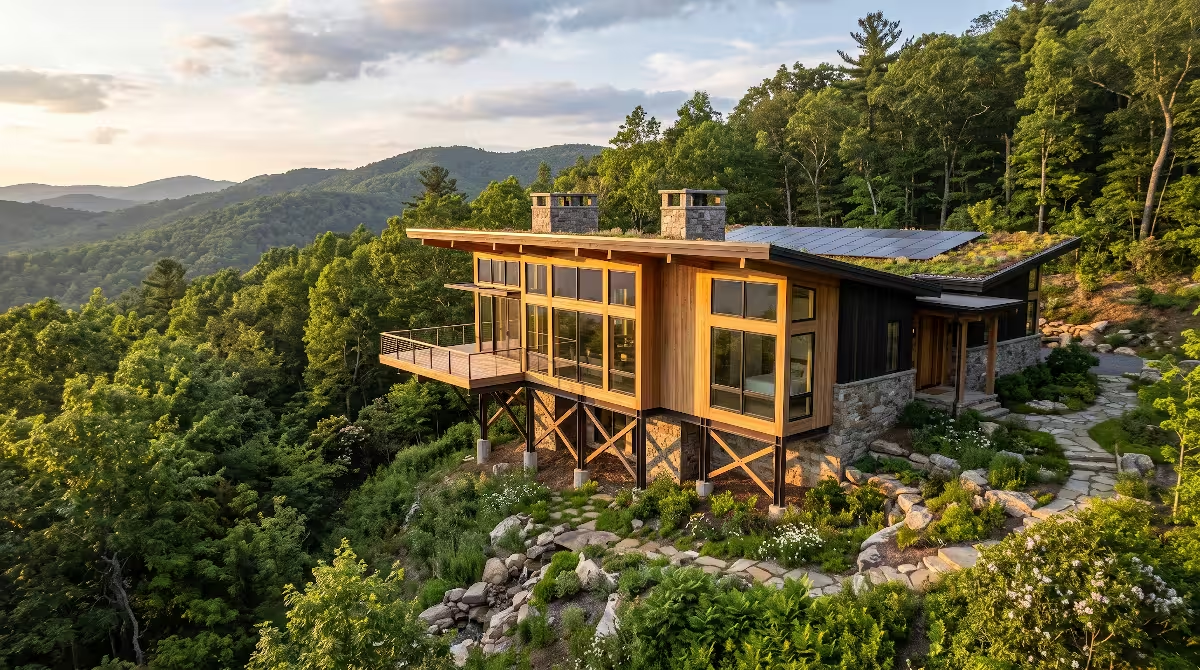
When you use local materials, your house feels like it grew out of the ground. This is part of the “Mountain Modern” style that is very popular right now. We combine the rugged look of stone and wood with clean, straight lines. It is a look that is both cozy and very professional.
We also use reclaimed wood from old barns in the area. This adds a story to your walls. Every piece of wood has a history. This is much better than buying cheap, plastic-looking floors from a big box store. An intentional house chooses quality over speed. It values the texture of the grain and the coolness of the stone. These materials also last a long time. They are competent materials that can handle our humid summers and cold winters.
Designing for Daily Rituals
Most people spend their time in only a few spots in their home. We call these “ritual zones.” An intentional design makes these spots perfect. Think about where you have your first cup of coffee. Is there a window that catches the morning sun over Buffalo Mountain? If there is, that coffee will taste better.
Think about the transition from outside to inside. In Kingsport, many of us love to go fishing or hiking. When you come back, you probably have muddy boots and wet gear. A well-designed mudroom is an intentional choice to have in your home. It gives you a place to drop the stress of the day before you enter the rest of the house.
We also think about “multi-functional” spaces. A room should be able to change as your day changes. Maybe you have a guest room that you use as a yoga studio three days a week. We design these rooms with the right storage and lighting so they can switch roles easily. This makes your house feel bigger because every square foot is being used for a reason.
Biophilic Design and Wellness in East TN
People often ask: “What are the benefits of biophilic home design?” Biophilic design is a method of connecting people with nature within their living space. It is not just about having a few house plants. It is about using light, air, and natural patterns to make you feel healthy.
In the Tri-Cities, we have beautiful seasons. An intentional house uses large windows to frame these seasons like art. Seeing trees and sky helps lower your heart rate. It also helps your “circadian rhythm.” This is your body’s internal clock. When you get plenty of natural light during the day, you sleep better at night.
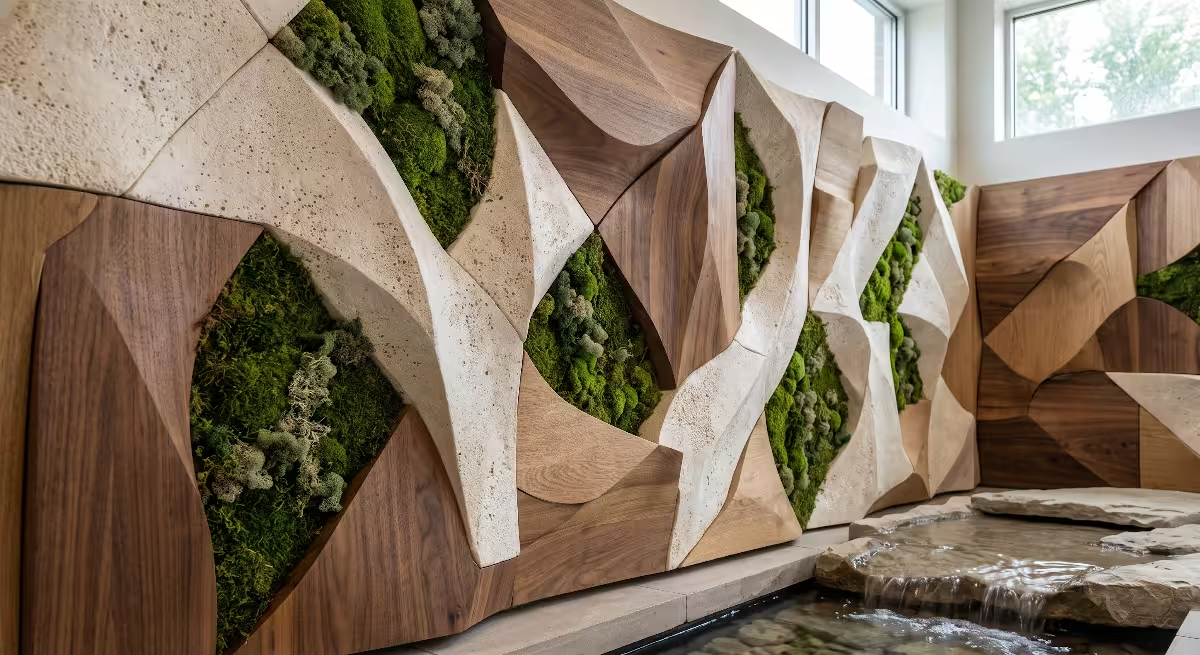
We also use “fractal patterns.” These are shapes that repeat in nature, like the veins in a leaf or the way a tree branch grows. Our brains find these patterns very relaxing. We can put these patterns in rugs, wallpaper, or even the way we lay out stones on a wall. It is a subtle way to make your house feel like a natural sanctuary.
The Technical Side: Efficiency as Intention
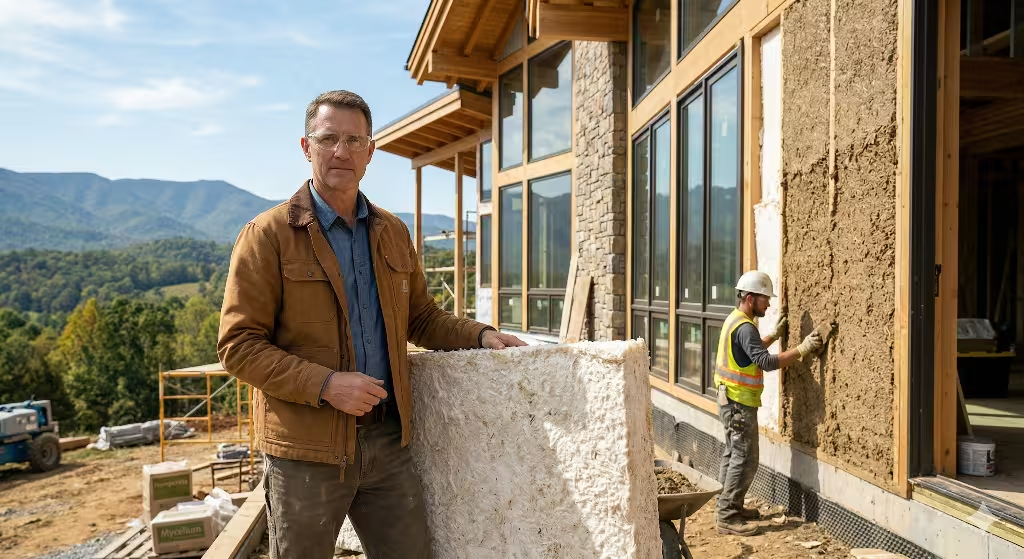
To have a comfy home, you have to pay attention to what is behind the walls. You cannot have a peaceful house if it is drafty or has bad air. Designing a home with intention means thinking about the “thermal envelope.” This is the shell of your house that keeps the heat in or out.
We use math to make sure your house is comfortable. We look at something called the $R$-Value. This measures how well your insulation stops heat from moving. The formula is:
In this math, Δ T is the difference in temperature between the inside and outside. q is the heat flux, or how fast heat is moving through the wall. A high R-Value means your house stays warm in the winter without your heater running all the time.
This is a precision choice. It saves you money, but it also makes the house quieter. Thick insulation blocks the sound of cars or wind. An intentional house is a quiet house. We also look at indoor air quality. We use systems that bring in fresh air but keep out the pollen that we get so much of in Tennessee. This is a competent way to build a house that actually looks after your health.
Lighting Layers: Setting the Intentional Tone
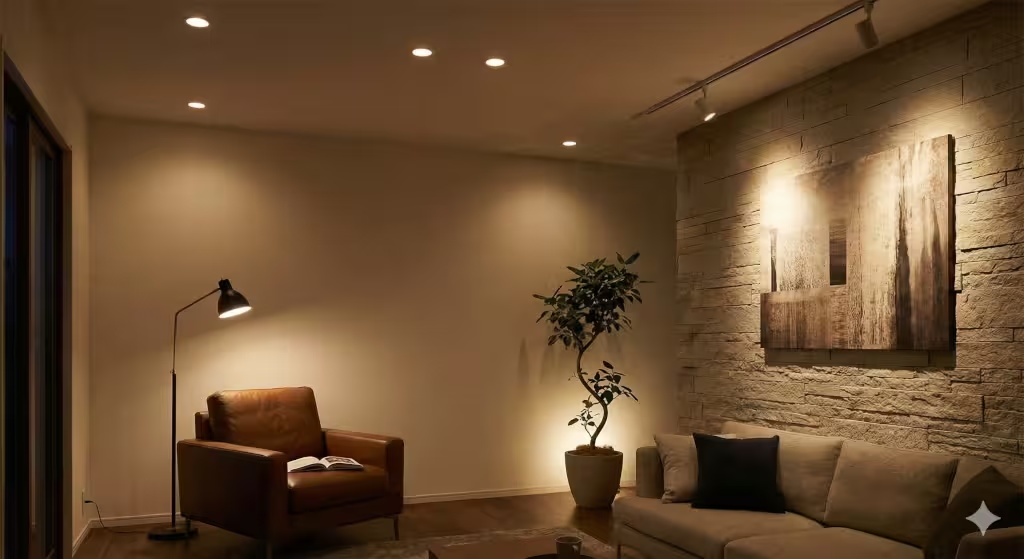
Lighting is one of the most forgotten parts of building. But it is one of the most important for your mood. In an intentional house, we do not just put one big light in the middle of the ceiling. That is called “flat lighting,” and it makes a room feel like a grocery store.
Instead, we use three layers of light:
Ambient Light: This is the general light that lets you see where you are walking.
Task Light: This is bright light for specific jobs, like reading or chopping vegetables.
Accent Light: This is soft light that points at something pretty, like a piece of art or a stone wall.
We also use smart technology to change the lights during the day. In the morning, the lights in the home can be cool and bright to help you wake up. In the evening, they can turn warm and dim to help you get ready for sleep. This is a very professional way to handle your environment. It shows that you have thought about every hour of your day.
Curated Longevity vs. Fast Trends
The world of building is full of “fast trends.” These are things that look cool on social media today but will look old in five years. Designing a home with intention is the opposite of this. We look for “curated longevity.” This means picking things because they are high quality and timeless.
For most people it is good to choose three great pieces of furniture instead of ten cheap ones for your home. A solid oak table will last your whole life. A cheap plastic one will end up in a landfill. The same goes for your house. It is better to have a smaller house built with great materials than a giant house built with cheap ones.
This takes integrity. It is tempting to want the biggest house on the block. But an intentional house is sized just right. It is easy to clean, easy to fix, and easy to love. When you walk through a house built this way, you can feel the craftsmanship. You can see the precision in the trim and the care in the paint. This is the kind of house that keeps its value for a long time.
Working with the Land: The Site Visit
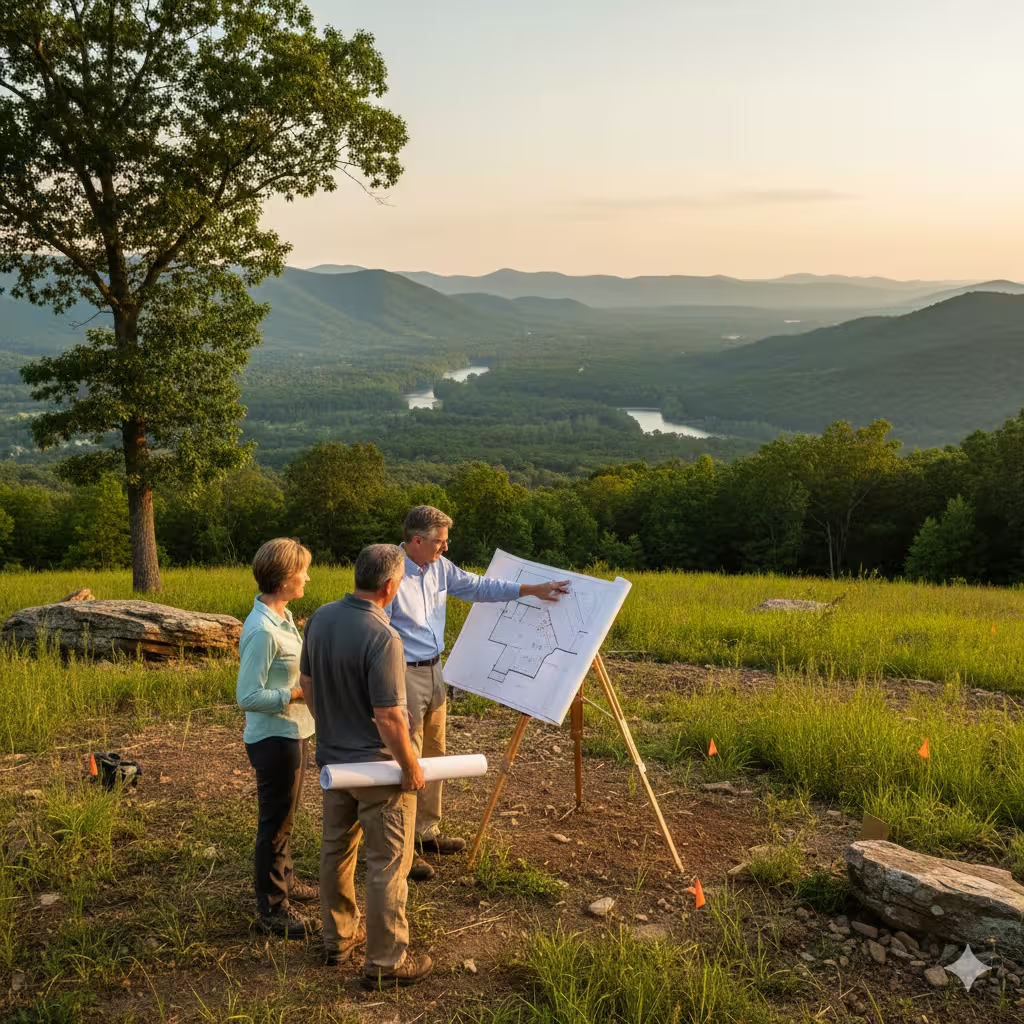
Here in east Tennessee, every piece of land has a personality. You cannot just plop a house down anywhere. An intentional house is designed to fit the specific hill or field where it sits.
We look at where the sun rises and sets. We look at where the water flows when it rains. In East Tennessee, we have a lot of slopes. A smart builder uses the slope to create a “walk-out” basement. This gives you extra living space that still gets lots of light.
Designing a home with intention means respecting the land. We try to keep as many old trees as we can. Trees provide shade which keeps the house cool. They also provide privacy. When you work with the land, your house feels like a part of the neighborhood. It looks like it has always been there.
The Legal and Development Side of the Tri-Cities
Building in Johnson City or Bristol requires knowing the local rules. Every city has different codes. These codes are there to keep you and your home safe. An intentional builder sees these rules as a baseline for quality and goes even further.
We look at “zoning” and “setbacks.” These tell us how close to the road or the neighbors we can build. In our area, we also have to think about “soil stability.” Because we have hills and rocky ground, we have to make sure the foundation is very strong. We use engineering to ensure the house will never shift or crack.
This part of the job is technical, but it is very important. You want to make sure your investment is safe. A professional builder will handle all the permits and inspections for you. This lets you focus on the creative side of the house while the experts handle the legal side.
The Social Heart: Kitchens and Gathering Spaces
Most of our best memories happen around food. That is why the kitchen is such a big part of designing a home with intention. We move away from the “work triangle” and move toward “work zones.”
Imagine a kitchen where one person can be cleaning up, another person can be cooking, and a third person can be making a drink—all without bumping into each other. This is the goal. We use islands that are large enough for the whole family to sit at. We use materials like quartz or granite that are very tough and easy to clean.
We also think about the “Great Room.” In the Tri-Cities, we love to host friends for basketball games or holiday dinners. An intentional house has a space that feels big enough for a crowd but cozy enough for two people. We use rugs and furniture to create “rooms within rooms.” This keeps the space from feeling like a giant, empty hall.
Personalization and the Power of Choice
A lot of people get “decision fatigue” when building. There are too many choices for tile, faucets, and knobs. An intentional process helps you narrow these down. We look for a “cohesive theme.”
If you like the look of a mountain cabin, we stick to warm tones and matte finishes. If you like a modern look, we use polished metal and smooth surfaces. By staying within a theme, the whole house feels like it was designed by one person. It feels like a complete story.
We also leave room for your personal treasures. Maybe you have an old chair from your grandmother or a painting you bought on vacation. An intentional house has “display zones” where these things can shine. Your house should tell the story of who you are and where you have been.
The Journey from Bedroom to Kitchen
Think about your morning path. You wake up, walk to the bathroom, and then head to the kitchen for coffee. Is that path pleasant? Or is it a dark hallway with too many doors?
In an intentional house, we think about “procession.” This is the journey you take through the space. We try to make every journey have a “view.” Maybe as you walk down the hall, you can see out a window into the garden. Maybe the hallway is wide enough to hold a bookshelf full of your favorite stories.
When you think about these small paths, the house feels much more expensive and thoughtful. It shows that the builder cared about every single step you take in your home. This is how we move from a “set” to a “scene.” A bedroom is just a set for sleeping. But an intentional bedroom is a scene for resting, reading, and feeling safe.
Acoustics: The Hidden Key to Peace
People rarely talk about how a house sounds. But sound is a huge part of your mood. An intentional house uses materials that swallow noise. We use solid-core doors so you don’t hear the TV in the other room. We use soft rugs and curtains to stop echoes.
In the engineering world, we look at “Sound Transmission Class” or STC. A higher STC rating means less sound gets through the wall. We can add extra layers of drywall or special insulation to make your bedroom a quiet cave. This is a precision choice that makes a giant difference in how much you enjoy your home.
Outdoor Living: More Than Just a Deck
In the Tri-Cities, we have great weather for much of the year. An intentional house treats the outdoors like another room. We design “screened porches” that can be used even when it is raining. We add outdoor fireplaces so you can sit outside in the fall.
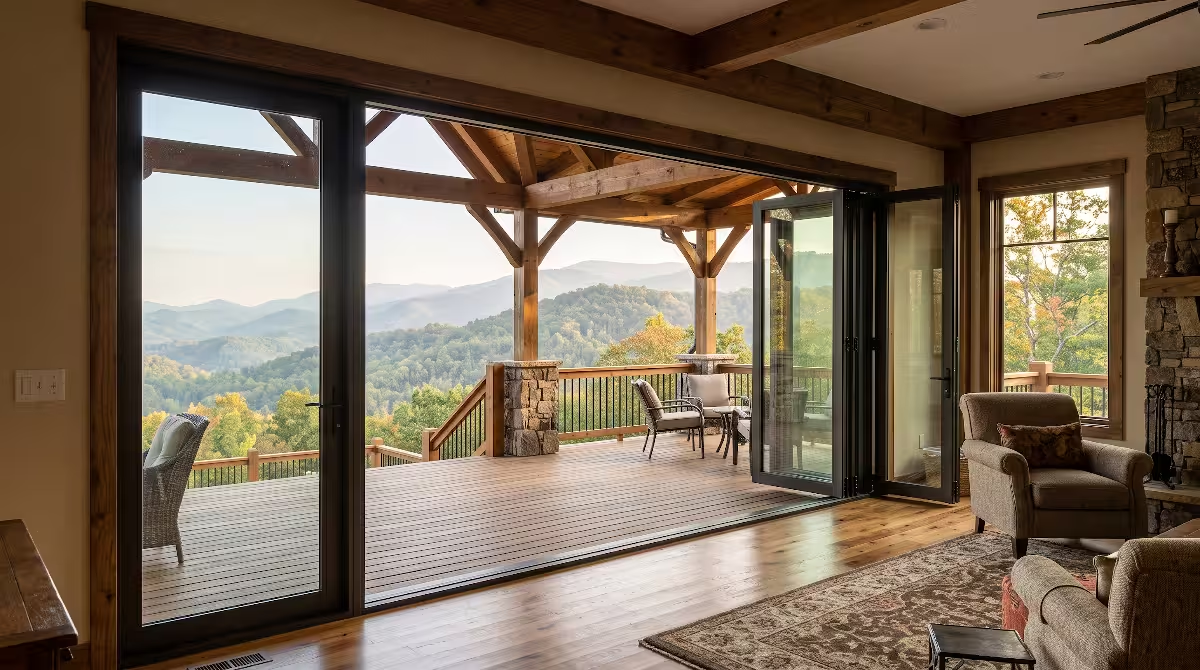
We also think about “indoor-outdoor synergy.” This means the floor inside the home should be the same level as the porch outside. We use big sliding glass doors that can open up completely. This makes your living room feel twice as large. It lets the fresh air of the mountains blow through your house.
An intentional outdoor space is also private. We use the shape of the house or the placement of trees to block the view of the neighbors. This makes your backyard feel like a secret garden. It is a place where you can truly relax and be yourself.
Sustainability and the Future
Designing a home with intention means thinking about the planet. We want to build houses that use less energy and last longer. This is good for your wallet and good for Tennessee.
We look for “Energy Star” appliances and HVAC systems. We use “Low-E” glass in the windows. This glass has a special coating that reflects heat back to its source. In the summer, it keeps the sun’s heat out. In the winter, it keeps your heater’s heat in.
We also think about water. We use “low-flow” faucets and toilets. We can even design “rainwater harvesting” systems that collect water from the roof to water your garden. These are competent choices that show you care about the future. An intentional house is a responsible house.
The Value of Professional Networking
Building a house takes a team. As a general manager, I spend a lot of time talking to experts. I talk to plumbers, electricians, and interior designers. An intentional home is the result of all these experts working together.
In the Tri-Cities, we have a great community of builders. We share ideas and help each other stay up to date on the latest trends. When you hire a professional, you are not just getting one person. You are getting their whole network of experts. This ensures that every part of your house is built with precision and integrity.
Your Legacy in the Tri-Cities
Designing a home with intention is a journey. It starts with a dream and ends with a home where you can grow old and be happy. In Johnson City, Kingsport, and Bristol, we have the perfect backdrop for these beautiful houses.
Remember, a house is just a building of wood and stone. But a home is a place of meaning. By focusing on your purpose, using local materials, and thinking about the technical details, you can create something truly special. You can create a place that reflects your values and supports your life.
Building this way takes more time and more thought. But it is worth every second. When you walk into a house that was built with intention, you can feel the difference. It feels solid. It feels calm. It feels like you.
We hope this guide has helped you understand the power of intentional design. Whether you are just starting to dream or you are ready to break ground, remember to keep your “why” at the center of everything. Your future self will thank you for the care you put in today.