

Custom home buyers in the Tri-Cities of TN, when their house is under construction will often stand in a room filled with raw lumber and sawdust and point to a corner and say, “That will be my study.” They imagine the bookshelves and the desk. They imagine the leather chair. But rarely do they imagine the most critical part of that room. They rarely think about the light.
This is a mistake. Here at Tri-Cities TN Home we can tell you that a poorly lit reading room is useless. You can have the most expensive desk in Kingsport, but if the lighting fights your eyes, you will not want to work there. You can have the most comfortable chair in Johnson City, but if the shadows cause headaches, you will not relax there.
The problem is usually simple. Most people think lighting a room just means buying a lamp. That is not how a professional thinks. We look at light as a system. We look at how the human eye works. We look at physics. Eye strain, fatigue, and a lack of focus are not always because you are tired. They are often because your lighting design is failing you.
In this article, we are going to move beyond basic decoration. We are going to engineer an environment. We will look at the science of light bulbs. We will look at where to put fixtures so shadows do not ruin your work. We will look at how to layer light so your reading room can be a place of high focus at 10 AM and deep relaxation at 8 PM.
Whether you are remodeling a historic home in Jonesborough or building new in Bristol, the principles remain the same. Let us build a reading room that actually works for you. At the end of the article there an easy checklist you can use to acquire the correct light bulbs for your reading room.
Watch a Video of this Article
The Science of Light: An Engineer’s Approach
To build the perfect reading room, we have to start with physics. You do not need a degree in engineering to understand this, but you do need to know three key terms. If you go to the hardware store and just grab a box of bulbs, you are gambling with your comfort.
Understanding Color Temperature (Kelvin)
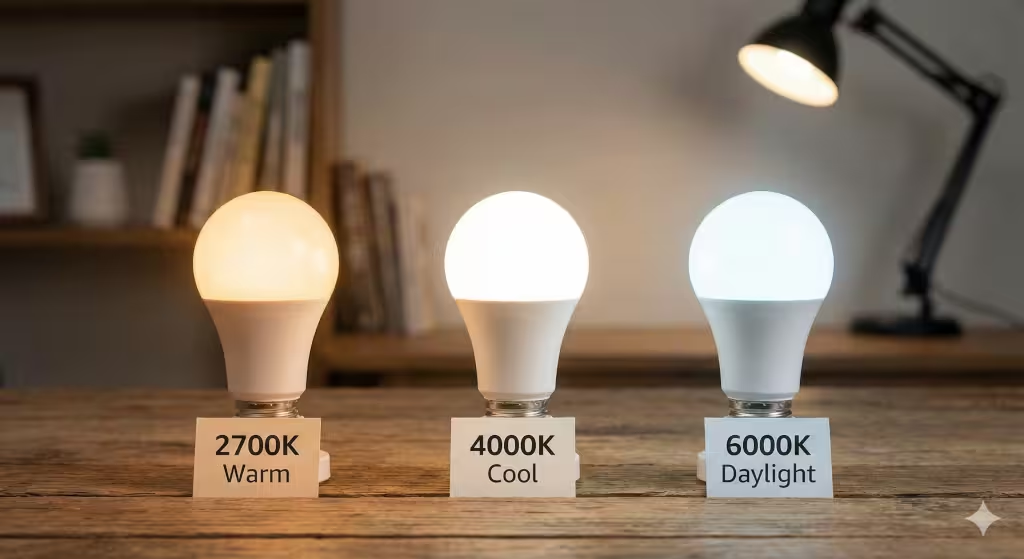
Light has a “temperature.” We measure this in Kelvin. This does not mean how hot the bulb gets. It means the color of the light itself. This is the single most important factor in how your reading room feels.
Imagine the sun. At noon, the light is bright white and crisp. This wakes you up. It tells your brain to be alert. This is “Cool Light.” On the Kelvin scale, this is between 4000K and 6000K. If you are using your reading room for serious work, drafting, or studying for a certification, you want this light. It suppresses melatonin, which is the chemical that makes you sleepy.
Now imagine a sunset. The light is orange, soft, and warm. This tells your brain it is time to rest. This is “Warm Light.” On the scale, this is 2700K to 3000K. If your reading room is a place to unwind with a novel after a long day at the Eastman plant, you want warm light.
The trick for a great reading room is flexibility. You do not want to be stuck with only one option. I often recommend “Tunable White” LED bulbs. These allow you to change the color. You can have a bright, cool reading room in the morning for work. Then, with a click of a button, you can shift to a warm, cozy reading room at night.
Brightness (Lumens vs. Watts)
For years, we bought bulbs based on watts. We would look for a 60-watt bulb or a 100-watt bulb. In the world of modern LEDs, watts do not matter for brightness. Watts only tell you how much energy the bulb uses.
For your reading room, you need to look at “Lumens.” Lumens measure the actual amount of light coming out of the bulb. This is critical for engineering the space.
A general bedroom might only need 10 to 20 lumens per square foot. That is too dark for a reading room. For general ambient light in a study, you want about 50 lumens per square foot. But that is just the background light.
For your actual workspace, like your desk or your reading chair, you need much more. You need focused light. I recommend a target of 450 to 800 lumens directed right at your book or paper. If you go lower than this in your reading room, your eyes have to work too hard. The muscles in your eyes will strain to focus, and you will get a headache.
CRI (Color Rendering Index)
There is one more metric to check. It is called the Color Rendering Index, or CRI. This measures how “true” colors look under the light.
Have you ever put on a pair of navy blue socks in a dark room, and then walked outside and realized they were actually black? That is bad CRI. The light source did not show the true color.
In a reading room, this matters more than you think. If you have nice wood floors, a leather chair, or colorful books, a low CRI bulb makes them look gray and washed out. It makes the room feel cheap. It makes the text on a page look less sharp.
Standard bulbs have a CRI of 80. For a custom home quality reading room, I tell my clients to look for CRI 90 or higher. It makes the print on the page pop. It makes the room feel vibrant. It is a small detail that makes a massive difference in how the room feels.
The Three Layers of Lighting Design
In the building industry, we never rely on just one light source. If you walk into a room and there is only one light bulb in the center of the ceiling, the room will look flat and uninviting. It will create harsh shadows.
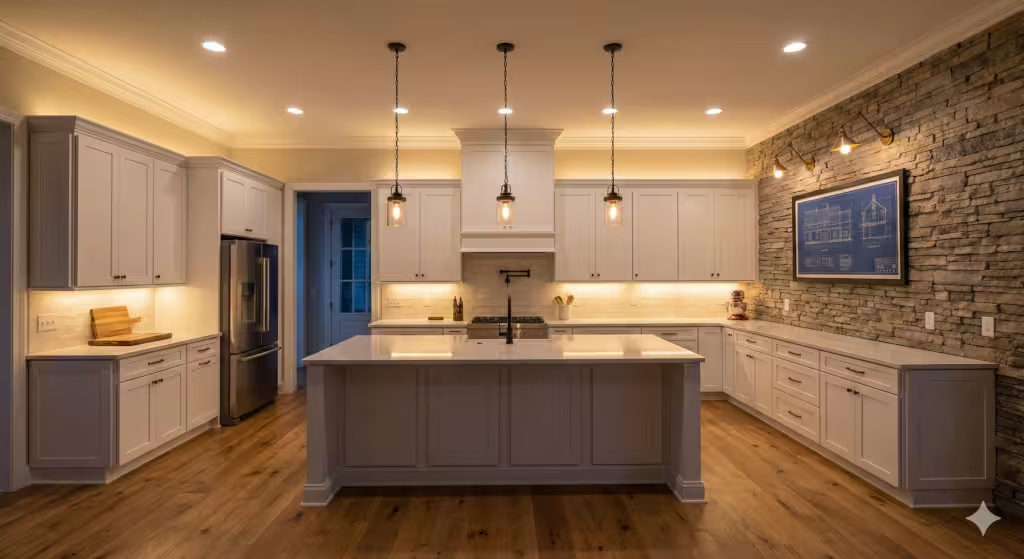
To make a reading room functional and beautiful, we use a technique called “layering.” Imagine it like dressing for winter weather. You have a base layer, a middle layer, and an outer layer. In lighting, we have Ambient, Task, and Accent layers.
Ambient Lighting (The Foundation)
This is your base layer. Ambient light is the general light that fills the room so you can walk around without bumping into furniture. In most reading room designs, this comes from recessed “can” lights in the ceiling or a central fixture.
When I design a ceiling plan for a reading room, I am very careful about where these lights go. A common mistake is putting a recessed light directly over the chair. This creates “down-lighting.” It casts shadows over your face. It creates a glare on your phone or book.
Instead, we place ambient lights around the perimeter of the room. We want the light to bounce off the walls. This softens the light. It makes the reading room feel larger. If you prefer a ceiling fan or a central light fixture, choose one with a frosted glass shade. The frost diffuses the light so it spreads evenly across your reading room.
Task Lighting (The Workhorse)
This is the most important layer for a reading room. Ambient light is for walking; task light is for working. You cannot rely on the ceiling light to read a book. The light is too far away. By the time it hits your page, it is too weak.
You need a dedicated light source for your specific tasks. This usually means a desk lamp or a floor lamp next to your chair. The goal of task lighting in a reading room is contrast. You want the page to be brighter than the rest of the room. This helps your eye focus on the text.
However, you have to be careful. If the rest of the room is pitch black and your task light is super bright, it causes strain. Your eye has to constantly adjust between the dark room and the bright page. This is why you need the ambient light on a low setting while using your task light.
Accent Lighting (The Mood)
The final layer is accent lighting. This is what separates a standard room from a custom-designed reading room. Accent lighting is not for function. It is for feeling.
In a reading room, this might mean LED strip lights hidden inside your bookshelves. It might mean a small picture light over a diploma or a piece of art.
Why does this matter? It adds depth. It makes the reading room feel cozy and finished. It also helps reduce eye fatigue. By lighting up the walls or shelves, you soften the contrast in the room. It makes the space feel balanced. When I build a high-end study, we almost always include lighting inside the cabinetry. It turns your book collection into a display piece.
Fixture Selection for Tri-Cities Homes
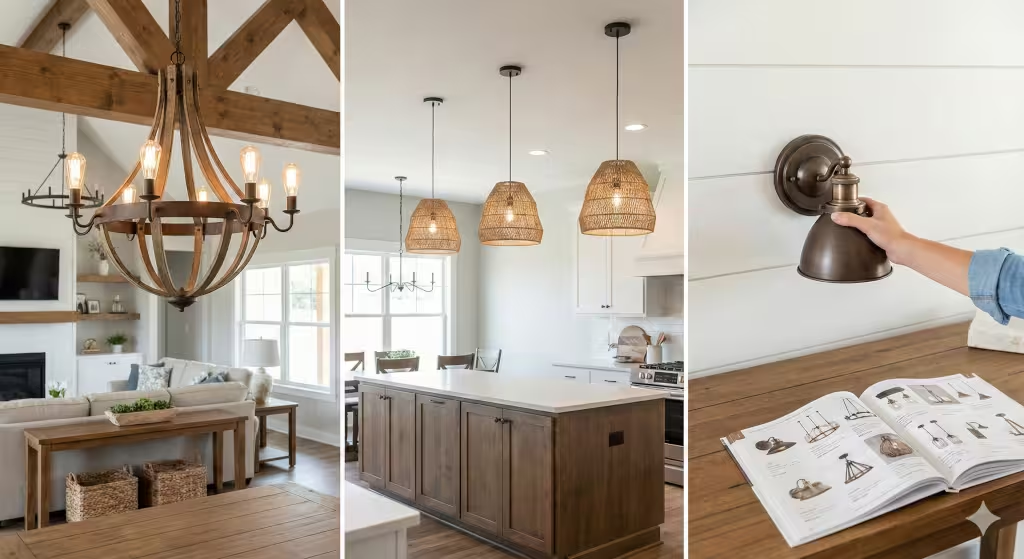
Now that we understand the layers, we have to pick the actual fixtures. In the Tri-Cities, we see a mix of styles. We have modern lofts in downtown Johnson City and traditional farmhouses in the county. Your reading room fixtures should match your style, but they must function correctly.
Desk Lamps
For the desk in your reading room, functionality is king. I always recommend an “articulating arm” lamp. This is sometimes called an architect lamp. It has joints that allow you to move the light head up, down, left, or right.
This is crucial. Depending on what you are reading or writing, you might need to move the light closer or further away. A fixed lamp does not let you do this.
Look for desk lamps that have modern tech built in. Many now come with USB charging ports in the base. This keeps your reading room desk tidy. Also, look for lamps that let you adjust the color temperature. As we discussed, being able to switch from cool work light to warm reading light is a huge benefit.
Floor Lamps for Reading Nooks
If your reading room has a comfortable leather armchair, you need a floor lamp. There are three main types to consider.
First is the Torchiere. This lamp points straight up at the ceiling. It is great for ambient light, but it is terrible for reading. Do not use this as your main reading light.
Second is the Club Lamp. This is a standard lamp with a shade. It is okay, but the light goes down and up. It might not be focused enough for small text.
The best option for a reading room chair is an Arc Lamp or a Pharmacy Lamp. An Arc lamp curves over the chair. It hangs the light directly over your lap. This is perfect. It gets the light exactly where you need it without the pole getting in your way. A Pharmacy lamp is adjustable and focused. It is great for a classic, traditional reading room look.
Overhead Choices
For the ceiling of your reading room, you have to be careful with glare. Many people buy fancy crystal chandeliers or fixtures with exposed clear bulbs. These look nice when they are off. But when you turn them on, they create a harsh glare.
If you are lying back in your chair in your reading room, you do not want to stare up into a bright, bare bulb. Stick to fixtures with shades. Linen shades are excellent. They glow warmly and stop the glare.
In our area, the “modern farmhouse” look is popular. This often uses metal fixtures in matte black or brushed nickel. These work well in a reading room because they are solid. They direct light down, rather than scattering it sideways into your eyes.
Strategic Placement & Ergonomics
You can buy the best lights in the world, but if you put them in the wrong spot, your reading room will fail. This means fitting the room to the human body.
Handedness Matters
This is a detail almost everyone misses. Are you right-handed or left-handed? This dictates where your desk lamp should go in your reading room.
If you are right-handed, you hold your pen in your right hand. If you place your lamp on your right side, your hand will cast a shadow across the paper as you write. You will constantly be writing into the dark.
So, if you are right-handed, place the lamp on the left side of the desk. If you are left-handed, place the lamp on the right. This keeps the light in front of your hand. It seems small, but in a reading room where you spend hours working, it saves you a lot of frustration.
Screen Glare Management
Most reading room setups today include a computer screen or a tablet. Screens are flat, shiny surfaces. They reflect light like a mirror.
Never place a light source directly behind you. If there is a bright window or a lamp behind your chair, it will bounce off your screen and hit your eyes. This reflection is exhausting for your brain to filter out.
Also, do not place a bright light directly behind the monitor facing you. This creates a silhouette effect. Your eyes will struggle to see the screen because the light behind it is so bright.
The best solution for a reading room with a computer is “bias lighting.” This is a soft LED strip stuck to the back of your monitor. It lights up the wall behind the screen. It lowers the contrast between the bright screen and the dark wall. It is an incredible upgrade for very little money.
Window Orientation
Natural light is wonderful, but it changes. In a reading room, direct sunlight can be too harsh. It creates extreme contrast.
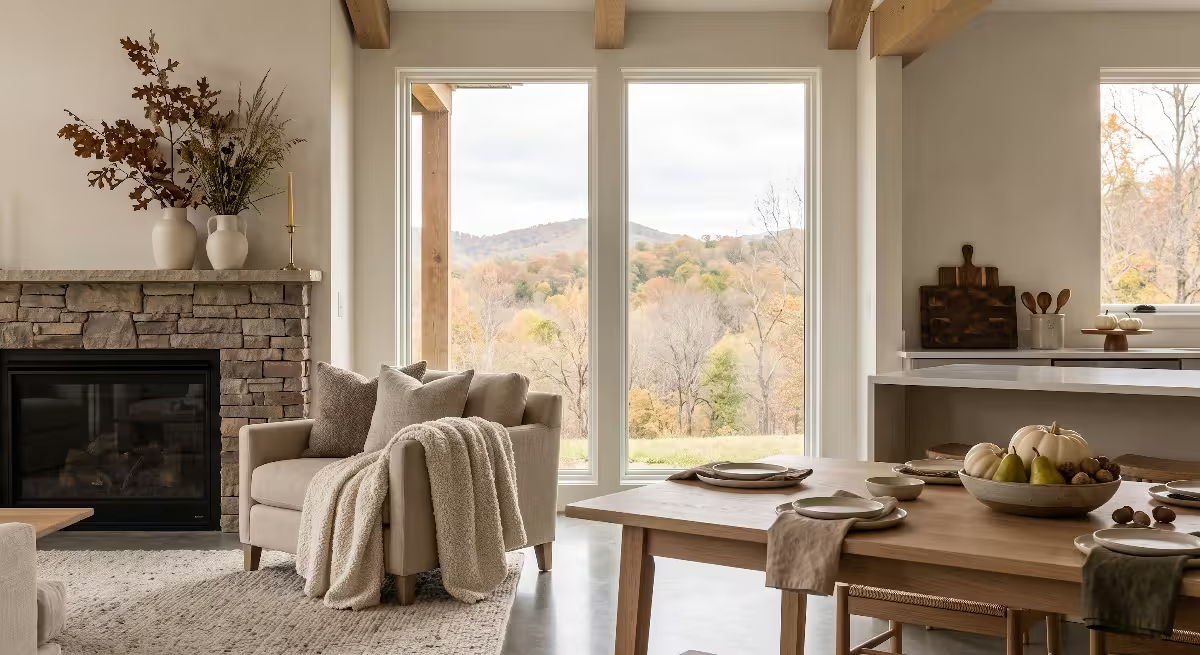
If your desk faces a window, you might get glare in your eyes. If your back is to the window, you get glare on the screen. The best position is to have the window to your side. This gives you the view and the light, without the direct beam.
If you cannot move your desk, invest in sheer shades or blinds. These diffuse the sunlight. They turn harsh beams into a soft glow. This makes the natural light in your reading room usable all day long.
Smart Technology & Modern Controls
We are living in the future of home building. When a house is wired today, we think about smart systems. Your reading room should take advantage of this.
Dimmers are Mandatory
Often, a light switch without a dimmer is a mistake. Every overhead light in a reading room needs a dimmer. This is non-negotiable.
Sometimes you need 100% brightness to find a lost paperclip. Sometimes you need 10% brightness to relax and think. A simple dimmer switch gives you total control over the atmosphere of your reading room. It is the cheapest way to make a room feel expensive.
Smart Systems
If you want to take it to the next level, look at smart bulbs like Philips Hue or switches like Lutron Caseta. These let you program “scenes” for your reading room.
Imagine walking in and saying, “Set reading room to Focus.” The lights turn bright and cool white. You get to work.
Then, at 7 PM, you say, “Set reading room to Relax.” The overhead lights turn off. The table lamp turns on to a warm, soft glow. The bookshelf lights dim to 30%. The room instantly changes from an office to a sanctuary. This is the power of smart lighting in a modern reading room.
Localizing for the Tri-Cities Region
Living here in East Tennessee, we have specific challenges. Our environment should shape how we design our reading room.
Winter Considerations
Our winters in the Tri-Cities are not the coldest, but they can be very gray. We can go weeks in January and February without seeing much sun. This can affect your mood. It is often called Seasonal Affective Disorder (SAD).
Your reading room can help fight this. I suggest ensuring your main ambient fixtures can handle 5000K bulbs. During those dark winter months, turning on these “daylight” bulbs in your reading room for 30 minutes in the morning can trick your brain. It can boost your energy levels when the sky outside is gray.
Style Integration
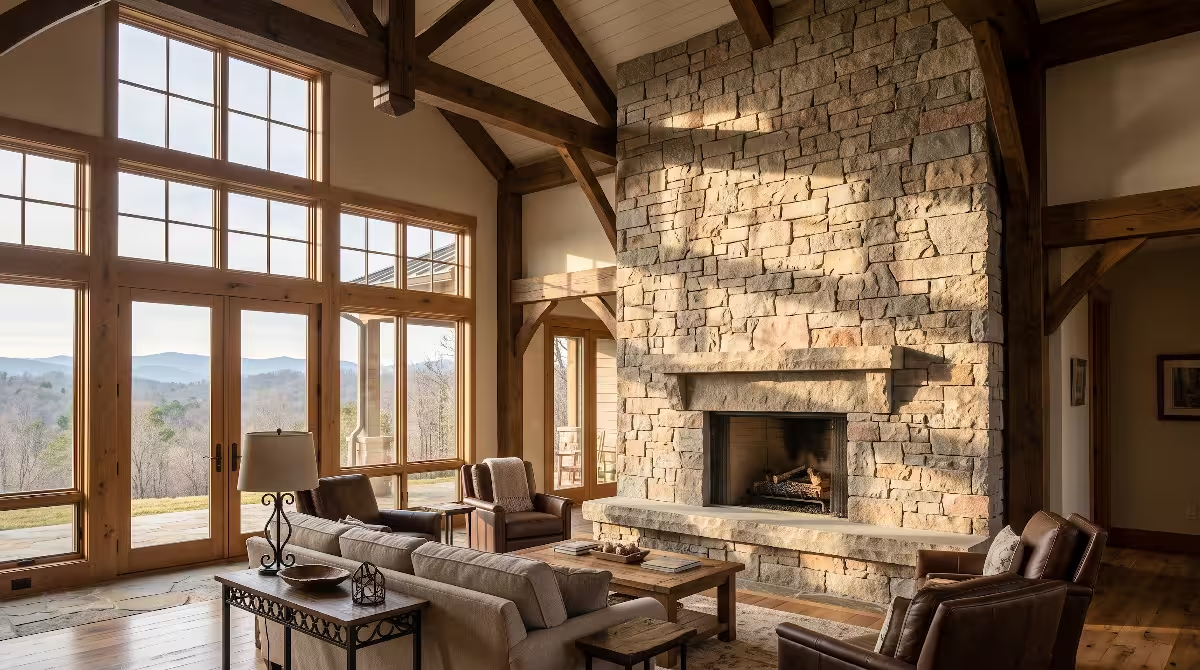
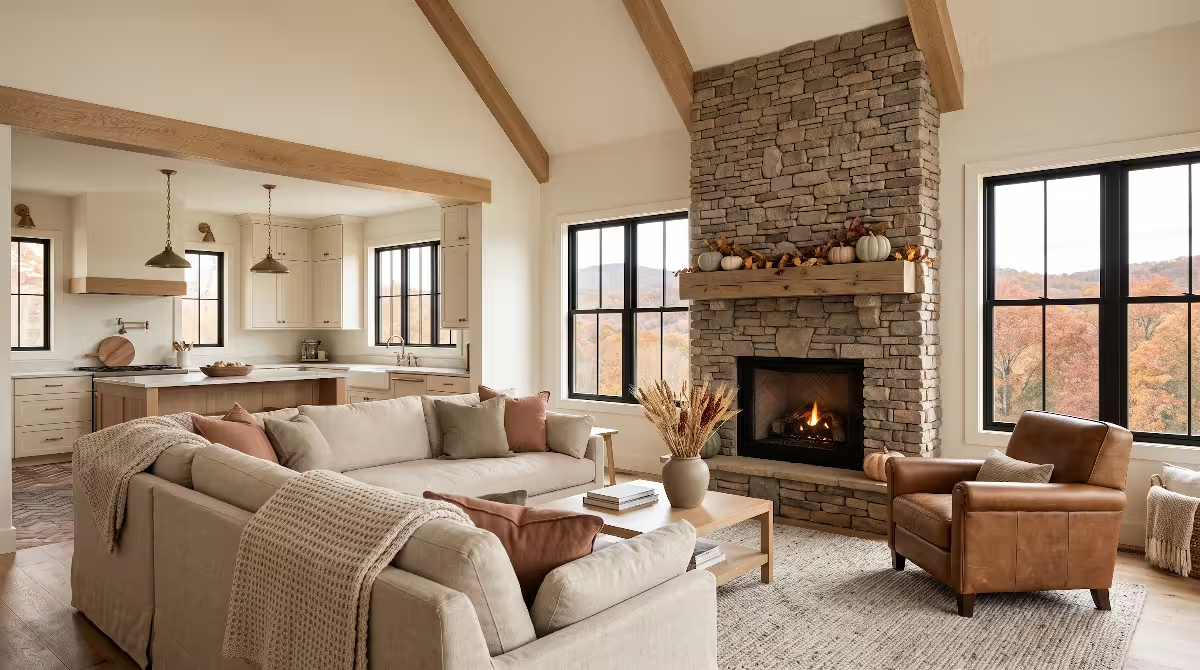
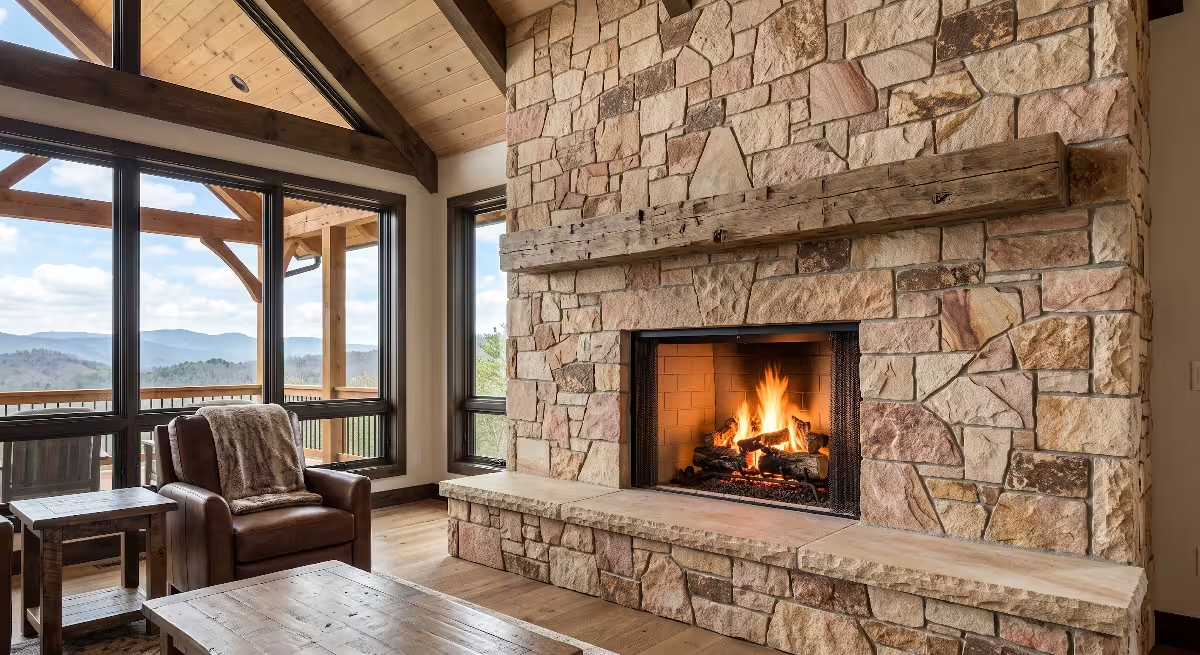
We also have a unique style here. We love our mountains and our history. Many homes in our area feature wood beams, stone fireplaces, and rich hardwood floors.
When lighting a reading room with these features, you have to be careful. Dark wood absorbs light. A white room reflects light. If your reading room has wood paneling or dark floors, you will need more lumens than a standard room. You might need 30% more light to make the room feel bright.
Also, consider the aesthetic. You can find LED bulbs that look like old-fashioned Edison bulbs. They have the visible filament inside. These look fantastic in a rustic reading room. However, older versions of these were very dim and yellow. Look for the newer “high lumen” vintage LEDs. They give you the look you want with the brightness you need.
Questions about Reading Room Lighting
In my line of work, clients ask me many questions about setting up their spaces. Here are the most common questions regarding reading room lighting.
“What is the best light color for studying?”
For studying, you want a Cool White light. Look for 4000K to 5000K. This range contains more blue light, which suppresses melatonin and keeps you alert. It simulates mid-day sun. It is the best choice for a reading room when productivity is the goal.
“How many lumens do I need for a reading lamp?”
For a dedicated reading lamp, you should aim for 450 to 800 lumens. This is roughly equivalent to a 40-watt to 60-watt traditional bulb, but focused in one direction. If the light is adjustable, getting a brighter bulb (800 lumens) and dimming it down is always better than having a bulb that is too dim.
“Is warm or cool light better for reading eyes?”
It depends on the goal. If you are reading for work or study, cool light is better for focus. If you are reading for pleasure before bed, warm light (2700K) is better. Cool light before bed can make it hard to fall asleep. This is why variable color bulbs are great for a multi-purpose reading room.
“Where should reading lights be placed?”
The light should come from the side and slightly behind your shoulder. You do not want it right in front of your face (glare) and you do not want it directly overhead (shadows). In a proper reading room layout, the bottom of the lampshade should be at about eye level when you are seated.
Conclusion
Designing the lighting for a reading room is about more than buying a lamp that looks nice. It is about understanding how light affects your body and your mind. It is a mix of engineering and art.
You need the right science: correct Kelvin for the time of day and high CRI for clarity. You need the right layers: ambient to fill the room, task to do the work, and accent to set the mood. You need the right placement to avoid shadows and glare.
When you get this right, your reading room becomes the best room in the house. It becomes a place where you can work effectively without headaches. It becomes a place where you can truly relax.
You can fall in love with your home all over again because of a simple change in lighting. Do not settle for a dark, shadowy corner. Treat your light like a tool.
We encourage you to go into your reading room right now. Turn on the light. Look at your hand. Is there a shadow? Look at the bulb. Is it too yellow or too blue? You now have the knowledge to fix it.
Take the next step. Check the ratings on your current bulbs. If they do not match the specs we discussed, head to the store and upgrade them. Your eyes will thank you.
A Checklist for Bulbs to Create Your Ultimate Tri-Cities, TN Reading Room
this list cuts through the marketing fluff and gives you the exact product codes and locations you need to build the lighting system we just discussed.
Part 1: The Light Engine (Bulbs)
Do not buy generic “Daylight” bulbs. They are often low quality and harsh blue (6500K). You need specific specs.
1. The “Do-It-All” Bulb (For Lamps)
Product: Philips Hue White Ambiance A19 (Bluetooth + Zigbee)
Why: This is the gold standard for “Tunable White.” You can slide it from bright work-white (4000K) to cozy reading-warm (2200K) via your phone or a dimmer switch.
Where to Buy:
Home Depot (Kingsport & Johnson City): Aisle 3, usually near the end-cap.
Best Buy (Johnson City): They often have the “Starter Kits” in stock which save you money.
2. The “High-Fidelity” Bulb (For standard non-smart fixtures)
Product: Feit Electric “Enhance” Series 90+ CRI
Why: If you don’t want smart bulbs, you must buy these. The “90+ CRI” label is crucial. It ensures your wood floors and book covers don’t look gray.
Specs to check on box:
Look for the Color Enhancement logo.
Buy 3000K (Bright White) for a balance, or 4000K (Cool White) if this is strictly a workspace.
Where to Buy: Lowe’s (Johnson City & Bristol). They stock the Feit “Enhance” line heavily.
3. The “Hidden” Strip Light (For behind the monitor/bookshelves)
Product: Lutron Caseta or Philips Hue Lightstrip Plus
Why: Sticks to the back of your monitor or under shelves to reduce eye strain (bias lighting).
Where to Buy: Inline Electric Supply (Johnson City). Go to the pro counter. They can also sell you the aluminum channels to diffuse the light so you don’t see the individual “dots” of the LED.
Part 2: The Hardware (Fixtures)
We need heavy, stable bases and adjustable arms. Avoid flimsy plastic.
1. The Desk Lamp (Articulating Arm)
Style Target: “Architect” or “Drafting” style.
Local Pick: Grand Home Furnishings (Johnson City & Kingsport)
Look for: The “Signature Design by Ashley” accessory line. They often carry heavy metal industrial-style desk lamps that don’t tip over.
Budget Pick: Kirkland’s (The Pinnacle, Bristol) usually has excellent “farmhouse industrial” metal lamps in matte black for under $60.
2. The Reading Chair Lamp (Arc or Pharmacy)
Style Target: “Pharmacy Floor Lamp” (Adjustable height, metal shade).
Local Pick: Zak’s Home Outlet (Johnson City)
Why: Their showroom floor changes often, but they regularly stock heavy, rustic-modern floor lamps that fit our mountain aesthetic perfectly.
The “Unique” Pick: Reclaim It (Kingsport)
Why: If you want something that looks like it came from an old Kingsport mill, check here. You might find a vintage brass floor lamp that just needs a new shade.
Part 3: The Brains (Controls)
If you don’t have smart bulbs, you need a smart switch.
1. The “Bulletproof” Dimmer Switch
Product: Lutron Caseta Wireless Dimmer Kit (P-PKG1W-WH)
Why: It replaces your wall switch. It works with any dimmable bulb (even the cheap ones). It is rock solid and never disconnects from Wi-Fi.
Where to Buy:
Lowes (Any Tri-Cities location): Electrical Aisle.
Inline Electric Supply: If you are doing a whole room, go here. They can help you ensure your wiring box has room for the switch (these switches are slightly larger than normal ones).
Tri-Cities, TN “Pro-Tip” Shopping Route
If I were fitting out a study this Saturday, here is the exact route I would drive to save time:
Start at The Pinnacle (Bristol): Hit Kirkland’s for the decorative floor lamp.
Drive to Johnson City: Stop at Inline Electric Supply (Market Place Blvd) to grab your Lutron switches or high-end LED strips.
Finish at Lowe’s (Johnson City): Grab your Feit Enhance bulbs and any extension cords.
Total Estimated Cost for a Full “Light Layering” Package:
High-End (Smart bulbs + Heavy fixtures): $450 – $600
Budget-Friendly (High CRI bulbs + Standard fixtures): $150 – $200