

The Town Carved by Rails and Ridge Lines
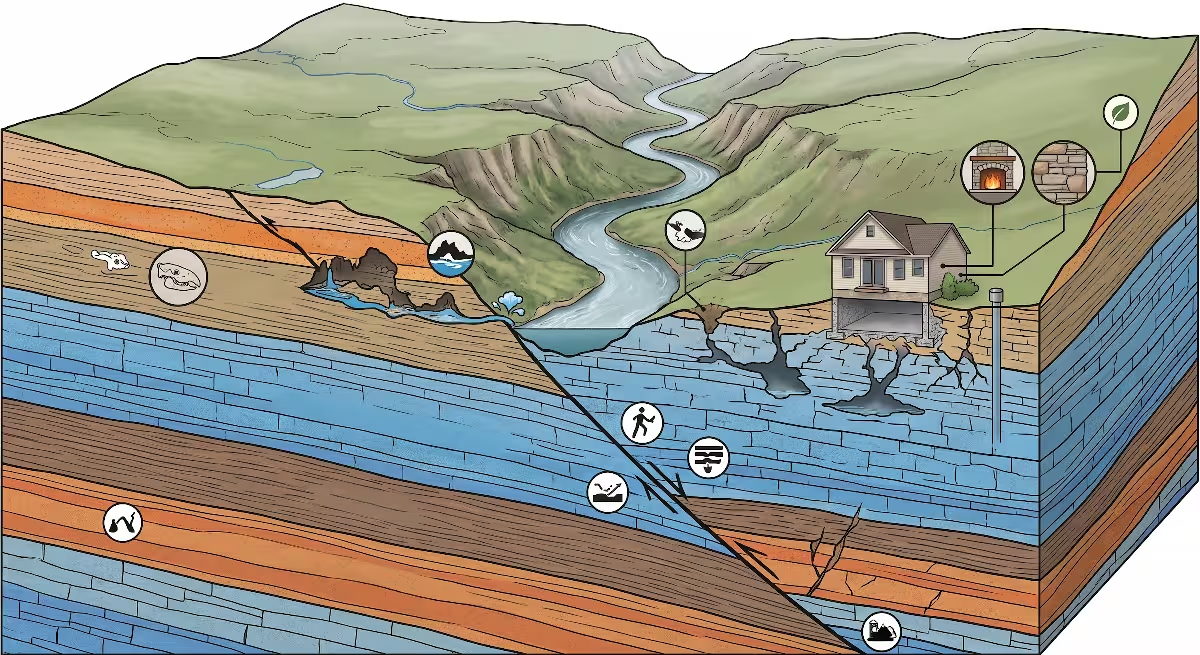
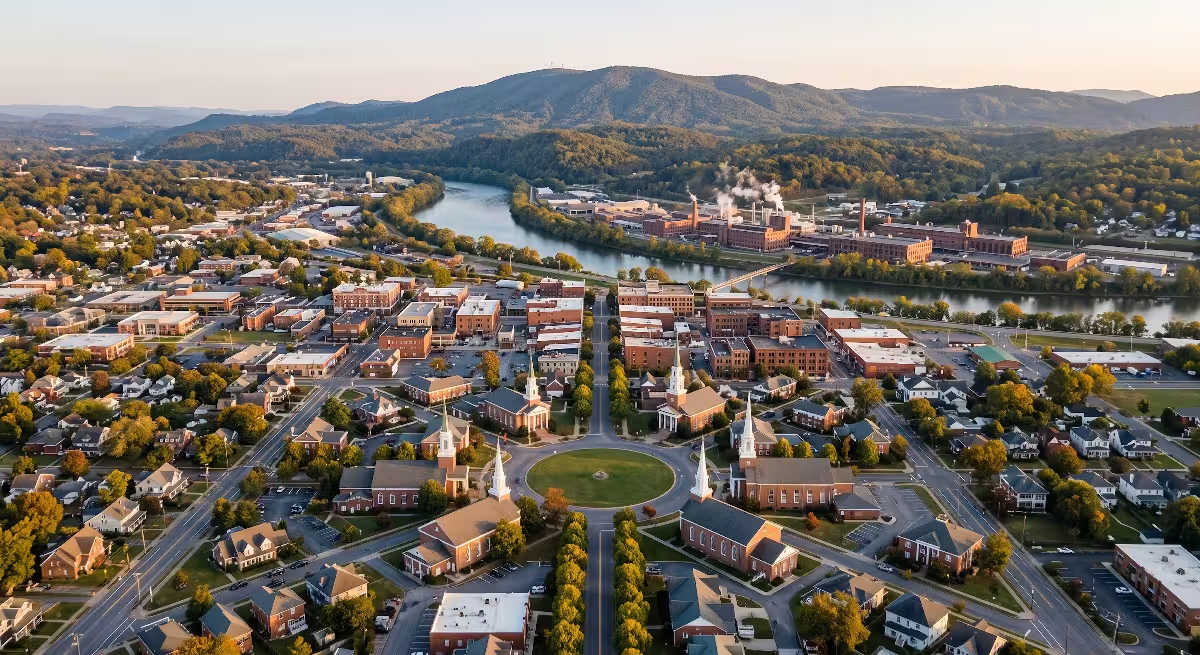
When you drive south from Johnson City on Interstate 26, the valley begins to narrow. You find yourself tucked directly into the shadow of the Unaka Mountains, where the town of Erwin, TN sits at an elevation of roughly 1,670 feet above sea level. Right at the edge of town, the waters of North Indian Creek rush down out of the high hollows to join the Nolichucky River. From a simple geographical glance, Erwin, TN looks like the kind of quiet, secluded mountain hollow that time forgot. It appears to be a peaceful pocket protected by steep green ridges on every side.
Yet, looks can be deceiving. The central paradox of Erwin, TN is that this seemingly isolated mountain community actually grew into one of the most technologically advanced and industrially connected rail junctions in the entire Southern Appalachian region. It was never a sleepy, forgotten hamlet cut off from modern progress. Instead, heavy industrial machinery, transcontinental freight lines, and world-class commercial manufacturing defined daily life here for more than a century.
The history of Erwin, TN was never shaped by passive agrarian isolation. The people who settled this valley did not simply hide away in the hills to farm rocky patches of dirt. Instead, the true identity of Erwin, TN was forged by heavy civil engineering, skilled industrial craftsmanship, and a stubborn, continuous adaptation to rugged mountain topography. From the early frontier trails along the river to the blasting of rail tunnels through solid granite, Erwin, TN has always been a place where human determination met the stone and water of the mountains head-on.
Frontier Roots: Cherokee Trails, Greasy Cove, and Andrew Jackson (Late 1700s to 1870s)
Long before heavy steam engines echoed off the mountain ridges, the valley where Erwin, TN sits served as a natural highway. Native American peoples, particularly the Cherokee, understood the terrain intimately. They established major footpaths along the Nolichucky River basin, utilizing the gap where the river cuts through the Unaka Range. These ancient paths served as seasonal trading routes, hunting avenues, and migration trails between the high peaks of Western North Carolina and the fertile valleys of East Tennessee. The bottomland soils around modern Erwin, TN provided rich seasonal game, clear mountain spring water, and safe ground for temporary encampments.
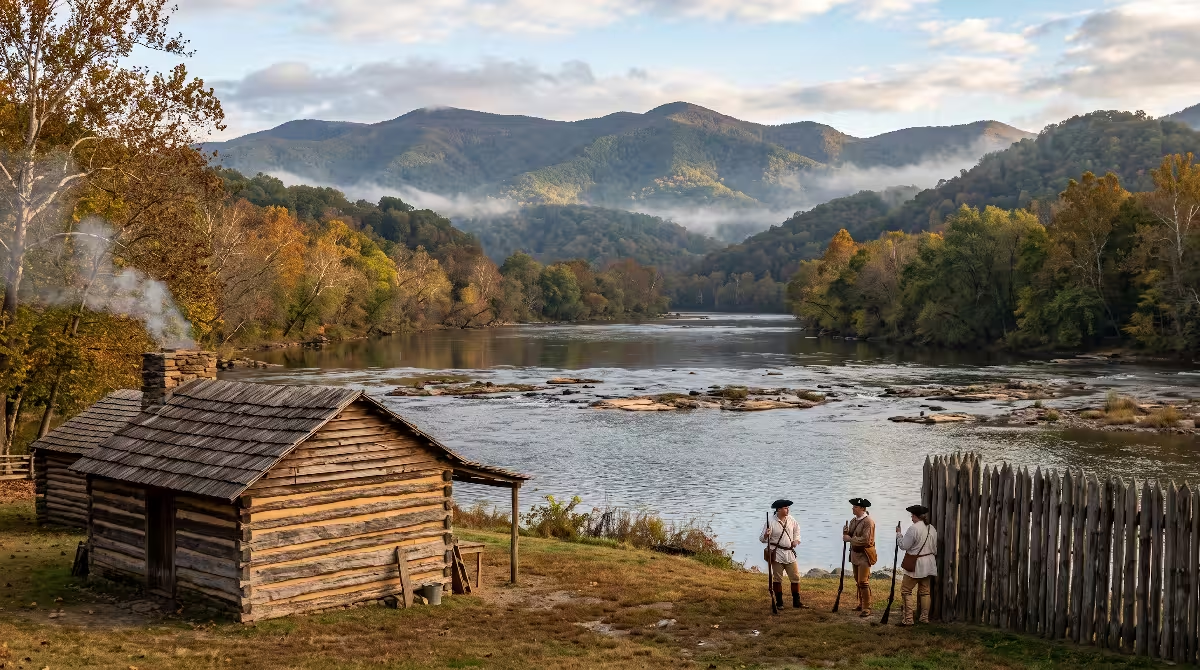
By the late eighteenth century, long hunters and early European settlers began pushing over the mountains from North Carolina and Virginia. When these pioneers entered the valley just south of present-day downtown Erwin, TN, they found an expansive, fertile bottomland known as Greasy Cove. Local tradition holds that the cove earned its unusual name because the area was so dense with black bear, deer, and other wild game that the meat hung by hunters left their camp equipment coated in grease. Greasy Cove quickly became a major gathering point for early settlers who carved out homesteads, cleared timber, and pastured cattle along the river bottoms.
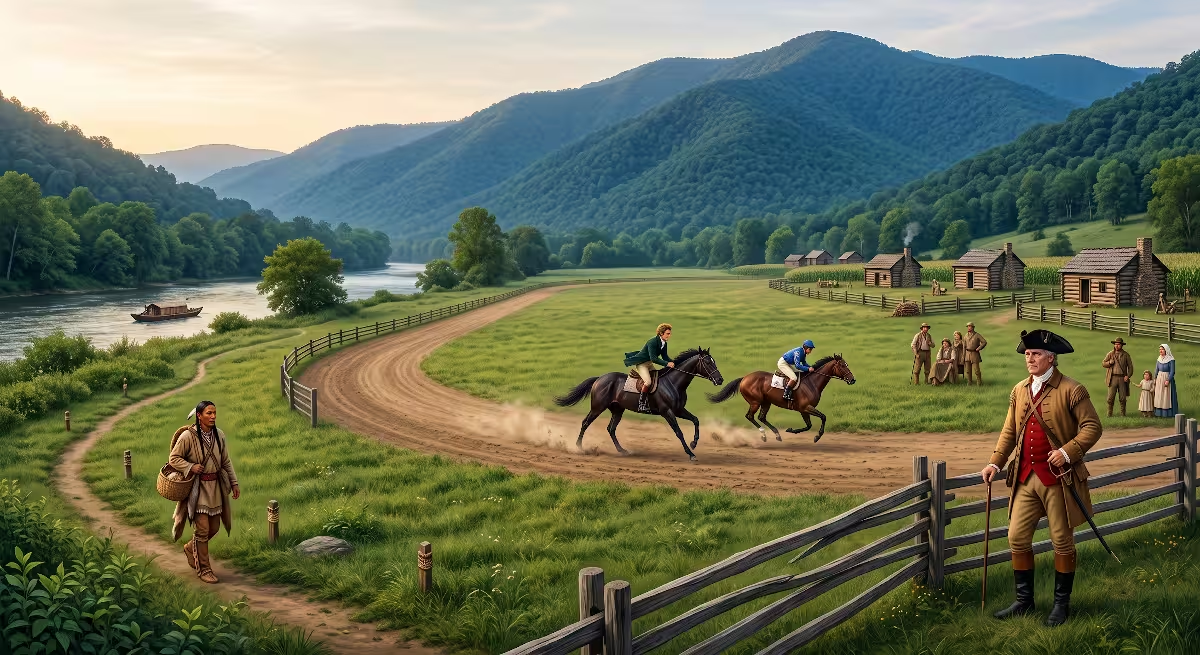
Life in Greasy Cove was rugged, competitive, and distinctly frontier in character. One of the most famous legends of early Erwin, TN took place in the autumn of 1788 on a flat, half-mile horse track laid out in the cove. A fiery young frontier lawyer named Andrew Jackson, who would later become the seventh President of the United States, rode into the valley to race his prized thoroughbred against a horse owned by Colonel Robert Love, a prominent local landowner.
The match race drew settlers from miles around, with spectators wagering money, livestock, rifles, and frontier goods. As the story goes, Jackson’s regular jockey fell ill right before the contest, forcing the tall, slender Jackson to ride the horse himself. Jackson was outmatched by Love’s seasoned rider, and Love’s horse won the race by a clear margin. Jackson lost his temper, leading to a heated shouting match between Jackson and Love that nearly resulted in violence before bystanders intervened. This colorful event remains a celebrated chapter in the early frontier lore of Erwin, TN, highlighting the high-spirited nature of the early settlement.
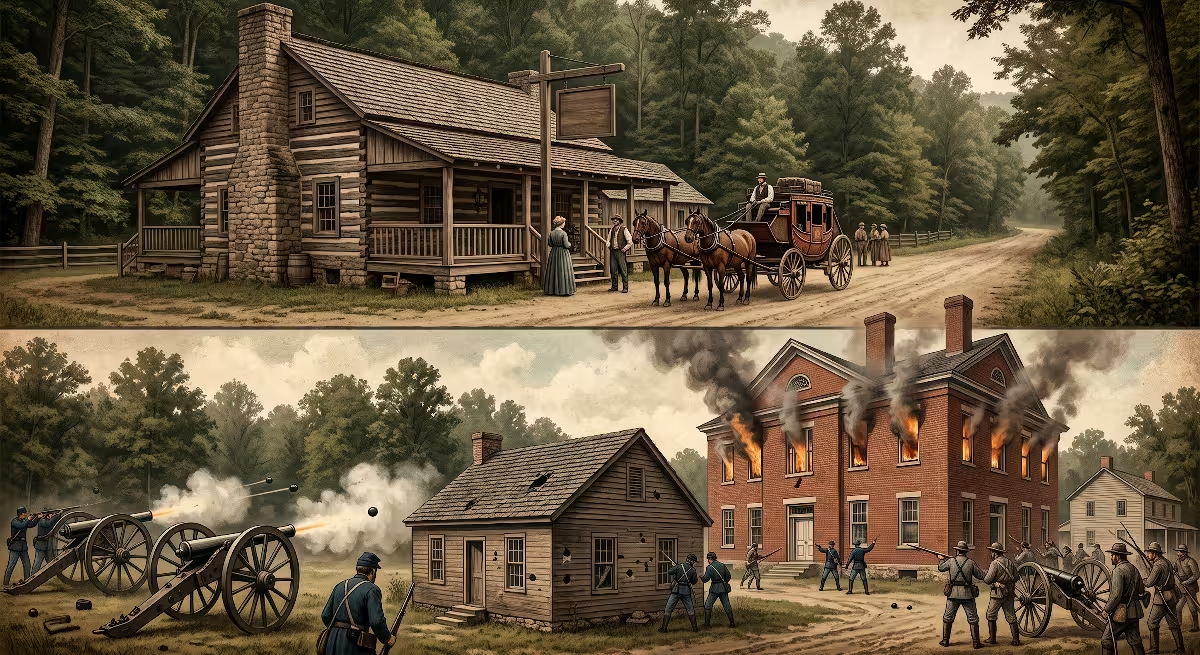
For the next century, the community grew slowly as a traditional farming and timber settlement. Mountain life required deep self-reliance. Builders constructed log cabins using hand-hewn white oak and tulip poplar logs, setting them on fieldstone pier foundations that could adjust to the uneven mountain grades. However, the residents faced a major logistical challenge. The valley was separated from the established county seats in Jonesborough and Elizabethton by steep, muddy mountain tracks that were often impassable during the winter months.
To solve this problem, local citizens petitioned the state legislature to create a new county that would place civil governance closer to home. In late 1875 and early 1876, the state formed Unicoi County from portions of Washington and Carter Counties. The creation of the county meant that the small settlement at the center of the valley needed to establish a permanent seat of government, setting the stage for the formal creation of Erwin, TN.
The Accidental Name: D.J.N. Ervin and the Postal Typo of 1879
Every town has an origin story, but few communities carry a permanent clerical error right on their welcome signs like Erwin, TN. When Unicoi County was established, the county commissioners needed a centralized location for a courthouse, a jail, and a public square. The valley held several prominent farming families, but one man stepped forward to anchor the civic future of the community.
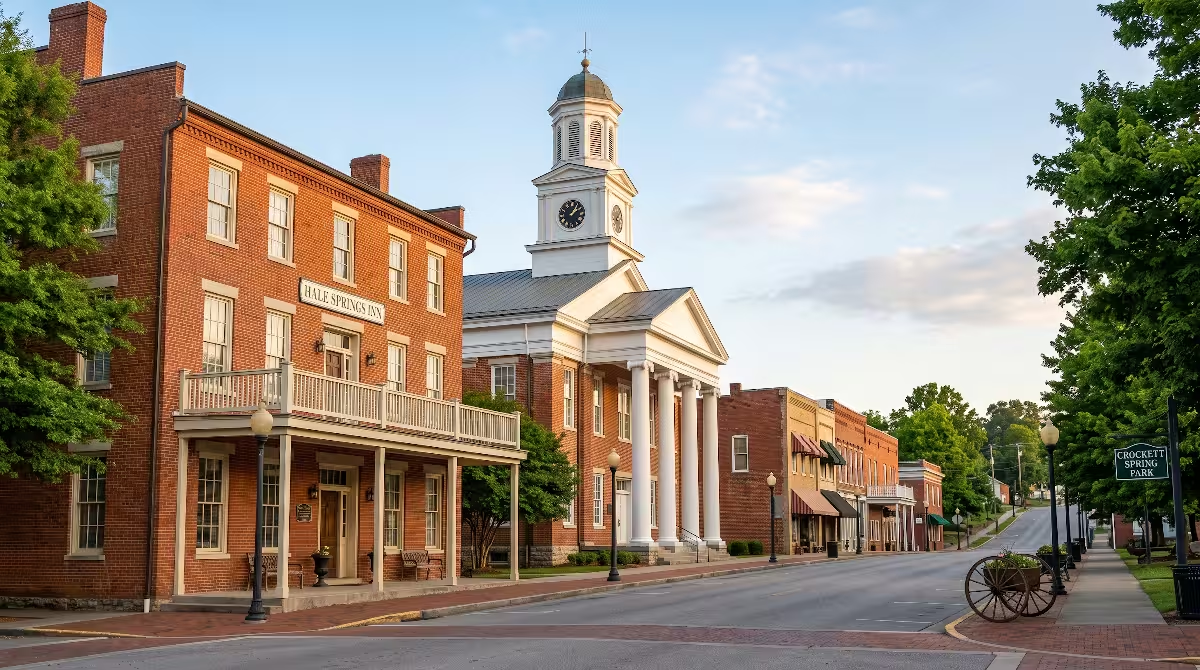
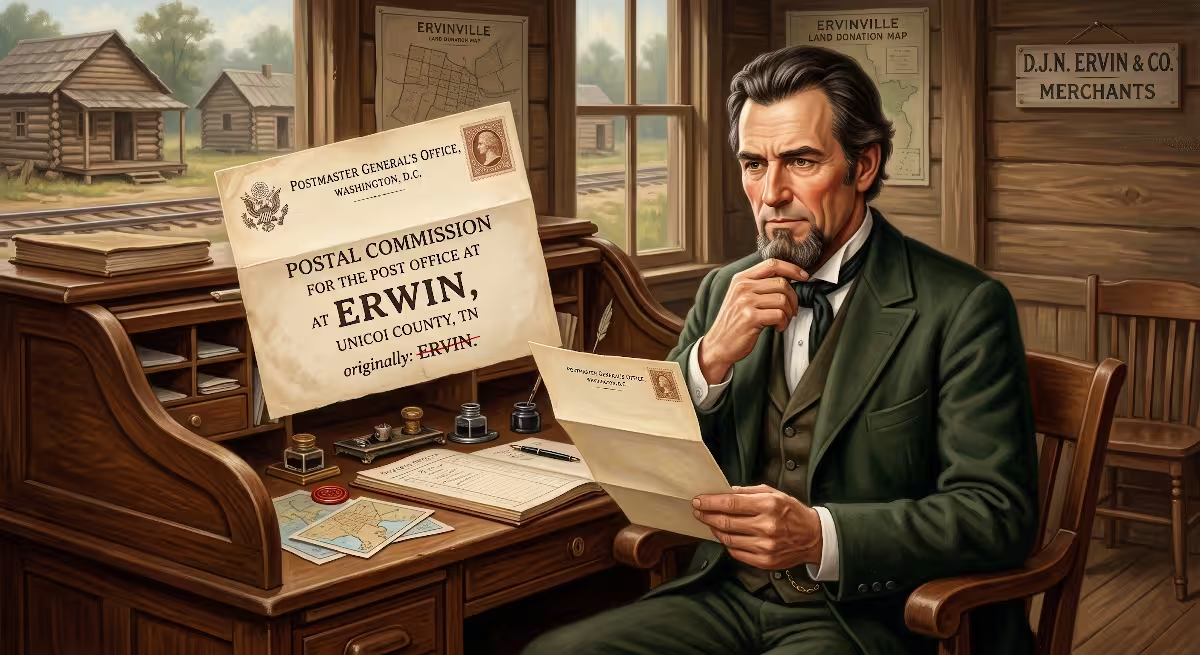
David J.N. Ervin was a well-respected local merchant, farmer, and landowner who saw the potential for a thriving town center. In 1879, Ervin generously donated fifteen acres of prime, level land near the center of the valley to serve as the new county seat. His gift allowed the county to lay out town lots, construct a modest brick courthouse, and establish municipal streets. In gratitude for his civic donation, the local citizens decided to name their new town Ervin in his honor.
The town leadership submitted the formal paperwork to the United States Post Office Department in Washington, D.C., to establish an official federal post office for the county seat. In December 1879, the federal bureaucracy returned the official documentation, but the postal clerk had made a careless mistake. The clerk had accidentally replaced the letter “v” with the letter “w,” registering the town’s official federal postal station as Erwin rather than Ervin.
In the late nineteenth century, dealing with distant federal offices was a slow and frustrating process that involved weeks of written correspondence. The town leaders met to discuss the administrative mistake. Rather than embark on an endless campaign of paperwork to correct the federal registry, the pragmatic mountain residents simply decided to accept the postal spelling. They painted the new name on their buildings and accepted the typo. From that December day forward, the town became known officially across the map as Erwin, TN.
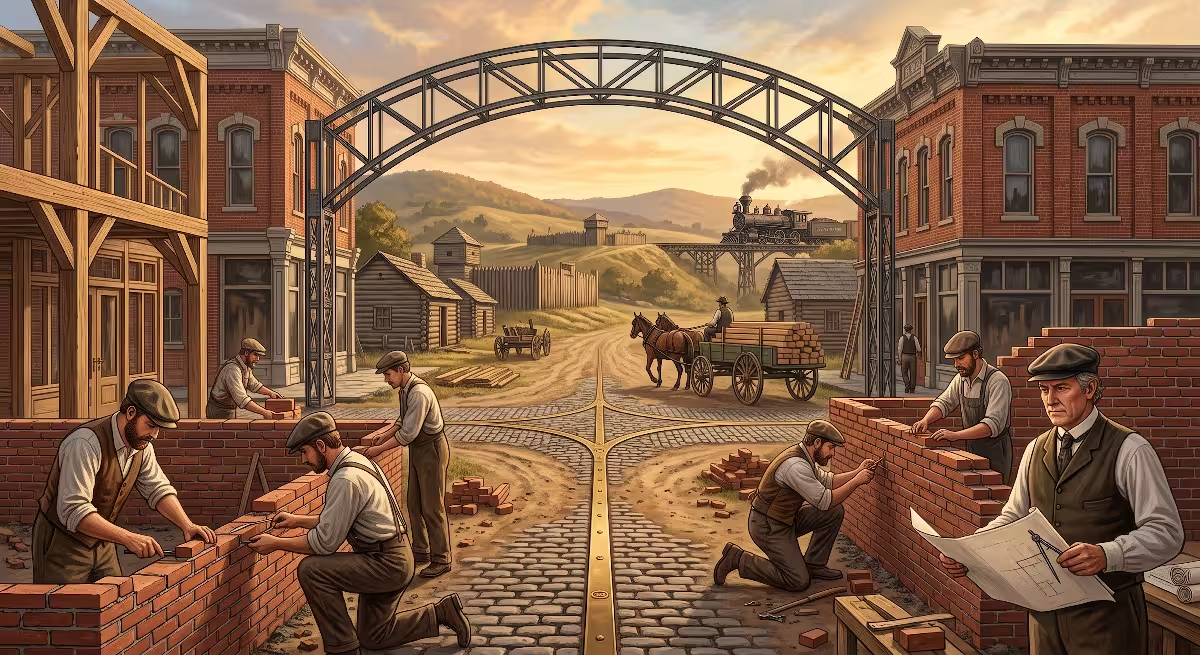
The newly minted town of Erwin, TN began to take organized shape around David Ervin’s original fifteen-acre donation. Surveyors laid out a grid of streets that accommodated the natural run of the valley, while early builders erected wood-frame stores, boarding houses, and simple gabled homes. Yet, despite having a courthouse and a post office, Erwin, TN remained a quiet mountain outpost that was difficult to reach by wagon. The true transformation of the town was still waiting for the arrival of heavy steel rails.
The Iron Spine: The Clinchfield Railroad Era (1890s to 1950s)
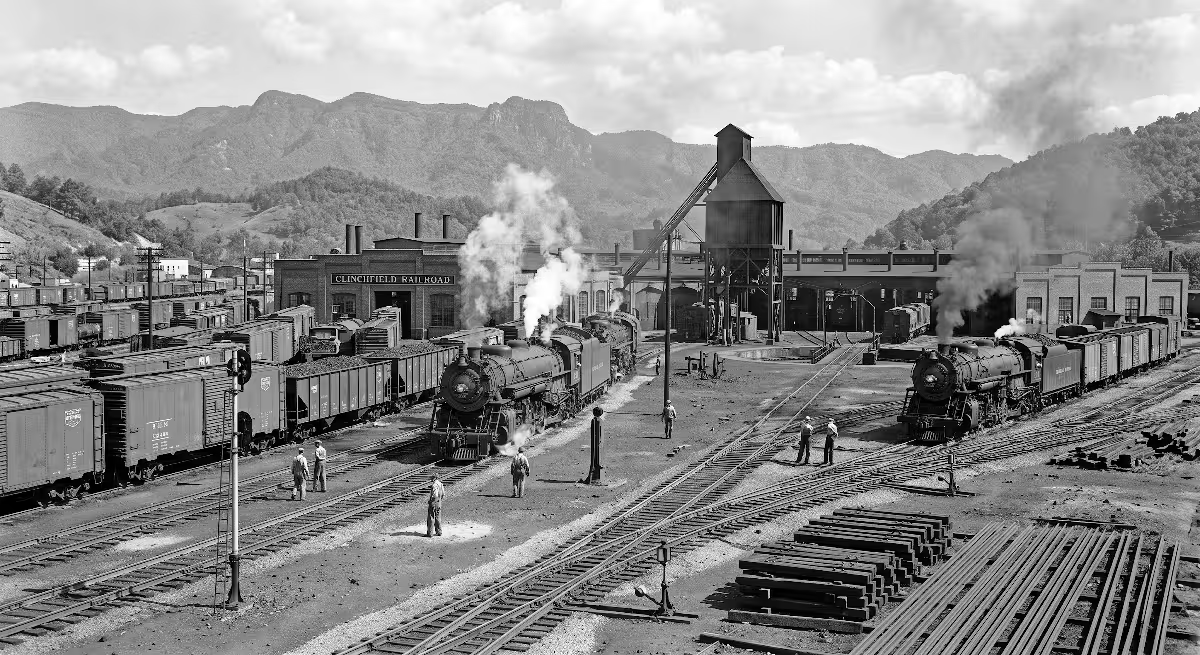
To understand modern Erwin, TN, you must understand the railroad. For decades, industrialists dreamed of building a direct rail line that could transport high-grade bituminous coal from the deep deposits of Southwest Virginia and Eastern Kentucky through the Appalachian Mountains directly to the textile mills and ocean ports of the Carolinas. The massive natural obstacle in the way was the Blue Ridge chain, a wall of jagged granite peaks and narrow river gorges that seemed impossible to cross.
Early railroad ventures tried and failed. The Charleston, Cincinnati and Chicago Railroad, known as the “3C,” went bankrupt in the financial panic of 1893 after spending fortunes on grading work. Another venture, the Ohio River and Charleston, struggled against the unforgiving rock. It was not until financier George L. Carter took control of the project that the dream became a reality. Carter organized the Carolina, Clinchfield and Ohio Railway, universally known as the Clinchfield Railroad.
Engineers attacked the mountains with steam shovels, black powder, and brute human labor. When the line was completed in 1909, the Clinchfield Railroad was celebrated as a masterwork of modern civil engineering. The track stretched 277 miles, cutting through fifty-five separate tunnels blasted through solid mountain rock. The Clinchfield crossed the Nolichucky River, skirted steep cliffs, and carved its way directly through the center of Erwin, TN.
The railroad executives realized that they needed a central operational hub midway along the line, a place where trains could be serviced, crews could be swapped, and heavy engines could be repaired. Erwin, TN was chosen as the operational headquarters and division point for the entire Clinchfield system. That single decision transformed Erwin, TN overnight from a quiet agricultural hamlet into a roaring industrial nerve center.
The Clinchfield Railroad built an immense industrial complex in Erwin, TN:
- A sprawling rail switching yard that stretched for miles down the valley floor.
- A massive roundhouse and turntable capable of handling the largest steam locomotives of the day.
- Extensive machine shops, blacksmith shops, and foundry buildings designed to rebuild damaged rail cars and forge custom parts.
- A comprehensive diesel locomotive maintenance and rebuild facility as the railroad modernized.
- Specialized heavy equipment tracks that housed the system’s massive 100-ton industrial derrick crane cars.
The demand for labor in Erwin, TN exploded. Highly skilled tradesmen moved into the valley from across the country. Boilermakers, steam fitters, blacksmiths, machinists, telegraph operators, switchmen, and engineers settled in Erwin, TN with their families. The company paid solid wages, creating an economically stable blue-collar middle class that was rare for Southern Appalachian mountain towns.
The physical footprint of Erwin, TN expanded rapidly to support the rail workforce. The railroad laid out residential streets, installed municipal water systems, and helped finance civic amenities. Sturdy craftsman bungalows and traditional four-square homes went up along streets like Ohio Avenue and Main Street. From an engineering standpoint, these homes were built to last, framed with dense, old-growth native hardwoods and set on solid raised foundations. Erwin, TN became known across the region as a true company town, where the daily rhythm of life was kept by the morning, noon, and evening whistles blowing from the Clinchfield shops.
Industrial Artistry: Southern Potteries and Blue Ridge China (1916 to 1957)
The leadership of the Clinchfield Railroad was sharp and forward-thinking. They realized that depending solely on one-way coal traffic was a risky business model. To maximize profits, the railroad needed local manufacturing industries in Erwin, TN that would generate steady outbound freight traffic and consume raw materials shipped in from elsewhere.
In 1916, railroad promoters helped establish a commercial pottery operation in Erwin, TN known as Southern Potteries, Inc. The location along Ohio Avenue was chosen with engineering precision. The town sat near rich natural deposits of high-grade feldspar and kaolin clay in the nearby mountains of Western North Carolina. Furthermore, the Clinchfield Railroad could deliver cheap, high-quality coal directly to the pottery kilns to fire the ceramic ware, and the finished products could be loaded directly onto boxcars right at the factory door.
To house the skilled managers and ceramic workers coming to the new plant, the Holston Corporation, a real estate subsidiary of the railroad, hired famous New York architect Grosvenor Atterbury. Atterbury was a pioneer in community planning and standardized worker housing. In Erwin, TN, he designed charming, functional worker cottages that featured clean rooflines, efficient interior floor plans, covered front porches, and solid framing. Many of these historic Atterbury cottages still stand in central Erwin, TN today, representing an important early example of thoughtful residential architecture in East Tennessee.
In its early years, Southern Potteries manufactured standard commercial dishware decorated with transfer decals. However, in the late 1930s, the company made a bold artistic and operational pivot that would make Erwin, TN famous nationwide. They introduced a new line of dinnerware called “Blue Ridge China.”
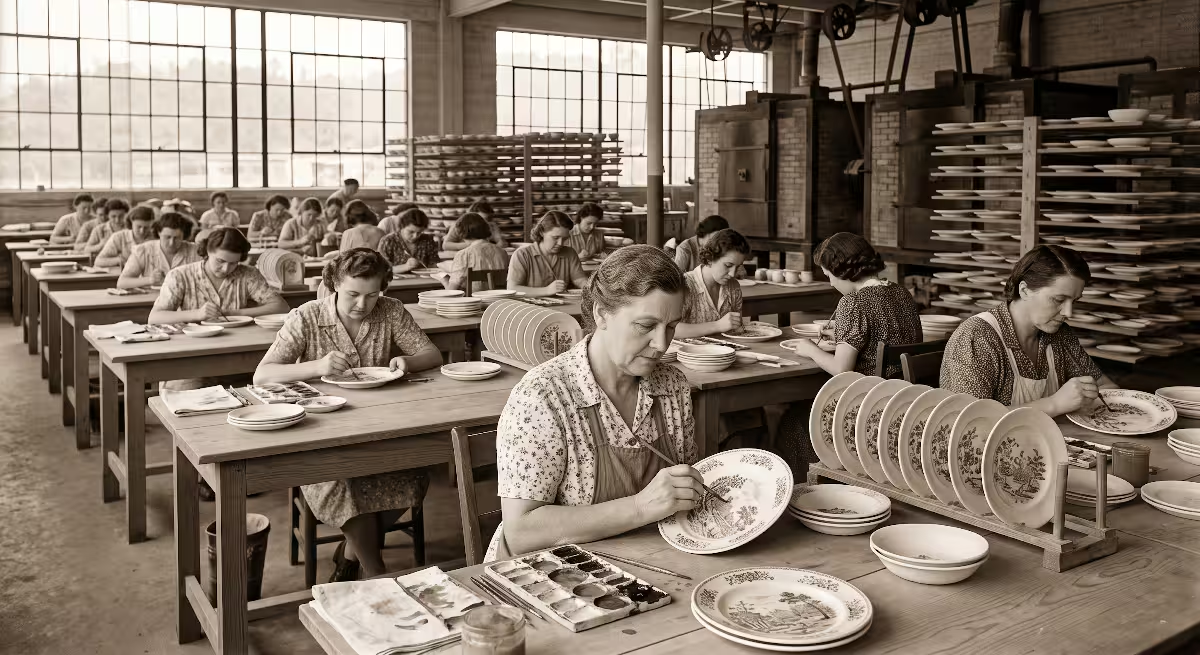
Instead of using mass-produced printed decals, the company decided that every single piece of Blue Ridge dinnerware would be painted entirely by hand under the protective glaze. Southern Potteries began recruiting hundreds of young women from Erwin, TN and the surrounding mountain communities. These women possessed remarkable natural hand-eye coordination, brush dexterity, and patience. The company trained them in specialized, freehand brushstroke techniques.
Working with wet clay blanks, these local artisans painted vibrant floral motifs, fruit clusters, and country patterns with swift, confident strokes:
- No two pieces were ever strictly identical because every plate, bowl, cup, and platter was painted by hand.
- The designs were sealed beneath a clear, durable glaze and fired in the giant kilns of Erwin, TN, making the vibrant colors permanent and resistant to fading.
- The cheerful, bright patterns captured the imagination of American homemakers who were looking to brighten their homes during the late Great Depression and post-war years.
At its production peak in the late 1940s, Southern Potteries was the largest manufacturer of hand-painted dinnerware in the entire United States. The company employed over one thousand local workers, most of them women, and produced an astonishing seventeen million pieces of hand-painted china annually in Erwin, TN. The plant was a point of immense community pride, providing independent wages for local women and putting the artistry of Erwin, TN into department stores across the country.
The boom, however, did not last forever. In the 1950s, the American housewares market underwent a rapid technological shift. Inexpensive, shatterproof plastic dinnerware made from melamine flooded department store shelves. At the same time, cheap ceramic imports from post-war Japan and Europe undercut American manufacturing prices. Southern Potteries saw its order volumes drop sharply. Facing high labor costs from its handcrafted process, the company could no longer compete.
In January 1957, Southern Potteries closed its doors permanently, ending an unforgettable era of industrial artistry in Erwin, TN. Today, vintage Blue Ridge dinnerware produced in Erwin, TN is highly prized by antique collectors across the globe.
Historical Reckonings and Cultural Turning Points
A comprehensive study of the history of Erwin, TN requires confronting difficult and painful historical events alongside its industrial achievements. The town has lived through moments of national controversy and racial strife that tested the character of the community and left lasting marks on its collective memory.
The most famous, and tragic, event occurred in mid-September 1916. A traveling circus known as Sparks World Famous Shows arrived for a scheduled performance in the nearby industrial boomtown of Kingsport. The circus employed a five-ton Asian elephant named Mary, promoted as one of the largest land animals in captivity. To assist the regular handlers, the circus hired a novice hotel worker named Walter Eldridge to act as an elephant tender. During a parade through Kingsport, the elephant stopped to nibble on a piece of discarded watermelon rind. Eldridge prodded the animal roughly behind the ear with a heavy bull hook. Enraged by the strike, Mary attacked Eldridge, killing him in front of a horrified crowd of onlookers.
A public panic swept through the region, with spectators and municipal leaders demanding that the dangerous animal be put down immediately. However, destroying a five-ton elephant in 1916 presented a major mechanical challenge. Small-arms gunfire was ineffective, and local officials could not safely poison or electrocute the animal.
The circus management agreed to transport Mary down the Clinchfield line to Erwin, TN for one specific engineering reason: the Clinchfield Railroad yard in Erwin, TN possessed the only piece of machinery in the entire region capable of hoisting such immense weight. That machine was a 100-ton railroad derrick crane car used to clear heavy derailed steam locomotives from the tracks.
On the rainy afternoon of September 13, 1916, a crowd gathered in the rail yard of Erwin, TN. Crews wrapped heavy industrial chains around the elephant’s neck and used the derrick car to hoist the animal from the tracks. The terrible spectacle ended with Mary’s death and burial in an unmarked grave adjacent to the rail yard in Erwin, TN.
For decades, this sensational and dark story was passed down through sensational folklore, casting an unfair and sensationalized shadow over Erwin, TN. Yet in recent generations, the citizens of Erwin, TN have confronted this history with remarkable grace and compassion. Rather than hiding from the past, the town has used the memory of Mary to promote animal welfare. Local artists have painted decorative elephant statues displayed throughout downtown Erwin, TN. Furthermore, the community hosts regular civic events and auctions centered around these sculptures, raising thousands of dollars to support The Elephant Sanctuary in Hohenwald, Tennessee, turning an old industrial tragedy into a force for modern compassion.
The town also experienced racial turmoil during the height of the railroad boom. In May 1918, a tragic shooting took place near the railroad facilities in Erwin, TN. An African American rail worker named Tom Devert was accused of fatally shooting a white Erwin, TN police officer during an altercation. Tensions boiled over, and an armed mob tracked down Devert, resulting in his lynching.
In the volatile days that followed, armed groups intimidated and forced the African American population to leave Unicoi County entirely. African American workers had played an important role in building the rail lines and working in the rail shops of Erwin, TN. Their forced expulsion created a long-standing demographic shift that made the county almost exclusively white for generations. Acknowledging this painful history has been an essential step for modern civic leaders in Erwin, TN, who continue to foster a welcoming, inclusive environment for new businesses, residents, and visitors who choose to build their lives in the valley today.
Environmental Forces: Topography, the Nolichucky, and Building for Mountain Floods
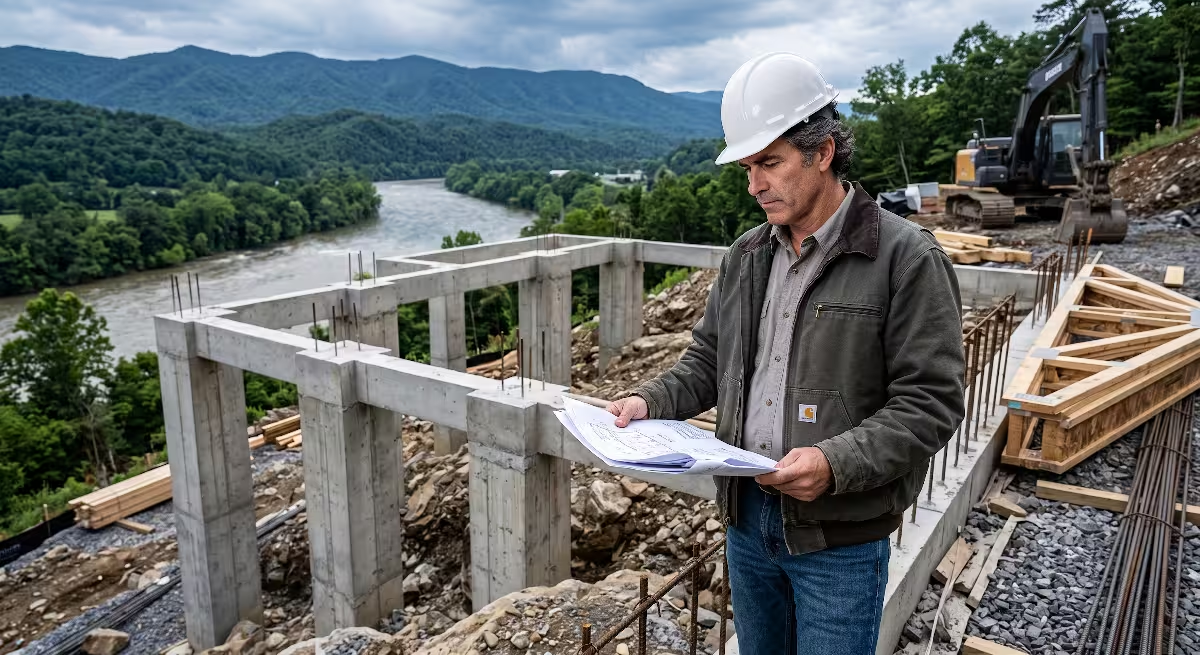
As an engineer and custom home builder, I always remind clients that nature holds the final deed to any property. You can pour reinforced concrete and erect structural steel, but you must always respect the surrounding topography and watershed. In Erwin, TN, the physical environment has always been both the town’s greatest asset and its most formidable challenger.
The geography of Erwin, TN is defined by narrow valley profiles. To the west rises Buffalo Mountain; to the east loom the massive peaks of the Unaka Range. This geological bowl channels all mountain runoff down through local creek networks, including North Indian Creek, South Indian Creek, and Rock Creek, directly into the Nolichucky River.
The Nolichucky River is a powerful waterway. In the nineteenth century, it served as a logging corridor, where mountain timber crews floated giant rafts of virgin hardwood downriver to local sawmills. Later, it provided hydroelectric power and clean water for municipal development in Erwin, TN. However, the river has a well-documented history of violent flooding.
Because the mountains surrounding Erwin, TN are exceptionally steep, heavy rainfall from slow-moving summer storms or the remnants of tropical systems cannot easily soak into the thin mountain topsoil. Instead, water rushes down the granite bedrock faces into the valley floor in a matter of hours. Over the past century, Erwin, TN has experienced multiple historic high-water events that pushed river waters far beyond their natural banks.
The most catastrophic demonstration of this natural power occurred in late September 2024, when the remnants of Hurricane Helene dumped historic volumes of rain across the Southern Appalachian high country. The Nolichucky River rose to unprecedented levels, smashing previous historical records. Torrential floodwaters swept through lower-lying sections of Erwin, TN, causing catastrophic damage to municipal utilities, local bridges, industrial facilities, and residential neighborhoods. The flooding inundated the Unicoi County Hospital, requiring daring rooftop helicopter rescues that drew national attention to Erwin, TN.
For anyone involved in the residential building industry in East Tennessee, these environmental realities dictate how we must plan, design, and construct homes in Erwin, TN moving forward:
- Elevated Foundations: Building in the valley requires careful elevation studies. Slab-on-grade construction in flood-fringe areas carries inherent risks. Homes in Erwin, TN must prioritize raised stem-wall foundations, reinforced concrete piers, or properly engineered crawlspaces with high-capacity flood vents to allow rising water to pass through without compromising the living space.
- Stormwater Management and Grading: When developing residential lots on the mountain slopes around Erwin, TN, civil site design is critical. Builders must construct deep swales, catch basins, and retaining walls with proper aggregate backfill and drainage tile to redirect hillside runoff safely around foundations.
- Soil Stability and Slope Engineering: Mountain lots in Erwin, TN often feature rocky soils layered over slick clay seams. Installing footings requires reaching competent native rock or undisturbed structural subsoil to prevent foundation settling or slope slippage during extended periods of heavy rain.
- Floodplain Setbacks and Code Enforcement: Modern construction in Erwin, TN requires strict adherence to FEMA flood insurance rate maps and local building codes. Building resilient communities means keeping new living envelopes out of the high-velocity floodways of the Nolichucky River and North Indian Creek.
Following the 2024 disaster, the people of Erwin, TN demonstrated the incredible resilience that has defined this mountain community since its frontier days. Through municipal recovery programs and community initiatives like RISE Erwin, local leaders, contractors, and volunteer groups mobilized to rebuild public infrastructure, restore damaged homes, and revitalize downtown commercial spaces. The ongoing recovery efforts in Erwin, TN emphasize smarter, more resilient civil engineering, ensuring that new construction can withstand the natural power of the surrounding mountains.
Modern Evolution: From Industrial Hub to Mountain Sanctuary
Over the last few decades, Erwin, TN has undergone an exciting economic and cultural transition. The industrial landscape that defined the twentieth century has gradually given way to an economy focused on outdoor recreation, regional tourism, historic preservation, and residential growth.
The transformation of the railroad played a major role in this shift. Through corporate mergers, the Clinchfield Railroad was absorbed into the Family Lines System, the Seaboard System, and ultimately CSX Transportation. While heavy freight trains continued to roll through the valley, modern rail operations required fewer local maintenance facilities. In 2015, CSX officially closed the major locomotive maintenance and repair shops in Erwin, TN, ending more than a century of heavy rail shop work in the town.
Rather than letting its industrial identity fade away, the community of Erwin, TN chose to preserve and celebrate its heritage:
- The magnificent brick Clinchfield Railroad passenger depot in downtown Erwin, TN was meticulously restored and now serves as the Unicoi County Public Library, offering an inspiring public space where residents read books beneath historic wood-beamed ceilings.
- The Clinchfield Railroad Museum and the Unicoi County Heritage Museum, located on the grounds of the Erwin National Fish Hatchery, house thousands of rare artifacts, photographs, tools, and scale models detailing the rail history of Erwin, TN.
- The Heritage Museum maintains an extraordinary collection of original hand-painted Blue Ridge China, preserving the artistic legacy of the local women who painted millions of dishes along Ohio Avenue.
Today, Erwin, TN is celebrated as one of the premier outdoor mountain destinations in the entire Southeast. The town sits directly along the corridor of the world-famous Appalachian Trail, which traverses the ridgelines of the Unaka Mountains just east of town. Erwin, TN is an officially designated Appalachian Trail Community, welcoming thousands of thru-hikers each spring who descend from the high ridges into the valley to resupply gear, enjoy hot meals, and experience classic East Tennessee hospitality.
Beyond the hiking trails, Erwin, TN is an international destination for whitewater paddling. The Nolichucky Gorge, carved deep into the mountains upstream from town, features world-class Class III and Class IV rapids that draw rafters, kayakers, and canoeists from across the nation. Local outfitters based in Erwin, TN guide thousands of visitors down the river each season. Anglers travel to Erwin, TN to wade the clear waters of Rock Creek or cast flies for smallmouth bass and rainbow trout along the Nolichucky River, while families explore the historic Erwin National Fish Hatchery, which has been rearing trout and protecting aquatic species since 1897.
This rich mix of outdoor adventure, mountain scenery, and small-town charm has reshaped the local real estate and home building market in Erwin, TN. As remote work has expanded and homebuyers look to escape crowded suburban centers, Erwin, TN has become an attractive option for buyers seeking custom mountain homes.
From my perspective as a custom builder, Erwin, TN offers unique opportunities:
- Historic Cottage Restorations: Buyers can find beautiful early-twentieth-century craftsman bungalows and historic Grosvenor Atterbury worker cottages in central Erwin, TN that feature unmatchable historic character, hardwood millwork, and walkable neighborhood layouts.
- Custom Mountain Retreats: The wooded ridges surrounding Erwin, TN provide exceptional home sites for custom timber-frame or modern rustic homes that offer sweeping views of the Unaka Mountains while maintaining easy access to Interstate 26.
- Strategic Regional Location: Living in Erwin, TN provides the perfect balance of quiet mountain living with an easy, scenic fifteen-minute commute into the medical, university, and commercial centers of Johnson City.
Erwin, TN has successfully reinvented itself. It is no longer defined strictly by the roar of the machine shop or the heat of the ceramic kiln. Instead, Erwin, TN has evolved into a welcoming mountain sanctuary where history, outdoor beauty, and community pride come together to create a wonderful place to live, work, and build a lasting home.
Frequently Asked Questions About the History of Erwin, TN
Why was Erwin, TN named Erwin?
The town was originally founded to serve as the county seat of Unicoi County and was named “Ervin” in December 1879. The name was selected to honor David J.N. Ervin, a prominent local merchant and landowner who generously donated fifteen acres of prime land for the construction of the county courthouse, jail, and town square. When the local leadership filed the paperwork with the federal government to establish a post office, an administrative clerk with the United States Post Office Department in Washington, D.C., made a typographical error, recording the name with a “w” instead of a “v.” The town leaders decided that petitioning to fix the clerical mistake would take too much time, so they adopted the new spelling. The community has proudly carried the official name of Erwin, TN ever since.
What is Erwin, TN famous for?
Historically, Erwin, TN is famous for being the central operational headquarters, division point, and repair hub for the historic Clinchfield Railroad, which built an engineering marvel of a rail line through the Appalachian Mountains. The town is also famous as the home of Southern Potteries, Inc., which produced the iconic, hand-painted Blue Ridge China dinnerware that became a mid-twentieth-century household sensation across the United States. In popular lore, Erwin, TN is recognized for the tragic 1916 hanging of Mary the circus elephant. In modern times, Erwin, TN is famous as a premier outdoor recreation hub, celebrated as an official Appalachian Trail Community, a gateway to the wild Nolichucky River Gorge, and the home of the historic Erwin National Fish Hatchery.
Why was an elephant hanged in Erwin, TN?
In September 1916, Mary, a five-ton Asian elephant with Sparks World Famous Shows, was involved in a fatal incident in nearby Kingsport, where she killed an inexperienced circus handler during a parade. Public outrage and safety concerns led the circus management to decide that the animal had to be humanely destroyed. However, regional authorities lacked the equipment needed to manage such a massive task safely. The Clinchfield Railroad rail yard in Erwin, TN held the only piece of heavy industrial machinery in the region capable of lifting that amount of weight: a specialized 100-ton railroad derrick crane car normally used to lift overturned steam train engines. The elephant was transported by rail to Erwin, TN, where the execution was carried out in the rail yards on September 13, 1916. Today, Erwin, TN honors Mary’s memory through painted elephant statues downtown, using the event to raise funds for elephant conservation and animal sanctuaries.
What happened to the Clinchfield Railroad in Erwin, TN?
The Clinchfield Railroad remained the economic backbone of Erwin, TN for many decades, employing generations of boilermakers, machinists, conductors, and repairmen. Over the years, corporate consolidations integrated the Clinchfield into the Family Lines System, the Seaboard Coast Line, and eventually CSX Transportation. As freight train technology modernized, the rail company required fewer localized mechanical shops. In 2015, CSX closed its heavy locomotive repair and maintenance shops in Erwin, TN, ending more than a century of intensive shop work. Nevertheless, CSX trains continue to run along the historic mountain rails through Erwin, TN, and the legacy of the railroad is lovingly preserved at the Clinchfield Railroad Museum and the Unicoi County Public Library, which operates inside the beautifully restored historic passenger depot in downtown Erwin, TN.
What is Blue Ridge Pottery and where was it made?
Blue Ridge Pottery, officially known as Blue Ridge China, was a beloved brand of hand-painted ceramic dinnerware produced by Southern Potteries, Inc. on Ohio Avenue in Erwin, TN between 1916 and 1957. The pottery was celebrated because every plate, cup, and bowl was painted completely by hand by local artisans, mostly women from Erwin, TN and surrounding mountain hollows, using colorful floral, vegetable, and scenic underglaze designs. Because each piece was hand-painted before being glazed and fired in high-heat kilns, the vibrant patterns were permanent and unique. At its peak production in the late 1940s, the plant in Erwin, TN was the largest producer of hand-painted dinnerware in the country, crafting up to seventeen million pieces a year. Today, original Blue Ridge pieces made in Erwin, TN are highly sought after by antique collectors and pottery enthusiasts across the United States.
Summary of Building and Architectural Characteristics in Erwin, TN
To give you a quick technical overview of how history shaped the built environment here in the valley, I have assembled this summary reference table based on local architectural records and structural inspections across Erwin, TN:
| Era / Neighborhood | Primary Architectural Style | Common Foundation & Framing Materials | Historical & Practical Construction Notes |
| Frontier Settlement (1870s to 1890s) | Traditional Log and Heavy Timber Folk | Hand-hewn white oak logs; native fieldstone corner piers; dry-stack stone foundations. | Built directly over natural contours; relied on massive central hearths; requires moisture inspection along lower sill logs today. |
| Atterbury Planned Village (1910s to 1920s) | Grosvenor Atterbury Standardized Worker Cottages | Poured concrete or regional brick stem walls; dimensional spruce and native hardwood framing. | Designed by famous New York architect Grosvenor Atterbury for the railroad; compact floor plans with excellent roof drainage profiles. |
| Rail Boom Craftsman (1910s to 1940s) | Classic Craftsman Bungalow and American Four-Square | Continuous mortared river stone or structural red clay brick; rough-sawn oak subflooring. | Wide overhanging eaves, deep covered front porches, and dense dimensional framing; highly desirable for historic residential restoration. |
| Mid-Century Post-War (1940s to 1960s) | Traditional Ranch and Minimal Traditional | Concrete masonry unit (CMU) crawlspaces; dimensional pine framing with brick or stone veneer. | Low-pitched rooflines; open interior living areas; requires verifying crawlspace ventilation and perimeter drainage in low-lying valley areas. |
| Modern Mountain Custom (1990s to Present) | Rustic Modern, Timber Frame, and Mountain Lodge | Poured reinforced concrete foundations; engineered lumber, structural insulated panels (SIPs), or heavy timber. | Built primarily on elevated hillside lots; requires advanced stormwater diversion, engineered retaining walls, and deep soil-anchored footings. |
Understanding the layers of time in Erwin, TN gives anyone living or building here a deep appreciation for the land. Whether you are restoring an early rail cottage in town or building a modern custom retreat overlooking the Nolichucky River, Erwin, TN offers an extraordinary heritage of craft, strength, and mountain perseverance.