
The Twin City Built on a Boundary Line
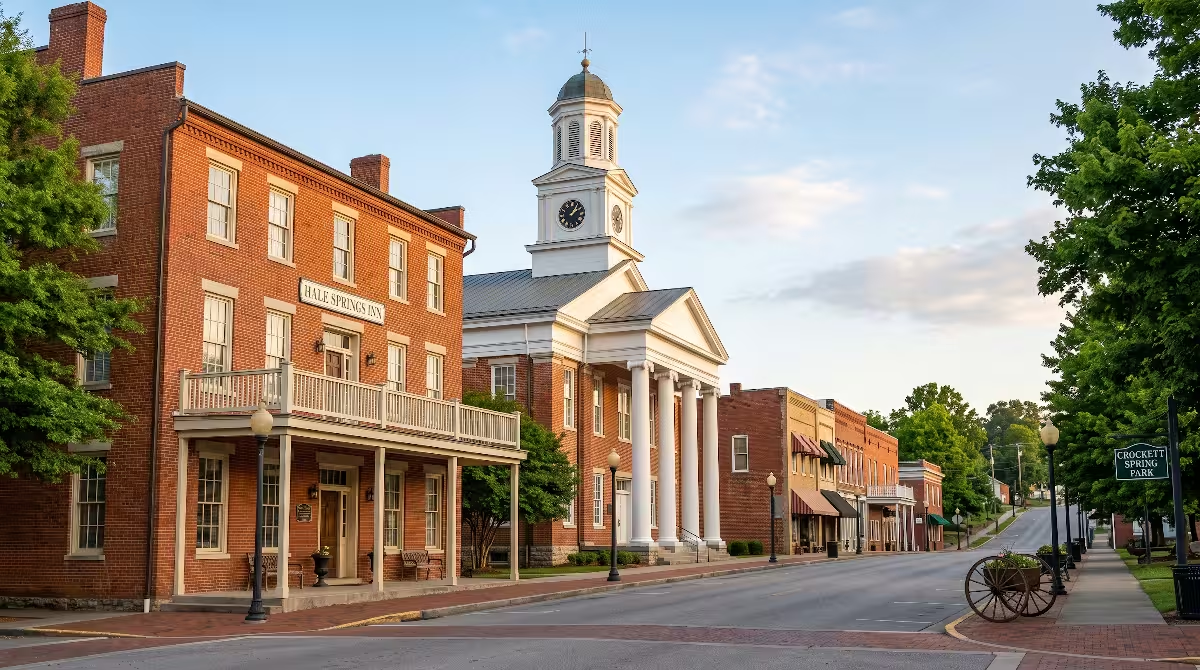
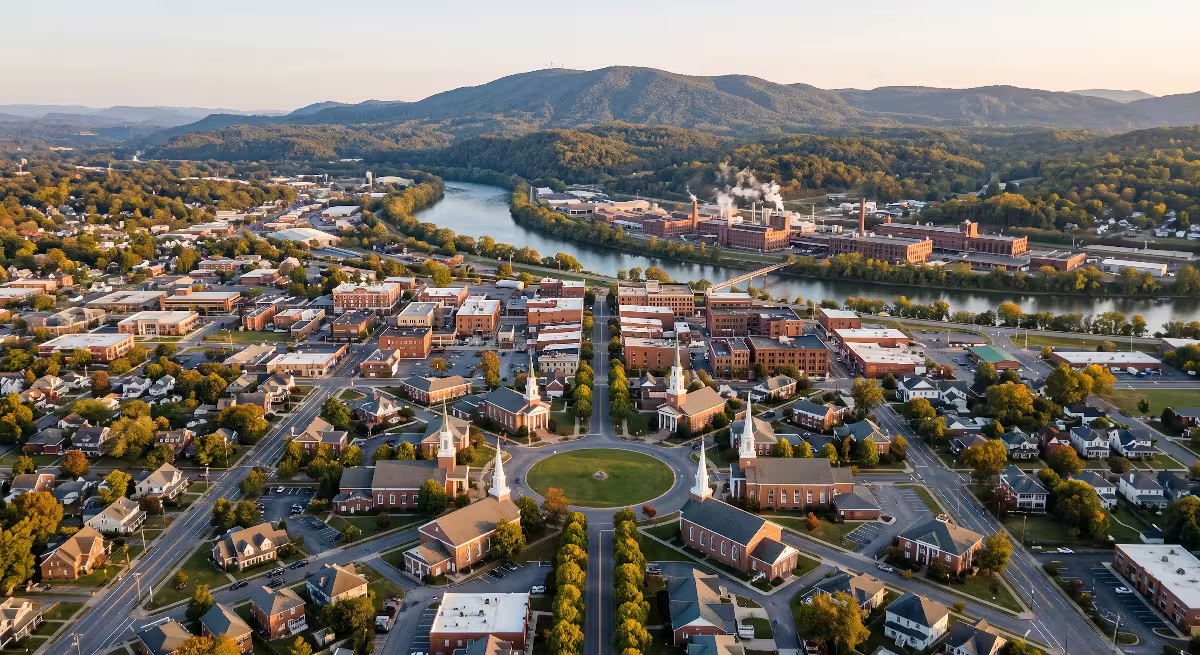
There is no place in our region quite like Bristol, TN. When you stand in the middle of downtown, you are looking at a living wonder of American planning. To your south sits Sullivan County in Tennessee. To your north sits Washington County in Virginia. Most American cities grow outward in a circle from a central courthouse square or a busy river landing. The story of Bristol, tn is completely different. This city grew along a line. That dividing line runs straight down the center of State Street. On one side of the yellow line, you are standing in Bristol, TN. Take one step to the north, and you are standing in Bristol, Virginia.
Understanding the growth of Bristol, TN requires looking at how geography, trade routes, and ground conditions shaped early human choices. Long before paved roads or surveyor stakes existed, the Appalachian Mountains forced travelers into natural valleys. The Great Warriors Path brought Native American tribes right through this basin along Beaver Creek. When European settlers pushed west through the gaps in the mountains, they followed those same low elevation trails. They needed water for their stock, flat ground for their crops, and hard rock for their mill foundations. The land that became Bristol, TN offered all three.
Building a city across two different states was not an easy path. It took more than two hundred years of hard work, clever railroad engineering, and tough mountain timber to build the community we see today. The pioneers had to clear thick forests of white oak and chestnut. Later generations had to figure out how to run water pipes, build brick storefronts, and enforce laws when half the street answered to Nashville and the other half answered to Richmond. By looking at how the early settlers laid their footings and framed their lives, we can appreciate why Bristol, TN remains such a strong, welcoming community for families and custom home buyers today.
Frontier Foundations: Cherokee Lands, Big Camp Meet, and Sapling Grove (Pre-1770s to 1790s)

Before any permanent log cabins stood in what we now call Bristol, TN, this rolling valley was a crossroads for Native American nations. Cherokee and Shawnee hunters moved through the Holston River basin following huge herds of deer and buffalo. The area that would become downtown Bristol, TN was known among native travelers as a prime resting spot. It offered cool mountain springs, shelter from winter winds, and plenty of game. Early white longhunters called this specific meadow Big Camp Meet because large hunting parties gathered here to rest before heading deeper into the wilderness.
In 1765, a Welsh immigrant and veteran of the French and Indian War named General Evan Shelby explored the Holston Valley. Shelby had a sharp eye for land. As an experienced woodsman and soldier, he knew how to read the landscape. He looked for rich bottomland soil that could support corn, high ground that would stay dry during spring floods, and fast water to turn mill wheels. In 1766, Shelby moved his family to this fertile basin and established a permanent settlement. He named the property Sapling Grove because of the dense stands of young trees that covered the gentle hills.
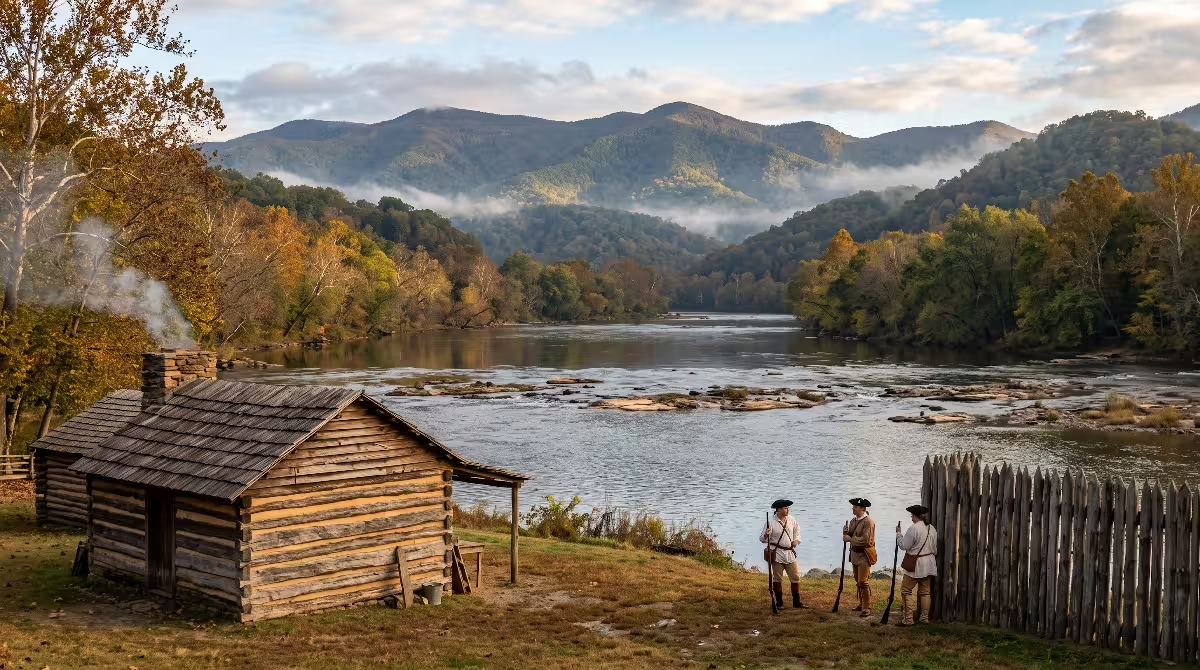
Sapling Grove was the true starting point for the modern community of Bristol, TN. Life on the frontier was dangerous, and the settlers needed real structural protection. In 1774, Shelby and his sons built Fort Shelby on a high hill overlooking Beaver Creek. From a builder point of view, Fort Shelby was a masterclass in frontier engineering. The men felled tall, straight oak logs, squared them with broadaxes, and notched the corners with tight lap joints. They drove heavy wooden palisades into the rocky clay soil to create a stockade wall that could stop musket balls and arrows.
Inside Fort Shelby, the settlers built living quarters, storehouses, and a blacksmith shop. It quickly became the commercial and military heart of the entire region surrounding Bristol, TN. It served as a trading post where hunters traded beaver pelts and deer hides for salt, lead, gunpowder, and iron tools. If you needed nails or iron strap hinges in those days, you had to buy them at a post like Shelby’s or forge them by hand over coal fires.
Fort Shelby also played a crucial role in the birth of our nation. In the late summer of 1780, British Major Patrick Ferguson threatened to march his army over the Blue Ridge Mountains to hang the frontier leaders and burn their settlements. The frontiersmen, known to history as the Overmountain Men, refused to sit back and wait. Leaders like John Sevier, Isaac Shelby, and William Campbell gathered their local militias. Fort Shelby served as a vital staging post and supply depot for the men gathering from around Bristol, TN and Southwest Virginia.
These rugged mountain fighters rode southeast across the mountains into the Carolinas. In October 1780, they surrounded Ferguson on King’s Mountain and won a complete, crushing victory. Thomas Jefferson later called that battle the turning point of the American Revolution. The men who organized at Fort Shelby helped save the American cause of independence. When you drive through Bristol, TN today, you are driving across the very ground where those pioneer soldiers gathered their supplies and saddled their horses.
The Iron and Timber Roots: Colonel James King and Industrial Vision (1790s to 1840s)
After the Revolutionary War ended, the frontier began to settle down into organized communities. General Evan Shelby remained a prominent leader, but as the 1790s arrived, new entrepreneurs came west to unlock the natural resources of the area. The most influential of these men was Colonel James King. King was another Revolutionary War veteran who understood that building a lasting civilization required heavy industry, not just subsistence farming.
Colonel King acquired the Sapling Grove tract and built a massive estate that he called Mountain View, which locals often called King’s Meadows. This vast property covered much of the land where the center of modern Bristol, TN sits today. King was not content to simply farm the land. He recognized that the mountains surrounding Bristol, TN were packed with high grade iron ore, pure limestone, and endless acres of hardwood timber.
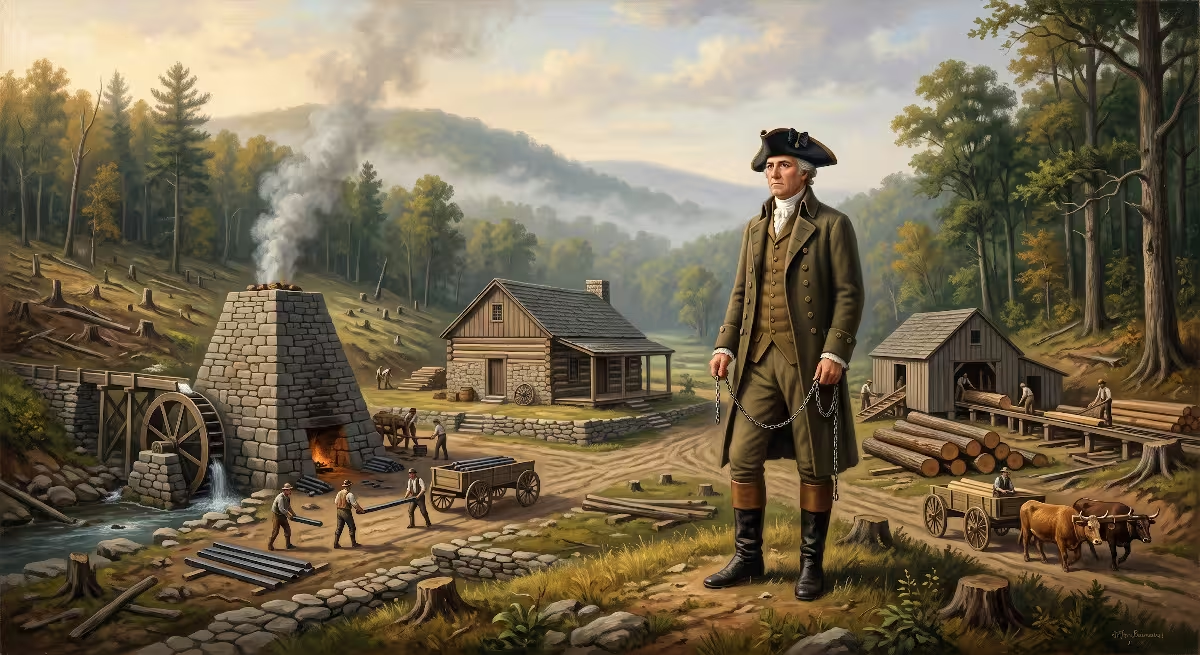
To turn iron ore into usable metal, you need three basic ingredients: iron ore from the earth, limestone to act as a chemical flux, and charcoal made from burning hardwood timber in low oxygen pits. King had all three right at his fingertips. In the late 1790s, he built the Beaver Creek Ironworks, which was one of the earliest commercial iron furnaces in the state of Tennessee.
From an engineering perspective, building an iron furnace in the wilderness was a massive undertaking. King had to quarry tons of local limestone, cut the blocks square, and build a tapering stone pyramid that could withstand temperatures above two thousand degrees. He diverted water from Beaver Creek through wooden flumes to power heavy water wheels. Those water wheels drove huge leather bellows that pumped continuous blasts of air into the furnace.
The Beaver Creek Ironworks produced cast iron pots, skillets, fireplace backs, and heavy iron bars that local blacksmiths could shape into horseshoes, wagon tires, and building hardware. Because of King’s operations, people living near Bristol, TN did not have to wait months for iron goods to be hauled across the mountains by wagon from Philadelphia or Richmond. King also built gristmills to grind local corn and wheat into flour, as well as sawmills to turn logs into dimensional lumber.
During this era, construction methods in Bristol, TN began to change. Settlers moved away from primitive round log cabins and started building large, two-story timber framed homes. Builders used heavy timber framing techniques, joining massive oak and poplar beams with mortise and tenon joints locked together with wooden pegs called trunnels. They set their homes on hand-cut limestone foundation piers. This kept the wood sills off the damp ground and allowed air to circulate under the floors, preventing rot. Many of the building foundations laid during Colonel King’s time proved so durable that they remained stable for more than a century. King’s industrial success proved that the valley of Bristol, TN had the economic power to support a true commercial city.
The Iron Horse Convergence: Joseph R. Anderson and the Birth of Bristol (1852 to 1865)
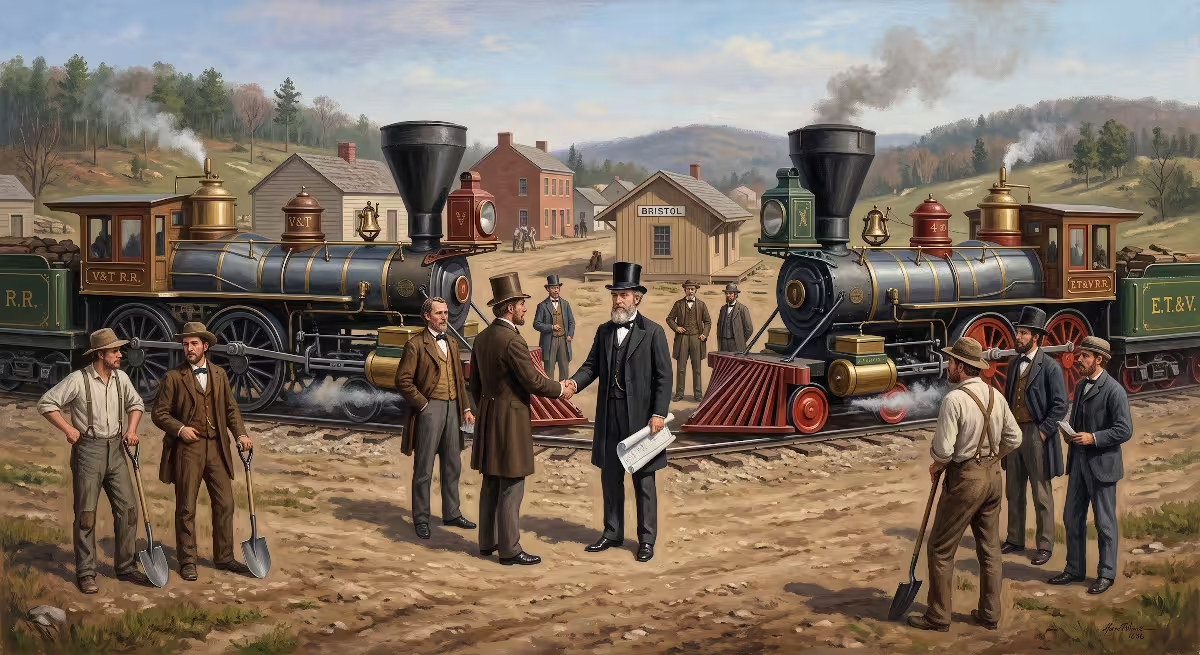
By the early 1850s, King’s Meadows was still largely open farmland, pastures, and orchards owned by the descendants of Colonel King. However, a major transportation revolution was sweeping across the United States. That revolution was the steam railroad. Forward-thinking leaders realized that the Appalachian valleys offered the only practical route to link the deep South with the mid-Atlantic seaboard.
Enter Joseph R. Anderson, the man recognized as the founding father of Bristol, TN. Anderson was a brilliant merchant and banker from nearby Blountville, Tennessee. In the late 1840s, Anderson learned that two separate railroad lines were planning routes toward the state line. The Virginia and Tennessee Railroad was building southwest from Lynchburg, Virginia. At the same time, the East Tennessee and Virginia Railroad was pushing northeast from Knoxville, Tennessee.
Anderson had the vision to realize what would happen when those two lines met. They were not just building tracks; they were going to create a central transfer hub where trains, passengers, and freight would have to stop and exchange cargo. In 1852, Anderson bought one hundred acres of the King’s Meadows tract right on the Tennessee state line. He hired surveyors to lay out wide, straight streets on a neat grid pattern. Remembering the busy trade hub of Bristol, England, Anderson named his new planned community Bristol.
While Anderson was planning his town in Tennessee, a Virginia landowner named Samuel Goodson owned the property directly across the state line. Goodson decided to build his own town on the Virginia side, which he incorporated as Goodsonville, later shortened to Goodson, Virginia. For several years, you had two separate towns growing side by side: Goodson on the north side of the dirt path, and Bristol, TN on the south side.
In 1856, the community on the southern side of the border officially incorporated as the town of Bristol, TN. Joseph R. Anderson was elected as its first mayor. That same year, the rails of the Virginia and Tennessee Railroad finally rolled into town. Two years later, in 1858, the East Tennessee and Virginia Railroad completed its tracks from the south. The last spike was driven, connecting the two rail networks right at the state line.
The arrival of the iron horse transformed Bristol, TN overnight. Farmers who used to spend weeks hauling their wheat, tobacco, and livestock to distant markets on muddy wagon roads could now load their goods onto train cars and have them in major coastal cities in just two days. Hotels, dry goods stores, banks, and warehouses sprang up along the tracks. Builders used locally fired clay bricks to construct sturdy two-story commercial buildings designed to store heavy freight.
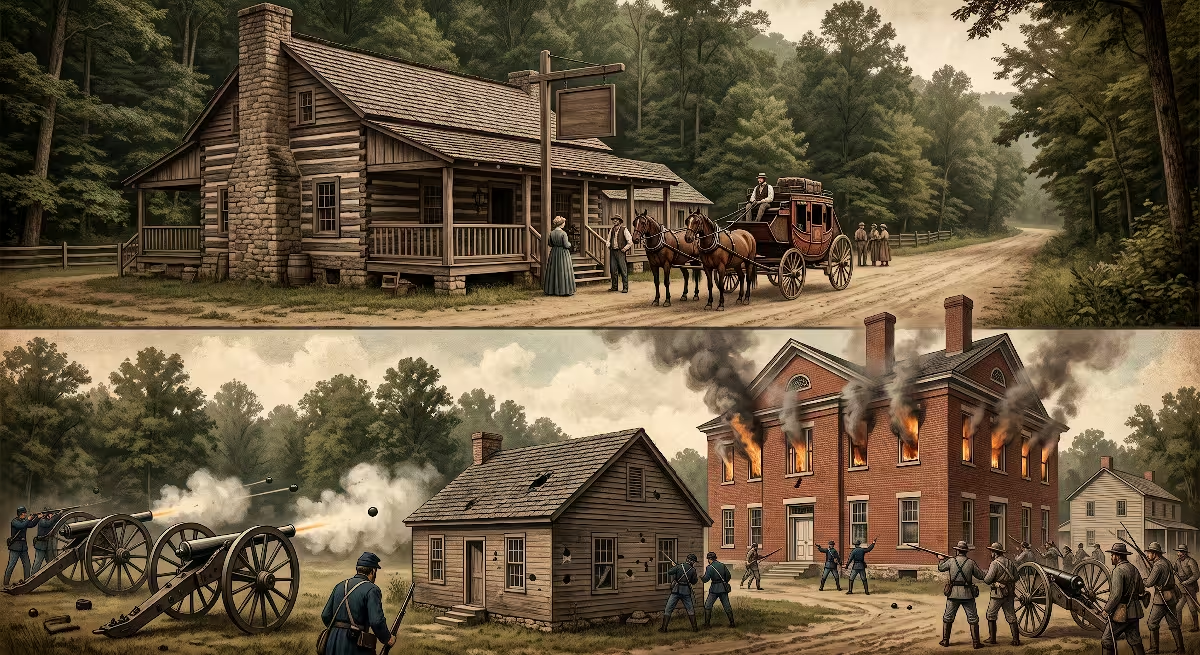
Then came the dark clouds of the American Civil War from 1861 to 1865. Because of its railroad junction, Bristol, TN became one of the most critical supply hubs in the entire Upper South for the Confederate army. Trains carried salt from nearby Saltville, lead from the Wythe County mines, and food from the Tennessee valleys directly through the rail yards of Bristol, TN to General Robert E. Lee’s army in Northern Virginia.
Because of its strategic value, the rail yards and depots in Bristol, TN were prime targets for Union cavalry raids. Union forces struck the town multiple times during the war, tearing up miles of railroad tracks, heating the rails over burning ties to twist them into useless scrap, and burning the depots and warehouses. Yet the people of bristol, tn proved resilient. After every raid, local carpenters and track crews went right back to work, cutting new ties, leveling the crushed stone ballast, and rebuilding the depots. When the war finally ended in 1865, the rail lines were repaired quickly, setting the stage for an explosive postwar building boom.
Resolving the Border: How State Street Became the Official State Line (1880s to 1901)
Following the Civil War, the twin communities grew rapidly. Goodson, Virginia, and Bristol, TN were practically touching each other, but sharing an invisible boundary line created massive daily headaches. The main commercial road was called Main Street, which later became State Street. The problem was that nobody knew the exact legal boundary line down to the inch.
Early surveyors in the 1700s had marked the state line by cutting notches into oak trees and stacking fieldstones on ridge tops. Over the decades, those trees died, fence lines moved, and stone markers were knocked over by livestock or wagon wheels. By the 1880s, the uncertainty along State Street was causing major legal, social, and economic disputes for both Bristol, TN and its Virginia neighbor.
Imagine running a hardware store or a general mercantile along State Street during that era. If a customer bought a plow on the south side of your counter, you had to pay sales tax and record the transaction under the laws of Tennessee. If your store doorway opened toward the north side, Virginia tax collectors claimed you owed taxes to their state. Property owners frequently argued about where their building foundations could legally sit. If a building settled or leaned slightly across the border, it created endless property disputes.
Law enforcement was an even bigger circus. In those days, Tennessee and Virginia had completely different criminal laws, especially regarding the sale of liquor, gambling, and Sunday business operations. If a police officer from Bristol, TN chased a criminal down State Street, the suspect could simply jump across the dirt wagon ruts to the Virginia side of the street and laugh at the officer. The Tennessee officer had no legal power to make an arrest in Virginia. Saloons took full advantage of this confusion. If Tennessee passed a law closing taverns at midnight, tavern keepers would pack up their bottles and move their tables to the Virginia side of the street, continuing business as usual.
City leaders knew this setup was bad for business and terrible for community safety. In 1881, the municipal governments of Goodson and Bristol, TN came together to sign a formal agreement. They agreed to treat the center of Main Street as the working boundary line. They also made the smart decision to pave the muddy street with round river stones and macadam rock, splitting the construction costs right down the middle.
In 1890, the town of Goodson, Virginia, made a major symbolic move by officially changing its name to Bristol, Virginia. Now the two towns shared one name, but they still needed a permanent, legally binding state border. The governors of Tennessee and Virginia appointed a joint commission of master surveyors and civil engineers to fix the line once and for all.
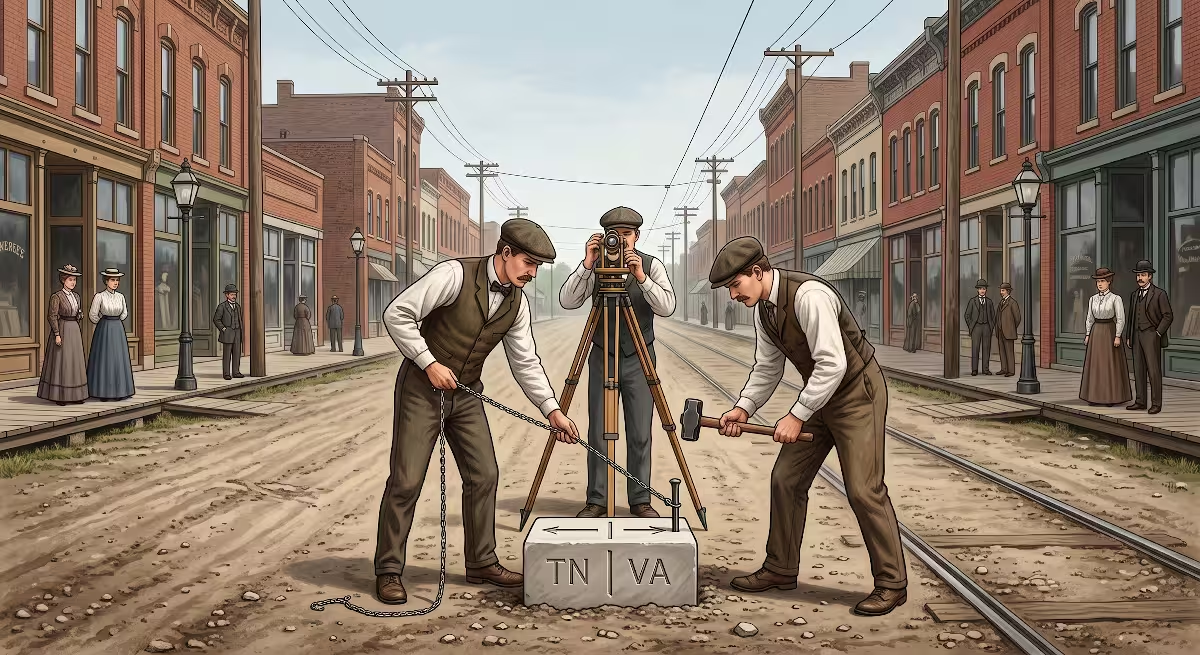
Between 1899 and 1901, the survey team used brass transit scopes, steel chains, and astronomical observations to retrace the border from the top of the Blue Ridge Mountains all the way to Cumberland Gap. When they reached State Street, they found that the true colonial line actually zigzagged across private buildings and lots. It would have caused legal chaos to tear down existing brick buildings just to satisfy a line on a map.
The commissioners proposed a practical, common-sense compromise. The State of Tennessee agreed to cede a tiny strip of land to Virginia, and the Commonwealth of Virginia ceded a matching strip to Tennessee. This allowed the official state line to run dead center down the exact middle of State Street. In 1901, the Tennessee General Assembly and the Virginia Legislature both passed laws approving the survey. The United States Congress ratified the compact, creating the modern border we know today.
From an engineering and urban planning viewpoint, this agreement was a huge victory for Bristol, TN. It allowed both cities to coordinate underground sewer pipes, run uniform water mains, and establish clear rights-of-way for overhead electric power lines and telephone wires. Today, when you drive down State Street in downtown bristol, tn, the yellow paint separating the east and west traffic lanes marks the exact legal border between two sovereign American states.
The Boomtown Era and Architectural Legacy (Late 19th to Early 20th Century)
With the border dispute resolved and railroad freight traffic booming, Bristol, TN entered a golden age of building and commerce between 1885 and 1925. The city was surrounded by thousands of square miles of untouched virgin timber in the Appalachian high country. Massive logging trains pulled by geared Shay locomotives hauled giant tulip poplar, red oak, hemlock, and white pine logs out of the mountains and straight into the sawmills of Bristol, TN.
At the same time, the coal fields of Southwest Virginia and Eastern Kentucky opened up. Millions of tons of high energy bituminous coal passed through the freight yards of Bristol, TN, powering factories, heating homes, and fueling train engines across the country. Wealth flowed into the city, and local business leaders invested their fortunes in high quality, permanent architecture that still defines the character of Bristol, TN today.
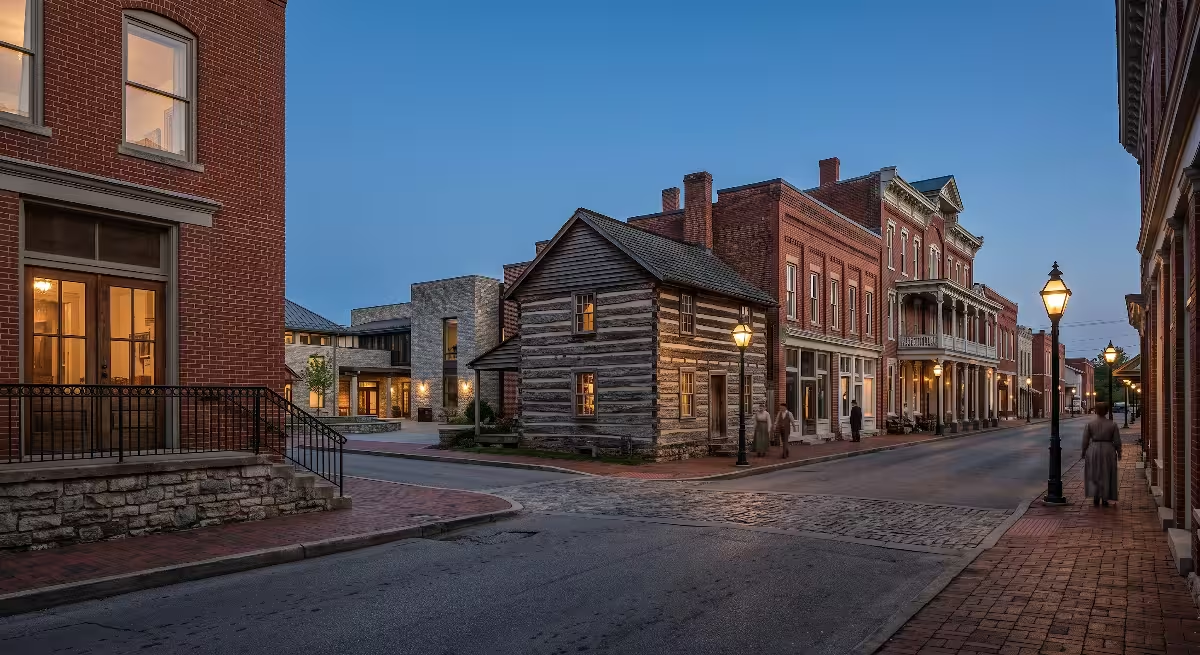
Along State Street, 4th Street, and 6th Street, builders erected handsome, multi-story commercial buildings. Because timber was so cheap and local brick plants were firing thousands of red clay bricks every day, these buildings were built to last for centuries. Builders constructed multi-wythe exterior walls, often three or four layers of brick thick, laid with lime and cement mortars. They decorated the storefronts with cast-iron columns, arched window headers, and ornate pressed-tin ceilings that helped prevent the spread of interior fires.
This economic surge also created beautiful residential neighborhoods in Bristol, TN that continue to draw custom home buyers and architectural fans. As a builder, walking through historic neighborhoods like Solar Hill, Anderson Park, and Holston Avenue is like opening an encyclopedia of American architectural craftsmanship:
- Victorian and Queen Anne Architecture: Built from the late 1880s through the early 1900s, these grand homes feature asymmetrical footprints, steep rooflines, round corner towers, and elaborate decorative trim known as gingerbread scrollwork. They feature massive wraparound porches designed to catch mountain breezes during hot summer afternoons before air conditioning existed. Skilled carpenters used heart-pine flooring and custom oak millwork to create stairs and fireplace mantels that are nearly impossible to duplicate today.
- American Foursquare Style: Popular between 1900 and 1920, the Foursquare homes in Bristol, TN offered a simpler, more efficient floor plan. These two-story, box-shaped homes featured four balanced rooms on each floor, large central dormers on the roof, and wide front porches supported by thick brick or stone piers. They were built with incredible structural stability, using full-dimension rough-sawn lumber joists and rafters.
- Craftsman and Bungalow Design: Arriving in the 1910s and 1920s, the Craftsman style became a staple across the growing residential streets of Bristol, TN. These homes celebrated natural materials, showcasing exposed roof rafters, low-pitched gables, tapered porch columns resting on heavy river rock pedestals, and built-in oak bookshelves and china cabinets. They were designed to blend directly into the natural landscape, a concept that modern custom home builders still emulate.
Outstanding historic homes like the E.W. King House, the I.C. Fowler House, and the G.W. Blackley House demonstrate the high level of structural precision achieved during this boom period in Bristol, TN. Local masons laid Tennessee limestone water tables and used heavy slate shingles that protected roofs from rot for eighty years or more.
The civic pride of this era culminated in 1910 with the creation of the famous Bristol Slogan Sign. The Bristol Gas and Electric Company built a massive steel truss sign spanning across State Street. It was illuminated by hundreds of glowing electric light bulbs. Originally, the sign displayed the energetic industrial slogan “Push! That’s Bristol.”
While modern, that slogan felt a bit aggressive to many long-time residents. In 1921, the community held a contest to pick a new motto that better reflected the warm, family-friendly culture of the twin cities. The winning phrase was “Bristol: A Good Place to Live.” Today, that historic steel sign still arches across the center of State Street, glowing in vibrant neon every evening. It stands as an enduring monument to the early twentieth-century boom that made Bristol, TN a true industrial center.
The 1927 Bristol Sessions: Changing Music History Forever
While railroads, iron furnaces, and timber mills gave Bristol, TN its physical muscle, an unexpected event during the summer of 1927 gave the city its cultural soul. That event changed American culture and earned the city an international reputation that grows stronger with each passing decade.
By 1927, the commercial phonograph record industry was growing fast, but record companies were based almost entirely in northern cities like New York and Chicago. A visionary artists and repertoire man named Ralph Peer, working for the Victor Talking Machine Company, realized that rural American folk music represented a huge, untapped commercial market. Peer knew that mountain people across East Tennessee, Southwest Virginia, Western North Carolina, and Kentucky had been singing traditional ballads, fiddle tunes, and gospel hymns on their front porches for generations.
Instead of trying to bring shy, impoverished mountain musicians to a confusing skyscraper studio in New York City, Peer decided to take portable recording gear directly to the mountains. He chose Bristol, TN as his temporary studio location. The decision was purely practical: Bristol, TN was the central railroad hub of the entire Southern Appalachian region. Musicians could easily hop on a train from any hollow or mountain ridge and arrive downtown in just a few hours.
In late July 1927, Peer and his sound engineers arrived in Bristol, TN. They rented the top floor of the Taylor-Christian Hat Company building, located at 416 State Street on the Virginia side, right across the street from the Tennessee boundary line. The building was a typical brick commercial structure. To turn a drafty hat warehouse into a functioning sound studio, the crew hung heavy wool packing blankets along the brick walls to absorb echo and sound reverberation. Peer set up the latest Western Electric microphones and cutting-edge wax disc cutting machines.
On July 25, 1927, Ralph Peer placed a notice in the local newspaper announcing that he would pay cash royalties to local musicians who auditioned and recorded their songs. Over the next two weeks, the sound studio in the center of Bristol, TN hosted dozens of mountain singers, string bands, harp players, and gospel quartets. Two acts that stepped in front of Peer’s microphones during those hot August days changed modern music history forever:
- The Carter Family: Coming from Maces Spring in nearby Poor Valley, Virginia, A.P. Carter, his wife Sara, and his sister-in-law Maybelle arrived in Bristol, TN in an old, worn-out car. Sara’s clear, mournful mountain vocals paired with Maybelle’s revolutionary guitar picking style, now celebrated around the world as the Carter Scratch, stunned Ralph Peer. They recorded foundational tracks like “Bury Me Under the Weeping Willow” and “Wildwood Flower.” The Carter Family became the first true vocal group stars of country music, establishing the harmony patterns and storytelling ballads that defined the genre.
- Jimmie Rodgers: A former railroad brakeman from Mississippi who was living in nearby Asheville, North Carolina, Jimmie Rodgers arrived in Bristol, TN flat broke and suffering from severe tuberculosis. He auditioned with his signature rhythmic blue yodel and brilliant acoustic guitar rhythm. Peer recorded Rodgers singing “Sleep, Baby, Sleep” and “The Soldier’s Sweetheart.” Rodgers went on to become the very first solo superstar of country music, known as the Singing Brakeman and the Father of Country Music. His work successfully blended traditional folk, blues, and pop melodies.
The recordings made during those two historic weeks became known to scholars, musicians, and historians as the 1927 Bristol Sessions. Legendary musician Johnny Cash later declared that the Bristol Sessions were “the single most important event in the history of country music.”
In 1998, the United States Congress officially recognized this incredible cultural legacy by passing a formal resolution recognizing Bristol, TN and Bristol, Virginia, as the official “Birthplace of Country Music.” Today, visitors from across the globe travel to downtown Bristol, TN to tour the world-class Birthplace of Country Music Museum, an affiliate of the Smithsonian Institution. The museum celebrates how a temporary sound studio on the state line gave voice to the working-class people of the Appalachian Mountains.
Twentieth Century Modernization: Industry, Speed, and Subdivisions (1930s to 1990s)

Following the Great Depression of the 1930s, Bristol, TN entered a long period of modernization that expanded the city far beyond its original downtown core. During the Depression, federal relief programs left lasting architectural landmarks across the community.
One of the most impressive examples of this era is the Stone Castle stadium at Bristol Tennessee High School, constructed in 1936 by the Works Progress Administration and Public Works Administration. Local workers quarried native gray limestone blocks by hand and chiseled them to build a massive, crenelated stadium that resembles a medieval European fortress. As a builder who understands stone masonry, I can tell you that the structural integrity of the Stone Castle is breathtaking. The heavy stone walls, arched entry portals, and fortified towers were built so soundly that the stadium remains in active use today, hosting football games and track meets nearly ninety years later.
In 1931, downtown Bristol, TN saw the opening of the Paramount Center for the Arts. Built in the lavish Art Deco style, the Paramount featured intricate exterior brick patterns, dynamic marquee lighting, and an opulent interior filled with gilded plaster friezes and plush velvet seats. It brought entertainment and Hollywood films to thousands of local families, providing hope and escape during challenging economic times.
The post-World War II period brought an economic shift toward manufacturing and consumer goods. Factories making electronics, automotive components, garments, and paper products opened in modern industrial parks across the outskirts of Bristol, TN. The local workforce had a well-deserved reputation for mechanical skill, reliability, and pride in craftsmanship.
However, the event that put modern Bristol, TN on the international sports map occurred in 1961. Two visionary promoters and builders, Larry Carrier and Carl Moore, decided to construct a brand-new auto racing facility in the rolling hills of Sullivan County, just south of downtown Bristol, TN. They envisioned a short track that would deliver edge-of-your-seat excitement for stock car fans.
When Bristol International Speedway, now known worldwide as Bristol Motor Speedway, opened in the summer of 1961, it was an immediate sensation. The track was a half-mile oval, but what made it truly special was its steep banking. Carrier and his engineers designed the turns with high bank angles that eventually reached up to thirty degrees. That steep banking allowed stock cars to carry incredible cornering speeds, earning the track its famous nickname: The World’s Fastest Half-Mile.
Over the next few decades, Bristol Motor Speedway expanded into one of the largest sporting arenas on earth. Construction crews poured tens of thousands of yards of reinforced concrete, turning the facility into a massive bowl stadium completely enclosed by grandstands that can seat over one hundred forty thousand cheering fans. Twice every year, the roar of high horsepower NASCAR engines echoes across the hills of Bristol, TN, drawing visitors from all fifty states and generating millions of dollars in economic activity for regional businesses, hotels, and restaurants.
As the city expanded outward in the 1960s, 1970s, and 1980s, residential construction around Bristol, TN evolved. Families moved out of dense urban streetcar neighborhoods into spacious suburban subdivisions. Subdivisions featured sprawling brick ranch houses and split-level designs set on large, green quarter-acre and half-acre lots. Builders framed these homes with southern yellow pine dimension lumber, installed efficient central heat pump systems, and wrapped exteriors in durable brick veneer that required minimal exterior maintenance. These suburban communities established the peaceful, family-oriented neighborhood feel that continues to make residential living in bristol, tn so popular today.
Modern Bristol: Adaptive Reuse, Historic Preservation, and Living Here Today
Today, Bristol, TN stands at the exciting intersection of proud historic preservation and forward-looking residential growth. When you look at our urban core, you do not see a town that abandoned its roots. Instead, you see a masterclass in adaptive reuse.
Adaptive reuse is a building term that describes taking old, historic structures designed for heavy manufacturing or freight storage and updating their interiors for modern residential and commercial use. In downtown Bristol, TN, historic multi-story brick warehouses that once stored tobacco, cured hams, and railroad hardware have been beautifully transformed. Developers have preserved the exposed brick walls, hand-hewn oak ceiling joists, and large factory windows, while installing high-efficiency heat pumps, modern plumbing, quartz countertops, and smart home electrical wiring.
On the street level, downtown Bristol, TN has become a vibrant dining, shopping, and entertainment center. You can walk down State Street to enjoy craft breweries, independent farm-to-table restaurants, boutique coffee shops, art galleries, and live music venues. Every September, the entire downtown district shuts down vehicle traffic to host the Bristol Rhythm and Roots Reunion, a massive three-day music festival that welcomes tens of thousands of visitors to celebrate the heritage of the 1927 Bristol Sessions.
From my perspective as a custom home building expert, the appeal of moving to and building a life in Bristol, TN is stronger than it has ever been. People relocating from crowded, expensive metropolitan areas are drawn to our region by several practical advantages:
- Lower Cost of Living and Favorable Taxes: Sullivan County and the Tennessee side of the city offer a clear financial benefit. Tennessee has no state personal income tax on wages, and property tax rates across Bristol, TN remain very reasonable compared to the national average. This allows homeowners to put more of their hard-earned money directly into high quality building materials and custom home upgrades.
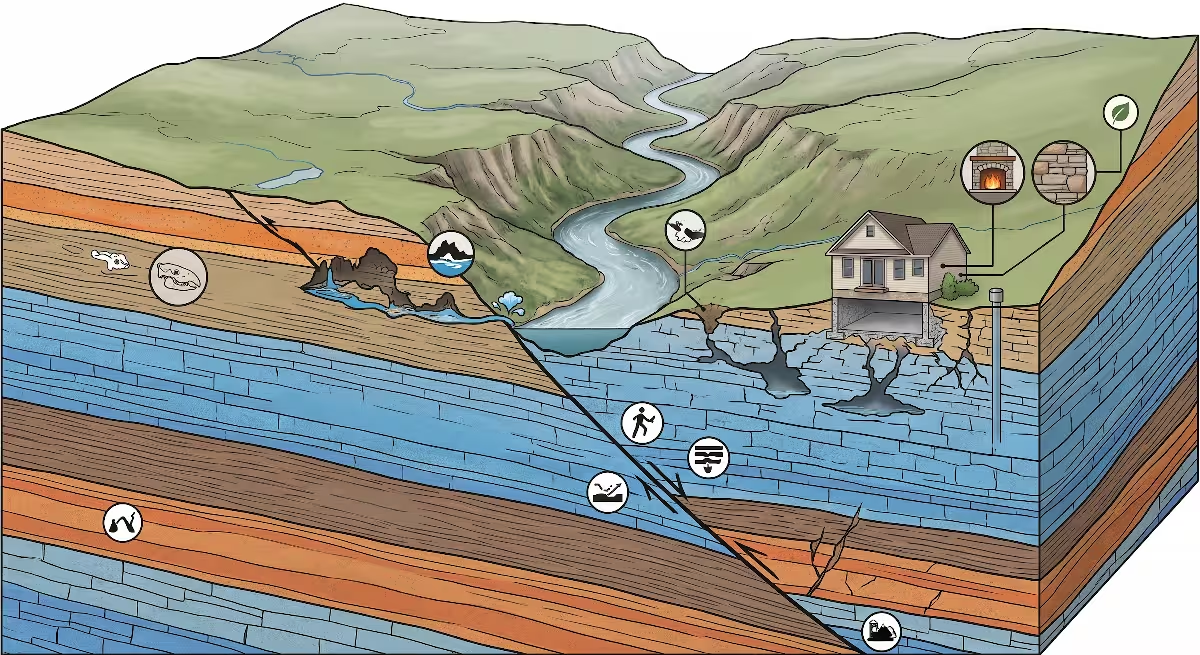
- Stable Soil and Beautiful Topography: The rolling terrain around Bristol, TN is composed largely of solid limestone and firm clay subsoils. When properly surveyed and engineered, this ground provides exceptional structural bearing capacity for residential foundations, whether you are pouring a full walkout basement, a conditioned crawlspace, or a heavy frost-protected slab.
- Unmatched Outdoor Recreation: Living in Bristol, TN places you just minutes from world-class outdoor adventures. You can fish for trophy brown trout on the South Holston River, which is recognized as one of the top tailwater fly fishing rivers in the entire country. South Holston Lake offers thousands of acres of deep, clean mountain water for boating, paddleboarding, and water skiing, surrounded by the protected forests of the Cherokee National Forest.
- Exceptional Community Character: Despite its modern amenities and famous attractions, Bristol, TN has never lost its small-town warmth. Neighbors still wave to each other from front porches, local high school football games bring entire communities together on Friday nights, and civic pride runs deep in every neighborhood.
Whether you are looking to purchase a classic 1920s Craftsman bungalow in an established neighborhood or buy a rolling three-acre wooded lot to build a custom modern farmhouse, Bristol, TN offers an incredible foundation for your family’s future.
Frequently Asked Questions About Bristol, TN History
To help you gain an even deeper understanding of our community, here are direct, practical answers to the questions people search most often when studying the background of Bristol, TN:
What was Bristol, TN originally called?
Before it was incorporated as Bristol, the settlement was officially named Sapling Grove. General Evan Shelby chose that name in 1766 when he established his pioneer farm and trading post because of the thick groves of young sapling trees covering the hills along Beaver Creek. Prior to Shelby’s arrival, early longhunters and Native American hunting parties called the area Big Camp Meet. Later, when Colonel James King took ownership of the land in the 1790s, his vast family plantation was known locally as Mountain View or King’s Meadows, a name that remained until Joseph R. Anderson platted the modern town of Bristol, TN in 1852.
Who founded Bristol, Tennessee?
A visionary merchant and banker named Joseph R. Anderson is universally recognized as the founding father of Bristol, TN. In 1852, Anderson recognized that two major regional railroad lines, the Virginia and Tennessee Railroad and the East Tennessee and Virginia Railroad, were building tracks that would terminate at the state boundary. Realizing that this junction would become an economic powerhouse, Anderson purchased one hundred acres of the historic King’s Meadows plantation. He surveyed the streets, platted commercial and residential lots, and named the town Bristol after the bustling commercial port city of Bristol, England.
Why is Bristol split between Tennessee and Virginia?
Bristol is divided between two states because its founders built the town directly over the royal colonial boundary line that was surveyed between the Commonwealth of Virginia and the State of North Carolina in the 1700s, long before Tennessee became a state in 1796. When Joseph R. Anderson developed his town in Tennessee in 1852, Samuel Goodson developed his own town, Goodsonville, on the Virginia side of the line. The two towns grew together along the main roadway. In 1901, after decades of boundary arguments, both state legislatures and the United States Congress formally signed a joint compact establishing the exact center line of State Street as the permanent, legal state line.
Why is Bristol, TN called the Birthplace of Country Music?
The community earned its title as the Birthplace of Country Music because of the legendary 1927 Bristol Sessions. Over two weeks in late July and August of 1927, record producer Ralph Peer of the Victor Talking Machine Company set up a temporary recording studio on State Street. Peer recorded the first major commercial breakthrough songs of both the Carter Family and Jimmie Rodgers, who became the pioneering superstar acts of the entire country music genre. In 1998, the United States Congress passed a formal resolution declaring Bristol, TN and its sister city across the street as the official Birthplace of Country Music.
Building Your Future in Bristol, TN
Every great building project begins with a rock-solid foundation. As we have seen through two and a half centuries of local history, the story of Bristol, TN was built on a foundation of grit, smart engineering, and community cooperation. From Evan Shelby’s hand-hewn oak stockade at Fort Shelby to Joseph R. Anderson’s railroad junction, and from the 1927 recording sessions to the modern high-banks of the motor speedway, this city has always been a place where visionary builders turn big ideas into reality.
When you decide to plant your roots in Bristol, TN, you are not just buying a parcel of real estate. You are becoming part of a rich mountain legacy. You are choosing a community where craftsmanship still matters, where natural beauty surrounds your daily life, and where the values of hard work and neighborly kindness remain strong.
If you are planning to make a move to our region, take the time to study the land. Look at how the hills roll, observe how the morning sun lights up the ridge lines, and work with builders who understand the local soil, regional building codes, and environmental conditions. The twin city of Bristol, TN has spent more than two centuries proving that it is, truly, a good place to live. We look forward to helping you build your dream home right here in our Appalachian home.