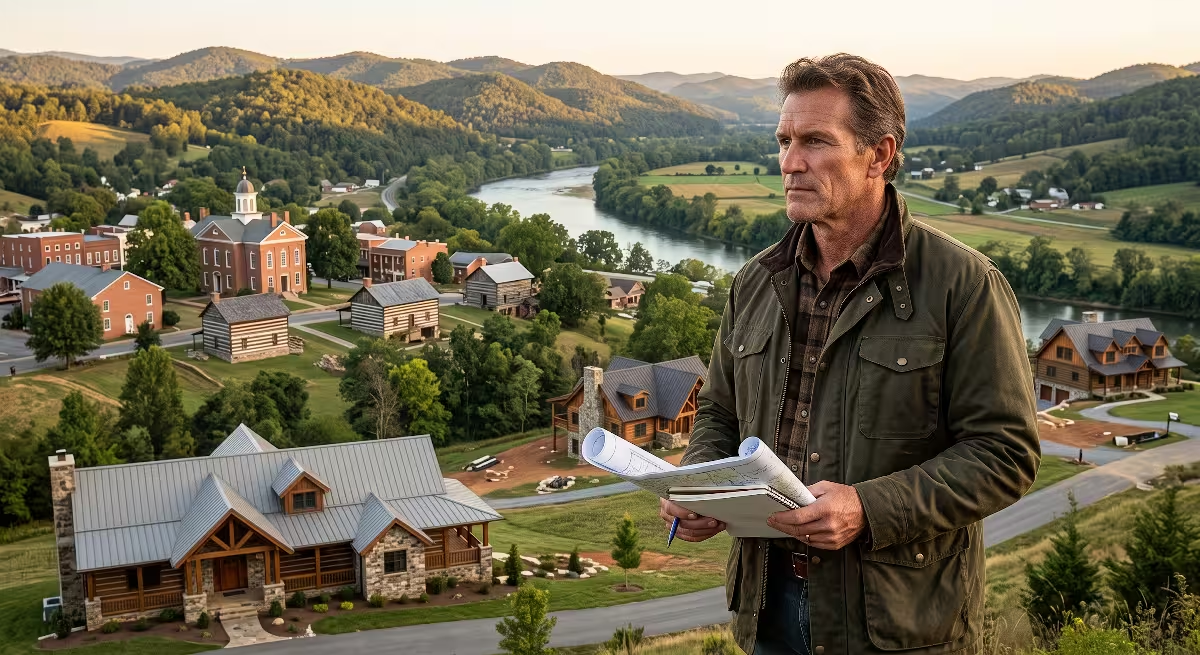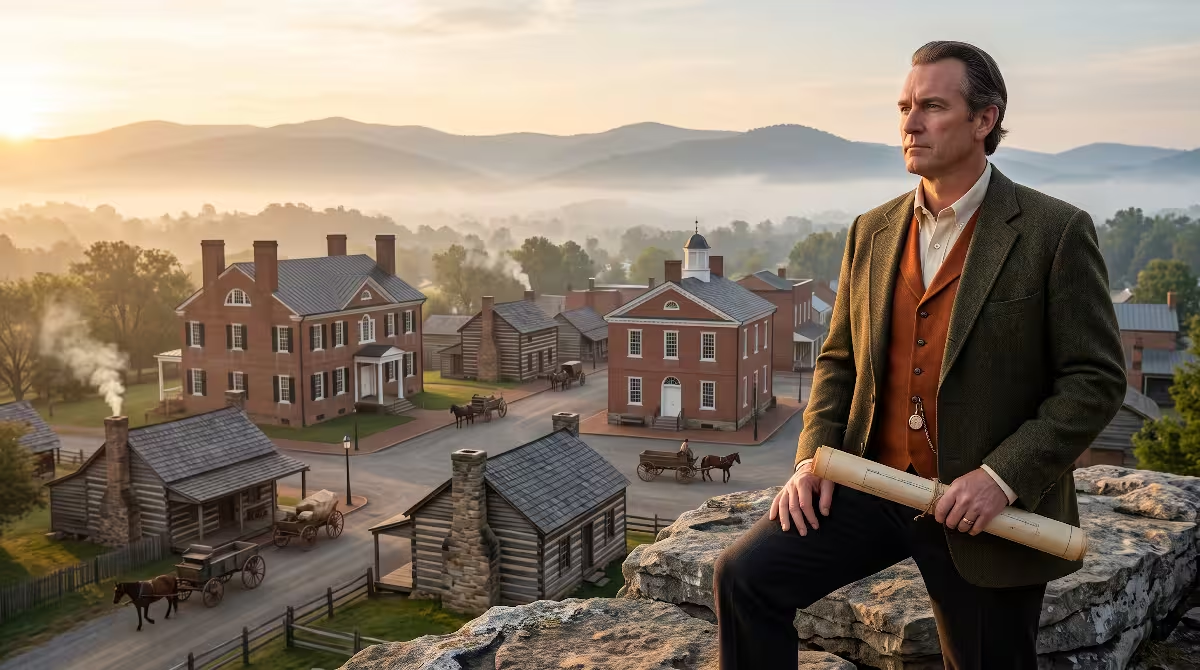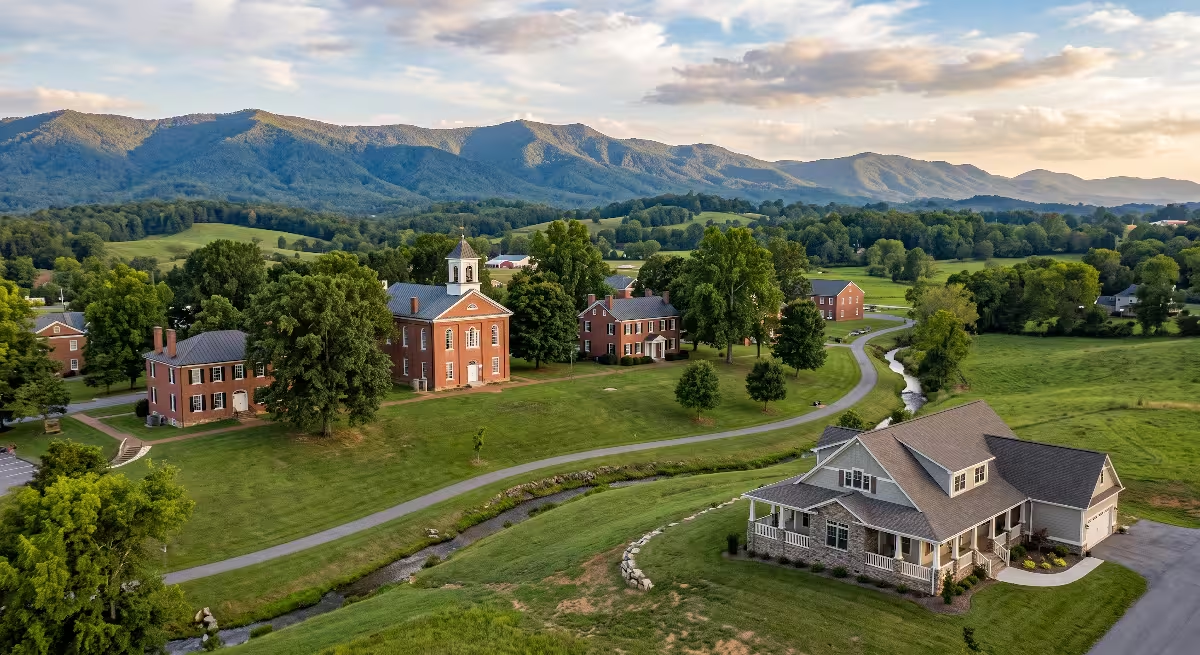


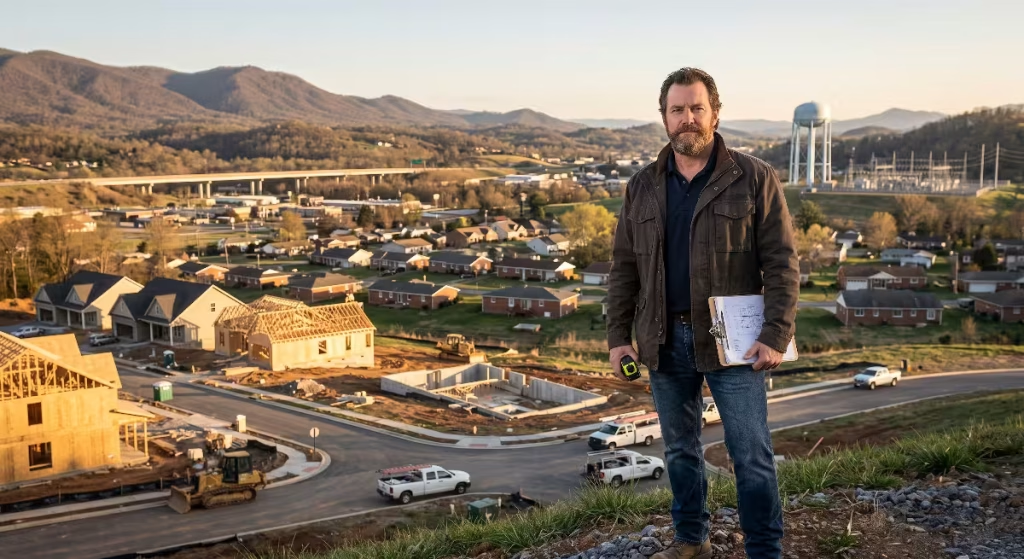
Welcome to this comprehensive overview of Sullivan County, TN. When you build or buy a home in our region of East Tennessee, you quickly realize that the dirt under your boots carries deep roots. I grew up in Kingsport and have managed construction projects across our valley for decades. Before you pour a footers trench or raise a roof truss, understanding the land is critical. Every ridge, riverbend, and property line across Sullivan County, TN tells a story that started hundreds of years ago.
This guide explores the foundational events, cultural milestones, and construction traditions of Sullivan County, TN. Whether you are a native resident, an amateur historian, or a family looking to build your custom dream home, learning how this county came together will give you a true appreciation for the ground you walk on.
The Cradle of Tennessee Heritage
The Second-Oldest County in Tennessee
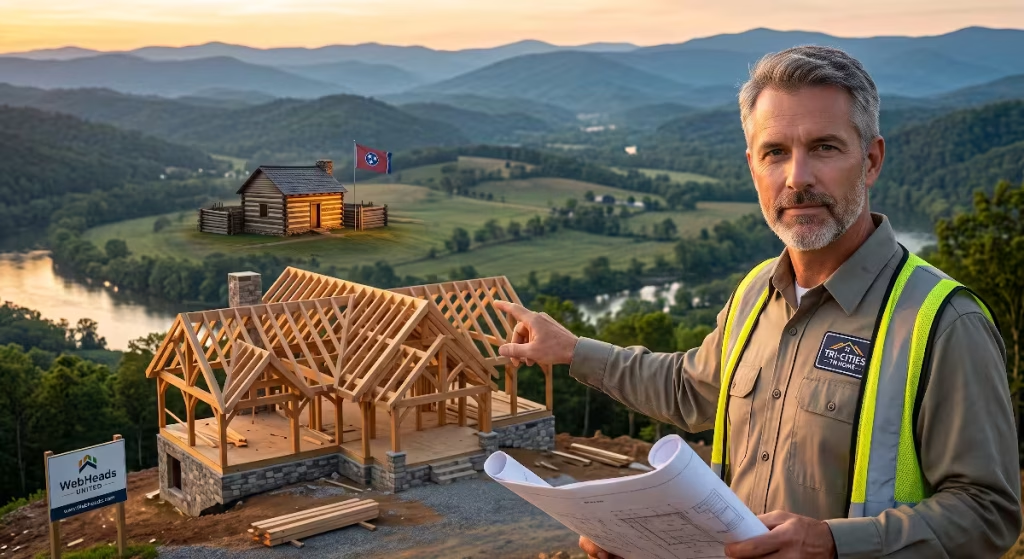
Long before Tennessee became the sixteenth state in the Union, pioneers were carving homesteads out of the dense Appalachian forests. Sullivan County, TN was officially formed in 1779, making it the second-oldest county in the state, trailing only Washington County.
Back in that era, North Carolina claimed all the land stretching west toward the Mississippi River. Settlers pushed across the Blue Ridge Mountains looking for good soil, fresh water, and timber to raise cabins. The North Carolina legislature recognized that these frontier folks needed local courts, tax records, and law enforcement. As a result, they split Washington County to establish Sullivan County, TN.
Knowing this background explains why many old property deeds in Sullivan County, TN reference colonial surveys and early mountain markers. When our crew reviews site boundaries today, we still run across old calls referencing long-gone chestnut trees or stacked rock corners.
Strategic Geography of the Holston River Valley
The geography of Sullivan County, TN explains why people settled here. The county sits right in the Great Appalachian Valley, framed between rolling ridges and cut by the North and South Forks of the Holston River.
In the 18th century, waterways served as the original highways. The Holston River provided clean drinking water, fertile river bottoms for growing crops, and downstream transport for timber, furs, and cured bacon. Water powered the early gristmills and sawmills that cut the first framing timbers in Sullivan County, TN.
From an engineering perspective, this rolling topography features significant limestone formations. Anyone developing acreage in Sullivan County, TN today knows that you must account for shallow bedrock and natural drainage swales created by ancient water paths.
How Pioneer Footprints Shape Modern Tri-Cities Building
The earliest wagon trails were not chosen by accident. Pioneers followed game trails and indigenous trading paths that avoided steep cliffs and soft swamps. Those early paths eventually turned into stagecoach roads, then gravel turnpikes, and finally modern paved arteries like US-11W, US-11E, and Highway 36.
When we plan subdivisions and private home sites in Sullivan County, TN, our access routes, utility runs, and orientation toward natural sunlight often mirror the decisions made by pioneer builders over two centuries ago. Early homesteaders positioned their houses facing south to catch winter sun, sheltered on the northern side by ridges. That time-tested logic still saves modern homeowners money on heating bills across Sullivan County, TN.
Frontier Origins and Early Outposts
The Cherokee Heritage and Long Island of the Holston
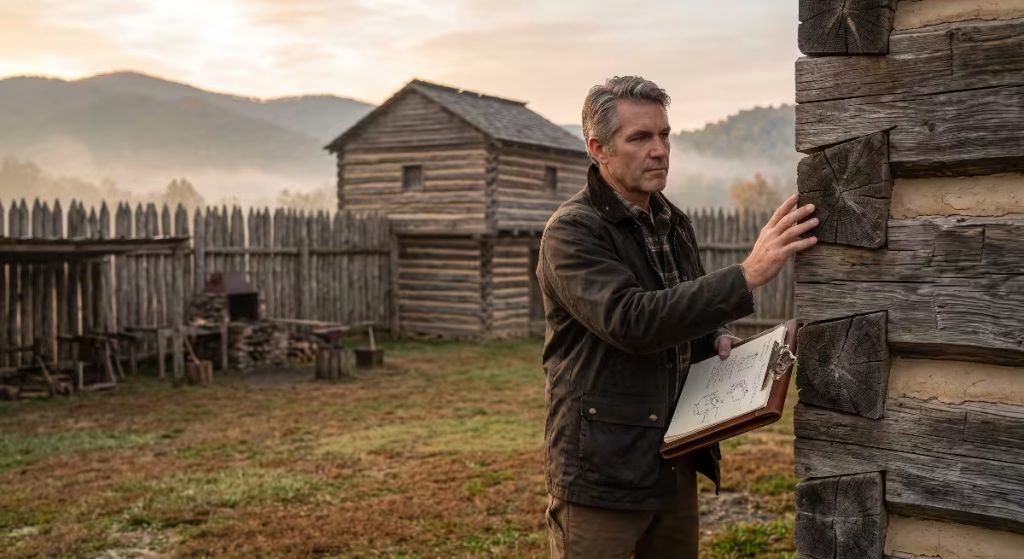
Long before white explorers entered the region, native tribes hunted and lived along the waterways of Sullivan County, TN. The Cherokee Nation held sacred regard for Long Island of the Holston, located in what is now modern Kingsport.
Long Island was a peaceful gathering spot and a neutral zone where different tribes met to trade goods, hold council, and negotiate peace treaties. The island sat at the crossroads of the Great Indian Warpath. Because native trails converged here, it naturally became one of the most vital strategic points in the early expansion of Sullivan County, TN. Today, this historic site remains preserved as a reminder of the Native American heritage woven into Sullivan County, TN.
Fort Patrick Henry and the Battle of Island Flats
During the American Revolutionary War in 1776, British agents urged Cherokee war parties to push settlers out of the river valleys. In response, frontier militias organized defense outposts across Sullivan County, TN.
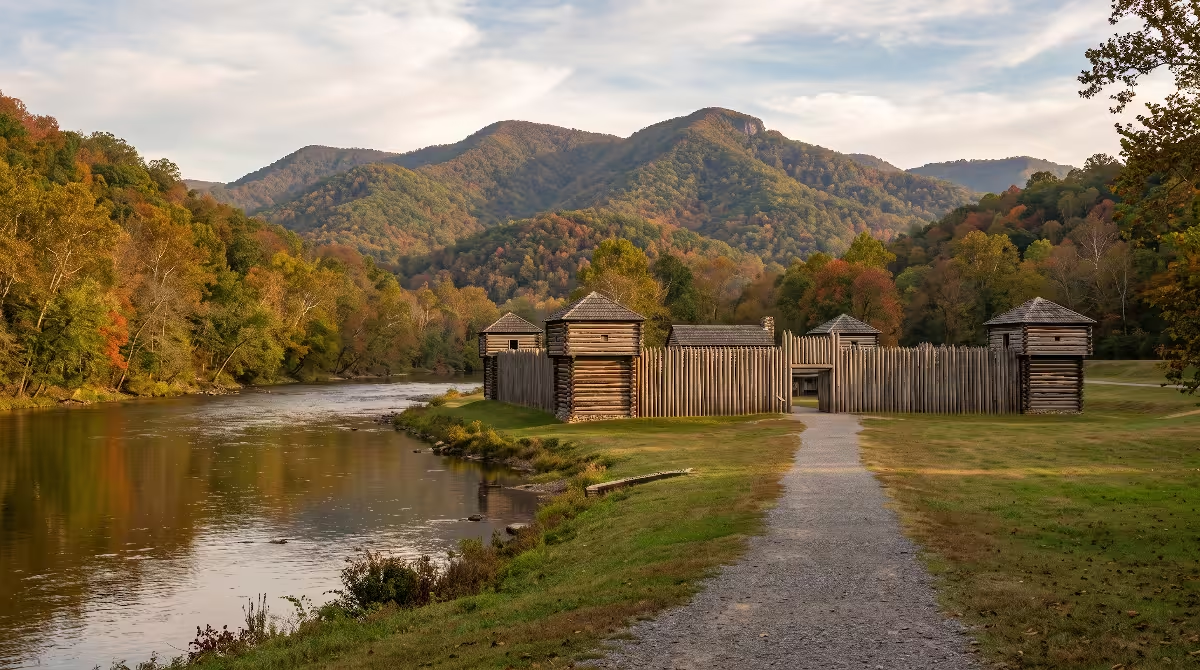
One primary outpost was Fort Patrick Henry, erected near the Long Island of the Holston. In July 1776, local militia forces met a Cherokee raiding party at the Battle of Island Flats. The frontier riflemen used tactical cover behind trees and fallen logs to turn back the attack. That victory secured the safety of local homesteads, allowing more pioneers to move into Sullivan County, TN.
Daniel Boone and his company of axe-men had also blazed the Wilderness Road starting right from Long Island of the Holston in 1775. As a result, Sullivan County, TN served as the main staging ground for thousands of pioneer families journeying westward into Kentucky.
Pioneer Craftsmanship: Timbers, Limestone, and Joinery
As a builder who loves traditional carpentry, I hold immense respect for early frontier craft across Sullivan County, TN. Settlers did not have lumber yards, power jointers, or steel brackets. They worked with three basic tools: an axe, an adze, and an auger.
Pioneers harvested native hardwoods from the dense forests of Sullivan County, TN. They favored American chestnut, white oak, and yellow poplar because these species resist rot and insect damage. They hand-hewed round logs into flat timbers using broadaxes. To join corner joints, they cut half-dovetail or full-dovetail notches. Dovetail joints shed rainwater away from the wood and lock logs tightly together without nails.
For foundations and chimneys, they dry-stacked native limestone gathered straight out of pastures and creek beds across Sullivan County, TN. Those dry-stacked stone piers allowed air to circulate underneath the structure, keeping floor joists dry and free from mold. Today, custom homes throughout Sullivan County, TN often feature stacked stone accents that celebrate these early building methods.
County Formation and the Lost State of Franklin
Formation from Washington County and General John Sullivan
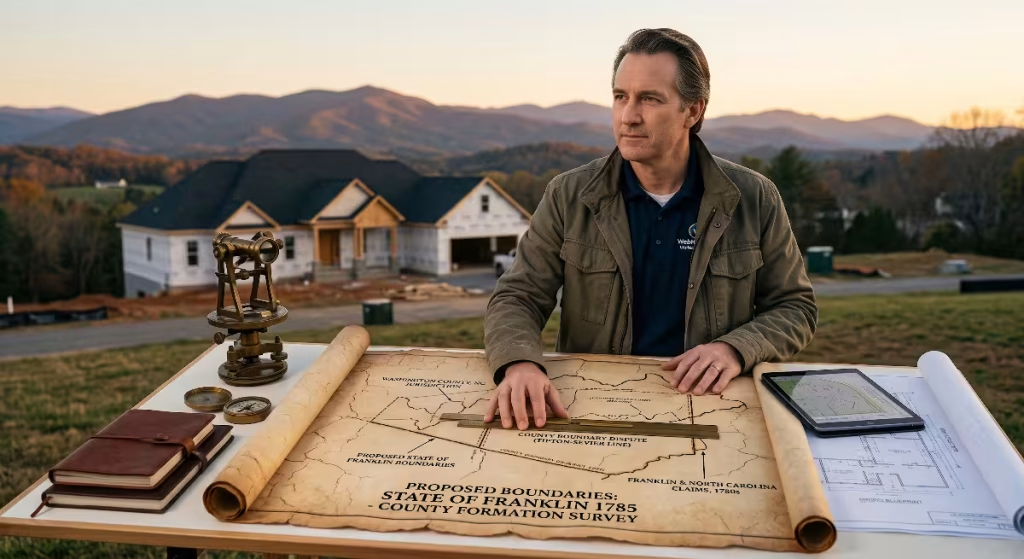
In October 1779, the North Carolina General Assembly officially ratified the creation of Sullivan County, TN. The state named the new county in honor of Major General John Sullivan, a respected officer in the Continental Army.
General Sullivan had served under General George Washington, distinguishing himself in major campaigns throughout the northern colonies. Frontier settlers in Sullivan County, TN held great pride in their Revolutionary War heroes, making the name an easy and popular choice.
       1779: North Carolina forms Sullivan County from Washington County
                                   │
                                   ▼
             1784 - 1788: The Lost State of Franklin Era
                                   │
                                   ▼
       1790: Southwest Territory Capital established at Rocky Mount
                                   │
                                   ▼
          1796: Tennessee officially admitted as the 16th State
The State of Franklin (1784 to 1788)
One of the most fascinating chapters in East Tennessee history is the story of the State of Franklin. Following the Revolutionary War, North Carolina offered to cede its western lands to the federal government to offset war debts. The settlers on the western side of the Blue Ridge felt neglected, lacking court systems, military protection, and stable roads.
In 1784, delegates met and voted to form an independent territory called the State of Franklin, with John Sevier chosen as governor. However, residents across Sullivan County, TN were deeply divided. Many citizens supported John Sevier, while others remained loyal to North Carolina under the leadership of local Colonel John Tipton.
For four years, the region operated with competing county courts, two tax collectors, and two rival sheriffs. The dispute came to an armed skirmish in late 1788 just south of Sullivan County, TN. When North Carolina promised tax relief and regular court sessions, the State of Franklin dissolved, restoring peace to Sullivan County, TN.
Rocky Mount and the First Capital of the Southwest Territory
Between 1790 and 1792, Sullivan County, TN stood at the center of regional government. President George Washington appointed William Blount as the Governor of the newly established “Territory South of the River Ohio,” commonly called the Southwest Territory.
Governor Blount made his territorial headquarters at Rocky Mount, the homestead of the Cobb family near modern Piney Flats in Sullivan County, TN. From this site, Blount managed territorial treaties, established militia patrols, and laid the groundwork for statehood.
+--------------------------------------------------------------------------+
|                  HISTORIC ROCKY MOUNT AT A GLANCE                        |
|                                                                          |
|  Location:       Piney Flats, Sullivan County, TN                        |
|  Established:    Circa 1770–1772 by William Cobb                         |
|  Role:           Capital of the Southwest Territory (1790–1792)          |
|  Governor:       William Blount, appointed by George Washington          |
|  Construction:   White pine logs, interior wood paneling, early glass    |
+--------------------------------------------------------------------------+
From an architectural standpoint, Rocky Mount remains a showcase of early construction in Sullivan County, TN. Unlike crude single-pen dirt floor cabins, William Cobb built a spacious two-story home using massive horizontal pine logs. The house featured finished interior paneling, a large stone fireplace, and imported window glass. It demonstrated that by 1790, Sullivan County, TN was evolving from a wild frontier into an organized, prosperous community.
Historic Towns of Sullivan County, TN
Each town across Sullivan County, TN brings its own personality and commercial background. Understanding these communities helps explain our regional housing markets today.
| Community Name | Type of Entity | Key Historic Role or Focus | Modern Geographic Landmark |
| Blountville | Census-Designated Place | County Seat since 1795; Court and Civic Center | Historic Courthouse & Old Deery Inn |
| Kingsport | Incorporated City | Model Planned City, Chemical & Industrial Center | Bays Mountain & Holston River |
| Bristol | Incorporated City | Birthplace of Country Music; Twin City border hub | State Street & Bristol Motor Speedway |
| Piney Flats | Census-Designated Place | Agricultural roots, Territorial Capital heritage | Rocky Mount State Historic Site |
| Bluff City | Incorporated City | River Crossing and Railroad Town | South Fork Holston River |
| Bloomingdale | Census-Designated Place | Residential community north of Kingsport | Bloomingdale Road corridor |
| Colonial Heights | Census-Designated Place | Early suburban boom and scenic ridge living | Fort Henry Drive / I-81 interchange |
| Walnut Hill | Census-Designated Place | Farming crossroads west of Bristol | Rolling agricultural pastureland |
| Spurgeon | Census-Designated Place | Border hamlet shared with Washington County | South Fork Holston drainage basin |
Blountville: The Historic County Seat
Blountville has served as the county seat of Sullivan County, TN since 1795. It holds the honor of being the only unincorporated county seat in Tennessee, functioning as a historic census-designated community centered around county government offices.
Blountville grew along the Great Stage Road, where travelers stopped overnight while journeying between Washington, D.C., and Nashville. A prime landmark is the Old Deery Inn, built around 1797. The inn combines several building styles, including a log cabin, a stone structure, and a frame addition. Notable figures like Andrew Jackson, James K. Polk, and Andrew Johnson stayed there while traveling across Sullivan County, TN.
The brick courthouse in the heart of Blountville has anchored county records for generations, surviving war, fires, and modern renovations.
Kingsport: From River Landing to America’s Model City
Kingsport started as an early river landing known as “King’s Port,” run by Colonel James King. Boatmen tied flatboats to the docks, loading iron, salt, and grain destined for Chattanooga and Knoxville.
In the early 20th century, Kingsport took a giant leap forward. Industrialist J. Fred Johnson envisioned a completely planned modern industrial center. He hired renowned city planner John Nolen in 1916 to design Kingsport from a clean drawing board.
Nolen laid out distinct zones for industrial plants, retail shops, green parks, and residential neighborhoods. Wide avenues, traffic circles, and dedicated green belts gave Kingsport an orderly design rarely seen in the region. This planning drew major businesses like Eastman Kodak, Kingsport Press, and Holston Defense to Sullivan County, TN. That forward-thinking layout continues to support housing and commerce in Sullivan County, TN today.
Bristol: The Twin City and Birthplace of Country Music
Bristol features one of the most distinctive municipal layouts in the United States. State Street runs down the center of downtown, dividing Bristol, Tennessee from Bristol, Virginia. One side of the street lies in Sullivan County, TN, while the other side sits in the independent city of Bristol, Virginia.
Bristol made cultural history in the summer of 1927. Record producer Ralph Peer of the Victor Talking Machine Company set up portable recording equipment in a commercial building on State Street. Over two weeks, Peer recorded audition sessions with regional musicians.
Those recordings introduced the Carter Family and Jimmie Rodgers to the nation, an event now celebrated as the famous “1927 Bristol Sessions.” In 1998, the United States Congress formally recognized Bristol as the “Birthplace of Country Music.” Today, visitors come from all over the globe to explore downtown Bristol in Sullivan County, TN.
The Civil War Era: Division and Conflict
Secession and Internal Division
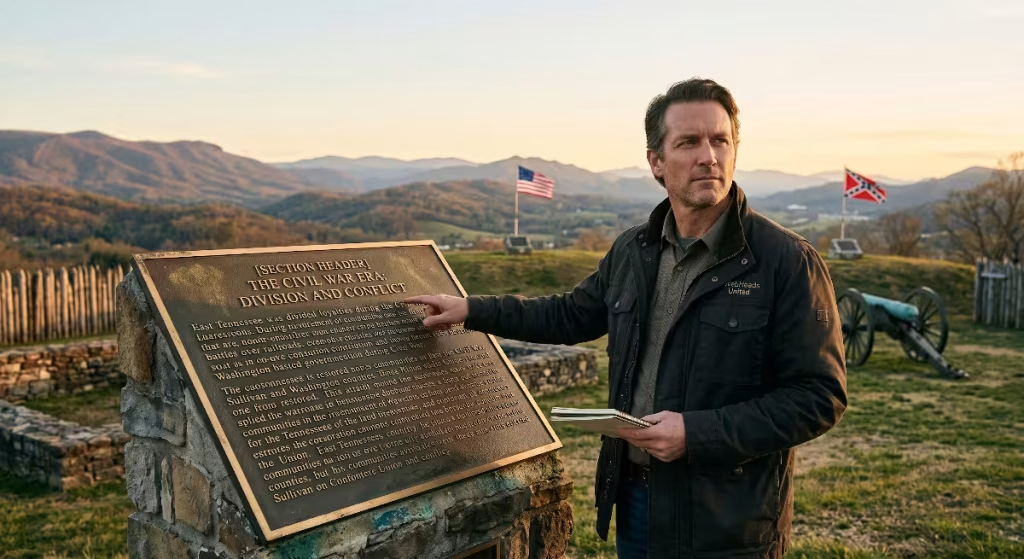
The Civil War was a painful period for East Tennessee. While the majority of East Tennessee counties voted to stay loyal to the Union in June 1861, voters in Sullivan County, TN chose a different path. Influenced by agricultural connections with southwest Virginia, Sullivan County, TN voted by a substantial margin in favor of secession.
This vote earned Sullivan County, TN the nickname the “Little Confederacy” of East Tennessee. However, loyalty was far from unanimous. Neighborhoods and families found themselves split down the middle. Brother took arms against brother, and neighbors kept watch over who supported the Union flag and who wore Confederate gray across Sullivan County, TN.
The Battle of Blountville (September 1863)
The most notable engagement fought on county soil occurred on September 22, 1863. Union cavalry forces commanded by Colonel John W. Foster attacked Confederate troops under Colonel James E. Carter defending Blountville.
The battle lasted for several hours, with artillery fire echoing across the town center. During the bombardment, an artillery shell struck and ignited the Sullivan County courthouse, destroying valuable early deeds, tax ledgers, and court files. Confederate forces eventually withdrew toward Virginia, leaving the Union army in temporary control of central Sullivan County, TN.
Reconstruction and Infrastructure Recovery
When fighting ended in 1865, Sullivan County, TN faced heavy economic hurdles. Fences were burnt, livestock was scattered, and family farms were depleted.
+--------------------------------------------------------------------------+
|                  POST-CIVIL WAR RECOVERY MILESTONES                      |
|                                                                          |
|  1. Railroad Restoration: Reconnecting the Virginia & Tennessee line     |
|  2. Civic Rebuilding:     Erecting a new brick courthouse in Blountville  |
|  3. Timber & Milling:     Expanding watermills to process native lumber  |
|  4. Agricultural Rebirth: Transitioning to burley tobacco & beef cattle  |
+--------------------------------------------------------------------------+
Rebuilding required hard labor and practical skill. Residents rebuilt the Blountville courthouse using local brick and timber, completing the new structure in 1866. Crews repaired rail lines and sawmills, processing local hardwoods to rebuild bridges and train stations. By the 1880s, commercial farming, burley tobacco auctions, and livestock operations returned economic stability to Sullivan County, TN.
20th-Century Modernization and Growth
The Tennessee Valley Authority (TVA) and Hydroelectric Dams
Few developments changed everyday life in Sullivan County, TN as dramatically as the creation of the Tennessee Valley Authority in 1933. Prior to TVA, seasonal spring rains regularly flooded homes and farmlands along the Holston River.
TVA constructed major flood control and hydroelectric projects affecting Sullivan County, TN, including Boone Dam and Fort Patrick Henry Dam in the early 1950s. These dams harnessed the river, providing inexpensive electricity to rural farms and stopping devastating floods.
       Holston River Seasonal Flooding (Pre-1930s)
                           │
                           ▼
          TVA Construction: Boone Dam & Fort Patrick Henry Dam
                           │
                           ▼
  +─────────────────────────────────────────────────────────────+
  |                   MODERN COUNTY BENEFITS                    |
  |  • Low-cost, reliable municipal electric power             |
  |  • Elimination of valley floor flooding                     |
  |  • Miles of premium recreational lakefront real estate      |
  +─────────────────────────────────────────────────────────────+
For custom home builders, the creation of Boone Lake and Fort Patrick Henry Lake opened miles of prime waterfront real estate. Today, building custom lake homes along the shorelines of Sullivan County, TN remains one of our most active residential construction sectors.
Industrial Engines: Eastman Chemical and Manufacturing
During the First World War, the Eastman Kodak Company struggled to source photographic chemicals and wood alcohol from Europe. Founder George Eastman scouted East Tennessee, drawn by the coal fields of southwest Virginia, the timber forests, and the water supply of the Holston River.
In 1920, Eastman purchased an unfinished timber plant in Kingsport, launching Tennessee Eastman Corporation. Over the following decades, Eastman grew into an international chemical powerhouse and the largest private employer in Sullivan County, TN.
The company provided thousands of well-paying, steady jobs, creating a boom in middle-class housing. Subdivisions with brick ranches, Cape Cods, and Colonial Revivals multiplied across Kingsport and Colonial Heights during the mid-20th century. Eastman remains a major industrial cornerstone in Sullivan County, TN.
The Modern Road Network: From Wagon Trails to I-81 and I-26
As personal automobile ownership grew, the rough dirt turnpikes of Sullivan County, TN received modern asphalt paving. US Highway 11 was widened to handle growing regional traffic, later splitting into US-11W and US-11E to connect Kingsport and Bristol with Knoxville.
The Interstate Highway System in the 1960s and 1970s brought Interstate 81 straight through Sullivan County, TN, making the county a central logistics corridor for the entire East Coast. Later, the construction of Interstate 26 connected Kingsport south across the mountains into North Carolina.
Today, this highway system lets residents commute anywhere within the Tri-Cities area in under thirty minutes. When selecting a home site in Sullivan County, TN, access to this highway network remains a top factor for buyers.
Frequently Asked Questions About Sullivan County, TN
Here are common questions people ask when exploring the history and lifestyle of Sullivan County, TN:
What is Sullivan County, TN famous for?
Sullivan County, TN is famous for being the second-oldest county in Tennessee, home to the first capital of the Southwest Territory at Rocky Mount, and the site where country music was first recorded during the 1927 Bristol Sessions. It is also well-known for its industrial roots in Kingsport, Bristol Motor Speedway, and outdoor recreation on Boone Lake and South Holston Lake.
What is the oldest town in Sullivan County, TN?
Blountville is the oldest town in Sullivan County, TN, established in 1795 when it was chosen as the county seat. It features historic architecture, including the 18th-century Old Deery Inn and one of the longest-serving courthouses in Tennessee.
Who was Sullivan County, TN named after?
Sullivan County, TN was named in honor of Major General John Sullivan, an officer in the American Revolutionary War and later governor of New Hampshire, celebrated by early settlers for his military leadership during the fight for American independence.
What is the history of Rocky Mount in Sullivan County, TN?
Rocky Mount was built around 1770 by William Cobb. Between 1790 and 1792, it served as the original capital of the Territory South of the River Ohio (the Southwest Territory). Territorial Governor William Blount lived and worked out of the Cobb home while organizing the frontier territory that would become Tennessee.
How Regional History Shapes Building and Living Today
Deed Research, Land Grants, and Boundary Verification
When you buy land in Sullivan County, TN, you are stepping into a complex chain of custody. Many properties originate from 18th-century North Carolina land grants awarded to Revolutionary War soldiers in place of cash payment.
Because early surveyors used physical features like trees, creeks, and stone piles to mark corners, older deeds often contain measurement variances. In modern custom building, our first step before clearing a lot is hiring a licensed surveyor to run a modern boundary and topographic survey. Doing your due diligence protects your investment and ensures that your home, septic field, and driveway fall strictly within your legal boundaries in Sullivan County, TN.
Managing Limestone Karst and Shallow Bedrock
The geological history of the Great Valley dictates how we excavate homes in Sullivan County, TN. Our limestone bedrock provides a stable foundation, but it brings two unique factors to manage:
               BUILDING IN SULLIVAN COUNTY LIMESTONE TERRAIN
                                     │
         ┌───────────────────────────┴───────────────────────────┐
         ▼                                                       ▼
  Shallow Rock Outcrops                                   Karst & Sinkholes
  • Requires heavy hydraulic hammering                    • Formed by acidic rainwater
  • Adjust foundation footings to solid stone             • Thorough geotechnical soil tests
  • Protects against structural settling                  • Proper perimeter drainage management
- Shallow Rock Formations: In many parts of Sullivan County, TN, hard limestone bedrock sits twelve inches beneath the topsoil. Excavating a full basement may require hydraulic breakers. While breaking rock increases excavation costs, building directly on solid stone creates a sturdy, durable foundation.
- Karst and Sinkholes: Limestone dissolves over time from natural water runoff, creating underground voids and sinkholes. Before building a custom home in Sullivan County, TN, we review geological maps and conduct soil tests. Ensuring that roof runoff and surface water drain away from the foundation is vital to preserving soil stability.
Incorporating East Tennessee Architectural Heritage
Homeowners building in Sullivan County, TN often want modern interior layouts paired with exterior styling that pays homage to regional history. East Tennessee vernacular architecture emphasizes timeless, practical materials that handle our changing seasons with ease.
Here are key architectural elements drawn straight from our county heritage:
- Covered Porches: Wide covered front and back porches have shaded families across Sullivan County, TN for generations. They provide comfortable outdoor living space and shield windows from midday summer heat.
- Native Stone Masonry: Modern foundation accents, outdoor kitchens, and fireplaces frequently feature native limestone or river rock that echoes Rocky Mount and early frontier outposts.
- Timber Framing Details: Exposed interior beams, heavy timber porch trusses, and tongue-and-groove ceilings reflect the wood craftsmanship practiced by the pioneers who cleared the forests of Sullivan County, TN.
- Steep-Pitched Gable Rooflines: Designed to shed winter mountain snow and heavy spring rains, classic gable roofs provide great architectural balance while giving you ample space for attic insulation.
Looking Forward in the Tri-Cities
Sullivan County, TN offers a rare blend of heritage and modern convenience. From the historic streets of Blountville to the industrial strength of Kingsport and the cultural sound of Bristol, this county provides an exceptional environment to raise a family, build a career, and retire in comfort.
When you understand the history of Sullivan County, TN, you see that building a home here is about joining an ongoing community story. The care we take in planning subdivisions, engineering foundations, and honoring regional craftsmanship helps ensure that Sullivan County, TN remains a wonderful place for future generations to live and thrive.