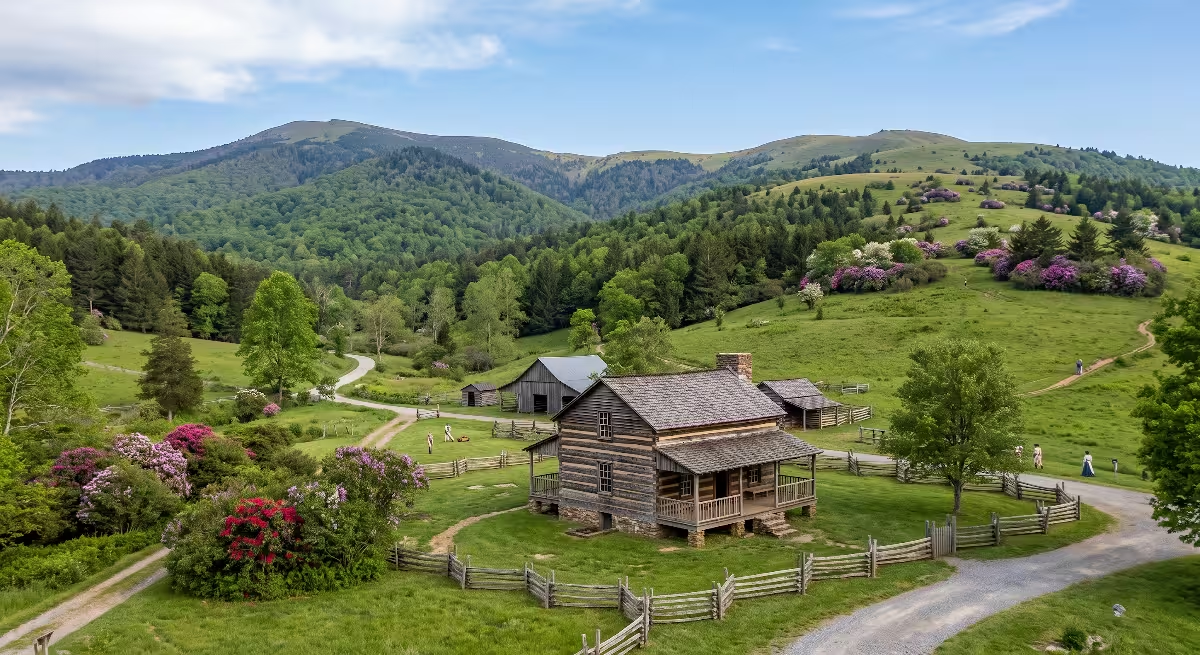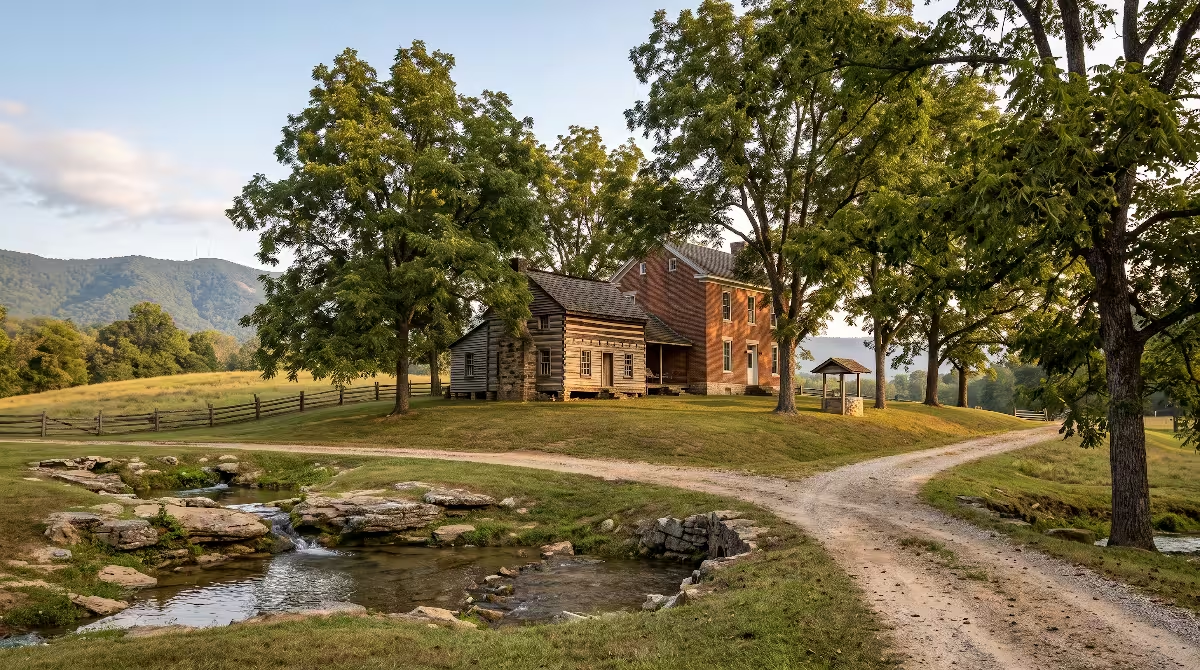

Welcome to our in-depth exploration of one of the most distinctive communities in Upper East Tennessee. If you have spent time driving the back roads of Greene County or looking at land in the shadow of the Appalachian Mountains, you know that this region has a personality all its own.
When people think about building a custom home or relocating to East Tennessee, they often ask about quiet towns that offer open space, good land, and authentic character. Tusculum, TN sits right near the top of that list. It is a place where frontier log cabins, pre-Civil War brickwork, and twentieth-century neighborhoods sit side by side along quiet country ridges.
To really understand what makes this area special today, we need to walk through the complete story of Tusculum, TN. We will look at how an early frontier outpost became the cradle of higher education in our state, how it weathered the storms of war and reconstruction, and how it grew into an independent city. Along the way, we will examine the architectural details, the local soil and topography, and the practical lessons every homeowner and builder can learn from the craftspeople who came before us.
The Geographic Setting
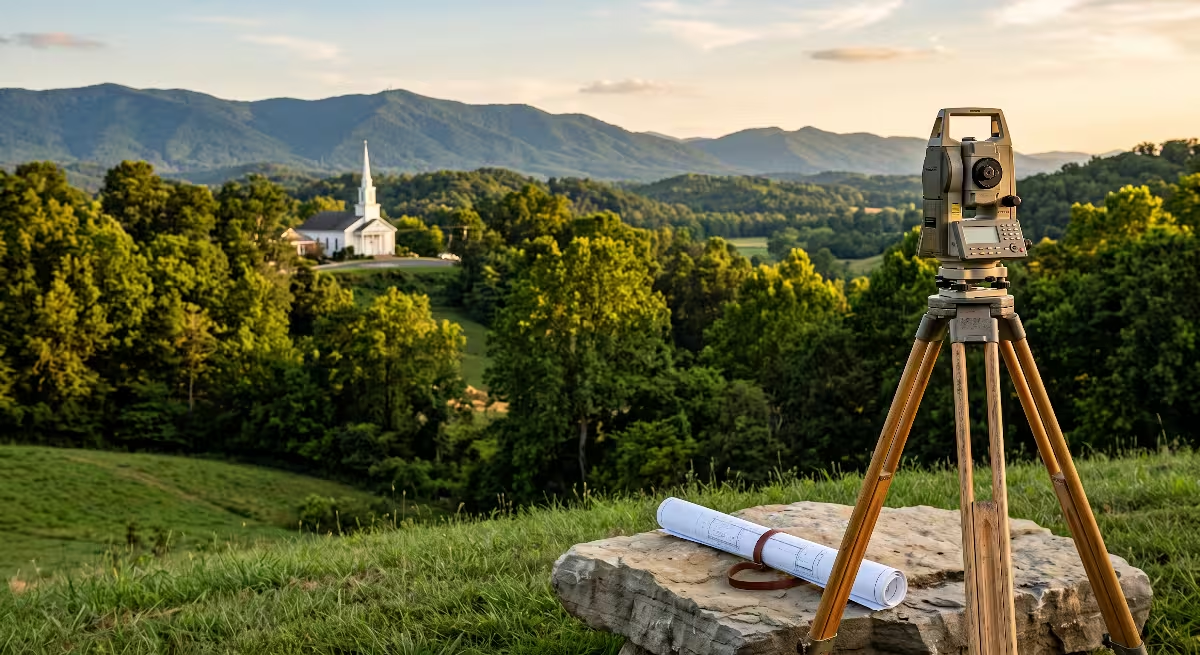
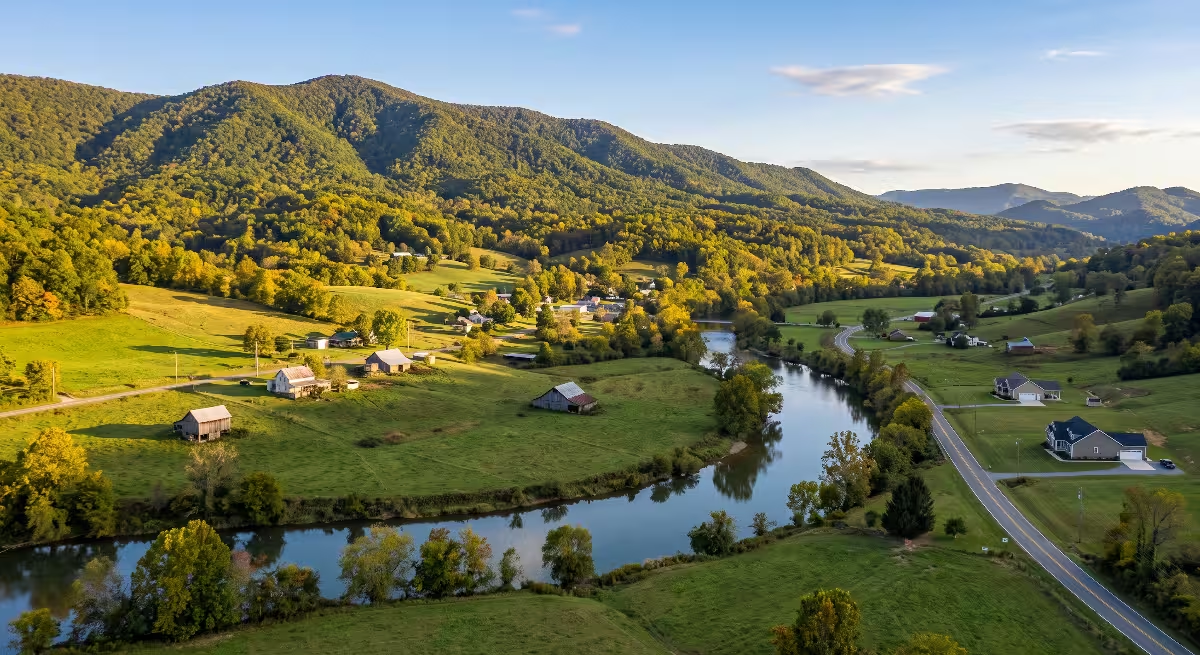
Every great settlement starts with the lay of the land. Tusculum, TN is located in the rolling ridge-and-valley country of Greene County, Tennessee. To the south and east rise the high peaks of the Unaka Range and the Great Smoky Mountains, forming a blue wall along the North Carolina border. To the north and west roll the agricultural ridges and valleys that feed into the Holston and Nolichucky river drainages.
From a builder’s perspective, this landscape offers incredible natural advantages alongside specific site challenges. Tusculum, TN sits at an elevation of roughly 1,400 to 1,500 feet above sea level. This provides four distinct seasons, mild summer evenings compared to the lowlands of the deep South, and plenty of natural air circulation moving off the ridges.
The Nolichucky River basin has shaped the lifestyle and commerce of this region for hundreds of years. The river flows south and west of town, while local creeks like Moon Creek wind straight through the heart of the municipal landscape. In the early days, these waterways provided drinking water, turned the wheels of grist mills, and created rich bottomlands where early settlers could grow corn, wheat, and tobacco.
The topography of Tusculum, TN is dominated by rolling hills underlain by Appalachian limestone and dolomite bedrock. When you walk a parcel of land in Tusculum, TN, you are walking over deep clay loam soils that support thick stands of native timber. Early pioneers found white oak, chestnut, yellow poplar, and walnut standing tall across these ridges. For a frontier builder, having access to rot-resistant white oak for foundation sills, yellow poplar for framing, and limestone for footings and chimneys was like striking gold.
Today, that same geography creates prime home sites with mountain views. When we design a home in Tusculum, TN, we always take advantage of the natural slope of the ridge. Positioning a home to capture natural breezes, managing water runoff from heavy mountain rainstorms, and using the natural grade to build walkout basements are traditions that modern builders share with the original pioneers of Tusculum, TN.
The Meaning Behind the Name

Have you ever stopped to wonder how a small, rural town in East Tennessee ended up with a classical Latin name like Tusculum? It is a fascinating story that links the mountains of Tennessee directly back to ancient Rome and the American Revolution.
In ancient times, Tusculum was a famous Roman resort city located southeast of Rome in the Alban Hills. It was where Roman patricians, philosophers, and statesmen built their country villas to escape the heat, noise, and disease of the capital city. The most famous resident of ancient Tusculum was the Roman statesman and orator Cicero. In his villa at Tusculum, Cicero wrote philosophical works about virtue, civic duty, republican government, and the pursuit of truth. To educated scholars of the eighteenth century, the word “Tusculum” stood for intellectual pursuit, peace, classic learning, and moral independence.
That brings us to the American colonies. In the mid-1700s, John Witherspoon, a prominent Scottish Presbyterian minister and scholar, came to America to serve as the sixth president of the College of New Jersey, which is known today as Princeton University. Witherspoon was a giant in early American education and one of the signers of the Declaration of Independence. When Witherspoon built his country home near Princeton, he named it “Tusculum” in honor of Cicero’s quiet retreat for scholarly thought.
Among Witherspoon’s students at Princeton was an ambitious young Scots-Irish scholar and minister named Samuel Doak. Doak absorbed Witherspoon’s deep devotion to education, Presbyterian theology, and classical literature. When Doak moved down the Great Wagon Road and pushed into the wilderness of East Tennessee, he brought that intellectual heritage with him in his saddlebags.
When Samuel Doak and his son established their school in Greene County in the early 1800s, they did not name it after a creek or a local tree. They named it Tusculum Academy. By choosing that name, they made a bold statement: right here in the rough, untamed wilderness of East Tennessee, they were planting a center of classical learning and civic virtue. That single log building gave its name to the academy, then to the college, and eventually to the entire incorporated city of Tusculum, TN.
First in Education Across Tennessee
When we look back at Tennessee history, many people imagine the frontier as a wild, rough place populated solely by hunters and trappers. While life on the frontier was indeed dangerous and physically demanding, the settlers who came to Tusculum, TN had a burning desire for structure, community, and intellectual growth. They believed that a free republic could only survive if its citizens were educated and capable of independent thought.
Because of this mindset, Tusculum, TN earned a permanent place in state history as a true pioneer in education. In fact, the roots of higher learning in Tennessee run directly through the soil of Greene County. Long before the state had large public universities, major metropolitan school districts, or statewide road systems, small Presbyterian schools were training teachers, ministers, lawyers, and political leaders.
The story of higher education in Tusculum, TN is not just a footnote; it is the headline. The institution that grew here holds the distinct title of being the oldest institution of higher learning in Tennessee, and the 28th oldest operating college in the United States. Think about that for a moment. Before Nashville was the recognized state capital, and before cities like Memphis or Chattanooga had taken modern form, scholars in Tusculum, TN were studying Latin, mathematics, natural philosophy, and ethics.
This early commitment to learning gave Tusculum, TN a unique civic identity. While other frontier settlements grew around livestock trading posts, iron forges, or riverboat landings, Tusculum, TN grew around classrooms, libraries, and student debate societies. That academic atmosphere shaped the people who lived here. It attracted educated families, skilled builders, and national leaders to a quiet corner of Greene County, leaving an imprint on the community that is clearly visible today.
Settlement Before Statehood (1780s–1790s)
To see how Tusculum, TN was founded, we have to travel back to the chaotic years following the American Revolutionary War. During the 1780s, the land that is now Tennessee was not yet a state. It was technically the western territory of North Carolina, but the government in Raleigh was hundreds of miles away across rugged mountains. Settlers in Upper East Tennessee felt ignored and unprotected against regional conflicts, leading them to form their own independent government, known as the State of Franklin, which lasted from 1784 to 1788.
Greeneville served as a key meeting point for the State of Franklin, and the surrounding farmland of what is now Tusculum, TN was quickly claimed by Scots-Irish, English, and German settlers. These pioneers were tough, independent, and deeply religious. When North Carolina ceded the territory to the United States federal government in 1790, the region was organized as the Territory South of the River Ohio, commonly known as the Southwest Territory.
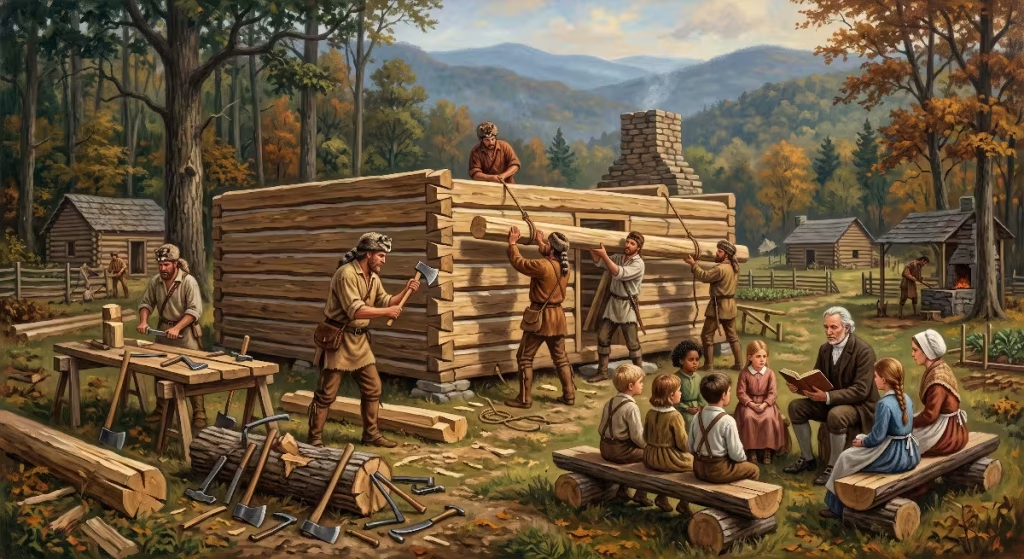
During this period, pioneer families began carving permanent homesteads out of the dense hardwood forests of Tusculum, TN. Building a home on the frontier was heavy, dangerous labor. Settlers could not run to a modern supply yard for kiln-dried lumber, concrete block, or engineered trusses. Everything had to be shaped by hand using an axe, an adze, and an auger.
The earliest homes in Tusculum, TN were single-pen log cabins. A pioneer would fell straight yellow poplar or oak trees, notch the ends using half-dovetail or V-notches to lock the corners tight, and raise the walls log by log. The spaces between the logs were packed with mud, clay, straw, and horsehair, a process known as chinking and daubing, to keep out the winter wind. Limestone rocks from local fields were dry-stacked or set with lime mortar to build massive end chimneys. These modest structures were durable, well-insulated, and built entirely from local resources. Several families laid their roots in Tusculum, TN during this territory era, setting the stage for permanent community institutions.
Reverend Hezekiah Balch and Greeneville College (1794)
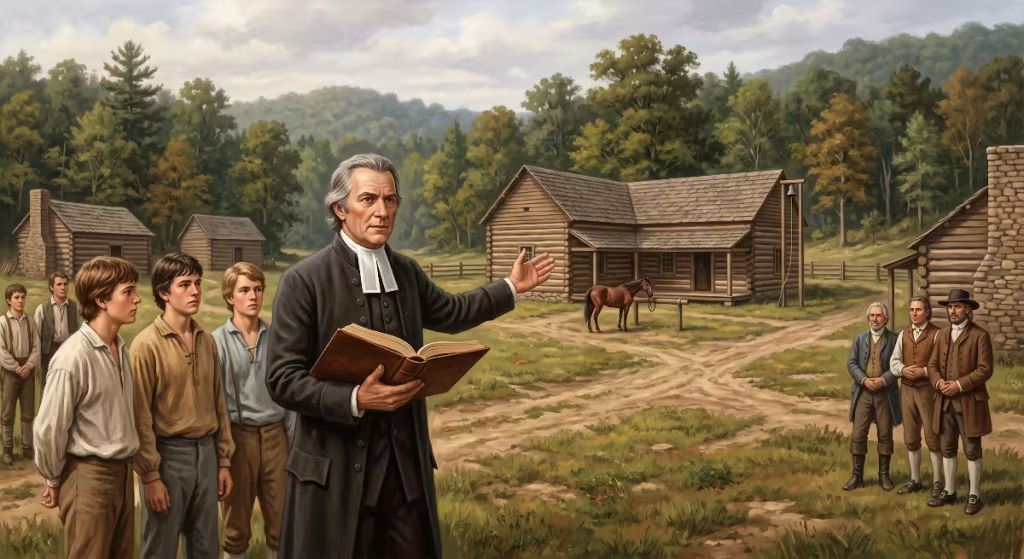
The educational lineage of Tusculum, TN involves two separate pioneer institutions that eventually joined forces. The first of these began in 1794, two full years before Tennessee achieved statehood in 1796. The Southwest Territory legislature granted a charter for Greeneville College, located just south of the main Greeneville settlement and only a short ride from modern Tusculum, TN.
Greeneville College was founded by Reverend Hezekiah Balch, another graduate of Princeton and a close peer of Samuel Doak. Balch was a fiery, brilliant, and often controversial Presbyterian preacher. He believed that the people of the frontier needed a rigorous classical college, not just a basic grammar school.
Balch took on the monumental task of raising funds for the frontier school. He actually traveled on horseback all the way back to New England and the mid-Atlantic states, raising several thousand dollars and collecting more than a thousand books to establish the college library. In the 1790s, hauling a library of leather-bound books across the Blue Ridge Mountains on packhorses was an extraordinary engineering and logistical feat.
Greeneville College began holding classes in a modest frame building on Balch’s farm. It was the first college chartered in the Southwest Territory. Balch served as its president until his death in 1810. Although Greeneville College operated independently for several decades, its fortunes would eventually intertwine directly with the school being built just down the road in Tusculum, TN. The library and resources gathered by Balch would later form part of the academic foundation of Tusculum, TN.
The Doak Dynasty: Founding Tusculum Academy (1818)
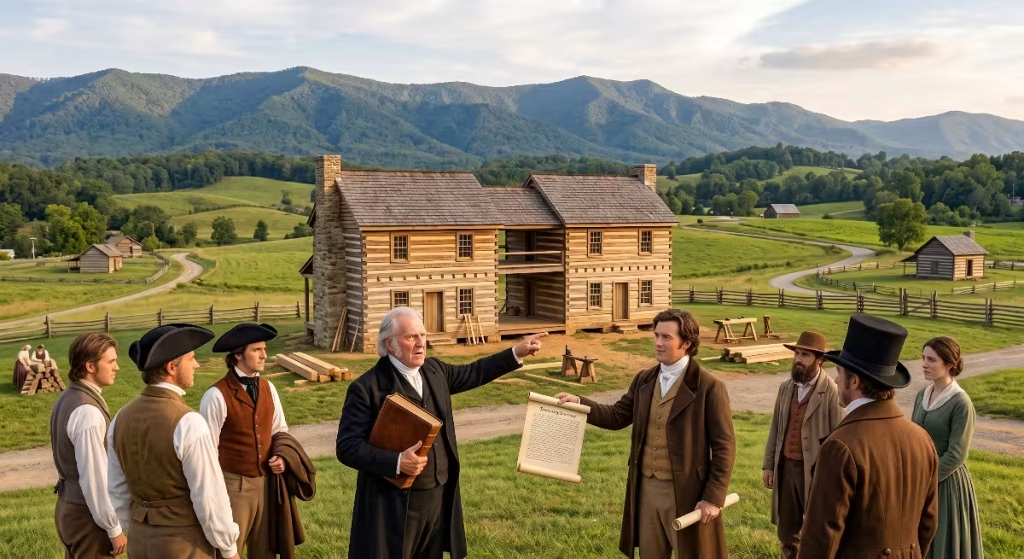
While Greeneville College was finding its feet, Reverend Samuel Doak was continuing his life’s work. Doak was already a legendary figure in East Tennessee history. Back in 1780, he had preached a famous sermon to the Overmountain Men at Sycamore Shoals before they marched across the mountains to defeat British loyalist forces at the Battle of Kings Mountain. He had founded Martin Academy in Washington County, which later became Washington College.
By 1818, Doak was ready for a new project. Along with his son, Reverend Samuel Witherspoon Doak, he moved to Greene County and founded Tusculum Academy in modern-day Tusculum, TN. They started classes in a modest log building on the Doak farm.
The relationship between father and son was a true academic partnership. Samuel Doak was an old-school classicist who taught Greek, Latin, logic, and moral philosophy. His son, Samuel Witherspoon Doak, was an energetic administrator and preacher who understood how to organize a growing student body and recruit families from across the region to send their sons to Tusculum, TN.
The Doaks believed in an education that balanced intellectual rigor with physical labor and Christian morality. Students in Tusculum, TN spent long hours reading the classics, writing essays, and practicing public speaking. But they also helped chop wood for the hearths, maintain the school grounds, and board with local farming families. The school gained a reputation throughout East Tennessee, Virginia, and North Carolina as a place where young men could receive an elite education without having to travel hundreds of miles to the eastern seaboard.
The Doak dynasty cemented Tusculum, TN as a center of educational excellence. Father and son worked side by side until the elder Doak passed away in 1830. Samuel Witherspoon Doak carried on the work, expanding the academy’s reputation and setting the stage for its elevation to a full degree-granting college.
Historic Architecture Spotlight: The Doak House (c. 1830)
As a builder and carpenter, few things excite me more than studying genuine nineteenth-century construction. If you want to see pure Appalachian craftsmanship preserved in its original context, you must visit the Doak House in Tusculum, TN. Built around 1830 for Reverend Samuel Witherspoon Doak and his family, this two-story brick home is a masterclass in early American residential construction.
Let us look closely at the materials and techniques used to build this landmark in Tusculum, TN:
1. Locally Fired Clay Brick
In 1830, you could not buy mass-produced bricks from an industrial yard. The bricks for the Doak House were made right on site or very close by in Tusculum, TN. Workers dug local clay, mixed it with water and sand using horse-powered pug mills, pressed it into wooden molds, dried the “green” bricks in the sun, and stacked them into outdoor kilns called scove kilns. Wood fires were kept burning for days to bake the bricks. You can see slight color variations throughout the exterior walls of the Doak House, ranging from deep orange to rich red, reflecting variations in kiln temperature.
2. Brick Bonding and Structural Integrity
The exterior walls of the Doak House are multiple wythes thick, meaning the walls are made of two or three layers of solid brick rather than brick veneer over wood framing. The masons used a combination of Flemish bond and common running bond. Flemish bond alternates headers (short ends of the brick) and stretchers (long sides of the brick) in each course. The headers tie the outer brick face directly to the inner structural brick wall, creating a massive, load-bearing masonry envelope capable of standing for centuries in Tusculum, TN.
3. Timber Framing and Joinery
Inside the Doak House, the floor joists and roof rafters were hand-hewn from old-growth yellow poplar and oak. Heartwood yellow poplar was the framing wood of choice in early East Tennessee because it was light, straight-grained, easy to work with hand tools, and naturally resistant to rot and wood-boring insects. Builders joined heavy structural members using traditional mortise-and-tenon joints secured with wooden pegs, called trunnels. This allowed the frame of the home to flex naturally during high winds and seasonal temperature shifts without cracking.
4. Classical Federal Details
The Doak House reflects the Federal architectural style popular in the early nineteenth century. Notice the balanced, symmetrical facade, the central entryway, the neat brick jack arches above the windows, and the simple interior mantels. The Doak family wanted a home that looked dignified and refined, reflecting their status as educators and ministers, while remaining practical for family life on a working farm in Tusculum, TN.
From Academy to College (1844)
By the early 1840s, Tusculum Academy had outgrown its original operational scope. Young men were graduating from the academy and seeking full collegiate degrees. Samuel Witherspoon Doak recognized that if the school wanted to compete with other institutions and retain top students, it needed to evolve.
In 1844, the state of Tennessee granted a formal charter elevating Tusculum Academy to Tusculum College. This charter gave the institution full legal authority to grant Bachelor of Arts and Master of Arts degrees. The change was much more than just a name change; it marked the emergence of Tusculum, TN as an official college town.
To house the expanding college, the trustees and community came together to construct a permanent academic building. In 1841, work began on what is known today as Old College. Completed around the time the college charter was secured, Old College was constructed of handmade brick on a raised limestone foundation, matching the durable building style of the Doak House.
Old College featured lecture halls, classrooms, a library room, and space for student debate societies. The addition of this substantial masonry structure gave Tusculum, TN an air of permanence. Students arrived from surrounding counties and across state lines, traveling by stagecoach or horseback to take up their studies. The local economy in Tusculum, TN shifted to support the college, with nearby farmsteads offering room and board, blacksmith services, and provisions for students and faculty.
Andrew Johnson’s Footsteps in Tusculum, TN
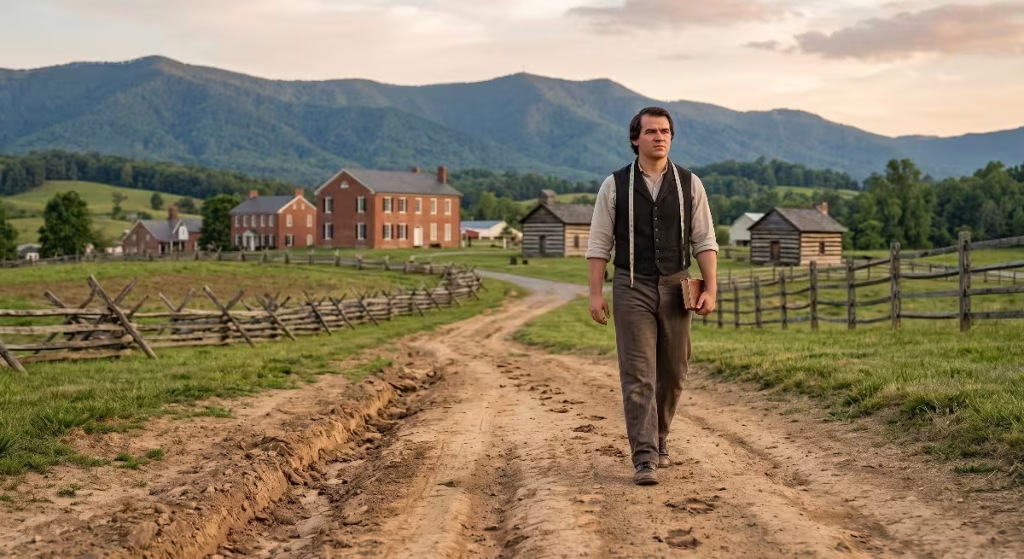
You cannot talk about the history of Greene County without discussing Andrew Johnson, the 17th President of the United States. While Johnson’s tailor shop and primary residence were located in nearby Greeneville, his life was deeply intertwined with the community of Tusculum, TN.
Andrew Johnson came from extremely humble beginnings. Born into poverty in North Carolina, he was a runaway tailor’s apprentice who arrived in Greeneville as a teenager unable to write smoothly or do complex math. As he built his tailoring business, he developed a deep hunger for knowledge and political debate.
Johnson looked to the academic community in Tusculum, TN as a primary resource for self-improvement. Starting in the late 1820s and 1830s, Johnson would regularly make the five-mile trek from his tailor shop in Greeneville out to Tusculum Academy. He walked that dirt road on foot just to attend and participate in meetings of the student debating societies.
Imagine that scene for a moment: young college scholars listening to an ambitious, self-taught tailor argue about constitutional law, taxation, and the rights of working people. Those debates in Tusculum, TN honed Johnson’s aggressive, direct speaking style, which later propelled him into the Tennessee state legislature, the U.S. House of Representatives, the U.S. Senate, the Tennessee governorship, and ultimately the White House.
Johnson never forgot his connections to Tusculum, TN. As his political fortunes grew, he became a staunch supporter of the school, eventually serving as a member of the Board of Trustees for Tusculum College. His personal relationship with the college cemented a bond between the municipality of Greeneville and the educational enclave of Tusculum, TN that remains strong to this day.
Civil War Strains and Divided Loyalties
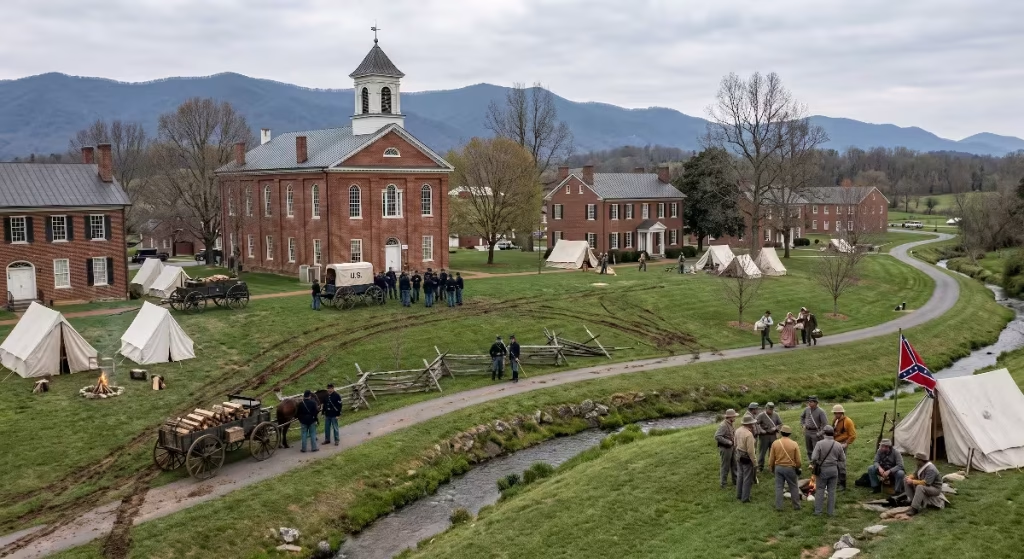
The decade of the 1860s brought heartbreak, division, and destruction to East Tennessee. While the state of Tennessee voted to secede from the Union in June 1861, East Tennessee was a fierce stronghold of Union sympathy. The mountain population owned very few slaves, felt alienated by the wealthy plantation aristocracy in Middle and West Tennessee, and wished to remain loyal to the federal government.
This division created bitter conflict in Greene County and directly impacted Tusculum, TN. Neighbors turned against neighbors, churches split, and families were torn apart. Some young men from Tusculum, TN slipped across the mountains into Kentucky to enlist in the Union Army, while others volunteered for the Confederate forces.
During the war, collegiate operations in Tusculum, TN ground to a near-complete halt. Students and professors joined the military, leaving the campus largely vacant. Old College and other buildings in Tusculum, TN were used at various times as barracks, supply depots, and field hospitals by both Union and Confederate forces as control of the East Tennessee railroad line swung back and forth.
Troops occupying the campus caused significant physical damage. Desks, wooden railings, and fences were torn down and burned as firewood during cold winter nights. Lead weights were taken from window sashes to melt into bullets. Books from the library were scattered, damaged, or carried off.
Compounding the tragedy, Samuel Witherspoon Doak passed away in 1864, in the middle of the conflict. By the time the war concluded in 1865, Tusculum, TN was emotionally exhausted, economically broke, and facing a badly damaged educational campus.
The 1868 Merger: Rebuilding Higher Education
Following the Civil War, the entire South was forced into a painful period of Reconstruction. In Greene County, both Greeneville College and Tusculum College were struggling to survive on their own. Both institutions had lost endowments, enrollment had collapsed, and their physical buildings were in desperate need of renovation.
Leaders in both communities realized that trying to operate two competing Presbyterian colleges within five miles of each other was no longer practical. In 1868, the trustees of both schools made a historic decision: they agreed to merge the two institutions into a single entity, chartered as Greeneville and Tusculum College.
Under the terms of the merger, the consolidated institution chose to focus its educational campus at the Tusculum location. The library assets, historical records, and remaining funds of Greeneville College were moved to Tusculum, TN. This decision was a critical turning point for the community. If the campus had been consolidated in Greeneville, modern Tusculum, TN might have faded into a simple agricultural crossroad.
Instead, the merger revitalized the campus in Tusculum, TN. Faculty members were hired to replace those lost during the war, students returned to the classrooms, and the institution reopened its doors to young men and women looking to rebuild their lives in the post-war South. The school dropped the combined name decades later, officially returning to Tusculum College, but the 1868 union permanently anchored the combined legacy of Balch and Doak in Tusculum, TN.
The Gilded Age Patronage: Nettie Fowler McCormick
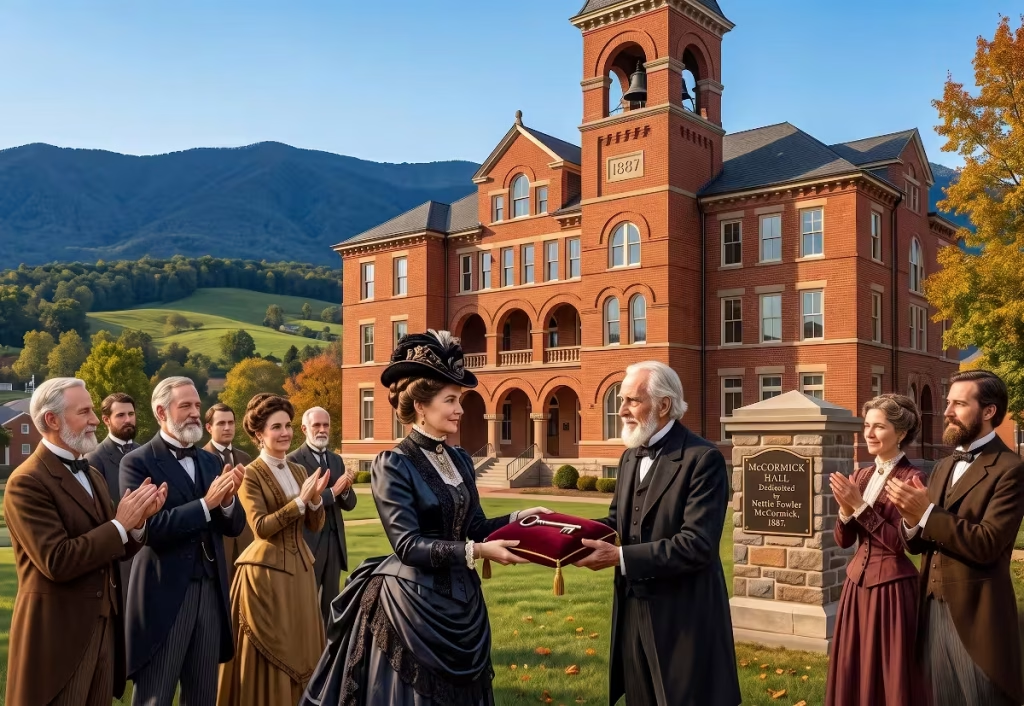
During the late nineteenth century, small liberal arts colleges across the country faced severe financial hurdles. Tusculum, TN was no exception. The college had high academic standards but a very modest endowment. That changed when a wealthy Northern philanthropist took a personal interest in the mountain youth of East Tennessee.
Nettie Fowler McCormick was the widow of Cyrus McCormick, the inventor of the mechanical reaper and founder of the International Harvester empire. Mrs. McCormick was a devout Presbyterian who used her enormous wealth to support Christian education, with a particular focus on rural colleges in Appalachia.
Starting in the 1880s, Nettie Fowler McCormick became the greatest benefactor in the history of Tusculum, TN. Her generosity transformed the campus from a small collection of buildings into a modern, thriving collegiate landscape.
Her philanthropic gifts funded several major construction projects:
- McCormick Hall (1887): A stunning multi-story administrative and classroom building. Built in the Romanesque Revival style, it features heavy brick arches, rock-faced stone trim, and a prominent bell tower that became an immediate landmark in Tusculum, TN.
- Craig Hall: Built to provide dormitory housing for male students.
- Gordon Hall: A dormitory built specifically to accommodate female students, helping Tusculum, TN expand its coeducational programs.
- Campus Infrastructure: Mrs. McCormick also provided funds for central heating, library expansions, and faculty salaries.
The architectural influence of the McCormick era gave Tusculum, TN a sophisticated collegiate character. Rather than building simple wood-frame halls, the college erected durable, firesafe brick structures that still stand proudly along Erwin Highway today. McCormick’s support ensured that Tusculum, TN would enter the twentieth century on solid financial and structural footing.
Official Incorporation as a City (1959)
For the first 140 years of its settled history, Tusculum, TN was not an incorporated town. It was an unincorporated village and college community lying within the rural borders of Greene County. Local services were limited, roads were maintained by the county, and there was no formal city hall, police department, or municipal zoning.
By the 1950s, the post-World War II building boom was transforming East Tennessee. Greeneville was growing steadily eastward, automotive traffic was increasing on state highways, and open farmland around the college was being eyed for residential and commercial development.
Residents and college officials in Tusculum, TN realized that they needed local control over their own destiny. They wanted to protect the quiet, historic character of their neighborhood, provide dedicated municipal services, and ensure that commercial growth was properly managed.
On May 12, 1959, the citizens voted to officially incorporate as the City of Tusculum, TN. The town adopted a commission-manager style of government, establishing an elected city commission, a mayor chosen from among the commissioners, and a professional city manager to oversee day-to-day services.
Incorporation allowed Tusculum, TN to create its own dedicated police department, build a municipal hall, establish local planning and zoning boards, and manage road maintenance. This municipal autonomy allowed Tusculum, TN to maintain its identity as a clean, peaceful residential and academic enclave, distinct from the busier industrial and commercial centers of Greeneville.
Local Infrastructure Evolution
Infrastructure is the backbone of any healthy community. For custom builders and developers, understanding how utilities, roads, and water systems developed tells you everything you need to know about where and how a town can grow.
In the nineteenth century, transportation in Tusculum, TN relied entirely on unpaved dirt turnpikes. The primary artery was the old stage road connecting Greeneville to Erwin and the mountain communities of North Carolina. During rainy East Tennessee winters, these clay roads turned into thick mud bogs that made travel miserable.
In the twentieth century, that stage road was paved and designated as State Route 107, commonly called the Erwin Highway. It runs directly through the center of Tusculum, TN, linking the university campus, city hall, and local businesses.
As regional truck traffic and commuting expanded in the late twentieth century, having heavy traffic pass directly through the historic campus of Tusculum, TN created safety and noise concerns. To solve this, state and local transportation planners developed the Tusculum Bypass (part of U.S. Route 11E). The bypass routes heavy freight and high-speed commuter traffic around the northern edge of the city, allowing easy regional transit while keeping the historic heart of Tusculum, TN quiet and pedestrian-friendly.
Water and sewer infrastructure followed a similar thoughtful path. Tusculum, TN partnered with regional utility districts to bring municipal treated water and sanitary sewer lines to key corridors. For modern home builders, having access to reliable public water and sewer means you can design custom homes without always having to clear land for large septic drain fields or drill deep water wells, though beautiful acreage tracts on the town’s perimeter still utilize private septic systems successfully.
Community Amenities and Green Spaces
A major reason why families, retirees, and faculty choose to live in Tusculum, TN is the quality of life offered by its public parks and preserved outdoor spaces. Despite being a small municipality, Tusculum, TN has invested heavily in creating clean, safe, and scenic green spaces.
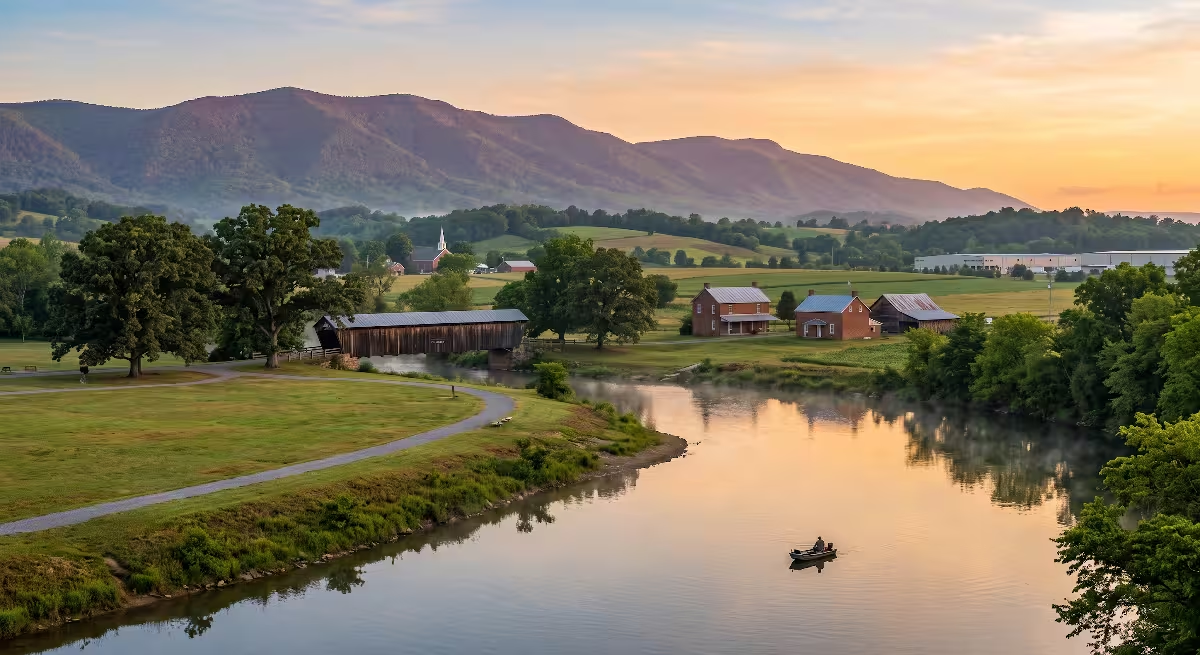
The crown jewel of the city’s park system is the Tusculum Linear Park Trail. This paved multi-use greenway winds along the banks of Moon Creek, providing a peaceful corridor for walking, jogging, cycling, and bird watching. The trail connects residential neighborhoods directly to the university campus, municipal athletic fields, and local historic sites.
From a civil planning standpoint, the linear park serves two vital functions:
- Recreational Value: It gives residents of Tusculum, TN a safe, car-free environment to exercise and enjoy the natural beauty of the Appalachian foothills.
- Stormwater Management: By preserving the riparian corridor along Moon Creek as green parkland, the city protects natural wetlands and prevents residential flooding during heavy spring rainstorms.
Adjacent to the trail system, the city maintains well-kept municipal athletic facilities, picnic pavilions, and open fields that host community festivals, youth sports, and regional gatherings. This blend of historic preservation and modern park development gives Tusculum, TN a welcoming, small-town atmosphere that is increasingly rare in fast-growing suburban areas.
Transition to Tusculum University (2018)
Institutions must continue to adapt, and in 2018, Tusculum College marked its bicentennial by taking a major institutional step: it officially transitioned to Tusculum University.
This name change reflected decades of academic expansion. Tusculum, TN was no longer just home to a traditional undergraduate college. The institution had added extensive graduate programs, professional adult education degrees, online degree paths, and specialized pre-professional tracks in healthcare, education, and business administration.
The university’s physical presence in Tusculum, TN expanded as well. Modern academic facilities, such as the Meen Center for Science and Math, brought cutting-edge laboratories, medical training simulators, and energy-efficient building designs to campus. The Meen Center stands as a model of modern educational construction, utilizing high-performance curtain walls, advanced HVAC air-handling systems, and smart-classroom technology right across the lawn from nineteenth-century brick buildings.
The university serves as the economic and cultural heartbeat of Tusculum, TN. It brings student energy, collegiate sports, theatrical performances, lectures, and employment to the area. For local property owners, having a stable, prestigious university in the center of town provides steady rental demand, supports neighborhood property values, and ensures a vibrant local culture.
Frequently Asked Questions about Tusculum, TN
When people search online for information about Tusculum, TN, several specific questions come up repeatedly. Let us answer these common queries directly with accurate, factual details.
What is Tusculum, TN known for?
Tusculum, TN is best known as the home of Tusculum University, the oldest institution of higher learning in Tennessee and the 28th oldest in the United States, founded in 1794 and 1818. It is also famous for its deep pioneer history, including the historic Doak House Museum, its well-preserved early nineteenth-century brick architecture, and its close historical ties to 17th U.S. President Andrew Johnson.
How did Tusculum, Tennessee get its name?
Tusculum, TN was named by its founder, Reverend Samuel Doak, in honor of ancient Tusculum, an Italian resort city near Rome where the philosopher Cicero had his country villa. Doak adopted the name from his alma mater, Princeton University, where university president John Witherspoon had named his own country estate Tusculum. The name represents a place of classical learning, quiet reflection, and civic virtue.
Is Tusculum, TN a separate city from Greeneville?
Yes, Tusculum, TN is a completely separate, legally incorporated municipality. While it shares a close geographic boundary and economic ties with the Town of Greeneville, Tusculum, TN was formally incorporated on May 12, 1959. It has its own city commission, mayor, city manager, municipal court, police department, and zoning ordinances.
What historical buildings are on the National Register in Tusculum, TN?
The center of the community is recognized as the Tusculum College Historic District on the National Register of Historic Places. Key historic buildings include:
- The Doak House (c. 1830): The Federal-style brick home of co-founder Samuel Witherspoon Doak.
- Old College (1841): The oldest academic building on campus, built of handmade brick.
- McCormick Hall (1887): The Romanesque Revival hall built with funds from Nettie Fowler McCormick.
- Welty-Craig Hall and Virginia Hall: Historic residence and academic structures from the late nineteenth and early twentieth centuries.
- The Tusculum Arch: A stone entrance monument welcoming visitors to the historic campus.
Architectural Diversity in Tusculum, TN
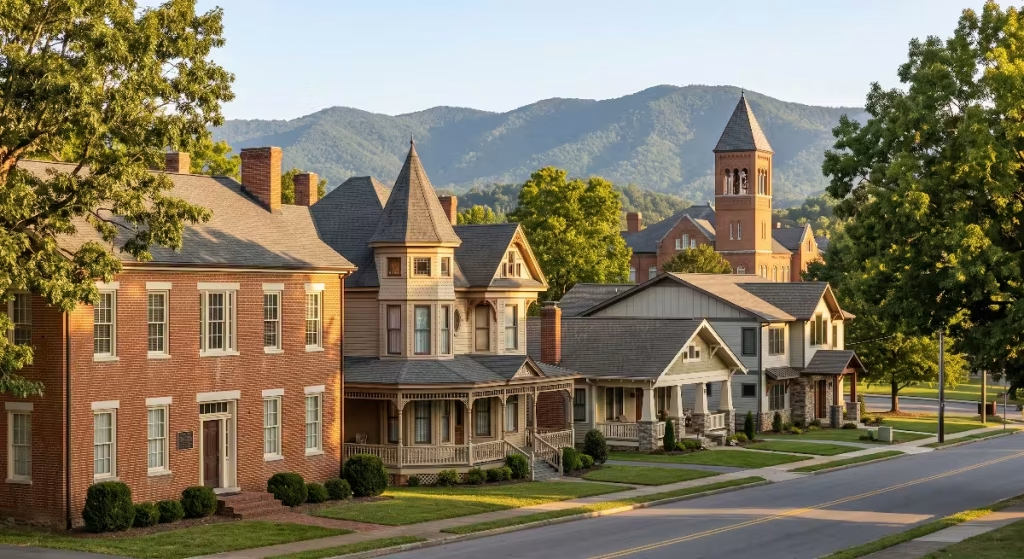
From a custom home builder’s viewpoint, walking through the neighborhoods of Tusculum, TN is like reading a field guide to American architectural history. Because the city developed gradually over two centuries rather than exploding in a single decade, you find a balanced mix of architectural styles standing comfortably together.
Federal and Greek Revival (1820–1860)
The earliest substantial homes in Tusculum, TN feature simple, elegant Federal styling. These homes focus on strict symmetry, side-gabled roofs, multi-pane double-hung windows (often in a six-over-six or nine-over-six glass configuration), and transom lights over the front entry door. Interior layouts traditionally follow a central-hall plan, allowing cross-ventilation to cool the home during humid summer months.
Victorian and Romanesque Influences (1880–1910)
Following the arrival of McCormick funding and the post-war recovery, homes and campus buildings in Tusculum, TN adopted richer, more textured styles. You will find Queen Anne Victorian elements such as wrap-around porches, steep hipped roofs, turned porch posts, and decorative wooden brackets. These homes were designed for hospitality, offering wide, shaded outdoor porches where families could sit and enjoy mountain breezes.
Craftsman Bungalows and Folk Farmhouses (1920–1940)
As automotive travel expanded along State Route 107, early twentieth-century bungalows were built on the parcels surrounding the college. These homes feature low-pitched gables, exposed rafter tails, wide front porches supported by tapered square columns on stone piers, and built-in interior cabinetry. They offer efficient floor plans, excellent structural integrity, and cozy, functional living spaces.
Mid-Century Ranch Homes (1950–1970)
Following the 1959 municipal incorporation of Tusculum, TN, several residential subdivisions were platted. These neighborhoods feature classic mid-century ranch homes built with low horizontal profiles, solid brick veneer exteriors, hardwood oak floors, and full daylight basements. These homes remain popular today because of their sturdy framing, single-level living convenience, and large lot sizes.
Modern Custom Construction (1980–Present)
Recent residential construction in Tusculum, TN leans toward modern mountain craftsman styles, custom timber-frame homes, and traditional two-story family homes. Modern builders use fiber-cement siding, engineered floor systems, spray-foam insulation, and high-efficiency heat pumps to deliver twenty-first-century energy performance while respecting the traditional aesthetic of Tusculum, TN.
Land and Topography: Building in Greene County
If you are planning to purchase land and build a custom home in Tusculum, TN, you need to understand the unique physical realities of building in this part of Greene County. Having managed home building projects across East Tennessee, I always tell clients that what is under the grass is just as important as what goes on the roof.
Here are the primary site development considerations for building in Tusculum, TN:
1. Soil Composition and Karst Geology
Greene County sits over limestone formations. Over thousands of years, groundwater can dissolve limestone bedrock, creating what geologists call karst topography. This can result in sinkholes, underground fissures, and variable bedrock depths.
- Builder’s Tip: When purchasing land in Tusculum, TN, always walk the property after a heavy rain. Look for natural depressions where water might collect or disappear underground. Before pouring footings, perform soil penetration tests or work with a builder who knows how to dig down to solid, undisturbed subsoil or stable bedrock.
2. Clay Soils and Foundation Engineering
The topsoil in Tusculum, TN quickly gives way to heavy red and brown clay subsoils. East Tennessee clay has a high plasticity index, meaning it expands when wet and contracts when dry.
- Builder’s Tip: Proper foundation drainage is non-negotiable in Tusculum, TN. Every foundation must have a dedicated perforated perimeter drain pipe surrounded by clean washed gravel, covered with filter fabric, and daylighted to gravity away from the house. Exterior basement walls require thorough waterproof coatings and dimpled drainage boards to prevent water intrusion.
3. Slope Management and Basements
Because Tusculum, TN features rolling ridges, flat building lots are rare. Most parcels have a gentle to moderate slope.
- Builder’s Tip: Do not fight the slope; design with it. A sloping lot in Tusculum, TN is an ideal candidate for a walkout basement. This gives you high-value square footage, natural daylight in lower-level bedrooms, and easy access to outdoor patio spaces, while reducing the amount of cut-and-fill dirt work needed on site.
4. Solar Orientation and Mountain Views
Many building sites in Tusculum, TN offer sweeping views of the southern and eastern mountain ridges.
- Builder’s Tip: Orient your primary living spaces, covered rear porches, and primary bedroom suites toward those views. However, be mindful of western afternoon sun exposure. Using wide overhangs, covered porches, and low-emissivity (Low-E) insulated glass helps keep the home cool and prevents your HVAC unit from overworking during July and August.
The Small-Town Balance: Why Buyers Choose Tusculum, TN
Over the past decade, we have seen a noticeable influx of custom home buyers moving into East Tennessee. Some are moving from urban centers in other states, while others are relocating from larger nearby cities like Knoxville or Nashville. When people look at the Tri-Cities region, Tusculum, TN consistently stands out as a unique sweet spot.
Here is why this community resonates so strongly with custom home buyers:
Peaceful Atmosphere with Low Density
Unlike rapidly growing metropolitan suburbs where homes are built practically touching one another, Tusculum, TN has maintained a calm, low-density rural character. You can still purchase a custom home on a one-acre, three-acre, or ten-acre parcel where you have space for a garden, a detached workshop, or simply private woods between you and your neighbor.
Proximity to Tri-Cities Amenities
Living in Tusculum, TN does not mean sacrificing convenience. The city is located:
- 5 minutes from downtown Greeneville (shopping, dining, hospitals, and local schools)
- 30 minutes from Johnson City (regional medical centers, East Tennessee State University, shopping)
- 45 minutes from Kingsport (manufacturing hubs, outdoor recreation)
- 1 hour from the Great Smoky Mountains National Park
You get to enjoy the quiet serenity of a small college town while remaining within an easy drive of regional employment, advanced healthcare facilities, and commercial airport hubs like Tri-Cities Airport (TRI).
Strong Property Values and Historic Pride
Because of the presence of Tusculum University, the historic districts, and active municipal leadership, Tusculum, TN takes pride in its appearance. Properties are generally well-maintained, zoning regulations prevent industrial creep into residential neighborhoods, and the rich history creates a stable environment for long-term real estate investments.
Building Your Future in Historic Tusculum, TN
Whether you are an architecture fan, a history lover, or a future homeowner searching for the perfect piece of land, Tusculum, TN offers something genuinely special.
From its humble beginnings in Samuel Doak’s log academy to the thriving collegiate and municipal community it is today, Tusculum, TN proves that when you build with integrity, purpose, and good materials, the things you create can last for generations. The handmade bricks of Old College and the sturdy hewn timbers of the Doak House stand as quiet proof of the value of doing things right the first time.
If you are thinking about building a custom home in Tusculum, TN, take the time to visit the area. Walk along the Moon Creek trail, drive down the Erwin Highway under the shade of the campus trees, and study the rolling ridges that look out toward the Appalachian Mountains. It is easy to see why settlers stopped here two hundred years ago, and why so many families are proud to call Tusculum, TN home today.
When you are ready to turn your own dream home into reality, remember the lessons taught by the builders of Tusculum, TN: choose your site wisely, respect the lay of the land, demand quality craftsmanship in your framing and foundation, and build a structure that your family will be proud of for generations to come.