The Cradle of Westward Expansion
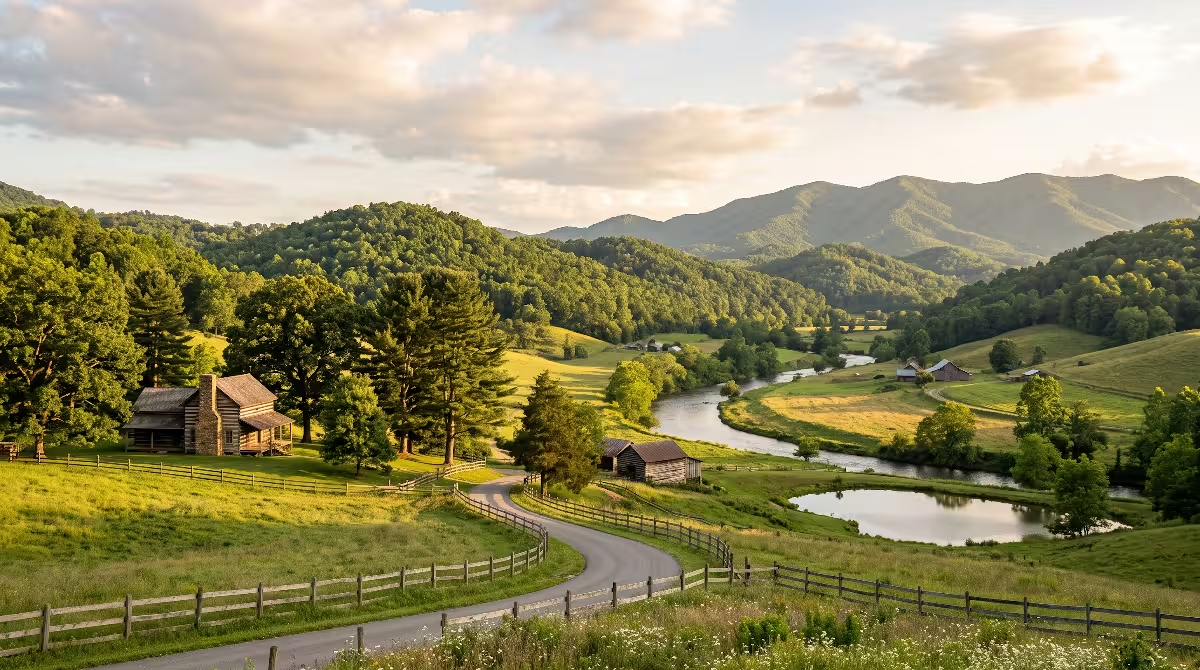
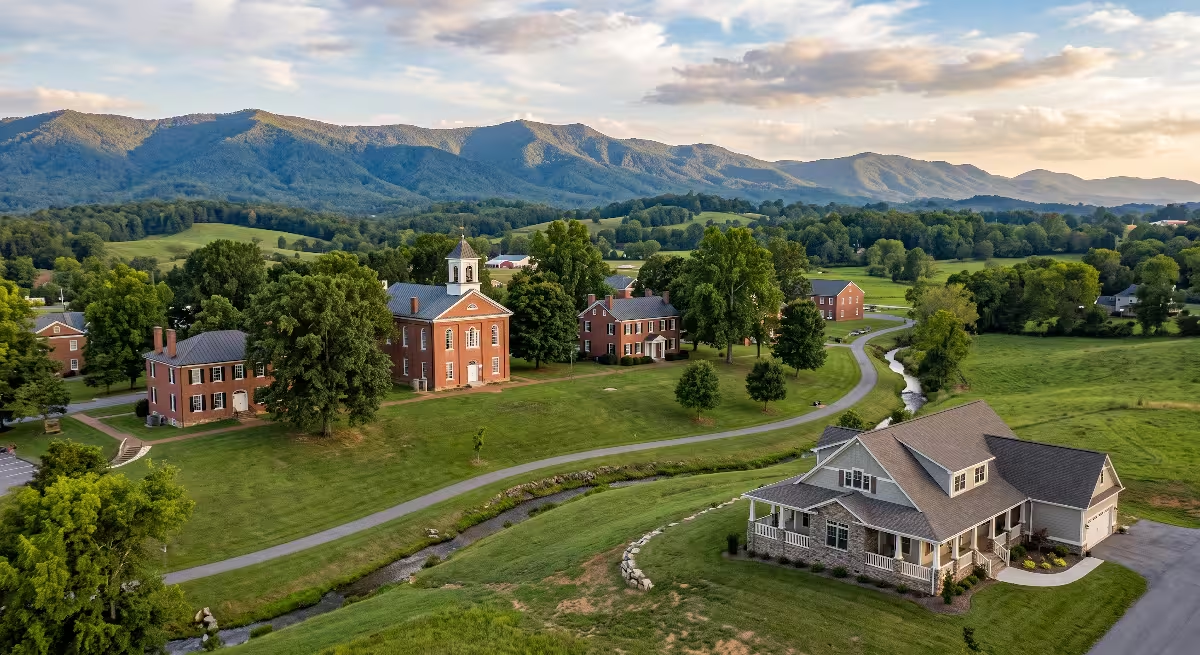
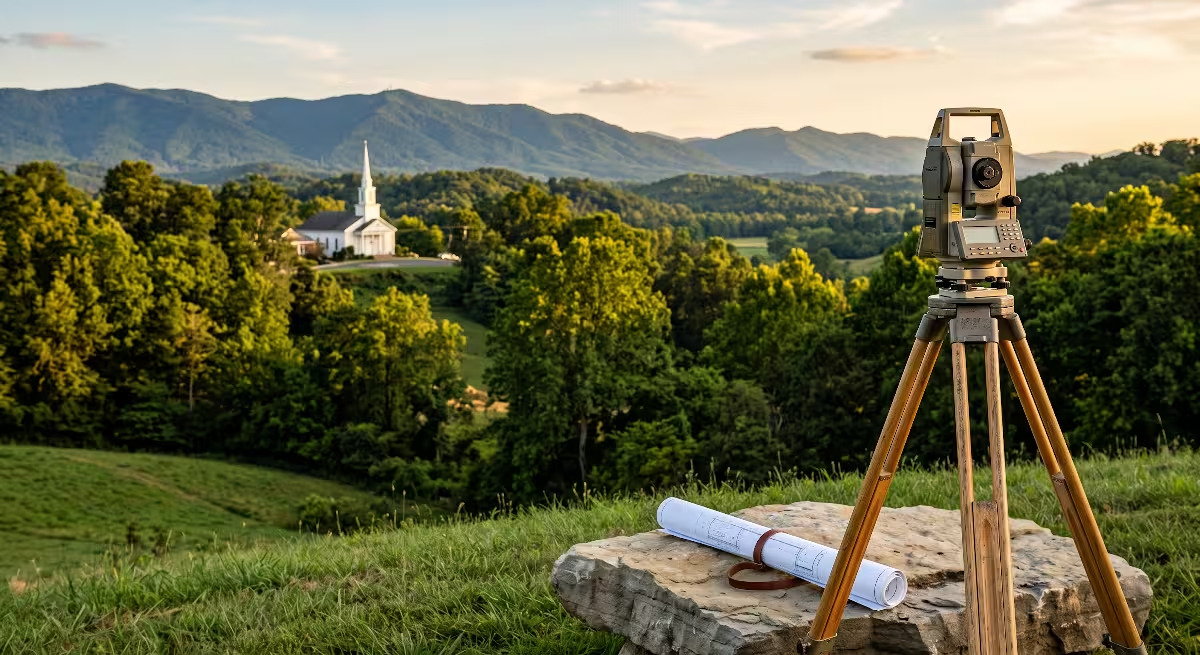
When you spend your life studying how land is shaped and how communities are built in East Tennessee, you quickly realize that geography dictates destiny. Elizabethton sits directly at the confluence of the Doe River and the Watauga River, cradled by the rugged ridgelines of the Blue Ridge Mountains. This natural river basin provided fertile bottomland, clean mountain water, and natural transportation corridors that drew people here long before modern roads existed. Understanding this landscape is the true starting point for anyone exploring Elizabethton, TN history, because the terrain itself decided where early pioneers would clear land, build timber cabins, and defend their families.
+-------------------------------------------------------------------------+
|                  CHRONOLOGY OF ELIZABETHTON, TN HISTORY                 |
+-------------------------------------------------------------------------+
|  1772       Watauga Association formed (First independent government)  |
|  1775       Transylvania Purchase signed at Sycamore Shoals             |
|  1775-1780  Carter Mansion constructed (Oldest frame home in TN)        |
|  1780       Overmountain Men muster at Sycamore Shoals for Kings Mtn    |
|  1799       Town of Elizabethton officially founded and chartered       |
|  1882       Elizabethton Covered Bridge built across the Doe River      |
|  1925-1928  Bemberg and North American Rayon Corporation plants open    |
|  1929       Historic Elizabethton Rayon Strikes shape labor rights      |
|  1948       Watauga Dam completed by TVA for regional flood control     |
+-------------------------------------------------------------------------+
The historical significance of this mountain valley goes far beyond local borders. Long before the United States declared independence from Great Britain, an unassuming Carter County river basin served as the testing ground for American self-governance, frontier treaties, and military courage. Out of this river valley came the first written constitutional government created by free settlers west of the mountains. A few years later, the same valley hosted the gathering of frontier riflemen who turned the tide of the American Revolutionary War. Every layer of Elizabethton, TN history shows a community of independent people who knew how to work with raw timber, rich earth, and mountain stone to forge a lasting civilization.
This article traces the complete timeline of the area. We will examine early Native American footpaths, the bold experiment of the Watauga Association, the architectural secrets of 18th-century timber framers, the rise of modern industrial textile mills, and the massive hydro-engineering projects that protect the valley today. Whether you are a lifelong resident, a prospective homebuyer looking to put down roots in Carter County, or a student of Appalachian heritage, this deep look into Elizabethton, TN history will show you how wilderness was transformed into a thriving mountain community.
Pre-Settlement and Native American Foundations
Centuries before European axes felled the first virgin chestnut and oak trees along the riverbanks, the Watauga River basin was an active hub of Native American life. The Cherokee people, along with earlier Woodland and Mississippian cultures, recognized the unique advantages of this valley. The rich soil left behind by seasonal river overflows provided ideal ground for growing corn, beans, and squash. The surrounding mountain ridges offered abundant game, including white-tailed deer, black bear, wild turkey, and elk.
The Cherokee Overhill settlements maintained a system of foot trails that crossed through what is now Carter County. One of the most important routes was the Great Indian Warpath, along with connected trails that followed the Doe and Watauga rivers through mountain gaps into North Carolina and Virginia. These pathways were not random dirt tracks. They were masterfully engineered routes that followed the easiest topographical grades through dense mountain passes, water gaps, and ridgelines. Many of our modern highways in East Tennessee still follow these exact native trade routes.
By the mid-1700s, European long hunters and trappers began crossing the Blue Ridge Mountains, venturing deep into the Appalachian wilderness. Men like Daniel Boone and William Bean recognized the immense value of the timber, game, and waterways in this region. However, British royal policy soon stood in the way of settlement. Following the French and Indian War, King George III issued the Royal Proclamation of 1763. This decree strictly forbade British colonists from buying land or settling west of the crest of the Appalachian Mountains, designating the territory as an Indian reserve.
Frontier settlers chose to ignore the royal proclamation. Drawn by the promise of fertile land and freedom from colonial taxes, bold families packed their belongings, crossed the rugged mountains, and established homesteads along the Watauga River. They knew they were living beyond the protection of British colonial law and British soldiers. This boundary defiance created the foundation for a culture of fierce independence, making this early frontier period one of the most exciting chapters in Elizabethton, TN history.
       [Blue Ridge Mountains]
                 |
                 v  (Pioneers defy 1763 Proclamation)
      [Watauga River Valley] <=== Cherokee Trade Trails
                 |
                 v
   [Independent Frontier Homesteads]
The Watauga Association (1772): America’s First Independent Government
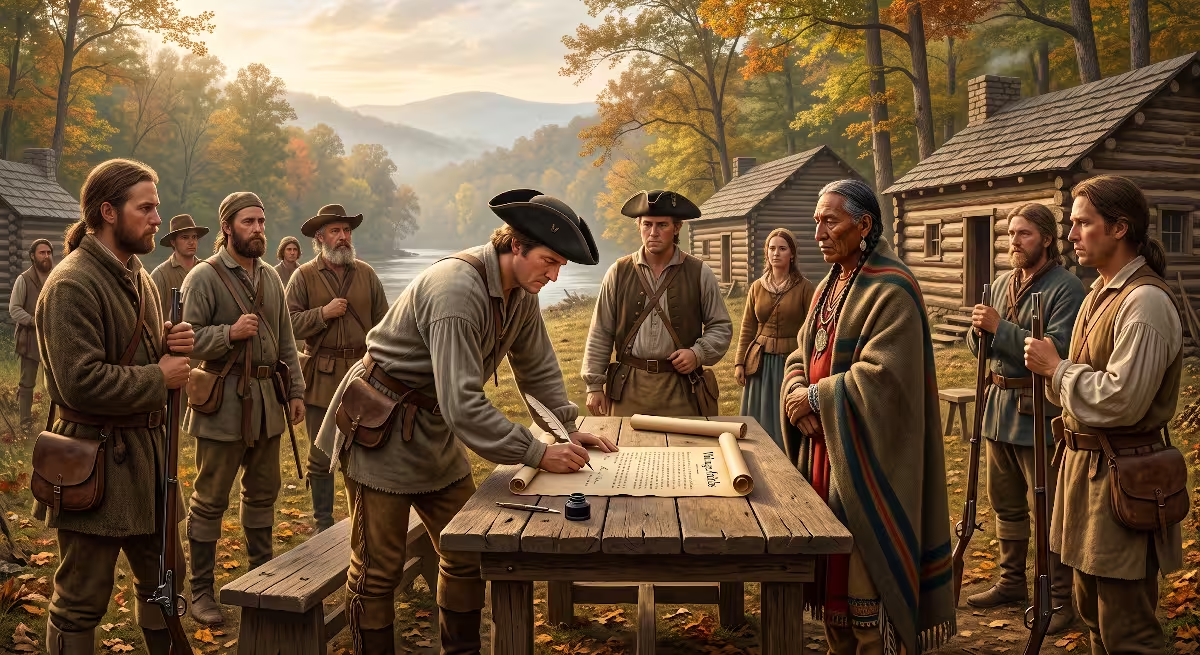
By 1772, the growing population of settlers living along the Watauga, Doe, and Holston rivers found themselves in a difficult legal situation. A formal survey revealed that their homesteads were not located within the official boundaries of the colony of Virginia as they had hoped, but were actually within territory claimed by North Carolina and occupied by the Cherokee. Because North Carolina refused to extend legal protections or government services across the mountains, the settlers had neither courts, sheriffs, land title offices, nor military defense.
Rather than abandoning their homesteads and moving back east, the settlers took a historic step. They gathered at Sycamore Shoals and established the Watauga Association in 1772. They drafted the Watauga Compact, which established the very first free, independent, and written constitutional government formed by American-born settlers west of the Appalachian Mountains. This document created a simple court of five commissioners to handle legal disputes, record deeds, settle estates, issue marriage licenses, and maintain a local militia.
Key leaders stepped forward to guide this new government. Men such as John Carter, James Robertson, and a young John Sevier brought structure and legal order to the wilderness. John Carter served as the chairman of the committee, providing steady leadership and practical business sense. James Robertson brought exceptional diplomacy skills, negotiating fair land leases directly with Cherokee chiefs. John Sevier brought sharp military leadership and administrative skill, later becoming the first governor of Tennessee.
The creation of the Watauga Association proved that ordinary citizens could establish the rule of law on their own without royalty or colonial governors. British royal authorities viewed the compact as dangerous and unlawful, with Lord Dunmore, the Royal Governor of Virginia, calling it a dangerous example of people setting up a separate government outside royal authority. Today, historians recognize the Watauga Compact as a vital milestone in Elizabethton, TN history and a direct forerunner to the principles written into the United States Constitution.
+--------------------------------------------------------------------------+
|                     THE 1772 WATAUGA COMPACT STRUCTURE                   |
+--------------------------------------------------------------------------+
|  Five-Member Commission : Managed civil disputes, recorded land deeds    |
|  Frontier Militia       : Provided collective defense against raids      |
|  Direct Lease System    : Negotiated land rights directly with Cherokee  |
|  Democratic Franchise   : Extended voting rights to frontier households  |
+--------------------------------------------------------------------------+
Sycamore Shoals and the Revolutionary War Turning Point
As the American Revolution approached, Sycamore Shoals, located within the modern city limits of Elizabethton, became a major center for frontier diplomacy, conflict, and military action. In March 1775, Judge Richard Henderson of North Carolina met with over one thousand Cherokee leaders and warriors at Sycamore Shoals. Accompanied by Daniel Boone, Henderson negotiated the Transylvania Purchase, also known as the Treaty of Sycamore Shoals.
Under this treaty, Henderson and his private land company purchased more than twenty million acres of land covering much of modern Kentucky and Middle Tennessee in exchange for six wagon loads of British trade goods. While older Cherokee leaders like Attacullaculla and Oconostota agreed to the trade, younger war chiefs strongly opposed it. Dragging Canoe warned the buyers that they had purchased a dark and bloody ground and vowed to resist any settlement of the land.
      [Transylvania Purchase (1775)]
     /                              \
[Attacullaculla / Chiefs]      [Dragging Canoe]
(Agreed to exchange land)     (Vowed armed resistance)
            |                            |
            v                            v
   [Settlers occupy land]       [1776 Fort Watauga Siege]
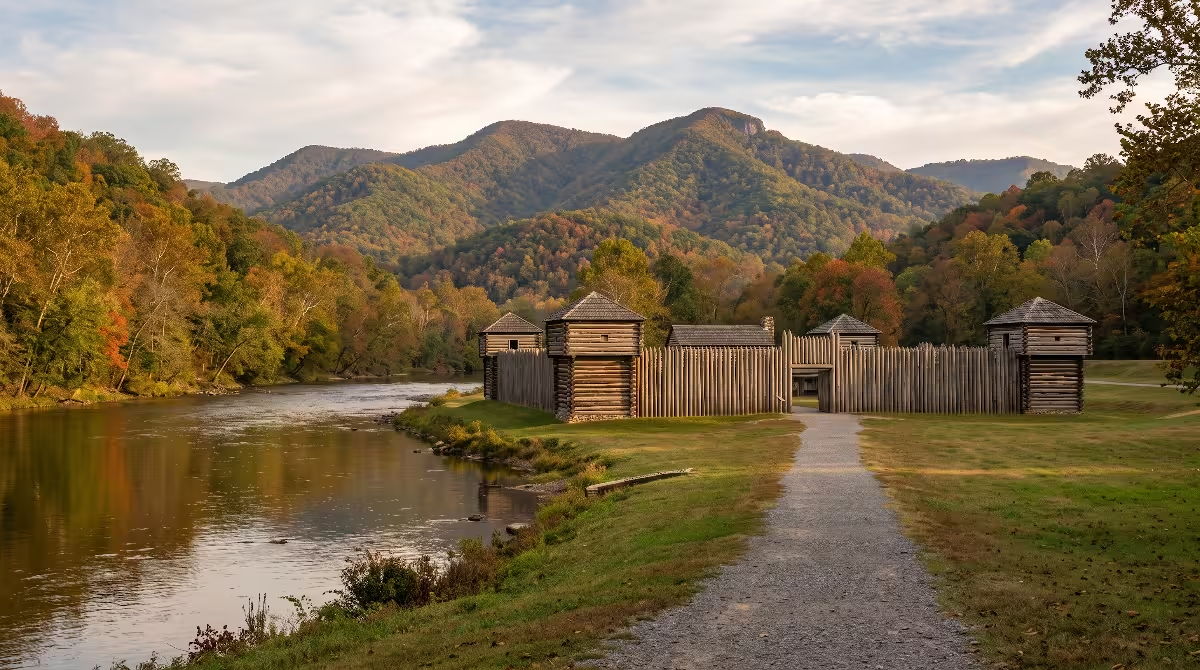
That resistance arrived in the summer of 1776, when Dragging Canoe and allied factions launched coordinated attacks against frontier outposts. Settlers fled to Fort Watauga at Sycamore Shoals, enduring a tense two-week siege. Under the command of John Carter, James Robertson, and John Sevier, the pioneers successfully defended the fort. During this siege, Catherine Sherrill was locked outside the fort gate during a surprise attack. John Sevier reached over the timber palisade, pulled her to safety, and later married her, creating one of the most famous romantic legends in Elizabethton, TN history.
The most famous moment at Sycamore Shoals occurred four years later, in September 1780. British Major Patrick Ferguson issued an arrogant ultimatum to the mountain settlers, warning them that if they did not lay down their arms, he would march his army over the mountains, burn their settlements, and hang their leaders. Instead of waiting to be attacked, the frontier settlers decided to take the fight directly to Ferguson.
On September 25, 1780, over one thousand backwoodsmen gathered at Sycamore Shoals. Known as the Overmountain Men, these volunteer fighters carried their personal hunting rifles, small bags of parched corn, and home-spun hunting shirts. Reverend Samuel Doak delivered a famous sermon, urging them to ride forth with the sword of the Lord and of Gideon.
+-------------------------------------------------------------------------+
|                  THE MARCH OF THE OVERMOUNTAIN MEN                      |
+-------------------------------------------------------------------------+
|  Sept 25, 1780: Muster at Sycamore Shoals (Elizabethton, TN)            |
|  Sept 26-29   : March across Yellow Mountain Gap in heavy snow          |
|  Sept 30-Oct 6: Regrouping and tracking British Major Patrick Ferguson  |
|  Oct 7, 1780  : Battle of Kings Mountain (Complete Patriot Victory)     |
+-------------------------------------------------------------------------+
The Overmountain Men marched across the Blue Ridge Mountains through deep mountain snow and caught up with Ferguson’s forces at the Battle of Kings Mountain on October 7, 1780. In an intense battle that lasted just over an hour, the mountain riflemen surrounded the ridge, killed Ferguson, and captured his entire army. Thomas Jefferson later described this decisive victory as the joyful turn of the tide of the American Revolution. This brave campaign remains the proudest military chapter in Elizabethton, TN history.
Founding and Naming of Elizabethton (1799)
Following the Revolutionary War, the settlers of Upper East Tennessee found themselves in political limbo once again. North Carolina ceded its western lands to the federal government to settle war debts, leaving the mountain settlements without state support. In response, local leaders formed the independent State of Franklin in 1784, electing John Sevier as its governor. For four years, the State of Franklin operated as an independent entity, creating its own currency, collecting taxes, and opening courts. Although the State of Franklin dissolved by 1788 due to internal political divisions and pressure from North Carolina, it showed the continuing desire for local self-determination that defined Elizabethton, TN history.
       [1784: Land Cession by North Carolina]
                         |
                         v
        [1784-1788: State of Franklin]
   (Led by John Sevier, self-declared state)
                         |
                         v
       [1796: Tennessee Enters the Union]
                         |
                         v
       [1799: Town of Elizabethton Founded]
When Tennessee officially joined the Union as the sixteenth state in 1796, the state legislature created Carter County, named in honor of General John Carter. Three years later, in 1799, the state assembly established the town of Elizabethton as the official county seat.
The town was laid out on a clean grid pattern along the banks of the Doe River, near its meeting point with the Watauga River. The founders named the town in honor of Elizabeth Maclin Carter. She was the wife of General Landon Carter and the daughter-in-law of John Carter. Elizabeth was known as a woman of strong character, intelligence, and business sense who managed large agricultural estates while her husband served in military campaigns and political conventions.
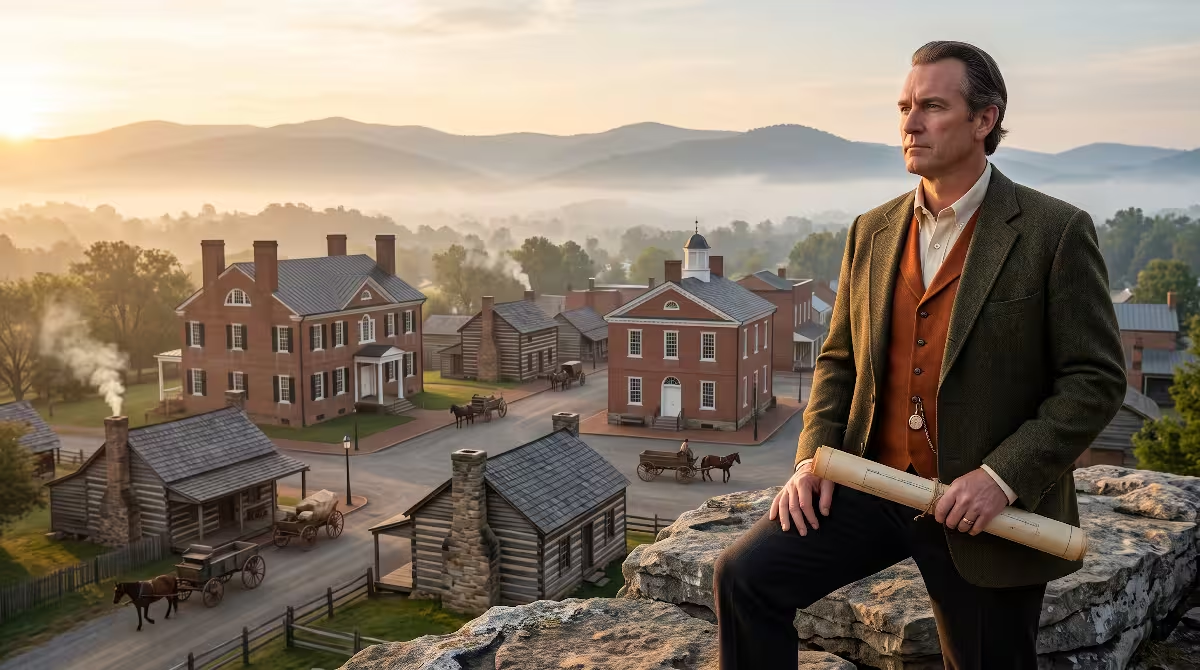
As the county seat, Elizabethton quickly became the center of commerce, justice, and community life in Carter County. Farmers from the surrounding valleys of Stoney Creek, Gap Creek, and the Doe River basin brought livestock, corn, timber, and iron blooms into town to trade. The establishment of local courts and a permanent public square cemented the town’s position as a vital hub in East Tennessee.
Architectural Legacy and Historic Preservation
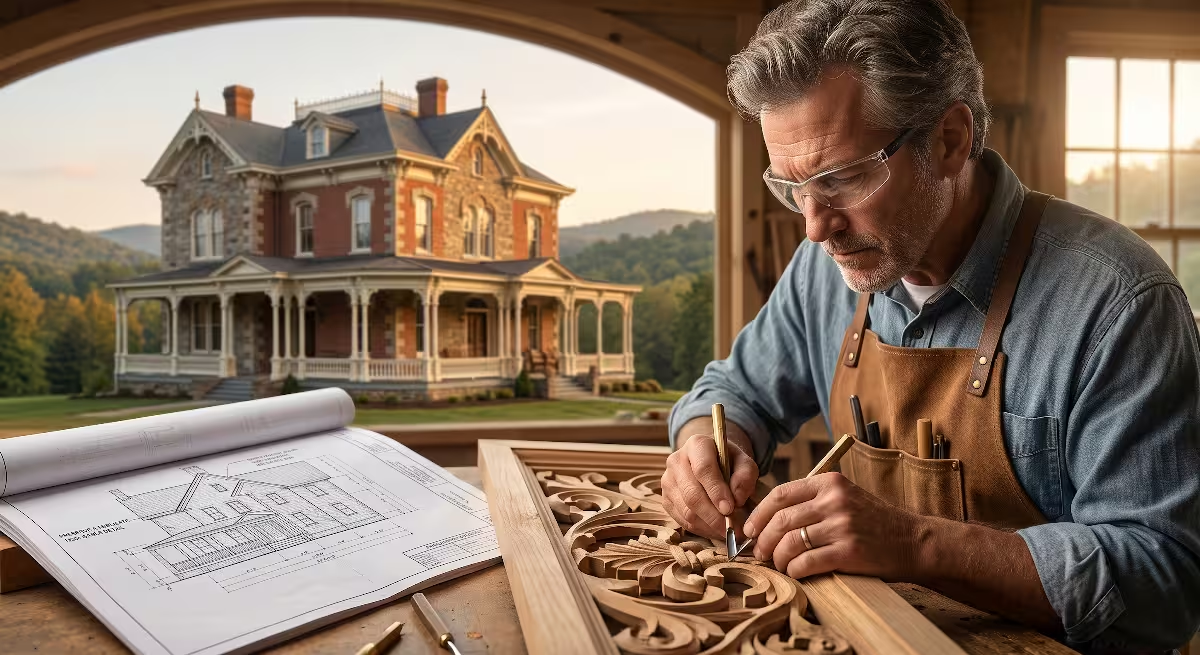
The historic buildings of Carter County tell the physical story of the people who built this valley. As a builder, looking at these surviving structures reveals incredible craftsmanship, durable materials, and smart structural engineering. These historic buildings provide tangible proof of the skill and resourcefulness found throughout Elizabethton, TN history.
+-------------------------------------------------------------------------+
|                  HISTORIC ARCHITECTURE OF CARTER COUNTY                 |
+-------------------------------------------------------------------------+
|  Carter Mansion (c. 1775-1780) : Oldest frame house in Tennessee       |
|  Sabine Hill (c. 1818)         : Premium Federal-style frontier estate  |
|  Covered Bridge (1882)         : Howe truss timber bridge over Doe River|
+-------------------------------------------------------------------------+
The John and Landon Carter Mansion (c. 1775 to 1780)
The Carter Mansion is the crown jewel of historic architecture in Carter County. Constructed between 1775 and 1780 by John Carter and his son Landon, it stands as the oldest surviving frame house in Tennessee. At a time when nearly every frontier family lived in simple dirt-floor log cabins, the Carters constructed a sophisticated, two-story home using heavy timber framing techniques.
+-------------------------------------------------------------------------+
|                      CARTER MANSION FRAMING DETAILS                     |
+-------------------------------------------------------------------------+
|  Joinery   : Hand-cut mortise and tenon joints with white oak pegs      |
|  Timbers   : Hand-hewn native virgin white pine, oak, and poplar        |
|  Interior  : Raised field paneling, decorative crown moldings           |
|  Finishes  : Original 18th-century painted landscapes on overmantels    |
|  Plan      : Pennsylvania-German hall-and-parlor floor layout           |
+-------------------------------------------------------------------------+
The home was built using hand-hewn virgin timber joined by mortise and tenon woodwork secured with white oak wooden pegs. Instead of rough-hewn log walls, the interior features raised field paneling, fine cornices, and detailed chair rails that reflect high-end English and Pennsylvania-German architectural influences.
Most remarkably, the home contains original 18th-century decorative paintings directly on the wood paneling above the fireplace mantels. These paintings represent the earliest known interior art of its kind in Tennessee. The Carter Mansion proved that frontier families could bring beauty, sophistication, and lasting engineering into the Appalachian wilderness, making it a cornerstone for understanding early Elizabethton, TN history.
Sabine Hill (c. 1818)
Located on a scenic knoll overlooking the valley, Sabine Hill is an exceptional example of Federal-style architecture from the early 19th century. Built around 1818 by Mary Patton Taylor, the widow of Brigadier General Nathaniel Taylor, the home showcases the growing wealth and refinement of the area following the War of 1812.
The home features classic Federal proportions, including a symmetrical exterior, delicate interior wood moldings, tall nine-foot ceilings, and grand brick fireplaces. Mary Patton Taylor came from a prominent family known for producing high-quality black gunpowder, which was used by the Overmountain Men at the Battle of Kings Mountain. Sabine Hill stands as a preserved monument to the post-Revolutionary period in Elizabethton, TN history, highlighting the transition from defensive frontier outposts to elegant agricultural estates.
The Elizabethton Covered Bridge (1882)
Spanning the Doe River in downtown Elizabethton is the historic Elizabethton Covered Bridge. Built in 1882, this 137-foot span is one of the most beloved and photographed landmarks in Tennessee. The bridge was commissioned by the Carter County Court to provide a reliable crossing between downtown Elizabethton and the nearby railway line.
       [Top Chord / Ridge Beam]
       / \   / \   / \   / \
      /   \ /   \ /   \ /   \   <== Timber Howe Truss Diagonal Struts
     +-----+-----+-----+-----+
     |  |  |  |  |  |  |  |  |  <== Vertical Iron Tension Rods
     =========================  <== Bottom Chord & Heavy Timber Deck
          [Doe River Flow]
The bridge was constructed under the supervision of Dr. E.E. Hunter, who hired local carpenter Thomas Matson to oversee the engineering. Matson selected a Howe truss system, a smart design that combined heavy diagonal timber struts with vertical iron tension rods. The entire structure was clad in protective wood siding and covered with a shingle roof to protect the load-bearing oak and pine framework from weather, moisture, and rot.
The engineering brilliance of the Howe truss design was proven during the catastrophic flood of May 1901. Heavy mountain rains caused the Doe River to rise to historic flood levels, tearing away homes, mills, and modern iron bridges all along its path. The wooden covered bridge held firm against the floodwaters, remaining fully intact while other crossings were washed downstream. Today, it stands as a fully operational pedestrian bridge and a lasting symbol of nineteenth-century engineering in Elizabethton, TN history.
The 20th-Century Rayon Boom and Industrial Transformation
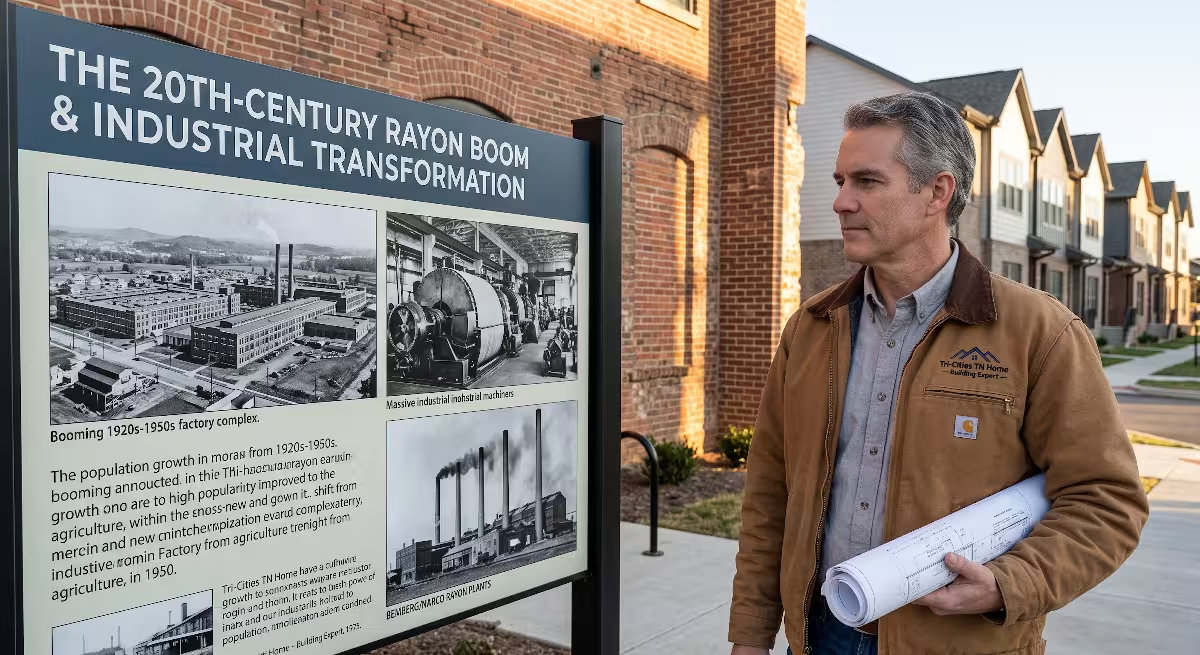
As the nineteenth century came to a close, Carter County began transitioning from an agricultural economy to an industrial powerhouse. The arrival of the railroad was the spark that started this transformation. The East Tennessee and Western North Carolina Railroad, affectionately known as the “Tweetsie” railroad, laid tracks through Elizabethton and the Doe River Gorge in the late 1800s.
+--------------------------------------------------------------------------+
|                     THE INDUSTRIAL TRANSFORMATION                        |
+--------------------------------------------------------------------------+
|  1880s-1910s : Tweetsie Railroad connects mountain timber and iron       |
|  1925        : American Bemberg opens plant along the Watauga River      |
|  1928        : North American Rayon Corporation (NARC) opens plant       |
|  1929        : Historic Rayon Strikes mark turning point in labor rights |
+--------------------------------------------------------------------------+
The narrow-gauge railroad made it possible to transport heavy timber, iron ore, and farm goods out of the steep mountains to national markets. This modern rail connection, combined with an abundant supply of clean river water and a hard-working local labor force, caught the attention of international investors in the 1920s.
In 1925, the German textile firm J.P. Bemberg selected Elizabethton for its new artificial silk manufacturing plant. Three years later, in 1928, a second major facility, the North American Rayon Corporation, was built right next to it along the Watauga River. These massive industrial plants completely changed the skyline and economy of Elizabethton. Farmland quickly gave way to modern housing subdivisions, paved city streets, commercial downtown buildings, and bustling retail stores.
         [Clean Mountain Water + Rail Transport]
                           |
                           v
     [American Bemberg & NARC Textile Plants (1925-1928)]
                           |
                           v
        [Rapid Urbanization of Elizabethton]
  (Paved streets, housing subdivisions, new commerce)
                           |
                           v
        [1929 Elizabethton Rayon Strikes]
The rayon boom brought thousands of good-paying jobs to Carter County, drawing farm workers and mountain families out of remote hollows and into industrial manufacturing. However, the rapid pace of factory work brought serious challenges. Plant workers faced long twelve-hour shifts, low wages, and exposure to harsh chemical fumes, such as carbon disulfide and sulfuric acid, used in the rayon spinning process.
These challenging conditions led to the historic 1929 Elizabethton Rayon Strike, one of the most famous events in Appalachian labor history. The strike was sparked in March 1929 by a young female worker named Margaret Bowen, who walked out of the inspection room with her fellow workers to protest unfair wage differences between male and female workers. Within days, thousands of workers from both the Bemberg and North American Rayon plants walked off the job.
The strike gained national news coverage as Appalachian women took to the picket lines, demanding fair wages, eight-hour workdays, and better workplace safety. Tennessee Governor Henry Horton sent in the National Guard to maintain order and protect factory property, turning the quiet mountain town into an armed military camp with armed soldiers patrolling the streets.
Although the strike ended with compromises that did not immediately give workers everything they wanted, it served as a major turning point for American labor organizing. The 1929 strike showed that mountain workers could organize effectively, setting the stage for future labor reforms across the American South and marking a powerful chapter in Elizabethton, TN history.
+-------------------------------------------------------------------------+
|                  THE 1929 ELIZABETHTON RAYON STRIKE                     |
+-------------------------------------------------------------------------+
|  Primary Spark : Margaret Bowen leads female inspection room walkout    |
|  Core Demands  : Fair pay, 8-hour workday, improved chemical safety     |
|  State Action  : National Guard troops sent to patrol plant property    |
|  Legacy        : Foundational milestone for Southern labor rights       |
+-------------------------------------------------------------------------+
Hydro-Engineering and Flood Control: TVA in Carter County
Living in a mountain valley means learning to respect the power of mountain water. The Watauga and Doe river basins drain hundreds of square miles of steep, forested mountain terrain. During periods of heavy spring rainfall or seasonal tropical storms, millions of gallons of runoff rush down the steep ridges into the river channels. Throughout early Elizabethton, TN history, severe flash flooding was a regular danger to homes, livestock, and downtown businesses.
The devastating flood of May 1901, followed by another major flood in August 1940, proved that natural river flows needed modern engineering solutions to protect the valley. The 1940 flood caused millions of dollars in property damage, washed out railroad bridges, and threatened the industrial rayon plants that powered the local economy.
[Steep Blue Ridge Watershed] ===> Heavy Storm Runoff
                                          |
                                          v
                               [Uncontrolled River Surge]
                                          |
                                          v
                               [Catastrophic Valley Floods]
                               (1901 & 1940 Disaster Events)
                                          |
                                          v
                              [TVA Dam Engineering (1940s)]
                                          |
                                          v
                        +-----------------+-----------------+
                        |                                   |
                        v                                   v
             [Hydroelectric Power]               [Flood-Safe Valley]
To solve this problem, the Tennessee Valley Authority stepped in during the 1940s as part of its broad mandate to improve navigation, produce hydroelectric power, and provide regional flood control across the Tennessee Valley basin.
The first major hydro project in the area had been Wilbur Dam, originally built on the Watauga River by private investors in 1912 and later purchased and upgraded by TVA. However, Wilbur Dam was too small to hold back major mountain floods on its own.
In 1942, TVA began construction on Watauga Dam, located a few miles upstream from Elizabethton in a narrow mountain gorge. Construction was temporarily halted due to material shortages during World War II, but work resumed quickly after the war. Engineers and construction crews completed the massive project in late 1948.
+-------------------------------------------------------------------------+
|                        WATAUGA DAM SPECIFICATIONS                       |
+-------------------------------------------------------------------------+
|  Structure Type     : Massive rolled-earth and rock-fill embankment     |
|  Structural Height  : 318 feet above foundation                         |
|  Crest Length       : 900 feet across the mountain gorge                |
|  Lake Surface Area  : Approximately 6,430 acres of mountain reservoir   |
|  Primary Benefits   : Flood control, clean hydro power, recreation      |
+-------------------------------------------------------------------------+
Watauga Dam is a massive rolled-earth and rock-fill structure that stands 318 feet high and spans 900 feet across the river gorge. Building this dam created Watauga Lake, a deep mountain reservoir covering over 6,400 acres surrounded by the Cherokee National Forest.
The construction of Watauga Dam changed Elizabethton, TN history forever. It ended the constant fear of catastrophic flooding along the lower Watauga River basin, generated clean hydroelectric power for expanding neighborhoods and factories, and created a world-class recreational lake for boating, fishing, and outdoor tourism. For home builders and property buyers, TVA flood control made it safe to build durable residential communities across the river valley.
Frequently Asked Questions About Elizabethton, TN History
What is Elizabethton, TN known for?
Elizabethton is widely known as the cradle of frontier independence and Appalachian history. It is most famous for being the gathering site of the Overmountain Men at Sycamore Shoals before their march to win the Battle of Kings Mountain in 1780. The city is also famous for its 1882 wooden Covered Bridge across the Doe River, the historic Carter Mansion, and its beautiful mountain location near Watauga Lake and the Appalachian Trail.
Who was Elizabethton named after?
Elizabethton was named in honor of Elizabeth Maclin Carter. She was the wife of General Landon Carter, a prominent Revolutionary War soldier, political leader, and speaker of the State of Franklin Senate. Elizabeth was well respected throughout the frontier settlement for her leadership, character, and management of the family estates during the founding era of Carter County.
What is the oldest structure in Elizabethton, TN?
The oldest standing structure in Elizabethton, and in the entire state of Tennessee, is the John and Landon Carter Mansion. Constructed between 1775 and 1780, this heavy-timber framed home features beautiful wood paneling, fine hand-carved details, and the state’s earliest surviving interior overmantel paintings. It is preserved today as a state historic site.
+--------------------------------------------------------------------------+
|                  SUMMARY OF FREQUENTLY ASKED QUESTIONS                   |
+--------------------------------------------------------------------------+
|  Core Identity  : Overmountain Men muster, historic 1882 Covered Bridge  |
|  City Namesake  : Elizabeth Maclin Carter (Wife of Gen. Landon Carter)   |
|  Oldest Home    : The Carter Mansion (Built between 1775 and 1780)       |
|  Key Government : Watauga Association (1772 pioneer compact)             |
+--------------------------------------------------------------------------+
Why was the Watauga Association significant to American history?
The Watauga Association of 1772 was significant because it was the first free, independent, and written constitutional government established by American settlers west of the Appalachian Mountains. Created because settlers were living outside colonial government protection, the association proved that frontier Americans could create their own courts, register land deeds, and maintain public order through democratic self-government.
Modern Living: Where Heritage Meets Mountain Living
Today, Elizabethton stands as a community where deep historical roots match the natural beauty of the Appalachian Mountains. From a land planning and home construction perspective, the historic growth patterns of Carter County continue to guide how our modern neighborhoods develop. The mountain topography that once challenged early long hunters now provides breathtaking mountain views and natural privacy for modern custom home buyers.
+--------------------------------------------------------------------------+
|                  CONNECTING HISTORIC ROOTS TO MODERN HOMES               |
+--------------------------------------------------------------------------+
|  Natural Foundations : Stable mountain terrain and gravel-rich soils     |
|  Reliable Hydrology  : TVA dam management ensures safe building zones    |
|  Design Inspiration  : Timber framing and local stone echo pioneer craft |
|  Quality of Life     : Direct access to rivers, lakes, and state parks   |
+--------------------------------------------------------------------------+
Local preservation efforts have kept this rich heritage alive. Sycamore Shoals State Historic Park, the Carter Mansion, and Sabine Hill are actively maintained, offering living history events, historic tours, and educational programs throughout the year. The Tweetsie Trail, built on the historic rail bed of the ET&WNC Railroad, provides a wide, crushed-stone pedestrian path connecting downtown Johnson City to downtown Elizabethton, showing how historic infrastructure can be reused for modern health and recreation.
When building a custom home in the Tri-Cities area, understanding local soil conditions, river floodplains, and timber selection connects directly back to the lessons learned across Elizabethton, TN history. The pioneer builders chose their building sites carefully, selecting high ground near freshwater springs with good natural drainage. Modern home building follows these same practical engineering rules, using advanced concrete foundations, energy-efficient framing, and smart site grading to create comfortable homes that last for generations.
Elizabethton continues to attract families, retirees, and custom home builders who value small-town charm, clean mountain air, outdoor recreation, and a deep connection to the past. By honoring the builders, leaders, and pioneers who shaped this valley over the past two hundred and fifty years, we can build strong, beautiful communities that carry the proud legacy of Elizabethton, TN history forward into the future.