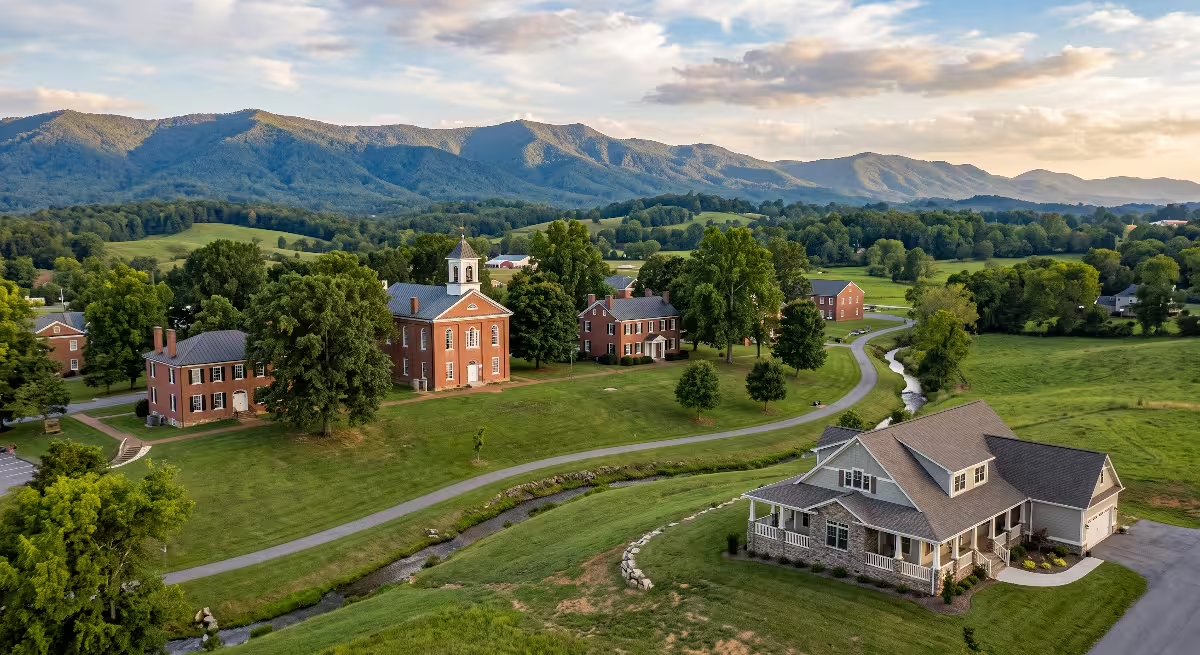

The Genesis of Frontier Self-Determination
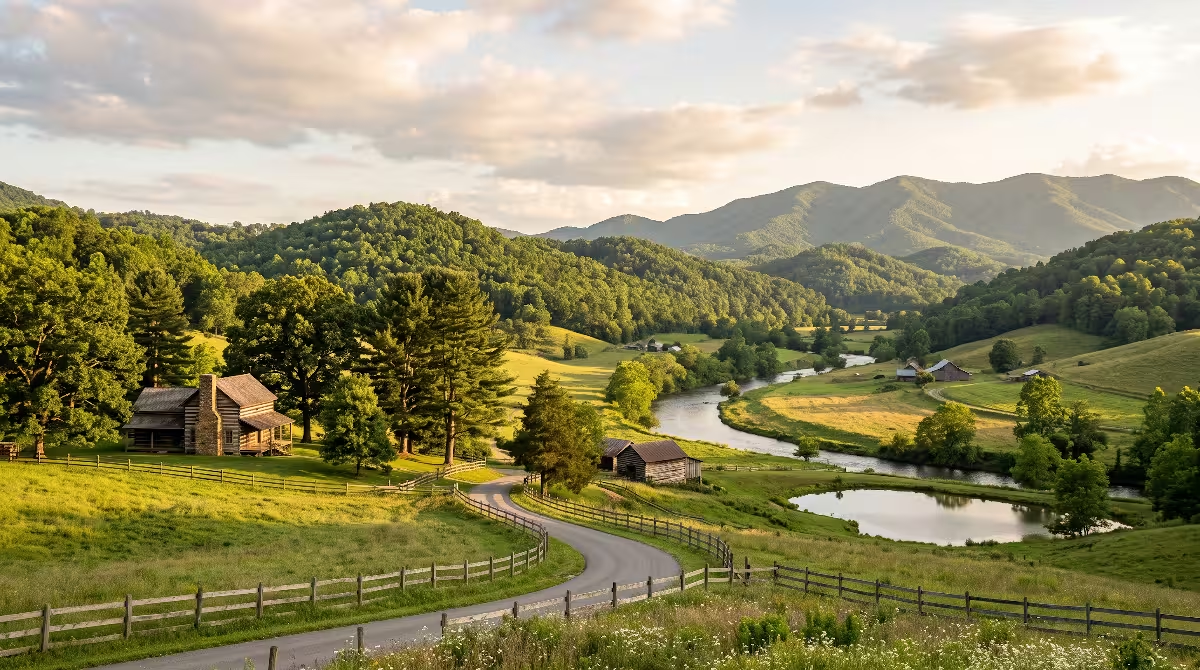
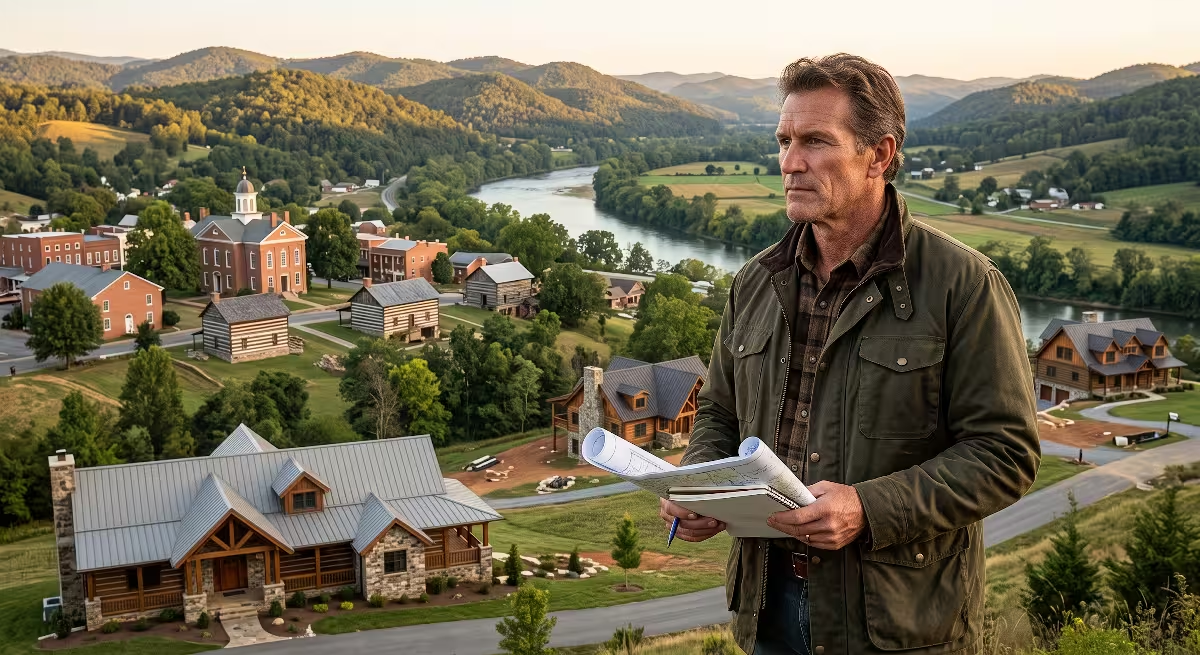
Building a home in the mountains of East Tennessee has always required a clear understanding of the land. When you break ground here in the Tri-Cities, whether on a ridge in
These settlers stepped into a complete political void. They were isolated by thick ridges, rushing mountain streams, and miles of dense forest. Neither the royal governors of Virginia nor North Carolina provided law enforcement, courts, or land deeds to this remote river basin. If a dispute arose over a property line, there was no county courthouse to resolve it. If an agreement was broken, there was no judge to enforce it. In response to this practical crisis, the pioneers established the
The Watauga Association was not born from political theory or armchair philosophy. It grew directly out of urgent necessity. Men and women on the frontier needed rules to record deeds, resolve property disputes, celebrate lawful marriages, and build a common defense. By putting pen to paper, they formed a unique community compact. The Watauga Association proved that ordinary people could govern themselves cleanly, honestly, and effectively when traditional institutions failed to show up.
The Defining Moment
The defining moment came in the late spring of May 1772. Several families had gathered along the fertile flats of the Watauga River near Sycamore Shoals. They knew that their presence violated imperial British treaties. They also knew they could not count on royal courts hundreds of miles away across mountain tracks. Rather than scatter or live in lawless chaos, these frontier families took a bold step forward.
They gathered under the shade of massive sycamore trees to debate their future. They decided to write down a clear set of laws. This written compact established the Watauga Association as a functioning, self-contained government. Every free adult male stepped up to agree to its terms. It was a simple, practical step, yet it marked a monumental pivot in frontier history. The creation of the Watauga Association showed that order and community could take root anywhere people possessed the determination to organize and protect their homes.
Significance
The historical significance of this frontier government caught the attention of scholars and leaders for generations. Over a century later, President Theodore Roosevelt took note of this bold compact in his famous multi-volume work, The Winning of the West. Roosevelt wrote that the people of the Watauga Association were the first men of American birth to establish a free and independent community on the continent.
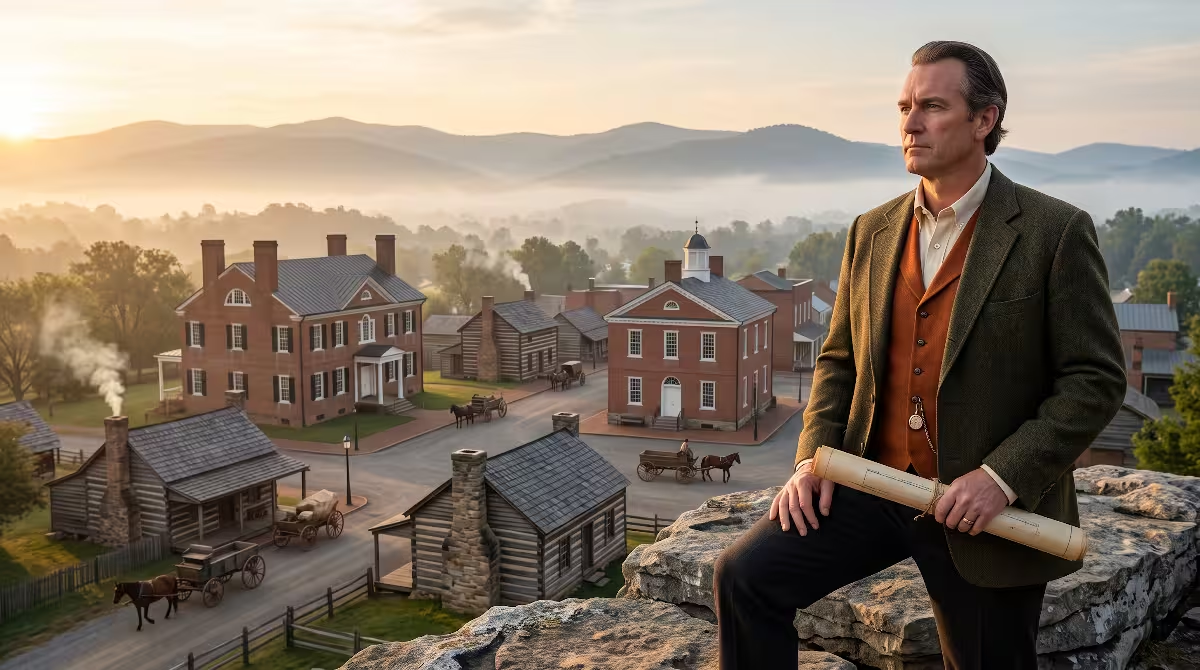
That distinction matters. When you study early American history, textbooks often focus entirely on the Atlantic seaboard, looking at Boston, Philadelphia, and Williamsburg. Yet right here in the valleys of East Tennessee, the Watauga Association was operating its own independent judicial system, court docket, and citizen militia years before the Declaration of Independence was signed in 1776. The Watauga Association stood as living proof that democracy on this continent was not created solely by wealthy scholars in coastal cities. It was forged by practical working people swinging broadaxes, cutting timber, and surveying boundary lines on the rugged western frontier.
The Main Idea
Driven by immediate legal necessity, the Watauga Association created a stable society out of wild uncertainty. The settlers needed to secure land rights, maintain civil order, and organize collective defense. By establishing clear administrative branches, electing honest magistrates, and working with indigenous neighbors, the Watauga Association laid the groundwork for Appalachian settlement. In doing so, the Watauga Association pioneered representative democracy and set the standard for community building that continues to define the Tri-Cities today.
Historical Context: Trapped Beyond the Proclamation Line
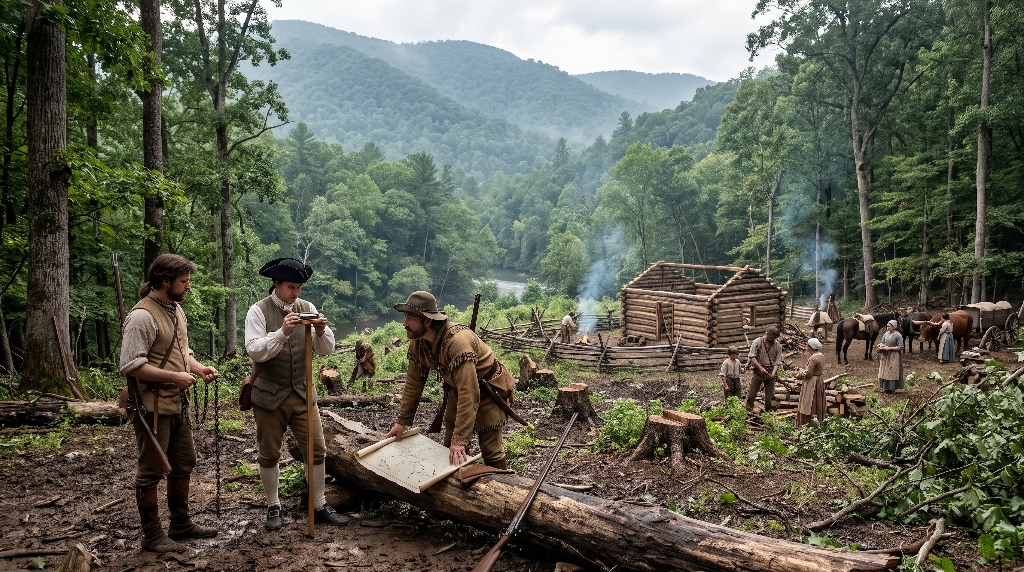
To understand why the Watauga Association was created, you must first examine the map of North America in the late eighteenth century. The physical landscape of East Tennessee is marked by parallel ridges and fertile river valleys. It offered excellent soil, clean mountain springs, and endless hardwood timber. To hard-working families who felt crowded in the eastern settlements, moving west seemed like a natural way to build wealth. However, global politics stood directly in their path.
       [ Atlantic Seaboard Colonies ]
                     |
         (Appalachian Crest Line)
                     |
       < Royal Proclamation of 1763 >
                     |
     [ Forbidden Western Frontier ]
                     |
      (Watauga & Holston River Basins)
                     |
        * Watauga Association *
       Formed by Necessity in 1772
The Royal Proclamation of 1763
In 1763, Great Britain concluded the French and Indian War. The British crown found itself deeply in debt and burdened with managing vast new frontier lands. To avoid costly conflicts with Native American tribes, King George III issued the Royal Proclamation of 1763. This royal decree created a firm boundary along the crest of the Appalachian Mountains.
The crown ordered that no British subject could buy land, build a cabin, or settle west of that mountain divide. Any land beyond the crest was officially reserved for Native American nations. From the viewpoint of the British government in London, this line kept colonials pinned along the Atlantic coastline where they could be easily taxed, monitored, and governed. For ambitious families looking to build a homestead, the proclamation felt like an unreasonable barrier that locked them out of fertile, open country.
The Boundary Miscalculation
Settlers began trickling across the mountains anyway. Most of these families believed in good faith that they were building their cabins inside the official borders of the Virginia colony. In 1770, British agents and the Cherokee signed the Treaty of Lochaber, which pushed the legal boundary slightly further west into southwestern Virginia.
Families assumed that the upper reaches of the Holston and Watauga rivers fell safely inside Virginia territory. This mattered because Virginia had an organized government willing to issue land grants, record deeds, and send sheriffs to protect settlers. In 1771, Colonel John Donelson conducted an official boundary survey to mark the line on the ground.
When Donelson completed his survey, the hard truth came out. The settlements along the Watauga River were actually south of the Virginia line. They sat squarely inside the boundaries of North Carolina. Worse yet, because North Carolina had not purchased or negotiated those lands from the native inhabitants, the entire settlement sat on sovereign Cherokee ground. The settlers were technical trespassers under imperial law.
The Eviction Order
Once the survey results were verified, British authorities acted quickly. Alexander Cameron, the British deputy superintendent for Indian affairs, issued a stern eviction order. He informed the families along the river that they were living in direct violation of the law. He gave them notice to pack up their belongings, tear down their cabins, abandon their crops, and retreat back across the mountains.
Put yourself in the shoes of those early builders. Clearing an acre of dense Appalachian forest with hand tools took weeks of brutal labor. A settler had to fell massive oaks, chestnuts, and poplars, notch the logs, raise the walls of a cabin, split cedar shakes for the roof, dig a stone hearth, and plant corn between the remaining tree stumps. Being told to walk away from all that sweat equity was intolerable. The settlers refused to pack up and leave, but they also knew they could not survive without legal standing.
The Pragmatic Solution
The settlers chose a pragmatic, level-headed solution. Because the British Crown banned private individuals from buying native lands outright, the Watauga settlers found a legal workaround. In 1772, leaders from the settlement approached the local Cherokee leadership, including headmen such as Attakullakulla.
Instead of trying to buy the land, which would violate royal treaties, the settlers negotiated a comprehensive ten-year lease. They paid the Cherokee in valuable trade goods, including textiles, iron tools, firearms, lead shot, and kitchen items. This ten-year lease gave the settlers lawful permission from the Cherokee to live on the land, clear fields, and raise livestock without fear of immediate conflict.
However, holding a lease from a Native American tribe did not provide a system of civil law. Who would handle estate distributions when a builder passed away? Who would resolve property line disputes between neighbors? How would thieves or violent criminals be punished? To solve these domestic problems, the community gathered to establish the Watauga Association. The lease gave them physical ground to stand on; the Watauga Association gave them a legal structure to live by.
The Structure and Mechanics of the 1772 Government
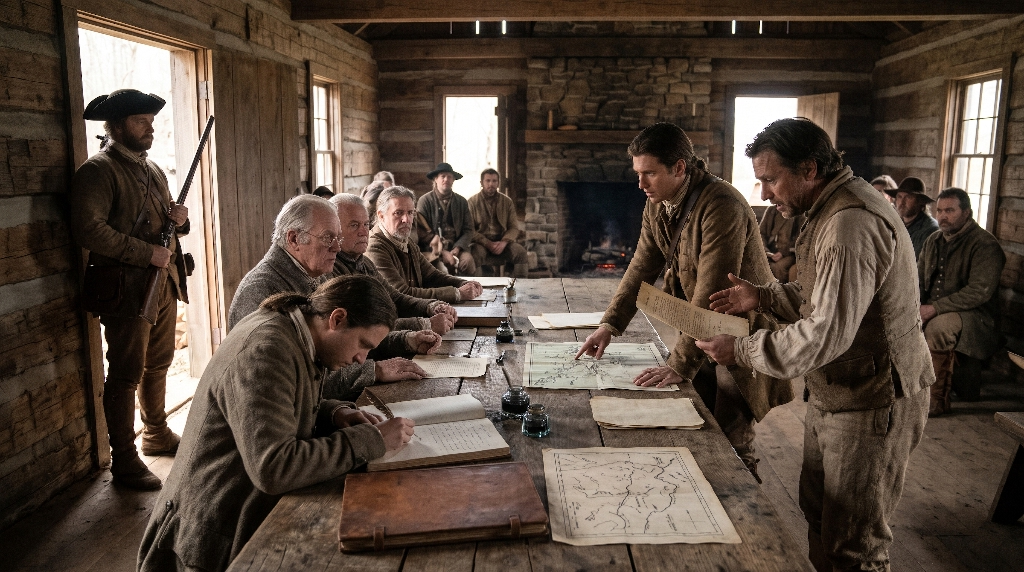
A modern home builder knows that a house is only as stable as its foundation. If your footings are uneven or your concrete mix is poor, the framing will sag, windows will stick, and the entire structure will eventually fail. The leaders who designed the Watauga Association understood that the same rule applies to civil government. They needed a functional, durable framework that could withstand the pressures of frontier life.
| Structural Element | Component Specification | Primary Function | Modern Civic Equivalent |
| Founding Charter | Articles of the Watauga Association | Baseline constitutional framework | State Constitution / Municipal Charter |
| Executive Oversight | Committee of Thirteen | General policy and external diplomacy | City Council / County Commission |
| Judicial Engine | Five-Member Magistrate Court | Deciding property lines, trials, and contracts | Circuit Court / Civil Bench |
| Law Enforcement | Elected Frontier Sheriff | Serving warrants, protection, and arrests | County Sheriff’s Department |
| Land Registry | Clerk of the Court | Recording deeds, wills, and marriages | County Register of Deeds |
| Armed Security | Volunteer Citizen Militia | Community defense and rapid patrol | National Guard Unit |
The Articles of Association
The fundamental document of this frontier community was known as the Articles of the Watauga Association. While the original parchment document was lost to history during the turmoil of the American Revolution, we know its core components through letters, petitions, and legal records preserved in North Carolina and Virginia archives.
The Articles of the Watauga Association served as a written constitution. It began with an agreement among all free male citizens to abide by majority rule. In an era when European nations were governed by hereditary kings and rigid aristocratic hierarchies, the Watauga Association adopted a remarkably modern, democratic stance. It granted equal voting rights to every free adult male who lived within the settlement, regardless of whether he owned vast tracts of land or worked as a simple tenant carpenter.
The document laid out the responsibilities of leadership, established regular meeting intervals, and outlined the boundaries of the settlement. The Watauga Association established a rule of law in an area that the outside world viewed as unmapped wilderness.
Civil and Legal Administration
The day-to-day work of the Watauga Association was managed through a practical two-tiered structure. The community elected a general council known as the Committee of Thirteen. This committee handled broad community decisions, managed external diplomatic communications with the Cherokee and neighboring colonies, and oversaw the safety of the settlement.
To handle everyday civil and legal disputes, the larger committee selected five magistrates from among its members to form an executive court. This five-man court possessed broad judicial and administrative authority:
- Land Deeds and Boundaries: The court recorded property lines, timber rights, and water privileges. In a frontier town, preventing boundary disputes between neighbors was critical for community peace.
- Civil Disputes and Contracts: The magistrates settled debts, enforced construction agreements, and handled commercial disputes between merchants and farmers.
- Estate Administration: When a settler died, the court validated their last will and testament, appointed executors, and ensured that surviving spouses and children were treated fairly.
- Vital Statistics: The court recorded marriages, ensuring that family unions had full legal recognition and that property inheritances remained secure.
- Criminal Justice: The court tried theft, assault, and other civil crimes. Without formal stone jails, the court handed down swift, pragmatic punishments, including fines, physical labor, or expulsion from the settlement.
To carry out its orders, the court appointed a sheriff and a clerk. The sheriff served warrants, maintained physical custody of prisoners, and enforced court orders. The clerk was tasked with carefully writing down land transactions, court rulings, and vital records in leather-bound ledgers. Through this setup, the Watauga Association maintained an organized, lawful community where commerce could thrive and property remained secure.
                  [ Citizens of Watauga ]
                             |
                   (General Annual Vote)
                             |
                 [ Committee of Thirteen ]
              (Broad Policy & Frontier Defense)
                             |
             (Elected Internal Executive Board)
                             |
             [ Five-Member Magistrate Court ]
           (Judicial Rulings & Property Deeds)
                             |
             +---------------+---------------+
             |                               |
    [ Executive Sheriff ]          [ Court Clerk ]
    (Enforcement & Safety)     (Records, Wills, Deeds)
Foundational Leaders
The success of any venture, whether framing a custom home or launching a government, comes down to the integrity and skill of the people in charge. The Watauga Association was fortunate to attract leaders who combined practical trade skills with deep personal courage.
James Robertson
James Robertson is often remembered by historians as the Father of Middle Tennessee, but his foundational work began right here along the banks of the Watauga River. Robertson was born in Brunswick County, Virginia, and later lived in North Carolina, where he observed the abuses of royal governors and corrupt tax collectors firsthand. In 1770, he set out across the Blue Ridge Mountains to find land where honest labor was respected.
Robertson was a natural diplomat, calm in an emergency, and deeply respected by both settlers and Native American leaders. When the Watauga Association was formed, Robertson was chosen as one of its primary magistrates. He had a gift for defusing tense situations through quiet conversation rather than angry bluster.
Robertson negotiated directly with the Cherokee, secured the initial land leases, and spent weeks traveling between remote homesteads to keep the peace. His steady hand ensured that the Watauga Association did not fracture into petty personal feuds during its earliest, most fragile months.
John Carter
John Carter was an older, wealthy merchant who brought formal administrative polish and business acumen to the settlement. He moved to the frontier from Virginia and quickly recognized the enormous economic potential of the river valleys. Carter settled along what is now known as Gap Creek, near the modern town of Elizabethton.
Carter was chosen as the permanent chairman of the Committee of Thirteen and presided over the five-member court. His deep knowledge of Virginia civil law gave the proceedings of the Watauga Association legitimacy and legal weight. Carter was not a fiery orator; he was a careful administrator who understood contracts, bookkeeping, and structural governance. His leadership gave the Watauga Association stability, earning the trust of regional merchants and financial backers across the mountains.
John Sevier
John Sevier became one of the most celebrated figures in Tennessee history, eventually serving as the state’s very first governor. Before he won military acclaim at the Battle of Kings Mountain or fought for the short-lived State of Franklin, Sevier was an energetic young man seeking opportunity in the frontier settlements. He was a surveyor, merchant, and builder who understood land value and community planning.
Sevier moved to the area in 1773 and immediately threw his energy into supporting the Watauga Association. He was appointed clerk of the court, where his sharp handwriting filled the settlement’s official record books. Sevier had an open, charismatic personality that drew people to him.
He understood the practical mechanics of the frontier: how to lay out defensive stockades, how to survey acreage across mountain draws, and how to rally men in times of danger. His work within the Watauga Association established the organizational habits and political relationships that defined his long career in public service.
Charles Robertson and Zachariah Isbell
No government functions on the backs of only two or three individuals. Charles Robertson, the brother of James Robertson, served as a dedicated trustee and magistrate for the Watauga Association. He handled sensitive real estate assignments, frequently serving as the legal conduit through whom large land tracts were divided and deeded to individual family farmers.
Zachariah Isbell was a seasoned frontiersman who brought judicial experience from earlier years in Virginia and the Carolinas. Isbell served as one of the original five magistrates. He was known for his firm, no-nonsense enforcement of criminal law. When horse thieves, counterfeiters, or swindlers crossed the mountains hoping to hide in the wilderness, Isbell and his fellow magistrates ensured they met swift justice.
The presence of experienced men like Charles Robertson and Zachariah Isbell gave the Watauga Association the practical capability needed to manage a functioning community on the rough western border.
British Resistance and Frontier Diplomacy
Creating an independent government in the interior of North America was not going to pass unnoticed by the British Crown. In London and the colonial capitals of Williamsburg and New Bern, royal administrators viewed unauthorized western settlements with deep suspicion. The Watauga Association found itself caught between the demands of angry royal governors and the complex politics of neighboring Native American tribes.
Lord Dunmore’s Warning
In 1774, the Royal Governor of Virginia, John Murray, fourth Earl of Dunmore, took direct notice of the growing community along the Watauga River. Lord Dunmore was an aggressive defender of the royal prerogative. While he frequently asserted Virginia’s western territorial claims against neighboring Pennsylvania, he viewed independent civilian initiatives with alarm.
Lord Dunmore wrote a famous dispatch back to the British Colonial Office in London. In his official correspondence, he warned that the settlers of the Watauga Association had formed a dangerous example to the rest of America. Dunmore recognized the deeper implications of what had taken place.
If backwoods settlers could draft their own laws, elect their own judges, and manage their own affairs without royal permission, what need did they have for the British Crown? Dunmore understood that the Watauga Association was operating as a functional republic, demonstrating that the authority of King George III was entirely unnecessary for maintaining social order.
The Cherokee Dynamic
At the very same time the settlers were managing friction with British authorities, they had to navigate diplomatic relations with the Cherokee Nation. The Cherokee were not a unified political monolith; their governance relied on consensus among different towns, regional divisions, and generations.
The older Cherokee leaders, represented by the respected peace chief Attakullakulla, also known as the Little Carpenter, favored peaceful trade and diplomatic accommodations with the settlers. Attakullakulla recognized that European expansion was backed by deep manufacturing strength. He sought to secure European trade goods and arms for his people while avoiding devastating military clashes. He was a central figure in negotiating the peaceful leases that allowed the Watauga Association to develop its homes and farm fields.
       [ Cherokee Council at Sycamore Shoals ]
                         |
           +-------------+-------------+
           |                           |
  (Older Peace Faction)      (Young Warrior Faction)
     Attakullakulla               Dragging Canoe
  "Accommodate & Trade"       "Defend & Push Back"
           |                           |
  * Supported Leases *       * Fought Watauga *
However, a younger generation of Cherokee warriors viewed these agreements with alarm. This faction was led by Attakullakulla’s fierce son, Dragging Canoe. Dragging Canoe watched with deep concern as settlers cleared timber, built permanent log homes, and raised livestock along the river bottoms. He understood that a ten-year lease would inevitably lead to permanent ownership.
Dragging Canoe warned that the settlers would keep advancing until native hunting grounds were entirely consumed. This growing divide within the Cherokee Nation meant that the Watauga Association had to maintain constant vigilance, backing its diplomatic talks with ready citizen militias and fortified defensive stations.
Sycamore Shoals and the Transylvania Purchase (1775)
In March 1775, the historic flats of Sycamore Shoals became the stage for one of the largest private land real estate transactions in North American history. Judge Richard Henderson, an ambitious land speculator from North Carolina, organized the Transylvania Company. Henderson gathered over a thousand Cherokee men, women, and children, along with major tribal leaders, to negotiate the purchase of twenty million acres of land covering much of modern Kentucky and Middle Tennessee.
The leaders of the Watauga Association recognized a golden opportunity. Knowing that the Cherokee were already assembled to negotiate the sale of immense territory to Henderson, the Watauga leaders stepped forward to convert their existing ten-year lease into permanent, outright deeds. Charles Robertson acted as the legal buyer on behalf of the settlement. For a substantial sum of trade goods, the Cherokee leadership signed deeds transferring the ownership of the Watauga and Holston river bottom lands directly to the settlers.
It was during these dramatic negotiations that Dragging Canoe staged his famous protest. Refusing to consent to the sale of tribal hunting grounds, the young war chief stood up, turned toward the gathering, pointed his finger toward the west, and delivered an unforgettable warning. He told the white buyers that they had bought a fair land, but a cloud hung over it. He warned that the land would become a dark and bloody ground.
Dragging Canoe walked out of the council fire, withdrew with his followers down the Tennessee River to establish the militant Chickamauga towns, and prepared for war. The Watauga Association now held legal title to the land in their own eyes, but they knew they would soon have to defend those titles with lead and flint.
Transition: From the Watauga Association to the Washington District (1775 to 1777)
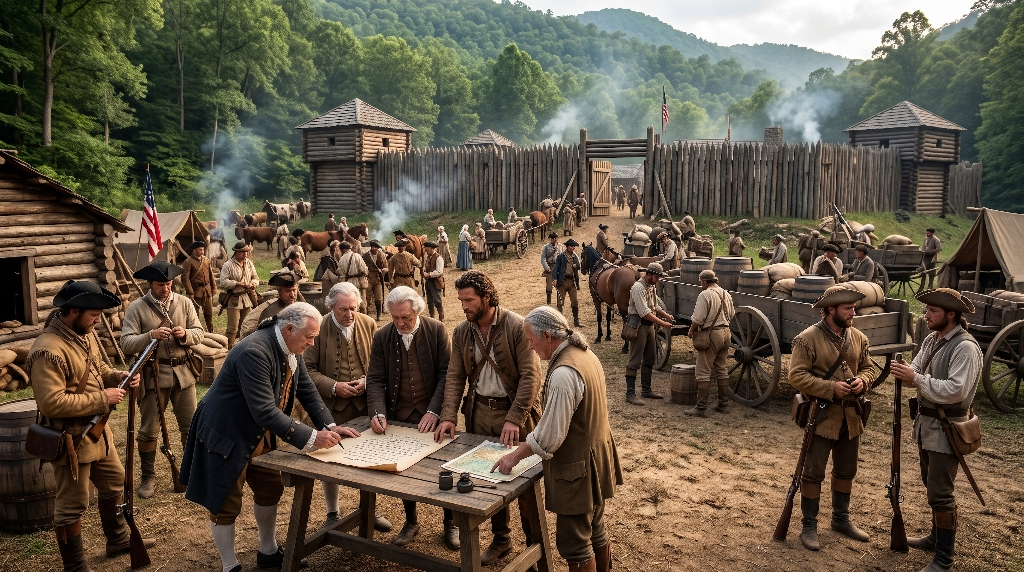
The year 1775 altered the destiny of the frontier. When the shots fired at Lexington and Concord echoed through the colonies, the independent spirit of the Watauga Association aligned directly with the broader American revolutionary cause. The settlers along the Watauga were no longer merely isolated pioneers defending a river valley; they were now on the western front lines of a continental struggle for liberty.
The Revolutionary Pivot
News of open warfare against British troops reached the mountains by mid-summer 1775. The leaders of the Watauga Association realized immediately that their political calculations had changed. British Indian agents, operating from strongholds in Pensacola and Mobile, began supplying firearms, lead, and gunpowder to Dragging Canoe and his warriors, urging them to strike frontier settlements to divert colonial forces away from the Atlantic coast.
The Watauga Association responded by retooling its civilian administration into a wartime defense council. The Committee of Safety was formed, meeting regularly to stockpile lead, gather emergency corn stores, repair blockhouses, and establish scouting networks along mountain trails. The legal structure that had efficiently recorded deeds and handled estate distributions now turned its full energy toward military readiness.
The Washington District
In late 1775, the settlers took a profound symbolic and political step. They renamed their territory the Washington District. This was the very first geographical region, county, or district in the United States to be named in honor of General George Washington, who had recently taken command of the Continental Army outside Boston.
This renaming was a clear statement of alignment. The settlers of the Watauga Association discarded any lingering loyalty to the British Crown and declared their allegiance to the American cause. They were no longer an isolated, informal compact. They saw themselves as an armed, self-governing district of free Americans standing as a defensive barrier on the western Appalachian frontier.
The Petitions for Annexation
While the Watauga Association had proven that frontiersmen could run their own government, its leaders were realistic men. They recognized that an independent enclave of several hundred families could not survive indefinitely against coordinated British and Indian military campaigns without regional support. They needed access to state gunpowder supplies, formal military commissions, and official recognition of their property deeds.
In the spring of 1776, the settlers sent a formal petition to the colonial assembly of Virginia, asking to be annexed into that commonwealth. Virginia, burdened with its own wartime mobilization and uncertain of its southern boundary, declined to accept the district.
The leaders of the Watauga Association did not give up. On July 5, 1776, just one day after the Continental Congress in Philadelphia approved the Declaration of Independence, the settlers completed a detailed petition to the Provincial Council of North Carolina. Drafted largely by John Sevier and John Carter, this document carried the signatures of over one hundred frontier heads of household.
The petition read as a masterclass in clear, respectful, yet firm political writing. The settlers recounted how they had cleared the land, formed the Watauga Association to preserve civil order, negotiated peaceful leases with the Cherokee, and stood steadfast against British agents. They asked North Carolina to formally incorporate the Washington District into the state so that they could pay taxes, send representatives to the state legislature, and fight side by side with their American brethren.
Siege of Fort Caswell (July 1776)
Before North Carolina could formally act on the petition, war arrived on the Watauga River. Dragging Canoe launched a coordinated, two-pronged offensive against the frontier settlements in July 1776. Thanks to an early warning provided by Nancy Ward, the respected Beloved Woman of the Cherokee who favored peace, the settlers had brief advance notice of the attack.
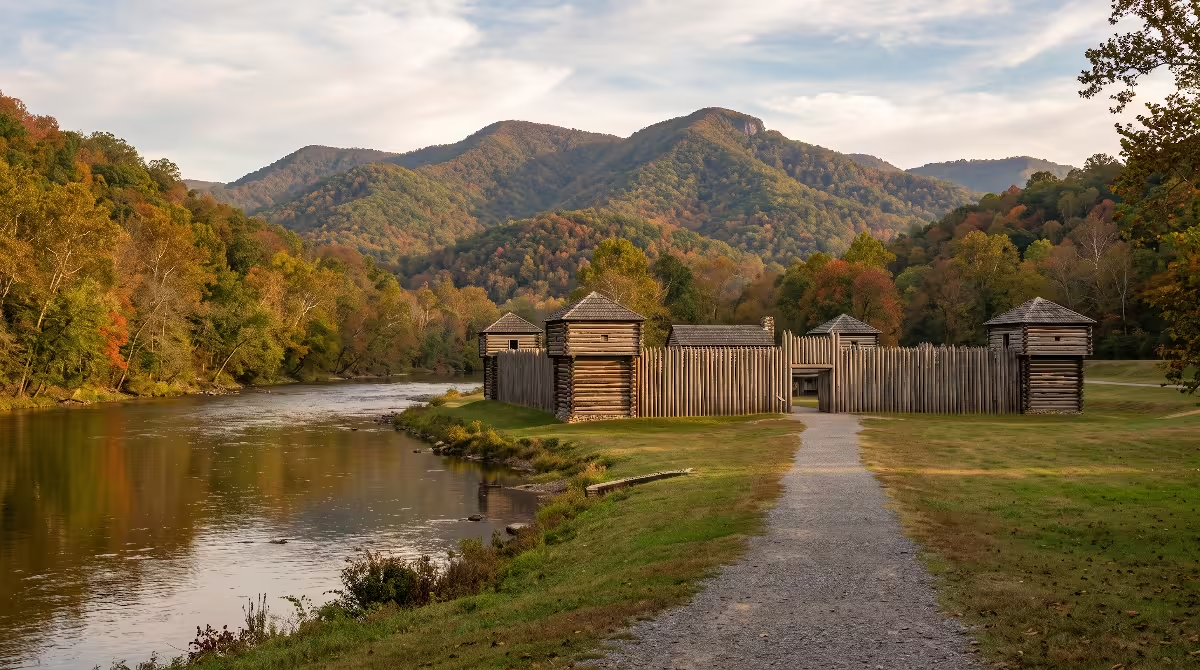
Settlers rushed to abandon their outlying cabins and concentrated inside Fort Caswell, commonly known as Fort Watauga, located at Sycamore Shoals. The fort was a stout wooden stockade featuring log blockhouses, sturdy palisade walls, and firing ports, engineered by the settlers to resist assault.
       +---------------------------------------------+
       | [Blockhouse]               [Blockhouse]     |
       |      +---------------------------+          |
       |      |                           |          |
       |      |    Cabins & Hearthstones  |          |
       |      |                           |          |
       |      |   Open Central Compound   |          |
       |      |                           |          |
       |      +---------------------------+          |
       | [Blockhouse]               [Heavy Gate]     |
       +---------------------------------------------+
           * Fort Caswell (Fort Watauga Stockade) *
Under the joint command of John Carter, James Robertson, and John Sevier, approximately seventy-five armed men defended the stockade against several hundred attacking Cherokee warriors. For over two weeks, the defenders held the fort through an intense siege.
The battle produced legends of individual courage:
- James Robertson directed defensive fire from the loopholes, driving attackers back with accurate rifle marksmanship.
- John Sevier demonstrated cool command, managing ammunition and keeping civilian morale high inside the crowded compound.
- Catherine Sherrill, running toward the fort after being caught outside during the initial ambush, was pulled over the stockade wall to safety by John Sevier. She later married him and became the first lady of Tennessee.
The successful defense of Fort Watauga broke the momentum of the invasion. It proved that the defensive planning of the Watauga Association was sound. The frontier held firm, preventing British-backed forces from breaking through to the eastern colonies.
Formal State Recognition
The courage displayed by the Watauga settlers made a deep impression on the leaders of North Carolina. In late 1776, North Carolina seated representatives from the Washington District, including John Carter and John Sevier, in its Provincial Congress at Halifax.
In November 1777, the North Carolina legislature passed formal legislation converting the Washington District into Washington County, North Carolina. This newly formed county was massive, initially encompassing the entire area of what is today the state of Tennessee.
With this legislative act, the independent legal standing of the Watauga Association came to an end. It had served its purpose completely. For five critical years, from 1772 to 1777, the Watauga Association had kept the peace, built communities, maintained the rule of law, and defended the western frontier. It now handed over its civil ledgers and military companies to an organized state government.
Frequently Asked Questions about the Watauga Association
When modern readers, students, and home builders search online for information about early East Tennessee history, several core questions appear regularly. Below are concise, clear answers to the most common queries regarding this pioneering era.
What Was the Main Purpose of the Watauga Association?
The main purpose of the Watauga Association was to establish an orderly, legal government for families who settled beyond the reach of British colonial law. When surveyors determined that the Watauga settlements were outside Virginia and sat on unceded Cherokee lands in North Carolina, the pioneers faced an eviction order from the British Crown.
Because neither colonial government provided courts, law enforcement, or land offices, the settlers formed the Watauga Association to handle essential civil functions. It allowed them to record deeds, resolve property disputes, validate wills, license marriages, try criminals, and organize a volunteer militia for common defense. In short, its purpose was to prevent lawlessness and protect the investments of working families.
Did the Watauga Association Declare Independence from Great Britain?
No, the Watauga Association did not draft an ideological declaration of independence from Great Britain in 1772. The settlers did not view themselves as political rebels setting out to overthrow King George III. Instead, they acted out of practical necessity because the British Crown provided no administrative or judicial support on the frontier.
While the settlers operated independently by writing their own laws and electing their own judges, they avoided making inflammatory statements against the Crown. However, British administrators, including Virginia Governor Lord Dunmore, correctly recognized that by governing themselves without royal permission, the Watauga Association was setting a dangerous precedent that undermined royal control across all the colonies. When the Revolutionary War broke out in 1775, the settlers quickly aligned with the American cause.
How Did the Watauga Association Influence the State of Franklin and Tennessee Statehood?
The Watauga Association served as the direct political and cultural ancestor of both the State of Franklin and the future state of Tennessee. The experience of running an independent government taught leaders like John Sevier, John Carter, and James Robertson how to draft constitutions, manage courts, and organize defensive forces.
       [ Watauga Association (1772) ]
                      |
           (Practical Self-Rule)
                      |
         [ Washington District (1775) ]
                      |
        (First American Patriot Entity)
                      |
          [ State of Franklin (1784) ]
                      |
       (Frontier Sovereignty Tested)
                      |
           [ State of Tennessee (1796) ]
When North Carolina temporarily ceded its western lands to the federal government in 1784, leaving the mountain settlements vulnerable once again, the settlers drew on their Watauga heritage to form the State of Franklin. John Sevier was elected its first and only governor.
Although the State of Franklin collapsed after four years due to internal political divisions and federal pushback, the momentum toward self-determination remained unstoppable. In 1796, Tennessee was admitted to the Union as the sixteenth state, with John Sevier serving as its initial governor. The democratic habits, legal frameworks, and community spirit established by the Watauga Association in 1772 served as the foundation of Tennessee’s statehood.
Structural Blueprint: Linking Frontier Heritage to Tri-Cities Living
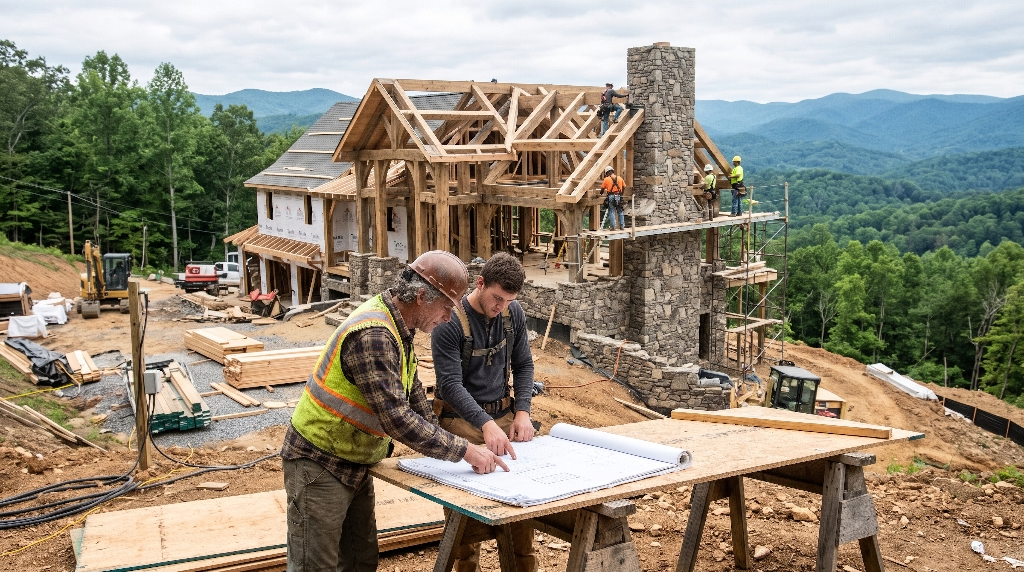
Today, every time construction crews pour a concrete foundation in Carter County, frame a roof in Johnson City, or grade an access road in Kingsport, we follow paths carved out by early pioneers. The decisions made during the era of the Watauga Association continue to influence how we develop land, build homes, and live in East Tennessee today.
Architectural Parallels
There is a direct connection between the traditional woodworking of early frontier cabins and the custom homes we construct today. The settlers who lived under the Watauga Association were skilled woodworkers. They lacked access to structural steel, modern insulation, or manufactured dimensional lumber. They relied on virgin Appalachian timber, choosing rot-resistant species like American chestnut, white oak, and black locust.
Consider the precision required to build an 18th-century Appalachian log cabin:
- Hand-Hewn Logs: Builders squared round logs using a broadaxe, creating flat interior and exterior surfaces that shed water and made finishing simpler.
- Half-Dovetail Notching: At every corner, carpenters cut intricate half-dovetail notches. These joints locked the logs together securely while pitching downward, allowing rainwater to run harmlessly out of the joint rather than pooling inside and rotting the wood.
- Chinking and Daubing: The gaps between logs were sealed with split wood slats, river stones, and a mortar daubing made of clay, lime, and straw, creating an effective thermal envelope.
- Dry-Stack Stone Foundations: Cabins were elevated off the ground on dry-stacked limestone piers, keeping bottom sill logs away from wet soil and insects.
          [ Modern Structural Engineering ]
                         |
      +------------------+------------------+
      |                                     |
(Site Grading & Drainage)          (Durable Material Selection)
Follows 1770s Creek Layouts       Mirrors Native Timber Durability
      |                                     |
      +------------------+------------------+
                         |
           [ Custom Tri-Cities Living ]
In modern custom home building, we honor those same core design principles. When building on mountain ridges across Sullivan and Washington counties, we face the same environmental factors: high winds, heavy summer rainfall, freeze-and-thaw winter cycles, and shifting soil compositions.
Just as the early settlers carefully selected rot-resistant white oak and cut interlocking joints, we use engineered lumber, advanced house wraps, double-glazed low-emissivity windows, and continuous exterior insulation. The aesthetic appeal of heavy timber framing, exposed rafters, and natural stone fireplaces in today’s luxury homes is a direct architectural tribute to the durable construction methods pioneered during the Watauga Association era.
Land Stewardship
The Watauga Association was created because of land: who owned it, who surveyed it, and who had the legal right to build upon it. The geography of the Watauga, Holston, and Nolichucky river basins guided the settlement patterns of East Tennessee. Early pioneers followed the river valleys because they offered level ground, rich alluvial topsoil for farming, and easy water transportation.
Today, those historic settlement corridors remain the focal points of Tri-Cities residential development and real estate value. However, building in East Tennessee requires careful land stewardship. Our region features unique karst topography, characterized by limestone rock formations, underground drainage networks, and occasional sinkholes.
Just as the magistrates of the Watauga Association had to understand property boundaries and water rights, modern builders must understand civil engineering, environmental conservation, and soil mechanics. Proper site preparation requires:
- Careful analysis of topography to manage rainwater runoff without eroding slopes.
- Preservation of mature native trees to maintain slope stability and natural shade.
- Geotechnical testing of limestone bedrock to ensure strong, long-lasting foundation footings.
- Protection of local creeks and wetlands to keep our regional waterways clean and healthy.
By building homes that fit the natural landscape rather than fighting it, we carry forward the sensible stewardship that allowed the original Watauga settlements to prosper.
Historic Sites to Visit
If you live in the Tri-Cities or are planning to build a home here, you can walk through the physical history of the Watauga Association. Several well-preserved historic sites allow you to experience the frontier era firsthand:
Sycamore Shoals State Historic Park (Elizabethton, TN)
This beautiful park sits directly on the banks of the Watauga River. It features a full-scale reconstruction of Fort Watauga, allowing visitors to walk through the log stockade, explore timber blockhouses, and stand where the Watauga Association magistrates held court. The park’s museum houses original artifacts, interactive historical displays, and comprehensive maps of the early frontier settlements.
The Carter Mansion (Elizabethton, TN)
Built around 1775 by John Carter and his son Landon Carter, this is the oldest standing frame house in the state of Tennessee. Unlike the basic log cabins typical of the frontier, the Carter Mansion was constructed using advanced carpentry, complete with fine interior wood paneling, over-mantel paintings, and hand-carved moldings. It stands as living proof that refined architectural taste arrived in the Tri-Cities during the Watauga Association period.
Rocky Mount State Historic Site (Piney Flats, TN)
Located just a short drive from Johnson City, Rocky Mount features an original two-story log home constructed by the Cobb family in the early 1770s. The site served as the first territorial capital of the Southwest Territory from 1790 to 1792. Visiting Rocky Mount provides an authentic look at what daily life, kitchen work, farming, and construction looked like for prosperous families during the late eighteenth century.
The Living Legacy of Watauga
Summary of the Frontier Spirit
Looking back across more than two and a half centuries, the achievement of the Watauga Association stands out as a remarkable chapter in the American story. When isolated settlers crossed the Blue Ridge Mountains, they did not leave behind their desire for order, community, and justice. When faced with an eviction notice from the British Crown and the total absence of colonial law enforcement, they did not turn to lawless violence or retreat in defeat.
Instead, they took personal responsibility for their community. By drafting the Articles of the Watauga Association, they established a practical, representative government that honored the rule of law. They created an elected five-member court to protect property rights, appointed law enforcement to ensure safety, negotiated leases and deeds with their Cherokee neighbors, and built a citizen militia to defend their homes.
The Watauga Association proved that ordinary citizens possessed the practical wisdom, courage, and discipline to govern themselves cleanly and effectively.
Final Takeaway
In East Tennessee today, you can still see the enduring influence of the Watauga Association all around us. You can see it in our independent civic spirit, our deep-seated respect for private property, and the high value we place on craftsmanship, family, and community. The men and women who cleared the first timber along the Watauga River were builders in the truest sense of the word. They constructed cabins, erected timber stockades, and laid out farm plots. More importantly, they built a lasting foundation for self-government on the American frontier.
When we build a custom home in East Tennessee today, we are doing more than assembling lumber, running wiring, and pouring concrete. We are adding another chapter to an ongoing regional story that began along the banks of the Watauga River in 1772. The courage, integrity, and self-reliance of the Watauga Association helped carve this community out of the Appalachian wilderness, leaving a legacy of freedom, craftsmanship, and good government that continues to enrich our lives across the Tri-Cities.