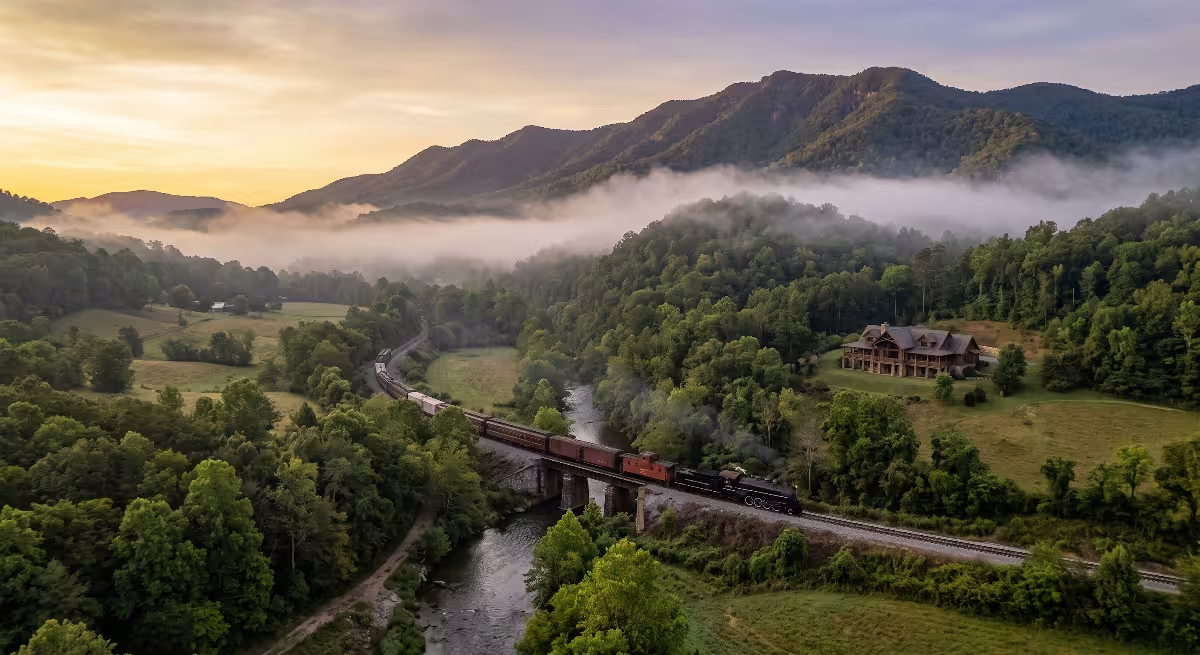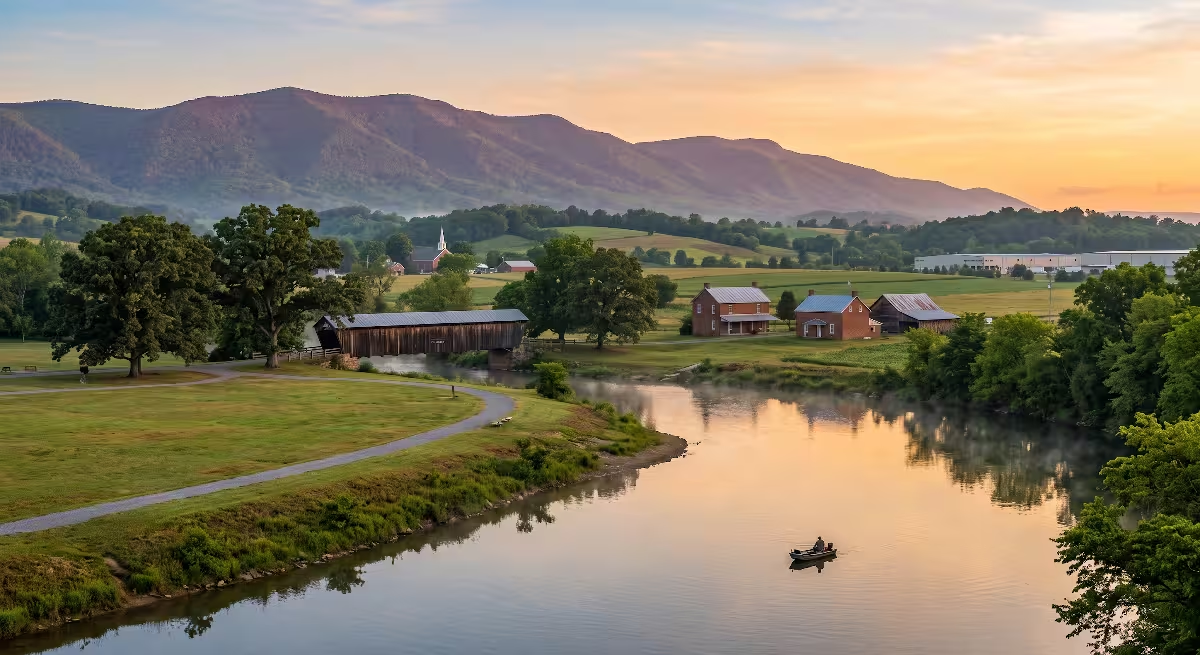

Welcome to our in-depth look at the past, present, and physical landscape of one of the most storied regions in the Volunteer State. If you spend time traveling through East Tennessee, you quickly realize that the dirt under your boots carries deep roots. That is especially true across Hawkins County, TN. Understanding the history of Hawkins County, TN gives you a practical advantage whether you want to renovate a historic property or build a brand-new home from the foundation up.
Every mountain ridge, limestone outcropping, and river bend tells a story. When you know how early settlers cleared timber, where the ancient trade paths crossed the ridges, and how local builders used native stones, you make smarter decisions about property boundaries, soil composition, structural foundations, and neighborhood planning.
In this comprehensive guide, we will step through the full story of Hawkins County, TN. We will explore its Native American corridors, its role as a cradle of frontier statehood, its iconic marble quarries, its Civil War railroad junctions, and the towns that define it today. We will also examine how this deep background directly shapes the custom home building industry, zoning rules, and property values in Hawkins County, TN today.
The Gateway to the Tennessee Frontier
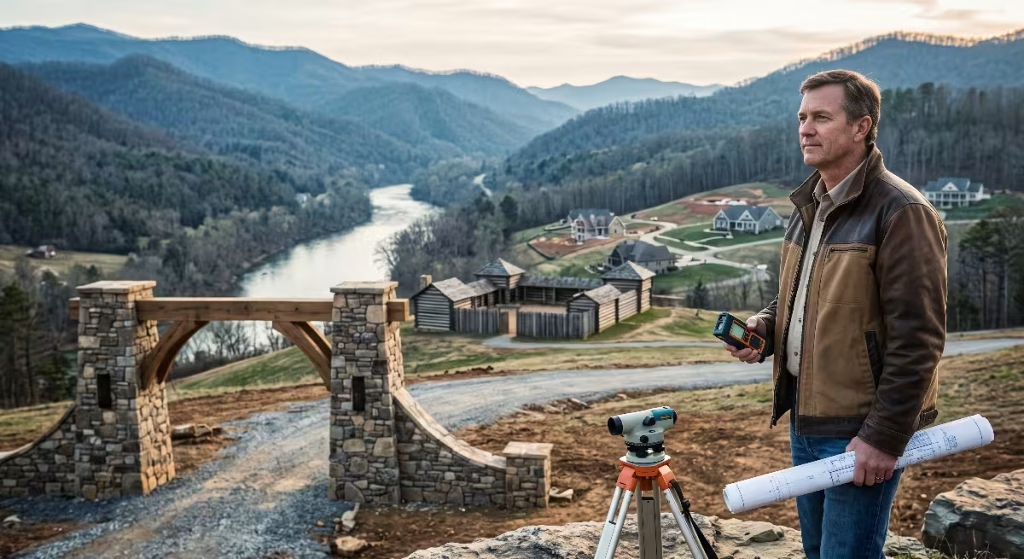
Hawkins County, TN sits in the upper northeastern corner of the state, serving as an open corridor between the high mountain country and the broader Tennessee Valley. To understand why early pioneers risked everything to claim acreage here, you must first look at the lay of the land.
The Physical Lay of the Land
Geographically, Hawkins County, TN is bounded to the north by the towering spine of Clinch Mountain and to the south by the rugged slopes of Bays Mountain. Running straight through the middle of the county is the Holston River, which provides a natural drainage basin, fertile bottomland, and a historic waterway for transport. This ridge and valley topography creates protected agricultural valleys, abundant natural freshwater springs, and sweeping mountain views. These same features attract modern landowners seeking private homesites with rolling pasture and mountain backdrops.
Frontier Survival Meets Modern Construction
The pioneers who settled Hawkins County, TN in the late 1700s faced many of the exact same physical constraints that custom home builders handle today:
- Finding natural freshwater sources that flow cleanly through rolling acreage.
- Locating building sites elevated above the seasonal flood levels of the Holston River.
- Working with tough limestone ledges to anchor foundations.
- Managing drainage and water runoff across steep hillsides.
Frontier survival in early Hawkins County, TN required disciplined craftsmanship. When timber framers notched heavy white oak logs or laid mortar for brick chimneys, they built structures intended to withstand harsh winters and long generations. That tradition of durable, honest building remains a core value for those of us working on custom homes throughout Hawkins County, TN today.
Early Frontier Settlements and Native American Pathways
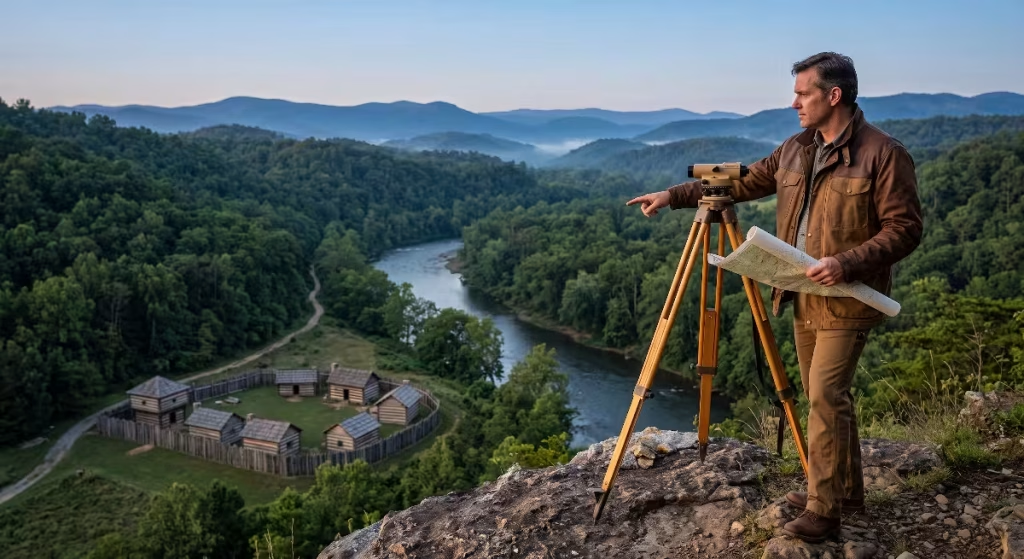
Human history in this part of East Tennessee began thousands of years before the first European log cabins went up. The geographical layout of Hawkins County, TN formed a natural highway for animal migration and Native American travel.
The Great Indian Warpath
Long before formal roads existed, the Great Indian Warpath crossed directly through Hawkins County, TN. This ancestral network of footpaths connected the Cherokee settlements to the south with the tribes of the Ohio Valley and Virginia to the north. Native American hunters and travelers followed the river bottoms and natural mountain gaps, establishing pathways that minimized elevation changes.
When European longhunters, traders, and pioneers pushed westward through the Cumberland Gap and the Appalachian ridges, they followed these exact footpaths. Modern highways across Hawkins County, TN, including major sections of U.S. Route 11W, still trace the broad routes of these ancient trails.
The Carter’s Valley Settlement
By the late 1760s and early 1770s, settlers began crossing the mountains from Virginia and North Carolina into what is now Hawkins County, TN. One of the earliest organized pioneer communities took root in Carter’s Valley, named after John Carter. Together with William Parker, Carter established a trading post and cleared agricultural acreage in the fertile soil north of the Holston River.
During this period, these settlers believed they were building homes inside the legal boundaries of the Colony of Virginia. However, when early surveyor lines were run, the settlers discovered they were actually residing within territory claimed by North Carolina. Furthermore, the land was recognized by the British Crown as Native American hunting grounds.
Rather than packing up their wagons and retreating, the resilient settlers organized under the Watauga Association. They negotiated land leases directly with local Cherokee leaders, creating one of the earliest self-governing compacts in American frontier history. This willingness to stand firm, clear tough terrain, and create local order established a culture of rugged independence that still runs deep in Hawkins County, TN.
Frontier Fortifications and Topography
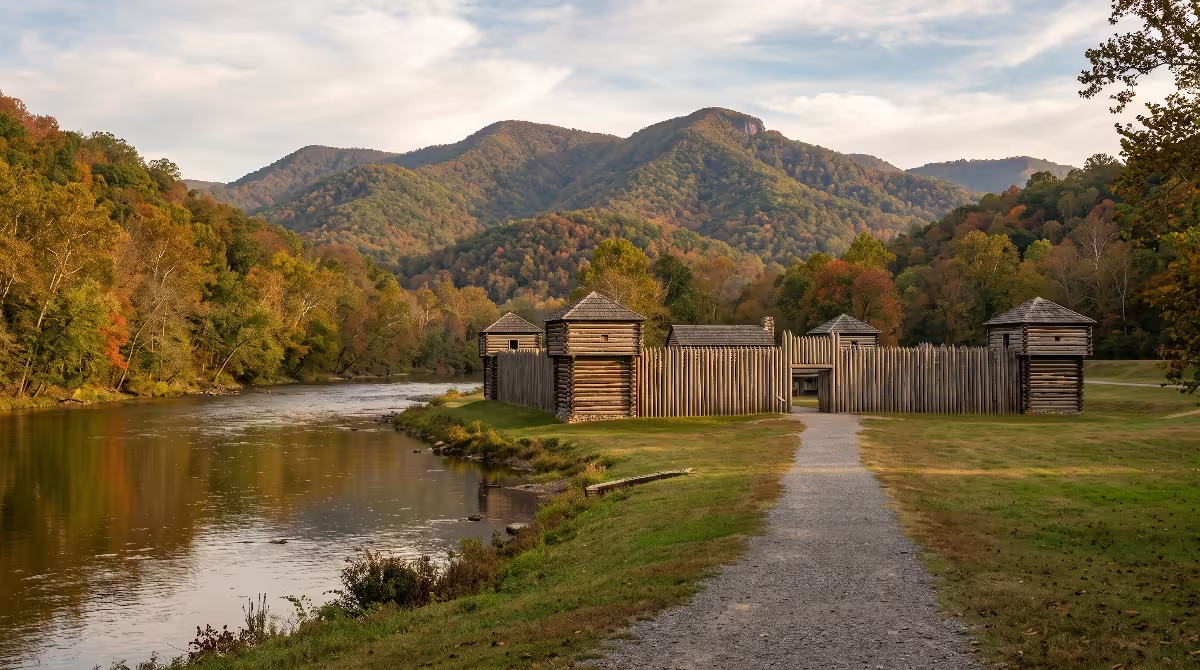
Life along the frontier was hazardous. Disputes over hunting grounds and broken treaties led to frequent border conflicts. To protect families and livestock, settlers in Hawkins County, TN constructed fortified homesteads and neighborhood stockades known as stations:
- Patterson’s Mill and Fort: Established near modern Surgoinsville along the Holston River to protect early mill operations and river travelers.
- Amis Mill: Built around 1781 by Captain Thomas Amis, a Revolutionary War veteran. This stone and heavy timber complex included a gristmill, sawmill, tavern, and palisade wall located along Big Creek. The stone dam built by Amis remains the oldest stone dam still standing in Tennessee.
- Carter’s Valley Stockades: Network of fortified log compounds where scattered farming families gathered during frontier alarms.
From an engineering perspective, building these early forts required smart site selection. Settlers located stations on high ground above river floodplains, with direct line-of-sight to the valleys below and immediate access to a permanent freshwater spring. If a water source failed during a siege, the fort could not survive. When walking prospective building parcels in Hawkins County, TN today, it is common to find these same historic springheads still pouring cold, crystal-clear mountain water from limestone fissures.
The Birth of Hawkins County: North Carolina, Spencer, and the State of Franklin
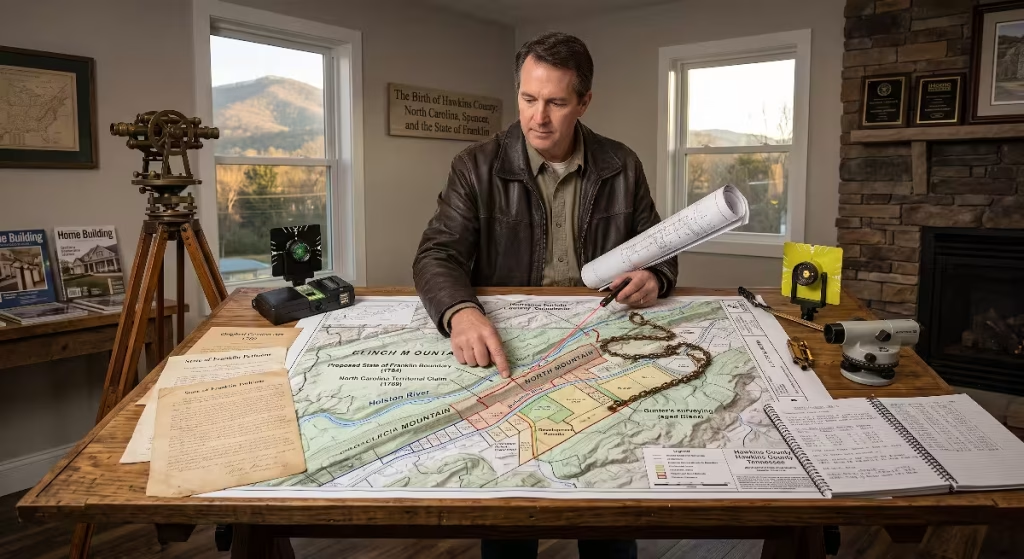
The political birth of Hawkins County, TN was full of border disputes, rival governments, and shifting state lines during the aftermath of the American Revolutionary War.
Who Was Hawkins County Named After?
Hawkins County, TN was officially named in honor of Colonel Benjamin Hawkins. Hawkins was a distinguished North Carolina statesman, a delegate to the Continental Congress, and later a United States Senator. During the Revolutionary War, he served on George Washington’s staff as an interpreter because of his fluency in French.
Following the war, Benjamin Hawkins was appointed by Congress as the Principal Temporary Agent for Indian Affairs South of the Ohio River. He gained a reputation for fair dealing, diplomacy, and deep respect for Native American treaties. Although Colonel Hawkins spent much of his later career working among the Creek Nation further south, his strong legislative advocacy for the western frontier settlers earned him the honor of having Hawkins County, TN carry his name.
The Lost State of Franklin Era
Between 1784 and 1788, the region that is now East Tennessee attempted to break away and form its own independent 14th American state, known as the State of Franklin. Settlers felt neglected by the North Carolina state legislature, which sat hundreds of miles away across the rugged Appalachian Mountains. North Carolina had offered to cede its western lands to the federal government to pay Revolutionary War debts, leaving the local frontier communities without military defense or judicial courts.
In response, regional leaders, led by John Sevier, formed the State of Franklin. During this turbulent period:
- Franklin officials divided the territory into local administrative districts.
- The land comprising modern Hawkins County, TN was organized by the Franklin government as Spencer County, named in honor of longhunter Thomas Sharp Spencer.
- North Carolina refused to recognize Franklin’s sovereignty and rescinded its land cession.
- For several years, dual governments operated across the same valleys. Residents were asked to pay taxes to two separate sheriff departments, hold deeds under two different legal codes, and serve in competing militias.
North Carolina officially established Hawkins County on January 6, 1787, carving it out of Sullivan County to reassert its governmental control. By 1789, the State of Franklin collapsed due to political fragmentation and lack of federal recognition. North Carolina regained jurisdiction over Hawkins County, TN, only to officially cede the entire territory to the United States federal government shortly afterward.
       Frontier Land Timeline: Hawkins County, TN

   1770s: Carter's Valley Settlement (Watauga Association)
     |
   1784: Region Joins the State of Franklin Movement
     |
   1785: Administered as "Spencer County" under Franklin
     |
   1787: Officially Established as Hawkins County by North Carolina
     |
   1790: Incorporated into the Southwest Territory
     |
   1796: Tennessee Enters Union (Hawkins as 2nd Oldest County)
1796 Tennessee Statehood and the “Mother County”
In 1790, the federal government organized the region as the Territory South of the River Ohio, commonly called the Southwest Territory. When the territory achieved statehood on June 1, 1796, Hawkins County, TN entered the Union as the second-oldest county in the new state, predated only by neighboring Washington County.
Historically, Hawkins County, TN served as an expansive “mother county.” At the time of its initial creation, its borders stretched across vast wilderness areas. Over the following decades, several modern counties were carved out of original Hawkins County territory, including:
- Hancock County
- Grainger County
- Parts of Jefferson County
- Parts of Knox County
- Hamblen County
- Parts of Claiborne County
When you look at property deeds and title abstractions in Hawkins County, TN today, you will sometimes see legal descriptions referencing these original territorial land grants signed by North Carolina governors before Tennessee became an independent state.
Rogersville: Architecture, Print, and Tennessee Firsts
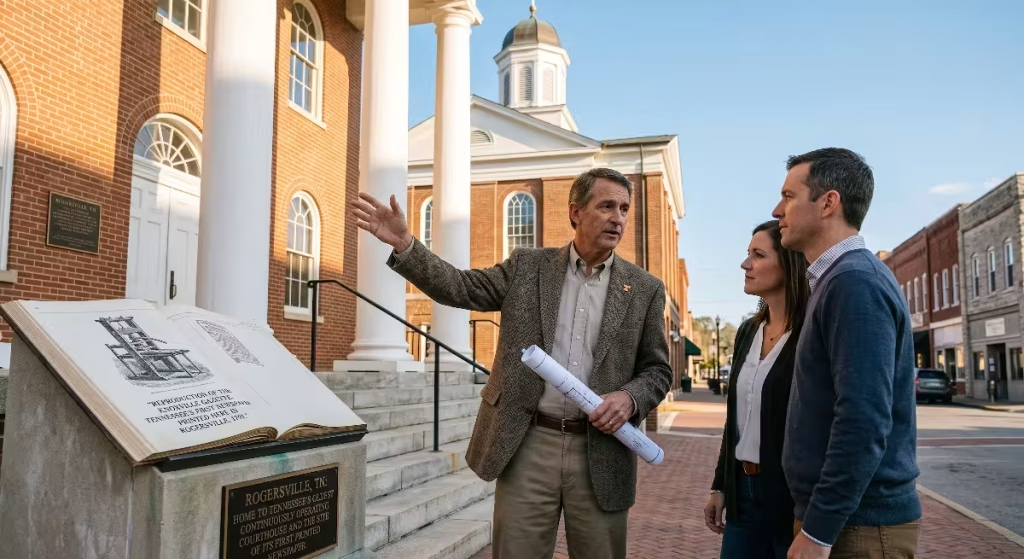
You cannot talk about the history of Hawkins County, TN without focusing on Rogersville, the county seat and the beating heart of local civic history.
What Is the Oldest Town in Hawkins County?
Rogersville is the oldest town in Hawkins County, TN, and shares credit with Jonesborough as one of the two oldest continuously settled municipalities in the entire state of Tennessee.
Rogersville was founded in 1789 by Joseph Rogers, an Irish immigrant who arrived on the frontier and married Mary Amis, the daughter of Captain Thomas Amis. Rogers purchased land near Crockett Spring, where the grandparents of the famous frontiersman Davy Crockett had settled in the 1770s before being killed in a frontier conflict. In 1789, the North Carolina legislature passed a formal act designating Rogersville as the official seat of justice for Hawkins County, TN. Joseph Rogers surveyed town lots, established a central public square, and began constructing permanent civic buildings.
Pioneer Media: The Birth of the Knoxville Gazette
In 1791, a printer named George Roulstone brought a wooden printing press over the Blue Ridge Mountains by wagon. He partnered with Robert Ferguson to establish the Knoxville Gazette in Rogersville.
Although named for the town of Knoxville, which had just been laid out as the capital of the Southwest Territory, Knoxville was still an active military frontier site without adequate buildings. Roulstone set up his shop in Rogersville, publishing the very first newspaper printed anywhere in the territory of Tennessee. The paper reported on national congressional debates, local land auctions, runaways, and frontier militia dispatches. This pioneer publishing operation established Hawkins County, TN as an early center for regional communication and legal recordkeeping.
Historic Architecture and Native Masonry
As a builder with a carpentry certificate, I hold a deep appreciation for the historic downtown district of Rogersville in Hawkins County, TN. The town serves as a living museum of early American construction methods.
       Key Historic Landmarks of Rogersville, TN
+---------------------------+-----------+-----------------------------------+
| Landmark Name             | Year Built| Architectural Significance        |
+---------------------------+-----------+-----------------------------------+
| Crockett Spring Park      | 1770s     | Site of early Crockett homestead  |
| Thomas Amis Stone Dam     | 1781      | Oldest stone dam in Tennessee     |
| Hawkins County Courthouse | 1836      | Oldest operating courthouse in TN |
| Hale Springs Inn          | 1824      | Historic brick Federal tavern     |
| Overton-Hale House        | c. 1860   | Classic Greek Revival residential |
+---------------------------+-----------+-----------------------------------+
The Hawkins County Courthouse
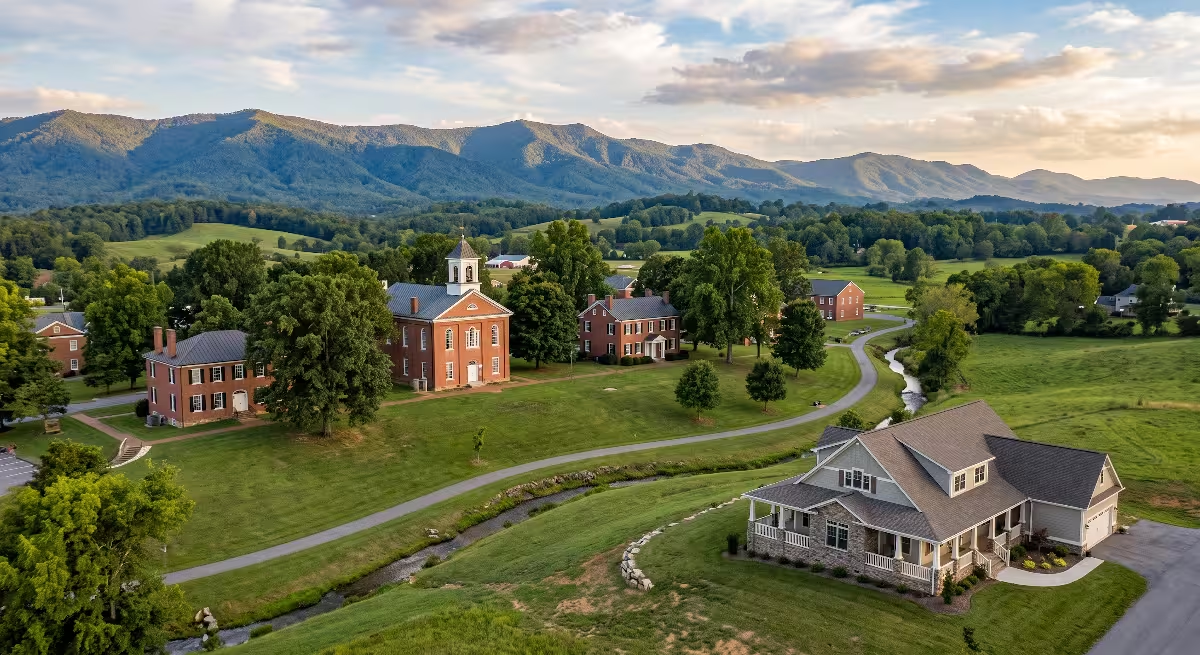
The Hawkins County Courthouse stands proudly on the main square in Rogersville. Completed in 1836, it is the oldest continuously operating courthouse in the state of Tennessee. Designed in the classic Greek Revival style, it features hand-molded red brick, grand masonry columns, and a central cupola.
From an engineering perspective, the building is a masterclass in structural masonry. Early builders laid load-bearing multi-wythe brick walls without modern steel rebar reinforcement. Instead, they relied on proper wall thickness, true mortar joints, and massive timber floor joists to support heavy structural loads. The courthouse has survived earthquakes, regional conflicts, and nearly two centuries of daily public service, standing as a tribute to early building standards in Hawkins County, TN.
Hale Springs Inn
Constructed in 1824 by John McKinney, the Hale Springs Inn is another architectural treasure in downtown Rogersville, Hawkins County, TN. This three-story Federal-style brick structure served as a central stagecoach stop along the Great Stage Road between Washington, D.C., and Nashville.
The inn hosted three early United States presidents: Andrew Jackson, James K. Polk, and Andrew Johnson. Examining the brickwork reveals lime-based mortar joints, hand-carved interior mantels, and heavy heart-pine tongue-and-groove flooring. The building highlights the exceptional skill of early Appalachian craftsmen who turned native clay and local virgin timber into lasting community landmarks.
Geological Assets: Tennessee Marble, Rail, and 19th-Century Expansion
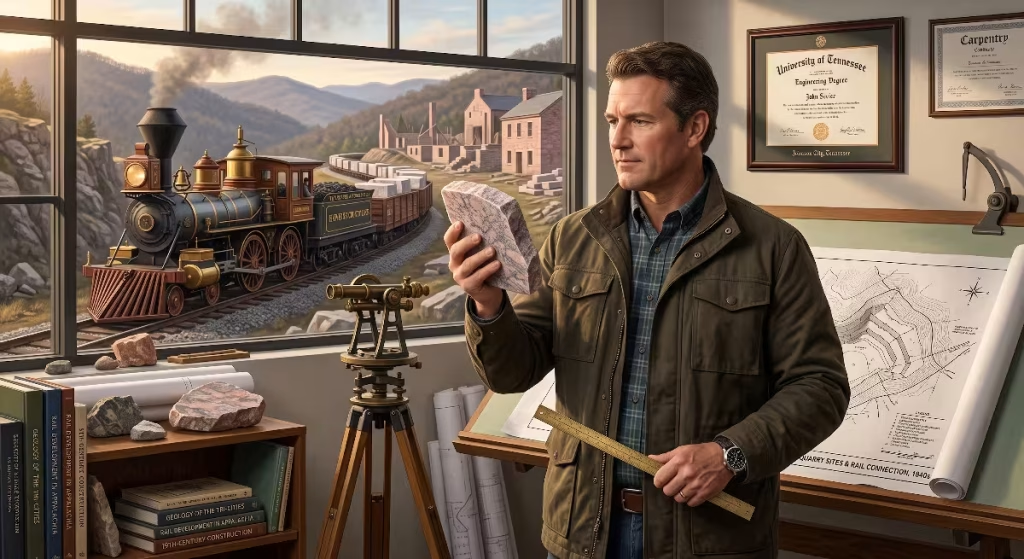
The economic growth of Hawkins County, TN during the 19th and early 20th centuries was powered by its unique natural resources, especially its world-renowned stone quarries and growing railroad lines.
Hawkins County Variegated Marble
One of the most remarkable chapters in the history of Hawkins County, TN involves the extraction of Tennessee marble. Despite its name, this material is not true metamorphic marble. Geologically, it is an extremely dense, fine-grained Ordovician limestone belonging to the Holston Formation.
What made Hawkins County, TN famous among architects nationwide was its variegated stone. The quarries throughout the county yielded stone with striking cedar red, chocolate brown, pink, and variegated cream patterns. The stone was hard, took a brilliant glass-like polish, and resisted weather erosion far better than softer stones.
During the mid-1800s, Hawkins County, TN became the quarrying capital of the region. Heavy blocks were cut from open-pit quarries using steam drills, wedge blocks, and steel cables. The stone was hauled by teams of oxen to the Holston River or local railheads. This local stone gained national fame and was selected for major public works projects across the United States:
- Interior columns and balustrades in the United States Capitol Building in Washington, D.C.
- Decorative stone panels in the National Gallery of Art.
- The state capitols of several southern and midwestern states.
- Ornate banks, libraries, and historic municipal buildings from New York to San Francisco.
For homeowners in Hawkins County, TN today, this geological heritage remains clearly visible. You will regularly find fieldstone walls, garden borders, and house foundations constructed with chunks of this historic pink and cedar marble pulled right out of local fields.
                  Ordovician Limestone Profile
                 (Holston Formation Characteristics)

   [ Topsoil Layer: Rich, dark loam mixed with organic matter ]
   ===========================================================
   [ Clay Subsoil: Dense red/orange clay, sensitive to water  ]
   -----------------------------------------------------------
   [ Fractured Bedrock: Weathered limestone and karst fissures ]
   -----------------------------------------------------------
   [ Solid Holston Formation: High-density pink/cedar stone   ]
The Civil War and Strategic Railroad Crossings
The mid-19th century brought major transportation changes to Hawkins County, TN. The East Tennessee and Virginia Railroad laid tracks through the southern portion of the county, establishing an East Coast rail link that connected Bristol, Virginia, to Knoxville and points west.
The town of Bulls Gap, located in southern Hawkins County, TN, emerged as a vital railway hub. Trains stopped here for coal, water, and track switching, making it one of the most commercially active junctions in the region.
When the Civil War erupted in 1861, Hawkins County, TN, like most of East Tennessee, was deeply divided. While many large plantation owners in the river bottoms favored the Confederacy, the vast majority of small farmers across the mountain hollows and ridges were staunch Union sympathizers. The strategic railroad lines running through Hawkins County, TN became high-value military targets:
- Control of Bulls Gap: Both Union and Confederate armies fought fiercely for control of the rail line and mountain pass at Bulls Gap. The junction changed hands multiple times throughout the war.
- The Battle of Bulls Gap (1864): Confederate forces under Major General John C. Breckinridge attacked Union troops entrenched in the gap, forcing a chaotic federal retreat toward Russellville.
- Infrastructure Destruction: Bridges over the Holston River and local rail tracks were repeatedly burned, rebuilt, and destroyed again by guerrilla raiders and conventional forces.
The war caused extensive economic disruption across Hawkins County, TN. However, during the Reconstruction era, local communities rallied around their agricultural land, rebuilt their rail infrastructure, and revitalized the quarrying and timber industries to lead the county back to prosperity.
Communities of Hawkins County: Municipalities and Historic Outposts
To truly understand Hawkins County, TN, you must look beyond Rogersville to the diverse towns, cities, and rural settlements that make up its geography. Each community offers its own unique local character, development patterns, and residential building landscape.
Populated Places in Hawkins County, TN
The following table provides an overview of all incorporated cities, incorporated towns, and census-designated places (CDP) located within Hawkins County, TN:
| Place Name | Municipal Status | Historical and Modern Significance | Primary Building and Real Estate Character |
| Church Hill | City | Largest incorporated municipality in Hawkins County, TN; grew rapidly during the 20th century as a residential hub for nearby industrial centers. | Dense residential subdivisions, single-family neighborhoods, municipal water and sewer connections. |
| Kingsport (Part) | City | Major industrial and manufacturing center of the Tri-Cities; the corporate city limits extend westward into eastern Hawkins County, TN. | Master-planned communities, commercial corridors, urban infrastructure, and suburban custom home sites. |
| Mount Carmel | Town | Incorporated town along Highway 11W; serves as a peaceful bedroom community with strong civic pride and scenic ridgeline views. | Well-established single-family neighborhoods, traditional ranches, and newer mid-sized custom construction. |
| Rogersville | Town | County seat and oldest town in Hawkins County, TN; home to the 1836 courthouse and rich historic preservation districts. | Historic restorations, downtown commercial revitalization, and expansive perimeter acreage tracts. |
| Surgoinsville | Town | Named for French merchant Francois Surgoin; historic river trading post that evolved into a welcoming rural community. | Riverfront properties, mid-size farms, industrial park developments, and custom homes on rolling terrain. |
| Bulls Gap | Town | Historic railroad terminal and strategic Civil War mountain gap named for early gunsmith John Bull. | Rolling pasture tracts, historic rail depot district, quiet countryside living, and hobby farms. |
| Bean Station (Part) | Town | Historic stagecoach crossroads at the foot of Clinch Mountain; primarily located in Grainger County with eastern municipal portions in Hawkins County, TN. | Lakeside recreational parcels along Cherokee Lake, mountain-view homes, and cabin construction. |
| Mooresburg | Census-Designated Place (CDP) | Unincorporated historic community along U.S. 11W; settled by Hugh Moore in 1769 and home to rich farming bottoms. | Large agricultural acreage, rural residential home sites, private septic developments, and lake access points. |
Notable Unincorporated Rural Communities
Beyond the formal municipalities and census-designated places, Hawkins County, TN features several unincorporated rural communities that carry long historical records:
- Austins Mill: Centered around early water-powered grain mills along local creek beds.
- Eidson: Located north of Clinch Mountain in rich agricultural country near the Virginia state line.
- Midway: A traditional farming crossroads between main commercial corridors.
- Persia: Historic rural community situated south of Rogersville along former rail spurs.
- Saint Clair: Settled along early stagecoach trails, featuring historic churches, rolling cattle pastures, and panoramic views of Bays Mountain.
Frequently Asked Questions About Hawkins County, TN
When people research the region on search engines, they regularly ask practical questions about its background, origins, and daily living conditions. Here are clear, straightforward answers to the most common queries regarding Hawkins County, TN.
What is Hawkins County, TN known for?
Hawkins County, TN is best known for its rich pioneer history, its role as the second-oldest county in Tennessee, and the historic preservation of Rogersville, its county seat. It is famous for:
- The quarrying of pink and cedar variegated Tennessee marble, which was used in major American landmarks like the U.S. Capitol.
- The Amis Mill historic site, which preserves the oldest stone dam in the state of Tennessee.
- Being the publishing location of the Knoxville Gazette, Tennessee’s first printed newspaper.
- Outstanding outdoor recreation along the Holston River and Cherokee Lake, which offers premier smallmouth bass, striper, and catfish fishing.
When was Hawkins County, TN founded?
Hawkins County, TN was officially created on January 6, 1787. It was formed by an act of the North Carolina General Assembly out of land that was previously part of Sullivan County. This occurred nearly a decade before Tennessee officially achieved American statehood in 1796.
What makes the land in Hawkins County, TN unique for building a custom home?
The physical landscape of Hawkins County, TN offers incredible mountain scenery and rich topsoil, but it also presents unique structural conditions that require competent engineering:
- Karst Limestone Formations: The underlying bedrock throughout the county is predominantly limestone. While solid limestone provides an exceptional structural base for load-bearing footers, it is also prone to underground sinkholes, surface fissures, and subsurface caves. A thorough geotechnical site inspection is essential before pouring foundations.
- Soil Perc and Septic Suitability: Because municipal sewer service is concentrated primarily inside cities like Church Hill, Mount Carmel, and downtown Rogersville, most custom homes in Hawkins County, TN require private on-site septic systems. The red clay subsoils common across the region can drain slowly. Testing soil percolation rates early ensures you can legally permit the number of bedrooms you plan to build.
- Slope and Grading Management: With Clinch Mountain to the north and Bays Mountain to the south, many of the prettiest building sites sit on sloping terrain. Proper site grading, retaining wall design, and foundation water management systems (such as perimeter French drains and waterproof foundation coatings) are essential to prevent water intrusion.
Modern Living: The Legacy of Hawkins County for Landowners and Homebuyers
Today, Hawkins County, TN bridges the gap between its pioneer past and the modern needs of families, retirees, and remote workers looking for a balanced lifestyle. As someone who works closely with custom home buyers across the Tri-Cities market, I see firsthand why this county continues to attract steady interest.
       Site Assessment Checklist: Hawkins County, TN

   [x] 1. Geotechnical Walk: Check for surface limestone outcroppings.
   [x] 2. Soil Perc Testing: Verify drain field suitability for bedrooms.
   [x] 3. Water Source: Confirm municipal tap or plan for private well drilling.
   [x] 4. Topography & Grading: Plan cut/fill balance to manage slope drainage.
   [x] 5. Title & Boundary Search: Verify historical easements and road access.
The Balance of Acreage and Accessibility
In today’s real estate market, buyers are often forced to choose between tiny suburban lots with zero privacy or remote mountain land that sits hours away from hospitals and grocery stores. Hawkins County, TN offers an ideal middle ground.
Here, buyers can find five, ten, twenty, or fifty-acre tracts with gentle slopes, open meadows, and mountain views, while remaining an easy drive from the commercial amenities of Kingsport, Johnson City, and Bristol. Highway 11W runs like an open spine through the county, providing direct four-lane highway travel to regional job markets, medical centers, and shopping districts.
Preserving Heritage While Building for the Future
When you drive the country roads of Hawkins County, TN, you see historic 19th-century timber barns standing right alongside modern, energy-efficient custom homes. There is a deep, community-wide respect for the land and its historical architecture.
Homeowners who build here often draw inspiration from regional building traditions. We frequently integrate classic East Tennessee architectural elements into modern floor plans:
- Broad, covered wrap-around porches designed to catch cool mountain breezes.
- Heavy exterior timber framing using native rough-sawn oak, cedar, and pine.
- Hand-laid native stone fireplaces and foundation accents that echo the historic limestone and marble masonry of early Rogersville.
- Standing-seam metal roofing that provides traditional farmhouse charm alongside modern durability and fire protection.
At the same time, modern homes in Hawkins County, TN are built to today’s high energy standards. By incorporating advanced crawlspace encapsulation systems, spray foam insulation packages, high-efficiency heat pump systems, and modern solar generation arrays, homeowners get the classic look of a historic homestead with the low monthly utility bills of a high-performance modern house.
Practical Steps for Buying Land in Hawkins County, TN
If you are planning to purchase land and build a custom home in Hawkins County, TN, taking a structured, disciplined approach will save you time, stress, and money. Here are the core steps I recommend to every buyer:
1. Secure Legal Access and Conduct Title Verification
Because Hawkins County, TN has a long settlement history, older rural parcels often carry complex deed histories. Always ensure that the property has direct, deeded access to a county-maintained road rather than an informal or contested handshake easement across a neighbor’s property. A professional boundary survey and title search are non-negotiable.
2. Perform Early Perc Testing
Never purchase a rural acreage tract in Hawkins County, TN without making your contract contingent on an approved soil percolation test. Tennessee Department of Environment and Conservation (TDEC) regulations require specific soil absorption rates for standard subterranean septic drain fields. Knowing where your septic field must go dictates your driveway layout, your home orientation, and your future detached workshop or garage locations.
3. Evaluate Water and Electrical Infrastructure
If you are buying outside the municipal water districts of Church Hill, Mount Carmel, or Rogersville, you will need to drill a private water well. Hawkins County, TN generally features abundant groundwater due to its karst limestone network, but well depth and water flow rates can vary from one hollow to the next. Speak with local well drillers to evaluate average depths and water quality in that specific neighborhood. Additionally, verify the distance to the nearest electrical utility pole with the local electric cooperative (such as Holston Electric Cooperative) so you are not caught off guard by line extension costs.
4. Design Foundations for Regional Soils
The soil throughout Hawkins County, TN contains significant amounts of Appalachian red clay. Clay expands when wet and contracts when dry. Pouring a foundation in these soils requires proper footing depth (below the regional frost line of 18 to 24 inches), adequate steel reinforcement, solid compaction of all backfill dirt, and careful drainage planning to keep rainwater moving away from the foundation perimeter.
Building on Strong Foundations
The history of Hawkins County, TN is not just a collection of dates, old court records, and museum artifacts. It is written directly into the geography of the land, the craftsmanship of its historic downtown buildings, and the durable character of its people. From the early hunters following ancient paths along the Holston River to the stonecutters who pulled prized pink marble from regional quarries, this county has always rewarded hard work, competent planning, and respect for the natural landscape.
Whether you are walking through the historic square of Rogersville to admire the craftsmanship of the 1836 courthouse, settling into a quiet neighborhood in Church Hill or Mount Carmel, or staking out your building footprint on rolling acreage overlooking Clinch Mountain, you are becoming part of an authentic American story.
When you build or buy a home in Hawkins County, TN, you are not simply purchasing real estate. You are claiming your own piece of frontier heritage, anchored by mountain ridges, clear running rivers, and two and a half centuries of enduring East Tennessee history.