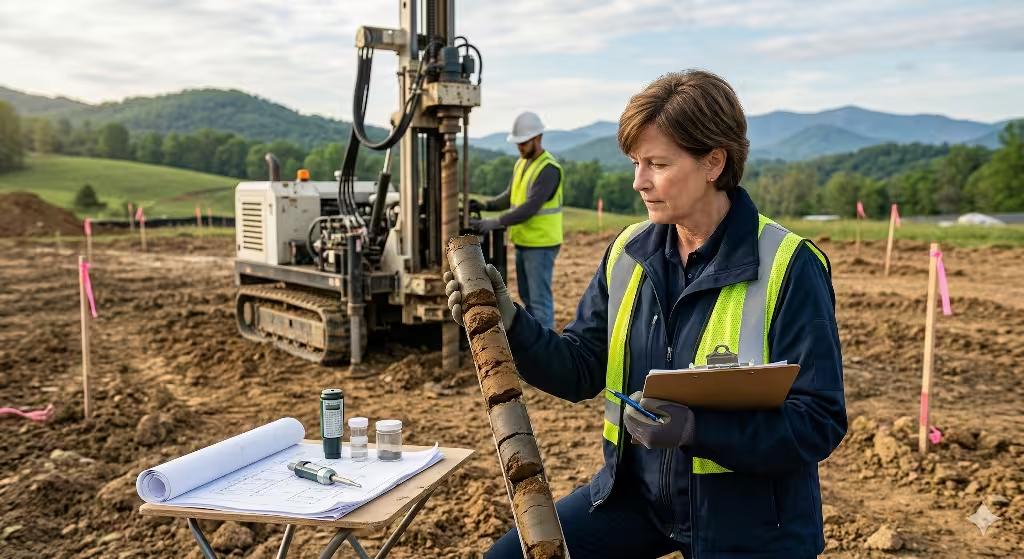


The cornerstone of that independence, especially on a beautiful piece of land in our East Tennessee hills, is a private water well. It is your personal, secure source for the home’s most vital resource.
However, budgeting for a new well is not a simple line item. When clients ask me, “How much does it cost to drill a well?” my answer is always, “It depends.” The final price can change a lot, especially in our unique geology. The rock under Johnson City is not the same as the soil in other parts of the country.
This guide will calmly break down every factor that determines the final price of getting water for your custom home. We will look at the 2025 costs and give you the knowledge you need to plan your budget with integrity and confidence.
Video Version of this Article
The “Quick Answer”: Average Well Drilling Costs in 2025

Before we get into the details, you need a number for your budget. For planning purposes, the national average for a complete, new residential well system in 2025 is between $3,750 and $15,300.
This price usually includes the drilling, the casing, the pump, and all the basic components to make it work.
The most common way drillers charge is by the cost per foot. Nationally, this averages $25 to $65 per foot for a full, turn-key system. Just for the drilling itself, you might see prices closer to $15 to $30 per foot.
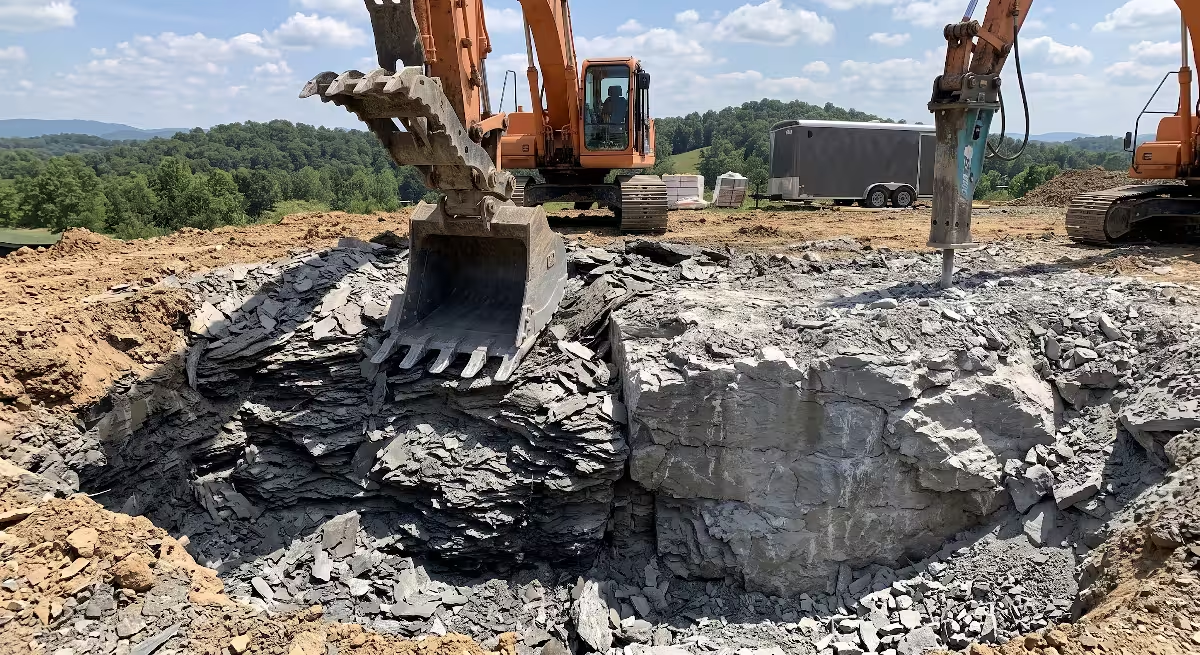
But here is a critical note for our local area. If you are building in Johnson City, Kingsport, Bristol, or the surrounding counties, we must be realistic. We live in the Appalachian Ridge. Our ground is filled with hard limestone, shale, and bedrock. Drilling through this rock is much harder and slower than drilling through sand or soft clay.
Because of this, I always advise my Tri-Cities clients to budget toward the middle or higher end of that national average. Precision in your quotes from local drillers is paramount. A cheap well on paper can become expensive quickly if the driller hits rock they were not prepared for. A good local driller will already know this.
📈 Deconstructing the Bill: A Precise Breakdown of Well Costs
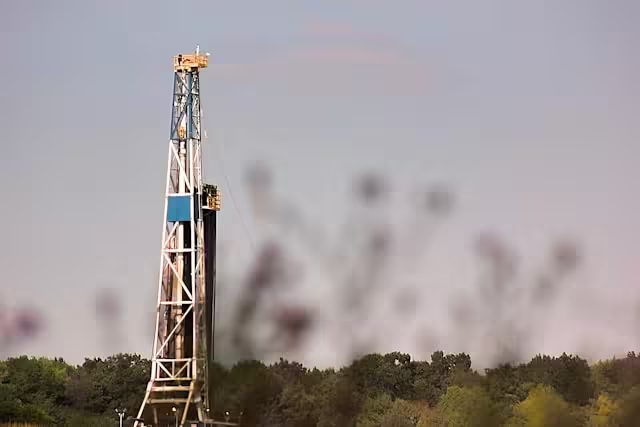
A quote from a well driller can look confusing. A good contractor, one with integrity, will break down the costs for you. Let’s look at each part of the bill so you know exactly what you are paying for.
1. Drilling (Cost Per Foot)
This is the first and most basic charge. It is the fee for the labor, the massive drilling rig, the fuel, and the crew’s time to drill the actual hole. As we just discussed, this is almost always charged by the foot.
- Average Cost: $15 – $30 per foot (this is just for the drilling service).
The price changes based on two things: the diameter of the hole and the type of ground. A standard residential well needs a 6-inch diameter hole to fit the casing and pump.
The biggest factor is the geology. A driller using a “mud rotary” rig in a sandy area can drill very quickly. Here in East Tennessee, drillers must use powerful “air rotary” or “percussion” rigs. These are like giant, high-speed jackhammers. They hammer and blast the rock into small pieces, which are then blown out of the hole with compressed air. This is slow, specialized, and more costly. But it is the only way to create a stable well in our bedrock.
2. Well Casing (Cost Per Foot)
This is one of the most important parts of your well. The casing is the pipe that gets inserted into the drilled hole. It serves two critical jobs:
- It keeps the well from collapsing in on itself.
- It seals the well from any surface water or ground contaminants, protecting your water.
The Tennessee Department of Environment and Conservation (TDEC) has strict rules about how a well must be cased. The driller must seal the casing, especially near the surface, to make sure nothing but deep, clean aquifer water gets into your well.
You will see two main types of casing:
- PVC Casing: This is a strong, thick-walled plastic pipe. It is the most common choice today.
- Pros: It is less expensive (around $10 – $20 per foot, installed) and it will never rust or corrode.
- Cons: It is not as rigid as steel.
- Steel Casing: This is the traditional, heavy-duty option.
- Pros: It is extremely strong. It is needed for very deep wells or in ground that is very unstable.
- Cons: It is much more expensive (often $30 – $50 per foot or more) and it can rust over many decades.
For most residential wells in our area, PVC is the standard. The driller will sink the casing deep into the bedrock to create a permanent, stable well.
3. The Well Pump System
Many people get this confused. The well is the hole and the casing. The pump is the engine that gets the water out. The pump system is a major cost, and it is not always included in the per-foot drilling price. Always ask.
A new pump system can cost between $800 and $3,000, depending on the type and power.
- Submersible Pump: This is the standard for any modern, deep-drilled well. The pump is a long, thin cylinder that is lowered deep into the well, far below the water level. It works by pushing the water up to your house. This is very efficient. The deeper your well, the more horsepower (HP) your pump will need, which increases the cost.
- Jet Pump: You might hear about these, but they are only for very shallow wells (less than 25 feet deep). They work by sucking water up. They are not used for new custom homes, which rely on the deep, clean water only a drilled well can reach.
Your driller will choose a pump that matches your well’s depth and the amount of water your family will need.
4. “Balance of System” Components & Installation
This is the “everything else” that people often forget to budget for. These parts are all needed to make your well function as a modern water system.
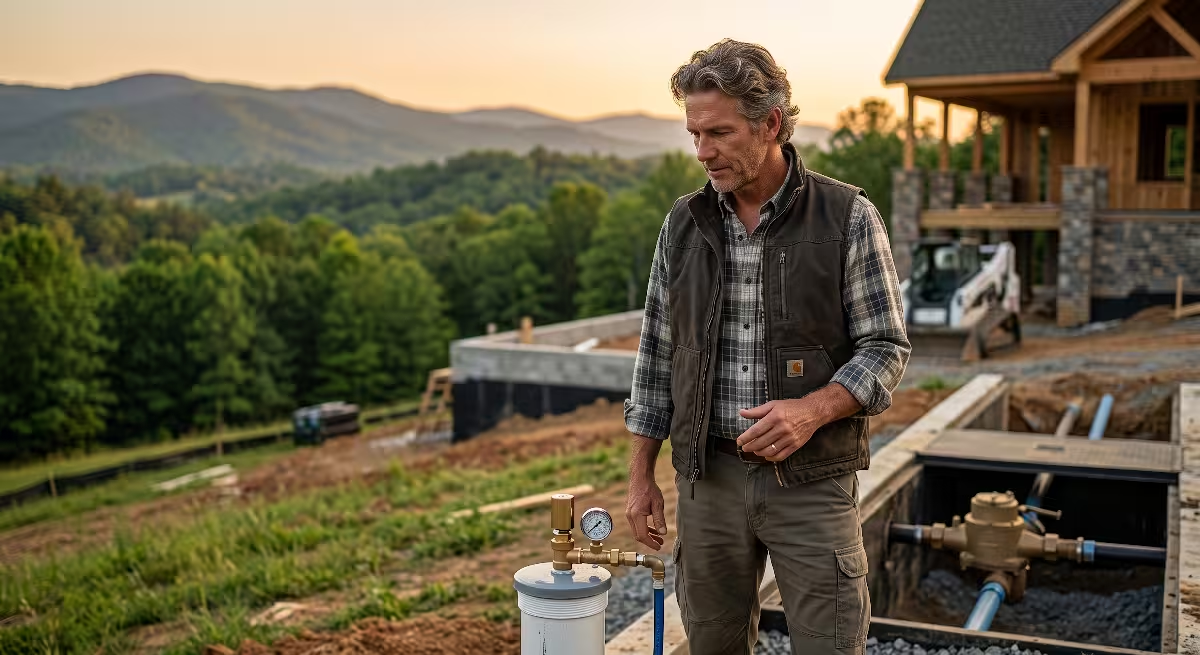
- Pressure Tank: (Cost: $300 – $800) Your pump should not turn on every time you open a faucet. This blue or gray tank holds a reserve of water (maybe 20-80 gallons) under pressure. When you open a tap, water comes from the tank. Only when the tank’s pressure gets low does the pump kick on to refill it. This saves a huge amount of wear and tear on your pump.
- Control Box & Electrical: (Cost: $500 – $1,500) A submersible pump is a powerful 240-volt appliance. It needs a dedicated circuit from your home’s main breaker panel. This cost includes the wiring, the control box at the head, and the labor to trench and connect everything.
- Well Cap: (Cost: $50 – $100) This is not just a simple lid. It is a TDEC-required sanitary seal. It is vented (to prevent a vacuum) but screened and sealed to keep out insects, small animals, and surface water.
- Pitless Adapter: This is a clever piece of engineering. In cold climates like ours, we must protect the water pipe from freezing. This device connects the pipe from the pump to the main water line going to your house underground. It attaches to the side of the casing, about 4-5 feet below the surface, sufficiently below the frost line. This means you do not need an old-fashioned well house.
5. Permits, Testing, and Connection
Finally, there are the administrative and safety costs.
- Permit Fees: (Cost: $200 – $700) You cannot just drill for water. Your driller must pull a permit from the state (TDEC) and sometimes the local county (Washington, Sullivan, or Carter). This ensures the well is logged, drilled to code, and its location is recorded. This fee is passed on to you.
- Water Quality Testing: (Cost: $100 – $500) This is a step you must not skip. Once the it is drilled and flushed, a water sample must be sent to a certified lab. They will test for bacteria (like E. coli), nitrates, and other contaminants.
- Water Treatment System (If Needed): (Cost: $800 – $4,000) The test will also tell you about the water’s “character.” Here in East Tennessee, our water flows through limestone. This means it is often “hard.” Hard water has a lot of dissolved calcium and magnesium.8 It is perfectly safe to drink, but it will create mineral scale that clogs pipes, water heaters, and dishwashers. The solution is a water softener, which is a common add-on for any new well in this region. You may also need a filter for iron (which stains) or sulfur (which can smell).
⛰️ Key Factors That Influence Your Final Cost in East Tennessee

Now you see why the answer to “how much does it cost to drill a well?” is “it depends.” A driller can give you a quote for their rates (cost per foot), but they cannot give you a firm final price. The final price depends on what they find underground.
Here are the five key factors that can make your bill go up or down.
1. Geology (The #1 Factor)
This is the biggest variable in the Tri-Cities. Drilling 300 feet in soft, sandy soil might take a day. Drilling 300 feet in our hard bedrock might take three days.
That means more labor, more fuel, and more wear on the very expensive drill bits. A good local driller knows the rock. Their quote will reflect this. A lowball quote from an out-of-area driller might be a sign they do not know what they are getting into. This is where hiring a competent, local expert is so important.
2. Well Depth (The Biggest Unknown)
This is the second-biggest variable. You are paying by the foot, but you do not know the final footage. The driller is “hunting” for water-bearing fractures in the bedrock. In our area, a well might be 150 feet deep. It might be 400 feet deep.
A good driller can look at state geological maps and check the depth of your neighbors’ wells to get a good estimate. But it is never a guarantee. You must have a contingency in your budget in case your well needs to go deeper than expected to get a good water supply.
3. Flow Rate (Gallons Per Minute – GPM)
When the driller hits water, they will test the “flow rate.” This is measured in Gallons Per Minute (GPM). For a typical 3-4 bedroom home, you need a flow rate of at least 6 to 10 GPM to run showers, the dishwasher, and laundry at the same time.
What if your driller hits water, but the well only produces 2 GPM? You have a “low-yield” well.
This does not mean you have to drill a new hole. There is a solution called hydrofracturing (or “hydrofracking”).9 This costs an extra $1,500 to $3,000. The driller will pump high-pressure water into the well to clean out and widen the small rock fractures. This can often increase a 2 GPM well to a 10 GPM well. It is another potential cost to be aware of.
4. Site Accessibility
A drilling rig is a massive, heavy truck. It needs a solid, relatively flat area to set up.
If your custom home site is on a steep, wooded lot (which describes many beautiful properties in our area), the driller may have to do extra work. This could include building a temporary gravel road or clearing trees. That extra site preparation work will be added to your bill.
5. Distance from Home
TDEC has rules about where a well can be. It must be a safe distance from septic tanks (at least 50 feet) and septic drain fields (at least 100 feet). It also must be set back from your property lines.
On some lots, this means the best, safest spot for the well is 200 feet from the house. This adds cost. You have to pay for 200 feet of trenching and 200 feet of water pipe and electrical conduit. A well that is only 50 feet from the house will be cheaper to connect.
Common Well Drilling Questions
Below are some common questions related to drilling.
Is drilling a well cheaper than connecting to city water?
This is a great question. The answer depends on your timeframe.
- Upfront Cost: A new well is almost always more expensive upfront. The $5,000 to $15,000 for a well is a bigger bill than a typical $2,000 to $5,000 “tap fee” to connect to a city water line (if one is even available).
- Long-Term Cost: The well almost always wins. A city water bill of $80 per month is $960 per year. Over 30 years, that is $28,800 in payments. Your well has no monthly bill.
Your well pump does run on electricity, but this cost is very low. A well gives you control over your water, but you are responsible for maintenance. City water comes with a monthly bill and the risk of rate hikes, but you do not have to fix it. For most custom homes on large lots, a well is the clear and only choice.
What are the different types of wells?
You will hear a few terms. For a modern home, only one matters.
- Dug Wells: This is the old-fashioned well you see in movies, lined with stones. They are dug by hand or backhoe, are very shallow (10-30 feet), and draw water from the surface. They are very easy to contaminate and are not a safe or reliable option for a new home.
- Driven (Sand Point) Wells: These are made by driving a small-diameter pipe into the ground. They only work in very sandy or soft ground with a high water table (water at 15-20 feet). This does not apply to our rocky region.
- Drilled Wells: This is the standard. A drilling rig drills a 6-inch hole hundreds of feet deep into the bedrock, where the water is clean and protected. The well is sealed with casing. This is the only type of well you should consider for a custom home.
How long does a water well last?
This is the best part about investing in a well. A properly drilled well is a permanent asset.
- The Well Itself: The drilled hole and the casing can last 50 years or more. Many wells last for the life of the home.
- The Well Pump: This is the main moving part.13 A good submersible pump will last 10 to 15 years on average.
- The Pressure Tank: This component also has a similar lifespan of about 10 to 15 years.
So, while the well is a long-term asset, you should budget to replace the pump and tank once every 10-15 years. This is your “maintenance cost.”
What happens if they drill and don’t find water?
This is the “dry hole” risk. It is the question everyone is afraid to ask.
First, this is rare for a professional, local driller. They use geological maps and their decades of experience in the area to pick a high-probability spot.
But it can happen. And if it does, you (the homeowner) are almost always still responsible for paying for the drilling. You are paying for the service—the labor, the fuel, the rig’s time—not for the guarantee of water.
This is a hard fact, but it is why integrity is so important in this business. If you get a dry hole, the driller will cap it (per TDEC rules) and move the rig to try a new location. You will then have to pay for the second hole. This is the single biggest reason you must have a contingency in your budget.
Final Recommendations for Tri-Cities Buyers
Having a well drilled is a major step, and you need to approach it with the right mindset. Here are our final recommendations.
- Budget High. Drilling clients need to add a 20-30% contingency to their drilling budget. If your driller estimates $10,000, you should have $13,000 set aside. If you hit rock and need to go 100 feet deeper, or if you need to hydrofrack, you are covered. If you do not, that money can go right back into your finishes.
- Get Three Itemized Quotes. Do not just accept a single, lump-sum price for a new well. Ask for itemized quotes that break everything down. Compare the driller’s cost per foot for drilling, the cost per foot for casing (and what type), and the specific make and model of the pump and pressure tank. A competent expert will be happy to provide this.
- Hire Local & Licensed. This is my most important piece of advice. Do not hire a company from two states away just because their per-foot price is $2 cheaper. Use a driller who is licensed by TDEC and who has been drilling wells in Washington, Sullivan, and Carter counties for decades. They know our rock. They know the aquifers. Their experience is your best insurance policy against a dry hole and will give you the best possible well for your new home.