

Building a custom home here in the Tri-Cities is an exciting journey. But before you can finalize those beautiful floor plans and start thinking about kitchen cabinets, there is a critical first step that must be taken, one that forms the bedrock of the entire project: understanding your land. A proper land survey is not a mere formality or a box to check on a long list of tasks. It is a foundational requirement that protects your investment, ensures you are following the law, and prevents costly headaches and neighborly disputes down the road.
This guide will walk you through the essential land survey requirements, explaining the different types of surveys, what they show you, and why a comprehensive land survey is absolutely indispensable for any new home construction project.
Why a Land Survey is a Non-Negotiable First Step

The most common and costly mistakes often stem from an incomplete understanding of the property itself. A professional land survey is the single most important investment you can make before any dirt is moved. It is the blueprint of your property, providing the essential data that everything else relies on.
Establishes Legal Boundaries
First and foremost, a land survey establishes the legal boundaries of your property. You might have a general idea of where your property ends and your neighbor’s begins, perhaps based on a fence line, a row of trees, or what the previous owner told you. However, these visual markers are often not accurate. A licensed surveyor will use precise instruments and historical records to find or set official markers at the corners of your property. This definitive line prevents encroachment, which is when a structure or part of your home accidentally gets built on a neighbor’s land. An issue like that can lead to expensive legal battles, and in the worst case, the forced removal of the structure.
A certified land survey confirms you are building on the land you legally own, giving you, your builder, and your financial partners complete peace of mind. It addresses potential disputes before they ever have a chance to start.
Required for Permits and Financing
Beyond neighborly peace, a land survey is a hard requirement for most of the official processes involved in building a home. Here in Tennessee, municipal planning departments, whether you are in Johnson City, Kingsport, or Bristol, will not issue a building permit without a certified site plan that is based on a recent and accurate land survey. They need to verify that your proposed home design respects all local zoning regulations, including setback rules which dictate how far your home must be from property lines, roads, and bodies of water.
Furthermore, your financial partners will insist on it. A mortgage lender is investing a significant amount of money into your project, and they need to protect that investment. They will require a current land survey to ensure the property is exactly as it is legally described and that there are no hidden issues that could devalue it. Similarly, a title insurance company, which protects you and the lender from claims against your property title, will not issue a policy without a thorough land survey to identify any potential encroachments, easements, or other title defects.
Informs Site Planning and Design
Finally, a land survey is a critical tool for the design and construction team. A simple boundary survey is just the start; for new construction, we almost always need what is called a topographic survey. This type of land survey provides the architect and builder with the precise data needed to position the house correctly on the lot. It maps the elevation and contours of the land, showing exactly where hills, valleys, and slopes are located.
This information is vital for several reasons. It influences the foundation design; a sloping lot may require a walkout basement or specialized foundation work. It is crucial for creating an effective drainage plan to ensure water flows away from your home, not toward it. The topographic land survey also helps determine the best placement for the driveway, septic system if you have one, and outdoor living spaces. It allows your design team to work with the natural features of your land, not against them, saving you money and resulting in a better final product.
What Type of Survey Do You Need for New Construction?

The term “land survey” can refer to a few different products. For a new custom home, you will likely need a combination of survey types as the project progresses from planning to construction. Understanding which one you need at each stage is key.
The Boundary Survey: Defining Your Property Lines
A boundary survey is the most basic type of land survey. Its sole purpose is to locate and mark the corners and property lines of a parcel of land as they are described in the deed. A surveyor will research historical records, including previous deeds and plats for your property and surrounding properties. They will then visit the site to locate existing property markers, which are often iron pins or monuments set in the ground. If markers are missing, they will set new ones. The final product is a drawing, or plat, that clearly shows the dimensions and boundaries of your land. While this is the starting point, it is usually not sufficient on its own for new construction.
The Topographic Survey: Mapping the Lay of the Land
This is where things get more detailed. A topographic survey includes all the information from a boundary survey but adds a crucial layer: the three dimensional features of your property. This type of land survey maps the contours and elevation changes of the land, essentially creating a 3D map. It also locates all natural and man made features, such as trees, large rocks, hills, streams, existing buildings, fences, utility poles, and underground utility lines.
As mentioned before, this information is invaluable for your architect and builder. It allows them to design a home that fits the land perfectly and to foresee potential challenges, like needing to clear specific trees or manage a steep grade for the driveway. Without a topographic land survey, you are essentially designing in the dark.
The ALTA/NSPS Land Title Survey: The Comprehensive Option
The ALTA/NSPS Land Title Survey is the gold standard in the industry. It is the most detailed and comprehensive type of land survey available. It follows a strict set of national standards set by the American Land Title Association (ALTA) and the National Society of Professional Surveyors (NSPS). This survey combines all the elements of a boundary survey and a topographic survey and adds a deep dive into title related matters.
An ALTA/NSPS land survey will show all observable improvements, easements, rights of way, and any other items that could impact the ownership of the property. For example, it will not just show that a utility easement exists; it will show its precise location and dimensions on the property. Because it is so thorough, this type of land survey is often required by lenders and title insurance companies for larger, more complex, or more valuable residential construction projects. It provides the highest level of assurance to everyone involved that no detail about the property has been overlooked.
Construction Staking (Site Layout Survey): From Plan to Ground
This final type of survey happens after the design is complete and you are ready to break ground. A construction staking survey, also called a site layout survey, is the process of translating the digital building plans into physical points on the ground. A surveyor will come back to the property and place wooden stakes to mark the exact location of key elements. This includes the corners of the foundation, the location of walls, the placement of septic tanks and wells, and the route for utility lines.
This step is critical for ensuring the home is built exactly where the plans say it should be, with the correct orientation and at the correct elevation. It is the final land survey step that guides the excavation and foundation crews.
Breaking Down the Survey Report: What Your Surveyor Will Show You
When you receive your land survey plat, it can look like a complex and confusing document full of lines, symbols, and notes. However, understanding its key components is straightforward once you know what to look for.
- Property Lines and Corners: These will be clearly drawn, often with measurements for each boundary line (bearing and distance). The corners of the property will be marked, indicating whether the monument was found or set by the surveyor.
- Easements and Rights of Way: An easement is a legal right for someone else to use a portion of your property for a specific purpose. The most common are utility easements for power, water, or sewer lines. A right of way allows for passage, like a shared driveway. Your land survey will show the exact location and width of any easements on your property, which is critical because you cannot build permanent structures within them.
- Building Setbacks: The land survey will show the setback lines required by local zoning. These lines create a “building envelope” on your property, and your home must be constructed entirely within this area. This is one of the first things a builder looks at to confirm a house plan will fit on the lot.
- Topography and Elevation: On a topographic survey, you will see a series of curved lines called contour lines. Each line represents a specific elevation. Lines that are close together indicate a steep slope, while lines that are far apart show flatter terrain. This visual representation of the land’s shape is essential for site planning.
- Location of Utilities: The land survey will mark the location of visible utility features like manholes, fire hydrants, and utility poles. It will often also indicate the presence of underground utilities based on records and markings from utility companies.
- Floodplain Information: The surveyor will consult official maps from the Federal Emergency Management Agency (FEMA) to determine if any portion of your property is within a designated floodplain. This will be clearly noted on the land survey, as it has major implications for building requirements and flood insurance.
- Legal Description: This is the official description of your property in words, as it appears in public records. It is used on the deed and other legal documents to identify the property. The land survey confirms that the physical property matches its legal description.
Navigating the Process in the Tri-Cities Area

While the principles of a land survey are universal, the specific processes can have local nuances. Here in East Tennessee, the process is straightforward, but you need to work with the right professionals.
Finding a Licensed Surveyor
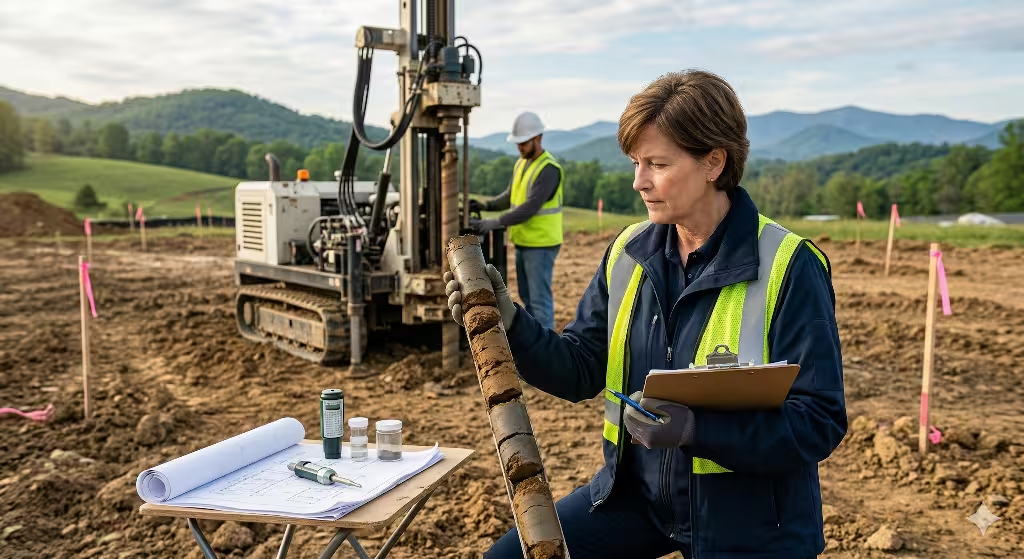
The most important step is to hire a Professional Land Surveyor (PLS) who is licensed to practice in the state of Tennessee. This licensure ensures they have the required education, experience, and have passed rigorous exams. A licensed professional’s stamp on a land survey makes it a legally binding document. The best way to find a good surveyor is through referrals. Your builder or general contractor will have a list of surveyors they trust and have worked with before. You can also ask your real estate agent or check with the Tennessee Association of Professional Surveyors. I always recommend getting a quote from two or three different firms.
Local Municipal Requirements
When you submit your plans for a building permit in Johnson City, Sullivan County, or Washington County, the planning department will have specific requirements for the land survey. They will typically want to see a recent survey, usually one that has been completed within the last year, to ensure it reflects the current state of the property. The survey must clearly show the property boundaries, all existing structures, any easements, and the proposed location of the new home with setback dimensions clearly marked. Working with a local surveyor is a big advantage here, as they will be familiar with the exact requirements of the specific municipality you are building in.
Understanding Costs and Timelines
The cost of a land survey can vary widely. The main factors that influence the price are the size of your property, the complexity of the terrain (a flat, clear lot is easier to survey than a hilly, wooded one), the type of land survey you need, and how easy or difficult it is to find the historical records for the property.
A simple boundary survey on a small lot might cost a few hundred dollars, while a full ALTA/NSPS topographic survey on a large, complex property could cost several thousand. It is important to view this as an investment in the project, not just a cost. A good land survey prevents mistakes that would cost far more to fix later.
The timeline can also vary, from a week to several weeks, depending on the surveyor’s workload and the project’s scope, so it is important to schedule your land survey early in the planning process.
Frequently Asked Questions About New Home Surveys
Over the years, clients have asked me many of the same questions about this process. Let’s cover some of the most common ones.
How much does a land survey cost for a new house?
As mentioned, the cost is variable. For a typical new home build on a standard subdivision lot, you can expect to pay somewhere between $1,000 and $2,500 for a combined boundary and topographic land survey. For larger, more rural, or more complex properties, the cost will be higher. Always get a written proposal from the surveyor that details exactly what services are included in the price. The investment in a quality land survey is minor compared to the total cost of building a home, but its value is immense.
How long is a land survey legally valid?
Technically, a land survey does not have a legal expiration date. The physical facts of the property it documents are true as of the date it was completed. However, for practical purposes, it does have a shelf life. As I noted, lenders and local building authorities will almost always require a recent survey, often no older than six months. This is because things can change. A new easement might have been granted, or a neighbor might have built a new fence. Getting a new land survey ensures that everyone is working with the most current and accurate information possible, protecting you from any changes that may have occurred since the last survey was done.
What is the difference between a plot plan and a survey?
This is a great question, as the terms are often used interchangeably, but they are not the same thing. A land survey is the professional process of measuring the land and collecting data, performed by a licensed surveyor. The survey plat is the official drawing created from that process. A plot plan, or site plan, is a drawing that shows the proposed improvements on the property. It is often created by an architect or designer using the land survey as its base. So, the land survey is the foundational document that provides the accurate canvas, and the plot plan is the picture of what you intend to build on that canvas.
Can I use an old survey from the previous owner?
While an old survey can be a useful reference document, I strongly advise against relying on it for new construction. First, an old survey may not be accurate anymore; property markers could have been moved, or new easements could have been added. Second, a surveyor is only liable for their own work. A surveyor you hire is certifying the land survey information to you, your lender, and the title company. They cannot and will not certify another surveyor’s old work. For legal, permitting, and financing purposes, you will need a new land survey performed by a licensed surveyor who can certify that the information is current and accurate.
Conclusion: Build with Confidence on a Solid Foundation
Building your dream home should be an exciting and rewarding experience. The key to ensuring it goes smoothly is to start with a solid, well understood foundation. In the world of construction, that foundation begins not with concrete, but with data. A comprehensive and professional land survey provides the critical information needed to protect you legally, secure financing, obtain permits, and design a home that fits your property perfectly.
My final piece of advice is this: do not treat the land survey as just another item on a checklist. See it as one of the most important investments you will make in your home. It provides the clarity, precision, and security you need to move forward with your project confidently, knowing that you are building on a firm and well defined foundation. I encourage you to speak with your general contractor and a licensed local surveyor as one of the very first steps in your home building journey.