
Many homeowners in east Tennessee focus entirely on the big number. They look at the R-Value on the package of insulation and think that is the end of the story. They believe that more insulation will always lead to a warmer home and lower bills. However, they are often overlooking a silent energy thief. That thief is air leakage.
The thing is, a home is a system. You cannot just look at one part and hope for the best. You have to look at how every part works together. This is where the big debate comes in. Many people often have the same question when they sit down to plan their custom home. They want to know: is air sealing more important than R-Value?
To answer that, we have to look at the science. While R-Value measures how well a material stops heat from moving through it, that number means very little if air is moving freely through your walls or attic. Imagine you are outside on a cold day in East Tennessee. You put on a thick wool sweater. That sweater has a high R-Value because it is thick and holds heat. But if a cold wind blows, that air goes right through the wool. You will stay cold. Now, imagine you put a thin windbreaker over that sweater. The windbreaker stops the air. That is what air sealing does for your home.
Defining the Terms: R-Value vs. Air Sealing
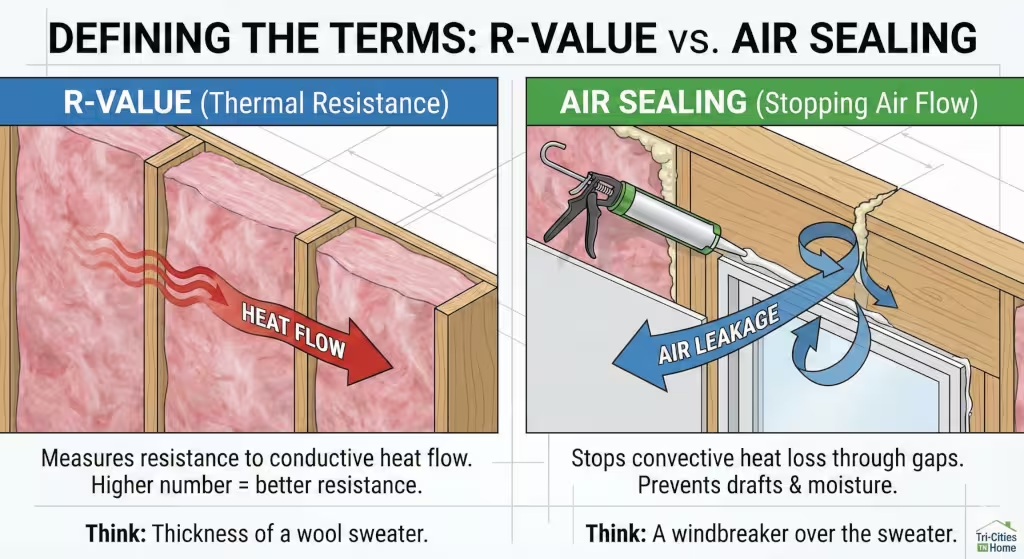
To understand this topic, we must first be very clear about what these words mean. Precision is important when you are building a home that is meant to last for decades. Most builders like to be precise because it saves clients money and stress in the long run.
R-Value is a technical term. It stands for thermal resistance. It measures how well a material can stop heat from moving through it by touch. This is called conduction. If you have a thick piece of fiberglass or foam, it has a higher R-Value. The higher the number, the better the material is at resisting heat. In Tennessee, we usually look for high R-Values in our attics because the sun beats down on the roof all summer.
On the other hand, air sealing is a process. It is the work we do to close up all the gaps, cracks, and holes in the shell of your house. We call this shell the building envelope. Air sealing stops convection. Convection is when heat moves through the air. If your house has holes in it, the warm air you paid to heat will simply float out of those holes. At the same time, cold air from the outside will be sucked in to take its place.
Why Air Sealing Is More Important Than R-Value
When people ask if air sealing is more important. Here is it is helpful to know about the performance gap. This is a term we use to describe the difference between how insulation is supposed to work and how it actually works in a real house.
If you put high R-Value insulation into a house that has many leaks, the insulation will not work well. In fact, air movement can lower the effectiveness of fiberglass insulation by as much as thirty percent. This is because the air moving through the fibers carries the heat away. It is like having a high-end cooler with a hole in the side. No matter how much ice you put in, the cold will escape.
Builders often use the “hole in the bucket” concept to explain this to buyers. Think of your home as a bucket. You want to keep the bucket full of warm air in the winter. Adding more insulation is like making the walls of the bucket thicker. That is good. But if there is a hole in the bottom of the bucket, the water will still leak out. It does not matter how thick the walls are. You must plug the hole first. That is why air sealing is the foundation of a good build.
The Problem of Convective Loops
One thing many people do not realize is that air can move inside your walls even if you cannot feel a draft. This is called a convective loop. If there is a gap at the top and bottom of a wall, the air inside will start to circle. Warm air rises and cold air sinks. This movement carries heat away from your living space and into the attic or crawl space.
Without proper air sealing, these loops happen all day and night. You might have the best insulation in the world, but if the air is looping inside the wall, the R-Value is being bypassed. This is why builders are so focused on the details during the framing stage. We want to make sure every top plate and bottom plate is sealed tight. This stops the air from moving before it even starts.
Does Air Sealing Save More Money Than Insulation?
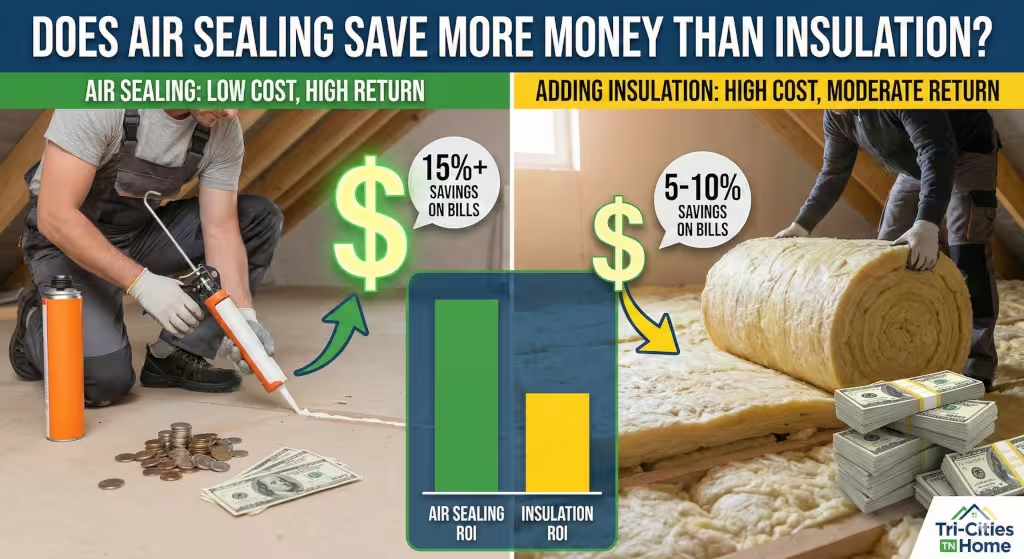
This is one of the most common questions builders get. People want to know where to spend their hard-earned money. If you have a limited budget, where should it go? In my experience, air sealing offers some of the best returns on your investment.
The Environmental Protection Agency (EPA) says that homeowners can save about fifteen percent on heating and cooling costs by air sealing and adding insulation. But here is the secret. Air sealing is often much cheaper to do than buying huge amounts of high-end insulation.
For example, a few cans of spray foam and some caulk can seal a lot of leaks in an attic. This might cost you fifty dollars in materials. If those leaks were letting out twenty percent of your heat, you will see that money back on your power bill very quickly. Adding another foot of blown-in insulation might cost hundreds or even thousands of dollars. While it will help, it won’t fix the leaks.
In the Tri-Cities, our power bills can get high in the winter. We have some cold nights in Johnson City. If your house is not sealed, your heat pump will run all night long. By focusing on air sealing, you allow your HVAC system to work less. This not only saves you money on your monthly bill but also helps your equipment last longer.
Can You Seal a House Too Tight?
This is a myth that builders hear all the time. People tell me, “Tri-Cities TN Home, I heard that a house needs to breathe.” I understand why people think this. In older homes, the leaks provided fresh air. But those leaks also brought in moisture, dust, and pollen.
The modern engineering view is different. We say, “Seal tight, then vent right.” We want to control the air. We do not want the air to leak in through a dirty crawl space or a dusty attic. We want to seal the house as tight as possible. Then, we use a mechanical ventilation system to bring in fresh, filtered air.
If a house is too leaky, you have no control. On a windy day, you get too much air. On a still day, you might not get enough. By using air sealing to make the home airtight, we take control of the environment. This makes the home healthier and more comfortable for your family. It stops the “ghosting” or dark spots you sometimes see on carpets or walls where air is filtering through the fibers and leaving dirt behind.
How to Find and Seal Air Leaks in an Existing Home
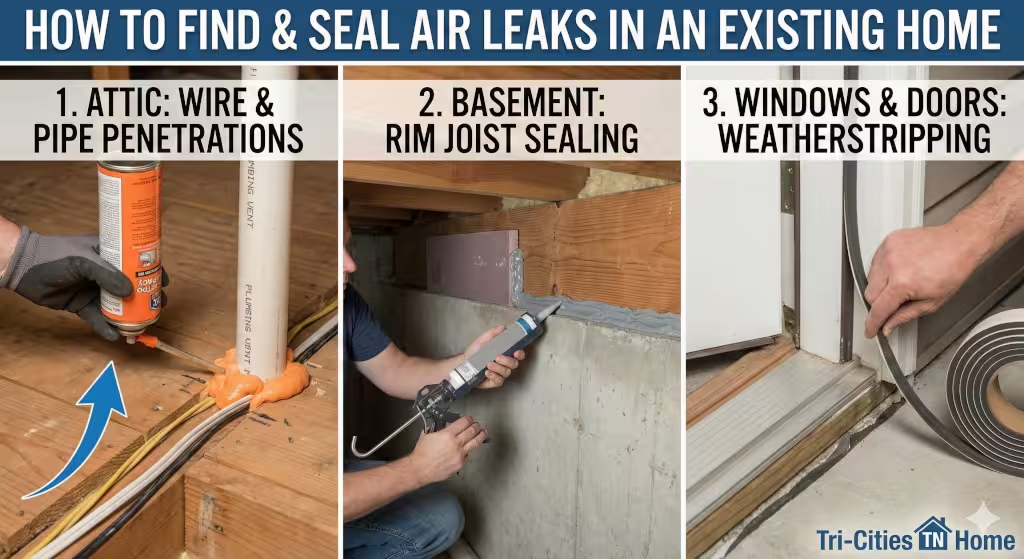
If you are not building a new home but want to improve the one you have, you can still do a lot of good. You do not always need a big team of workers to start air sealing. You can look for the low-hanging fruit yourself.
The best place to start is the attic. Most of the air leaks out through the top of your house. Look for where pipes or wires go through the floor of the attic. Often, there is a big gap around these items. You can use expanding spray foam to fill these gaps.12 Also, look at your attic hatch. This is often just a piece of wood sitting in a frame. It is a giant hole for heat. You can add weatherstripping around the edges to stop the air.
Next, look at your basement or crawl space. The rim joist is the area where the house frame sits on the foundation. This is a major source of leaks. You can use foam board or spray foam to seal this area. By doing this, you stop the cold air from being sucked into the bottom of your house.
Finally, check your windows and doors. While people often think windows are the main problem, they are usually a small part of the total leakage. Still, you should use caulk around the trim and weatherstripping on the doors. These small steps add up to a much tighter building envelope.
The Science of the Stack Effect
To understand why air sealing is so vital, we have to talk about the stack effect. This is also called the chimney effect. It is a basic law of physics. Warm air is less dense than cold air, so it rises. In the winter, the warm air in your Johnson City home rises to the top. It looks for any hole it can find to escape into the attic.
When that warm air leaves through the top, it creates a vacuum at the bottom of the house. This vacuum sucks in cold air from the basement, crawl space, or through the gaps under your doors. This is why your feet might feel cold even if the thermostat says it is seventy degrees.
The stack effect is strongest when it is very cold outside. The bigger the temperature difference, the harder the air tries to escape. By using air sealing in the attic and the basement, you break the cycle. You stop the “chimney” from working. This keeps the warm air where you want it. It also prevents the house from sucking in damp air from the crawl space, which is a major cause of mold and bad smells in Tennessee homes.
Measuring Success: The Blower Door Test
In the building industry, we do not like to guess. We like to measure. The best way to see if air sealing has been done correctly is with a blower door test. This is a tool that helps us find exactly where a house is leaking.
We put a large fan in an exterior door. The fan pulls air out of the house, which lowers the pressure inside. This makes the outside air try to get in through all the cracks and gaps. We can then walk around with a smoke pen or an infrared camera to see exactly where the air is coming in.
We measure the results in Air Changes per Hour (ACH). This tells us how many times all the air in your house is replaced by outside air in one hour. Modern codes in Tennessee are getting stricter. We want to see low numbers here. A low ACH means the house is tight and the air sealing work was done with precision.
Thermal Bridging: The Hidden Heat Path
Even if you have great insulation and have done your air sealing, you might still lose heat through thermal bridging. This happens because wood is not a great insulator. The wooden studs in your walls act like a bridge. Heat can move through the wood and bypass the insulation entirely.
To stop this, we sometimes use rigid foam on the outside of the house. This creates a continuous layer of insulation that covers the wood. It also helps with air sealing because the foam boards can be taped together to create a second air barrier. This is a more advanced technique, but for a custom home in the Tri-Cities, it is something I often recommend. It ensures that the R-Value of your wall is consistent from one end to the other.
Regional Context: Building in the Tri-Cities
Building in East Tennessee is different than building in Florida or Maine. We are in what the experts call Climate Zone 4. This means we have mixed weather. We have hot, humid summers and cold, damp winters.
In our area, moisture control is a huge deal. If you have air leaks, you are also moving moisture. In the summer, the humid air from outside can leak into your wall cavities. When that warm, wet air hits the cold back of your drywall (thanks to your air conditioning), it turns into water. This is called condensation. Over time, this leads to mold and rot.
By focusing on air sealing, we are also doing moisture control. We are keeping the humid air out of the walls. This protects the structure of your home and the health of your family. Integrity in building means thinking about these things before the first nail is driven. We want to build a house that is still standing and healthy fifty years from now.
Local Building Codes in Tennessee
It is also important to know that building codes are changing. Tennessee has adopted new rules that require better energy efficiency. These codes now require builders to pay more attention to air sealing than they did ten or twenty years ago.
When you hire a builder in Kingsport or Johnson City, you should ask them about their air sealing package. If they only talk about insulation, they might not be up to date on the latest standards. A modern builder should be able to explain how they seal the building envelope and how they will test the home’s airtightness.
Common Terms Used in House Air Sealing
Throughout this article, we have touched on many important concepts. To be a true expert, you should be familiar with these terms:
Building Envelope: The physical separator between the conditioned and unconditioned environment.
Conditioned Space: The parts of your home that you heat and cool.
Vapor Retarder: A material that reduces the rate at which water vapor can move through it.
Attic Bypass: A hidden path that allows air to move from the living space into the attic, often through interior walls or soffits.
Top Plate: The horizontal wood member at the top of a stud wall. This is a major area for air sealing.
IC-Rated Lighting: Light fixtures that are safe to be in direct contact with insulation. We always want these to be airtight models.
The Custom Home Buyer’s Checklist for Air Sealing
If you are currently planning or building a custom home, here is a list of things you should watch for. These are the areas where air sealing is most often missed:
The Mud Sill: Ensure there is a foam gasket between the concrete foundation and the first piece of wood.
Top Plates: Every hole for a wire or pipe that goes into the attic must be filled with foam.
Bathtubs and Showers: If a tub is on an exterior wall, the wall behind it should be sealed and insulated before the tub is installed.
Recessed Lights: Use only “Airtight” and “IC-Rated” cans. Even then, they should be sealed to the drywall with caulk.
Fireplace Walls: The area behind a fireplace is a huge source of leaks. It needs a solid air barrier.
Windows and Doors: Use non-expanding foam around the gaps between the window frame and the house frame. Do not just stuff fiberglass in there; it does not stop air!
The Integrated Approach
To wrap things up, let’s go back to our main question: is air sealing more important than R-Value? While both are necessary for a high-performance home, air sealing is the most critical first step. You can have an attic with R-60 insulation, but if there are air leaks, your home will still be drafty and expensive to heat.
Think of air sealing as the foundation and insulation as the walls. You cannot build a strong house without a good foundation. When you combine precise air sealing with the right amount of insulation, you get a home that is quiet, comfortable, and efficient.
Building a home is one of the biggest investments you will ever make. It pays to get the details right. Stop the leaks, control the air, and then layer on the insulation. That is how we build a home that stands the test of time in East Tennessee.